GOQii

Blog

  • HOME
  • HEALTHY LIVING
  • FITNESS
  • HEALTHY RECIPES
  • USER STORIES
  • KARMA
  • BUY GOQii

Search Results for: protein

July 23, 2022 By Mrinali Dwivedi 1 Comment

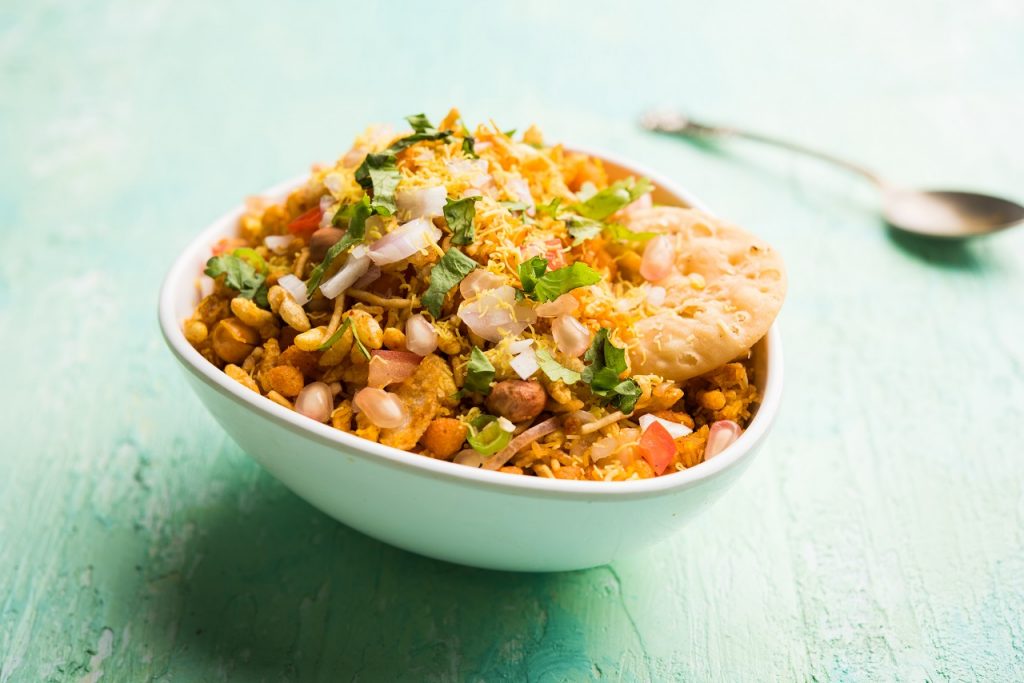
Healthy Eating: Protein Papdi Chaat

protein papdi chaat

Chaats refer to a lip smacking delicacy made by bringing together a range of rustic masalas and chutneys. Isn’t there something about Indian Chaats that makes our mouth water instantly, just by thinking about them? For the longest time we have associated a plate of chat dripping with curd and chutneys to an unhealthy indulgence. But what if I were to tell you that chaats can be really beneficial to your health? Let’s try this healthy Protein Papdi Chaat recipe. 

What You Will Need 

For the papdi 

  • Wheat flour – 1 cup 
  • Soya flour – 1 cup 
  • Rava (semolina) – 1 cup 
  • Besan (chana flour) – 1 cup 
  • Ajwain (carom seeds) – 1 tsp 
  • Regular spices according to taste preference such as haldi, lal mirch powder, dhaniya powder and salt
  • Oil – 1 tbsp

For assembling the chaat 

  • Boiled chana – ½ cup 
  • Boiled corn – ½ cup 
  • Boiled potato (finely diced) – ½ cup 
  • Tomato (finely diced) – ½ cup
  • Onion (finely diced) – ½ cup
  • Cucumber (finely diced) – ½ cup
  • Carrot (finely grated) – ½ cup 
  • Pomegranate seeds – ½ cup 
  • Dry roasted peanuts and chana – ½ cup 
  • Curd – ½ cup 
  • Tamarind dates chutney – 1 tbsp 
  • Coriander mint chutney – 1 tbsp 
  • Chaat masala – 2 pinches 

How To Prepare 

  1. Knead a stiff dough of the papdi ingredients (all flours, all spices and a teaspoon of oil).
  2. Roll this dough into a big flat thin sheet and cut diamond shapes with a shankar para cutter or knife. You can also cut it into small discs with a cookie cutter.
  3. Brush these diamonds or discs of dough with the remaining oil and bake for 12 minutes at 1800c. Your protein rich papdi is ready. Store in an airtight jar.
  4. While making the chaat, break some of these papdi roughly with your hand into a bowl.
  5. Assemble all the other ingredients of the chaat into this bowl.
  6. Garnish with some chopped coriander leaves and chaat masala and serve immediately.

Benefits of the Protein Papdi Chaat 

  • This Protein Papdi Chaat is wholesome, delicious and can aid weight loss
  • Can prove to be a very sumptuous meal addition to your healthy yet tasty diet
  • The fresh ingredients and mix of spices make it super rich in vitamins, minerals and essential digestive properties. 
  • It is rich in fiber and protein, both of which induce a feeling of fullness and prevent overeating or resorting to fried and sugary preparations that are fattening.

We hope you enjoy this Protein Papdi Chaat recipe! Do try it out and share your experience in the comments below or share it on social media, tagging GOQii. For more healthy recipes, check out Healthy Reads or ask a GOQii Coach by subscribing for personalized health coaching here: https://goqiiapp.page.link/bsr

#BeTheForce 
May 27, 2022 By Luke Coutinho 16 Comments

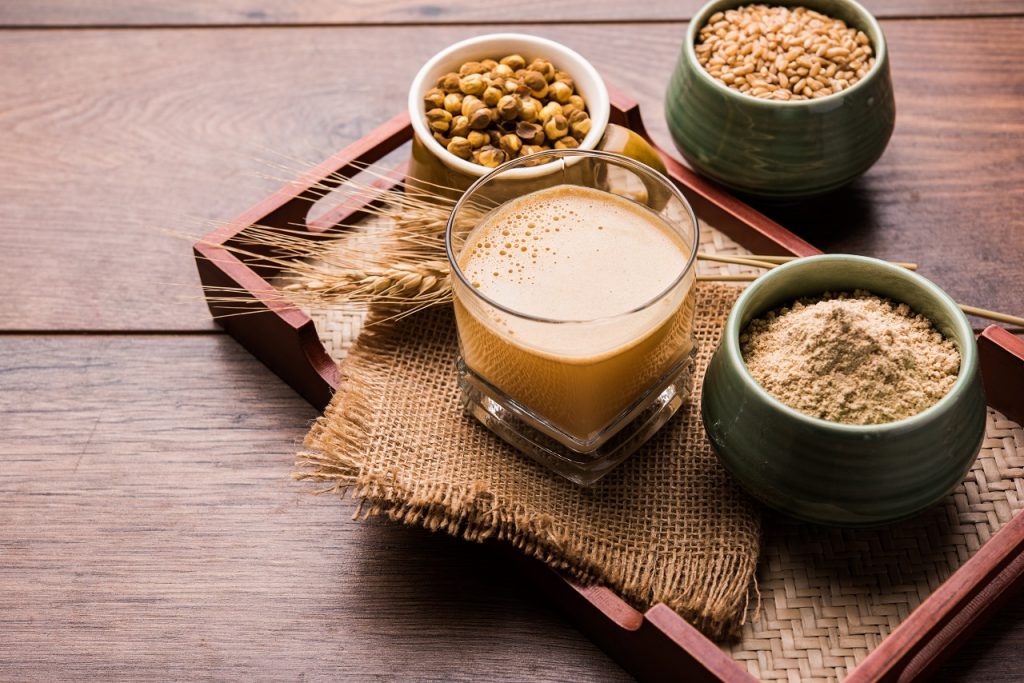
Sattu: Your Natural, Inexpensive, High Quality Protein Drink

sattuThere has never been a single talk session that I have done and left without learning something new from the state, country or participants. On a trip to Kolkata, I learnt about this amazing drink made of roasted gram flour or what is popularly called in Northern India as “Sattu”. One of the participants in my session enlightened me about a drink made from ‘Sattu’ that the locals drink, that keeps them high on energy and healthy through the hot summer months.

I learnt of the health benefits of this drink that has been famous to states in the North of India for generations and used as a natural cure for several diseases as well as a high value, nutrient dense staple food. I picked up several packets of Sattu to bring back with me. What got my interest levels up were the keywords – Protein, Calcium, Fiber, Iron and Magnesium. Sattu has it all.

For many of you who don’t know me, I have the reputation of ripping a product apart, studying and researching on it in detail, testing it in labs for authenticity and nutritional values and then sharing it with everyone I can after using it myself.

‘Sattu’ is your equivalent to a ‘WHEY PROTEIN SHAKE’. Made of roasted gram flour, this composition is one of the highest sources of vegetarian protein and a quality that is most easily absorbed by the body.

60 grams (4 tbsp) of this roasted flour will give you 19.7 grams of high quality protein along with –
Calcium and magnesium (a fantastic combination as magnesium helps calcium get better absorbed into the body). This makes it excellent for bone health and prevention and treatment of osteoporosis.

Super healthy for growing children and adults!

Iron:  (Iron deficiency is a leading problem and can cause severe health issues.Taking iron supplements can sometimes be too toxic to the liver and cause constipation) Natural iron is best.

Fiber: Excellent source of fiber. All of us know that fiber cleans out the colon and stomach, prevents and cures constipation and aids fat loss and energy levels.

Most of you will be thinking that ‘ Sattu’ will cause a lot of gas just like channa (garbanzo beans/chickpeas) do, in fact it’s just the opposite. Ayurveda states that in this form (sattu) people with gas will be relieved.

It aids fat and weight loss, it’s excellent for strong sexual health and is a natural colon cleanser.

For elderly people, sick people, bed ridden people, people recovering from serious diseases or surgery, sattu or roasted gram flour will build their strength and muscle mass rapidly.

I was not surprised, just overwhelmed, as once again I discover that nature has provided it all to us.We just fail to discover because we got caught up in the trap of marketing and media.

Sattu Can Be Your New Protein Shake 

This is my new protein shake or better still, health drink. 4 tbsp with water OR chaas (buttermilk) sometimes I add pepper, sometimes, roasted cumin (jeera) and sometimes cinnamon. 20 grams of protein. I have one in the morning and one post work out, sometimes even another one as a mid-evening snack, because this glass of ‘Sattu’ fills you up and provides you more than sufficient protein.

You feel lighter, more toned, less bloated (some whey proteins cause temporary bloating) and you know what’s in your glass, unlike the numerous ingredients that you may not even understand on the jar of a whey protein. The person at the stall also said you can add jaggery to make it sweet. It’s an excellent summer drink, extremely cooling for the body.

It is Surprisingly Inexpensive 

When compared to the amount you will pay for Whey Protein, Sattu is a much cheaper and effective alternative. In fact, you can get Sattu from the GOQii Health Store within the app for a discount using GOQii Cash. Putting the cost aside, what’s more important is that I know the quality of protein and what’s going into my glass. If you blend it, it’s better as it may tend to form lumps if not stirred well. Add some lemon to it and you can’t go wrong.

So make the change today and spread the word. The aim is to move from processed to natural! We hope this article helps you. Do share your thoughts in the comments below. For more on nutrition, check out Healthy Reads or ask a GOQii Coach by subscribing for personalized health coaching here: https://goqiiapp.page.link/bsr

#BeTheForce 
February 20, 2022 By Urvi Gohil 1 Comment

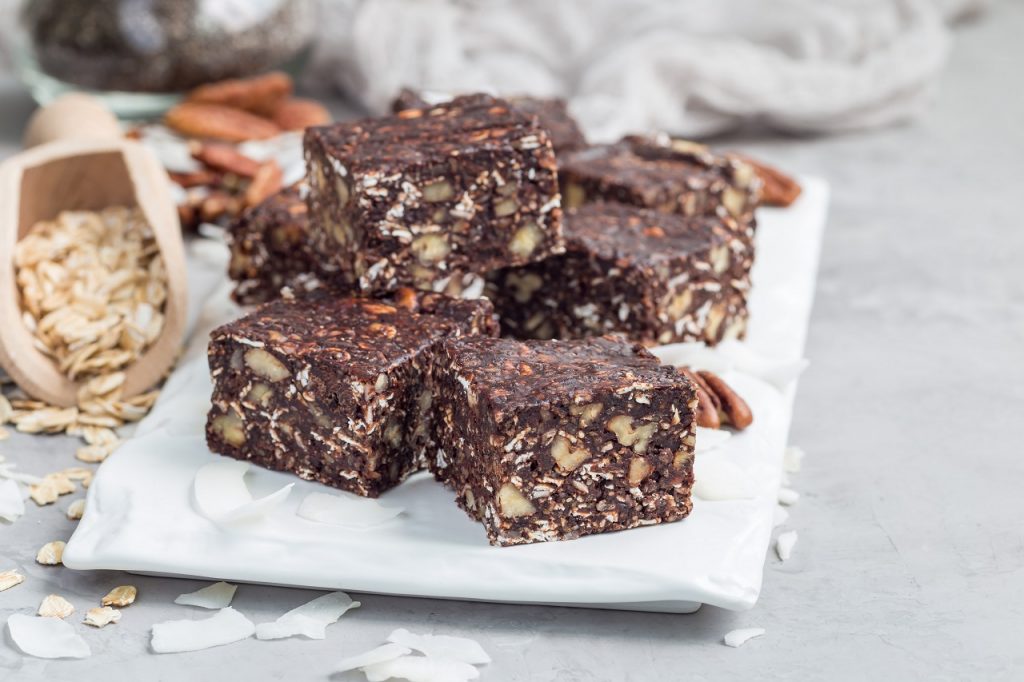
Healthy Eating: Homemade Protein Bars

protein bars

Want to stock up on your winter protein supply? We’ve got you covered with these simple, healthy, no bake, sugar-free homemade protein bars. You can make these protein bars using ingredients available in your kitchen. It is quick and quite suited for winters! 

What You Will Need 

  • Dates – 1 cup 
  • Hot water – 1 cup 
  • Almonds – ½ cup 
  • Cashews – ½ cup 
  • Walnuts – ½ cup 
  • Pistachio – ½ cup 
  • Rolled oats – ¼ cup 
  • Desiccated coconut – ½ cup 
  • Flax seeds – 1 tbsp 
  • Pumpkin seeds – 1 tbsp 
  • Sesame seeds – 1 tbsp 
  • Cardamom powder – 1 tsp 
  • Cinnamon powder – 1 tsp 
  • Jaggery powder – 2 tbsp 

How To Prepare 

  1. In a bowl, add the dates and hot water and soak the dates for 1-2 hours until it softens. Once soft, remove the seeds and blend it in a mixture to a fine, smooth paste. 
  2. Heat a pan and add almonds, cashews, pistachio, walnuts, oats, flax seeds, pumpkin seeds and sesame seeds. Dry roast this for 5-7 minutes until they turn crisp and slight golden. 
  3. Time to add the desiccated coconut in the pan and sauté just for 1-2 minutes and remove all the contents in a bowl.
  4. In the same pan, add the dates paste and allow it to cook for 5 minutes until the paste thickens and loses some moisture.
  5. Now add the roasted nuts and seeds mixture to the dates paste and season it with cardamom powder, cinnamon powder & also add the jaggery powder. Mix it well until everything comes together.
  6. Grease a mithai tray or plate with some ghee/ oil and spread the mixture uniformly. Refrigerate for 1-2 hours until it sets completely and using a knife, cut it into bars and enjoy! 

Highlights Of The Homemade Protein Bars 

  • Power packed with energy, micronutrients, minerals, fiber and healthy fats. 
  • A perfect guilt free, sugar free, preservative free alternative to granola bars and energy bars.
  • A great way to start the day in winter, it is filling and keeps your sweet cravings away.
  • Works as a perfect post workout snack.

We hope you enjoy this Protein Bars recipe. Do try it out and leave your feedback in the comments below. For more healthy recipes, check out Healthy Reads or ask a GOQii Coach by subscribing for personalized health coaching here: https://goqiiapp.page.link/bsr

Eat healthy and #BeTheForce  

October 30, 2018 By Richa Athavale 22 Comments

How to include proteins to your Breakfast?

179739-curd

All of us are well aware that breakfast is the first important meal of the day. The second most important thing is to have frequent meals to keep our metabolism high. Our body goes into the rest mode for almost 8 to 10 hours after dinner when we are sleeping through the night. Hence, it becomes essential to eat a good, balanced meal which has the right proportion of carbohydrates, protein, fats, vitamins, minerals, fibres, anti- oxidants etc.in the morning. More often than not it is a difficult task to incorporate all these nutrients in the morning breakfast due to our rush to get to work.But, one can always try to incorporate as many nutrients as we can out of the above if not all.

It is advised to include proteins in every meal. The inclusion of proteins to your breakfast becomes a challenging task especially if you are a vegetarian. Lacto- Ovo vegetarian breakfast can easily get proteins through the milk and eggs. The tough task is for vegetarians and vegans (those who limit dairy products).

Common Indian breakfast items are Poha (cooked Puffed Rice with some veggies), flat breadsUpma, Idli and Dosa (steamed Rice pancakes), flatbreads(Chaapti), Rice, Porridgeetc. Today, I am going to tell you how we add proteins in our 1st meal of the day – breakfast.

Whenever we have options like steamed rice pancakes (Idlisambhar) or bread omelette we’re obviously getting proteins from the dish.  When we have options like Cooked Puff Rice, Upma, rice, cooked Wheat Flat breads (Chappati)  etc. without any side dish we need to add some proteins to it.

Here are few items which you can add:

  1. Peanuts/ Groundnuts: A humble source of proteins and MUFA (mono unsaturated fatty acids) will add to proteins in breakfast. We can use in different forms as peanut butter, chutney etc. spread it on your bread or chapatti. Excellent to be added in pre workout meal.
  • 100 g of Dry roasted peanuts will give 24-26 g of proteins.
  1. Roasted Chana: Simple, easily available and can be stored. Just add a handful of black (Kabuli)or brown Chana to your plate or have it on the go post breakfast. If you couple it up with peanuts it will be even better.
  1. Mixed Sprouts: This one will need some preparation. Soak the sprouts for 6-8 hours, then drain the water and tie in the cloth for sprouts to come. Add handful of it either raw or steamed. Raw will give you good enzymes as compared to cooked ones. Whereas steamed will be easier to digest. Following are the rough values for sprouted and steamed sprouts.
  • Moong/ Green gram 2-3 g
  • Matki/ Moth bean 8 g
  • Chana/ Chick peas 9 g
  1. Green peas: It is very to incorporate peas in any dish. Add it to your upma, poha, rice liberally. They will taste good as well as increase the protein value. Its green colour also add to the visual effect.
  • 100 g of fresh green peas contain 5 g of protein
  1. Nuts like (almond, walnut, cashew nut): Again a very handy option. Just adding them to your bowl of breakfast is very easy. They are rich in minerals like calcium, good fats like MUFA, omega 3 fatty acids. Don’t forget to soak and peel almond to avoid anti nutritional factors in the peel.
  • Almond 21.2 g
  • Walnut 15.2 g
  1. Sesame, flax, sunflower, pumpkin seeds: Dry roasted seeds can serve as a protein quotient of the meal. You can easily stock it in cool and dry place. You can have them as it is or grind to make into chutney. Dips like tahini can be made from sesame seeds.
  1. Milk: You can just add a glass of milk to complete the protein quota of the meal. It goes well with roti, chapati, bread, cereals etc. It is better to go for low fat milk. If having cow’s milk make sure it is Desi cow’s milk. Make sure you’re not having it with salty or savoury as milk and salt is not recommended to have together.1 cup of milk gives you 8 g protein on an average.
  1. Curds/ Yogurt: Add a bowl of curds or yogurt to make your breakfast not only protein rich but yummy. We can mix poha, rice with it to give a better texture and taste. Fruits with yogurt can be another hit option and light still complete meal. 1 cup gives you 10-11 g proteins on an average.
  1. Buttermilk: It is the best bet in summer. Having it post breakfast will help in digestion. It has good water content and therefore it will not be a concentrated source. Unlike milk it can be coupled with salty and savoury options as well.
  1. Cheese: I am yet to come across a person who doesn’t like cheese unless of course you are a vegan. We can add it with breads, chapatti, pancakes etc. You can use different varieties like cheese spread, cubes, and slices or just grate some cheese on your dish. People who are targeting weight gain can have it on regular basis. Those who are trying to lose weight should limit it once or twice in a week. 100 g will give approx. 20 g of proteins.
  • « Previous Page
  • 1
  • 2
  • 3
  • 4
  • 5
  • …
  • 148
  • Next Page »

Search

Recent Posts

  • Foods to Manage Blood Sugar Naturally: A Complete Guide to Better Blood Sugar Control
  • The Lazy Person’s Guide to Staying Healthy: 5 Micro-Habits That Take Less Than 2 Minutes
  • Healthy Eating: Comforting Chilli Bean Soup Recipe for the Monsoon
  • The Truth About the ‘Beer Belly’: What Alcohol Really Does to Your Metabolism
  • Benefits of Meditation: How One Daily Habit Can Transform Your Mental Wellbeing

Stay Updated

Archives

  • August 2026 (7)
  • July 2026 (25)
  • June 2026 (22)
  • May 2026 (20)
  • April 2026 (24)
  • March 2026 (18)
  • February 2026 (14)
  • January 2026 (14)
  • December 2025 (19)
  • November 2025 (15)
  • October 2025 (20)
  • September 2025 (6)
  • August 2025 (6)
  • July 2025 (9)
  • June 2025 (18)
  • May 2025 (16)
  • April 2025 (22)
  • March 2025 (26)
  • February 2025 (21)
  • January 2025 (25)
  • December 2024 (22)
  • November 2024 (22)
  • October 2024 (20)
  • September 2024 (22)
  • August 2024 (28)
  • July 2024 (15)
  • June 2024 (23)
  • May 2024 (26)
  • April 2024 (27)
  • March 2024 (27)
  • February 2024 (23)
  • January 2024 (21)
  • December 2023 (14)
  • November 2023 (10)
  • October 2023 (19)
  • September 2023 (21)
  • August 2023 (16)
  • July 2023 (16)
  • June 2023 (21)
  • May 2023 (20)
  • April 2023 (19)
  • March 2023 (23)
  • February 2023 (19)
  • January 2023 (15)
  • December 2022 (11)
  • November 2022 (15)
  • October 2022 (15)
  • September 2022 (12)
  • August 2022 (9)
  • July 2022 (17)
  • June 2022 (11)
  • May 2022 (10)
  • April 2022 (6)
  • March 2022 (6)
  • February 2022 (13)
  • January 2022 (11)
  • December 2021 (7)
  • November 2021 (3)
  • October 2021 (6)
  • September 2021 (3)
  • August 2021 (8)
  • July 2021 (7)
  • June 2021 (15)
  • May 2021 (16)
  • April 2021 (10)
  • March 2021 (7)
  • February 2021 (4)
  • January 2021 (4)
  • December 2020 (3)
  • November 2020 (4)
  • October 2020 (10)
  • September 2020 (3)
  • August 2020 (3)
  • July 2020 (2)
  • June 2020 (4)
  • May 2020 (10)
  • April 2020 (12)
  • March 2020 (10)
  • February 2020 (4)
  • January 2020 (4)
  • December 2019 (3)
  • November 2019 (7)
  • October 2019 (5)
  • September 2019 (4)
  • August 2019 (9)
  • July 2019 (9)
  • June 2019 (11)
  • May 2019 (4)
  • April 2019 (8)
  • March 2019 (8)
  • February 2019 (9)
  • January 2019 (8)
  • December 2018 (9)
  • November 2018 (3)
  • October 2018 (3)
  • September 2018 (5)
  • August 2018 (10)
  • July 2018 (6)
  • June 2018 (13)
  • May 2018 (8)
  • April 2018 (18)
  • March 2018 (9)
  • February 2018 (8)
  • January 2018 (15)
  • December 2017 (12)
  • November 2017 (19)
  • October 2017 (13)
  • September 2017 (15)
  • August 2017 (4)
  • July 2017 (8)
  • June 2017 (7)
  • May 2017 (6)
  • April 2017 (8)
  • March 2017 (6)
  • February 2017 (7)
  • January 2017 (9)
  • December 2016 (10)
  • November 2016 (7)
  • October 2016 (7)
  • September 2016 (7)
  • August 2016 (11)
  • July 2016 (9)
  • June 2016 (9)
  • May 2016 (12)
  • April 2016 (17)
  • March 2016 (17)
  • February 2016 (8)
  • January 2016 (6)
  • December 2015 (2)
  • November 2015 (9)
  • October 2015 (7)
  • September 2015 (9)
  • August 2015 (11)
  • July 2015 (9)
  • June 2015 (11)
  • May 2015 (9)
  • April 2015 (13)
  • March 2015 (8)
  • February 2015 (5)
  • January 2015 (12)
  • December 2014 (14)
  • November 2014 (11)
  • October 2014 (6)
  • September 2014 (13)
  • August 2014 (12)
  • July 2014 (6)
  • June 2014 (2)
  • May 2014 (7)
  • April 2014 (4)

From Burnout to Balance: How Dr. Ranjit Reclaimed His Health

Dr Ranjit Bhatt has spent years tending to others. A practising doctor in Odisha, his days were packed with patients, surgeries, and emergencies. From the outside, it looked like a life lived in service. But on the inside, something wasn’t right. “I had no … [Read More...]

From Shimla’s Slopes to Chandigarh’s Sidewalks: Surinder Kaur Bhalla’s Journey from Chaos to Control

Some journeys start with a plan. Others begin with a stumble literally. Surinder Bhalla, a government professional, born and raised in the scenic hill town of Shimla, had always lived a life of movement. “In Shimla, you walked everywhere,” she reflects. “Walking was never an exercise. It was just life.” But after shifting to Chandigarh, […]

“I’ve Challenged Myself to Live 100 Years” – The Story of Chandubhai Savani’s Second Chance at Life

At 67, most people start slowing down. Not Chandubhai Savani. A resident of Surat, Chandubhai, thought life was on track. “My life was going well till I had my bypass surgery,” he says. That surgery, back in 2021, was a wake-up call.  Medication was routine, but exercise wasn’t. His diet? What he calls ‘normal.’ “I […]

Ananda Mukherjee Health Story

From Terminal Illness To Complete Wellness! Ananda Mukherjee Health Story

As we observe World Cancer Day under the powerful theme ‘United by Unique’ (2025-2027)**, we are reminded that every individual’s journey with cancer is distinct, yet united by shared resilience, hope, and the collective fight against this disease. This theme places people at the centre of care and their stories at the heart of the […]

  • HOME
  • HEALTHY LIVING
  • FITNESS
  • HEALTHY RECIPES
  • USER STORIES
  • KARMA
  • BUY GOQii

Copyright ©2016 GOQii