GOQii

Blog

  • HOME
  • HEALTHY LIVING
  • FITNESS
  • HEALTHY RECIPES
  • USER STORIES
  • KARMA
  • BUY GOQii

Archives for October 2026

October 31, 2026 By GOQii Leave a Comment

Healthier Diwali Snacks: Baked and Air-Fried Namkeen Recipes

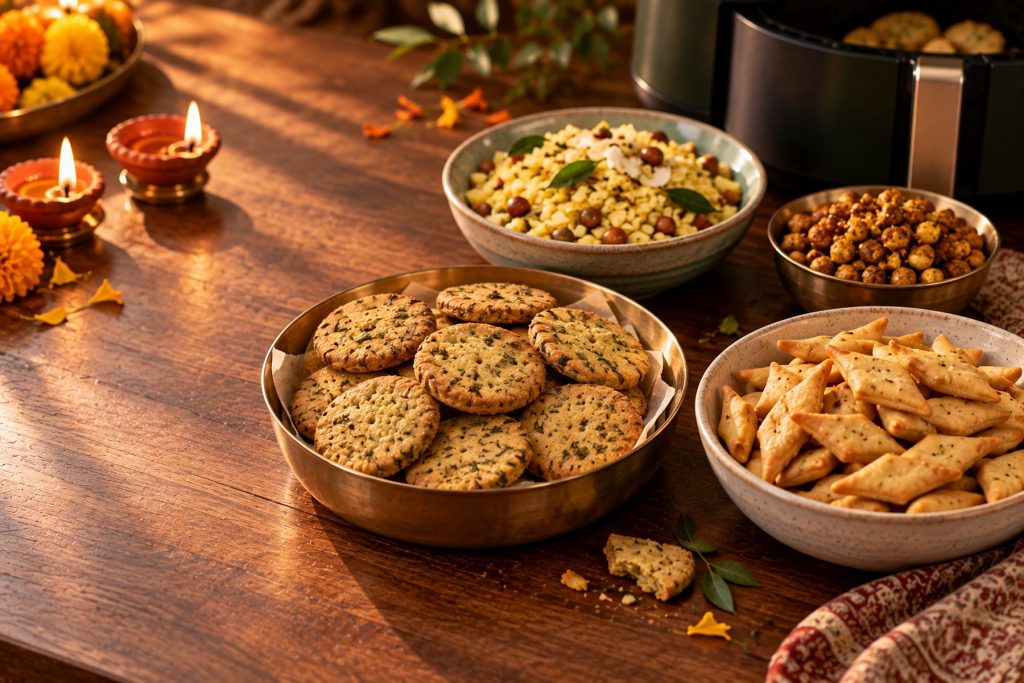
In most Indian homes, Diwali smells of hot oil. Trays of chakli, mathri, sev and chivda come out of the kadhai a week before the festival, and the steel dabbas stay full until well after it. A handful here, a handful with every cup of chai, a box for every guest: it adds up quickly.

You don’t have to give up namkeen to eat better this Diwali. Baking, air-frying and dry-roasting can give you the crunch and the masala with a fraction of the oil, especially if you also go easy on salt and portions. Below are four simple recipes, plus what these methods do and don’t change.

At a glance

  • Deep-fried namkeen is very energy-dense: a popular packaged aloo bhujia lists about 38 g of fat and 562 kcal per 100 g.
  • Salt is the hidden problem: Indians eat about 11 g of salt a day, more than twice the WHO limit of 5 g, and namkeen is a common source.
  • Baking and air-frying use far less oil: a teaspoon or two instead of a kadhai full.
  • They aren’t magic: a baked snack is still a snack, and browning starchy foods too much can form acrylamide, so aim for golden, not dark brown.
  • Avoid reusing frying oil: ICMR–NIN advises against frying again in used oil.
  • Four recipes: baked methi mathri, air-fried whole wheat namak pare, roasted poha chivda and air-fried masala chana.

Why regular namkeen weighs heavy

There is nothing wrong with enjoying festive snacks. The issue is how they’re usually made and how much of them we eat over a fortnight of celebrations.

Deep-frying adds a lot of fat. Dough and batter soak up oil as they fry, which is why fried namkeen is so calorie-dense. Using the aloo bhujia label above as an example, a 50 g bowl (roughly two small katoris) provides about 280 kcal and 19 g of fat, before the chai and sweets alongside it.

Reused oil is a bigger worry. At home and at many sweet shops, the same kadhai of oil is often used batch after batch. Repeated heating breaks oil down and forms harmful compounds, including trans fats and free radicals. The ICMR–National Institute of Nutrition advises that oil used once for frying can be filtered and used for curries within a day or two, but shouldn’t be used for frying again.

Salt sneaks in. An ICMR–National Institute of Epidemiology analysis puts average intake in India at about 11 g of salt a day, and names namkeen, papad, pickles and chips among the hidden sources. The WHO recommends less than 5 g a day for adults. Too much salt raises blood pressure, the leading risk factor for stroke and heart disease.

Portions creep up. Namkeen is easy to eat without noticing: straight from the dabba, in front of the TV, at every house you visit. Over two weeks, those handfuls add up.

Baked, air-fried or fried: what really changes

What improves:

  • Much less oil. An air fryer circulates very hot air around the food, so a recipe needs about a tablespoon of oil rather than the cups used for deep-frying, and studies of fries found the air-fried versions had substantially less fat. Baking works the same way. Dry-roasting in a kadhai, as for chivda, needs only a little oil for the tadka.
  • No reused oil. Each batch starts with fresh oil, in teaspoons.
  • More control. At home you choose the flour, the oil, the salt and the spices.

What doesn’t change:

  • A baked mathri with a heaped teaspoon of salt is still salty. The recipes below use less salt than most, and lean on ajwain, methi, pepper, amchur and curry leaves for flavour.
  • Baking maida-based snacks doesn’t add fibre. Swapping in whole wheat atta, besan, poha, makhana or chickpeas does.
  • Lower-fat snacks are easy to eat in larger amounts. A small katori is still a sensible serving.

A note on browning. Starchy foods form acrylamide, a compound best kept low, when they’re cooked to a dark brown at high heat. A 2024 study found air-frying potatoes didn’t produce less acrylamide than deep- or oven-frying. Whatever the method, cook snacks to light golden, not dark brown, and throw away any burnt pieces.

4 healthier namkeen recipes for Diwali

Oven and air fryer temperatures vary, so check the first batch a few minutes early and adjust. All four keep well in an airtight container once fully cooled.

1. Baked methi mathri

Flaky, savoury and lightly bitter from the methi. Whole wheat atta and a little besan replace maida, and they’re baked instead of fried.

Makes: about 30 mathris | Prep: 15 minutes, plus 20 minutes resting | Bake: 15–20 minutes per tray

Ingredients

  • 1 cup (120 g) whole wheat atta
  • ¼ cup (30 g) besan
  • 3 tbsp kasuri methi, crushed between your palms
  • ½ tsp ajwain
  • ½ tsp cumin seeds
  • ¼ tsp turmeric
  • ½ tsp red chilli powder
  • ½ tsp salt
  • 2 tbsp oil or ghee, plus ½ tsp for brushing
  • About ⅓ cup (70–80 ml) water

Method

  1. Mix the atta, besan, methi, spices and salt. Add 2 tbsp oil or ghee and rub it in with your fingertips until the flour holds together when pressed.
  2. Add water a little at a time to make a stiff dough, firmer than roti dough. Cover and rest for 20 minutes.
  3. Preheat the oven to 180°C. Roll the dough to about 3 mm thick and cut 5 cm rounds. Re-roll the scraps.
  4. Prick each mathri several times with a fork so it doesn’t puff up. Place on a lined tray and brush very lightly with oil.
  5. Bake for 15–20 minutes, turning once halfway, until firm and light golden at the edges. They crisp up further as they cool on a rack.

Air fryer: 170°C for 8–10 minutes in a single layer, turning once.

2. Air-fried whole wheat namak pare

The classic diamond-shaped teatime crunch, made with atta and a little suji for bite.

Serves: 6 (a small katori each) | Prep: 15 minutes, plus 15 minutes resting | Cook: 10–12 minutes per batch

Ingredients

  • 1 cup (120 g) whole wheat atta
  • ¼ cup (40 g) fine suji (semolina)
  • ½ tsp ajwain
  • ¼ tsp crushed black pepper
  • ½ tsp salt (scant)
  • 1½ tbsp oil, plus 1 tsp for tossing
  • About ⅓ cup (70–80 ml) water

Method

  1. Mix the atta, suji, ajwain, pepper and salt. Rub in 1½ tbsp oil, then add water gradually to make a stiff dough. Cover and rest for 15 minutes so the suji softens.
  2. Roll out to about 3 mm thick. Cut into 1.5 cm strips, then cut across at an angle to make small diamonds.
  3. Toss with 1 tsp oil so each piece has a light coating.
  4. Air-fry at 170°C for 10–12 minutes in a single layer, shaking the basket every 3–4 minutes, until golden and crisp. Cook in batches; crowding makes them chewy.

Oven: 180°C for 15–18 minutes on a lined tray, stirring halfway.

3. Roasted poha chivda

The Diwali staple, roasted instead of fried. Thin poha crisps up beautifully in a dry kadhai.

Makes: about 4 cups (8 servings of ½ cup) | Time: 20 minutes

Ingredients

  • 2 cups (about 100 g) thin poha (patla or nylon poha)
  • 2 tbsp (20 g) peanuts
  • 2 tbsp (20 g) roasted chana dal (dalia)
  • 1 tbsp oil
  • ½ tsp mustard seeds
  • 12–15 curry leaves
  • 1–2 green chillies, slit
  • ¼ tsp turmeric
  • A pinch of hing
  • ½ tsp salt
  • ½ tsp amchur (optional)

Method

  1. Dry-roast the poha in a wide kadhai on low heat for 6–8 minutes, stirring constantly, until it’s crisp and crumbles when pressed. It shouldn’t brown. Tip it onto a plate.
  2. Heat the oil and roast the peanuts on low heat for 2–3 minutes. Add the dalia for a minute.
  3. Add the mustard seeds; when they splutter, add the curry leaves, chillies, turmeric and hing.
  4. Return the poha to the kadhai, sprinkle in the salt and amchur, and toss gently on low heat for 2 minutes to coat.
  5. Cool completely before storing, or it will turn soft.

Tip: for a crunchier mix with more protein, add roasted makhana and chana, as in the makhana chivda from our trending healthy recipes.

4. Air-fried masala chana

Crunchy chickpeas with real protein and fibre, and a good swap for fried dal moth.

Serves: 4 | Prep: overnight soaking, plus 20 minutes | Cook: 15–20 minutes

Ingredients

  • 1 cup (about 200 g) dried kabuli chana, soaked for 8 hours
  • 2 tsp oil
  • ½ tsp red chilli powder
  • ½ tsp roasted cumin powder
  • ½ tsp amchur
  • ¼ tsp black pepper
  • ¼ tsp salt, or to taste

Method

  1. Pressure-cook the soaked chana for 2–3 whistles until just tender but holding their shape. Mushy chana won’t crisp.
  2. Drain and spread on a clean kitchen towel. Pat completely dry and leave for 15 minutes; any surface moisture stops them crisping.
  3. Toss with the oil and air-fry at 190°C for 15–20 minutes, shaking every 5 minutes, until they’re crunchy and rattle in the basket.
  4. Toss with the spices and salt while still warm.

Oven: 200°C for 30–40 minutes on a lined tray in a single layer, stirring every 10 minutes.

Tip: roasted chana lose their crunch within a day or two. Store them airtight and re-crisp for 3–4 minutes in the air fryer if needed. Pulses like chana are a great everyday food too; read more about why pulses are good for you.

Smart snacking through the festive season

  • Serve, don’t graze. Put a small katori on a plate instead of eating from the dabba. About 30 g (a small handful) is a sensible serving of most namkeen.
  • Pair it with protein or fibre. A bowl of roasted chana or a few mathris with a plate of cut fruit or cucumber is more filling than namkeen alone.
  • Go lighter on salt everywhere else that day if you’ve had a few snacks: less pickle and papad at dinner, and no extra salt on the salad.
  • Mind the chaat masala. It’s mostly salt (including black salt), so a sprinkle on top can double the salt in a snack.
  • Keep portions for guests small, and offer fruit, dry fruit or a lighter homemade sweet, such as our dates roll with seeds, alongside the namkeen.
  • Store well. Cool everything completely before closing the jar, and keep it airtight. Roasted chivda and baked mathri keep for 1–2 weeks; roasted chana are best within a few days.

Buying ready-made namkeen?

Turn the pack over and check the nutrition table, not just the front label. Compare products per 100 g: look for lower fat, lower sodium and fewer ingredients you don’t recognise. Words like “baked”, “roasted” or “multigrain” on the front don’t guarantee less salt, and many still use refined flour and palm oil. Check the serving size too; a small pack is often more than one serving.

The bottom line

Diwali namkeen doesn’t have to mean a kadhai of reused oil. Baking, air-frying and dry-roasting keep the crunch and the masala with a fraction of the fat, and making snacks at home puts you in charge of the flour and the salt. Just remember that a healthier snack is still a snack: serve it in a katori, enjoy it slowly, and save the extra handful for tomorrow. For more ideas you can make in minutes after the festivities, try these 5-minute healthy snacks for work and home.

Pro Tip: Log your festive snacks and meals in the GOQii App to keep an eye on portions and salt through the celebrations. Your GOQii Personalised Health Coach can help you plan a balanced Diwali week, so you can enjoy every get-together without the post-festival slump.

Frequently asked questions

Is baked namkeen healthier than fried namkeen?

Generally, yes. Baked namkeen uses far less oil, so it’s lower in fat and calories, and it avoids reused frying oil. But it can be just as salty, so check the salt and keep portions small.

Is air-fried food healthy?

Air-frying uses much less oil than deep-frying, which cuts fat and calories. It’s a healthier cooking method, but what you cook still matters: an air-fried snack made with refined flour and lots of salt isn’t automatically healthy.

Does air-frying cause acrylamide?

Acrylamide can form when starchy foods are cooked to a dark brown at high heat, whether they’re air-fried, baked or deep-fried. Cook snacks to light golden rather than dark brown and discard burnt pieces.

Which Diwali namkeen is the healthiest?

Snacks made from whole foods and cooked with little oil are the best choices, such as roasted chana, roasted makhana, dry-roasted poha chivda and baked whole wheat mathri. Watch the salt in all of them.

How much namkeen can I eat in a day?

There’s no fixed limit, but about 30 g, a small handful or katori, is a sensible serving. Remember that namkeen adds to your daily salt, which the WHO advises keeping below 5 g for adults.

Can people with diabetes or high blood pressure eat namkeen?

In small portions, homemade low-salt versions such as roasted chana or baked mathri can fit into most meal plans. Packaged and fried namkeen are often high in salt, fat and refined flour, so keep those occasional. Check with your doctor or dietitian about your own plan.

How long does homemade baked namkeen last?

Cooled completely and stored in an airtight container, baked mathri, namak pare and roasted poha chivda usually keep for one to two weeks. Air-fried chana are best eaten within a few days.

#BeTheForce

Disclaimer: The information provided in this blog is for general awareness and educational purposes only. It is not intended to replace professional medical advice, diagnosis, or treatment. Always consult a qualified healthcare provider for personalised medical guidance or concerns related to your health.
October 30, 2026 By GOQii Leave a Comment

Trending Healthy Recipes Worth Trying This Season

What India cooks says a lot about what India cares about. Last year, the humble idli topped Google’s list of the country’s most-searched recipes, alongside festive favourites like thekua and modak and a surprise wellness drink, beetroot kanji. This year, food trend reports point to savoury high-protein snacks, millets moving into everyday meals, smarter home cooking and a fresh look at traditional sweets.
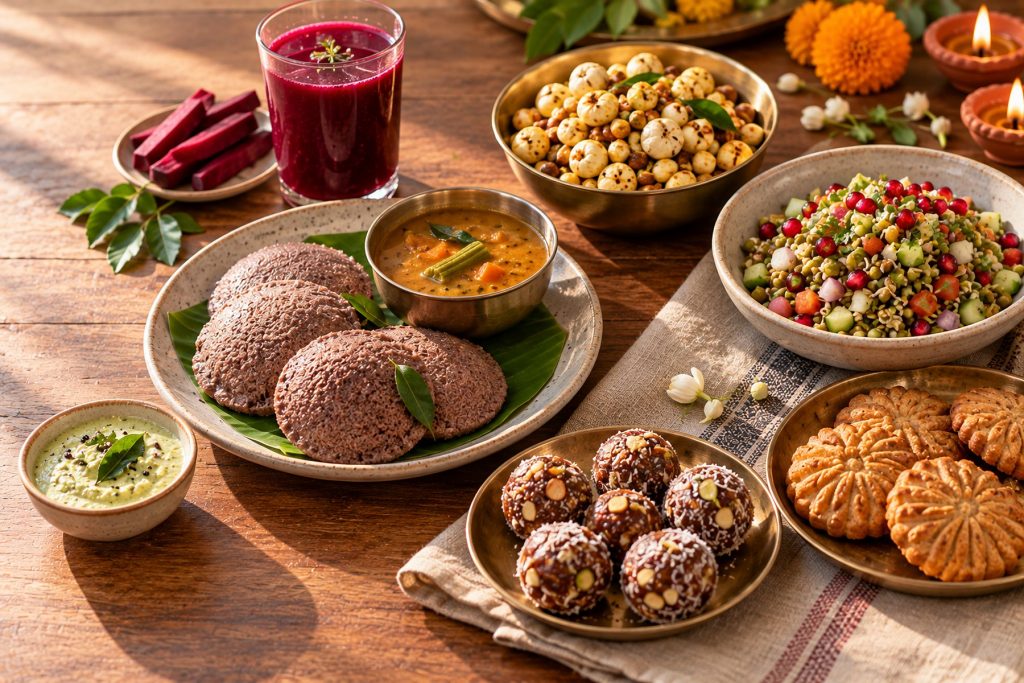
With Diwali on 8 November and Chhath Puja from 13 to 16 November, it’s a good moment to try a few of these trending recipes, made in ways that support your health rather than undo it. Here are seven worth cooking this season, why each one is trending, what it does (and doesn’t do) for your health, and a simple way to make it at home.

At a glance

  • Idli is India’s most-searched recipe. Try a ragi idli for extra calcium and fibre.
  • Beetroot kanji is the fermented drink of the moment. Enjoy it as a tasty fermented drink rather than a remedy: a small glass is far more dilute than the beetroot juice used in blood-pressure trials, and it contains added salt.
  • Protein snacks have gone savoury. A homemade roasted chana and makhana chivda gives you protein without packaged extras.
  • Millets are moving into everyday cooking. A ragi or jowar dosa is an easy way in.
  • Chatpata is in. A sprouts chaat packs bold flavour and plant protein. Steam the sprouts lightly, and cook them thoroughly for children, older adults, pregnant women and anyone with weakened immunity.
  • Festive sweets are getting a makeover. Lighter thekua and a dates-and-nuts laddoo keep the tradition but need portion control: they’re still energy-dense.

What’s trending, and how we chose these recipes

We started with two sources of what Indians are actually cooking and buying:

  • Google’s Year in Search 2025 for India, where the top recipe searches included idli, modak, thekua, Ugadi pachadi, beetroot kanji, gond katira and kolukattai. Google’s own summary notes that “classic Idli topped the charts”.
  • 2026 food trend reports. The Godrej Food Trends Report 2026 highlights bold “chatpata” flavours, savoury protein snacks, Indo-modern mithai and “smarter” home cooking, such as millet dosa mixes. Esquire India adds protein-fortified namkeen, functional makhana and millets in everyday foods.

From these, we picked recipes that are trending, easy to make at home with Indian ingredients, and can be made in a genuinely healthier way. We left out trends that rely mainly on packaged products, like collagen drinks and protein ice creams, and seasonal recipes that don’t fit October and November.

7 trending recipes, made healthier

1. Ragi idli

Why it’s trending: idli was India’s most-searched recipe of 2025. Adding ragi ties it to another big trend: millets in everyday food.

The health angle: idli is steamed, not fried, and the fermented batter makes it light and easy to digest for most people. Using ragi (finger millet) in place of some of the rice adds fibre and calcium: ragi provides about 344 mg of calcium per 100 g, far more than rice and other major cereals. Keep expectations realistic, though. Spread across a batch, three ragi idlis give roughly 60 mg of calcium, about 6% of the 1,000 mg a day ICMR–NIN recommends for most adults, so ragi idli adds to your calcium rather than covering it. Serve three or four idlis with a bowl of sambar for protein and vegetables.

You’ll need (makes about 20 idlis): 1 cup ragi flour, 1 cup idli rava, ½ cup whole urad dal, ½ tsp methi seeds, salt to taste.

Method:

  1. Soak the urad dal and methi for 4–5 hours, then grind to a smooth, fluffy batter with a little water.
  2. Rinse the idli rava, squeeze out the water and mix it into the urad batter with the ragi flour and salt. Add water to make a thick, pourable batter.
  3. Cover and leave in a warm place for 8–12 hours, until risen and slightly sour.
  4. Pour into greased idli moulds and steam for 10–12 minutes. Serve with sambar and coconut or tomato chutney.

Tip: ragi idlis are darker and slightly denser than rice idlis. If your family is new to them, start with half the ragi and increase it over time.

2. Beetroot kanji

Why it’s trending: this tangy, fermented North Indian winter drink (traditionally made with black carrots, though the beetroot version is the one going viral) made Google’s 2025 list of top recipe searches, riding the wider interest in gut health and traditional Indian drinks.

The health angle: beetroot is rich in dietary nitrate. A 2022 review of seven trials in people with high blood pressure found beetroot juice lowered systolic blood pressure by about 5 mm Hg on average, though the trials were small and varied. Those studies used concentrated beetroot juice. Kanji uses a couple of beetroots in a litre of water, so a small glass delivers far less nitrate, and kanji itself hasn’t been tested for blood pressure. Fermentation is the more relevant angle: in a small Stanford trial, a 10-week diet rich in fermented foods, including vegetable brine drinks similar to kanji, increased gut microbiome diversity and lowered markers of inflammation. That’s promising but early, so think of kanji as a tasty way to add a fermented food to your day, not a remedy for digestive or blood-pressure problems.

You’ll need (makes about 1 litre): 2 medium beetroots (or 1 beetroot and 2 black carrots), 1 litre boiled and cooled water, 1 tbsp coarsely ground mustard seeds (rai), 1 tsp black salt or regular salt, ½ tsp red chilli powder (optional).

Method:

  1. Peel the beetroots and cut into thin sticks.
  2. Put them in a clean, dry glass jar with the mustard, salt and chilli. Pour in the water and stir with a clean spoon.
  3. Cover with a muslin cloth or loose lid and leave in a warm spot for 3–5 days, stirring once a day, until pleasantly tangy.
  4. Strain, refrigerate and drink within a week. Have a small glass (about 100–150 ml) with a meal.

Tip: use a very clean jar and spoon, and throw the batch away if you see mould or it smells unpleasant. The recipe uses about a teaspoon of salt per litre, so one small glass adds only a little, but it adds up alongside pickles, papad and namkeen; keep to one glass if you’ve been told to limit salt. Beetroot is also high in oxalate. That isn’t a concern for most healthy people, but if you’ve had kidney stones, check with your doctor before making kanji a daily drink. Pink urine after eating beetroot is common and harmless.

3. Protein-rich makhana and chana chivda

Why it’s trending: protein has “gone namkeen”. Food trend reports describe a shift from sweet protein bars to savoury, street-food-style protein snacks, and makhana is a favourite base.

The health angle: a homemade version gives you control over the oil and salt that packaged namkeen often hides. Roasted chana brings plant protein and fibre (pulses contain about 20–25% protein), peanuts and seeds add protein and healthy fats, and makhana adds crunch and volume.

You’ll need (makes about 8 servings of 30 g): 2 cups makhana, 1 cup roasted chana, ½ cup peanuts, 2 tbsp pumpkin or sunflower seeds, 2 tsp oil, 10–12 curry leaves, ¼ tsp turmeric, ½ tsp red chilli powder, 1 tsp chaat masala, salt only if needed.

Method:

  1. Dry-roast the makhana in a heavy pan on low heat for 6–8 minutes, until crisp. Set aside. Roast the peanuts and seeds the same way.
  2. Heat the oil, add the curry leaves and turmeric, then add everything back with the roasted chana.
  3. Turn off the heat, sprinkle over the chilli powder and chaat masala, and toss well. Taste before adding salt: chaat masala already contains plenty.
  4. Cool completely and store in an airtight jar for up to a week.

Tip: pre-portion it into small boxes; about 30 g (a small handful) is a sensible snack. Whole nuts and hard, crunchy snacks are a choking risk for young children, and NHS guidance is that whole nuts shouldn’t be given to children under 5, so leave out the peanuts or crush the mix for little ones. Skip the peanuts altogether for anyone with a peanut allergy. For more ideas, see our 5-minute healthy snacks for work and home.

4. Chatpata sprouts chaat

Why it’s trending: bold, layered “chatpata” flavours are one of 2026’s biggest food trends, along with a renewed love of regional street food.

The health angle: sprouted moong is a pulse, so it’s a good source of plant protein and fibre (read more in our guide to why pulses are good for you). Fresh vegetables, lemon and spices bring the flavour without frying, and the vitamin C in lemon, tomato and pomegranate helps your body absorb the iron in the moong.

You’ll need (serves 2): 1½ cups moong sprouts, 1 small onion, 1 tomato, ½ cucumber (all finely chopped), 2 tbsp pomegranate seeds, 1 green chilli (optional), juice of ½ lemon, 1 tsp chaat masala, ½ tsp roasted jeera powder, fresh coriander.

Method:

  1. To sprout at home, soak whole moong for 8–10 hours, drain, then cover or tie in a damp cloth for 1–2 days until short shoots appear, rinsing them in clean water twice a day. Refrigerate once sprouted and use within a day or two; discard any that smell sour or feel slimy.
  2. Steam or boil the sprouts for 3–4 minutes and cool. For children, older adults, pregnant women and anyone with weakened immunity, boil them until fully soft instead.
  3. Mix with the vegetables, pomegranate, chilli, lemon juice and spices. Serve straight away.

Tip: raw sprouts can carry bacteria such as E. coli and Salmonella. Health Canada advises children, older adults, pregnant women and people with weakened immunity to avoid raw sprouts, so the light cooking step is worth keeping for everyone.

5. Instant jowar dosa

Why it’s trending: “home cooking, but smarter” is a major 2026 trend: busy families are combining quick bases, such as millet dosa mixes, with their own fresh touches. Millets like jowar are also moving from regional staples into everyday foods.

The health angle: jowar (sorghum) is a whole grain and naturally gluten-free. (If you have coeliac disease, choose flour labelled gluten-free, as millets can pick up wheat during milling.) This instant version needs no fermentation, so it’s a quick weekday breakfast or dinner. Add vegetables to the batter, and pair it with sambar, a dal or an egg for protein.

You’ll need (makes 6–7 dosas): 1 cup jowar flour, ¼ cup rice flour, ¼ cup curd, 1 small onion and a handful of coriander (finely chopped), 1 green chilli, ½ tsp jeera, salt to taste, about 1½–2 cups water, a little oil for the pan.

Method:

  1. Whisk the flours, curd, salt and water into a thin, lump-free batter, like rava dosa batter. Stir in the onion, coriander, chilli and jeera. Rest for 15 minutes.
  2. Heat a tawa until hot, then lower the heat. Stir the batter and pour it from a height in a circle, filling the gaps.
  3. Drizzle a few drops of oil around the edge and cook until crisp and golden. Fold and serve.

Tip: if you use a ready-made millet mix, check the label. Some contain a lot of salt, or more refined flour than millet.

6. Lighter thekua

Why it’s trending: thekua, the crunchy, jaggery-sweetened offering made for Chhath Puja, was one of India’s top recipe searches in 2025. With Chhath falling on 13–16 November this year, interest will peak again.

The health angle: thekua is traditionally made with whole wheat flour, jaggery and ghee, then deep-fried. For the puja itself, follow your family’s tradition. For everyday snacking through the season, a baked version cuts the oil considerably while keeping the flavour, though the texture is a little more biscuit-like. Remember that jaggery is still a sugar, so this remains a treat.

You’ll need (makes about 15): 1 cup whole wheat flour, 2 tbsp semolina (sooji) or extra whole wheat flour, 2 tbsp desiccated coconut, ½ tsp fennel seeds (saunf), ¼ tsp cardamom powder, 2 tbsp ghee, about ½ cup grated jaggery melted in ¼ cup warm water.

Method:

  1. Mix the flour, sooji, coconut, fennel and cardamom. Rub in the ghee until the mixture looks like breadcrumbs.
  2. Add the cooled jaggery water a little at a time to make a firm dough.
  3. Shape into small discs and press each into a thekua mould or the back of a fork to make a pattern.
  4. Bake at 180°C for 20–25 minutes, turning once, until golden and firm. (You can also use an air fryer.) Cool fully before storing.

Tip: make them small. One or two thekua with a cup of tea is a better fit than a handful.

7. Dates and nuts laddoo with an Indo-modern twist

Why it’s trending: traditional mithai is getting an “Indo-modern” makeover, with familiar sweets given new flavours and textures. With Diwali on 8 November, this is an easy way to join in.

The health angle: these laddoos contain no refined sugar, and the nuts and seeds add fibre, protein and healthy fats. But dates are naturally high in sugar, and once they’re blended into a paste, NHS guidance counts that sugar as “free sugar”, the kind adults are advised to keep below 30 g a day. Nuts are energy-dense too, so this is still a sweet, not a health food. If you have diabetes, count it as a sweet and check with your doctor or dietitian about portions.

You’ll need (makes about 15 small laddoos): 1 cup soft seedless dates, ¾ cup mixed nuts (almonds, cashews, walnuts), 2 tbsp roasted seeds (sunflower, pumpkin or flax), 1 tbsp desiccated coconut, ¼ tsp cardamom powder. For the twist, add the grated zest of 1 orange, or 1 tbsp unsweetened cocoa powder.

Method:

  1. Dry-roast the nuts for 4–5 minutes on low heat, cool and chop coarsely.
  2. Blend or mash the dates into a sticky paste. If they’re dry, soak them in warm water for 10 minutes first.
  3. Mix the dates with the nuts, seeds, cardamom and your chosen twist.
  4. Grease your palms lightly and roll into small balls, about the size of a walnut. Roll in coconut and refrigerate for up to a week.

Tip: make them small and serve one at a time. Gifting a box this Diwali? These make a thoughtful alternative to heavily sugared mithai.

Trend or hype? 5 quick checks

Not every trending food is a healthy one, and “healthy” on a label doesn’t always mean much. Before you jump on the next food trend, ask:

  1. What’s actually in it? A “high-protein” namkeen can still be fried and salty. Read the ingredients list and the salt, sugar and fat per serving, not just the protein claim on the front of the pack.
  2. Is the sugar just renamed? Jaggery, honey, dates and coconut sugar are still sugars. They’re fine in a festive sweet, but they don’t turn it into a health food.
  3. Does the claim match the evidence? Words like “gut-healing”, “detox” or “immunity-boosting” are easy to print and hard to prove. Fermented foods are promising for gut health, for example, but the research is still early.
  4. Is it a whole food or a product? The healthiest trends usually bring back whole ingredients, such as millets, pulses, vegetables and fermented foods, rather than new packaged products.
  5. Can you keep it up? A trend is only useful if it fits your week. Ragi idli or a sprouts chaat you’ll make every week beats an expensive superfood you’ll buy once. Our meal-prep guide shows how to make healthy food the easy option.

The bottom line

The best food trends of the moment aren’t really new. Idli, kanji, thekua, sprouts and millets have been part of Indian kitchens for generations; what’s changed is how we’re rediscovering them. Cook them at home, keep the oil, salt and sugar in check, and enjoy festive treats in sensible portions, and these trending recipes can be a genuinely healthy addition to your season.

Pro Tip: Use the GOQii App to log your meals through the festive season and keep an eye on how often sweets and fried snacks creep in. Your GOQii Personalised Health Coach can help you adapt your favourite recipes and plan a festive week that still fits your health goals.

Frequently asked questions

What are the trending recipes in India right now?

According to Google’s Year in Search 2025, India’s top recipe searches included idli, modak, thekua, Ugadi pachadi, beetroot kanji, gond katira and kolukattai, with idli at number one. In 2026, food trend reports highlight high-protein savoury snacks, millet-based meals, bold chatpata flavours and modern twists on traditional mithai.

Is ragi idli healthier than regular idli?

Both are steamed and light. Ragi idli adds finger millet, which is rich in calcium and adds fibre, so it makes a nutritious swap. For a balanced meal, serve either kind with sambar and vegetables.

Is beetroot kanji good for you?

It can be a healthy addition in small amounts. Beetroot juice has modestly lowered blood pressure in trials, but a small glass of kanji is far more dilute, so enjoy it mainly as a tasty fermented drink. Fermented foods are being studied for gut health, but the research is still early, and kanji contains added salt, so keep portions small.

Are packaged high-protein snacks healthy?

Some are, but many are still fried or high in salt. Check the ingredients and the salt, fat and sugar per serving, not just the protein claim. A homemade roasted chana and makhana chivda lets you control what goes in.

Is it safe to eat raw sprouts?

Raw sprouts can carry bacteria such as E. coli and Salmonella. Children, older adults, pregnant women and people with weakened immunity should avoid them raw. Cook sprouts thoroughly for these groups; for everyone else, steaming or boiling for a few minutes reduces the risk.

Are dates laddoos healthy for people with diabetes?

They have no refined sugar, but dates are naturally high in sugar, and once blended into a paste their sugar counts as “free sugar” under UK NHS guidance. They will still raise blood sugar. If you have diabetes, treat them as a sweet, keep to one small laddoo and check portions with your doctor or dietitian.

How can I eat healthily during Diwali without missing out?

Enjoy your favourite sweets in small portions, choose baked or steamed snacks where you can, fill up on balanced home-cooked meals, and keep moving. Recipes like ragi idli, sprouts chaat and baked thekua let you join in the festivities while eating well.

#BeTheForce

Disclaimer: The information provided in this blog is for general awareness and educational purposes only. It is not intended to replace professional medical advice, diagnosis, or treatment. Always consult a qualified healthcare provider for personalised medical guidance or concerns related to your health.

October 29, 2026 By GOQii Leave a Comment

World Stroke Day 2026: Know the Signs, Act FAST

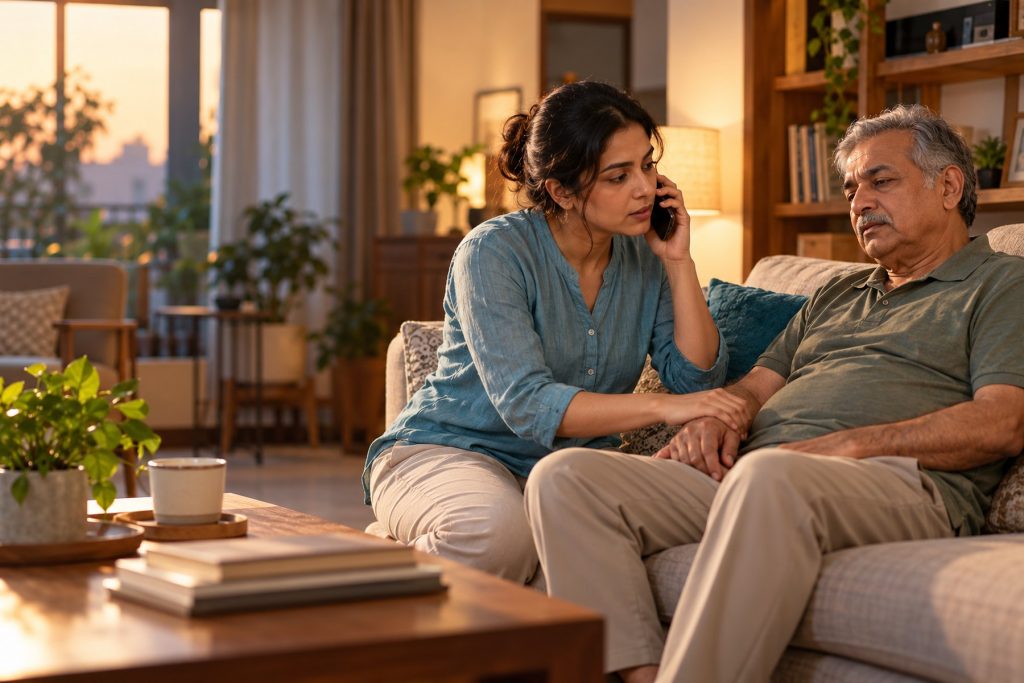
Your father is at the dinner table and halfway through a sentence his words come out jumbled. One corner of his mouth droops. A minute later he says he feels fine and wants to lie down. What do you do?
For a stroke, what you do next, and how quickly, can decide whether someone recovers or lives with lasting disability. Yet many families in India wait to see if things settle, call a relative first, or give a tablet at home. Precious hours are lost.

World Stroke Day, held every year on 29 October and led by the World Stroke Organization, is about changing that. Its message is simple: learn the signs of a stroke and act fast to get emergency care. This guide explains how to spot a stroke, what to do in the first few minutes, and the everyday steps that can lower your risk.

At a glance

  • Stroke is common: globally, 1 in 4 adults over 25 will have a stroke in their lifetime.
  • India’s burden is rising: India recorded over 25 million new strokes in 2021, about 51% more than in 1990.
  • It isn’t only an older person’s illness: in an ICMR registry, about 1 in 7 stroke patients was under 45.
  • Learn BE FAST: Balance, Eyes, Face, Arms, Speech, Time to call for help.
  • Every minute counts: clot-busting treatment generally works best within 4.5 hours of symptoms starting, but in India only about 1 in 5 patients reaches hospital in that window.
  • Most strokes are linked to risks you can change: high blood pressure is the biggest one, so know your numbers.

What is a stroke?

A stroke happens when the blood supply to part of the brain is cut off. Without oxygen and nutrients, brain cells in that area begin to die within minutes. That’s why a stroke is a medical emergency, in the same way a heart attack is.

There are two main types:

  • Ischaemic stroke: a clot blocks an artery supplying the brain. This is the most common type worldwide. In India’s national stroke registry, it made up about 60% of cases.
  • Haemorrhagic stroke: a blood vessel in or around the brain bursts and bleeds. In the same registry, bleeding inside the brain accounted for about 34% of strokes, a higher share than is typical in many high-income countries.

This difference matters in an emergency. The two types can look identical from the outside, and only a brain scan can tell them apart. Treatments that dissolve a clot could make a bleed worse, which is why nobody should give medicine at home “just in case”.

What about a mini-stroke (TIA)?

A transient ischaemic attack, or TIA, is caused by a temporary blockage. Its symptoms are the same as a stroke but they pass, usually within minutes to a few hours and always within 24 hours.

It’s tempting to brush a TIA off because the person feels normal again. Don’t. The NHS describes a TIA as a warning sign that a full stroke may follow soon. At the time, no one can tell whether symptoms will pass or turn into a stroke, so treat every episode as an emergency. If symptoms have already passed and you didn’t get help, see a doctor the same day.

Know the signs: BE FAST

Stroke symptoms come on suddenly. The best-known memory aid is FAST. Many hospitals now teach an extended version, BE FAST, which adds balance and eye problems that FAST alone can miss.

Letter Look for
B – Balance Sudden dizziness, loss of balance or coordination, trouble walking
E – Eyes Sudden blurred or double vision, or loss of sight in one or both eyes
F – Face One side of the face droops; ask them to smile
A – Arms One arm is weak or numb; ask them to raise both arms and see if one drifts down
S – Speech Slurred or jumbled speech, or difficulty finding or understanding words
T – Time Time to call an ambulance immediately, and note the time symptoms started

Other warning signs

The NHS also lists:

  • sudden weakness or numbness down one side of the body, including a leg
  • confusion or memory loss
  • a sudden, severe headache
  • feeling or being sick

You don’t need all the signs. Even one sudden symptom is enough to act. And if symptoms go away, still get emergency help: it could be a TIA.

Women and younger adults

Women have the classic symptoms too, but a review of studies found they were somewhat more likely to also report headache or fatigue. These less specific symptoms can delay recognition, so don’t let them distract from a drooping face, weak arm or slurred speech.

Younger people often assume a stroke can’t happen to them, and symptoms get put down to stress, migraine or tiredness. In India’s national stroke registry, 13.8% of patients were under 45. Age is no reason to wait.

Why speed matters so much

During a typical untreated ischaemic stroke, the brain is estimated to lose about 1.9 million nerve cells every minute. Doctors sum this up as “time is brain”.

The main emergency treatments are time-limited:

  • Clot-busting medicine (thrombolysis): for suitable patients with an ischaemic stroke, it is usually given within 4.5 hours of symptoms starting, and the earlier the better.
  • Clot removal (thrombectomy): a specialist threads a thin tube through an artery to pull out a large clot. In carefully selected patients, it can help up to 24 hours after symptoms begin, but it’s only available at some hospitals.

Both need a brain scan first to rule out bleeding. This is where India loses most ground. In the ICMR registry, only 20.1% of patients reached hospital within 4.5 hours, 37.8% arrived more than a day later, and just 4.6% of those with an ischaemic stroke received clot-busting treatment. Late arrival was the main reason eligible patients missed out.

What to do if you suspect a stroke

Do

  1. Call an ambulance straight away. In India, dial 108 (the free emergency ambulance service in most states) or 112, the national emergency number. Say clearly that you think it is a stroke.
  2. Note the time symptoms started, or the last time the person was seen well. If they woke up with symptoms, it’s the time they went to sleep. Doctors need this to decide on treatment.
  3. Head for a hospital that can treat stroke. If you have to travel yourself, go to the nearest hospital with a CT scan and emergency stroke care, not a local clinic. It helps to find out now which hospitals near you offer this.
  4. Keep the person safe and comfortable. If they are drowsy or vomiting, lay them on their side with the head slightly raised and loosen tight clothing.
  5. Take their medicines list with you, especially blood thinners, and any recent reports.
  6. Start CPR if they become unresponsive and are not breathing normally.

Don’t

  • Don’t give aspirin or any other medicine. If the stroke is a bleed, a blood thinner could make it worse.
  • Don’t give food or water, not even a sip. A stroke can affect swallowing, and food or liquid can go into the lungs.
  • Don’t wait to see if it passes, or call family members before calling for help.
  • Don’t let the person drive, even if they insist they are fine.
  • Don’t try home remedies, such as pricking fingers or applying pressure points. They waste time that the brain doesn’t have.

Lowering your risk: the factors you can change

Some stroke risks can’t be changed, such as age, family history or a past stroke. But most of the risk lies elsewhere. The Global Burden of Disease study estimates that 84% of the global stroke burden is linked to risk factors that can be modified. The large INTERSTROKE study across 32 countries reached a similar conclusion: ten modifiable factors accounted for about 90% of stroke risk.

1. Blood pressure: the biggest one

High blood pressure is the single most important risk factor for stroke worldwide, and it usually causes no symptoms. In India’s stroke registry, nearly 3 in 4 patients had hypertension. Meanwhile, NFHS-5 found raised blood pressure in about 22.5% of women and around a quarter of men aged 15 and over, and many people don’t know they have it.

What helps: get your blood pressure checked at least once a year from adulthood, and more often if it is raised. If your doctor prescribes medicine, take it every day, even when you feel well. Stopping it on your own is a common, and risky, mistake.

2. Salt

Eating too much salt raises blood pressure. The WHO advises adults to have less than 5 g of salt a day, about one level teaspoon, and most Indians eat well above this. Much of it comes from pickles, papad, namkeen, sauces, instant noodles and restaurant food, not just the salt shaker. Cooking with less salt, tasting before adding more, and using lemon, herbs and spices for flavour all add up.

3. Tobacco in any form

Smoking and smokeless tobacco both damage blood vessels. In the ICMR registry, 22.6% of stroke patients smoked and 28.5% used smokeless tobacco such as gutka or khaini. Quitting lowers your risk, whatever your age, and the national tobacco quitline (1800-11-2356) offers free support.

4. Diabetes and cholesterol

Diabetes was present in over a quarter of patients in the Indian registry, and high LDL (“bad”) cholesterol is among the top five global risk factors. Both can be picked up by simple blood tests. If you have either, keeping them in your target range with your doctor’s guidance lowers stroke risk.

5. An irregular heartbeat

Atrial fibrillation (AF) is an irregular, often fast, heart rhythm that can let clots form in the heart and travel to the brain. It makes a stroke about five times more likely. If you notice palpitations or an irregular pulse, see a doctor; treatment, often with blood thinners, can greatly reduce the risk.

6. Diet, weight and activity

A diet built around vegetables, fruit, whole grains and pulses, with less fried and ultra-processed food, supports healthy blood pressure, cholesterol and weight. Regular movement helps all three. Aim for at least 150 minutes of moderate activity, such as brisk walking, each week; it can lift your mood too.

7. Alcohol and stress

Heavy drinking raises blood pressure and the risk of both types of stroke; less is better, and none is safest. Long-term stress was also among INTERSTROKE’s risk factors, so making time to recover matters.

8. Air pollution

Outdoor and household air pollution are both among the top five global risk factors for stroke, and this is especially relevant in India as winter smog sets in. On high-pollution days, limit outdoor exercise, especially near traffic, and use cleaner cooking fuels where possible.

Life after a stroke

Recovery looks different for everyone. Some people recover within days or weeks; for others, it can take months or years, and some changes may be lasting.

Rehabilitation is part of treatment, not an optional extra. Depending on what the stroke has affected, it may include:

  • physiotherapy to rebuild strength, balance and movement
  • speech and language therapy for speaking, understanding and swallowing
  • occupational therapy to manage daily tasks such as dressing, cooking and getting back to work
  • support for memory, concentration, tiredness, low mood and anxiety, which are common and treatable after a stroke

Ask the treating team for a clear rehab plan before discharge, and keep practising the exercises at home. Progress can continue well after the first few months.

Preventing a second stroke

Anyone who has had a stroke or TIA is at higher risk of another one. The same steps that prevent a first stroke matter even more now: take prescribed medicines (such as blood thinners, blood pressure and cholesterol medicines) regularly, keep follow-up appointments, stop tobacco, and stay as active as you safely can.

For caregivers

In India, much of stroke care happens at home, usually by family. Caring for someone after a stroke can be tiring and lonely. Learn the basics from the therapy team, share tasks within the family, and look after your own sleep, food and health too. If you feel low or overwhelmed, Tele-MANAS (14416) offers free, confidential support.

The bottom line

A stroke gives little warning, but it does give signs. Learn BE FAST and share it with your family, especially older parents and the people who care for them. If you see even one sudden sign, call 108 or 112 straight away, note the time, and don’t give medicine, food or water. Then take care of the risks you can control, starting with knowing your blood pressure. This World Stroke Day, a few minutes spent learning the signs could give someone their life back.

Pro Tip: Use the GOQii App to log your blood pressure, steps, sleep and meals, so you and your doctor can see the trends that matter. Your GOQii Personalised Health Coach can help you build steady habits, from cutting back on salt to moving more and quitting tobacco.

Frequently asked questions

What are the first signs of a stroke?

Stroke symptoms start suddenly. Use BE FAST: loss of Balance, Eye or vision problems, Face drooping, Arm weakness, Speech difficulty, and Time to call an ambulance. Sudden numbness on one side, confusion or a severe headache can also be signs.

What should I do if someone is having a stroke?

Call an ambulance immediately on 108 or 112 and say you suspect a stroke. Note the time symptoms started. Don’t give aspirin, any other medicine, food or water, and don’t wait to see whether symptoms improve.

Should I give aspirin to someone having a stroke?

No. Some strokes are caused by bleeding in the brain, and aspirin could make bleeding worse. Only a brain scan in hospital can show which type of stroke it is, so leave all medicines to the doctors.

What is the golden hour for a stroke?

The sooner treatment starts, the better. Clot-busting medicine is usually given within 4.5 hours of symptoms starting, and some patients can have a clot removed up to 24 hours later. Getting to hospital within the first hour gives the best chance of treatment.

Can young people have a stroke?

Yes. In India’s national stroke registry, about 1 in 7 stroke patients was under 45. High blood pressure, tobacco, diabetes and some heart conditions can cause strokes at younger ages, so never dismiss sudden symptoms because of age.

What is a mini-stroke, and is it serious?

A mini-stroke, or transient ischaemic attack (TIA), causes stroke symptoms that go away within 24 hours. It is serious because it can be a warning that a full stroke may follow soon. Get emergency help even if symptoms pass.

How can I reduce my risk of stroke?

Most stroke risk is linked to factors you can change. Check and control your blood pressure, eat less salt, avoid all tobacco, stay active, limit alcohol, and manage diabetes, cholesterol and any irregular heartbeat with your doctor.

#BeTheForce

Disclaimer: The information provided in this blog is for general awareness and educational purposes only. It is not intended to replace professional medical advice, diagnosis, or treatment. Always consult a qualified healthcare provider for personalised medical guidance or concerns related to your health.

October 28, 2026 By Urvi Gohil Leave a Comment

Healthy Diwali Recipe: Dates Roll with Seeds

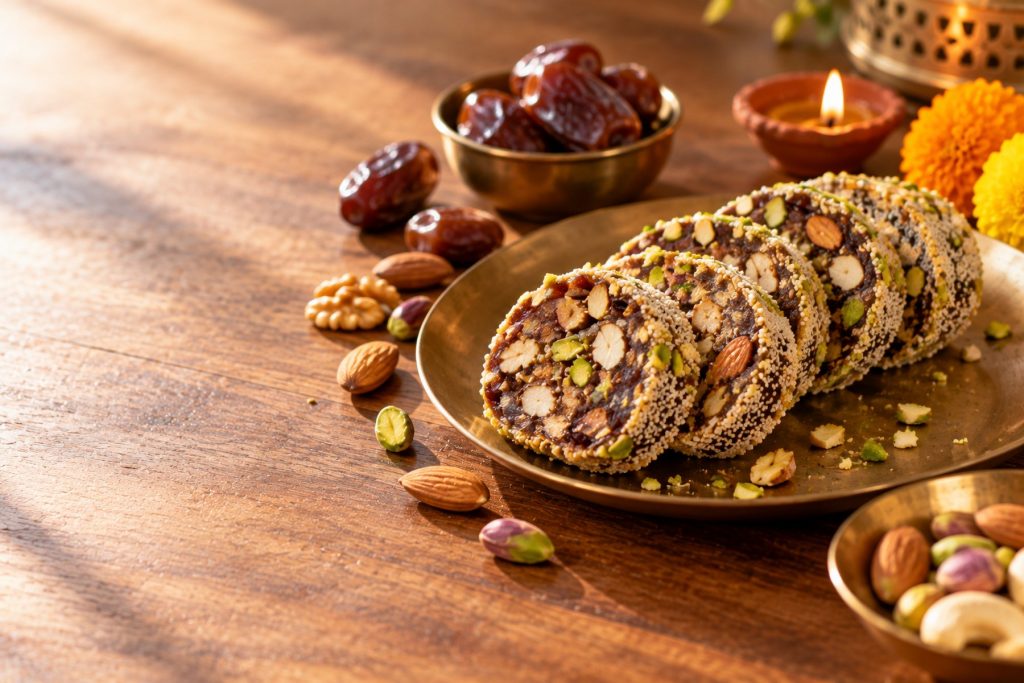
Diwali and mithai go hand in hand, and that’s part of the joy of the festival. If you’d like something a little lighter on your table or in your gift boxes this year, this dates roll with seeds is a lovely option. It’s sweetened only with dates, packed with nuts and seeds, needs no frying, and slices into pretty rounds that look as festive as any barfi.
We’ve updated our original recipe to use fewer dates and more nuts and seeds, so each slice is better balanced. One thing hasn’t changed: dates are naturally very sweet, so this is still a sweet, best enjoyed one slice at a time.

At a glance

  • Makes: about 28 slices | Time: 25 minutes, plus 2 hours to chill
  • No added sugar: the sweetness comes from dates, which are naturally rich in sugar and fibre.
  • Better balance: nuts and seeds add protein, healthy fats and crunch, and help make a small slice satisfying.
  • Portion matters: one slice has roughly 7 g of sugar (about 1½ teaspoons), so enjoy one or two, not a handful.
  • Diabetes: dates are a low-GI fruit, but they still raise blood sugar. Count a slice as a sweet and check portions with your doctor or dietitian.
  • Keeps well: up to a week in the fridge, which makes it ideal for Diwali gift boxes.

Dates roll with seeds: recipe

Makes: about 28 slices (1 cm thick) | Prep: 15 minutes | Cook: 6–10 minutes | Chill: 2 hours (or overnight)

Ingredients

  • 300 g soft seedless dates (about 2 cups)
  • 30 g walnuts, coarsely chopped (about ¼ cup)
  • 30 g almonds, coarsely chopped (about ¼ cup)
  • 20 g cashews, coarsely chopped (about 2 tbsp heaped)
  • 30 g pistachios, coarsely chopped (about ¼ cup), divided
  • 1 tbsp flaxseeds, roasted and coarsely ground
  • 1 tbsp sunflower or pumpkin seeds, roasted
  • 3 tbsp poppy seeds (khus khus), roasted: 1 tbsp for the mix, 2 tbsp for coating
  • ½ tsp cardamom powder
  • 1 tbsp ghee

Method

  1. Roast the nuts and seeds. Dry-roast the walnuts, almonds, cashews and two-thirds of the pistachios in a heavy pan on low–medium heat for 3–4 minutes, stirring, until fragrant. Tip them out. Lightly roast the flax and sunflower seeds for a minute, then the poppy seeds for just 30–60 seconds, as they burn quickly. Once cool, grind the flaxseeds coarsely.
  2. Make the date paste. If your dates are dry, soak them in warm water for 10 minutes, then drain and pat them completely dry: extra water makes the roll too soft to set. Pulse in a mixer to a coarse, sticky paste.
  3. Cook the paste. Heat the ghee in the same pan, add the date paste and cook on low heat for 4–6 minutes, stirring, until it softens, comes together and starts to leave the sides of the pan.
  4. Turn off the heat. Stir in the roasted nuts, flax, sunflower seeds, 1 tbsp poppy seeds and the cardamom until evenly mixed. Let it cool for 2–3 minutes, just until you can handle it.
  5. Divide the mixture in two. With lightly greased hands, shape each half into a log about 4 cm thick and 15 cm long. Work while the mixture is still warm; it firms up as it cools.
  6. Scatter the remaining poppy seeds and pistachios on a plate or board and roll each log over them, pressing gently so they stick.
  7. Wrap each log tightly in butter paper or foil, twist the ends and refrigerate for at least 2 hours, or overnight for the cleanest slices.
  8. Slice and serve. Unwrap and cut into slices about 1 cm thick with a sharp knife, wiping it between cuts. Each log gives about 14 slices.

Storage: keep in an airtight container in the fridge for up to a week. Bring to room temperature for 10 minutes before serving.

Kitchen notes: if it doesn’t come out right

  • Too crumbly to shape? The dates were too dry. Return the mixture to the pan with 1–2 tsp water or ghee, warm for a minute and press together again.
  • Too soft or sticky to hold a log? There’s too much moisture, usually from soaked dates that weren’t dried. Cook the mixture for another 2–3 minutes, or add a spoonful of extra chopped nuts or roasted seeds.
  • Slices crumbling? Chill longer (ideally overnight) and use a sharp, clean knife, wiping it between cuts.
  • Coating not sticking? Roll the logs while they’re still slightly warm and press the poppy seeds and pistachios in firmly.

How healthy is a dates roll, really?

The good

  • No refined sugar. All the sweetness comes from dates, which also bring fibre and potassium. Dried dates contain about 8 g of fibre and 656 mg of potassium per 100 g, according to US Department of Agriculture data.
  • Nuts and seeds add balance. Walnuts, almonds, pistachios and seeds bring protein, healthy unsaturated fats and crunch, which make a small slice more satisfying than a sugar-syrup sweet. Walnuts and flaxseeds also provide plant omega-3 fats; grinding the flaxseeds helps your body use them.
  • No frying, very little ghee. Dry-roasting the nuts means the whole batch needs just 1 tbsp of ghee.

The honest part: it’s still a sweet

Dates are about 63% sugar by weight. By our calculation, the 300 g in this recipe contain roughly 190 g of sugar, or about 7 g per slice (across about 28 slices), around 1½ teaspoons. And once dates are blended into a paste, NHS guidance counts their sugar as “free sugar”, the kind adults are advised to keep below 30 g a day.

Nuts and seeds are also energy-dense, so the slices add up quickly. That doesn’t make this an unhealthy choice; it makes it a sweet. One or two slices is a sensible portion.

If you have diabetes

Dates have a lower glycaemic index (GI) than many people expect. In a small study of five varieties, dates had GI values of about 44–55 in people with and without type 2 diabetes. But low GI doesn’t mean low sugar: the study used 7–10 dates per serving, and the total amount of carbohydrate still matters. If you have diabetes, count a slice as a sweet within your meal plan, have it after a meal rather than on its own, and check with your doctor or dietitian about portions. Checking your own blood sugar response can also help.

Variations

  • Cocoa and orange: add 1 tbsp unsweetened cocoa powder and the grated zest of an orange to the date mixture.
  • Coconut finish: roll the logs in desiccated coconut instead of poppy seeds and pistachios.
  • Anjeer and dates: replace a third of the dates with soaked dried figs (anjeer) for a softer, less sticky roll.
  • Nut-free: use only seeds, such as pumpkin, sunflower, sesame and melon seeds, plus roasted makhana for crunch.
  • Extra protein: add 2 tbsp roasted chana (bhuna chana) powder or peanut powder to the mixture.

Gifting tips

  • Slice just before packing, and line boxes with butter paper so slices don’t stick.
  • Keep gift boxes in the fridge and tell people to refrigerate them too; homemade rolls have no preservatives.
  • Add a small label listing the nuts and seeds, so anyone with an allergy can check before eating.

Who should take care

  • Nut or seed allergies: this recipe contains tree nuts and seeds. Use the nut-free version if needed, and label gifts clearly.
  • Young children: chop the nuts finely for young children, as pieces of hard nuts can be a choking risk, and keep portions small.
  • Diabetes: see the section above. One slice, counted as a sweet, is a sensible starting point; check with your doctor or dietitian.
  • Kidney disease: dates are high in potassium, so if you’ve been told to limit potassium, check with your doctor before eating them regularly.

For more lighter festive ideas, see our 5-minute healthy snacks for work and home.

The bottom line

This dates roll with seeds is a better festive sweet than many: no refined sugar, no frying, and plenty of nuts and seeds. But it’s still a sweet, with about 1½ teaspoons of natural sugar in every slice. Make it, share it, enjoy a slice or two, and let it be part of a Diwali that feels both festive and balanced.

Pro Tip: Use the GOQii App to log your festive treats alongside your meals and activity, so you can enjoy Diwali without losing track. Your GOQii Personalised Health Coach can help you plan the festive week, including how sweets fit in if you’re managing diabetes or weight.

Frequently asked questions

Is a dates roll healthy?

It’s a better choice than many fried or sugar-syrup sweets, as it has no refined sugar, no frying and plenty of nuts and seeds. But dates are naturally high in sugar, so it’s still a sweet. One or two slices is a sensible portion.

How much sugar is in a slice of dates roll?

In this recipe, each of about 28 slices contains roughly 7 g of sugar, around 1½ teaspoons, almost all of it from the dates. Dried dates are about 63% sugar by weight.

Can people with diabetes eat a dates roll?

Dates had a low glycaemic index in a small study, but they still contain a lot of sugar. If you have diabetes, count one slice as a sweet within your meal plan, have it after a meal, and check portions with your doctor or dietitian.

Is a dates roll sugar-free?

No. It has no added refined sugar, but dates are rich in natural sugar. Once blended into a paste, UK NHS guidance counts that sugar as “free sugar”, the kind adults are advised to keep below 30 g a day.

How long does a dates roll last?

Wrapped well and kept in an airtight container in the fridge, it keeps for up to a week. Let slices sit at room temperature for 10 minutes before serving.

Can I make a dates roll without nuts?

Yes. Replace the nuts with seeds such as pumpkin, sunflower, sesame and melon seeds, and add roasted makhana for crunch. Check every ingredient label if you’re cooking for someone with a severe allergy.

Can I make it without ghee?

Yes. You can cook the date paste in a non-stick pan without any fat, or skip cooking it and simply knead the paste with the roasted nuts and seeds. The roll will be a little stickier but will still set in the fridge.

#BeTheForce

Disclaimer: The information provided in this blog is for general awareness and educational purposes only. It is not intended to replace professional medical advice, diagnosis, or treatment. Always consult a qualified healthcare provider for personalised medical guidance or concerns related to your health.

  • 1
  • 2
  • 3
  • …
  • 6
  • Next Page »

Search

Recent Posts

  • The Early Signs & Symptoms of Diabetes
  • How to Improve Sleep Quality Naturally: 12 Science-Backed Tips for Better Sleep
  • Post-Diwali Reset: Getting Back on Track Without Crash Diets
  • Diwali Safety: First Aid for Burns and Firecracker Injuries, and Protecting Your Lungs from Smoke
  • Cancer Screening: Which Tests You Need and When

Stay Updated

Archives

  • November 2026 (11)
  • October 2026 (23)
  • September 2026 (5)
  • August 2026 (8)
  • July 2026 (24)
  • June 2026 (22)
  • May 2026 (20)
  • April 2026 (24)
  • March 2026 (18)
  • February 2026 (14)
  • January 2026 (14)
  • December 2025 (19)
  • November 2025 (14)
  • October 2025 (17)
  • September 2025 (6)
  • August 2025 (5)
  • July 2025 (9)
  • June 2025 (18)
  • May 2025 (16)
  • April 2025 (22)
  • March 2025 (25)
  • February 2025 (21)
  • January 2025 (25)
  • December 2024 (21)
  • November 2024 (21)
  • October 2024 (15)
  • September 2024 (22)
  • August 2024 (27)
  • July 2024 (14)
  • June 2024 (23)
  • May 2024 (26)
  • April 2024 (27)
  • March 2024 (27)
  • February 2024 (23)
  • January 2024 (21)
  • December 2023 (14)
  • November 2023 (10)
  • October 2023 (18)
  • September 2023 (20)
  • August 2023 (16)
  • July 2023 (16)
  • June 2023 (21)
  • May 2023 (20)
  • April 2023 (19)
  • March 2023 (23)
  • February 2023 (19)
  • January 2023 (15)
  • December 2022 (11)
  • November 2022 (15)
  • October 2022 (15)
  • September 2022 (12)
  • August 2022 (9)
  • July 2022 (17)
  • June 2022 (11)
  • May 2022 (10)
  • April 2022 (6)
  • March 2022 (6)
  • February 2022 (13)
  • January 2022 (11)
  • December 2021 (7)
  • November 2021 (3)
  • October 2021 (6)
  • September 2021 (3)
  • August 2021 (8)
  • July 2021 (7)
  • June 2021 (15)
  • May 2021 (16)
  • April 2021 (10)
  • March 2021 (7)
  • February 2021 (4)
  • January 2021 (4)
  • December 2020 (3)
  • November 2020 (4)
  • October 2020 (10)
  • September 2020 (3)
  • August 2020 (3)
  • July 2020 (2)
  • June 2020 (4)
  • May 2020 (10)
  • April 2020 (12)
  • March 2020 (10)
  • February 2020 (4)
  • January 2020 (4)
  • December 2019 (3)
  • November 2019 (7)
  • October 2019 (5)
  • September 2019 (4)
  • August 2019 (9)
  • July 2019 (9)
  • June 2019 (11)
  • May 2019 (4)
  • April 2019 (8)
  • March 2019 (8)
  • February 2019 (9)
  • January 2019 (8)
  • December 2018 (9)
  • November 2018 (3)
  • October 2018 (3)
  • September 2018 (5)
  • August 2018 (10)
  • July 2018 (6)
  • June 2018 (13)
  • May 2018 (8)
  • April 2018 (17)
  • March 2018 (9)
  • February 2018 (8)
  • January 2018 (15)
  • December 2017 (12)
  • November 2017 (19)
  • October 2017 (13)
  • September 2017 (15)
  • August 2017 (4)
  • July 2017 (8)
  • June 2017 (7)
  • May 2017 (6)
  • April 2017 (8)
  • March 2017 (6)
  • February 2017 (7)
  • January 2017 (9)
  • December 2016 (10)
  • November 2016 (7)
  • October 2016 (7)
  • September 2016 (7)
  • August 2016 (11)
  • July 2016 (9)
  • June 2016 (9)
  • May 2016 (12)
  • April 2016 (17)
  • March 2016 (17)
  • February 2016 (8)
  • January 2016 (6)
  • December 2015 (2)
  • November 2015 (9)
  • October 2015 (7)
  • September 2015 (9)
  • August 2015 (11)
  • July 2015 (9)
  • June 2015 (11)
  • May 2015 (9)
  • April 2015 (13)
  • March 2015 (8)
  • February 2015 (5)
  • January 2015 (12)
  • December 2014 (14)
  • November 2014 (11)
  • October 2014 (6)
  • September 2014 (13)
  • August 2014 (12)
  • July 2014 (6)
  • June 2014 (2)
  • May 2014 (7)
  • April 2014 (4)

From Burnout to Balance: How Dr. Ranjit Reclaimed His Health

Dr Ranjit Bhatt has spent years tending to others. A practising doctor in Odisha, his days were packed with patients, surgeries, and emergencies. From the outside, it looked like a life lived in service. But on the inside, something wasn’t right. “I had no … [Read More...]

From Shimla’s Slopes to Chandigarh’s Sidewalks: Surinder Kaur Bhalla’s Journey from Chaos to Control

Some journeys start with a plan. Others begin with a stumble literally. Surinder Bhalla, a government professional, born and raised in the scenic hill town of Shimla, had always lived a life of movement. “In Shimla, you walked everywhere,” she reflects. “Walking was never an exercise. It was just life.” But after shifting to Chandigarh, […]

“I’ve Challenged Myself to Live 100 Years” – The Story of Chandubhai Savani’s Second Chance at Life

At 67, most people start slowing down. Not Chandubhai Savani. A resident of Surat, Chandubhai, thought life was on track. “My life was going well till I had my bypass surgery,” he says. That surgery, back in 2021, was a wake-up call.  Medication was routine, but exercise wasn’t. His diet? What he calls ‘normal.’ “I […]

Ananda Mukherjee Health Story

From Terminal Illness To Complete Wellness! Ananda Mukherjee Health Story

As we observe World Cancer Day under the powerful theme ‘United by Unique’ (2025-2027)**, we are reminded that every individual’s journey with cancer is distinct, yet united by shared resilience, hope, and the collective fight against this disease. This theme places people at the centre of care and their stories at the heart of the […]

  • HOME
  • HEALTHY LIVING
  • FITNESS
  • HEALTHY RECIPES
  • USER STORIES
  • KARMA
  • BUY GOQii

Copyright ©2016 GOQii