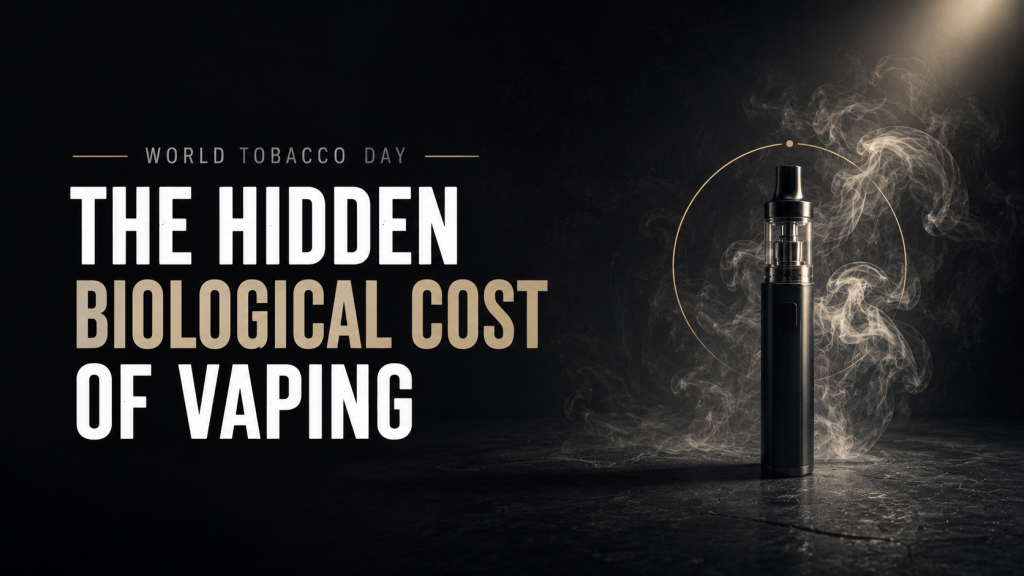
 The Big Question: If e-cigarettes don’t have tobacco, how do they accelerate biological ageing?
The World No Tobacco Day 2026 theme, “Unmasking the Appeal,” highlights how vaping and modern nicotine products are marketed to younger audiences through sleek branding and social media. While many believe e-cigarettes are safer than smoking, research shows that vaping exposes the body to severe oxidative stress, heavy metals, and ultrafine chemical particles. This combination damages blood vessels, impairs lung function, and accelerates cellular biological ageing, actively reducing your long-term healthspan.
Observed every year on May 31st, World No Tobacco Day is a global initiative led by the World Health Organization (WHO) to raise awareness about the dangers of tobacco and nicotine addiction.
But nicotine culture today no longer looks the way it once did.
The 2026 campaign theme “Unmasking the Appeal” directly challenges how vaping is being normalised among younger generations. Lured by candy flavours, sleek designs, and influencer-driven marketing, many young adults have bought into the biggest myth surrounding vaping: that it is “just harmless water vapour.”
It is not. Here is the hidden biological cost of the modern vaping epidemic.
Vaping Is Banned in India – But the Problem Remains
India took a massive step for public health by banning e-cigarettes in 2019 under the Prohibition of Electronic Cigarettes Act, which prohibits the manufacture, import, sale, distribution, storage, and advertisement of vape products.
However, despite the strict ban, vaping devices remain accessible through illegal online channels and informal retail networks. The danger here is not just nicotine addiction; it is the growing normalisation of vaping among younger populations who are entirely unaware of the oxidative stress, cardiovascular strain, and long-term cellular damage these devices cause.
Why Vaping Is Not Harmless
Unlike traditional combustible cigarettes, vape devices heat chemical liquids into an aerosol that is inhaled deep into the lungs. This aerosol contains a toxic payload of nicotine salts, ultrafine particles, artificial flavouring chemicals, heavy metals, and inflammatory compounds.
While vaping may expose users to fewer combustion-related toxins (like tar) than traditional cigarettes, it still places massive, unnatural stress on the human body.
3 Ways Vaping Accelerates Biological Ageing
Biological age reflects how efficiently your cells and organs function not simply how many birthdays you have had chronologically. Vaping actively accelerates that cellular ageing process in three distinct ways:
- Oxidative Stress and Cellular Damage
The heated chemicals inhaled during vaping increase oxidative stress throughout the body. Oxidative stress introduces free radicals that directly damage your DNA, blood vessels, cell membranes, and mitochondrial function. Over time, this accelerates cellular ageing and increases the risk of cardiovascular disease and metabolic dysfunction. Vaping-related oxidative stress also impairs cellular energy production, affecting how efficiently your body recovers and performs.
- Blood Vessel and Lung Damage
Nicotine is a potent vasoconstrictor it causes blood vessels to physically shrink and tighten, reducing healthy circulation and increasing strain on the heart. Simultaneously, repeated exposure to heated aerosol particles inflames the lung tissue and reduces oxygen exchange. Over time, this contributes to:
- Breathlessness and reduced endurance
- Elevated resting blood pressure
- Delayed workout recovery
- Premature skin ageing (due to reduced oxygen flow to the epidermis)
- Dopamine Addiction and Constant Nicotine Exposure
Vaping often becomes highly addictive because of how easily and frequently it can be used. Vapes utilize “nicotine salts,” which absorb rapidly into the bloodstream, creating intense, repeated dopamine spikes that reinforce dependency patterns.
Unlike traditional cigarettes, vape devices allow for continuous micro-dosing, discreet indoor usage, and frequent consumption throughout the day. This strengthens behavioural addiction loops linked to stress, boredom, and anxiety. Supporting stress regulation becomes an essential part of long-term nicotine recovery.
What Happens When You Quit?
The most encouraging news is that the human body is remarkably resilient. It begins repairing itself surprisingly quickly after nicotine exposure stops:
- Within 20 Minutes: Your elevated heart rate and blood pressure begin returning toward normal levels.
- Within 24 Hours: Nicotine levels in the bloodstream drop significantly, flushing out the toxin.
- Within 2–12 Weeks: General circulation and lung function begin to measurably improve, making physical movement easier.
- Within 1–9 Months: Breathing, cardiovascular endurance, and respiratory recovery continue improving as the cilia in your lungs stabilize and clear out mucus.
The Bigger Picture
Modern vaping culture is relentlessly marketed as cleaner, safer, more advanced, and socially acceptable. But beneath the slick branding, vaping exposes the body to severe addiction, systemic inflammation, oxidative stress, and accelerated biological wear.
Protecting your long-term health is not just about avoiding disease decades later. It is about protecting your daily energy, your cardiovascular endurance, and your healthy ageing right now.
Pro Tip: Breaking the cycle of nicotine addiction requires more than just willpower. Use the GOQii App to track your recovery, movement, sleep quality, and heart rate variability (HRV) trends while reducing nicotine use. Your GOQii Personalised Health Coach can help you build healthier routines to manage cravings and support long-term behavioural change naturally!
Frequently Asked Questions (FAQs)
- Is vaping safer than smoking?
While vaping may expose users to fewer combustion-related toxins (like tar and carbon monoxide) than traditional cigarettes, it is not harmless. It still carries significant health risks, including severe oxidative stress, lung inflammation, and cardiovascular strain.
- Why are vapes so addictive?
Vapes often contain “nicotine salts” that absorb rapidly into the bloodstream without the harsh throat burn of traditional tobacco. This creates faster dopamine reinforcement and stronger, more frequent dependency patterns.
- Does vaping affect fitness and workouts?
Yes. Vaping directly reduces lung efficiency, constricts blood vessels, and limits oxygen delivery to the muscles. This severely impairs cardiovascular endurance and delays post-workout recovery.
- Can the body recover after quitting vaping?
Yes. Circulation, lung function, and recovery capacity begin improving within just weeks after quitting nicotine exposure, drastically reducing your long-term disease risk.
#BeTheForce
Disclaimer: This article is intended for educational purposes only. Nicotine addiction is a medical condition. If you are struggling with smoking or vaping cessation, consult a healthcare professional for evidence-based support.
 Getting out of the house has been a task because of the heat. Venturing out means sweating profusely or being dehydrated due to lack of drinking water at continuous intervals. Want to take some extra precautions to keep your body cool and healthy? Try these healthy and refreshing summer coolers to keep you cool and ward off the heat!
 The Big Question: How does extreme summer heat affect the body, and how can I stay healthy?
 Quick Answer


