
GOQii

Blog

  • HOME
  • HEALTHY LIVING
  • FITNESS
  • HEALTHY RECIPES
  • USER STORIES
  • KARMA
  • BUY GOQii

About Luke Coutinho

Head Nutritionist and Master Coach, motivational speaker, published Author of ‘Eat Smart, Move More, Sleep Right – Your personal health coach’, sold globally, Luke has been involved in nutrition and fitness even since he graduated from IHM with specialization in food science and nutrition. Luke is an ‘International Collaborator ‘with the University of Yale, Griffin – Prevention research center, CT, U.S.A and practices in the field of nutrition, health, preventive and alternative treatment. Luke speaks at forums like the YPO, WPO, EO, etc worldwide on disease, nutrition, fitness and lifestyle. He encourages and helps people steer away from conventional medicine and uses natural foods. He believes in a lifestyle change and helps and coaches people to make ‘shifts in their lifestyles to achieve their health goals.

July 10, 2026 By Luke Coutinho 8 Comments

Heal Naturally From Monsoon Illnesses: A Scientific Guide to Seasonal Recovery

heal naturally The Big Question: Why does a sudden change in seasonal weather trigger a wave of respiratory virals, and how can we use our body’s built-in immune mechanics to heal rapidly without over-relying on antibiotics?

With the monsoons here in full swing, most of us worry about catching an infection. As the weather shifts, atmospheric humidity spikes, creating an ideal environment for airborne viruses to stabilize and replicate. The resulting wave of colds, fevers, virals, and sore throats becomes widespread.

A strong, highly responsive immune system is your primary defense line, allowing you to recover quickly and often without the need for heavy suppressive medications. The lower your baseline immunity, the longer the internal healing process stalls, frequently forcing you to resort to antibiotics for secondary bacterial infections. Understanding how to support your biology naturally can accelerate your recovery and strengthen your long-term immune resilience.

The Biology of Seasonal Sickness and Healing

When an airborne viral pathogen enters your respiratory tract, your immune system initiates a highly coordinated defense response. Your body deliberately elevates its core temperature—resulting in a fever—to create an environment where viruses cannot easily replicate, while simultaneously ramping up the production of white blood cells.

During this active immune phase, your body undergoes an acute shift in energy allocation. If you work with these natural defense mechanisms rather than suppressing them immediately with over-the-counter medications, your body can clear the infection cleanly and build robust, long-term immune memory.

6 Proactive Natural Remedies to Accelerate Recovery

  1. The Anti-Inflammatory Phytonutrient Concoction

Nature provides incredibly powerful antiviral and antibacterial compounds within common spices. When compiled correctly, these bio-active ingredients work together to soothe irritated mucous membranes, thin out thick mucus, and block viral replication pathways.

  • The Pathogen-Defense Pathway: Spiced Concoction ⇒ Suppresses Viral Pathogens ⇒ Thins Stubborn Mucus ⇒ Soothes Irritated Respiratory Tract.
  • The Healing-Energy Pathway: Mindful Appetite Rest ⇒ Lowers Digestive Demands ⇒ Redirects Cellular Energy ⇒ Accelerates Immune Recovery.
  • The Herbal Recipe: Take a 1-inch piece of fresh mashed ginger, 1 crushed garlic clove, 3 whole black peppercorns, 2 cloves, 2 cardamoms, and a small cinnamon stick. Boil these ingredients in filtered water until the liquid reduces to half. Strain the mixture into a cup and stir in a teaspoon of raw organic honey once it cools slightly. Drink this warm concoction two to three times a day during acute symptoms.
  1. Respect Your Body’s Natural Fasting Signals

When you fall sick, you will often notice a sudden, sharp decline in your appetite. This is a deliberate, protective biological response. Digesting complex, solid food requires an immense amount of cellular energy.

By naturally lowering your appetite, your brain’s hypothalamus redirects that vital energy away from your digestive tract and routes it entirely toward your immune system to repair cells and fight off pathogens. Listen to your body: avoid forcing heavy meals if you do not feel hungry, and wait until your appetite naturally begins to return.

  1. Maintain Core Body Temperature and Block Thermal Shocks

Vascular constriction occurs when your skin is exposed to sudden cold drops or damp drafts, which can reduce the circulation of protective white blood cells to your upper respiratory tract.

  • The Healthier Habit: Keep your body consistently warm by wearing dry clothing and putting on cotton socks, even while resting in bed. When stepping out into the damp evening air, ensure your head and chest are well covered to prevent sudden changes in body temperature from chilling your airways.
  1. Continuous Warm Hydration

Sipping on hot liquids throughout the day serves as a highly effective mechanical therapy for a congested respiratory system. Warm fluids—whether plain boiled water, herbal teas, or clear vegetable broths—help thin out stubborn mucus blockages, keep your throat tissues hydrated, and flush cellular waste smoothly out of your system.

  1. Maximize Deep Oxygenation Through Breathwork

Most seasonal viruses and anaerobic germs thrive in stagnant, low-oxygen cellular environments. Deep, deliberate diaphragmatic breathing is an excellent natural way to alter your internal chemistry.

By consciously expanding your lung capacity through structured deep breathing exercises multiple times a day, you significantly increase oxygen delivery to your cells, creating an unfavorable environment for multiplying germs.

  1. Protect Absolute Physical Rest

Deep, uninterrupted rest is the ultimate natural cure. When your body is completely at rest, your system can optimize its production of cytokines—specialized signaling proteins that target and destroy viral infections. True cellular healing cannot occur if you try to push through seasonal exhaustion. Honor your body’s call to slow down and sleep.

The Seasonal Illness Recovery Matrix

Active Symptom Profile The Subconscious Lifestyle Mistake The Targeted Natural Alternative
Acute Sore Throat & Congestion Drinking iced water; ignoring environmental drafts. Phytonutrient Decoction: Warm ginger, garlic, and peppercorn infusion to clear pathways.
Loss of Appetite & Nausea Forcing heavy, calorie-dense meals during a fever. Mindful Fasting: Rest the digestive tract; prioritize warm broths until hunger returns.
Chills & Body Aches Staying in damp clothes; exposing extremities to cold. Thermal Protection: Wear warm socks and keep your head covered during damp evenings.

Sickness as an Immune Reboot

It can actually be beneficial to experience a mild seasonal illness once in a while. A minor viral challenge serves as a necessary workout for your immune system. It prompts your bone marrow to replenish its supply of red and white blood cells, updates your antibody library, and sharpens your overall immune response.

Stay positive, keep your spirits high, and trust that your body is executing the exact internal protocols it needs to recover and grow stronger.

True wellness is built by listening to and supporting your body’s natural healing design, rather than forcing it to adapt to a hectic schedule. Seasonal monsoon illnesses are highly treatable when approached with patience, thermal care, targeted botanical infusions, and deep physical rest. By avoiding the immediate use of unprescribed antibiotics and allowing your immune system to do its job naturally, you build a foundation of true, lasting health. Protect your body, rest deeply, and let your natural defenses thrive!

Pro Tip: Navigating seasonal recovery is much easier when you can track your health parameters in real-time. Use the GOQii App to log your symptoms, monitor your daily water intake, and track your restorative sleep cycles. You can seamlessly share this health profile with your GOQii Personalised Health Coach to receive customized lifestyle guidance, recovery meal plans, and immune-support protocols tailored perfectly to your unique body composition!

Frequently Asked Questions (FAQs)

  1. Why does my appetite naturally drop when I catch a monsoon viral fever?

Your appetite decreases during a viral infection because your immune system releases inflammatory signaling proteins called cytokines. These proteins signal your brain to downregulate hunger, shifting your body’s energy consumption away from the energy-heavy process of digestion and redirecting it entirely toward fighting off the virus.

  1. How do the ingredients in the ginger-garlic concoction help treat a sore throat?

Ginger contains gingerol, a powerful compound that reduces tissue inflammation and eases throat pain, while garlic contains allicin, a potent antimicrobial that helps fight respiratory pathogens. Together with the warming effects of black pepper and cloves, this infusion helps break down thick mucus, increases local blood circulation, and forms a protective soothe over irritated airways.

  1. Is it safe to take antibiotics immediately when a monsoon cold or fever starts?

No, taking antibiotics at the immediate onset of a cold or flu is ineffective and can be counterproductive. Colds, flu, and typical monsoon fevers are caused by viral pathogens, and antibiotics are designed to target bacteria exclusively. Misusing antibiotics kills off your beneficial gut microbes—which make up 70% of your immune system—and can contribute to global antibiotic resistance.

  1. Why is keeping my feet warm with socks emphasized during a viral recovery?

Keeping your feet warm helps maintain your core body temperature and prevents sudden, reflexive blood vessel constriction in your upper respiratory tract. Protecting your body from temperature drops ensures that your blood circulation remains active, allowing white blood cells to travel efficiently to your respiratory tissues to fight the infection.

#BeTheForce

Disclaimer: This article is intended for educational and informational purposes only. It is not intended to replace professional medical advice, clinical diagnosis, or personalized treatment plans. Always consult a qualified healthcare provider immediately if your fever remains exceptionally high, if symptoms worsen after 5 days, or if you experience severe difficulty breathing.

March 11, 2026 By Luke Coutinho 9 Comments

Caution: Smoking is Injurious to health!!

No Smoking

With No Smoking Day upon us, there is no better time to evaluate the true impact of this habit. We are all incredibly familiar with this warning. Research consistently indicates that smoking is the number one cause of preventable death globally. By now, most of us are acutely aware of the severe toll it takes on the body.

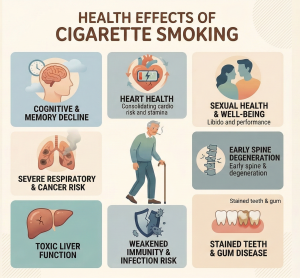
Chronic smoking is directly linked to:

  • Cardiovascular disease
  • Impotence, lack of sexual desire, and inability to perform
  • Various forms of cancer
  • A weakened immune system
  • Severely stained teeth
  • Early degeneration of bones (especially the spine)
  • Reduced lung function and capacity
  • Liver toxicity
  • Reduced stamina and endurance
  • Premature aging

Besides the above, there are several benefits of kicking the butt, apart from of course saving loads of money and time.

Interesting fact: 75% to 85% of smokers want to quit, but simply don’t know how, or find the withdrawal process too daunting.

One of the main reasons it is so hard to stop is because the dangers of continuing, and the benefits of quitting, seem very far away. However, your body begins to heal almost instantly.

The Healing Timeline: What Happens Right Now?

Here is a timeline detailing the immediate and long-term effects of quitting smoking, showing exactly how your body recovers minute by minute, and year by year.

  • In 20 minutes: Your blood pressure and heart rate will drop back down to normal levels.
  • In 8 hours: The carbon monoxide (a toxic gas) levels in your bloodstream will drop by half. Oxygen levels will return to normal, and your metabolism will begin to stabilize.
  • In 48 hours: Your chances of having a heart attack will have already decreased. All nicotine will have left your body. You will also notice your sense of taste and smell returning to normal levels.
  • In 72 hours: Your bronchial tubes will relax. You will notice an increase in your energy levels and lung volume.
  • In 2 weeks: Your blood circulation will increase, and it will continue to improve over the next 10 weeks.
  • In 3 to 9 months: Coughs, wheezing, and breathing problems will dissipate as your lung capacity improves by an impressive 10%.
  • In 1 year: Your risk of suffering a heart attack will have dropped by half compared to a smoker.
  • In 5 years: Your risk of having a stroke returns to that of a non-smoker.
  • In 10 years: Your risk of developing lung cancer will have dropped to that of a non-smoker.
  • In 15 years: Your overall risk of a heart attack will have entirely returned to that of someone who has never smoked.

You have far more immediate benefits to look forward to than you might realize. The healing starts the moment you put out your last cigarette. Make this No Smoking Day the day you finally kick the habit. Quit now!

Nutritional Support for Smokers

If you are currently smoking or in the process of quitting, nutritional support is vital. Smokers should ensure they take Vitamin C regularly, as smoking heavily depletes the body’s natural levels of this crucial antioxidant. Additionally, regular consumption of Curcumin (turmeric extract) is known to help clear nicotine patches from the lungs and is widely studied for its role in possible cancer prevention.

#BeTheForce

Disclaimer: GOQii is committed to providing accurate, up-to-date, and comprehensive health information. This article is intended for informational purposes only and should not be used as a substitute for professional medical advice, diagnosis, or treatment. Always consult a qualified healthcare professional before starting or changing any medication or supplement. Individual responses to treatment may vary.

June 26, 2025 By Luke Coutinho Leave a Comment

Everything You Need To Know About Fiber, Fat Loss and Your Health

fat lossEvery nutritionist will tell you to improve your fibre intake, particularly because of the role it plays in supporting fat loss, reducing the risk of heart disease, and certain cancers. It plays a key role in digestive health and creating a sense of fullness which essentially means that enough fibre can help you manage your weight effectively!

Women should aim for around 25 grams of fibre per day, while men should aim for at least 35 to 40 grams. Yet, the average person consumes just 15 grams a day. The best way to increase your fibre intake is by eating fibre-rich whole foods, not heavily processed options with “added fibre” claims. Simply increasing your intake of fruits, vegetables and wholegrains can naturally boost your daily fibre intake.

How Fibre Supports Fat Loss and Weight Management

Fibre is one of the most natural ways to reduce high cholesterol levels in the body. If you have diabetes, consuming the right amount of fibre can help regulate blood sugar levels, allowing you to enjoy a variety of foods that might otherwise be restricted.

A lack of fibre is a common reason why people experience constipation and we all know constipation isn’t just uncomfortable; it can lead to toxic build-up in the body, sluggish digestion, fat gain, and has even been linked to a higher risk of colon and other cancers.

Why We’re Consuming Less Fibre

One of the main reasons is food processing. Modern methods often strip fibre from food entirely, which is why many packaged foods are considered unhealthy. A useful tip: if a food label shows less than 2 grams of fibre per serving, it’s best avoided. Low-fibre foods can cause blood sugar spikes, leading to fat gain over time.

Another reason is that many people don’t consume enough fibrous carbohydrates. Ideally, your main source of carbohydrates should be fibrous – these typically contain fewer overall carbs, but their high fibre content helps balance insulin response, making them ideal for fat loss.

Best Sources of Fibrous Carbohydrates

Here’s a list of some of the best naturally fibrous foods to include in your daily diet, all easily available in supermarkets:

  • Broccoli
  • Lettuce
  • Cabbage
  • Cauliflower
  • Mushrooms
  • Green beans
  • Onions
  • Asparagus
  • Cucumber
  • Spinach
  • Bell Peppers
  • Courgette
  • Popcorn (plain, air-popped)
  • Apples
  • Oats
  • Brown rice
  • Wholemeal pasta
  • Lentils
  • Beans and Pulses (e.g., kidney beans, chickpeas)

Beans are a fantastic source of dietary fibre and protein, keeping you full for longer. The same applies to fruits, nuts, and seeds – all of which should be a regular part of your meals.

Psyllium husk (commonly known as Isabgol in Asian stores) is another fantastic fibre source. It helps detox the body and removes excess cholesterol and fat. As always, moderation is key.

Not All Grains Are Equal

While grains contain fibre, the amount can vary significantly. For example:

Food Item Fibre Content (approx.)
White bread (1 slice) 0.5 grams
Wholemeal bread (1 slice) 2 grams
Kidney beans (1 cup) 17 grams
Mixed berries (1 cup) 8 grams

As you can see, focusing on whole, natural food sources will boost your fibre intake far more than relying on refined or packaged foods.

Fibre is essential for good health and should be part of every weight-loss strategy. It aids digestion, balances blood sugar, reduces cholesterol, and keeps you feeling satisfied for longer – all of which support healthy fat loss.

It’s time to make a conscious effort to add more fibre to your meals – your body will thank you for it.

We hope this article helps you. Do let us know your thoughts in the comments below. For more on fiber and fat loss, check out Healthy Reads or reach out to a GOQii Coach for the right guidance and motivation by subscribing for Personalised Health Coaching here.

#BeTheForce

Disclaimer: The information provided in this blog is for general awareness and educational purposes only. It is not intended to replace professional medical advice, diagnosis, or treatment. Always consult a qualified healthcare provider for personalised medical guidance or concerns related to your health. Images shown are for representation purposes only and may not depict the exact recommendations or outcomes.

June 11, 2025 By Luke Coutinho 2 Comments

Portion Control: The Right Method To Lose Weight

portion controlThe principles of weight gain and loss remain consistent, regardless of emerging theories on molecular science, blood group diets, fad exercise programmes, or restrictive eating plans. Fundamentally, your body utilises only the amount of food it requires for its functions. Any surplus is stored, potentially leading to fat accumulation.



If you’re extremely hungry and your only option is a slice of pizza, it’s acceptable to eat it. Your body will convert it into the energy it needs. However, consuming multiple slices of pizza, accompanied by a portion of pasta and a dessert, may exceed your body’s immediate energy requirements. This brings us to the importance of controlling our food portions. How much food does our body truly need?

Are We Eating More Than Our Bodies Require? 

Awareness is key. Consuming two to three large portions of bread, rice, or any staple carbohydrate at lunch or dinner might simply be out of habit. This pattern may have been established during your younger, more active years with a faster metabolism.

However, as time progresses, our bodies and their metabolic processes evolve. What if your body now requires just one portion of carbohydrates instead of three? What if a small scoop of ice cream suffices instead of a large serving? What if six small meals a day aren’t necessary? Perhaps you can still enjoy your favourite dessert by sharing it, avoiding feelings of deprivation.

Many individuals consume more than their bodies need, especially given the vast array of culinary delights available. Visually appealing dishes and desserts can stimulate our cravings. And that’s perfectly natural—we all appreciate good food.

The challenge arises when we overindulge, leading our bodies to store the excess energy. An expanding waistline is your body’s way of signalling that you’re consuming more than necessary or not engaging in sufficient physical activity to utilise the surplus energy.

While it may take months or even years for abdominal fat to accumulate, we often seek rapid solutions. This desire for instant results can lead to extreme measures that might harm our bodies. Intense workouts can strain our knees and backs, and drastic diets might result in nutrient deficiencies.

Portion control is a challenging yet effective method to lose weight and maintain it. It’s a sustainable lifestyle change that can combat the obesity epidemic. We all face challenges with food, but portion control offers a balanced approach to enjoying our favourite dishes while being kind to our bodies.

Why Do We Need Portion Control? 

The UK market offers various portion control plates designed to guide individuals in serving appropriate food quantities without feeling deprived. These tools can educate both adults and children about suitable portion sizes, fostering a culture of balanced eating.

For instance, the Healthy Portion Plate by Diabetes UK provides a visual guide to balanced eating and is available for purchase online.

By using such plates, families can instil healthy eating habits, ensuring meals are balanced with the right proportions of carbohydrates, proteins, fats, and vegetables.

Personally, I experimented with a portion control plate for a month. Initially, the servings seemed small, but I soon realised I had been overeating. Starting with a one-cup portion and eventually reducing to half a cup at dinner, I adapted to the change. Now, I consume less and don’t feel hungry afterward.

This approach surpasses the efficacy of weight loss pills, which often prove ineffective. It teaches you to eat appropriately, promoting a sustainable lifestyle shift. Once accustomed to portion control, you’ll naturally apply the same principles when dining out.

Embracing this simple yet effective tool can transform your eating habits and assist in weight management. Moreover, it ensures a balanced intake of essential nutrients.

We hope this article on portion control proves beneficial! To delve deeper into portion control, explore our Healthy Reads or consult a GOQii Coach by subscribing to Personalised Health Coaching here.

#BeTheForce 

Disclaimer: The information provided in this blog is for general awareness and educational purposes only. It is not intended to replace professional medical advice, diagnosis, or treatment. Always consult a qualified healthcare provider for personalised medical guidance or concerns related to your health. Images shown are for representation purposes only and may not depict the exact recommendations or outcomes.

  • 1
  • 2
  • 3
  • …
  • 10
  • Next Page »

Search

Recent Posts

  • Yoga for Seasonal Viral Infections: A 5-Level Approach to Supporting Recovery
  • National Ice Cream Day: A Guide to Mindful & Healthy Indulgence
  • From Burnout to Balance: How Dr. Ranjit Reclaimed His Health
  • 7 Tips to Prevent Diarrhea During Monsoons: Protect Your Gut This Rainy Season
  • Healthy Eating: The Power-Packed Quinoa Chickpea Salad

Stay Updated

Archives

  • July 2026 (17)
  • June 2026 (22)
  • May 2026 (20)
  • April 2026 (24)
  • March 2026 (18)
  • February 2026 (14)
  • January 2026 (14)
  • December 2025 (19)
  • November 2025 (15)
  • October 2025 (20)
  • September 2025 (6)
  • August 2025 (6)
  • July 2025 (10)
  • June 2025 (18)
  • May 2025 (16)
  • April 2025 (22)
  • March 2025 (26)
  • February 2025 (21)
  • January 2025 (25)
  • December 2024 (22)
  • November 2024 (22)
  • October 2024 (20)
  • September 2024 (22)
  • August 2024 (29)
  • July 2024 (18)
  • June 2024 (23)
  • May 2024 (26)
  • April 2024 (27)
  • March 2024 (27)
  • February 2024 (23)
  • January 2024 (21)
  • December 2023 (14)
  • November 2023 (10)
  • October 2023 (19)
  • September 2023 (22)
  • August 2023 (17)
  • July 2023 (19)
  • June 2023 (21)
  • May 2023 (20)
  • April 2023 (19)
  • March 2023 (23)
  • February 2023 (19)
  • January 2023 (15)
  • December 2022 (11)
  • November 2022 (15)
  • October 2022 (15)
  • September 2022 (12)
  • August 2022 (9)
  • July 2022 (17)
  • June 2022 (11)
  • May 2022 (10)
  • April 2022 (6)
  • March 2022 (6)
  • February 2022 (13)
  • January 2022 (11)
  • December 2021 (7)
  • November 2021 (3)
  • October 2021 (6)
  • September 2021 (3)
  • August 2021 (8)
  • July 2021 (7)
  • June 2021 (15)
  • May 2021 (16)
  • April 2021 (10)
  • March 2021 (7)
  • February 2021 (4)
  • January 2021 (4)
  • December 2020 (3)
  • November 2020 (4)
  • October 2020 (10)
  • September 2020 (3)
  • August 2020 (3)
  • July 2020 (2)
  • June 2020 (4)
  • May 2020 (10)
  • April 2020 (12)
  • March 2020 (10)
  • February 2020 (4)
  • January 2020 (4)
  • December 2019 (3)
  • November 2019 (7)
  • October 2019 (5)
  • September 2019 (4)
  • August 2019 (9)
  • July 2019 (9)
  • June 2019 (11)
  • May 2019 (4)
  • April 2019 (8)
  • March 2019 (8)
  • February 2019 (9)
  • January 2019 (8)
  • December 2018 (9)
  • November 2018 (3)
  • October 2018 (3)
  • September 2018 (5)
  • August 2018 (10)
  • July 2018 (6)
  • June 2018 (13)
  • May 2018 (8)
  • April 2018 (18)
  • March 2018 (9)
  • February 2018 (8)
  • January 2018 (15)
  • December 2017 (12)
  • November 2017 (19)
  • October 2017 (13)
  • September 2017 (15)
  • August 2017 (4)
  • July 2017 (8)
  • June 2017 (7)
  • May 2017 (6)
  • April 2017 (8)
  • March 2017 (6)
  • February 2017 (7)
  • January 2017 (9)
  • December 2016 (10)
  • November 2016 (7)
  • October 2016 (7)
  • September 2016 (7)
  • August 2016 (11)
  • July 2016 (9)
  • June 2016 (9)
  • May 2016 (12)
  • April 2016 (17)
  • March 2016 (17)
  • February 2016 (8)
  • January 2016 (6)
  • December 2015 (2)
  • November 2015 (9)
  • October 2015 (7)
  • September 2015 (9)
  • August 2015 (11)
  • July 2015 (9)
  • June 2015 (11)
  • May 2015 (9)
  • April 2015 (13)
  • March 2015 (8)
  • February 2015 (5)
  • January 2015 (12)
  • December 2014 (14)
  • November 2014 (11)
  • October 2014 (6)
  • September 2014 (13)
  • August 2014 (12)
  • July 2014 (6)
  • June 2014 (2)
  • May 2014 (7)
  • April 2014 (4)

From Burnout to Balance: How Dr. Ranjit Reclaimed His Health

Dr Ranjit Bhatt has spent years tending to others. A practising doctor in Odisha, his days were packed with patients, surgeries, and emergencies. From the outside, it looked like a life lived in service. But on the inside, something wasn’t right. “I had no … [Read More...]

From Shimla’s Slopes to Chandigarh’s Sidewalks: Surinder Kaur Bhalla’s Journey from Chaos to Control

Some journeys start with a plan. Others begin with a stumble literally. Surinder Bhalla, a government professional, born and raised in the scenic hill town of Shimla, had always lived a life of movement. “In Shimla, you walked everywhere,” she reflects. “Walking was never an exercise. It was just life.” But after shifting to Chandigarh, […]

“I’ve Challenged Myself to Live 100 Years” – The Story of Chandubhai Savani’s Second Chance at Life

At 67, most people start slowing down. Not Chandubhai Savani. A resident of Surat, Chandubhai, thought life was on track. “My life was going well till I had my bypass surgery,” he says. That surgery, back in 2021, was a wake-up call.  Medication was routine, but exercise wasn’t. His diet? What he calls ‘normal.’ “I […]

Ananda Mukherjee Health Story

From Terminal Illness To Complete Wellness! Ananda Mukherjee Health Story

As we observe World Cancer Day under the powerful theme ‘United by Unique’ (2025-2027)**, we are reminded that every individual’s journey with cancer is distinct, yet united by shared resilience, hope, and the collective fight against this disease. This theme places people at the centre of care and their stories at the heart of the […]

  • HOME
  • HEALTHY LIVING
  • FITNESS
  • HEALTHY RECIPES
  • USER STORIES
  • KARMA
  • BUY GOQii

Copyright ©2016 GOQii