GOQii

Blog

  • HOME
  • HEALTHY LIVING
  • FITNESS
  • HEALTHY RECIPES
  • USER STORIES
  • KARMA
  • BUY GOQii

Search Results for: nutrition

July 24, 2026 By Urvi Gohil 2 Comments

Healthy Eating: Crispy Monsoon Corn Tikkis

Healthy RecipeThe Big Question: Can you enjoy crispy monsoon snacks without compromising your health goals?There’s something undeniably comforting about the aroma of roasted corn during the rainy season. Whether it’s a steaming boiled cob or a smoky street-side bhutta, sweet corn has long been one of the highlights of the monsoon. But along with the rains come intense cravings for deep-fried pakodas, cutlets, and other indulgent snacks.

The good news? You don’t have to give up the crunch to make a healthier choice. These pan-roasted Corn Tikkis deliver the exact same satisfying texture and comforting flavours while using wholesome ingredients and significantly less oil than traditional deep-fried versions.

Why You’ll Love These Healthy Corn Tikkis

These tikkis are not only delicious but also packed with ingredients that contribute to a balanced diet:

  • Supports Eye Health: Sweet corn contains lutein and zeaxanthin, two naturally occurring carotenoids that help support eye health and may contribute to protecting vision as we age.
  • Provides Dietary Fibre: Corn and added vegetables contribute dietary fibre, which supports healthy digestion and promotes satiety, helping you stay fuller for longer.
  • Adds Colour and Nutrients: Capsicum, carrots, and fresh coriander add colour, flavour, and a variety of vitamins, minerals, and antioxidants that support overall immune health.
  • A Healthier Way to Enjoy Comfort Food: Instead of deep-frying, these tikkis are pan-roasted using minimal oil, helping reduce the overall fat content while still achieving a perfect, crisp exterior.

Recipe Overview

  • Preparation Time: 20 minutes
  • Cooking Time: 15 minutes
  • Total Time: 35 minutes
  • Makes: 8 tikkis
  • Serves: 4

Ingredients

The Base

  • 1 cup boiled sweet corn kernels (coarsely ground)
  • 2 tbsp whole boiled corn kernels
  • ½ cup mashed boiled potatoes
  • 2 tbsp wheat rusk powder (for coating)
  • 1 tsp oil (for roasting)

The Vegetables

  • 2 tbsp finely chopped capsicum
  • 2 tbsp finely chopped onion
  • 2 tbsp grated carrot
  • 2 tbsp chopped fresh coriander

The Flavouring

  • 1 tbsp ginger paste
  • 1 tsp green chilli paste (adjust to taste)
  • 1 tsp red chilli powder
  • 1 tsp coriander-cumin powder
  • ½ tsp garam masala
  • Salt to taste
  • Chaat masala (optional)

Method

Step 1: Cook the Corn Mixture – Heat a teaspoon of oil in a non-stick pan. Add the ginger paste and sauté briefly. Add the coarsely ground corn and cook over medium heat for 4–5 minutes until most of the moisture evaporates. This helps prevent the tikkis from becoming soft or breaking during cooking.

Step 2: Prepare the Mixture – In a large bowl, combine the mashed potatoes, whole corn kernels, cooked corn mixture, capsicum, onion, carrot, and fresh coriander. Mix well.

Step 3: Season – Add the green chilli paste, red chilli powder, coriander-cumin powder, garam masala, salt, and chaat masala. Mix thoroughly until everything comes together into a soft, pliable dough.

Step 4: Shape the Tikkis – Lightly grease your palms. Shape the mixture into evenly sized round tikkis (cutlets). Roll each one gently in the wheat rusk powder for a light, crispy coating.

Step 5: Pan Roast – Heat a non-stick tawa or pan and brush it lightly with oil. Cook each tikki for about 4–5 minutes per side over medium heat until golden brown and crisp.

Step 6: Serve – Serve hot with fresh mint chutney, a mint-yoghurt dip, or coriander chutney. (Skip sugary ketchup if you’re trying to keep added sugar low!)

Approximate Nutrition (Per Serving – 2 Tikkis)

  • Calories: ~170 kcal
  • Protein: ~5 g
  • Carbohydrates: ~28 g
  • Fat: ~4 g
  • Fibre: ~4–5 g

(Values are approximate and may vary depending on the specific ingredients used.)

Healthy Variations & Swaps

Want to customise the recipe? Try these easy swaps:

Replace Potatoes With:

  • Sweet potato
  • Boiled raw banana
  • Mashed pumpkin

Add More Protein: These additions make the tikkis more filling while increasing the protein content:

  • Crumbled paneer or Tofu
  • Cooked quinoa
  • Boiled chickpeas (lightly mashed)

Gluten-Free Version: Replace the wheat rusk powder with:

  • Oats powder (certified gluten-free, if required)
  • Roasted poha (flattened rice) powder
  • Rice flakes powder

Air Fryer & Oven Methods:

  • Air Fryer: Cook at 180°C for 12–15 minutes, turning halfway through.
  • Oven: Bake at 180°C for 18–20 minutes, flipping once for even browning.

Storage Tips

Perfect for quick weekday snacks!

  • Refrigerate uncooked tikkis for up to 2 days in an airtight container.
  • Freeze shaped tikkis for up to 1 month. Thaw them overnight in the refrigerator before pan-roasting.

Healthy eating doesn’t mean giving up the foods you enjoy. Simple swaps—like pan-roasting instead of deep-frying, adding colourful vegetables, and choosing wholesome ingredients—can make traditional favourites more nutritious without compromising on taste. These crispy Corn Tikkis are proof that comfort food and healthy eating can go hand in hand.

Pro Tip: Cravings are easier to manage when you plan ahead. Track your meals on the GOQii App and connect with your GOQii Personalised Health Coach for customised snack ideas, healthier recipes, and nutrition guidance that fits your goals and lifestyle.

Frequently Asked Questions (FAQs)

  1. Is sweet corn good for weight management?

Yes. Sweet corn provides fibre that promotes fullness and contains important vitamins and minerals. Since it is a starchy vegetable, portion size remains important as part of a balanced diet.

  1. Can I prepare these tikkis in advance?

Yes. Shape the tikkis and refrigerate them for up to two days before cooking. They also freeze well for up to one month.

  1. Why are my tikkis falling apart?

The mixture may contain excess moisture. Cook the corn thoroughly before mixing to evaporate the water. If needed, add a tablespoon of roasted besan (chickpea flour) or oats powder to improve binding.

  1. Can people with diabetes eat these Corn Tikkis?

Yes, in moderation. Since sweet corn contains carbohydrates, portion control is important. Pair the tikkis with a protein-rich accompaniment such as yoghurt or paneer and avoid sugary sauces. Individual dietary needs vary, so consult your healthcare provider or dietitian for personalised advice.

Eat Healthy and #BeTheForce

Disclaimer: This recipe is intended for educational purposes only. Nutritional needs vary from person to person. If you have diabetes, kidney disease, or other medical conditions requiring specialised dietary advice, consult a qualified healthcare professional or registered dietitian before making significant dietary changes.

July 22, 2026 By Swati Savla Leave a Comment

Managing Type 2 Diabetes: Dietary Choices and Lifestyle Adjustments for Better Blood Sugar Control

The Big Question: If you’ve been diagnosed with prediabetes or Type 2 diabetes, can lifestyle changes really improve your blood sugar or are medications your only option?
A diagnosis of Type 2 diabetes can feel overwhelming, but it doesn’t mean you’ve lost control of your health. While medications play an important role for many people, everyday choices around food, physical activity, sleep, and stress management can significantly improve blood sugar control and reduce the risk of long-term complications.

For some people particularly those diagnosed early who achieve meaningful weight loss under medical supervision Type 2 diabetes may even go into clinical remission. However, remission isn’t possible for everyone, and maintaining healthy habits remains essential regardless of medication use.

The goal isn’t perfection it’s building sustainable habits that help you live well with diabetes.

Understanding Type 2 Diabetes

Type 2 diabetes is a chronic metabolic condition in which the body becomes resistant to insulin or doesn’t produce enough insulin to maintain healthy blood sugar levels.

Over time, persistently elevated blood glucose can increase the risk of complications affecting the:

  • Heart
  • Kidneys
  • Eyes
  • Nerves
  • Blood vessels

The encouraging news is that many of these risks can be significantly reduced through good blood sugar management and proactive lifestyle choices.

Build Your Plate for Better Blood Sugar

Food remains one of the most powerful tools for managing diabetes. Rather than eliminating entire food groups, focus on choosing foods that provide steady energy, adequate nutrition, and sustained fullness.

Complex Carbohydrates – Choose carbohydrates that are naturally rich in fibre. Compared with refined grains, these foods generally produce a slower rise in blood glucose because they contain more fibre and digest more gradually:

  • Oats
  • Brown rice
  • Millets
  • Buckwheat
  • Quinoa
  • Whole wheat

Lean Protein- Protein helps increase satiety and supports muscle maintenance. Good choices include:

  • Eggs, fish, and skinless chicken
  • Lentils, beans, and chickpeas
  • Low-fat paneer and tofu
  • Unsweetened Greek yoghurt
  • Nuts and seeds (Fatty fish such as salmon, sardines, and mackerel also provide omega-3 fatty acids that support cardiovascular health.)

Non-Starchy Vegetables – Fill at least half your plate with vegetables such as:

  • Spinach, broccoli, and cauliflower
  • Capsicum, cucumber, and zucchini
  • Bottle gourd, ridge gourd, and mushrooms (These foods are naturally rich in fibre, vitamins, and minerals while being relatively low in carbohydrates. Starchy vegetables like potatoes, corn, and sweet potatoes can still be included but in appropriately controlled portions.)

Healthy Fats – Healthy fats support overall nutrition and make meals more satisfying. Although nutritious, these foods are calorie-dense, so portion size still matters. Include foods such as:

  • Avocados and olive oil
  • Walnuts, almonds, and pistachios
  • Flaxseeds and chia seeds

Fruits – People living with diabetes do not need to avoid fruit completely. Instead:

  • Choose: Apples, pears, berries, guava, and oranges.
  • Eat fruit whole rather than as juice to preserve its fibre.
  • Pair fruit with a protein source such as Greek yoghurt, cottage cheese, or unsalted nuts. This combination may help slow digestion and improve satiety.

The Diabetes Plate Method

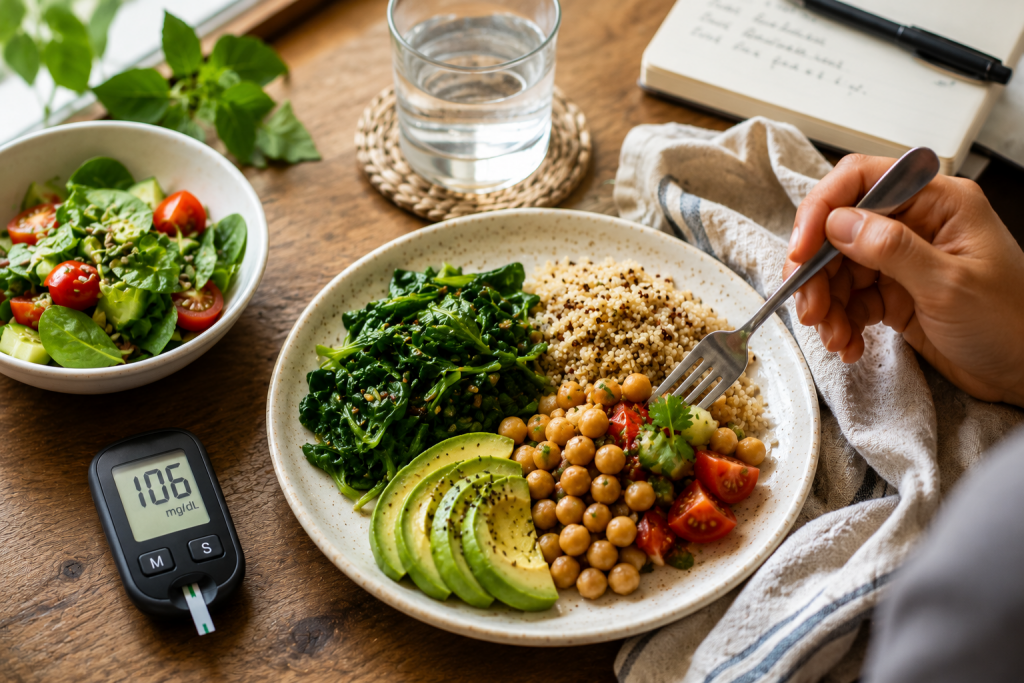
One of the simplest ways to plan balanced meals is the Diabetes Plate Method. This approach naturally increases fibre intake while helping manage portion sizes. Fill your plate with:

  • 🥦 50% Non-starchy vegetables
  • 🍗 25% Lean protein
  • 🌾 25% Whole grains or other healthy carbohydrates
  • 🥜 Add a small serving of healthy fats

Portion Size Still Matters

Even nutritious foods can raise blood glucose when eaten in large quantities. Helpful strategies include:

  • Eat slowly.
  • Use smaller plates.
  • Avoid second servings unless genuinely hungry.
  • Stop eating when comfortably satisfied rather than overly full.

Is Meal Timing Important?

Consistency often matters more than rigid rules. Some people do well with three balanced meals each day, while others benefit from smaller meals depending on their medication schedule, activity levels, and individual preferences. Work with your healthcare provider or dietitian to find a meal pattern that supports stable blood sugar throughout the day.

Can Certain Spices Help?

Several commonly used spices are being studied for their potential role in metabolic health:

  • Cinnamon: Some studies suggest cinnamon may modestly improve insulin sensitivity in certain individuals, although results remain mixed. It should never replace prescribed diabetes treatment.
  • Garlic: Garlic contains bioactive compounds with antioxidant properties and can be an excellent part of an overall healthy eating pattern.
  • Turmeric: Curcumin, the active compound in turmeric, has anti-inflammatory properties that continue to be studied for their potential role in metabolic health.

Lifestyle Matters Just As Much As Diet

Managing diabetes goes far beyond food choices alone.

Stay Physically Active – Physical activity helps muscles use glucose more efficiently and supports insulin sensitivity. Aim for:

  • At least 150 minutes of moderate-intensity activity each week.
  • 2–3 sessions of strength training weekly.
  • Light movement or a 10–15 minute walk after meals whenever possible.

Prioritise Sleep – Poor sleep can make blood sugar management more difficult. Aim for:

  • 7–9 hours of quality sleep.
  • A consistent bedtime.
  • Reduced screen time before bed.

Manage Stress – Chronic stress may contribute to higher blood glucose in some people. Helpful strategies include:

  • Yoga and meditation.
  • Walking and spending time outdoors.
  • Deep breathing exercises.
  • Connecting with family and friends.

Monitor Your Numbers & Protect Your Feet

Regular Monitoring – Regular monitoring helps you understand how your lifestyle affects your diabetes. Tracking trends over time is often more useful than focusing on a single reading. Discuss these targets with your healthcare provider:

  • HbA1c and fasting blood glucose
  • Post-meal blood glucose
  • Blood pressure and cholesterol
  • Waist circumference and body weight

Don’t Forget Foot Care – High blood sugar can affect circulation and nerve function. Protect your feet by:

  • Checking them daily for cuts or blisters.
  • Wearing properly fitting footwear.
  • Keeping feet clean and dry.
  • Seeking prompt medical attention for wounds that don’t heal.

Managing Type 2 diabetes isn’t about following a perfect diet or eliminating every favourite food. It’s about creating sustainable habits that support healthy blood sugar, protect your organs, and improve your quality of life. Small, consistent improvements in nutrition, physical activity, sleep, and stress management can make a meaningful difference over time. Remember, diabetes management is a journey—and every healthy choice counts.

Pro Tip: Understanding how your meals, activity, and sleep affect your blood sugar is the first step towards better diabetes management. Use the GOQii App to track your nutrition, daily movement, and sleep patterns. Your GOQii Personalised Health Coach can help you interpret your progress, build balanced meal plans, and stay motivated with practical, personalised guidance.

#BeTheForce 

Frequently Asked Questions (FAQs)

  1. Can Type 2 diabetes be reversed?
    Type 2 diabetes may go into clinical remission for some people, particularly with significant weight loss and sustained lifestyle changes under medical supervision. However, remission isn’t guaranteed, and ongoing healthy habits remain essential.
  2. Can people with diabetes eat fruit?
    Yes. Whole fruits provide fibre, vitamins, and antioxidants. Choose whole fruits over fruit juice and enjoy them in appropriate portions.
  3. Can people with diabetes eat rice?
    Yes. Portion size matters more than completely avoiding rice. Brown rice, hand-pounded rice, and millets may provide more fibre than polished white rice. Pair rice with vegetables and protein for a more balanced meal.
  4. Why do sleep and stress affect blood sugar?
    Poor sleep and chronic stress can influence hormones that affect insulin sensitivity and glucose regulation, making blood sugar management more challenging.
  5. Are all vegetables equally good for diabetes?
    Most vegetables are nutritious. Non-starchy vegetables generally have less impact on blood glucose, while starchy vegetables such as potatoes and corn should be eaten in appropriate portions as part of a balanced meal.

Disclaimer: The information provided in this blog is for general awareness and educational purposes only. It is not intended to replace professional medical advice, diagnosis, or treatment. Always consult a qualified healthcare provider for personalised medical guidance or concerns related to your health.

July 21, 2026 By GOQii Leave a Comment

Hormones and Longevity: Why Midlife Health Depends on Hormonal Balance

The Big Question: Why do the habits that worked effortlessly in your twenties suddenly seem less effective after 40?

Perhaps you’re exercising as much as before, but the weight won’t budge. You’re eating well, yet your energy levels fluctuate. Sleep isn’t as refreshing, recovery takes longer, and stress feels harder to shake off. While lifestyle certainly plays a role, another important factor is often at work your hormones.

Hormones are chemical messengers that regulate nearly every function in your body, including metabolism, sleep, appetite, muscle maintenance, mood, and reproduction. As we move through midlife, natural hormonal changes begin to influence how our bodies function. Understanding these changes and adapting your lifestyle accordingly can help you stay healthier, stronger, and more energetic for years to come.

Why Hormonal Balance Matters for Healthy Ageing

Hormones work together like an orchestra. When they’re in balance, your body can regulate energy, repair tissues, maintain muscle, support bone health, and respond appropriately to stress.

As hormone levels naturally change with age, you may notice:

  • Reduced energy
  • Changes in body composition
  • Slower recovery after exercise
  • Poorer sleep quality
  • Mood changes
  • Reduced muscle strength
  • Increased abdominal fat

These changes are a normal part of ageing, but healthy lifestyle habits can help you adapt and maintain good metabolic health.

Testosterone and Men: A Gradual Transition

Unlike the abrupt hormonal changes experienced by women during menopause, testosterone levels in men generally decline gradually with age. Testosterone contributes to muscle mass, bone health, red blood cell production, libido, and physical performance.

Some men may notice:

  • Reduced muscle strength
  • Slower recovery
  • Increased body fat
  • Lower motivation for exercise

While ageing is inevitable, healthy habits can support overall hormonal health.

What Helps?

  • Resistance training
  • Adequate protein intake
  • Maintaining a healthy body weight
  • Prioritising quality sleep
  • Managing chronic stress

These habits support healthy testosterone levels within your body’s normal physiological range but should not be viewed as replacements for medical evaluation if symptoms are significant.

Perimenopause and Menopause: A Time of Transition

For women, hormonal changes often begin several years before menopause during a phase known as perimenopause. During this transition, levels of oestrogen and progesterone fluctuate, leading to symptoms that vary considerably from person to person.

Some women experience:

  • Irregular menstrual cycles
  • Hot flushes and night sweats
  • Sleep disturbances
  • Mood changes
  • Increased abdominal fat
  • Reduced muscle mass

Every woman’s experience is different. Some notice only mild symptoms, while others experience significant changes that may affect their quality of life. Rather than focusing solely on calorie restriction, midlife nutrition should prioritise preserving muscle, supporting bone health, and maintaining metabolic wellbeing.

Don’t Forget Insulin

When discussing hormones, insulin is often overlooked, yet it plays a central role in healthy ageing. Insulin helps move glucose from your bloodstream into your cells for energy.

Over time, poor sleep, physical inactivity, excess body fat, and chronic stress can reduce insulin sensitivity. Supporting insulin sensitivity through regular exercise, balanced meals, and maintaining a healthy weight contributes to healthier ageing and reduces the risk of developing metabolic diseases.

Cortisol: When Stress Doesn’t Switch Off

Cortisol is your body’s primary stress hormone. It plays an essential role in helping you respond to physical and emotional challenges. Problems arise when stress becomes chronic.

Long working hours, inadequate sleep, constant notifications, and insufficient recovery can contribute to persistently elevated cortisol levels in some individuals. Over time, chronic stress may contribute to:

  • Poor sleep quality
  • Increased appetite
  • Abdominal fat accumulation
  • Reduced exercise recovery
  • Lower energy levels

Managing stress is therefore just as important as maintaining a healthy diet and exercise routine.

Four Daily Habits That Support Hormonal Health

  1. Prioritise Strength Training

Muscle naturally declines with age. Aim to include strength training at least two to three times per week. Resistance training helps maintain:

  • Lean muscle mass
  • Bone strength
  • Functional independence
  • Insulin sensitivity
  1. Protect Your Sleep

Sleep is when many important repair processes occur. Good sleep supports the healthy regulation of cortisol, appetite-related hormones, and overall recovery. To improve sleep quality:

  • Keep a regular sleep schedule.
  • Reduce screen exposure before bedtime.
  • Limit caffeine later in the day.
  • Create a cool, dark sleeping environment.
  1. Eat for Long-Term Health

Your diet provides the nutrients needed for normal hormone production and metabolic health. Rather than following restrictive diets, focus on consistency and overall dietary quality. Build meals around:

  • High-quality protein
  • Whole grains
  • Healthy fats
  • Fruits and vegetables
  • Nuts and seeds
  1. Manage Stress Every Day

Stress management isn’t a luxury it’s part of healthy ageing. Even a few minutes of intentional relaxation each day can support overall wellbeing. Helpful strategies include:

  • Walking outdoors
  • Yoga or meditation
  • Deep breathing exercises
  • Spending time with family and friends
  • Engaging in enjoyable hobbies

When Should You Seek Medical Advice?

While hormonal changes are a normal part of ageing, some symptoms deserve professional evaluation. Speak with your healthcare provider if you experience:

  • Persistent fatigue
  • Unexplained weight changes
  • Erectile dysfunction or significant loss of libido
  • Severe hot flushes or irregular menstrual bleeding
  • Persistent mood changes
  • Difficulty sleeping despite healthy habits

Your doctor can determine whether hormone testing or other investigations are appropriate.

Hormonal changes are a natural part of ageing not a sign that your body is failing. The habits that served you in your twenties may need to evolve as your body changes, but that doesn’t mean your best years are behind you.

By prioritising strength training, nourishing your body with balanced nutrition, managing stress, and protecting your sleep, you can support healthy ageing and maintain your energy, mobility, and resilience throughout midlife and beyond. Longevity isn’t simply about living longer it’s about living well.

Pro Tip: Midlife is the perfect time to become more intentional about your health. Use the GOQii App to monitor your sleep, physical activity, nutrition, and recovery. Your GOQii Personalised Health Coach can help you build a sustainable lifestyle plan that supports healthy ageing through personalised guidance on exercise, stress management, and nutrition.

Frequently Asked Questions (FAQs)

  1. Is it normal to gain belly fat during midlife?

Changes in hormone levels, reduced muscle mass, lower physical activity, and lifestyle factors can all influence body composition during midlife. Strength training, balanced nutrition, and regular exercise can help support a healthy body composition.

  1. Can lifestyle changes improve hormonal health?

Healthy habits such as regular exercise, quality sleep, stress management, and a balanced diet support overall hormonal health. However, they do not replace medical treatment when a clinically significant hormonal disorder is present.

  1. Why is strength training especially important after 40?

Strength training helps preserve muscle mass, maintain bone density, improve insulin sensitivity, and support functional independence as we age.

  1. Does poor sleep affect hormones?

Yes. Inadequate sleep can influence hormones involved in appetite regulation, stress response, and recovery. Improving sleep quality is an important part of maintaining overall health.

  1. Should I have my hormone levels tested?

Routine hormone testing isn’t necessary for everyone. If you’re experiencing persistent symptoms such as severe fatigue, erectile dysfunction, hot flushes, irregular menstrual cycles, or unexplained weight changes, consult your healthcare provider. They can determine whether testing is appropriate.

#BeTheForce

Disclaimer: This article is intended for educational purposes only and should not replace professional medical advice, diagnosis, or treatment. Hormonal changes vary from person to person. If you have persistent symptoms or concerns about your hormonal health, consult a qualified healthcare professional or endocrinologist for personalised evaluation and guidance.

July 20, 2026 By Bhumi Mehta 3 Comments

Yoga for Seasonal Viral Infections: A 5-Level Approach to Supporting Recovery

yoga therapyThe Big Question: When seasonal changes leave you with a cold, sore throat, or mild viral illness, can yoga help you feel better while your body recovers?
Seasonal weather changes—especially during the monsoon and winter months—often bring an increase in viral infections such as the common cold and other upper respiratory illnesses. While adequate rest, hydration, good nutrition, and medical care remain the cornerstones of recovery, gentle yoga practices may help ease discomfort, reduce stress, and support overall wellbeing during the healing process.

Rather than viewing recovery as purely physical, yoga takes a holistic approach by nurturing the body, breath, mind, and emotional wellbeing. This five-level framework offers simple practices that may help you feel more comfortable while your immune system does what it is naturally designed to do.

Important: If you have a high fever, severe weakness, chest pain, or difficulty breathing, avoid yoga entirely and seek medical advice promptly.

Level 1: Supporting the Physical Body

When you’re recovering from a viral illness, stiffness, fatigue, and nasal congestion can make even simple movements uncomfortable. Gentle yoga postures may help improve mobility, encourage comfortable breathing, and relieve muscular tension.

A. Uttanasana (Standing Forward Bend)yoga therapyThis gentle forward bend may temporarily ease the feeling of nasal congestion for some people while stretching the back of the body. Move slowly and avoid the pose if you feel dizzy.

B. Setu Bandhaasana (Bridge Pose)Bridge Pose gently opens the chest and stretches the front of the body, which some people find helps them breathe more comfortably. Support your hips with a yoga block or cushion if needed.

C. Viparita Karani (Legs-Up-the-Wall Pose)One of the most restorative yoga poses, this encourages deep relaxation and may help reduce feelings of tiredness after a prolonged illness. It also provides gentle relief for tired legs after long periods of inactivity.

D. Adho Mukha Svanasana (Downward-Facing Dog)If your energy levels allow, this pose stretches the spine and shoulders while encouraging gentle chest expansion. Skip this pose if you feel weak, light-headed, or feverish.

E. Ustrasana This asana opens up the chest and clears out all the passages. It is essential to try and breathe as much as you can while you are in this pose. This will help open up all the blocked areas that are causing the cold.

F. Matsyasana (Fish Pose)A supported version of Fish Pose using a cushion or yoga bolster beneath the upper back can encourage gentle chest opening and comfortable breathing.

Level 2: Supporting the Breath

Breathing exercises can help calm the nervous system and encourage slow, comfortable breathing during recovery. The goal here is relaxation—not force.

  • Gentle Diaphragmatic Breathing: Place one hand on your abdomen and breathe slowly through your nose, allowing your belly to rise and fall naturally. Practise for 5–10 minutes.
  • Nadi Shodhana (Alternate Nostril Breathing): If your nose isn’t completely blocked, gentle alternate nostril breathing may promote relaxation and reduce stress. Avoid forcing the breath if you are heavily congested.
  • Ujjayi Breathing: Soft Ujjayi breathing may create a soothing sensation in the throat while encouraging slow, controlled breathing. Keep the breath gentle and comfortable.

Avoid During Acute Illness: Practices such as Kapalabhati and Bhastrika involve forceful breathing and may not be appropriate during an active viral infection, fever, or significant respiratory symptoms. Consider returning to these techniques only after you have fully recovered and under the guidance of a qualified yoga instructor.

Level 3: Supporting the Mind

Being unwell can affect more than just your body. Fatigue, disrupted sleep, and frustration often increase stress, which can make recovery feel even more difficult. Simple meditation practices may help reduce stress and promote emotional wellbeing.

  • Spend 5–10 minutes sitting or lying down comfortably.
  • Focus purely on your breathing without trying to change its rhythm.
  • If your mind wanders, gently and without judgment bring your attention back to your breath.

Level 4: Prioritising Rest and Recovery

One of the biggest mistakes people make is returning to their normal routine too quickly. Recovery requires massive amounts of internal energy.

  • Shavasana (Corpse Pose): Although it appears simple, Shavasana encourages deep physical relaxation and allows your body to rest without unnecessary muscular effort. Even 10–15 minutes of intentional rest can help you feel refreshed during recovery.

Listen to your body and allow yourself ample time to recover fully before returning to intense physical activity.

Level 5: Building Emotional Resilience

Illness can leave you feeling discouraged, especially if symptoms linger longer than expected. Yoga encourages self-awareness and self-compassion.

Whether through quiet reflection, gratitude, gentle chanting, or prayer, taking a few moments to cultivate emotional resilience can help you cope with the temporary challenges of illness. While these practices don’t treat infections directly, they heavily support your overall sense of wellbeing during recovery.

When Should You Avoid Yoga?

Rest is often the best medicine. Stop any physical practice and seek medical advice if you experience:

  • High fever
  • Difficulty breathing or shortness of breath
  • Chest pain
  • Persistent dizziness
  • Severe fatigue
  • Significant dehydration
  • Worsening symptoms or symptoms lasting longer than expected

Resume physical activity gradually only once you begin feeling significantly better.

Yoga cannot cure viral infections, but it can be a highly valuable complementary practice during recovery. Gentle movement, breathing exercises, meditation, and adequate rest may help reduce stress, improve comfort, and support overall wellbeing while your body heals naturally. The key is to practise with strict self-awareness, respect your energy levels, and allow yourself the time you need to recover fully.

Pro Tip: Recovering from an illness is the perfect time to slow down and listen to your body. The GOQii App offers guided yoga sessions suitable for different fitness levels, and your GOQii Personalised Health Coach can help you choose appropriate practices based on your exact recovery stage.

Frequently Asked Questions (FAQs)

  1. Is it safe to practise yoga during a cold?

If your symptoms are mild and you don’t have a fever, gentle restorative yoga may help you relax and ease physical stiffness. Avoid strenuous or heated practice until you feel completely better.

  1. Can yoga boost immunity?

Regular physical activity, including yoga, contributes to overall health and stress management, which are vital components of a healthy immune system. However, yoga should not be considered a direct treatment for viral infections or a replacement for proper medical care.

  1. Which yoga poses are best during recovery?

Restorative poses such as Viparita Karani (Legs-Up-the-Wall), supported Matsyasana (Fish Pose), and Shavasana (Corpse Pose) are generally much better suited to recovery than vigorous, standing Vinyasa sequences.

  1. Should I do Kapalabhati if I have a cold?

No. Forceful breathing exercises such as Kapalabhati and Bhastrika are generally best avoided during an active illness, especially if you have a fever or significant respiratory symptoms, as they can cause dizziness and irritate inflamed airways.

#BeTheForce  

Disclaimer: This article is intended for educational purposes only and should not replace professional medical advice, diagnosis, or treatment. Consult a qualified healthcare provider if your symptoms are severe, worsen, or are accompanied by high fever, chest pain, or difficulty breathing. Yoga should be practised within your comfort level and, where appropriate, under the guidance of a qualified instructor.

  • « Previous Page
  • 1
  • …
  • 10
  • 11
  • 12
  • 13
  • 14
  • …
  • 163
  • Next Page »

Search

Recent Posts

  • Foods to Manage Blood Sugar Naturally: A Complete Guide to Better Blood Sugar Control
  • The Lazy Person’s Guide to Staying Healthy: 5 Micro-Habits That Take Less Than 2 Minutes
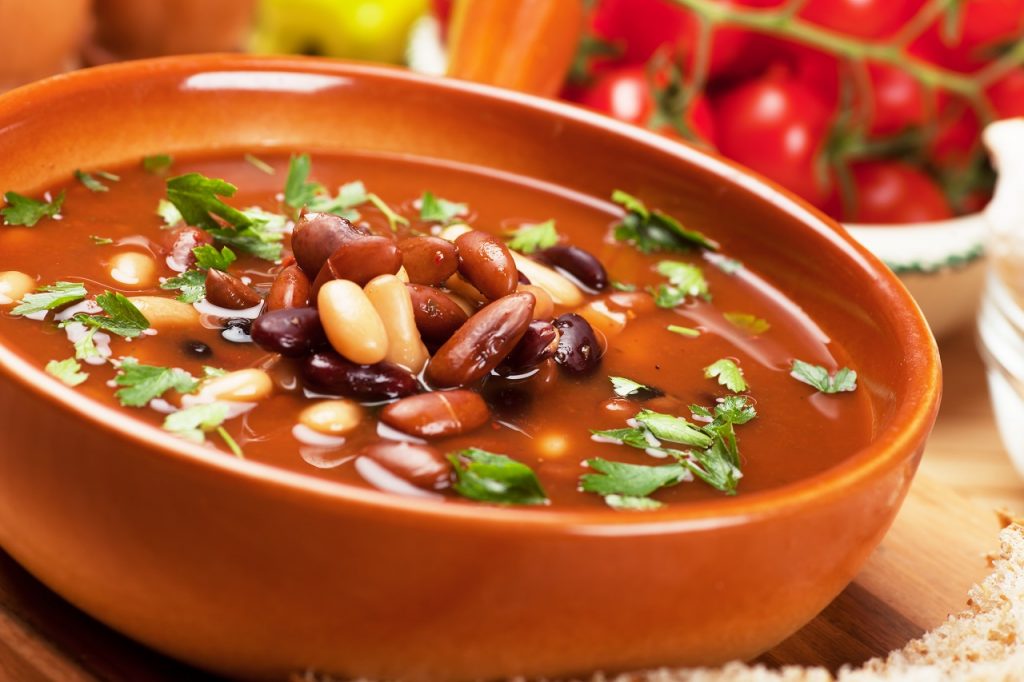
  • Healthy Eating: Comforting Chilli Bean Soup Recipe for the Monsoon
  • The Truth About the ‘Beer Belly’: What Alcohol Really Does to Your Metabolism
  • Benefits of Meditation: How One Daily Habit Can Transform Your Mental Wellbeing

Stay Updated

Archives

  • August 2026 (7)
  • July 2026 (25)
  • June 2026 (22)
  • May 2026 (20)
  • April 2026 (24)
  • March 2026 (18)
  • February 2026 (14)
  • January 2026 (14)
  • December 2025 (19)
  • November 2025 (15)
  • October 2025 (20)
  • September 2025 (6)
  • August 2025 (6)
  • July 2025 (9)
  • June 2025 (18)
  • May 2025 (16)
  • April 2025 (22)
  • March 2025 (26)
  • February 2025 (21)
  • January 2025 (25)
  • December 2024 (22)
  • November 2024 (22)
  • October 2024 (20)
  • September 2024 (22)
  • August 2024 (28)
  • July 2024 (15)
  • June 2024 (23)
  • May 2024 (26)
  • April 2024 (27)
  • March 2024 (27)
  • February 2024 (23)
  • January 2024 (21)
  • December 2023 (14)
  • November 2023 (10)
  • October 2023 (19)
  • September 2023 (21)
  • August 2023 (16)
  • July 2023 (16)
  • June 2023 (21)
  • May 2023 (20)
  • April 2023 (19)
  • March 2023 (23)
  • February 2023 (19)
  • January 2023 (15)
  • December 2022 (11)
  • November 2022 (15)
  • October 2022 (15)
  • September 2022 (12)
  • August 2022 (9)
  • July 2022 (17)
  • June 2022 (11)
  • May 2022 (10)
  • April 2022 (6)
  • March 2022 (6)
  • February 2022 (13)
  • January 2022 (11)
  • December 2021 (7)
  • November 2021 (3)
  • October 2021 (6)
  • September 2021 (3)
  • August 2021 (8)
  • July 2021 (7)
  • June 2021 (15)
  • May 2021 (16)
  • April 2021 (10)
  • March 2021 (7)
  • February 2021 (4)
  • January 2021 (4)
  • December 2020 (3)
  • November 2020 (4)
  • October 2020 (10)
  • September 2020 (3)
  • August 2020 (3)
  • July 2020 (2)
  • June 2020 (4)
  • May 2020 (10)
  • April 2020 (12)
  • March 2020 (10)
  • February 2020 (4)
  • January 2020 (4)
  • December 2019 (3)
  • November 2019 (7)
  • October 2019 (5)
  • September 2019 (4)
  • August 2019 (9)
  • July 2019 (9)
  • June 2019 (11)
  • May 2019 (4)
  • April 2019 (8)
  • March 2019 (8)
  • February 2019 (9)
  • January 2019 (8)
  • December 2018 (9)
  • November 2018 (3)
  • October 2018 (3)
  • September 2018 (5)
  • August 2018 (10)
  • July 2018 (6)
  • June 2018 (13)
  • May 2018 (8)
  • April 2018 (18)
  • March 2018 (9)
  • February 2018 (8)
  • January 2018 (15)
  • December 2017 (12)
  • November 2017 (19)
  • October 2017 (13)
  • September 2017 (15)
  • August 2017 (4)
  • July 2017 (8)
  • June 2017 (7)
  • May 2017 (6)
  • April 2017 (8)
  • March 2017 (6)
  • February 2017 (7)
  • January 2017 (9)
  • December 2016 (10)
  • November 2016 (7)
  • October 2016 (7)
  • September 2016 (7)
  • August 2016 (11)
  • July 2016 (9)
  • June 2016 (9)
  • May 2016 (12)
  • April 2016 (17)
  • March 2016 (17)
  • February 2016 (8)
  • January 2016 (6)
  • December 2015 (2)
  • November 2015 (9)
  • October 2015 (7)
  • September 2015 (9)
  • August 2015 (11)
  • July 2015 (9)
  • June 2015 (11)
  • May 2015 (9)
  • April 2015 (13)
  • March 2015 (8)
  • February 2015 (5)
  • January 2015 (12)
  • December 2014 (14)
  • November 2014 (11)
  • October 2014 (6)
  • September 2014 (13)
  • August 2014 (12)
  • July 2014 (6)
  • June 2014 (2)
  • May 2014 (7)
  • April 2014 (4)

From Burnout to Balance: How Dr. Ranjit Reclaimed His Health

Dr Ranjit Bhatt has spent years tending to others. A practising doctor in Odisha, his days were packed with patients, surgeries, and emergencies. From the outside, it looked like a life lived in service. But on the inside, something wasn’t right. “I had no … [Read More...]

From Shimla’s Slopes to Chandigarh’s Sidewalks: Surinder Kaur Bhalla’s Journey from Chaos to Control

Some journeys start with a plan. Others begin with a stumble literally. Surinder Bhalla, a government professional, born and raised in the scenic hill town of Shimla, had always lived a life of movement. “In Shimla, you walked everywhere,” she reflects. “Walking was never an exercise. It was just life.” But after shifting to Chandigarh, […]

“I’ve Challenged Myself to Live 100 Years” – The Story of Chandubhai Savani’s Second Chance at Life

At 67, most people start slowing down. Not Chandubhai Savani. A resident of Surat, Chandubhai, thought life was on track. “My life was going well till I had my bypass surgery,” he says. That surgery, back in 2021, was a wake-up call.  Medication was routine, but exercise wasn’t. His diet? What he calls ‘normal.’ “I […]

Ananda Mukherjee Health Story

From Terminal Illness To Complete Wellness! Ananda Mukherjee Health Story

As we observe World Cancer Day under the powerful theme ‘United by Unique’ (2025-2027)**, we are reminded that every individual’s journey with cancer is distinct, yet united by shared resilience, hope, and the collective fight against this disease. This theme places people at the centre of care and their stories at the heart of the […]

  • HOME
  • HEALTHY LIVING
  • FITNESS
  • HEALTHY RECIPES
  • USER STORIES
  • KARMA
  • BUY GOQii

Copyright ©2016 GOQii