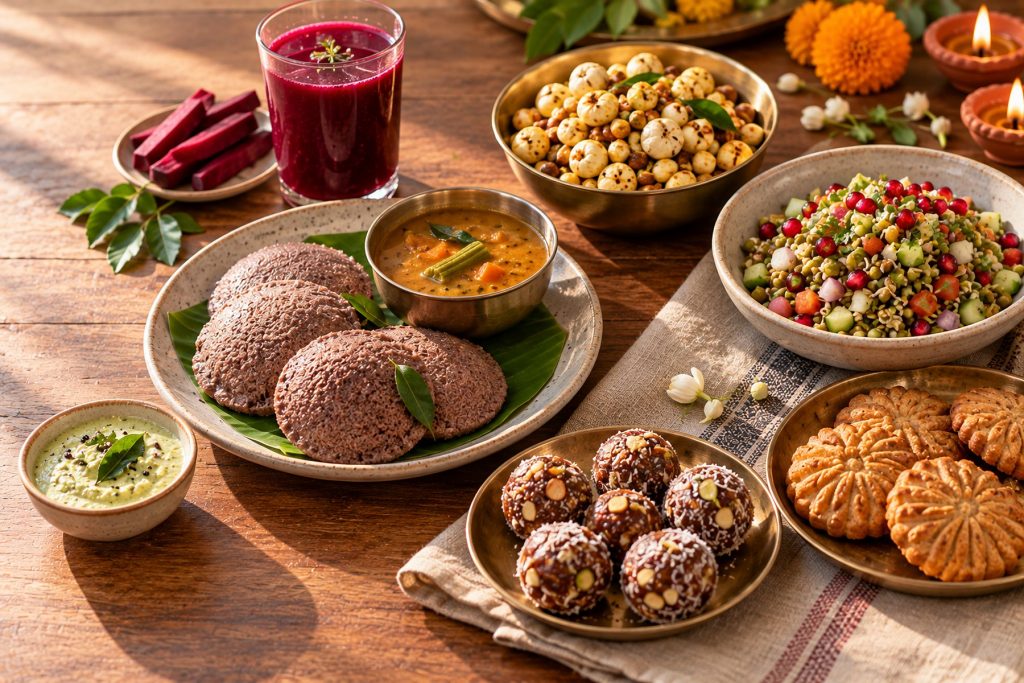
 What India cooks says a lot about what India cares about. Last year, the humble idli topped Google’s list of the country’s most-searched recipes, alongside festive favourites like thekua and modak and a surprise wellness drink, beetroot kanji. This year, food trend reports point to savoury high-protein snacks, millets moving into everyday meals, smarter home cooking and a fresh look at traditional sweets.
With Diwali on 8 November and Chhath Puja from 13 to 16 November, it’s a good moment to try a few of these trending recipes, made in ways that support your health rather than undo it. Here are seven worth cooking this season, why each one is trending, what it does (and doesn’t do) for your health, and a simple way to make it at home.
At a glance
- Idli is India’s most-searched recipe. Try a ragi idli for extra calcium and fibre.
- Beetroot kanji is the fermented drink of the moment. Enjoy it as a tasty fermented drink rather than a remedy: a small glass is far more dilute than the beetroot juice used in blood-pressure trials, and it contains added salt.
- Protein snacks have gone savoury. A homemade roasted chana and makhana chivda gives you protein without packaged extras.
- Millets are moving into everyday cooking. A ragi or jowar dosa is an easy way in.
- Chatpata is in. A sprouts chaat packs bold flavour and plant protein. Steam the sprouts lightly, and cook them thoroughly for children, older adults, pregnant women and anyone with weakened immunity.
- Festive sweets are getting a makeover. Lighter thekua and a dates-and-nuts laddoo keep the tradition but need portion control: they’re still energy-dense.
What’s trending, and how we chose these recipes
We started with two sources of what Indians are actually cooking and buying:
- Google’s Year in Search 2025 for India, where the top recipe searches included idli, modak, thekua, Ugadi pachadi, beetroot kanji, gond katira and kolukattai. Google’s own summary notes that “classic Idli topped the charts”.
- 2026 food trend reports. The Godrej Food Trends Report 2026 highlights bold “chatpata” flavours, savoury protein snacks, Indo-modern mithai and “smarter” home cooking, such as millet dosa mixes. Esquire India adds protein-fortified namkeen, functional makhana and millets in everyday foods.
From these, we picked recipes that are trending, easy to make at home with Indian ingredients, and can be made in a genuinely healthier way. We left out trends that rely mainly on packaged products, like collagen drinks and protein ice creams, and seasonal recipes that don’t fit October and November.
7 trending recipes, made healthier
1. Ragi idli
Why it’s trending: idli was India’s most-searched recipe of 2025. Adding ragi ties it to another big trend: millets in everyday food.
The health angle: idli is steamed, not fried, and the fermented batter makes it light and easy to digest for most people. Using ragi (finger millet) in place of some of the rice adds fibre and calcium: ragi provides about 344 mg of calcium per 100 g, far more than rice and other major cereals. Keep expectations realistic, though. Spread across a batch, three ragi idlis give roughly 60 mg of calcium, about 6% of the 1,000 mg a day ICMR–NIN recommends for most adults, so ragi idli adds to your calcium rather than covering it. Serve three or four idlis with a bowl of sambar for protein and vegetables.
You’ll need (makes about 20 idlis): 1 cup ragi flour, 1 cup idli rava, ½ cup whole urad dal, ½ tsp methi seeds, salt to taste.
Method:
- Soak the urad dal and methi for 4–5 hours, then grind to a smooth, fluffy batter with a little water.
- Rinse the idli rava, squeeze out the water and mix it into the urad batter with the ragi flour and salt. Add water to make a thick, pourable batter.
- Cover and leave in a warm place for 8–12 hours, until risen and slightly sour.
- Pour into greased idli moulds and steam for 10–12 minutes. Serve with sambar and coconut or tomato chutney.
Tip: ragi idlis are darker and slightly denser than rice idlis. If your family is new to them, start with half the ragi and increase it over time.
2. Beetroot kanji
Why it’s trending: this tangy, fermented North Indian winter drink (traditionally made with black carrots, though the beetroot version is the one going viral) made Google’s 2025 list of top recipe searches, riding the wider interest in gut health and traditional Indian drinks.
The health angle: beetroot is rich in dietary nitrate. A 2022 review of seven trials in people with high blood pressure found beetroot juice lowered systolic blood pressure by about 5 mm Hg on average, though the trials were small and varied. Those studies used concentrated beetroot juice. Kanji uses a couple of beetroots in a litre of water, so a small glass delivers far less nitrate, and kanji itself hasn’t been tested for blood pressure. Fermentation is the more relevant angle: in a small Stanford trial, a 10-week diet rich in fermented foods, including vegetable brine drinks similar to kanji, increased gut microbiome diversity and lowered markers of inflammation. That’s promising but early, so think of kanji as a tasty way to add a fermented food to your day, not a remedy for digestive or blood-pressure problems.
You’ll need (makes about 1 litre): 2 medium beetroots (or 1 beetroot and 2 black carrots), 1 litre boiled and cooled water, 1 tbsp coarsely ground mustard seeds (rai), 1 tsp black salt or regular salt, ½ tsp red chilli powder (optional).
Method:
- Peel the beetroots and cut into thin sticks.
- Put them in a clean, dry glass jar with the mustard, salt and chilli. Pour in the water and stir with a clean spoon.
- Cover with a muslin cloth or loose lid and leave in a warm spot for 3–5 days, stirring once a day, until pleasantly tangy.
- Strain, refrigerate and drink within a week. Have a small glass (about 100–150 ml) with a meal.
Tip: use a very clean jar and spoon, and throw the batch away if you see mould or it smells unpleasant. The recipe uses about a teaspoon of salt per litre, so one small glass adds only a little, but it adds up alongside pickles, papad and namkeen; keep to one glass if you’ve been told to limit salt. Beetroot is also high in oxalate. That isn’t a concern for most healthy people, but if you’ve had kidney stones, check with your doctor before making kanji a daily drink. Pink urine after eating beetroot is common and harmless.
3. Protein-rich makhana and chana chivda
Why it’s trending: protein has “gone namkeen”. Food trend reports describe a shift from sweet protein bars to savoury, street-food-style protein snacks, and makhana is a favourite base.
The health angle: a homemade version gives you control over the oil and salt that packaged namkeen often hides. Roasted chana brings plant protein and fibre (pulses contain about 20–25% protein), peanuts and seeds add protein and healthy fats, and makhana adds crunch and volume.
You’ll need (makes about 8 servings of 30 g): 2 cups makhana, 1 cup roasted chana, ½ cup peanuts, 2 tbsp pumpkin or sunflower seeds, 2 tsp oil, 10–12 curry leaves, ¼ tsp turmeric, ½ tsp red chilli powder, 1 tsp chaat masala, salt only if needed.
Method:
- Dry-roast the makhana in a heavy pan on low heat for 6–8 minutes, until crisp. Set aside. Roast the peanuts and seeds the same way.
- Heat the oil, add the curry leaves and turmeric, then add everything back with the roasted chana.
- Turn off the heat, sprinkle over the chilli powder and chaat masala, and toss well. Taste before adding salt: chaat masala already contains plenty.
- Cool completely and store in an airtight jar for up to a week.
Tip: pre-portion it into small boxes; about 30 g (a small handful) is a sensible snack. Whole nuts and hard, crunchy snacks are a choking risk for young children, and NHS guidance is that whole nuts shouldn’t be given to children under 5, so leave out the peanuts or crush the mix for little ones. Skip the peanuts altogether for anyone with a peanut allergy. For more ideas, see our 5-minute healthy snacks for work and home.
4. Chatpata sprouts chaat
Why it’s trending: bold, layered “chatpata” flavours are one of 2026’s biggest food trends, along with a renewed love of regional street food.
The health angle: sprouted moong is a pulse, so it’s a good source of plant protein and fibre (read more in our guide to why pulses are good for you). Fresh vegetables, lemon and spices bring the flavour without frying, and the vitamin C in lemon, tomato and pomegranate helps your body absorb the iron in the moong.
You’ll need (serves 2): 1½ cups moong sprouts, 1 small onion, 1 tomato, ½ cucumber (all finely chopped), 2 tbsp pomegranate seeds, 1 green chilli (optional), juice of ½ lemon, 1 tsp chaat masala, ½ tsp roasted jeera powder, fresh coriander.
Method:
- To sprout at home, soak whole moong for 8–10 hours, drain, then cover or tie in a damp cloth for 1–2 days until short shoots appear, rinsing them in clean water twice a day. Refrigerate once sprouted and use within a day or two; discard any that smell sour or feel slimy.
- Steam or boil the sprouts for 3–4 minutes and cool. For children, older adults, pregnant women and anyone with weakened immunity, boil them until fully soft instead.
- Mix with the vegetables, pomegranate, chilli, lemon juice and spices. Serve straight away.
Tip: raw sprouts can carry bacteria such as E. coli and Salmonella. Health Canada advises children, older adults, pregnant women and people with weakened immunity to avoid raw sprouts, so the light cooking step is worth keeping for everyone.
5. Instant jowar dosa
Why it’s trending: “home cooking, but smarter” is a major 2026 trend: busy families are combining quick bases, such as millet dosa mixes, with their own fresh touches. Millets like jowar are also moving from regional staples into everyday foods.
The health angle: jowar (sorghum) is a whole grain and naturally gluten-free. (If you have coeliac disease, choose flour labelled gluten-free, as millets can pick up wheat during milling.) This instant version needs no fermentation, so it’s a quick weekday breakfast or dinner. Add vegetables to the batter, and pair it with sambar, a dal or an egg for protein.
You’ll need (makes 6–7 dosas): 1 cup jowar flour, ¼ cup rice flour, ¼ cup curd, 1 small onion and a handful of coriander (finely chopped), 1 green chilli, ½ tsp jeera, salt to taste, about 1½–2 cups water, a little oil for the pan.
Method:
- Whisk the flours, curd, salt and water into a thin, lump-free batter, like rava dosa batter. Stir in the onion, coriander, chilli and jeera. Rest for 15 minutes.
- Heat a tawa until hot, then lower the heat. Stir the batter and pour it from a height in a circle, filling the gaps.
- Drizzle a few drops of oil around the edge and cook until crisp and golden. Fold and serve.
Tip: if you use a ready-made millet mix, check the label. Some contain a lot of salt, or more refined flour than millet.
6. Lighter thekua
Why it’s trending: thekua, the crunchy, jaggery-sweetened offering made for Chhath Puja, was one of India’s top recipe searches in 2025. With Chhath falling on 13–16 November this year, interest will peak again.
The health angle: thekua is traditionally made with whole wheat flour, jaggery and ghee, then deep-fried. For the puja itself, follow your family’s tradition. For everyday snacking through the season, a baked version cuts the oil considerably while keeping the flavour, though the texture is a little more biscuit-like. Remember that jaggery is still a sugar, so this remains a treat.
You’ll need (makes about 15): 1 cup whole wheat flour, 2 tbsp semolina (sooji) or extra whole wheat flour, 2 tbsp desiccated coconut, ½ tsp fennel seeds (saunf), ¼ tsp cardamom powder, 2 tbsp ghee, about ½ cup grated jaggery melted in ¼ cup warm water.
Method:
- Mix the flour, sooji, coconut, fennel and cardamom. Rub in the ghee until the mixture looks like breadcrumbs.
- Add the cooled jaggery water a little at a time to make a firm dough.
- Shape into small discs and press each into a thekua mould or the back of a fork to make a pattern.
- Bake at 180°C for 20–25 minutes, turning once, until golden and firm. (You can also use an air fryer.) Cool fully before storing.
Tip: make them small. One or two thekua with a cup of tea is a better fit than a handful.
7. Dates and nuts laddoo with an Indo-modern twist
Why it’s trending: traditional mithai is getting an “Indo-modern” makeover, with familiar sweets given new flavours and textures. With Diwali on 8 November, this is an easy way to join in.
The health angle: these laddoos contain no refined sugar, and the nuts and seeds add fibre, protein and healthy fats. But dates are naturally high in sugar, and once they’re blended into a paste, NHS guidance counts that sugar as “free sugar”, the kind adults are advised to keep below 30 g a day. Nuts are energy-dense too, so this is still a sweet, not a health food. If you have diabetes, count it as a sweet and check with your doctor or dietitian about portions.
You’ll need (makes about 15 small laddoos): 1 cup soft seedless dates, ¾ cup mixed nuts (almonds, cashews, walnuts), 2 tbsp roasted seeds (sunflower, pumpkin or flax), 1 tbsp desiccated coconut, ¼ tsp cardamom powder. For the twist, add the grated zest of 1 orange, or 1 tbsp unsweetened cocoa powder.
Method:
- Dry-roast the nuts for 4–5 minutes on low heat, cool and chop coarsely.
- Blend or mash the dates into a sticky paste. If they’re dry, soak them in warm water for 10 minutes first.
- Mix the dates with the nuts, seeds, cardamom and your chosen twist.
- Grease your palms lightly and roll into small balls, about the size of a walnut. Roll in coconut and refrigerate for up to a week.
Tip: make them small and serve one at a time. Gifting a box this Diwali? These make a thoughtful alternative to heavily sugared mithai.
Trend or hype? 5 quick checks
Not every trending food is a healthy one, and “healthy” on a label doesn’t always mean much. Before you jump on the next food trend, ask:
- What’s actually in it? A “high-protein” namkeen can still be fried and salty. Read the ingredients list and the salt, sugar and fat per serving, not just the protein claim on the front of the pack.
- Is the sugar just renamed? Jaggery, honey, dates and coconut sugar are still sugars. They’re fine in a festive sweet, but they don’t turn it into a health food.
- Does the claim match the evidence? Words like “gut-healing”, “detox” or “immunity-boosting” are easy to print and hard to prove. Fermented foods are promising for gut health, for example, but the research is still early.
- Is it a whole food or a product? The healthiest trends usually bring back whole ingredients, such as millets, pulses, vegetables and fermented foods, rather than new packaged products.
- Can you keep it up? A trend is only useful if it fits your week. Ragi idli or a sprouts chaat you’ll make every week beats an expensive superfood you’ll buy once. Our meal-prep guide shows how to make healthy food the easy option.
The bottom line
The best food trends of the moment aren’t really new. Idli, kanji, thekua, sprouts and millets have been part of Indian kitchens for generations; what’s changed is how we’re rediscovering them. Cook them at home, keep the oil, salt and sugar in check, and enjoy festive treats in sensible portions, and these trending recipes can be a genuinely healthy addition to your season.
Pro Tip: Use the GOQii App to log your meals through the festive season and keep an eye on how often sweets and fried snacks creep in. Your GOQii Personalised Health Coach can help you adapt your favourite recipes and plan a festive week that still fits your health goals.
Frequently asked questions
What are the trending recipes in India right now?
According to Google’s Year in Search 2025, India’s top recipe searches included idli, modak, thekua, Ugadi pachadi, beetroot kanji, gond katira and kolukattai, with idli at number one. In 2026, food trend reports highlight high-protein savoury snacks, millet-based meals, bold chatpata flavours and modern twists on traditional mithai.
Is ragi idli healthier than regular idli?
Both are steamed and light. Ragi idli adds finger millet, which is rich in calcium and adds fibre, so it makes a nutritious swap. For a balanced meal, serve either kind with sambar and vegetables.
Is beetroot kanji good for you?
It can be a healthy addition in small amounts. Beetroot juice has modestly lowered blood pressure in trials, but a small glass of kanji is far more dilute, so enjoy it mainly as a tasty fermented drink. Fermented foods are being studied for gut health, but the research is still early, and kanji contains added salt, so keep portions small.
Are packaged high-protein snacks healthy?
Some are, but many are still fried or high in salt. Check the ingredients and the salt, fat and sugar per serving, not just the protein claim. A homemade roasted chana and makhana chivda lets you control what goes in.
Is it safe to eat raw sprouts?
Raw sprouts can carry bacteria such as E. coli and Salmonella. Children, older adults, pregnant women and people with weakened immunity should avoid them raw. Cook sprouts thoroughly for these groups; for everyone else, steaming or boiling for a few minutes reduces the risk.
Are dates laddoos healthy for people with diabetes?
They have no refined sugar, but dates are naturally high in sugar, and once blended into a paste their sugar counts as “free sugar” under UK NHS guidance. They will still raise blood sugar. If you have diabetes, treat them as a sweet, keep to one small laddoo and check portions with your doctor or dietitian.
How can I eat healthily during Diwali without missing out?
Enjoy your favourite sweets in small portions, choose baked or steamed snacks where you can, fill up on balanced home-cooked meals, and keep moving. Recipes like ragi idli, sprouts chaat and baked thekua let you join in the festivities while eating well.
#BeTheForce
Disclaimer: The information provided in this blog is for general awareness and educational purposes only. It is not intended to replace professional medical advice, diagnosis, or treatment. Always consult a qualified healthcare provider for personalised medical guidance or concerns related to your health.




Leave a Reply