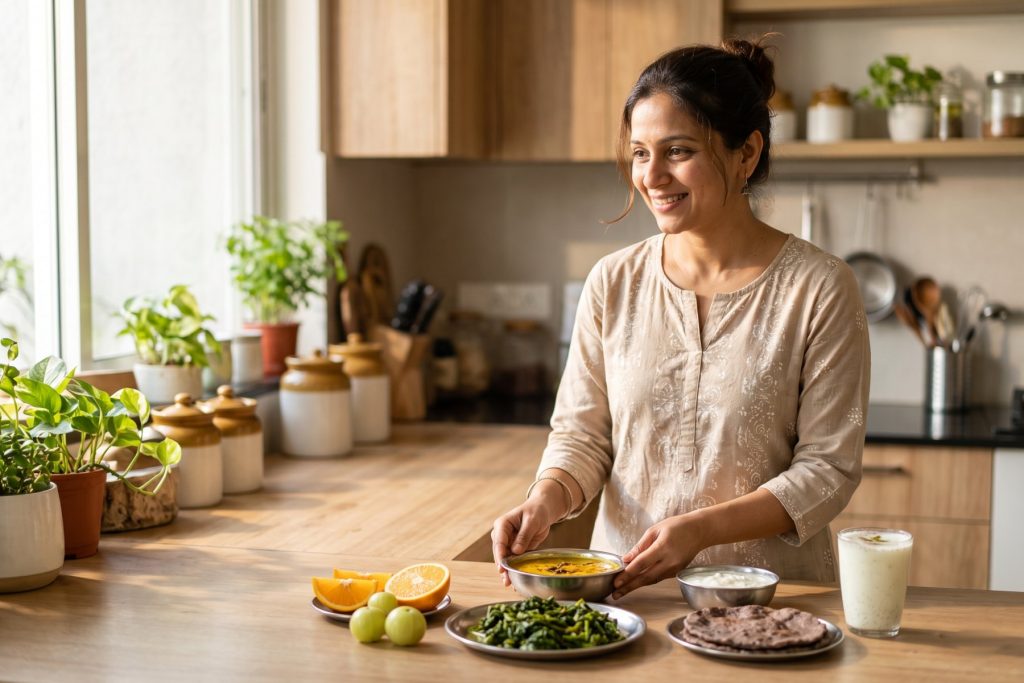
 Women’s nutrient needs change across life: with periods, pregnancy, breastfeeding and menopause. In India, some gaps are strikingly common. More than half of women aged 15–49 are anaemic, according to the latest National Family Health Survey, and many women don’t get enough vitamin D, vitamin B12 or calcium.
The good news is that most of these gaps can be closed with everyday Indian foods, with supplements filling in where food alone isn’t enough. Here are the vitamins and minerals that matter most for women, how much you need, where to find them, and when it’s worth talking to your doctor.
At a glance
- Iron: women need about 29 mg a day, more than men, largely to replace losses from periods. Anaemia affects 57% of Indian women aged 15–49.
- Folate: 220 µg a day, and a daily folic acid supplement for anyone who could become pregnant, starting before conception.
- Calcium and vitamin D: 1,000 mg of calcium and 600 IU of vitamin D a day help protect bones, especially around menopause.
- Vitamin B12: easy to fall short on a vegetarian diet. Milk, curd, paneer and eggs help; some people need a supplement.
- Iodine: iodised salt is the main source, and needs rise in pregnancy.
- Food first, test before you supplement: high doses of iron, vitamin A and vitamin D can do harm. Take supplements on medical advice.
The key nutrients for women
The daily amounts below are the Recommended Dietary Allowances (RDAs) for adult women from India’s ICMR–National Institute of Nutrition (2020). They are averages for healthy women; your needs may differ.
1. Iron
Why it matters: iron helps make haemoglobin, which carries oxygen around the body. Women lose iron every month through periods, and need much more during pregnancy. Low iron leads to anaemia, which can cause tiredness, breathlessness, pale skin, poor concentration and lower resistance to infection.
How common is a shortfall? Very. Anaemia affects 57% of Indian women aged 15–49 and 52% of pregnant women, according to NFHS-5 (2019–21).
How much: 29 mg a day for adult women.
Indian food sources: dals, rajma, chana and other pulses; green leafy vegetables such as methi, amaranth (chaulai) and drumstick leaves; garden cress seeds (halim); eggs, chicken, fish and red meat; iron-fortified atta or rice.
Get more from your food: iron from plant foods is less well absorbed than iron from meat and fish. Vitamin C helps: in one study, 100 mg of vitamin C increased iron absorption about four-fold. So add lemon to your dal, or have amla, guava or an orange with meals. Tea and coffee do the opposite, cutting iron absorption by up to 60–80%, so drink them between meals rather than with them.
Not all anaemia is caused by low iron. A study led by ICMR–NIN researchers found that vitamin B12 and folate deficiency, inherited haemoglobin disorders, inflammation and even air pollution also contribute to anaemia in India. Inherited conditions such as thalassaemia trait can look like iron deficiency on a basic blood test but aren’t treated with iron. So if you feel tired or have been told your haemoglobin is low, get properly tested before starting iron tablets on your own.
2. Folate (folic acid)
Why it matters: folate helps make healthy cells, including red blood cells. Before and in early pregnancy, it helps the baby’s brain and spinal cord develop properly and lowers the risk of neural tube defects such as spina bifida. These develop in the first weeks, often before a woman knows she’s pregnant.
How much: 220 µg a day for adult women. Anyone who could become pregnant is advised to take a 400–800 µg folic acid supplement daily, starting at least a month before conception and continuing through the first two to three months of pregnancy. Your doctor may recommend a higher dose in some situations.
Indian food sources: green leafy vegetables, dals and chana, sprouts, beetroot, citrus fruits and fortified cereals.
3. Calcium
Why it matters: calcium builds and maintains bones and teeth. Bones reach their peak density in your 20s and early 30s, and after menopause, falling oestrogen speeds up bone loss: women can lose up to 10% of their bone density in the first five years after menopause.
How much: 1,000 mg a day for adult women. Many Indians get only 300–500 mg a day, so most women need to plan for calcium-rich foods every day.
Indian food sources: milk, curd, buttermilk and paneer; ragi; sesame seeds (til); tofu; small fish eaten with their bones. Green leafy vegetables contain calcium too, but not all of it is absorbed: in one study, people absorbed about 5% of the calcium in spinach, compared with about 28% from milk, because spinach is high in oxalate. Weight-bearing exercise, such as brisk walking, stair climbing and strength training, matters just as much for bones.
4. Vitamin D
Why it matters: vitamin D helps your body absorb calcium and keeps bones and muscles healthy. Long-term low levels can contribute to weak bones (osteomalacia and osteoporosis).
How common is a shortfall? Common, despite plentiful sunshine: indoor lifestyles, covering up and pollution all reduce how much your skin makes. A review of 15 Indian studies estimated that about a third of pregnant women were deficient, though results varied widely between studies.
How much: 600 IU (15 µg) a day for adult women.
Sources: sunlight on your skin is the main source; there’s no single safe amount for everyone, so ask your doctor what suits you. Food sources are limited: egg yolks, oily fish such as salmon, sardines and mackerel, and fortified milk or oil. Many women need a supplement, ideally after a blood test.
5. Vitamin B12
Why it matters: B12 is needed to make red blood cells and keep nerves healthy. A shortfall can cause tiredness, a type of anaemia, tingling or numbness in the hands and feet, and memory or mood changes.
Who’s at risk: B12 comes almost entirely from animal foods, so vegetarians, and especially vegans, are more likely to fall short. A review of studies worldwide found that 17–39% of vegetarian pregnant women were B12-deficient, depending on the trimester. Some long-term medicines, such as metformin for diabetes and certain antacids, can also lower B12 levels.
How much: 2.2 µg a day for adult women.
Sources: milk, curd, buttermilk and paneer; eggs; fish, chicken and meat; B12-fortified foods. Plant foods don’t provide a reliable amount. If you’re vegetarian or vegan and tired all the time, ask your doctor about a B12 test.
6. Iodine
Why it matters: iodine is needed to make thyroid hormones. In pregnancy, deficiency can harm the baby’s brain development and growth and raise the risk of miscarriage and stillbirth, according to India’s National Iodine Deficiency Disorders Control Programme.
How much: 150 µg a day for adult women; needs rise during pregnancy and breastfeeding.
Sources: iodised salt is the main source in India, and selling non-iodised salt for everyday cooking is banned. Rock salt (sendha namak) and many “natural” or sea salts are often not iodised, so if you use them regularly, make sure iodised salt is still your everyday salt. Using iodised salt doesn’t mean using more salt: a small amount is enough. Milk, curd, eggs and seafood also contain some iodine.
7. Other nutrients that matter
These are important too, but most women who eat a varied diet get enough:
| Nutrient | Daily need (adult women, ICMR–NIN 2020) | What it does | Good sources |
| Protein | About 0.83 g per kg of body weight (around 46 g for a 55 kg woman) | Builds and repairs muscles, bones, skin and hair | Dals, chana, rajma, paneer, curd, milk, eggs, fish, chicken, soya |
| Vitamin A | 840 µg | Eyesight, especially in dim light; skin; immunity | Carrots, pumpkin, sweet potato, papaya, mango, green leafy vegetables, milk, eggs |
| Magnesium | 370 mg | Muscle and nerve function, bone health | Nuts, seeds, whole grains, millets, pulses, green leafy vegetables |
| Zinc | 13 mg | Immunity, wound healing | Pulses, nuts, seeds, whole grains, dairy, eggs, meat |
| Vitamin C | 65 mg | Wound healing, iron absorption | Amla, guava, citrus fruits, tomatoes, capsicum |
| Vitamin K | Varied diet is usually enough | Blood clotting, bone health | Green leafy vegetables, soybean oil |
Vitamin E (nuts, seeds, vegetable oils) and vitamin B6 (pulses, bananas, whole grains) are also needed, but there’s no good evidence that extra amounts “slow ageing” or “boost metabolism”, as is sometimes claimed. For more on plant protein, see our guide to why pulses are good for you.
How needs change through life
| Life stage | Nutrients to focus on | Practical tips |
| Teens and young women | Iron (periods begin), calcium and vitamin D (bones are still building), protein | Include dal, leafy greens and dairy daily; get some outdoor activity; don’t skip meals or follow crash diets |
| Planning a pregnancy | Folic acid, iron, iodine, vitamin B12 | Start a folic acid supplement at least a month before trying to conceive; ask your doctor about checking haemoglobin and B12 |
| Pregnancy and breastfeeding | Folate, iron, iodine, calcium, vitamin B12, protein | Take the supplements your doctor or antenatal clinic prescribes; avoid high-dose vitamin A supplements |
| Menopause and beyond | Calcium, vitamin D, vitamin B12, protein | Weight-bearing and strength exercise; dairy or other calcium sources daily; ask about a vitamin D and bone health check |
Pregnancy needs a closer look
Needs for several nutrients rise sharply in pregnancy. For reference, the US National Institutes of Health sets these daily amounts for pregnancy: iron 27 mg, folate 600 µg, iodine 220 µg and vitamin B12 2.6 µg. These are hard to meet from food alone, which is why India’s antenatal care routinely provides iron and folic acid tablets, and often calcium. Follow the plan your doctor gives you rather than adding extra supplements yourself.
One caution: too much preformed vitamin A (retinol), from high-dose supplements, can harm an unborn baby. Vitamin A from fruit and vegetables (beta-carotene) doesn’t carry this risk. Check any supplement label with your doctor if you’re pregnant or planning to be.
After menopause
As oestrogen falls, bone loss speeds up, so calcium, vitamin D and regular weight-bearing exercise become even more important. Staying active also helps protect muscle, mood and heart health; read more in how exercise impacts mental health.
Food first, supplements when needed
A varied Indian diet, with dals and pulses, whole grains and millets, vegetables and leafy greens, fruit, dairy, nuts and seeds, and eggs, fish or meat if you eat them, covers most needs for most women. Supplements are useful when food isn’t enough or needs are higher, for example:
- Folic acid if you could become pregnant, and during early pregnancy
- Iron and folic acid in pregnancy, or if a blood test shows anaemia
- Vitamin D if a test shows you’re low
- Vitamin B12 if you’re vegan, eat little dairy, or a test shows you’re low
- Calcium if you can’t get enough from food, especially after menopause or in pregnancy
Test, don’t guess
Tiredness can have many causes, from anaemia to low B12, thyroid problems, poor sleep or stress. Rather than taking several supplements “just in case”, ask your doctor whether tests such as haemoglobin, ferritin (iron stores), vitamin B12 or vitamin D make sense for you.
More isn’t better
- Vitamin D: taking large doses of supplements for a long time can raise blood calcium to harmful levels. The Mayo Clinic advises adults not to take more than 4,000 IU a day unless a doctor recommends it.
- Iron: iron supplements can cause constipation, nausea and stomach upset, and too much iron is harmful. Take iron only if you need it, and keep tablets well out of children’s reach.
- Vitamin A: high doses of preformed vitamin A are harmful, especially in pregnancy.
- Timing: calcium can reduce iron absorption, so if you take both, ask your doctor about taking them at different times of day.
When to see a doctor
Speak to a doctor if you have ongoing tiredness, breathlessness or pale skin; very heavy or prolonged periods; tingling or numbness in your hands or feet; or if you’re pregnant, planning a pregnancy, taking regular medicines or living with a long-term condition. Don’t start or stop prescribed supplements without advice.
The bottom line
The nutrients Indian women most often fall short on are iron, folate, vitamin B12, vitamin D, calcium and iodine. A varied diet built around dals, greens, whole grains, dairy and iodised salt goes a long way, and targeted supplements, taken on medical advice, fill the gaps that food can’t, especially before and during pregnancy and after menopause.
Pro Tip: Use the GOQii App to log your meals and spot patterns, such as how often iron-rich foods or dairy make it onto your plate. Your GOQii Personalised Health Coach can help you plan meals that cover these nutrients and work out, with your doctor, whether you need any tests or supplements.
Frequently asked questions
Which vitamins and minerals are most important for women?
Iron, folate, calcium, vitamin D, vitamin B12 and iodine are the nutrients women most often need to pay attention to, especially in India. Needs change with periods, pregnancy, breastfeeding and menopause.
How much iron does a woman need a day?
India’s ICMR–National Institute of Nutrition recommends 29 mg of iron a day for adult women. Needs rise in pregnancy, which is why iron and folic acid tablets are part of routine antenatal care.
What are the signs of iron deficiency in women?
Common signs include tiredness, breathlessness, pale skin, headaches, poor concentration and feeling cold. These can have other causes too, so a blood test is the only way to know for sure.
When should I start taking folic acid?
If you could become pregnant, take a daily folic acid supplement of 400–800 µg, starting at least a month before conception and continuing through the first two to three months of pregnancy. Your doctor may advise a higher dose in some situations.
How can vegetarian women get enough vitamin B12?
Milk, curd, buttermilk, paneer and eggs provide B12, and some foods are fortified with it. Plant foods don’t provide a reliable amount, so vegans and vegetarians who eat little dairy may need a supplement. Ask your doctor about a B12 test if you often feel tired.
How much calcium and vitamin D do women need after 40?
ICMR–NIN recommends 1,000 mg of calcium and 600 IU of vitamin D a day for adult women. Around and after menopause, bone loss speeds up, so getting enough calcium, checking vitamin D levels and doing weight-bearing exercise become even more important.
Should every woman take a multivitamin?
Not necessarily. Most women who eat a varied diet get enough of most nutrients from food. Targeted supplements, such as folic acid before pregnancy, iron for anaemia or vitamin D for deficiency, are more useful than a general multivitamin. Talk to your doctor before starting supplements, especially if you’re pregnant or take regular medicines.
#BeTheForce
Disclaimer: The information provided in this blog is for general awareness and educational purposes only. It is not intended to replace professional medical advice, diagnosis, or treatment. Always consult a qualified healthcare provider for personalised medical guidance or concerns related to your health.


I like the helpful information you supply to your articles. I’ll bookmark your blog and check once more here frequently. I am fairly certain I will learn plenty of new stuff right here! Best of luck for the following!