GOQii

Blog

  • HOME
  • HEALTHY LIVING
  • FITNESS
  • HEALTHY RECIPES
  • USER STORIES
  • KARMA
  • BUY GOQii

Search Results for: home workout

October 17, 2026 By GOQii Leave a Comment

Meal Prepping for Work: Healthy Lunch Ideas That Keep You Energised

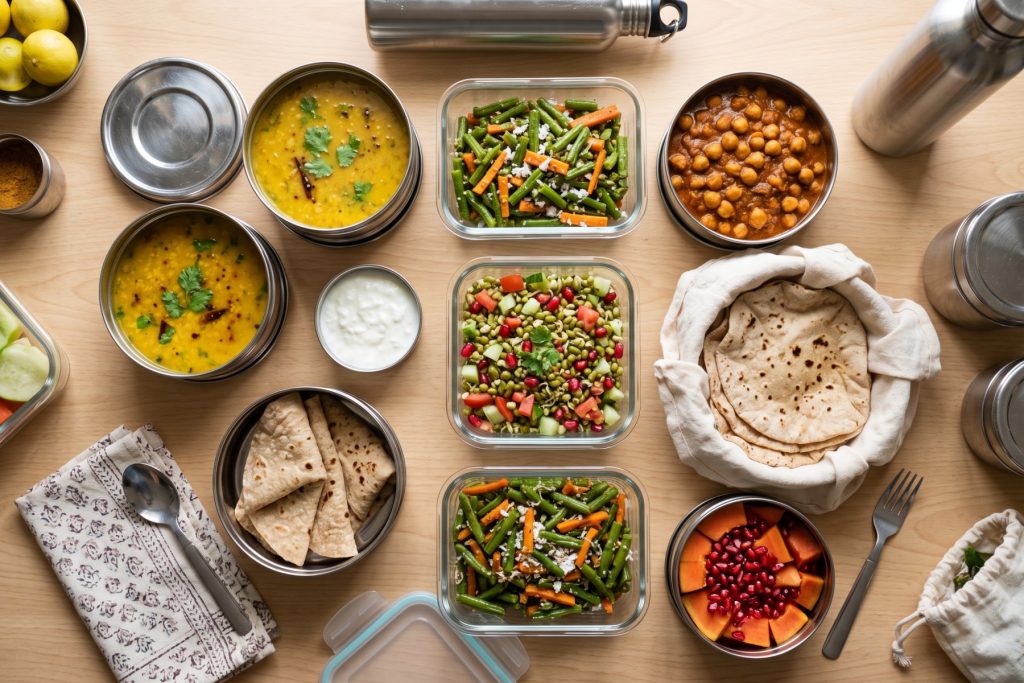
A packed lunch built around vegetables, protein and whole grains is one of the easiest ways to eat well on a workday. With an hour or so of prep at the weekend, you can have healthy lunches ready for most of the week.

For many people, workday lunch is whatever is quickest: a canteen thali heavy on rice and fried sides, a delivery order, or biscuits and chai at the desk. Then comes the 3 pm slump. Some of that afternoon dip is down to your body clock, but what and how much you eat at lunch can make it better or worse.

This guide covers what a balanced lunchbox looks like, how to prep a week of lunches without spending your whole Sunday in the kitchen, practical Indian lunch ideas, and how to keep packed food safe.

Meal prep at a glance

  • Fill half your box with vegetables. Then add a quarter protein (dal, paneer, eggs, chicken) and a quarter whole grains or millets.
  • A heavy, carb-led lunch can deepen the afternoon slump. Balance and portion size matter more than any single “superfood”.
  • Prep components, not complete meals. Cook a grain, a dal or protein, and chop vegetables once; mix and match through the week.
  • Keep it safe. Cool food quickly, refrigerate it, and eat cooked rice within a day and most other dishes within 2–3 days.
  • Lunch is only part of it. Drinking water and taking a short walk after eating also help you stay alert.

Why lunch affects your afternoon energy

The afternoon slump is real, but food is only part of the story. Research on the “post-lunch dip” shows it happens even when people skip lunch. It is partly built into the body clock and is worse when you have slept badly. The same review notes that a high-carbohydrate lunch can make it worse.

That gives you a few things you can actually control:

  • A meal that is mostly white rice, roti or bread, with little vegetable or protein, is digested quickly. Adding vegetables, dal, curd or another protein slows things down and keeps you fuller for longer.
  • Portion size. A very large lunch is more likely to leave you sluggish than a moderate one. Packing your own box makes portions easier to judge than a buffet or a large delivery order.
  • Vegetables, pulses and whole grains or millets add fibre, which helps you stay satisfied until evening, so you’re less likely to reach for biscuits or namkeen at 4 pm.
  • Sleep and water. A packed lunch can’t make up for a short night, and poor sleep affects appetite and food choices Being slightly dehydrated can also leave you feeling tired.

The balanced lunchbox formula

The ICMR–National Institute of Nutrition’s “My Plate for the Day” recommends that vegetables and fruits make up about half of what you eat, with cereals or millets, pulses or other protein, and some curd or milk, nuts and oil making up the rest. It also suggests eating from a range of food groups each day. Translated into a lunchbox, that looks like this:

Part of your box How much Indian examples
Vegetables About half Sabzi, salad, kosambari, stir-fried greens, vegetable raita
Protein About a quarter Dal, chana, rajma, sprouts, paneer, tofu, eggs, chicken, fish
Whole grains or millets About a quarter 1–2 whole wheat, jowar or bajra rotis; brown, red or hand-pounded rice; millet pulao
Extras A little Curd or buttermilk, a few nuts or seeds, a piece of fruit

Easy upgrades

  • Swap some of the grain for vegetables. If you usually pack three rotis, try two rotis and an extra serving of sabzi.
  • Add protein you can see. Many vegetarian lunches are low in protein. A bowl of dal, a handful of chana or a cube of paneer makes a real difference.
  • Pack curd or buttermilk. Both add protein and are easy to carry in a small steel box.
  • Go easy on oil and salt. Pickles, papad and fried sides add up quickly. The NIN suggests limiting added sugar to about 25–30 g a day.

How to meal prep in 60–90 minutes a week

Meal prep doesn’t mean eating the same dull box five days running. The trick is to prepare components you can combine in different ways, and to leave anything that spoils quickly for a short top-up mid-week.

1. Plan (10 minutes)

Pick two or three lunches for the week. Choose dishes that share ingredients, so one batch of chopped onions, tomatoes and greens covers several meals.

2. Batch-cook the base (45–60 minutes)

  • One protein: a pot of dal, chole or rajma, or grilled chicken or paneer.
  • Two vegetables: one dry sabzi (beans, cabbage or bhindi) and one gravy or roasted tray of mixed vegetables.
  • Raw prep: wash and chop salad vegetables, soak and sprout moong, boil eggs.
  • Grains: make roti or millet dough to keep in the fridge, and cook rice fresh on the day or the night before rather than for the whole week (see food safety below).

3. Store smart (10 minutes)

  • Portion straight away into individual boxes, so mornings are grab-and-go.
  • Keep wet and dry apart. Store dressings, chutney and raita separately so salads and rotis don’t go soggy.
  • Freeze what you won’t eat by Wednesday. Dal, chole, rajma and most cooked sabzis freeze well. Move a box to the fridge the night before.

4. Mid-week top-up (15–20 minutes)

On Wednesday evening, cook a fresh vegetable or protein and make fresh rice if you need it. This keeps Thursday and Friday lunches safe and tasting fresh.

Kit that helps

Steel or glass containers with tight lids, a compartment tiffin, a small leak-proof pot for curd or dressing, and an insulated lunch bag with an ice pack if you have no fridge at work.

10 healthy lunch ideas for work

Each of these follows the balanced lunchbox formula. Swap the protein to suit how you eat.

Lunch What’s in it Prep ahead Good for
Rajma or chole bowl Rajma or chole, a small portion of brown rice or 1–2 rotis, onion–cucumber salad Cook the rajma or chole at the weekend; it freezes well Vegetarian, high fibre
Dal, sabzi and millet roti Any dal, a dry sabzi, 2 jowar or bajra rotis, curd Dal and sabzi on Sunday; make rotis fresh or the night before Vegetarian, classic tiffin
Sprouts chaat box Moong sprouts, tomato, onion, cucumber, roasted peanuts, lemon, chaat masala Sprout moong over 2 days; pack the lemon separately Vegetarian, no reheating
Paneer or tofu tikka wrap Grilled paneer or tofu, peppers and onions, mint chutney in a whole wheat roti Marinate and grill in a batch; assemble in the morning Vegetarian, eat cold or warm
Vegetable millet pulao Foxtail or little millet cooked with mixed vegetables and peas, with raita Cook the night before; keep the raita separate Vegetarian, one-box meal
Besan chilla rolls Besan chillas filled with grated vegetables or paneer, green chutney Make the batter the night before; cook in the morning Vegetarian, high protein
Egg bhurji and veg roti Egg bhurji with onion, tomato and spinach, 2 whole wheat rotis, salad Boil or scramble eggs fresh; chop vegetables ahead Eggetarian
Chicken and vegetable stir-fry Chicken strips with beans, carrot, capsicum and cabbage, with a small portion of rice Cook the chicken in a batch; stir-fry vegetables fresh Non-vegetarian
Fish curry box Light fish curry, rice, a dry vegetable such as beans thoran Cook the curry once; eat within 2 days Non-vegetarian, omega-3
Curd rice with a twist Curd rice with grated carrot, cucumber and pomegranate, with a side of kosambari or chana Cook rice fresh the night before; mix with curd in the morning Vegetarian, cooling for hot days

Tips for variety

  • Change the cuisine, keep the formula. A rajma bowl, a paneer wrap and a millet pulao feel very different but share the same balance.
  • Rotate your grains. Alternate wheat roti with jowar, bajra, ragi, brown rice or millets across the week.
  • Keep a no-cook backup. Sprouts, boiled eggs, roasted chana and fruit cover you on days when the plan falls apart.

Keeping your lunch safe

Cooked food left warm for hours is a common cause of food poisoning, and India’s heat makes it a bigger risk. A few rules keep meal prep safe.

What Guidance
Cooling Cool cooked food and get it into the fridge within 2 hours. Spread large batches into smaller boxes so they cool faster.
Most cooked dishes Eat within about 3 days from the fridge, or freeze for up to 3 months.
Cooked rice Cool it quickly, ideally within 1 hour, refrigerate, and eat within 24 hours.
Reheating Reheat until steaming hot all the way through, and reheat rice only once.
Out of the fridge Food kept between 5°C and 60°C for more than 4 hours in total should be thrown away.

Why rice needs extra care

Raw rice can carry spores of a bacterium called Bacillus cereus that survive cooking. If cooked rice sits at room temperature, the bacteria can produce a toxin that makes it unsafe to eat. This is why rice is the one thing not to cook for the whole week. Make it fresh, or the night before, and cool it quickly.

No fridge at work?

  • Pack your lunch straight from the fridge into an insulated bag with an ice pack.
  • Choose foods that travel well, such as rotis with dry sabzi, chillas or roasted chana, over creamy gravies, rice or curd on very hot days.
  • If you have no way of keeping it cool, eat your lunch within about 4 hours of taking it out of the fridge.
  • If you use a hot-food flask, fill it with food that is already piping hot, and keep it closed until lunch.

Sprouts and salads

Rinse sprouts well and keep them chilled. Raw sprouts carry a small risk of food poisoning, so if you are pregnant, older or have a weakened immune system, steam or lightly cook them first. Add cut fruit and salad dressings on the day.

Beyond the lunchbox: other habits that help your afternoon

  • Step away from your desk. Eating while working makes it easy to overeat without noticing. Even 15 minutes away from the screen helps you notice when you’re full.
  • Take a short walk after eating. A 10-minute walk after lunch is an easy way to break up a long sitting day. Pair it with a few simple office workouts through the afternoon.
  • Keep water at your desk. Refill a bottle a couple of times through the day, especially in hot weather or air-conditioned offices, which can make you forget you’re thirsty.
  • Plan a 4 pm snack. A small, planned snack such as fruit, roasted chana, a handful of nuts, or buttermilk is better than whatever is in the office pantry.
  • Watch the extra chai. Two or three cups of sweetened tea in the afternoon add up in sugar, and caffeine late in the day can affect your sleep that night.

The bottom line

A healthy work lunch doesn’t need special ingredients or hours in the kitchen. Fill half your box with vegetables, add a good portion of protein and a moderate serving of whole grains or millets, and keep the portion sensible. An hour of batch-cooking at the weekend and a short top-up mid-week will cover most of your lunches. Store food safely, take a short walk after eating, and keep water close by.

Pro Tip: Use the GOQii App to log your lunches and see how your meals, water, steps and sleep line up with how you feel in the afternoon. Your GOQii Personalised Health Coach can help you build a weekly meal-prep plan around your food preferences, budget and work schedule.

Frequently Asked Questions (FAQs)

  1. How long does meal-prepped food last in the fridge?

Most cooked dishes, such as dal, sabzi and curries, are best eaten within about 3 days. Cooked rice should be eaten within 24 hours. Freeze anything you won’t eat in time.

  1. Is it safe to cook rice for the whole week?

No. Cooked rice can carry bacteria that produce a toxin if the rice cools slowly or is kept too long. Cook rice fresh or the night before, cool it quickly, refrigerate it, and eat it within a day.

  1. Why do I feel sleepy after lunch?

A dip in alertness in the early afternoon is partly natural and linked to your body clock. A heavy lunch that is mostly rice or bread can make it worse, and so can poor sleep. A balanced, moderate lunch and a short walk afterwards can help.

  1. How do I get enough protein in a vegetarian lunch?

Include a proper serving of dal, chana, rajma, sprouts, paneer or tofu, and add curd or buttermilk. If you eat eggs, a couple of boiled eggs or a bhurji add good-quality protein easily.

  1. What can I pack if there’s no fridge at work?

Pack your lunch straight from the fridge into an insulated bag with an ice pack. Choose foods that travel well, such as rotis with dry sabzi, chillas, sprouts kept chilled, or roasted chana, and eat within about 4 hours.

  1. Can I freeze Indian food for meal prep?

Yes. Dal, rajma, chole and most cooked sabzis freeze well for up to 3 months. Thaw them in the fridge overnight and reheat until steaming hot.

  1. How much time does meal prep take?

Around 60–90 minutes at the weekend for the main batch, plus a 15–20 minute top-up mid-week. Even prepping just one dal and chopping vegetables saves time every morning.

#BeTheForce

Disclaimer: The information provided in this blog is for general awareness and educational purposes only. It is not intended to replace professional medical advice, diagnosis, or treatment. Always consult a qualified healthcare provider for personalised medical guidance or concerns related to your health.

October 16, 2026 By GOQii Leave a Comment

5 Daily Stretches to Prevent & Relieve Lower Back Pain

A few gentle stretches a day can ease lower back stiffness and help keep pain from coming back. They work best as part of staying active, not as a replacement for it.

Lower back pain is the leading cause of disability worldwide, affecting around 619 million people. Long hours at a desk, long commutes and too little movement all play a part. In about 90% of cases there is no specific disease or injury behind it. Doctors call this non-specific low back pain, and it usually improves with time and movement.

The five stretches below are simple, need no equipment, and take about 10 minutes. They suit everyday stiffness and mild, non-specific back pain. If your pain is severe, follows an injury or comes with other symptoms, read the safety section first.

Lower back pain at a glance

  • Most back pain is not serious. It usually improves within a few weeks and isn’t caused by damage.
  • Movement helps, bed rest doesn’t. Staying active is the main advice from the NHS and WHO.
  • Exercise reduces pain. A large Cochrane review of 249 trials found it eases chronic low back pain more than no treatment.
  • Gentle is enough. Stretches may feel a little uncomfortable, but they shouldn’t make your pain clearly worse.
  • Little and often works best. About 10 minutes, once or twice a day.
  • Know the warning signs. Numbness, leg weakness or bladder changes need urgent care, not stretching.

Before you start

These stretches are safe for most people with everyday back stiffness. A few simple rules keep them that way:

  • Move slowly. No bouncing or jerking. Ease into each stretch until you feel a gentle pull.
  • Mild discomfort is fine; sharp pain is not. NHS physiotherapy advice is that exercises may feel uncomfortable but shouldn’t significantly increase your symptoms. If one does, skip it and try the others.
  • Breathe normally. Don’t hold your breath during a stretch.
  • Use a mat or carpet. Most of these are done lying down.
  • Check first if you need to. If you are pregnant, have had back surgery, or have a diagnosed spine condition such as osteoporosis or a slipped disc, ask your doctor or physiotherapist which stretches suit you.

Don’t stretch, get help

Stop and get urgent medical help if your back pain comes with any of these warning signs:

  • Numbness, tingling or weakness in both legs
  • Numbness around your genitals or bottom
  • New difficulty passing urine, or losing control of your bladder or bowels
  • Chest pain, fever or feeling generally unwell
  • Pain that started after a fall or accident

These can be signs of a serious problem that needs prompt treatment.

The 5 stretches

The first four are stretches and the fifth gently strengthens the muscles that support your back. The knee-to-chest stretch, knee rolls and bridge all appear in NHS physiotherapy advice for low back pain. Cat–cow and child’s pose are gentle mobility stretches widely used in physiotherapy and yoga.

The evidence supports regular exercise in general rather than any single move. The largest review, covering 249 trials, found that exercise reduced chronic low back pain more than no treatment, but it didn’t single out one type as best. So pick the stretches that feel good for you and do them regularly.

1. Knee-to-chest stretch

Good for: easing tightness across the lower back.

  1. Lie on your back with your knees bent and feet flat on the floor.
  2. Hold your knees, or behind your thighs if that is more comfortable for your knees, and gently draw both knees towards your chest.
  3. Stop when you feel a comfortable stretch in your lower back. Keep your head and shoulders relaxed on the floor.
  4. Hold for 20–30 seconds, breathing slowly, then lower your feet one at a time.

Repeat: 3 times. Easier version: bring one knee up at a time.

Avoid: yanking your knees in hard, or lifting your head. The stretch should come from a gentle hug, not force.

2. Knee rolls

Good for: gently loosening the lower back and hips with a twisting movement.

  1. Lie on your back with your knees bent, feet flat, and arms out to the sides.
  2. Keeping your knees together and both shoulders on the floor, slowly roll your knees to one side.
  3. Go only as far as is comfortable, pause for a breath, then roll back to the middle.
  4. Repeat on the other side.

Repeat: 8–10 times each side.

Avoid: letting your shoulders lift off the floor, or dropping your knees quickly.

3. Cat–cow

Good for: moving the whole spine gently, especially after sitting.

  1. Start on your hands and knees, with hands under your shoulders and knees under your hips.
  2. Breathe in and let your belly drop gently while you lift your chest and tailbone (cow).
  3. Breathe out and round your back up towards the ceiling, tucking your chin and tailbone (cat).
  4. Move slowly between the two, in time with your breath.

Repeat: 8–10 times. If your wrists hurt: rest on your fists or forearms.

Avoid: forcing either end of the movement. Work within a range that feels easy.

4. Child’s pose

Good for: a gentle stretch along the back and hips, and a calm way to finish.

  1. From hands and knees, sit your hips back towards your heels.
  2. Walk your hands forward and rest your forehead on the floor or a cushion.
  3. Let your back and shoulders relax, and breathe into your lower back.
  4. Hold for 20–30 seconds, or longer if comfortable.

Repeat: 2–3 times. Easier version: widen your knees, or put a pillow between your hips and heels.

Avoid: this one if it hurts your knees. Do an extra knee-to-chest stretch instead.

5. Glute bridge

Good for: strengthening the buttock and core muscles that support your lower back.

  1. Lie on your back with your knees bent, feet flat and hip-width apart, and arms by your sides.
  2. Tighten your stomach muscles gently and squeeze your buttocks.
  3. Lift your hips until your shoulders, hips and knees form a straight line.
  4. Hold for 3–5 seconds, then lower slowly.

Repeat: 8–10 times.

Avoid: arching your back or lifting too high. The work should come from your buttocks, not your lower back.

Your 10-minute daily routine

Order Stretch How much Time
1 Cat–cow 8–10 slow rounds 1 min
2 Knee rolls 8–10 each side 2 min
3 Knee-to-chest 3 × 20–30 seconds 2 min
4 Glute bridge 8–10 lifts, 2 sets 2–3 min
5 Child’s pose 2–3 × 20–30 seconds 2 min

Do it once or twice a day. The NHS leaflet suggests little and often, morning and afternoon.

Making it a habit

  • Tie it to something you already do. Straight after waking, after your evening walk, or before bed.
  • Start small. Even three of the five stretches is better than none on a busy day.
  • Use desk breaks. A seated cat–cow (slowly arching and rounding your back in your chair) and a standing side bend are easy to do at work after long sitting.
  • Expect gradual change. Stiffness often eases within days; it can take a few weeks of regular practice to notice less pain.

Beyond stretching: what else keeps your back healthy

Walk more

Walking is one of the simplest ways to keep back pain away. In a 2024 trial in The Lancet, 701 adults who had just recovered from low back pain followed a gradual walking programme with some physiotherapist guidance. They went a median of 208 days before their pain came back, compared with 112 days for those who didn’t. A daily walk pairs well with your stretching routine.

Keep moving, even when it hurts a little

During a flare-up, it is tempting to rest in bed. The NHS advises the opposite: stay active and keep up your normal activities as far as you can. Long bed rest tends to make stiffness worse.

Break up long sitting

No single posture is perfect, and there is little evidence that sitting a certain way causes back pain on its own. What helps most is changing position often. Stand up or walk for a minute or two every 30–45 minutes, and try a few simple office stretches between meetings. A comfortable desk setup, with your screen at eye level and your feet supported, makes long workdays easier.

Build strength

Stronger buttock, hip and core muscles help support your back. The bridge is a good start. Over time, add squats, step-ups or pilates-style exercises. WHO guidance recommends exercise programmes for chronic low back pain, and does not recommend back belts or braces for most people.

Look after sleep, stress and weight

Poor sleep and stress can make back pain feel worse and last longer, and WHO lists good sleep, activity and a healthy diet among the lifestyle changes that help. Keeping to a healthy weight also eases the load on your back.

When to see a doctor or physiotherapist

Most back pain gets better within a few weeks. See a doctor if your back pain:

  • doesn’t improve after a few weeks of home care, or stops you doing everyday activities
  • is worse at night or doesn’t ease with rest
  • comes with unexplained weight loss, fever or feeling unwell
  • gets worse when you cough, sneeze or go to the toilet
  • spreads down one leg, with numbness or tingling
  • worries you, or you’re finding it hard to cope

A physiotherapist can check what is going on and give you an exercise plan tailored to you. This is especially useful if your pain keeps coming back.

Go to A&E or call emergency services straight away for the warning signs listed in Before you start, such as numbness around your genitals or bottom, weakness in both legs, or changes in bladder or bowel control.

The bottom line

For most people, lower back pain is common, not serious, and gets better with movement. Ten minutes of gentle stretching a day, plus regular walking and fewer long stretches of sitting, is one of the simplest ways to ease stiffness and keep pain from returning. Go gently, stop anything that makes your pain clearly worse, and get help quickly if you notice any warning signs.

Pro Tip: A routine only helps if you keep it up. Use the GOQii App to track your steps, activity and sleep, and set a daily reminder for your stretches. Your GOQii Personalised Health Coach can help you build a movement plan around your work day, so back-friendly habits become part of your routine.

Frequently Asked Questions (FAQs)

  1. How often should I do these stretches?

Once or twice a day is a good aim. Little and often works better than a long session once a week. The full routine takes about 10 minutes.

  1. Should I stretch if my back already hurts?

Gentle movement usually helps, even during a flare-up. Stretches may feel a little uncomfortable, but they shouldn’t make your pain clearly worse. If one does, skip it. Don’t stretch through sharp pain, and see a doctor if the pain is severe or followed an injury.

  1. How long should I hold each stretch?

Hold static stretches such as knee-to-chest and child’s pose for 20–30 seconds. Moving stretches such as cat–cow and knee rolls are done slowly, 8–10 times.

  1. Is it better to rest or stay active with back pain?

Stay active. The NHS advises keeping up normal activities as far as you can, because long bed rest tends to make back pain and stiffness worse.

  1. Can stretching prevent back pain from coming back?

Regular exercise lowers the chances of back pain returning, and walking has some of the best evidence. In one large trial, a walking programme nearly doubled the time before people’s back pain came back. Stretching works best as part of staying generally active.

  1. Can I do these stretches at work?

A seated cat–cow, slowly arching and rounding your back in your chair, and a standing side bend are easy to do during a break. The floor stretches are better at home, before or after work. Standing up and moving every 30–45 minutes also helps.

  1. When should I see a doctor about lower back pain?

See a doctor if your pain doesn’t improve after a few weeks, stops you doing everyday things, is worse at night, or comes with fever or weight loss. Get urgent help for numbness around your genitals or bottom, weakness in both legs, or changes in bladder or bowel control.

#BeTheForce

Disclaimer: The information provided in this blog is for general awareness and educational purposes only. It is not intended to replace professional medical advice, diagnosis, or treatment. Always consult a qualified healthcare provider for personalised medical guidance or concerns related to your health.

October 13, 2026 By GOQii Leave a Comment

The Link Between Sleep & Weight Gain

At a glance

  • The link is real. Across 12 long-term studies, the risk of obesity rose by about 9% for each hour of sleep below seven.
  • It is mostly about eating more, not burning less. In pooled trial data, people ate around 385 kcal more per day when their sleep was cut short. The energy they burned barely changed.
  • Belly fat seems especially affected. Two weeks of four-hour nights raised deep abdominal fat by 11% in one tightly controlled study.
  • More sleep helps. Adults who extended their sleep by about 1.2 hours ate roughly 270 kcal less per day, without any diet advice.
  • It runs both ways. Excess weight raises the risk of sleep apnoea, which then disrupts sleep.
  • Sleep supports weight management. It does not replace it. It has not yet been shown that sleeping more, with nothing else changed, produces large or lasting weight loss.

Most weight advice comes down to two things: what you eat and how much you move. Sleep usually gets whatever time is left once work, the commute, dinner and the phone have taken theirs, even though sleep and weight gain are closely tied.

That ordering deserves a second look. Over the past two decades, research on sleep and weight gain has moved from noticing that short sleepers tend to weigh more to testing the idea directly: cutting people’s sleep under controlled conditions and measuring what happens to their appetite, their activity and their body fat. The results are consistent enough to act on, and more modest than the headlines suggest.

Does poor sleep cause weight gain?

Yes, it can. Regularly sleeping less than about seven hours a night is linked to a higher risk of gaining weight, and controlled trials show that at least part of that link is cause and effect.

The main route is appetite. People who are short on sleep eat more the next day, particularly in the evening, while burning roughly the same amount of energy. Over weeks, some of that surplus is stored as fat around the abdomen.

Sleep is one of several everyday habits that contribute to weight gain. Diet, physical activity, genetics, age, medicines and medical conditions all influence weight, and a full night’s sleep does not cancel any of them out. What sleep does is make the other things easier or harder to do.

What the research shows

Two kinds of evidence point the same way: large studies that follow people for years, and small experiments that change how long people sleep.

Long-term studies

A 2019 analysis in Sleep and Breathing pooled 12 studies that tracked sleep and weight over time. Obesity risk was lowest at seven to eight hours a night. Below seven, it rose by about 9% for each hour lost. Sleeping longer than that was not clearly linked to obesity either way.

Studies like these cannot prove cause. People who sleep little often differ in other ways: more stress, shift work, illness or low mood. Many also relied on people reporting their own sleep, which is not very accurate.

Sleep experiments

Trials deal with that problem by changing sleep and watching what follows.

Study What was changed What happened
Al Khatib et al., 2017: pooled analysis of 11 trials, 172 people Sleep partly restricted, across several trial designs Ate about 385 kcal more per day. Energy burned did not change significantly.
Covassin et al., 2022: 12 healthy adults living in a research unit Four hours in bed instead of nine, for 14 nights Ate over 300 kcal more per day. Gained about 0.5 kg. Deep abdominal fat rose 11%.
Zuraikat et al., 2026: 95 adults at home Bedtime pushed back for six weeks, losing about 80 minutes a night Gained about 0.45 kg. Was sedentary for 17 minutes longer each day.
Tasali et al., 2022: 80 adults with overweight, at home Sleep extended by about 1.2 hours for two weeks Ate about 270 kcal less per day than the comparison group.

How to read these numbers

The effect on any one person in any one week is small. Half a kilogram in six weeks is easy to miss. The concern is the slow drift when short nights become the routine for years.

The trials have limits too. Most are small and brief, and several used far harsher sleep loss than most people live with. The 2026 study matters because it tested something ordinary: going to bed about an hour and a half late.

How lack of sleep leads to weight gain

Short sleep does not act through one switch. Several small changes push in the same direction.

1. You eat more, and mostly late

More hours awake means more chances to eat, and the extra tends to arrive at night. In a 2013 study in Sleep, adults limited to four hours in bed, from 4 am to 8 am, ate an average of 553 extra kcal during the late-night hours.

This is the most consistent finding in the field. It is also the most useful one, because it is something you can plan around, for example by eating in line with your body clock.

2. High-calorie food becomes harder to resist

Tiredness changes what you want, not only how much. In a brain-imaging study of 23 adults, a night without sleep dulled activity in frontal regions involved in weighing up choices and heightened the response of the amygdala, a region involved in how appealing something feels.

Participants wanted high-calorie foods more. Their reported hunger did not change. That fits a familiar experience: after a bad night you are not hungrier for dal and vegetables, you are drawn to biscuits, namkeen and something sweet with your chai.

3. Hunger hormones may shift, though the evidence is mixed

This is the explanation you will read most often: sleep loss lowers leptin, which signals fullness, and raises ghrelin, which signals hunger. It comes from a well-known 2004 experiment in 12 young men. After two nights of four hours in bed, leptin fell 18%, ghrelin rose 28% and appetite rose 24%.

Later studies have not always agreed. A 2025 meta-analysis of six randomised trials concluded that sleep deprivation “does not consistently affect leptin and ghrelin levels”. A 2021 review found leptin reported as lower, unchanged and higher across studies.

Hormones probably play a part. The evidence that tired people eat more is much firmer than the evidence for exactly why.

4. You move a little less

In the 2026 trial, people were sedentary for about 17 minutes longer each day during the weeks of shorter sleep. That is a small amount, repeated daily. A planned workout is also easier to skip when you are tired.

5. Your body handles sugar less well

In a two-week study of 36 healthy adults, five-hour nights reduced insulin sensitivity by 13%. Lower insulin sensitivity is an early step on the road to type 2 diabetes.

6. More of the extra is stored around the abdomen

In the Mayo Clinic study, total abdominal fat rose 9% and visceral fat, the deep fat around the organs, rose 11% compared with normal sleep. Body weight went up by only about half a kilogram, so the scales alone would have missed it.

This matters in India in particular. In the ICMR-INDIAB national survey, 39.5% of adults had abdominal obesity, a pattern closely tied to heart disease and diabetes.

Weight can disrupt sleep too

The link runs in both directions. Obesity is one of the main risk factors for obstructive sleep apnoea, in which the airway narrows during sleep and breathing repeatedly stops and starts.

Each pause briefly rouses the brain, often without the person knowing. The result is a full night in bed and very little rest, followed by a tired day that makes activity harder and snacking easier.

The NHS lists these signs of sleep apnoea:

  • Breathing that stops and starts during sleep
  • Gasping, snorting or choking noises
  • Loud snoring
  • Waking often in the night
  • Feeling very tired in the day, with poor concentration or headaches on waking

A partner usually notices before you do. Sleep apnoea is treatable, and losing weight can improve it, so the loop can be broken from either side.

When to speak to a doctor

Book an appointment if any of these apply:

  • You have the signs of sleep apnoea listed above.
  • You have struggled to fall asleep or stay asleep for three months or more.
  • You sleep seven hours or more and still feel exhausted.
  • Your weight has changed noticeably without a clear reason.

Several medical conditions and some medicines affect both sleep and weight. A doctor can check for these. Do not stop a prescribed medicine without advice.

Can sleeping more help you lose weight?

It can help, and it is not a weight-loss method in its own right. Three findings show where the benefit lies.

Sleeping longer reduced how much people ate. In the University of Chicago trial, 80 adults with overweight who slept under six and a half hours had one counselling session on sleep habits. They slept about 1.2 hours longer and ate around 270 kcal less per day than the comparison group. Nobody gave them diet advice. The trial lasted two weeks and was not designed to measure weight loss.

Short sleep made a diet less effective. In a small study of 10 adults on a reduced-calorie diet, people lost about 3 kg in two weeks whether they had 8.5 or 5.5 hours in bed. With less sleep, only about 0.6 kg of that was fat, against 1.4 kg with more sleep. The rest was lean tissue, including muscle, which is one reason sleep matters for muscle recovery. They also felt hungrier.

Weekend lie-ins did not undo the week. In the two-week study of 36 adults, one group slept five hours on work nights and as long as they liked over the weekend. They still gained about 1.4 kg, the same as the group kept on five hours throughout, and their late-night snacking returned as soon as the short nights did.

Put together: enough sleep, most nights, makes eating sensibly and staying active easier, and helps a diet take fat instead of muscle. Longer-term trials are still needed to show how much weight this shifts over years.

What to do about it

For general advice, see our 12 science-backed tips for better sleep. The steps below are aimed at the specific ways short sleep affects weight.

  1. Find your real number. Track your sleep for two weeks with a wearable or a simple diary, then look at the average, not your best night. Sleep experts recommend seven or more hours for adults. If you are well short, that gap is your target.
  2. Fix the wake-up time first. Get up at the same time every day, then move bedtime earlier in steps of 15 to 20 minutes. Small shifts tend to be easier to keep than a sudden jump of an hour.
  3. Give the kitchen a closing time. The extra calories arrive late, so decide in advance when eating ends, ideally two to three hours before bed. If work keeps you up, plan one proper snack in place of open-ended grazing.
  4. Expect the cravings after a bad night. You will want sweet, salty and fried food more than usual. Knowing this helps. Eat your normal meals on time, keep snacks out of arm’s reach and avoid ordering in while tired.
  5. Move anyway, at lower intensity. Tired days are when sitting creeps up. A 15-minute walk after lunch and dinner is worth more than a missed workout you meant to do.
  6. Keep weekends close to weekdays. Aim to stay within about an hour of your usual times. Catch-up sleep feels good and does not fully clear a week of sleep debt.
  7. Protect the last hour. Caffeine after mid-afternoon, alcohol near bedtime and a phone in bed can all cut into sleep. Put the phone to charge outside the bedroom if you can.

If your schedule is not in your hands

Shift workers, new parents and carers cannot simply go to bed earlier. A review of 28 studies found night-shift workers had a 23% higher risk of overweight or obesity, with the strongest link for abdominal obesity.

If this is you, the same priorities apply in a different order. Protect one main block of sleep in a dark, quiet room. Plan what you will eat before the shift starts, so the small hours are not left to the vending machine or the delivery app. Take naps when you can get them.

None of this is a failure of willpower. Being short of sleep makes food harder to manage for everyone.

The takeaway

Sleep will not do the work of a balanced diet and regular movement. It decides how hard that work feels. If your weight has been creeping up and your nights have been getting shorter, the two may be connected, and sleep is a reasonable place to start.

Pro Tip: Not sure how much you sleep? Use the GOQii App to track your sleep, activity and meals side by side for two weeks. Your GOQii Personalised Health Coach can help you spot how short nights show up in your eating and build a routine that suits your schedule.

Frequently asked questions

How many hours of sleep do I need to avoid weight gain?

Most adults need seven or more hours a night. In long-term studies, obesity risk was lowest at seven to eight hours. Needs vary between people, and those studies found no added benefit for weight from sleeping longer.

Does lack of sleep slow your metabolism?

Not by much. In pooled trial data, the energy people burned did not change significantly when sleep was restricted. The weight gain comes mainly from eating more, about 385 kcal a day on average.

Can lack of sleep cause belly fat?

It appears to contribute. In a controlled study, two weeks of four-hour nights increased visceral fat by 11% compared with normal sleep, even though body weight rose by only about half a kilogram. The study was small, with 12 participants.

Why do I crave junk food when I am tired?

Sleep loss changes how the brain responds to food. Brain scans show weaker activity in regions that weigh up choices and a stronger response in a region tied to how appealing food feels. People want richer food without necessarily feeling hungrier.

Will sleeping more help me lose weight?

It can support weight loss and is unlikely to cause it alone. In one trial, adults who slept about 1.2 hours longer ate around 270 kcal less per day. Whether that leads to lasting weight loss has not yet been tested in long-term trials.

Can I catch up on sleep at the weekend?

Only partly. In a two-week study, people who slept in over the weekend after five-hour weeknights still gained weight and still showed reduced insulin sensitivity. Regular sleep through the week works better.

Can sleeping too much cause weight gain?

The evidence is weak. In a pooled analysis of long-term studies, longer sleep was not significantly linked to obesity. Regularly needing much more sleep than usual, or sleeping long and still feeling tired, is worth raising with a doctor.

#BeTheForce

Disclaimer: This article is for general information and education only. It is not a substitute for professional medical advice, diagnosis or treatment. If you have ongoing sleep problems, symptoms of sleep apnoea, unexplained changes in weight or a long-term health condition, please speak to a qualified healthcare professional before making changes to your routine.

June 23, 2026 By GOQii Leave a Comment

Monsoon Health Tips: How to Boost Your Immunity During Seasonal Changes

The Big Question: Why do so many people fall sick during the initial, patchy onset of the monsoon, when the weather transitions between dry heat and sudden showers?

The onset of the rainy season is one of the most volatile windows for human health. As regions transition from intense summer heat to humid, scattered showers, our bodies are subjected to rapid temperature and humidity swings. This damp, shifting climate creates a thriving environment for airborne and foodborne pathogens to multiply. If your immune system is caught off guard by these sudden seasonal changes, you become highly vulnerable to seasonal flu, respiratory infections, and sudden digestive distress.

Preparing your body for this erratic seasonal shift requires a proactive approach to your daily lifestyle. By making conscious, nutrition-focused adjustments to your plate right now, you can strengthen your cellular defenses and protect your health during this unpredictable monsoon transition.

Why Do We Fall Sick During Seasonal Weather Shifts?

The weeks overlapping the pre-monsoon and early monsoon phases bring rapid fluctuations in temperature and humidity. These environmental shifts force our bodies to work overtime to regulate internal temperature, which can subtly lower our baseline immune response.

At the same time:

  • Accelerated Food Spoilage: Rising humidity causes food to spoil much faster, encouraging swift bacterial growth on exposed meals.
  • Respiratory Irritation: Dusty transition winds, pollen, and sudden humidity changes can irritate the respiratory tract, making it easier for viruses to take hold.
  • Early Water Contamination: Initial rains often wash contaminants into local water systems long before the heavy, continuous downpours arrive, spiking the risk of waterborne illnesses.
  • Gastrointestinal Sensitivity: Digestion naturally slows down and becomes more sensitive as ambient heat shifts into heavy humidity.

Supporting your immune system during this seasonal change doesn’t require expensive supplements—it starts with your everyday habits.

10 Simple Ways to Strengthen Your Immunity Naturally

  1. Stay Well Hydrated

With the sticky humidity making you sweat constantly, your body loses fluids rapidly even if the day feels slightly cooler than peak summer. Aim for 8–10 glasses of clean, filtered water each day to support vital metabolic and detoxification functions. If you are traveling or out during sudden showers, strictly choose filtered, boiled, or packaged drinking water to keep waterborne pathogens at bay.

  1. Include Protein in Every Meal

Your immune system relies on protein to build antibodies and repair body tissues. A protein-deficient diet severely compromises your body’s ability to mount a timely defense against seasonal infections. Ensure every meal contains a clean protein source, such as:

  • Organic eggs or lean chicken
  • Paneer, organic soy, or tofu
  • Sprouts and mixed pulses
  • Lentils, dals, chickpeas, and beans
  1. Add Gut-Friendly Foods

Your gut microbiome houses roughly 70% of your body’s immune cells. Keeping your digestive system functioning well is critical right now, as fluctuating seasonal weather can easily cause indigestion.

Include fermented foods rich in probiotics like fresh curd, unsweetened yogurt, or homemade buttermilk. These foods contain beneficial bacteria that strengthen your intestinal barrier, improve nutrient absorption, and directly help your body fight off early seasonal stomach bugs.

  1. Drink Warm Herbal Beverages

Instead of choosing sugary soft drinks or iced beverages to beat the humidity, opt for warm herbal infusions. A simple cup of ginger and tulsi (Holy Basil) tea introduces natural compounds that help soothe throat irritations caused by seasonal dust storms. If desired, you can add a small amount of raw honey after the tea has cooled slightly for its natural antibacterial properties.

  1. Make Spices Your Everyday Allies

Traditional Indian kitchens already contain several ingredients that serve as potent, natural medicine to keep your digestive and respiratory systems firing efficiently through seasonal shifts. Intentionally include spices such as:

  • Turmeric: Packed with curcumin, which helps regulate immune responses.
  • Ginger & Black Pepper: Stimulates digestive enzymes and clears excess mucus.
  • Cinnamon, Cloves, & Fenugreek: Deliver robust antimicrobial and anti-inflammatory properties.
  1. Eat Plenty of Seasonal Fruits

Fresh fruits provide vitamins, minerals, fiber, and antioxidants that support overall health. Prioritize whole options like amla (Indian gooseberry), guava, apples, pomegranates, oranges, and pears. Amla and citrus fruits are exceptionally rich in Vitamin C, which supports white blood cell production and significantly enhances your body’s ability to absorb iron from plant-based meals. Always choose whole fruits instead of packaged fruit juices.

  1. Cook Vegetables Thoroughly

As humidity and sporadic rains increase, dust, mud, and micro-pests easily cling to raw leaves. Green leafy vegetables like spinach and cabbage are incredible sources of vitamins, but during this seasonal transition, they require careful preparation. Wash vegetables thoroughly and cook them well before eating. Steamed, sautéed, or lightly cooked vegetables are a much safer choice right now than raw salads.

  1. Get Enough Vitamin D

Overcast or hazy skies during seasonal shifts often mean less consistent sunlight, which can cause personal Vitamin D levels to drop. Vitamin D is a crucial micronutrient that modulates your frontline immune responses. Whenever possible, spend a few minutes outdoors during clear daylight hours, and include Vitamin D-rich foods in your meals like egg yolks, mushrooms, fortified dairy products, and fatty fish.

  1. Choose Healthy Fats

Incorporate a steady supply of monounsaturated (MUFAs) and polyunsaturated (PUFAs) healthy fats into your daily diet. These fats are essential for building strong, flexible cell membranes that can resist pathogen entry while lowering systemic inflammation. Include foods like:

  • Almonds and walnuts
  • Flaxseeds and chia seeds
  • Pumpkin and sesame seeds
  • Fatty fish and avocados
  1. Prioritise Sleep and Regular Activity

Nutrition is only one part of a strong immune system; your immune cells require a balanced approach to your wider lifestyle to handle changing weather:

  • Quality Sleep: Aim for 7–8 hours of uninterrupted sleep each night to allow your body to generate fresh T-cells and release protective cytokines.
  • Regular Physical Activity: Engaging in regular, moderate indoor workouts boosts blood circulation, helping your immune cells patrol your body more efficiently.
  • Stress Management: High mental stress floods your bloodstream with cortisol, which suppresses immune function over time. Dedicate a few minutes daily to yoga, meditation, or deep breathing.

Foods and Habits to Avoid

During this patchy monsoon transition, it’s equally important to be mindful of what you avoid to prevent overwhelming your natural defenses.

Limit Sugary Foods and Drinks

Consuming refined sugar triggers a temporary but severe drop in the ability of your white blood cells to actively engulf and destroy harmful bacteria. Excess sugar also adds empty calories and may displace more nutritious foods from your diet. Satisfy your sweet cravings with fresh fruit or naturally sweet foods in moderation.

Avoid Street Food

Open food stalls are highly susceptible to dust from high winds, flies, and changing temperatures, creating a perfect breeding ground for bacteria during partial rainy weather. To avoid acute gastroenteritis and indigestion, choose freshly prepared, home-cooked meals whenever possible.

Skip Pre-Cut Fruits

Pre-cut fruits or unpasteurized raw juices from street vendors can become rapidly contaminated if left exposed to humid air for long periods. Exposed fruit slices quickly attract airborne germs, which can lead to sudden food poisoning. Wash fresh fruits thoroughly and cut them yourself just before eating.

The Seasonal Transition Immunity Matrix

The Immune Pillars The Weather Transition Disruptor The Scientific Lifestyle Solution
Microbiome Integrity Heavy humidity encourages food spoilage and indigestion. Probiotic Defense: Prioritize fresh curd and yogurt to strengthen your gut barrier.
Cellular Activation Erratic, dusty winds and dampness irritate the respiratory lining. Herbal Infusions: Drink Tulsi and ginger tea with honey to soothe mucous membranes.
Vascular Health Dehydration from sticky, changing weather strains circulation. Potable Hydration: Maintain a strict 8-10 glasses of clean, filtered water daily.

Beyond Nutrition: Build Everyday Immunity

Good immunity isn’t built overnight through quick-fix supplements. It develops through consistent, healthy daily choices:

✔ Stay hydrated with clean water

✔ Eat balanced, protein-rich meals

✔ Sleep 7–8 hours nightly

✔ Stay physically active indoors

✔ Manage stress intentionally

✔ Maintain good hand hygiene

Small daily choices make the biggest difference when navigating patchy seasonal transitions.

Seasonal changes are unavoidable, but frequent illness doesn’t have to be. By eating nutritious meals, staying hydrated, practicing good food hygiene, and maintaining healthy lifestyle habits, you can help your body adapt to changing weather and reduce your risk of seasonal infections. This monsoon transition, think of immunity not as a quick fix, but as something you build every day—one healthy choice at a time.

Pro Tip: Preparing for seasonal changes is easier when you track your daily habits. Use the GOQii App to monitor your water intake, meals, activity levels, sleep, and stress patterns. You can seamlessly share this health data with your GOQii Personalised Health Coach to receive a customized seasonal transition plan, immune-boosting recipes, and lifestyle guidance tailored perfectly to your goals!

Frequently Asked Questions (FAQs)

  1. Why do people tend to fall sick during the initial monsoon transition?

Changes in temperature and rising humidity can affect the way our body regulates its internal temperature, which can temporarily lower the baseline immune response. Additionally, early humidity accelerates food spoilage, dusty transition winds carry respiratory irritants, and micro-pathogens thrive in damp conditions, making infections common during this patchy weather shift.

  1. Which foods help support immunity during seasonal shifts?

A macro and micronutrient-balanced diet is highly effective. Include clean plant or animal proteins (like eggs, sprouts, and pulses) to build antibodies, probiotic foods (like fresh curd and yogurt) to support your gut defense, fiber-rich whole fruits (like amla and guava) for Vitamin C, healthy fats (like nuts and seeds), and anti-inflammatory spices like turmeric and ginger.

  1. Is it safe to eat salads during this seasonal change?

If you choose to eat raw vegetables, you must wash them exceptionally thoroughly under running water. However, during periods of high humidity and dusty winds, microorganisms can easily cling to the intricate folds of raw leaves. For optimal digestive safety, many health professionals prefer lightly cooked, blanched, or sautéed vegetables over raw salads during this season.

  1. Can Vitamin C prevent colds during the rains?

Vitamin C supports normal immune function and helps optimize white blood cell activity, but it does not act as an impenetrable shield that guarantees you will avoid catching a cold. Consuming Vitamin C helps shorten the duration and lessen the severity of seasonal flu symptoms, but a balanced diet, quality sleep, and consistent hygiene remain the most effective approach.

#BeTheForce

Disclaimer: This article is intended for educational and informational purposes only. It is not intended to replace professional medical advice, clinical diagnosis, or personalized healthcare treatment. Always consult your primary care physician or a qualified healthcare provider before making major alterations to your diet or lifestyle, especially if you have an underlying gastrointestinal condition or chronic metabolic disorder.

  • « Previous Page
  • 1
  • …
  • 10
  • 11
  • 12
  • 13
  • 14
  • …
  • 37
  • Next Page »

Search

Recent Posts

  • Healthy Eating: Vegetable and Paneer Kathi Roll
  • The Science of Power Naps: How Long is Too Long?
  • 7 Reasons Why Pulses Are Good For You!
  • How Exercise Impacts Mental Health
  • Dussehra 2026: 10 Unhealthy Habits to Leave Behind

Stay Updated

Archives

  • October 2026 (17)
  • September 2026 (5)
  • August 2026 (8)
  • July 2026 (25)
  • June 2026 (22)
  • May 2026 (20)
  • April 2026 (24)
  • March 2026 (18)
  • February 2026 (14)
  • January 2026 (14)
  • December 2025 (19)
  • November 2025 (15)
  • October 2025 (20)
  • September 2025 (6)
  • August 2025 (5)
  • July 2025 (9)
  • June 2025 (18)
  • May 2025 (16)
  • April 2025 (22)
  • March 2025 (25)
  • February 2025 (21)
  • January 2025 (25)
  • December 2024 (21)
  • November 2024 (21)
  • October 2024 (15)
  • September 2024 (22)
  • August 2024 (27)
  • July 2024 (15)
  • June 2024 (23)
  • May 2024 (26)
  • April 2024 (27)
  • March 2024 (27)
  • February 2024 (23)
  • January 2024 (21)
  • December 2023 (14)
  • November 2023 (10)
  • October 2023 (18)
  • September 2023 (20)
  • August 2023 (16)
  • July 2023 (16)
  • June 2023 (21)
  • May 2023 (20)
  • April 2023 (19)
  • March 2023 (23)
  • February 2023 (19)
  • January 2023 (15)
  • December 2022 (11)
  • November 2022 (15)
  • October 2022 (15)
  • September 2022 (12)
  • August 2022 (9)
  • July 2022 (17)
  • June 2022 (11)
  • May 2022 (10)
  • April 2022 (6)
  • March 2022 (6)
  • February 2022 (13)
  • January 2022 (11)
  • December 2021 (7)
  • November 2021 (3)
  • October 2021 (6)
  • September 2021 (3)
  • August 2021 (8)
  • July 2021 (7)
  • June 2021 (15)
  • May 2021 (16)
  • April 2021 (10)
  • March 2021 (7)
  • February 2021 (4)
  • January 2021 (4)
  • December 2020 (3)
  • November 2020 (4)
  • October 2020 (10)
  • September 2020 (3)
  • August 2020 (3)
  • July 2020 (2)
  • June 2020 (4)
  • May 2020 (10)
  • April 2020 (12)
  • March 2020 (10)
  • February 2020 (4)
  • January 2020 (4)
  • December 2019 (3)
  • November 2019 (7)
  • October 2019 (5)
  • September 2019 (4)
  • August 2019 (9)
  • July 2019 (9)
  • June 2019 (11)
  • May 2019 (4)
  • April 2019 (8)
  • March 2019 (8)
  • February 2019 (9)
  • January 2019 (8)
  • December 2018 (9)
  • November 2018 (3)
  • October 2018 (3)
  • September 2018 (5)
  • August 2018 (10)
  • July 2018 (6)
  • June 2018 (13)
  • May 2018 (8)
  • April 2018 (17)
  • March 2018 (9)
  • February 2018 (8)
  • January 2018 (15)
  • December 2017 (12)
  • November 2017 (19)
  • October 2017 (13)
  • September 2017 (15)
  • August 2017 (4)
  • July 2017 (8)
  • June 2017 (7)
  • May 2017 (6)
  • April 2017 (8)
  • March 2017 (6)
  • February 2017 (7)
  • January 2017 (9)
  • December 2016 (10)
  • November 2016 (7)
  • October 2016 (7)
  • September 2016 (7)
  • August 2016 (11)
  • July 2016 (9)
  • June 2016 (9)
  • May 2016 (12)
  • April 2016 (17)
  • March 2016 (17)
  • February 2016 (8)
  • January 2016 (6)
  • December 2015 (2)
  • November 2015 (9)
  • October 2015 (7)
  • September 2015 (9)
  • August 2015 (11)
  • July 2015 (9)
  • June 2015 (11)
  • May 2015 (9)
  • April 2015 (13)
  • March 2015 (8)
  • February 2015 (5)
  • January 2015 (12)
  • December 2014 (14)
  • November 2014 (11)
  • October 2014 (6)
  • September 2014 (13)
  • August 2014 (12)
  • July 2014 (6)
  • June 2014 (2)
  • May 2014 (7)
  • April 2014 (4)

From Burnout to Balance: How Dr. Ranjit Reclaimed His Health

Dr Ranjit Bhatt has spent years tending to others. A practising doctor in Odisha, his days were packed with patients, surgeries, and emergencies. From the outside, it looked like a life lived in service. But on the inside, something wasn’t right. “I had no … [Read More...]

From Shimla’s Slopes to Chandigarh’s Sidewalks: Surinder Kaur Bhalla’s Journey from Chaos to Control

Some journeys start with a plan. Others begin with a stumble literally. Surinder Bhalla, a government professional, born and raised in the scenic hill town of Shimla, had always lived a life of movement. “In Shimla, you walked everywhere,” she reflects. “Walking was never an exercise. It was just life.” But after shifting to Chandigarh, […]

“I’ve Challenged Myself to Live 100 Years” – The Story of Chandubhai Savani’s Second Chance at Life

At 67, most people start slowing down. Not Chandubhai Savani. A resident of Surat, Chandubhai, thought life was on track. “My life was going well till I had my bypass surgery,” he says. That surgery, back in 2021, was a wake-up call.  Medication was routine, but exercise wasn’t. His diet? What he calls ‘normal.’ “I […]

Ananda Mukherjee Health Story

From Terminal Illness To Complete Wellness! Ananda Mukherjee Health Story

As we observe World Cancer Day under the powerful theme ‘United by Unique’ (2025-2027)**, we are reminded that every individual’s journey with cancer is distinct, yet united by shared resilience, hope, and the collective fight against this disease. This theme places people at the centre of care and their stories at the heart of the […]

  • HOME
  • HEALTHY LIVING
  • FITNESS
  • HEALTHY RECIPES
  • USER STORIES
  • KARMA
  • BUY GOQii

Copyright ©2016 GOQii


