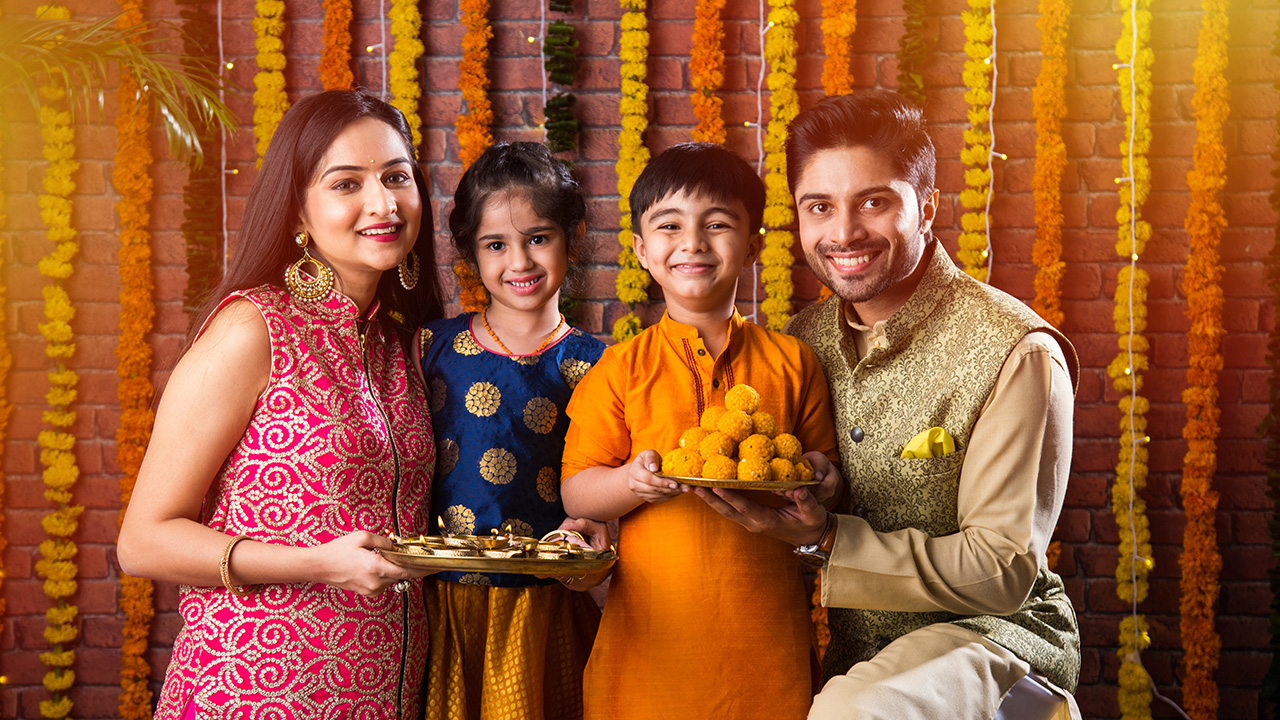
 Diwali is about light, family and togetherness, and food is at the heart of it. There’s the box of kaju katli from a neighbour, chakli and chivda with every cup of chai, the late-night card parties and the big family dinner. Nobody wants to spend the festival counting calories, and you shouldn’t have to.
The aim isn’t perfection. It’s balance: enjoying the traditions you love while keeping a few simple habits that stop one festive week turning into a month of feeling sluggish. Here’s how, before, during and after the celebrations, whether you’re celebrating in Mumbai, Leicester or New Jersey.
At a glance
- Aim for moderation, not perfection. A few sweets won’t undo your health; weeks of excess might.
- Don’t arrive at parties hungry. A balanced meal or snack beforehand makes overeating less likely.
- Eat mindfully. Slowing down and paying attention to food has been shown to reduce how much people eat.
- Make smarter swaps: baked or roasted namkeen, and sweets with less sugar and more nuts.
- Keep moving: even a few minutes of walking after a meal can help blunt the rise in blood sugar.
- Protect sleep, manage stress and go easy on alcohol. There’s no safe level of drinking.
- Take extra care if you have diabetes, high blood pressure, or heart or lung disease.
Why the festive weeks add up
Diwali isn’t one meal. It’s often two or three weeks of gifting, visiting and celebrating, starting with Dhanteras shopping and ending with Bhai Dooj, and the habits add up:
- Sweets: most mithai is rich in sugar and ghee. The WHO advises keeping free sugars below 10% of daily energy, and ideally below about 25 g (6 teaspoons) a day. Two or three pieces of mithai can use that up.
- Fried snacks: namkeen, samosas and pakoras are energy-dense and often fried in oil that’s been reused many times.
- Salt: namkeen, papad and pickles push salt intake up, which matters for blood pressure.
- Late nights and alcohol: card parties and celebrations cut into sleep, and drinking adds calories while lowering your guard around food.
- Smoke: firecrackers and winter smog can worsen asthma and other lung and heart conditions.
Weight gained over a festival doesn’t always come off. In research on Christmas, a festival with similar eating habits, adults typically gained 0.4–1 kg a year, with much of it put on during the festive season and not fully lost afterwards. Small, steady habits make the difference.
Before the celebrations
- Set realistic goals. “No sweets at all this Diwali” rarely lasts past the first box of barfi. Goals like “one sweet a day, savoured”, “a 20-minute walk every morning” or “no second helpings at dinner” are easier to keep. If you’re trying to lose weight, aiming to maintain your weight through the festival is a perfectly good goal.
- Don’t arrive starving. Going to a party hungry makes it much harder to stop at a few snacks. Have a balanced meal or a filling snack with protein and fibre beforehand, such as a bowl of dal, curd with fruit, a handful of nuts or roasted chana.
- Plan, and keep an eye on the scale. Look at the week ahead and decide which events matter most to you. Keep everyday meals simple and light on the other days. In a UK study over Christmas, adults who weighed themselves regularly and learnt how much activity it takes to burn off festive foods avoided weight gain, while the comparison group put weight on. A quick weigh-in twice a week, or logging your meals, is a gentle reality check, not a punishment.
- Know what’s in your favourite foods. You don’t need to count every calorie, but it helps to know that fried and syrup-soaked sweets such as gulab jamun and jalebi, and deep-fried namkeen, are among the most energy-dense festive foods. That makes them the ones to enjoy in smaller amounts.
At the table
- Eat mindfully. Sit down to eat rather than grazing from the plate on the table. Eat slowly, put food on a plate rather than eating from the box, and actually taste your favourite sweet instead of finishing it while chatting. A 2026 review of 46 studies found that mindfulness and mindful eating reduced how much people ate, although they didn’t change how hungry people felt.
- Use the plate, not the platter. At a buffet or family dinner, fill half your plate with vegetables, salad and dal first, then add the rich dishes. Pick the two or three festive foods you really love and skip the ones you’re eating out of habit.
- Choose smarter sweets and snacks. You don’t have to give up mithai, but you can:
- make sweets with dates, nuts and seeds instead of sugar syrup, like our dates roll with seeds, remembering that dates are still high in natural sugar
- swap deep-fried namkeen for baked and air-fried namkeen, such as methi mathri, namak pare and roasted poha chivda
- try the lighter festive ideas in our trending healthy recipes
- choose smaller pieces, and share a sweet rather than having a whole one
- give dry fruit, fruit baskets or homemade snacks as gifts, instead of another box of mithai
- Drink water, not just chai. Keep water within reach, and go easy on sweetened drinks and sherbets.
Beyond the food
- Keep moving. Cleaning and decorating the house counts! So do dancing at a family party, a morning walk before the day gets busy, and a short stroll after big meals. A 2022 analysis of seven studies found that even 2–5 minutes of light walking after eating helped blood sugar rise and fall more gently than sitting. On high-pollution days, move your workout indoors; see our guide to air pollution and your health.
- Protect your sleep. Late nights make you hungrier the next day and more likely to reach for sugary snacks. Try to keep a regular wake-up time, and catch up with an early night after a late celebration.
- Manage the stress. Cleaning, shopping, cooking, hosting and family expectations can make the festival exhausting. Share the jobs, keep plans simple and take a few minutes for slow breathing or quiet time. Saying no to one more event is allowed.
- Be honest about alcohol. If you drink, have less. The WHO is clear that there’s no safe level of alcohol for health, and no drink is a “healthy option”, including red wine. Alternate alcoholic drinks with water, avoid sugary mixers, eat before you drink, and never drink and drive.
- Lean on your people. Tell family or friends what you’re aiming for. Walk together after dinner, cook a lighter dish to share, and reward yourselves with an outing or a new book rather than another sweet.
If you have a health condition
Festivals are for everyone, but a few conditions need some extra planning.
- Diabetes: keep to your usual meal times and medicines, and don’t skip meals to “save up” for sweets, which can cause low blood sugar if you take insulin or certain tablets. Count sweets as part of your carbohydrates for that meal, choose a small piece, and check your sugar more often during the festival. Sugar-free sweets can still be high in fat and calories.
- High blood pressure or heart disease: watch the salt in namkeen, pickles and papad, keep taking your medicines on time, and avoid heavy meals late at night. Seek urgent help for chest pain or breathlessness, and know the signs of a stroke.
- Asthma or COPD: firecracker smoke and winter smog can trigger attacks. Stay indoors when the air is smoky, keep your reliever inhaler with you, and follow your action plan.
- Pregnancy: avoid alcohol completely, and choose freshly made sweets and dairy from trusted sources.
If you’re unsure how festive eating fits your treatment, check with your doctor or dietitian before the celebrations begin.
After Diwali: think long term
- Get straight back to normal. Had a few too many laddoos? That’s fine. One day doesn’t define your health; what you do over the following weeks matters far more. Go back to your usual meals and routine the next day. There’s no need for a crash diet, “detox” or skipping meals, which often backfire.
- Pass on the leftovers. Share leftover sweets with neighbours, staff or a local shelter rather than finishing them over the next fortnight. Freeze some if you can.
- Keep the good habits going. If you started walking after dinner or swapped fried namkeen for roasted snacks, keep it up. The healthiest festivals are the ones that leave you with a habit worth keeping.
The bottom line
A healthy Diwali isn’t about saying no to the sweets your family has made for generations. It’s about choosing the ones you love, eating them slowly, keeping meals around them simple, staying active, sleeping enough and going easy on alcohol. Do that, and you can enjoy every diya, every visit and every bite, and still feel good when the lights come down.
Pro Tip: Use the GOQii App to log your meals, steps and sleep through the festive weeks; seeing the pattern helps you balance a heavy day with a lighter one. Your GOQii Personalised Health Coach can help you set realistic festive goals and get back on track afterwards.
Frequently asked questions
How can I eat healthily during Diwali?
Aim for moderation rather than perfection. Eat a balanced meal before parties, choose the festive foods you love most, eat them slowly, fill half your plate with vegetables and dal, and choose baked or roasted snacks where you can.
How many sweets can I eat during Diwali?
There’s no fixed number, but the WHO advises keeping free sugars ideally below about 25 g, or 6 teaspoons, a day. Many pieces of mithai contain a large share of that, so one small sweet a day, enjoyed slowly, is a sensible approach.
What are healthy alternatives to Diwali sweets?
Try sweets made with dates, nuts and seeds, roasted makhana, fruit-based desserts or smaller portions of traditional mithai. Remember that sweets made with dates or jaggery still contain a lot of sugar.
How can I avoid weight gain during Diwali?
Keep everyday meals light and simple, stay active, weigh yourself once or twice a week, limit fried snacks and sugary drinks, and get back to your normal routine right after the festival.
Can people with diabetes eat sweets during Diwali?
Most people with diabetes can have a small sweet occasionally as part of a meal, counted within their carbohydrate allowance. Don’t skip meals or medicines, check your blood sugar more often, and ask your doctor or dietitian for advice.
Is red wine a healthy choice during celebrations?
No. The WHO says there is no safe level of alcohol for health, and red wine isn’t a healthy option. If you drink, drink less, alternate with water and never drink and drive.
How do I get back on track after Diwali?
Return to your usual meals and routine the very next day, drink plenty of water, move every day and get enough sleep. There’s no need for detox diets or skipping meals.
#BeTheForce
Disclaimer: The information provided in this blog is for general awareness and educational purposes only. It is not intended to replace professional medical advice, diagnosis, or treatment. Always consult a qualified healthcare provider for personalised medical guidance or concerns related to your health.

Leave a Reply