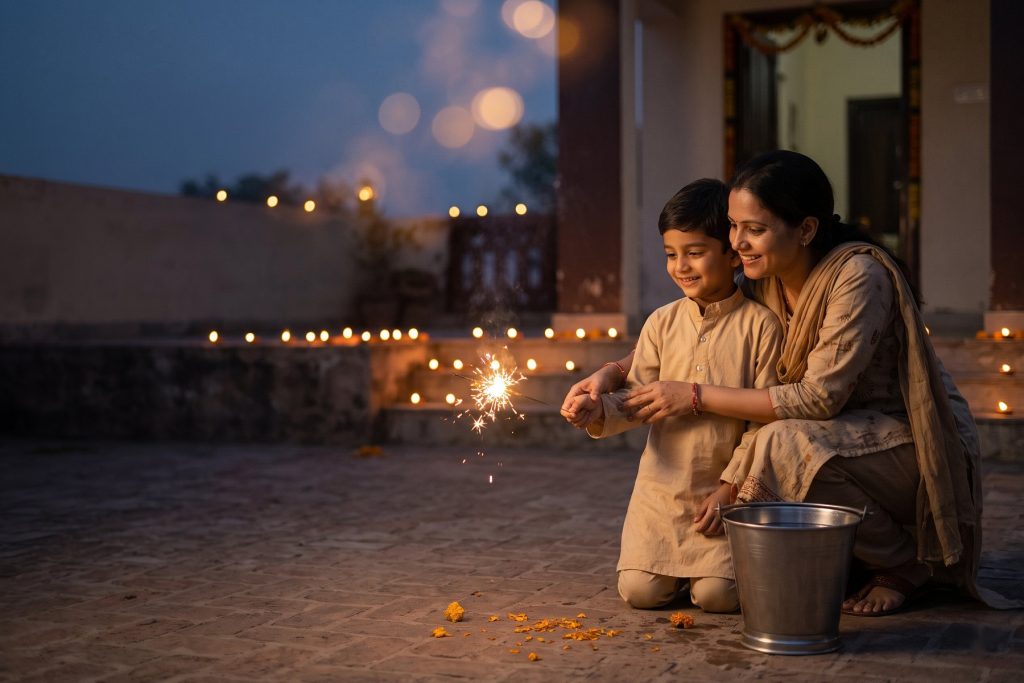
 Diwali night should end with sweets, family and lights, not a trip to casualty. Yet every year hospital emergency departments across India brace for the same injuries. On Diwali 2025, Delhi hospitals alone treated more than 250 burn cases, most of them from firecrackers. Safdarjung Hospital saw 129, and 24 of those patients were children under 12. Over the same festive period, AIIMS Delhi’s eye centre treated 190 firecracker-related eye injuries, 19% more than the year before, and around 60 children needed eye surgery. It isn’t only Delhi: in Bengaluru, four eye hospitals reported more than 90 cracker-related eye injuries in the first days of Deepavali 2025, more than half of them in children, and hospitals in other cities report the same pattern every year.
Most of these injuries are preventable, and for many of them what you do in the first few minutes makes a real difference. This guide covers the simple safety habits that prevent harm, the right first aid for burns and eye injuries (including the home remedies to skip), and how to protect your lungs and heart from the smoke that settles over towns and cities on Diwali night.
At a glance
- For a burn, cool it under cool running water for 20 minutes. Start as soon as you can. Don’t use ice, toothpaste, ghee, butter, haldi or oil.
- Then cover it loosely with cling film or a clean plastic bag. Don’t burst blisters or pull off anything stuck to the skin.
- Get medical help for burns bigger than the injured person’s hand, deep or charred burns, burns on the face, hands, feet or genitals, and any burn in a young child or older adult.
- For an eye injury, don’t rub, rinse or press the eye and don’t try to remove anything stuck in it. Shield it and go to hospital straight away.
- Keep a bucket of water and sand nearby, let adults light crackers, stand well back, and never relight a dud.
- Smoke is a health risk too. On Diwali 2025, PM2.5 levels in Delhi rose more than threefold. If you have asthma, COPD or heart disease, stay indoors during peak hours, keep your reliever inhaler close and know when to get help.
- In an emergency in India, call 112. It connects to police, fire and ambulance services.
Before you light: simple habits that prevent most injuries
The best first aid is the injury that never happens. Doctors at AIIMS noted that most patients with firecracker eye injuries were boys and young men up to the age of 20, and that many children were hurt. Research from the American Academy of Ophthalmology has also found that many people injured by fireworks are bystanders, not the person lighting them. So safety is everyone’s job, not just the person holding the agarbatti.
Set up a safe spot
- Burst crackers in an open area, away from buildings, parked vehicles, dry leaves and anything that can catch fire. Never burst them indoors, on a balcony or inside a crowded lane.
- Keep two buckets ready: one of water and one of sand. Drop used sparklers and duds into the water.
- Check local rules. In Delhi-NCR, for example, the Supreme Court has allowed only certified green crackers this Diwali, within set hours on 7 and 8 November, and none within 300 metres of hospitals, schools and old-age homes. Green crackers are designed to cut emissions, but they still burn and explode, so they need exactly the same care. Rules on timings and permitted crackers differ between states and cities, so check your local authority’s notice.
Dress for it
- Wear close-fitting cotton clothes. Loose dupattas, saris, flowing sleeves and synthetic fabrics catch fire easily, and synthetics can melt onto the skin.
- Tie back long hair and wear closed footwear, not chappals.
- If you are lighting crackers, wear protective glasses. Ordinary spectacles help a little, but proper safety eyewear is better.
Light carefully
- Adults should light crackers. Use a long agarbatti or a phuljhadi stick, keep your arm outstretched and your face turned away, then step back quickly.
- Never hold a cracker in your hand while lighting it, and never bend over it.
- Never relight or go back to a dud. Wait, then soak it in water.
- Don’t put crackers in tins, bottles or pots, or throw them at people or animals.
Watch the children
- Sparklers feel harmless but burn at roughly 1,000°C or more, hot enough to melt some metals. Emergency doctors advise that young children shouldn’t hold them at all. If older children do, supervise closely, hold one at a time at arm’s length and drop finished ones straight into water.
- Keep children well back from anything being lit, and keep unused crackers in a closed box away from them.
- Steer clear of carbide guns. These homemade or market “guns” were a new cause of serious chemical and blast eye injuries at AIIMS in 2025, accounting for around 18–20 of the 190 cases.
Diyas, candles and rangoli
Diyas caused 11 of Safdarjung’s 129 Diwali burn cases in 2025. Place them on a stable, non-flammable surface, away from curtains, decorations and where children and pets run. Keep them off doorways where a sari or dupatta can brush past, and put them out before you go to sleep. Electric diyas and lights are a safer swap for corners you can’t watch.
Kitchen safety counts too. Diwali means extra frying and hot oil. Keep pan handles turned inward, keep children out of the kitchen while you fry, and never pour water onto burning oil. Turn off the gas and cover the pan with a lid instead.
First aid for burns: what to do, step by step
If clothing catches fire, remember stop, drop and roll. Stop where you are, drop to the ground, cover your face with your hands and roll until the flames are out. If it’s someone else, get them to the ground and smother the flames with a heavy cotton or woollen blanket, a rug or water. Don’t let them run, because running fans the flames.
Then follow these steps for any burn:
- Make it safe. Move the person away from the source of heat and any crackers still going off.
- Cool the burn under cool running tap water for 20 minutes. This is the single most useful thing you can do. The British Red Cross explains that cooling reduces pain, swelling and the risk of scarring, and the sooner you start, the better. Indian burns specialists, including doctors at the National Burns Centre and PGIMER Chandigarh, give the same advice: keep clean, cool water running over the burn rather than stopping as soon as it feels a little better. Water that feels cool is enough; it doesn’t need to be ice cold. If there is no running water, a bowl of clean cool water or even cold milk or a cold drink will do while you find some.
- Remove rings, bangles, watches and tight clothing near the burned area before it starts to swell, but don’t pull off anything that is stuck to the skin.
- Keep the person warm. Cool only the burn, not the whole body. Cold baths or long cold showers can drop body temperature dangerously, especially in children.
- Cover the burn loosely with a layer of cling film or a clean plastic bag (for a hand). Lay it on rather than wrapping it tightly. Don’t use cotton wool, fluffy cloth or sticky plasters, which can stick to the wound.
- Ease the pain with paracetamol or ibuprofen if needed, following the dose on the pack. Ask a pharmacist about the right dose for a child.
Home remedies to skip
Many of us grew up with a quick dab of toothpaste or ghee on a kitchen burn. They feel soothing for a moment, but they trap heat in the skin, can carry germs into the wound and make it harder for doctors to assess the burn. Doctors at the National Burns Centre specifically warn against haldi, toothpaste, ice and cow dung, and PGIMER Chandigarh against toothpaste, butter and ink. The same goes for:
- ghee, oil or coconut oil
- haldi (turmeric), atta or other powders
- ink, mud or potato
- ice or iced water, which can damage the skin further
Don’t burst blisters either. They protect the healing skin underneath.
When a burn needs a doctor
Many small, red, painful burns heal at home. Official UK guidance from NI Direct says to go to hospital emergency services for:
- any burn bigger than the injured person’s hand
- deep burns, including those that look white, waxy, leathery or charred, even if they don’t hurt (deep burns can damage nerves)
- burns that blister on the face, hands, arms, feet, legs or genitals
- chemical or electrical burns
- anyone who has breathed in smoke, even if they seem fine at first
Get medical advice after any burn in children under 10, adults aged 50 and over, pregnant women and people with diabetes, heart, lung or liver disease, or a weakened immune system. Also see a doctor if a burn shows signs of infection over the following days: increasing pain, redness, swelling, pus, a bad smell or fever. If you can’t remember when you last had a tetanus jab, mention it to the doctor.
Eye injuries and other firecracker injuries
The eye injuries AIIMS sees on Diwali are often serious. In 2025, about 45% were open-globe injuries, where the wall of the eye is torn or punctured, and around half of patients had moderate or severe loss of vision. Getting to an eye specialist quickly gives the best chance of saving sight, and well-meaning first aid can make things worse.
If a spark, cracker or debris hits the eye
Eye specialists, including AIIMS Bhopal and the American Academy of Ophthalmology, advise the following:
- Don’t rub the eye. Rubbing can push debris deeper or worsen a cut.
- Don’t press on the eye or try to open it forcibly.
- Don’t try to remove anything stuck in the eye, however small it looks.
- Don’t rinse it if you suspect a cut, puncture or something embedded.
- Don’t put in drops or ointments, including home remedies such as rose water, ghee or breast milk.
- Shield the eye. Gently tape the bottom of a paper cup, or the cut-off base of a plastic bottle, over the eye so nothing presses on it. Ask the person to keep both eyes as still as possible.
- Go to the nearest hospital with an eye department straight away. Don’t wait to see if it settles. Avoid giving food or drink in case surgery is needed.
The one exception is a chemical splash (for example from a carbide gun or cracker powder) with no sign of a cut or embedded object. Here, rinsing is the priority: hold the eye open and flush it gently with plenty of clean running water for at least 15 minutes, then go to hospital. If in doubt about which kind of injury it is, shield the eye and go.
Minor irritation from smoke or ash usually settles with blinking and a few splashes of clean water. If vision is blurred, the eye stays red and painful, or there’s sensitivity to light, get it checked.
Hand and ear injuries
A cracker that goes off in the hand can cause deep burns, cuts and broken bones. Cool the burns, press a clean cloth on any bleeding, raise the hand and go to hospital. Ringing in the ears after a loud bang usually fades within a day; see a doctor if it doesn’t, or if there’s pain, bleeding or hearing loss.
Protecting your lungs and heart from Diwali smoke
Firecrackers release a dense mix of fine particles (PM2.5), sulphur dioxide, nitrogen oxides and metal compounds. In much of north India, they arrive on top of seasonal smog, cold, still air and crop-residue smoke. On Diwali 2025, an analysis of Central Pollution Control Board data by Climate Trends found Delhi’s average PM2.5 rose more than threefold, from about 157 to 488 µg/m³, with the sharpest spike between 10 pm and 1 am. That’s many times the WHO’s guideline for daily exposure.
For most healthy adults, one smoky night causes sore eyes, a scratchy throat or a cough that settles. The people who need to take it seriously are:
- people with asthma or COPD, for whom smoke can trigger a flare-up
- people with heart disease or who have had a stroke, because short spikes in fine particles are linked to heart attacks and strokes
- young children, whose lungs are still developing
- older adults and pregnant women
We cover the wider health effects of smog in our guide to air pollution and your health.
Practical steps for Diwali night
- Stay indoors during peak bursting hours, usually late evening until after midnight, and the following morning if the smog lingers. Keep doors and windows shut until the air clears.
- Check the AQI on the government’s SAMEER app or a trusted air-quality app before going out, and plan errands and walks for the cleaner middle of the day.
- Wear a well-fitting N95 or FFP2 mask if you do need to go out. Cloth and surgical masks don’t filter fine particles well.
- Don’t add to indoor smoke. Go easy on incense, dhoop, camphor and heavy diya smoke indoors, and use the kitchen exhaust when frying.
- Use an air purifier if you have one, in the room where you spend most time and where you sleep. It works best with doors and windows closed.
- Skip outdoor exercise for a day or two after Diwali if air quality is poor. Do a yoga or strength session indoors instead.
- Drink enough water. It won’t remove pollutants from your body, but it helps with a dry, irritated throat.
If you have asthma or COPD
Pulmonologists interviewed by Business Standard ahead of last year’s festive season advised:
- keep taking your preventer inhaler every day as prescribed, even if you feel well
- carry your reliever inhaler at all times, and check it isn’t empty or out of date
- ask your doctor for a written action plan that says what to do if symptoms worsen
- get checked if you’re using your reliever more than usual, or if symptoms last more than a week
- keep your flu and pneumococcal vaccines up to date
Get urgent help if breathing becomes very difficult, your reliever isn’t helping or you need it more than every four hours, you can’t speak in full sentences, or your lips or fingertips look blue or grey.
If you have heart disease
Stay indoors during the worst hours, keep taking your medicines and don’t exert yourself in smoky air. Call 112 for chest pain or pressure, breathlessness, a cold sweat, or pain spreading to the arm, jaw or back. And know the signs of a stroke: if someone’s face drops, an arm goes weak or their speech is slurred, act FAST and call for help straight away.
Pets and street animals
Dogs and cats hear far more than we do, and Diwali can be terrifying for them. Humane World for Animals suggests walking dogs earlier in the day, keeping pets indoors in a familiar room with windows and curtains closed, staying with them for comfort and making sure they wear an ID tag in case they bolt. If your pet has severe noise anxiety, talk to your vet before Diwali. Never burst crackers near animals, shelters or cowsheds, or tie them to animals.
Emergency numbers and your Diwali first-aid kit
Numbers to save before Diwali
| Number | What it’s for |
| 112 | National emergency number for police, fire and ambulance (ERSS) |
| 108 | Ambulance (in most states) |
| 101 | Fire and rescue |
The government is bringing the older numbers under 112, so if in doubt, call 112. Also save the number of your nearest hospital with a 24-hour emergency department, and find out in advance which nearby hospitals have a burns unit and an eye department. On Diwali night, roads are busy and minutes count.
Call an ambulance if someone has a large or deep burn, a burn to the face or airway, difficulty breathing after inhaling smoke, a serious eye injury, heavy bleeding or a severed finger, or if they’re confused, drowsy or unconscious. While you wait, keep cooling the burn and keep the person warm.
A simple Diwali first-aid kit
Keep these together in one place where every adult in the house knows to find them:
- a bucket of water and a bucket of sand near where crackers are being burst
- a roll of cling film and some clean plastic bags (for covering burns)
- sterile non-stick dressings, gauze and a crepe bandage
- medical tape and a few paper cups (for shielding an injured eye)
- clean cotton cloths or towels
- paracetamol or ibuprofen, in adult and children’s doses
- a spare reliever inhaler for anyone with asthma, and N95 masks
- a torch and a phone with emergency numbers saved
- a small fire extinguisher, if you have one, and a fire blanket or thick cotton blanket
What you won’t need: toothpaste, ghee, haldi or burn “creams” for fresh burns.
The bottom line
A safe Diwali comes down to a few habits: adults light the crackers, everyone stands back, there’s water and sand within reach and nobody goes back to a dud. If a burn happens, cool running water for 20 minutes beats every home remedy. If an eye is hurt, shield it and go to hospital without rubbing or rinsing. And if you or someone at home has asthma, COPD or heart disease, plan to be indoors with your medicines to hand when the smoke is at its worst. For the rest of the festival, from sweets to sleep, see our guide to a healthy Diwali.
Pro Tip: Before Diwali night, save 112 and your nearest hospital’s number, and set your air-quality alerts. If smoke keeps you indoors over the festive days, log an indoor workout or yoga session in the GOQii App so your activity streak doesn’t slip. Your GOQii Personalised Health Coach can help you plan indoor routines and keep your asthma or heart-health habits on track through the smog season.
Frequently asked questions
What is the first thing to do for a firecracker burn?
Move away from the heat, then hold the burn under cool running water for 20 minutes. Remove rings or tight clothing near the burn, cover it loosely with cling film or a clean plastic bag, and get medical help if it is large, deep or on the face, hands, feet or genitals.
Should I put toothpaste, ghee or ice on a burn?
No. Toothpaste, ghee, butter, oil, haldi and ice can trap heat, damage the skin or introduce infection. Cool running water is the right first aid.
When should I take a burn to hospital?
Go to hospital for burns bigger than the injured person’s hand, deep burns that look white or charred, blistered burns on the face, hands, arms, feet, legs or genitals, chemical or electrical burns, and anyone who has inhaled smoke. Children under 10, adults aged 50 and over and pregnant women should get any burn checked.
What should I do if a firecracker injures someone’s eye?
Don’t rub, press or rinse the eye, and don’t try to remove anything stuck in it. Gently cover it with a shield such as a paper cup taped in place, and go to a hospital with an eye department straight away. For a chemical splash without a cut, flush the eye with clean water for at least 15 minutes, then go to hospital.
Are sparklers safe for children?
Sparklers burn at around 1,000°C, hot enough to cause serious burns. Young children shouldn’t hold them. Older children should be closely supervised, hold one at a time at arm’s length and drop used sparklers into a bucket of water.
How can people with asthma protect themselves on Diwali?
Stay indoors with windows closed during peak bursting hours, keep taking your preventer inhaler, carry your reliever inhaler, wear an N95 mask if you must go out and follow your asthma action plan. Seek urgent help if your reliever isn’t working or breathing becomes very difficult.
What is the emergency number in India for burns and fire?
Call 112, India’s single emergency number, which connects to police, fire and ambulance services. You can also call 108 for an ambulance in most states and 101 for the fire service.
#BeTheForce
Disclaimer: The information provided in this blog is for general awareness and educational purposes only. It is not intended to replace professional medical advice, diagnosis, or treatment. Always consult a qualified healthcare provider for personalised medical guidance or concerns related to your health.




Leave a Reply