GOQii

Blog

  • HOME
  • HEALTHY LIVING
  • FITNESS
  • HEALTHY RECIPES
  • USER STORIES
  • KARMA
  • BUY GOQii

Search Results for: fat

November 15, 2026 By GOQii Leave a Comment

Children’s Day 2026: Healthy Lunchboxes and Screen-Time Habits for Happier, Healthier Kids

On 14 November, India celebrated Children’s Day, Bal Diwas, the birth anniversary of Jawaharlal Nehru, with school functions, treats and gifts. Once the celebrations are over, it’s a good moment for parents to look at two everyday habits that quietly shape children’s health: what goes into the lunchbox, and how much time goes into screens.

Both matter more than ever. UNICEF India reports that overweight and obesity among children under five more than doubled, from 1.5% to 3.4%, between the national family health surveys of 2005–06 and 2019–21, and rose even faster among adolescents, as ultra-processed foods and sugary drinks replace traditional meals. At the same time, the All India Ophthalmological Society warns that about 14% of urban school children are short-sighted, with long hours on screens and too little time outdoors among the reasons.

The good news is that small, steady changes at home make a real difference. This guide gives you a simple lunchbox formula, a week of Indian lunchbox ideas, and practical, age-by-age screen-time habits that work for real families.

At a glance

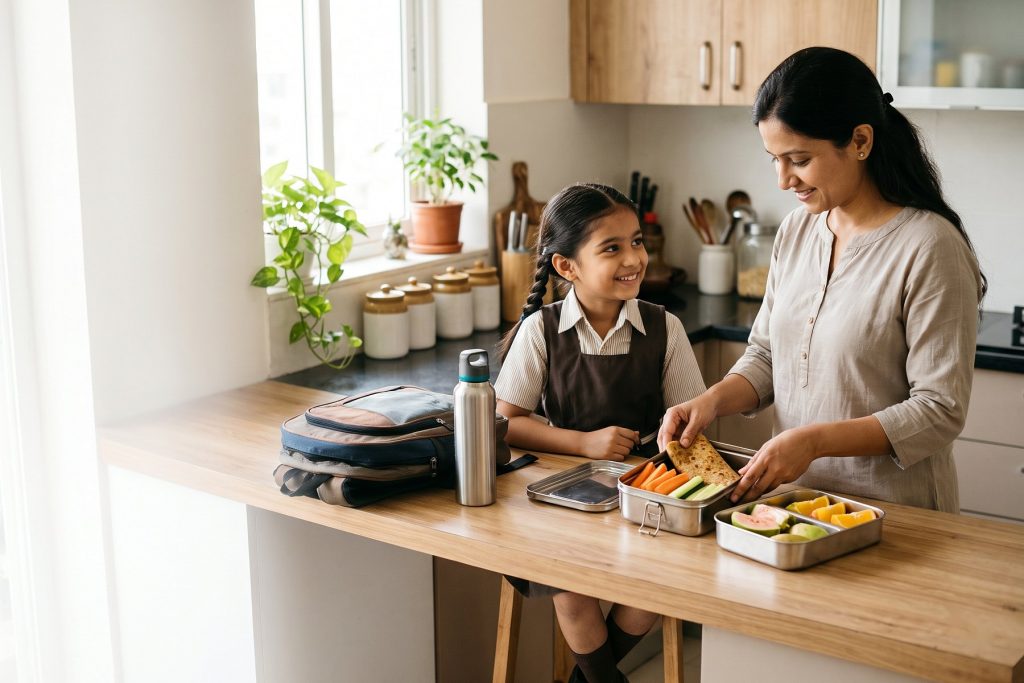
  • Build the lunchbox from four parts: a whole grain, a protein, a vegetable and a fruit, plus water to drink.
  • Keep packaged snacks, sweets and sugary drinks as occasional treats, not daily lunchbox fillers. India’s dietary guidelines advise no added sugar at all for children under two.
  • Pack food safely: use a clean, insulated box and keep perishable foods cool until lunch.
  • Follow age-based screen limits: the Indian Academy of Pediatrics advises no screens under two, up to one hour a day of supervised viewing for ages 2–5, and less than two hours of recreational screen time for ages 5–10.
  • Get two hours of outdoor play daily where possible. Eye doctors recommend it to help protect against short-sightedness.
  • Protect sleep: keep screens out of bedrooms and switch them off at least an hour before bed. School-age children need 9–12 hours of sleep.
  • Lead by example. Children copy what they see, from what’s on your plate to how often you pick up your phone.

Part 1: Building a healthy lunchbox

On school days, the lunchbox makes up a big part of what a child eats. It’s also the meal parents have least control over once it leaves home, so it helps to pack something children will actually eat.

The four-part lunchbox formula

Part Why it matters Easy options
Whole grain or millet Steady energy for learning and play Whole wheat roti or paratha, brown or hand-pounded rice, ragi, jowar or bajra rotis, poha, daliya, idli, whole wheat bread
Protein Growth, muscles and keeping full Dal, chana, rajma, moong sprouts, paneer, curd, besan chilla, egg, tofu, chicken
Vegetable Fibre, vitamins and minerals Carrot, cucumber or beetroot sticks, peas, beans, spinach, cabbage, capsicum, grated vegetables mixed into rotis or parathas
Fruit Natural sweetness, vitamin C and fibre Banana, apple, guava, orange segments, papaya, grapes (halved for younger children), seasonal fruit

Add water in a clean bottle. Plain water is the best drink; skip packaged juices and flavoured drinks.

India’s dietary guidelines from the ICMR-National Institute of Nutrition recommend at least 500 g of fruits and vegetables a day for adults and non-starchy vegetables at every meal, and advise limiting foods high in fat, sugar and salt. Children’s portions are smaller, but the principle is the same: vegetables and fruit in every lunchbox.

What to keep as an occasional treat

  • Packaged snacks: chips, biscuits, namkeen, instant noodles and bakery items such as puffs and cakes, which are often high in salt, sugar, refined flour and fat
  • Sugary drinks: packaged juices, flavoured milk with added sugar, colas and energy drinks
  • Sweets and chocolates as everyday fillers
  • Deep-fried foods most days of the week

The ICMR-NIN guidelines advise no added sugar for children under two, and keeping sugar low for everyone after that. Jaggery and honey count as sugar too; our guide to jaggery vs sugar explains why. If your child loves crunchy snacks, homemade options such as roasted chana, makhana or our baked and air-fried namkeen are better choices than packets.

How much to pack

Children’s appetites vary with age, growth spurts and activity, so there’s no single right amount. A good rule of thumb is to pack a little less than you think, and add more if the box keeps coming home empty. A box that keeps coming back full is a cue to talk to your child about what they’d enjoy, not to add more food.

Pack it safely

Lunchboxes often sit for four or five hours, sometimes in hot classrooms or buses. Food safety experts at safefood advise:

  • keep perishable foods as cold as possible until lunchtime, using an insulated box or bag, and keep the box out of direct sun
  • wash and dry the lunchbox and water bottle every day
  • throw away any perishable leftovers at the end of the day rather than eating them later

In hot weather, choose foods that travel well, such as parathas, theplas, dry sabzis, idli, upma, sprouts chaat and whole fruit. Be careful with curd-based, mayonnaise-based and creamy fillings, and cut fruit that browns or spoils quickly. Teach children to wash their hands with soap before eating.

A week of Indian lunchbox ideas

Each of these follows the four-part formula. Adjust portions to your child’s age and appetite, and swap in regional favourites.

Day Main Add-on Fruit
Monday Paneer and vegetable paratha (whole wheat), with curd in a separate leak-proof box (skip the curd on hot days) Cucumber sticks Guava slices
Tuesday Vegetable poha with peanuts and peas Moong sprouts chaat Banana
Wednesday Mini idlis with sambar or a thick dal dip Carrot sticks Orange segments
Thursday Rajma or chole with brown rice (or a roti roll) Kachumber salad Apple slices with a squeeze of lemon
Friday Besan or moong dal chilla stuffed with grated vegetables Mint or coriander chutney Papaya cubes
Saturday Ragi or jowar roti wrap with egg bhurji or paneer bhurji and vegetables Roasted chana Seasonal fruit

For non-vegetarian families, boiled eggs, egg bhurji or grilled chicken work well in place of paneer or chana.

Tips for fussy eaters

  • Involve them. Let children choose between two healthy options, help wash vegetables or roll rotis. They’re more likely to eat what they helped make.
  • Keep the familiar, add one new thing. Pair a favourite food with a small portion of something new.
  • Make it look good. Colourful food, small portions, mini sizes and simple shapes, such as rolled rotis or idli “coins”, appeal to younger children.
  • Hide, then reveal. Grated carrot or spinach in parathas, chillas or dal is a good start, but also serve vegetables openly so children learn to enjoy them.
  • Be patient. Children often need to see a new food many times before they’ll try it. Keep offering without pressure or bribes.
  • Don’t use sweets as rewards, which can teach children that sweets are better than other foods.
  • Ask what came home and why. Uneaten food may mean the portion was too big, the food didn’t travel well, or there wasn’t enough time to eat.

Part 2: Screen time, and why it matters

Screens aren’t all bad. Video calls with grandparents, educational shows and creative apps all have their place. The problem is usually how much, what kind, and what screens push out of a child’s day: play, sleep, conversation and time outdoors.

How much screen time is right?

The Indian Academy of Pediatrics’ guidelines on screen time and digital wellness, published in Indian Pediatrics in 2022, recommend:

Age Recommended screen time
Under 2 years No screens at all
2–5 years Up to one hour a day, supervised, with good-quality, age-appropriate content
5–10 years Less than two hours a day of recreational screen time
Adolescents No fixed limit, but screens shouldn’t displace physical activity, sleep, family time, studies or hobbies

The IAP also advises choosing educational, age-appropriate and non-violent content, and watching for signs of cyberbullying or problematic use. Screen time for online classes and homework is different from recreational use, but the same breaks, posture and bedtime habits apply.

What too much screen time can affect

Eyes. Short-sightedness (myopia) is rising in Indian children. The All India Ophthalmological Society’s 2026 guidelines note that children often spend four to six hours or more a day on screens, and recommend two hours outdoors every day, a yearly eye check and the 20-20-20 rule: every 20 minutes, look at something 20 feet away for 20 seconds. Signs a child may need an eye test include squinting, sitting very close to the TV, holding books close, headaches or rubbing their eyes.

Sleep. Screens in the evening can push bedtime later and make it harder to wind down. The American Academy of Sleep Medicine recommends 9–12 hours of sleep a day for children aged 6–12, and 8–10 hours for teenagers, and 10–13 hours, including naps, for children aged 3–5.

Activity and weight. Hours on screens are often hours sitting still, and UNICEF lists low physical activity and more screen time among the drivers of rising childhood obesity in India. Screens also bring advertising: in a UNICEF U-Report poll, 75% of young people had seen ads for sugary drinks, fast food or snacks in the past week, mostly on social media.

Mood, attention and relationships. Heavy use, especially of social media and games, can affect concentration, mood and family time. Talk to your child’s doctor if screen use seems to be causing distress, poor sleep, falling school performance or withdrawal from friends and activities.

Screen-time habits that work for real families

Strict bans rarely last. Clear, predictable family rules, agreed together and applied to adults too, work better.

Make a simple family screen plan

  • Agree on when, where and how long. For example: no screens before school, a set time after homework, and none during meals.
  • Keep screen-free zones: the dining table and bedrooms. Charge phones and tablets overnight outside the bedroom.
  • Switch off at least an hour before bedtime, and replace screens with a bath, a story or reading together.
  • Use timers and parental controls for younger children, and talk openly with older children about content, privacy and online safety.
  • Choose quality over quantity. Watch with younger children when you can, and talk about what you’ve seen.
  • Avoid screens as a pacifier, for example during meals or every time a child is bored or upset. Boredom often leads to creative play.

Swap screen time for green time

  • Aim for two hours outdoors a day, which eye doctors recommend to help protect children’s eyesight. Parks, school grounds, terraces and building compounds all count.
  • Build movement into the day: walking or cycling to school where safe, active games, dance, sport or helping with the shopping.
  • On smoggy days, move play indoors with dance, yoga, skipping or obstacle courses, and check the AQI before outdoor sport.

Lead by example

Children notice when parents scroll at the dinner table or check phones in the middle of a conversation. Try a family “phone basket” at mealtimes, put your own phone away during play, and narrate when you use screens for a purpose (“I’m checking the bus time”) rather than out of habit.

Protect sleep

A regular bedtime, a screen-free bedroom and a calm wind-down routine help children get the sleep they need. Many of the tips in our guide to improving sleep quality work for older children and teenagers too.

The bottom line

After the Children’s Day celebrations, the best gift you can give may be two simple habits. Pack a lunchbox with a whole grain, a protein, a vegetable and a fruit, and keep packaged snacks and sugary drinks for occasional treats. And set clear, age-appropriate screen limits, with plenty of outdoor play, screen-free meals and bedrooms, and a regular bedtime. Children learn most from what they see, so the changes work best when the whole family makes them together.

Pro Tip: Use the GOQii App to track your own steps and sleep, and set an active, well-rested example your children can follow. Your GOQii Personalised Health Coach can help you plan healthier family meals and active routines that fit busy school weeks.

Frequently asked questions

What should a healthy school lunchbox include?

A healthy lunchbox includes a whole grain or millet, a protein such as dal, paneer, sprouts or egg, a vegetable and a fruit, with water to drink. Keep chips, biscuits, sweets and sugary drinks as occasional treats.

How much screen time is okay for children?

The Indian Academy of Pediatrics recommends no screens for children under two, up to one hour a day of supervised screen time for ages 2 to 5, and less than two hours a day of recreational screen time for ages 5 to 10. For teenagers, screens shouldn’t replace sleep, activity, studies or family time.

Does screen time cause short-sightedness in children?

Long hours on screens and close-up work, together with too little time outdoors, are linked to rising short-sightedness in children. Eye doctors recommend two hours outdoors daily, the 20-20-20 rule and a yearly eye check.

How much sleep do children need?

The American Academy of Sleep Medicine recommends 10 to 13 hours a day, including naps, for children aged 3 to 5, 9 to 12 hours for ages 6 to 12, and 8 to 10 hours for teenagers.

How can I stop food in my child’s lunchbox from going bad?

Use a clean, insulated lunchbox, keep it out of direct sun, pack foods that travel well, and be careful with curd, cream and mayonnaise in hot weather. Wash the box every day and throw away any perishable leftovers.

How do I get my child to eat vegetables?

Involve your child in choosing and preparing food, serve vegetables in colourful, small portions alongside favourites, mix grated vegetables into parathas or chillas, and keep offering without pressure. Children often need to try a new food many times before they accept it.

Can children have sugar or jaggery?

India’s dietary guidelines advise no added sugar for children under two. After that, keep sugar, jaggery and honey low, and offer fruit for sweetness instead of sweets or sugary drinks.

#BeTheForce

Disclaimer: The information provided in this blog is for general awareness and educational purposes only. It is not intended to replace professional medical advice, diagnosis, or treatment. Always consult a qualified healthcare provider for personalised medical guidance or concerns related to your health.

November 14, 2026 By GOQii Leave a Comment

World Diabetes Day 2026: Early Action on Diabetes – Know Your Risk, Get Tested, Reverse Prediabetes

Type 2 diabetes doesn’t appear overnight. It usually builds quietly for years, through a stage called prediabetes, before it’s diagnosed, often after damage to the heart, kidneys, eyes or nerves has already begun. That long, silent run-up is also an opportunity: the earlier you act, the more you can change.

That’s the idea behind this year’s World Diabetes Day on 14 November. The International Diabetes Federation’s theme for 2026–27 is “Early Action on Diabetes”, focusing on screening, early diagnosis and reducing risk. The IDF notes that almost half of people with diabetes are undiagnosed, and about 1 in 8 people worldwide are at high risk of developing type 2 diabetes.

In India, the scale is especially large. The ICMR-INDIAB study estimated that 101 million Indians have diabetes and 136 million have prediabetes. This guide follows the three steps of early action: know your risk, get tested, and, if you have prediabetes, take the steps that are proven to lower your chances of it becoming diabetes.

At a glance

  • Know your risk. Age, a family history of diabetes, extra weight around the waist and an inactive lifestyle are the biggest risk factors. The Indian Diabetes Risk Score (below) takes two minutes.
  • Get tested. A fasting blood glucose or HbA1c test is quick and widely available. Adults aged 30 and over in India are advised to be screened, and younger people with risk factors should be too.
  • Prediabetes is an early warning, not diabetes. An HbA1c of 5.7–6.4% or a fasting glucose of 100–125 mg/dL means your risk is raised, and there’s time to act.
  • Lifestyle changes work. In a landmark US trial, modest weight loss and 150 minutes of activity a week cut the risk of type 2 diabetes by 58%. An Indian trial found lifestyle changes cut risk by about 28%.
  • Small changes add up: brisk walking, fewer refined carbohydrates and sugary drinks, more vegetables and pulses, good sleep and not smoking.
  • Already have diabetes? Early action still counts. Good control and regular eye, kidney and foot checks prevent complications, and some people with recent type 2 diabetes can reach remission with significant weight loss.

Step 1: Know your risk

You can’t change your age or your genes, but knowing where you stand tells you how urgently to act.

The main risk factors

  • Age: risk rises from your 30s onwards.
  • Family history: a parent, brother or sister with type 2 diabetes.
  • Weight around the waist: belly fat is more closely linked to diabetes than overall weight. South Asians tend to develop diabetes at a lower body weight than Europeans.
  • Physical inactivity: long hours sitting and little regular exercise.
  • Diabetes in pregnancy (gestational diabetes), or PCOS.
  • High blood pressure, high triglycerides or low HDL cholesterol.
  • Poor sleep and smoking.
  • Fatty liver, or long-term use of certain medicines such as steroids or some antipsychotics.

Check your Indian Diabetes Risk Score

The Indian Diabetes Risk Score (IDRS), developed by the Madras Diabetes Research Foundation, is a simple screening tool used across India. It uses four questions, with points for each answer. Add up your points:

Question Your answer Points
Your age Under 35 0
35–49 20
50 or over 30
Waist (women) Under 80 cm 0
80–89 cm 10
90 cm or more 20
Waist (men) Under 90 cm 0
90–99 cm 10
100 cm or more 20
Physical activity Regular vigorous exercise or strenuous work 0
Regular moderate exercise 10
Regular mild exercise 20
No exercise, mostly sitting 30
Family history of diabetes Neither parent 0
One parent 10
Both parents 20

What your score means:

  • Under 30: lower risk. Keep up healthy habits and get tested as recommended for your age.
  • 30–50: moderate risk. Get a blood test and work on activity and waist size.
  • 60 or more: high risk. Get a fasting glucose or HbA1c test soon.

Measure your waist midway between your lowest rib and the top of your hip bone, standing relaxed and breathing out. The score is a guide to who should be tested, not a diagnosis. A low score doesn’t rule out diabetes, so get tested if you have symptoms or other risk factors.

Step 2: Get tested

Many people with type 2 diabetes or prediabetes have no symptoms, which is why the IDF puts screening and early diagnosis at the centre of this year’s campaign. India’s national programme offers screening for adults aged 30 and over at Ayushman Arogya Mandirs and government health facilities, and tests are also widely available at private labs.

Which test?

Test Normal Prediabetes Diabetes
HbA1c (no fasting needed) Below 5.7% 5.7–6.4% 6.5% or higher
Fasting blood glucose Below 100 mg/dL 100–125 mg/dL 126 mg/dL or higher
2-hour glucose tolerance test Below 140 mg/dL 140–199 mg/dL 200 mg/dL or higher

These are the American Diabetes Association thresholds, widely used in India. A result in the diabetes range usually needs a repeat test to confirm.

HbA1c isn’t reliable for everyone. Iron-deficiency anaemia, which is common in India, can falsely raise HbA1c, and thalassaemia trait or other haemoglobin variants, recent blood loss or transfusion, advanced kidney disease and pregnancy can also make it misleading. If any of these apply to you, ask your doctor whether a fasting glucose or glucose tolerance test would be more accurate.

When to get tested

  • If you’re 30 or over: at least every three years if your results are normal, or more often if your doctor advises.
  • At any age if you’re overweight (for South Asians, a BMI of 23 or more) and have another risk factor, or your IDRS is 60 or more.
  • Every year if you have prediabetes.
  • During pregnancy, as part of routine antenatal care, because gestational diabetes usually causes no symptoms.
  • 6–12 weeks after giving birth, and then regularly, if you had gestational diabetes.
  • Straight away if you have symptoms such as excessive thirst, frequent urination, unexplained weight loss or blurred vision. Our guide to the early signs of diabetes explains what to look for.

Step 3: Act on prediabetes

Prediabetes doesn’t always progress to diabetes, and for many people blood sugar can return to the normal range. Two landmark trials show what’s possible.

What the evidence shows

The US Diabetes Prevention Program (2001) followed 3,234 overweight adults with impaired glucose tolerance, a form of prediabetes. Those in the lifestyle group aimed to lose about 7% of their body weight through a healthier, lower-fat diet and to be active for around 150 minutes a week, mostly by walking. They cut their risk of developing type 2 diabetes by 58%, and by 71% in people over 60. Most kept off about 5% of their weight, a modest amount.

The Indian Diabetes Prevention Programme (2006) tested lifestyle changes in 531 Asian Indians with impaired glucose tolerance. Advice on diet and physical activity reduced the risk of diabetes by 28.5% over three years, similar to the effect of the medicine metformin, and combining the two added no extra benefit. Interestingly, the participants didn’t lose weight, which suggests that better eating and more activity help even before the scale moves.

What to do: practical steps

Move more, most days

  • Build up to at least 150 minutes of moderate activity a week, such as brisk walking, cycling, swimming or dancing, plus muscle-strengthening exercises on two days.
  • Take a short walk after meals. Even 2–5 minutes of light walking after eating helps lower the rise in blood sugar.
  • Break up long periods of sitting every 30–60 minutes.

Eat for steadier blood sugar

  • Fill half your plate with vegetables, a quarter with protein (dal, chana, rajma, paneer, eggs, fish or chicken) and a quarter with whole grains or millets.
  • Cut back on refined carbohydrates such as white rice, maida, biscuits and bakery snacks, and keep rice and roti portions moderate.
  • Swap sugary drinks, packaged juices and sweetened chai for water, buttermilk or unsweetened tea. Jaggery and honey are still sugar; our guide to jaggery vs sugar explains why.
  • Limit fried snacks and ultra-processed foods, in line with the ICMR-NIN Dietary Guidelines for Indians.

Aim for modest weight loss if you’re overweight

Losing 5–7% of your body weight, for example 4–5 kg if you weigh 75 kg, is enough to make a real difference. Focus on your waist rather than the scale. Avoid unsupervised crash diets, especially if you take medicines for diabetes or blood pressure; our post-Diwali reset explains a steadier approach.

Look after sleep, stress and smoking

  • Aim for seven or more hours of sleep. Short sleep is linked to higher hunger and poorer blood sugar control; see our guide to improving sleep quality.
  • Find a stress outlet that works for you, whether that’s walking, yoga, breathing exercises or time with friends.
  • If you smoke, get help to stop.

Retest and review

Retest your HbA1c or fasting glucose after 3–6 months of changes, then at least yearly. Your doctor may also discuss metformin if your risk is high. Our tips on managing diabetes through lifestyle and nutrition apply to prediabetes too.

Already have diabetes? Early action still matters

The IDF stresses that early detection can prevent emergencies such as diabetic ketoacidosis and delay complications affecting the heart, kidneys, eyes and nerves. If you’ve recently been diagnosed, the years right after diagnosis are a valuable window.

Remission is possible for some people with type 2 diabetes

In the UK DiRECT trial, adults diagnosed with type 2 diabetes within the previous six years followed a medically supervised, low-calorie, meal-replacement programme. After one year, 46% were in remission, with blood sugar in the non-diabetic range without medication, compared with 4% of those receiving usual care. Remission happened only in people who lost weight, and was most likely in those who lost 15 kg or more.

This isn’t a do-it-yourself diet. Participants stopped their diabetes and blood pressure medicines under close medical supervision, with regular support from a nurse or dietitian. Very low-calorie diets can cause low blood sugar and other problems if you take diabetes medicines, so talk to your doctor before trying any intensive programme. Remission is also less likely the longer you’ve had diabetes, and it isn’t possible in type 1 diabetes. Our guide to type 1 vs type 2 diabetes explains the difference.

Remission isn’t a cure. Blood sugar can rise again if weight is regained, so people in remission still need at least a yearly HbA1c, and eye, kidney and foot checks. DiRECT was also carried out in the UK, mostly in people of European origin, so results may differ in other populations, including South Asians.

Regular checks prevent complications

Whatever your treatment, these checks help catch problems early, when they’re easiest to treat:

  • HbA1c every 3–6 months, against a target agreed with your doctor
  • Blood pressure at every visit, and cholesterol at least once a year
  • An eye check (retina) at diagnosis of type 2 diabetes, then at least once a year
  • Kidney tests (urine albumin and a blood test for kidney function) at least once a year
  • A foot check at every visit, and check your own feet daily for cuts, blisters or colour changes
  • Dental check-ups, because gum disease is more common in diabetes

Keep taking your medicines as prescribed, and don’t stop or change them without talking to your doctor.

The bottom line

This World Diabetes Day, early action means three simple steps. Know your risk: take two minutes to work out your Indian Diabetes Risk Score. Get tested: a fasting glucose or HbA1c test is quick and widely available. And if your result shows prediabetes, treat it as a chance to act, not a cause for alarm. Trials in the US and India show that regular activity, better eating and modest weight loss can lower the risk of type 2 diabetes substantially. If you already have diabetes, early, steady action protects your heart, kidneys, eyes and feet for the years ahead.

Pro Tip: Use the GOQii App to track your steps, meals, weight and sleep, so you can see how your habits change between blood tests. Your GOQii Personalised Health Coach can help you set realistic activity and eating goals, whether you’re working to reverse prediabetes or managing diabetes alongside your doctor.

Frequently asked questions

What is the theme of World Diabetes Day 2026?

The theme set by the International Diabetes Federation for 2026 and 2027 is “Early Action on Diabetes”. It focuses on screening, early diagnosis and reducing the risk of type 2 diabetes, so that complications can be prevented or delayed.

Can prediabetes be reversed?

Often, yes. Many people with prediabetes can bring their blood sugar back to the normal range with regular physical activity, healthier eating and modest weight loss. Even when blood sugar doesn’t fully return to normal, these changes lower the risk of progressing: in the US Diabetes Prevention Program, lifestyle changes cut the risk of developing type 2 diabetes by 58%.

How long does it take to reverse prediabetes?

It varies from person to person. HbA1c reflects your average blood sugar over the previous two to three months, so a retest about three months after you start making changes shows whether they’re working. After that, retest at least once a year.

What is the Indian Diabetes Risk Score?

The Indian Diabetes Risk Score is a simple screening tool from the Madras Diabetes Research Foundation. It scores your age, waist size, physical activity and family history of diabetes. A score of 60 or more means high risk, and you should get a blood sugar test.

How much weight do I need to lose to prevent diabetes?

If you’re overweight, losing about 5 to 7% of your body weight, such as 4 to 5 kg if you weigh 75 kg, can significantly lower your risk. In an Indian trial, healthier eating and more activity reduced risk even without weight loss.

Who should get tested for diabetes?

In India, adults aged 30 and over are advised to be screened. Anyone younger who is overweight and has another risk factor, such as a family history of diabetes, PCOS or diabetes in pregnancy, should also be tested, as should anyone with symptoms.

Can type 2 diabetes go into remission?

For some people, yes. In the UK DiRECT trial, 46% of people diagnosed within the previous six years were in remission after a year on a medically supervised low-calorie programme. Remission is linked to significant weight loss and should only be attempted with medical supervision.

#BeTheForce

Disclaimer: The information provided in this blog is for general awareness and educational purposes only. It is not intended to replace professional medical advice, diagnosis, or treatment. Always consult a qualified healthcare provider for personalised medical guidance or concerns related to your health.
November 11, 2026 By Priyanka Mangla 3 Comments

The Early Signs & Symptoms of Diabetes

symptoms of diabetes

Diabetes rarely announces itself. Type 2 diabetes, which accounts for more than 90% of cases, usually develops slowly over years, and many people have no obvious symptoms at all. Worldwide, the International Diabetes Federation estimates that 589 million adults are living with diabetes, and about 4 in 10 of them don’t know it.

In India, the numbers are especially high. The ICMR-INDIAB study, published in The Lancet Diabetes & Endocrinology, estimated that 101 million Indians have diabetes and another 136 million have prediabetes, blood sugar that’s higher than normal but not yet in the diabetes range.

That’s why it’s worth knowing the early signs, and also knowing that you shouldn’t wait for them. Spotting raised blood sugar early, before it damages the eyes, kidneys, nerves, heart and blood vessels, gives you the best chance of keeping it under control or, in the prediabetes stage, of bringing it back to normal. This guide explains the symptoms to look out for, how they differ between types of diabetes, who should get tested even without symptoms, and what the test results mean.

At a glance

  • Many people have no symptoms, especially with type 2 diabetes and prediabetes. A blood test is the only way to know.
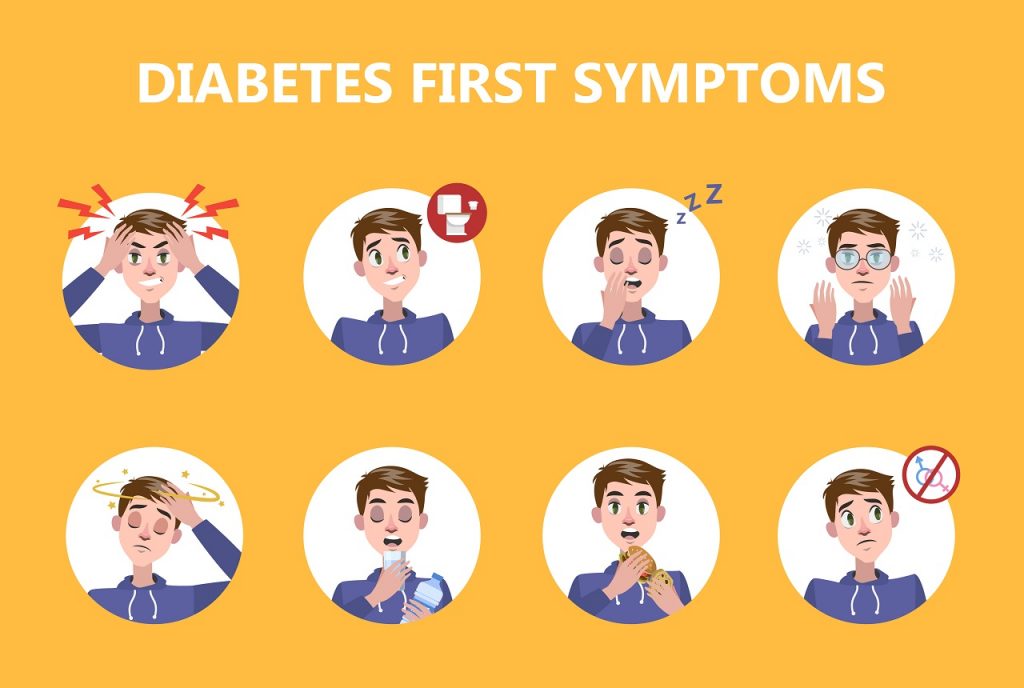
  • The classic signs are passing urine often (especially at night), feeling very thirsty, unexplained weight loss, tiredness and blurred vision.
  • Other clues include slow-healing cuts, frequent infections such as urinary or yeast infections, tingling or numbness in the hands or feet, and dark, velvety patches of skin on the neck or armpits.
  • Type 1 diabetes can appear quickly, over weeks, and can become an emergency. Vomiting, stomach pain, fast breathing, fruity-smelling breath or confusion need urgent care.
  • Get tested if you’re 30 or over, or younger with risk factors such as a family history, extra weight around the waist, a history of diabetes in pregnancy or PCOS. Indians tend to develop type 2 diabetes younger and at a lower weight.
  • The main tests are fasting blood glucose, HbA1c and the oral glucose tolerance test. An HbA1c of 6.5% or more suggests diabetes; 5.7–6.4% suggests prediabetes.
  • Prediabetes is a window to act. Healthy eating, regular activity and modest weight loss can lower your risk of it progressing.

The early signs of diabetes, and why they happen

When there’s too much glucose (sugar) in your blood, your body tries to get rid of it and can’t use it properly for energy. That explains most of the symptoms below. The US Centers for Disease Control and Prevention lists these as common symptoms of type 1 and type 2 diabetes. You might notice only one or two of them, and they can be mild enough to put down to stress, age or a busy schedule.

1. Passing urine more often

When blood sugar is high, your kidneys pass the extra glucose into your urine, and it takes water with it. You may need to urinate more often, particularly at night, and pass larger amounts.

2. Feeling very thirsty

Losing more water through urine leaves you dehydrated, so you feel thirsty and may have a dry mouth however much you drink. Thirst and frequent urination together are among the most common early clues.

3. Feeling hungry and tired

Insulin moves glucose from your blood into your cells for energy. When insulin isn’t working well or there isn’t enough, your cells are short of fuel even though there’s plenty of sugar in your blood. You may feel tired, low on energy, irritable or hungry soon after eating.

4. Losing weight without trying

If your body can’t use glucose for energy, it starts breaking down fat and muscle instead, and you lose calories as sugar in your urine. Unexplained weight loss is more typical of type 1 diabetes, but it can happen with type 2 too, and it always deserves a check-up.

5. Blurred vision

High blood sugar can change the fluid balance in the lens of the eye, making it swell and your vision blur. This often improves when blood sugar comes down, but it’s worth seeing a doctor. Over time, diabetes can damage the blood vessels at the back of the eye.

6. Slow-healing cuts and frequent infections

High blood sugar can affect circulation and the immune system, so cuts, sores and wounds may take longer to heal. Some people get repeated infections, such as urinary tract infections, thrush (yeast infections), skin or gum infections.

7. Tingling, numbness or burning in the hands or feet

Over time, raised blood sugar can damage nerves, particularly in the feet. This tends to happen when type 2 diabetes has been present for a while without being diagnosed, which is one reason testing early matters.

8. Dark, velvety skin patches

Darker, thicker, velvety skin in body folds, such as the back of the neck, armpits or groin, is called acanthosis nigricans. It’s often a sign of insulin resistance, the problem behind type 2 diabetes, and can appear years before diabetes develops. It’s common in South Asians and worth mentioning to your doctor, particularly in children and young adults.

Signs that are often blamed on something else

Tiredness, frequent urination at night, itchy skin, recurring infections and irritability are easy to put down to age, work or the weather. If you have several of these, or any of them along with risk factors for diabetes, ask for a blood test rather than waiting to see if they pass.

A note on what’s not a reliable sign: symptoms alone can’t confirm or rule out diabetes, and some that are often listed online, such as pale skin or a loss of libido, have many other causes. Only a blood test can tell you.

How symptoms differ: type 1, type 2, prediabetes and pregnancy

How it develops What you might notice
Type 1 diabetes An autoimmune condition in which the body stops making insulin. It can start at any age, but is most often diagnosed in children, teenagers and young adults. Symptoms can appear suddenly, over a few weeks or months, and can be severe: marked thirst, frequent urination, weight loss, tiredness, and sometimes nausea, vomiting and stomach pain.
Type 2 diabetes The body doesn’t respond well to insulin (insulin resistance) and gradually can’t make enough. Linked to genes, age, weight around the waist and lifestyle. Symptoms often take several years to develop, and some people have none. Slow-healing wounds, infections, tingling feet and dark skin patches may be the first clues.
Prediabetes Blood sugar is higher than normal but below the diabetes range. Usually no symptoms at all. It’s found only with a blood test.
Gestational diabetes High blood sugar that develops during pregnancy, usually in the second half. Usually no symptoms, which is why pregnant women are tested routinely. It raises the risk of type 2 diabetes later in life.

Type 1 diabetes isn’t present from birth, and type 2 is no longer only an adult disease: it’s increasingly seen in young adults and even teenagers. Our guide to type 1 vs type 2 diabetes explains the differences in more detail.

When high blood sugar is an emergency

In type 1 diabetes, and occasionally type 2, a severe lack of insulin can cause diabetic ketoacidosis (DKA), a life-threatening condition that can develop quickly. Get urgent medical help, or call 112, if someone has high blood sugar symptoms along with any of these warning signs of DKA:

  • stomach pain, feeling sick or being sick
  • breathing more deeply than usual
  • fruity-smelling breath (like pear drops or nail polish remover)
  • tiredness, sleepiness or confusion

This is especially important in children and young people who suddenly become very thirsty, are passing a lot of urine and losing weight. Don’t wait for a routine appointment.

Who should get tested, even without symptoms

Because type 2 diabetes and prediabetes are often silent, testing is based on risk rather than symptoms.

Risk factors

  • Age 30 or over. India’s national programme offers diabetes screening at Ayushman Arogya Mandirs and government health facilities for all adults aged 30 and over.
  • A parent, brother or sister with diabetes.
  • Extra weight, especially around the waist. For South Asian adults, a waist of more than about 90 cm (35.5 in) for men or 80 cm (31.5 in) for women is a common warning threshold.
  • South Asian heritage. At the same body weight, Asian Indians tend to have more body fat, more fat around the organs and less muscle than people of European descent, and diabetes often develops at a weight that would be considered healthy in Europeans. US screening guidance suggests considering testing in Asian adults from a BMI of 23.
  • Diabetes during pregnancy, or having had a baby weighing more than about 4 kg.
  • Polycystic ovary syndrome (PCOS).
  • High blood pressure, high cholesterol or triglycerides, or heart disease.
  • Little physical activity, smoking or regularly short sleep.
  • Dark, velvety skin patches (acanthosis nigricans).

How often to test

  • Adults aged 30 and over: get a blood sugar test, and repeat it at least every three years if it’s normal. Your doctor may suggest testing more often if you have other risk factors.
  • Younger adults with extra weight plus one or more risk factors: get tested now rather than waiting.
  • People with prediabetes: test every year.
  • Women who had gestational diabetes: get tested 6–12 weeks after the birth, then regularly for life.
  • Anyone with symptoms: don’t wait for a routine check. See a doctor soon.

If you’re due a check-up, our Dhanteras health guide lists the key tests by age and where to get them.

The tests, and what your numbers mean

Diabetes is diagnosed with a blood test, not a urine test or a symptom checklist. These are the ranges used by the American Diabetes Association, which are widely used in India too:

Test Normal Prediabetes Diabetes
Fasting blood glucose (after 8 hours without food) Below 100 mg/dL 100–125 mg/dL 126 mg/dL or higher
HbA1c (average blood sugar over 2–3 months; no fasting needed) Below 5.7% 5.7–6.4% 6.5% or higher
Oral glucose tolerance test (2 hours after a 75 g glucose drink) Below 140 mg/dL 140–199 mg/dL 200 mg/dL or higher

A random blood glucose of 200 mg/dL or more in someone with classic symptoms, such as thirst, frequent urination and weight loss, also points to diabetes.

A few things to know:

  • One high result usually needs confirming with a repeat test or a second type of test, unless your sugar is very high and you have clear symptoms.
  • HbA1c can be misleading in people with anaemia, some inherited haemoglobin conditions (such as thalassaemia trait), kidney disease or pregnancy. Your doctor may use fasting glucose or a glucose tolerance test instead.
  • Home glucometers are useful for monitoring once you’re diagnosed, but a lab test is needed to diagnose diabetes.

What to do with your result

  • Normal: keep up healthy habits and retest at least every three years, or as your doctor advises.
  • Prediabetes: this is a window to act. Regular activity, healthier eating and losing even a modest amount of weight can lower your risk of developing type 2 diabetes. Retest every year. Our tips on managing diabetes with lifestyle and nutrition apply here too.
  • Diabetes: your doctor will talk to you about treatment, which may include lifestyle changes, medicines or both, and check your eyes, kidneys, feet, blood pressure and cholesterol. Diagnosed early and managed well, diabetes is far less likely to cause complications.

Be wary of “cures”. Foods and traditional remedies such as karela (bitter gourd), jamun seeds or methi are often promoted as natural treatments for diabetes. Some have shown small effects in early studies, but none replaces diagnosis and medical treatment. Don’t stop or change prescribed medicines without talking to your doctor. If you’re weighing up sweeteners, our guide to jaggery vs sugar explains why gur isn’t a healthier choice for blood sugar.

The bottom line

Diabetes often develops quietly. Thirst, frequent urination, tiredness, blurred vision, slow-healing wounds and unexplained weight loss are all reasons to get checked, but the absence of symptoms isn’t a reason to skip testing. If you’re 30 or over, or younger with a family history, extra weight around the waist, PCOS or a history of diabetes in pregnancy, a simple blood test can tell you where you stand. Finding high blood sugar early, especially at the prediabetes stage, gives you the most room to act.

Pro Tip: Book a fasting glucose or HbA1c test if you haven’t had one in the last year, and log the result in the GOQii App so you can track it over time alongside your steps, weight and sleep. If your numbers are in the prediabetes or diabetes range, your GOQii Personalised Health Coach can help you build realistic eating and activity habits, alongside your doctor’s advice.

Frequently asked questions

What are the first signs of diabetes?

The most common early signs are passing urine more often, especially at night, feeling very thirsty, tiredness, blurred vision and losing weight without trying. Many people with type 2 diabetes or prediabetes have no symptoms at all, so a blood test is the only way to know.

Can you have diabetes without any symptoms?

Yes. Type 2 diabetes often develops slowly over years without obvious symptoms, and prediabetes usually has none. The International Diabetes Federation estimates that about 4 in 10 adults with diabetes don’t know they have it.

What are the early signs of diabetes in women?

Women have the same main symptoms as men, but may also notice repeated vaginal yeast infections (thrush) or urinary tract infections. Women with PCOS or a history of diabetes in pregnancy have a higher risk and should be tested regularly.

What blood sugar level indicates diabetes?

A fasting blood glucose of 126 mg/dL or higher, an HbA1c of 6.5% or higher, or a 2-hour glucose tolerance test result of 200 mg/dL or higher indicates diabetes, usually confirmed with a repeat test. Fasting glucose of 100 to 125 mg/dL or HbA1c of 5.7 to 6.4% indicates prediabetes.

At what age should I get tested for diabetes?

In India, adults aged 30 and over are advised to be screened. Get tested earlier if you have extra weight plus a risk factor, such as a family history of diabetes, PCOS, high blood pressure or diabetes in a previous pregnancy.

How is type 1 different from type 2 diabetes in symptoms?

Type 1 symptoms often appear suddenly over weeks and can be severe, with marked thirst, frequent urination and weight loss. Type 2 symptoms usually develop slowly over years and may be mild or absent. Vomiting, stomach pain, fast breathing or fruity-smelling breath can signal diabetic ketoacidosis and need urgent care.

Can prediabetes be reversed?

Prediabetes can often return to normal blood sugar levels with regular physical activity, healthier eating and modest weight loss, which also lowers the risk of developing type 2 diabetes. Retest at least once a year.

#BeTheForce

Disclaimer: The information provided in this blog is for general awareness and educational purposes only. It is not intended to replace professional medical advice, diagnosis, or treatment. Always consult a qualified healthcare provider for personalised medical guidance or concerns related to your health.

November 9, 2026 By GOQii Leave a Comment

Post-Diwali Reset: Getting Back on Track Without Crash Diets

The diyas are packed away, the mithai boxes are half empty and the scale may say something you’d rather it didn’t. After a week of Dhanteras shopping, Diwali feasts and card parties, with Bhai Dooj still to come, it’s natural to want to undo it all fast. Social media is happy to help, with three-day juice cleanses, “detox” teas and skip-dinner challenges.


Here’s the reassuring part: a few days of festive eating doesn’t undo months of good habits, and much of the jump on the scale isn’t fat at all. What matters far more is what you do over the next few weeks. This guide explains why crash diets and detoxes aren’t the answer, and gives you a simple, realistic seven-day plan to get your eating, movement and sleep back on track.

At a glance

  • Don’t panic about the scale. A quick rise after a festival is largely water and stored carbohydrate from salty, rich food, and it settles within days once you eat normally.
  • Skip the detox. Your liver, kidneys and gut already clear waste. The British Dietetic Association calls detox diets “a marketing myth”.
  • The real risk is the slow creep. Research suggests festive-season weight gain is small but often never comes off, so steady habits matter more than a dramatic fix.
  • Go back to regular meals, with vegetables, a source of protein and whole grains at each one. Don’t skip meals to “make up” for Diwali.
  • Deal with the leftovers. Share, freeze or portion out mithai and namkeen rather than grazing on them all week.
  • Move a little, often. A short walk after meals helps blood sugar. On smoggy days, move your workout indoors.
  • Fix your sleep after late festive nights. Short sleep makes you hungrier the next day.
  • If you have diabetes, high blood pressure or heart disease, check your numbers this week and speak to your doctor if they’re higher than usual.

Why crash diets and detoxes aren’t the answer

The scale is exaggerating

If you weigh yourself the morning after Diwali, a gain of a kilo or more can feel alarming. Most of it isn’t fat. Gaining a kilo of body fat takes several thousand extra calories on top of what your body uses, far more than a few festive meals usually add. What you’re mostly seeing is:

  • water held by salt. Namkeen, chaat, pakoras and restaurant food are salty, and your body temporarily holds extra water to balance it.
  • stored carbohydrate. Sweets, puris and rice top up your glycogen stores, and glycogen is stored with water.
  • food that hasn’t moved through yet, especially after large, late meals.

That’s also why crash diets seem to “work” at first. The British Dietetic Association points out that the rapid weight loss from fasting is mainly water and glycogen rather than fat, and that it can leave you tired and short of nutrients. The water comes straight back when you eat normally.

The real issue is the slow creep

The weight that does stick is small, but it adds up. A US study published in the New England Journal of Medicine weighed adults through the year and found the average holiday-season gain was only about half a kilo. The catch: it wasn’t lost over the rest of the year, and people with overweight were more likely to gain more. In India, the festive season runs from Navratri through Diwali to weddings and New Year, so it’s worth paying attention to.

The good news is that small, consistent habits work. In a UK trial published in The BMJ, adults who weighed themselves regularly and had simple tips didn’t gain weight over Christmas, while the comparison group did.

“Detox” is a marketing idea, not a medical one

Your liver, kidneys, gut, lungs and skin clear waste products around the clock. No juice, tea, powder or cleanse has been shown to do this better. The British Dietetic Association describes detox diets as “a marketing myth rather than nutritional reality”, with benefits that are short-lived at best. Some detox teas contain laxatives or diuretics, which simply flush out water and can upset your stomach and fluid balance.

Why strict rules often don’t last

Skipping meals or living on juice for a few days is hard to keep up, and it tends to end with a return to old habits. It can also leave you low on protein, fibre and energy just as work and routines restart. A plan you can follow for weeks beats one you can manage for three days.

A note of caution: if you notice a pattern of eating a lot, then feeling guilty and severely restricting, or if food and weight are causing you real distress, it’s worth talking to your doctor. You don’t have to manage that on your own.

Your 7-day post-Diwali reset

This isn’t a diet. It’s a week of getting back to your normal routine, with a few small upgrades. You don’t need special foods, and you shouldn’t feel hungry.

Days 1–2: back to regular meals

  • Eat breakfast, lunch and dinner at roughly your usual times. Skipping meals to “compensate” usually makes you hungrier later and more likely to snack on leftovers.
  • Start the day with protein and fibre, such as besan or moong dal chilla, poha with peanuts and vegetables, vegetable upma, eggs, or curd with fruit and seeds.
  • Drink water through the day. It won’t flush out toxins, but thirst is easy to mistake for hunger, and after salty food you’ll probably want more.
  • Go easy on salt. Home-cooked dal, sabzi and roti, with less pickle, papad and namkeen, will help your body let go of the extra water quickly.

Days 3–5: build a better plate

The ICMR-NIN Dietary Guidelines for Indians advise getting no more than 45% of calories from cereals and millets, filling the rest with pulses, vegetables, fruit, nuts and milk, and cutting back on salt, sugar and ultra-processed foods. In practice, at lunch and dinner:

  • fill half your plate with vegetables or salad: sabzi, kachumber, palak, lauki, beans or a bowl of soup
  • add a protein food: dal, rajma, chana, paneer, tofu, curd, eggs, fish or chicken
  • keep grains to about a quarter of the plate, choosing whole wheat roti, brown or hand-pounded rice, or millets such as jowar, bajra and ragi
  • use a little less oil, and cook more by steaming, roasting or tadka rather than deep-frying

Protein and fibre keep you full for longer, which makes it easier to say no to the third piece of kaju katli without feeling deprived.

Days 6–7: plan the week ahead

  • Shop for a normal week: vegetables, fruit, pulses, curd and whole grains.
  • Plan two or three easy dinners so you’re not relying on takeaway or leftover snacks when you’re tired.
  • Keep healthier snacks handy: fruit, roasted chana, makhana, nuts, buttermilk or sprouts chaat.

What to do with leftover mithai and namkeen

The real post-Diwali challenge is often the boxes on the dining table. You don’t need to throw them away or eat them all this week.

  • Share them with neighbours, office colleagues, house help, security staff or a local shelter.
  • Freeze what you can. Many milk-free sweets, such as besan ladoo, and dry fruit barfis freeze well. Milk-based sweets don’t keep long, so share those first.
  • Portion, don’t graze. Put one piece on a plate and put the box away, rather than eating from it as you walk past.
  • Have sweets after a meal, not on an empty stomach as a snack, and enjoy them slowly.
  • Store namkeen out of sight and serve a small katori rather than eating from the packet. If you’re making snacks again, try our baked and air-fried namkeen recipes.

A word on alcohol and sugary drinks

If the festive week included card parties and gatherings, give your body a break from alcohol for a few days. Alcohol adds calories, disturbs sleep and often leads to late-night snacking. Swap sweetened drinks and colas for water, nimbu pani without sugar, buttermilk or plain tea.

Movement, sleep and routine

Move a little, often

You can’t out-exercise a week of festive eating, and you don’t need to. The aim is to get back to regular activity, not to punish yourself with a two-hour gym session.

  • Walk after meals. A meta-analysis in Sports Medicine found that even 2–5 minutes of light walking after eating helped steady blood sugar compared with sitting, with the biggest effect within 60–90 minutes of the meal. A 10–15 minute stroll after dinner is a good habit to start this week.
  • Work back up to your usual routine. The WHO recommends adults get at least 150 minutes of moderate activity a week, such as brisk walking, cycling or dancing, plus muscle-strengthening on two or more days. If you’ve had a lazy fortnight, start with shorter sessions and build up over a week or two.
  • Add some strength work. Squats, lunges, push-ups against a wall and resistance bands help maintain muscle, which matters for blood sugar and metabolism as we age.
  • Break up long sitting, especially as you return to work. Stand up and move every 30–60 minutes.

If the air is bad: in much of north India, the days after Diwali often bring the worst smog of the year. Check the AQI before heading out, skip outdoor runs and walks on poor-air days and exercise indoors instead, with yoga, a home workout, skipping or walking in a mall or indoor track. Our guide to air pollution and your health has more on protecting your lungs and heart.

Get your sleep back on track

Late nights, early pujas and noisy celebrations can leave you short of sleep, and that affects your eating. In a small Mayo Clinic study, healthy adults who slept about 80 minutes less a night for eight nights ate around 550 extra calories a day, without burning any more.

  • Aim for seven or more hours a night, and go to bed and wake up at about the same time each day, including weekends.
  • Have dinner two to three hours before bed and keep it lighter than a festive meal.
  • Cut back on caffeine after mid-afternoon, including the many cups of chai that come with festive visits.
  • Dim screens for the last half hour before bed.

Be kind to yourself

Festivals are meant to be enjoyed. Guilt about what you ate tends to make people either give up or swing to extremes. Think of this week as getting back to your routine, not as a punishment. One good meal, one walk and one early night are a perfectly good start.

If you have diabetes, high blood pressure or heart disease

A week of sweets, fried snacks, late meals and missed walks can push your numbers up, sometimes without any obvious symptoms. This week is a good time to check in.

  • Diabetes: if you monitor at home, check your blood sugar more often for a few days, including after meals. Keep taking your medicines as prescribed. Don’t skip or double doses to make up for what you ate. Contact your doctor if readings stay higher than your target, or if you notice extreme thirst, passing urine often, blurred vision or unusual tiredness. If you take insulin or medicines that can cause low blood sugar, be careful about suddenly cutting meals.
  • High blood pressure: salty festive food can raise blood pressure in some people. If you have a home monitor, take a few readings this week at the same time of day. Speak to your doctor if they’re consistently above the target you’ve been given.
  • Heart disease: keep taking your medicines, ease back into activity gradually and avoid exercising outdoors in heavy smog. Get urgent help for chest pain, breathlessness or pain spreading to the arm, jaw or back.

If you’re due a routine check-up, such as HbA1c, a lipid profile or a blood pressure review, this is a good month to book it. Our Dhanteras health guide lists the main tests and where to get them.

And if you were planning a strict diet or fasting for weight loss, check with your doctor first. It’s especially important if you take medicines for diabetes or blood pressure, or if you’re pregnant, older or have kidney disease.

The bottom line

You don’t need to undo Diwali. You need to get back to normal. Most of the quick gain on the scale is water and will settle within days. The habits that actually protect your health are unglamorous ones: regular meals built around vegetables, protein and whole grains; less salt and sugar; a walk after meals; and enough sleep. Keep them going through the rest of the festive and wedding season, and the occasional celebration won’t matter much. For tips you can use at the next festival, see our guide to a healthy Diwali.

Pro Tip: Use the GOQii App to log your meals, steps, water and sleep for the next seven days. Seeing the week in one place makes it easier to spot what’s working. Your GOQii Personalised Health Coach can help you build a realistic post-festival plan that fits your routine, without crash diets.

Frequently asked questions

How can I lose weight after Diwali?

Go back to regular meals with plenty of vegetables, a source of protein and smaller portions of whole grains, cut back on salt, sugar and fried snacks, walk daily and get enough sleep. Much of the quick gain is water and will settle within a few days. Aim for steady habits rather than fast loss.

Do post-Diwali detox drinks or juice cleanses work?

No. Your liver, kidneys and gut already remove waste, and no juice, tea or cleanse has been shown to do it better. Weight lost on a cleanse is mostly water and comes back when you eat normally. Some detox teas contain laxatives that can upset your stomach.

Why has my weight gone up so much after the festival?

A quick rise is mostly water held by salty food, extra stored carbohydrate and food still being digested, rather than fat. Gaining a kilo of fat takes several thousand extra calories. The scale usually settles within a few days of normal eating.

Should I skip meals or fast to make up for overeating?

It’s better not to. Skipping meals often leads to more snacking later and can leave you low on energy and nutrients. If you have diabetes or take medicines for blood sugar or blood pressure, check with your doctor before fasting.

What should I do with leftover Diwali sweets?

Share them with neighbours, colleagues or a local shelter, freeze those that freeze well, and keep the boxes out of sight. Have a single piece after a meal rather than grazing through the day.

How much exercise do I need after Diwali?

There’s no need to overdo it. Return to your usual routine and build up to the WHO’s recommendation of at least 150 minutes of moderate activity a week, plus strength exercises on two days. A short walk after meals also helps steady blood sugar.

Is it safe to exercise outdoors after Diwali?

Not on days when air quality is poor. Check the AQI before going out, and on smoggy days exercise indoors with yoga, a home workout or walking indoors. This is especially important for people with asthma, COPD or heart disease.

#BeTheForce

Disclaimer: The information provided in this blog is for general awareness and educational purposes only. It is not intended to replace professional medical advice, diagnosis, or treatment. Always consult a qualified healthcare provider for personalised medical guidance or concerns related to your health.

  • « Previous Page
  • 1
  • …
  • 12
  • 13
  • 14
  • 15
  • 16
  • …
  • 220
  • Next Page »

Search

Recent Posts

  • PCOS: diet, exercise and the myths to stop believing
  • Cholesterol numbers explained: LDL, HDL and triglycerides
  • International Men’s Day 2026: why men’s health is everyone’s business
  • World COPD Day 2026: Short of Breath? Think COPD – Why Early Diagnosis Matters
  • National Epilepsy Day 2026: Seizure First Aid – What to Do (and Not Do) When Someone Has a Seizure

Stay Updated

Archives

  • November 2026 (20)
  • October 2026 (23)
  • September 2026 (5)
  • August 2026 (8)
  • July 2026 (24)
  • June 2026 (22)
  • May 2026 (20)
  • April 2026 (24)
  • March 2026 (18)
  • February 2026 (14)
  • January 2026 (14)
  • December 2025 (19)
  • November 2025 (14)
  • October 2025 (17)
  • September 2025 (6)
  • August 2025 (5)
  • July 2025 (9)
  • June 2025 (18)
  • May 2025 (16)
  • April 2025 (22)
  • March 2025 (25)
  • February 2025 (21)
  • January 2025 (25)
  • December 2024 (21)
  • November 2024 (21)
  • October 2024 (15)
  • September 2024 (22)
  • August 2024 (27)
  • July 2024 (14)
  • June 2024 (23)
  • May 2024 (26)
  • April 2024 (27)
  • March 2024 (27)
  • February 2024 (23)
  • January 2024 (21)
  • December 2023 (14)
  • November 2023 (10)
  • October 2023 (18)
  • September 2023 (20)
  • August 2023 (16)
  • July 2023 (16)
  • June 2023 (21)
  • May 2023 (20)
  • April 2023 (19)
  • March 2023 (23)
  • February 2023 (19)
  • January 2023 (15)
  • December 2022 (11)
  • November 2022 (15)
  • October 2022 (15)
  • September 2022 (12)
  • August 2022 (9)
  • July 2022 (17)
  • June 2022 (11)
  • May 2022 (10)
  • April 2022 (6)
  • March 2022 (6)
  • February 2022 (13)
  • January 2022 (11)
  • December 2021 (7)
  • November 2021 (3)
  • October 2021 (6)
  • September 2021 (3)
  • August 2021 (8)
  • July 2021 (7)
  • June 2021 (15)
  • May 2021 (16)
  • April 2021 (10)
  • March 2021 (7)
  • February 2021 (4)
  • January 2021 (4)
  • December 2020 (3)
  • November 2020 (4)
  • October 2020 (10)
  • September 2020 (3)
  • August 2020 (3)
  • July 2020 (2)
  • June 2020 (4)
  • May 2020 (10)
  • April 2020 (12)
  • March 2020 (10)
  • February 2020 (4)
  • January 2020 (4)
  • December 2019 (3)
  • November 2019 (7)
  • October 2019 (5)
  • September 2019 (4)
  • August 2019 (9)
  • July 2019 (9)
  • June 2019 (11)
  • May 2019 (4)
  • April 2019 (8)
  • March 2019 (8)
  • February 2019 (9)
  • January 2019 (8)
  • December 2018 (9)
  • November 2018 (3)
  • October 2018 (3)
  • September 2018 (5)
  • August 2018 (10)
  • July 2018 (6)
  • June 2018 (13)
  • May 2018 (8)
  • April 2018 (17)
  • March 2018 (9)
  • February 2018 (8)
  • January 2018 (15)
  • December 2017 (12)
  • November 2017 (19)
  • October 2017 (13)
  • September 2017 (15)
  • August 2017 (4)
  • July 2017 (8)
  • June 2017 (7)
  • May 2017 (6)
  • April 2017 (8)
  • March 2017 (6)
  • February 2017 (7)
  • January 2017 (9)
  • December 2016 (10)
  • November 2016 (7)
  • October 2016 (7)
  • September 2016 (7)
  • August 2016 (11)
  • July 2016 (9)
  • June 2016 (9)
  • May 2016 (12)
  • April 2016 (17)
  • March 2016 (17)
  • February 2016 (8)
  • January 2016 (6)
  • December 2015 (2)
  • November 2015 (9)
  • October 2015 (7)
  • September 2015 (9)
  • August 2015 (11)
  • July 2015 (9)
  • June 2015 (11)
  • May 2015 (9)
  • April 2015 (13)
  • March 2015 (8)
  • February 2015 (5)
  • January 2015 (12)
  • December 2014 (14)
  • November 2014 (11)
  • October 2014 (6)
  • September 2014 (13)
  • August 2014 (12)
  • July 2014 (6)
  • June 2014 (2)
  • May 2014 (7)
  • April 2014 (4)

From Burnout to Balance: How Dr. Ranjit Reclaimed His Health

Dr Ranjit Bhatt has spent years tending to others. A practising doctor in Odisha, his days were packed with patients, surgeries, and emergencies. From the outside, it looked like a life lived in service. But on the inside, something wasn’t right. “I had no … [Read More...]

From Shimla’s Slopes to Chandigarh’s Sidewalks: Surinder Kaur Bhalla’s Journey from Chaos to Control

Some journeys start with a plan. Others begin with a stumble literally. Surinder Bhalla, a government professional, born and raised in the scenic hill town of Shimla, had always lived a life of movement. “In Shimla, you walked everywhere,” she reflects. “Walking was never an exercise. It was just life.” But after shifting to Chandigarh, […]

“I’ve Challenged Myself to Live 100 Years” – The Story of Chandubhai Savani’s Second Chance at Life

At 67, most people start slowing down. Not Chandubhai Savani. A resident of Surat, Chandubhai, thought life was on track. “My life was going well till I had my bypass surgery,” he says. That surgery, back in 2021, was a wake-up call.  Medication was routine, but exercise wasn’t. His diet? What he calls ‘normal.’ “I […]

Ananda Mukherjee Health Story

From Terminal Illness To Complete Wellness! Ananda Mukherjee Health Story

As we observe World Cancer Day under the powerful theme ‘United by Unique’ (2025-2027)**, we are reminded that every individual’s journey with cancer is distinct, yet united by shared resilience, hope, and the collective fight against this disease. This theme places people at the centre of care and their stories at the heart of the […]

  • HOME
  • HEALTHY LIVING
  • FITNESS
  • HEALTHY RECIPES
  • USER STORIES
  • KARMA
  • BUY GOQii

Copyright ©2016 GOQii

