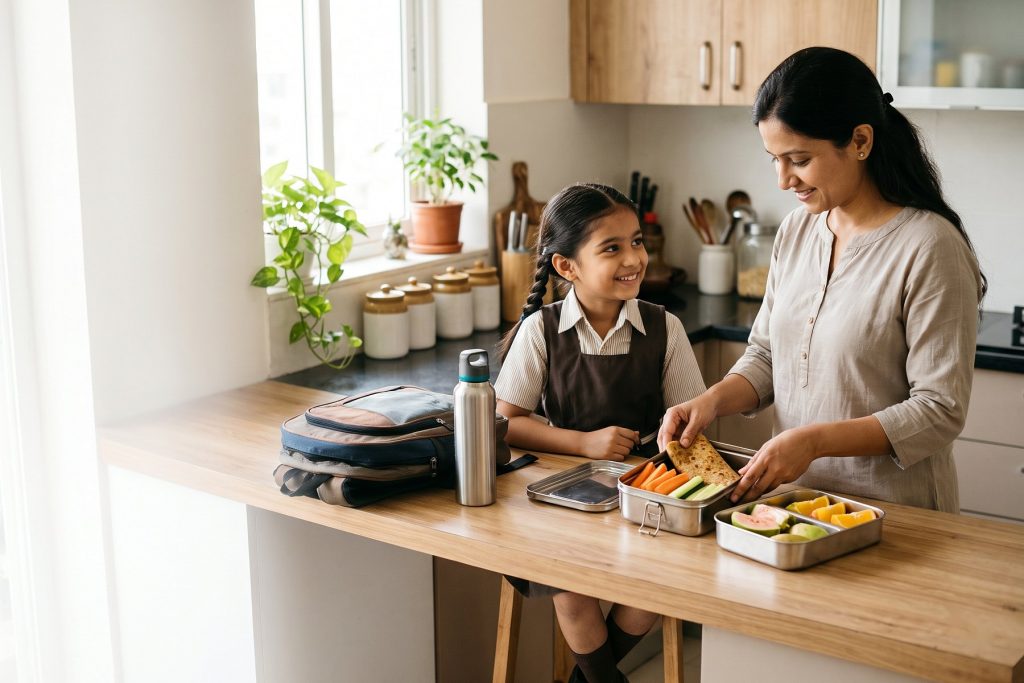
 On 14 November, India celebrated Children’s Day, Bal Diwas, the birth anniversary of Jawaharlal Nehru, with school functions, treats and gifts. Once the celebrations are over, it’s a good moment for parents to look at two everyday habits that quietly shape children’s health: what goes into the lunchbox, and how much time goes into screens.
Both matter more than ever. UNICEF India reports that overweight and obesity among children under five more than doubled, from 1.5% to 3.4%, between the national family health surveys of 2005–06 and 2019–21, and rose even faster among adolescents, as ultra-processed foods and sugary drinks replace traditional meals. At the same time, the All India Ophthalmological Society warns that about 14% of urban school children are short-sighted, with long hours on screens and too little time outdoors among the reasons.
The good news is that small, steady changes at home make a real difference. This guide gives you a simple lunchbox formula, a week of Indian lunchbox ideas, and practical, age-by-age screen-time habits that work for real families.
At a glance
- Build the lunchbox from four parts: a whole grain, a protein, a vegetable and a fruit, plus water to drink.
- Keep packaged snacks, sweets and sugary drinks as occasional treats, not daily lunchbox fillers. India’s dietary guidelines advise no added sugar at all for children under two.
- Pack food safely: use a clean, insulated box and keep perishable foods cool until lunch.
- Follow age-based screen limits: the Indian Academy of Pediatrics advises no screens under two, up to one hour a day of supervised viewing for ages 2–5, and less than two hours of recreational screen time for ages 5–10.
- Get two hours of outdoor play daily where possible. Eye doctors recommend it to help protect against short-sightedness.
- Protect sleep: keep screens out of bedrooms and switch them off at least an hour before bed. School-age children need 9–12 hours of sleep.
- Lead by example. Children copy what they see, from what’s on your plate to how often you pick up your phone.
Part 1: Building a healthy lunchbox
On school days, the lunchbox makes up a big part of what a child eats. It’s also the meal parents have least control over once it leaves home, so it helps to pack something children will actually eat.
The four-part lunchbox formula
| Part | Why it matters | Easy options |
| Whole grain or millet | Steady energy for learning and play | Whole wheat roti or paratha, brown or hand-pounded rice, ragi, jowar or bajra rotis, poha, daliya, idli, whole wheat bread |
| Protein | Growth, muscles and keeping full | Dal, chana, rajma, moong sprouts, paneer, curd, besan chilla, egg, tofu, chicken |
| Vegetable | Fibre, vitamins and minerals | Carrot, cucumber or beetroot sticks, peas, beans, spinach, cabbage, capsicum, grated vegetables mixed into rotis or parathas |
| Fruit | Natural sweetness, vitamin C and fibre | Banana, apple, guava, orange segments, papaya, grapes (halved for younger children), seasonal fruit |
Add water in a clean bottle. Plain water is the best drink; skip packaged juices and flavoured drinks.
India’s dietary guidelines from the ICMR-National Institute of Nutrition recommend at least 500 g of fruits and vegetables a day for adults and non-starchy vegetables at every meal, and advise limiting foods high in fat, sugar and salt. Children’s portions are smaller, but the principle is the same: vegetables and fruit in every lunchbox.
What to keep as an occasional treat
- Packaged snacks: chips, biscuits, namkeen, instant noodles and bakery items such as puffs and cakes, which are often high in salt, sugar, refined flour and fat
- Sugary drinks: packaged juices, flavoured milk with added sugar, colas and energy drinks
- Sweets and chocolates as everyday fillers
- Deep-fried foods most days of the week
The ICMR-NIN guidelines advise no added sugar for children under two, and keeping sugar low for everyone after that. Jaggery and honey count as sugar too; our guide to jaggery vs sugar explains why. If your child loves crunchy snacks, homemade options such as roasted chana, makhana or our baked and air-fried namkeen are better choices than packets.
How much to pack
Children’s appetites vary with age, growth spurts and activity, so there’s no single right amount. A good rule of thumb is to pack a little less than you think, and add more if the box keeps coming home empty. A box that keeps coming back full is a cue to talk to your child about what they’d enjoy, not to add more food.
Pack it safely
Lunchboxes often sit for four or five hours, sometimes in hot classrooms or buses. Food safety experts at safefood advise:
- keep perishable foods as cold as possible until lunchtime, using an insulated box or bag, and keep the box out of direct sun
- wash and dry the lunchbox and water bottle every day
- throw away any perishable leftovers at the end of the day rather than eating them later
In hot weather, choose foods that travel well, such as parathas, theplas, dry sabzis, idli, upma, sprouts chaat and whole fruit. Be careful with curd-based, mayonnaise-based and creamy fillings, and cut fruit that browns or spoils quickly. Teach children to wash their hands with soap before eating.
A week of Indian lunchbox ideas
Each of these follows the four-part formula. Adjust portions to your child’s age and appetite, and swap in regional favourites.
| Day | Main | Add-on | Fruit |
| Monday | Paneer and vegetable paratha (whole wheat), with curd in a separate leak-proof box (skip the curd on hot days) | Cucumber sticks | Guava slices |
| Tuesday | Vegetable poha with peanuts and peas | Moong sprouts chaat | Banana |
| Wednesday | Mini idlis with sambar or a thick dal dip | Carrot sticks | Orange segments |
| Thursday | Rajma or chole with brown rice (or a roti roll) | Kachumber salad | Apple slices with a squeeze of lemon |
| Friday | Besan or moong dal chilla stuffed with grated vegetables | Mint or coriander chutney | Papaya cubes |
| Saturday | Ragi or jowar roti wrap with egg bhurji or paneer bhurji and vegetables | Roasted chana | Seasonal fruit |
For non-vegetarian families, boiled eggs, egg bhurji or grilled chicken work well in place of paneer or chana.
Tips for fussy eaters
- Involve them. Let children choose between two healthy options, help wash vegetables or roll rotis. They’re more likely to eat what they helped make.
- Keep the familiar, add one new thing. Pair a favourite food with a small portion of something new.
- Make it look good. Colourful food, small portions, mini sizes and simple shapes, such as rolled rotis or idli “coins”, appeal to younger children.
- Hide, then reveal. Grated carrot or spinach in parathas, chillas or dal is a good start, but also serve vegetables openly so children learn to enjoy them.
- Be patient. Children often need to see a new food many times before they’ll try it. Keep offering without pressure or bribes.
- Don’t use sweets as rewards, which can teach children that sweets are better than other foods.
- Ask what came home and why. Uneaten food may mean the portion was too big, the food didn’t travel well, or there wasn’t enough time to eat.
Part 2: Screen time, and why it matters
Screens aren’t all bad. Video calls with grandparents, educational shows and creative apps all have their place. The problem is usually how much, what kind, and what screens push out of a child’s day: play, sleep, conversation and time outdoors.
How much screen time is right?
The Indian Academy of Pediatrics’ guidelines on screen time and digital wellness, published in Indian Pediatrics in 2022, recommend:
| Age | Recommended screen time |
| Under 2 years | No screens at all |
| 2–5 years | Up to one hour a day, supervised, with good-quality, age-appropriate content |
| 5–10 years | Less than two hours a day of recreational screen time |
| Adolescents | No fixed limit, but screens shouldn’t displace physical activity, sleep, family time, studies or hobbies |
The IAP also advises choosing educational, age-appropriate and non-violent content, and watching for signs of cyberbullying or problematic use. Screen time for online classes and homework is different from recreational use, but the same breaks, posture and bedtime habits apply.
What too much screen time can affect
Eyes. Short-sightedness (myopia) is rising in Indian children. The All India Ophthalmological Society’s 2026 guidelines note that children often spend four to six hours or more a day on screens, and recommend two hours outdoors every day, a yearly eye check and the 20-20-20 rule: every 20 minutes, look at something 20 feet away for 20 seconds. Signs a child may need an eye test include squinting, sitting very close to the TV, holding books close, headaches or rubbing their eyes.
Sleep. Screens in the evening can push bedtime later and make it harder to wind down. The American Academy of Sleep Medicine recommends 9–12 hours of sleep a day for children aged 6–12, and 8–10 hours for teenagers, and 10–13 hours, including naps, for children aged 3–5.
Activity and weight. Hours on screens are often hours sitting still, and UNICEF lists low physical activity and more screen time among the drivers of rising childhood obesity in India. Screens also bring advertising: in a UNICEF U-Report poll, 75% of young people had seen ads for sugary drinks, fast food or snacks in the past week, mostly on social media.
Mood, attention and relationships. Heavy use, especially of social media and games, can affect concentration, mood and family time. Talk to your child’s doctor if screen use seems to be causing distress, poor sleep, falling school performance or withdrawal from friends and activities.
Screen-time habits that work for real families
Strict bans rarely last. Clear, predictable family rules, agreed together and applied to adults too, work better.
Make a simple family screen plan
- Agree on when, where and how long. For example: no screens before school, a set time after homework, and none during meals.
- Keep screen-free zones: the dining table and bedrooms. Charge phones and tablets overnight outside the bedroom.
- Switch off at least an hour before bedtime, and replace screens with a bath, a story or reading together.
- Use timers and parental controls for younger children, and talk openly with older children about content, privacy and online safety.
- Choose quality over quantity. Watch with younger children when you can, and talk about what you’ve seen.
- Avoid screens as a pacifier, for example during meals or every time a child is bored or upset. Boredom often leads to creative play.
Swap screen time for green time
- Aim for two hours outdoors a day, which eye doctors recommend to help protect children’s eyesight. Parks, school grounds, terraces and building compounds all count.
- Build movement into the day: walking or cycling to school where safe, active games, dance, sport or helping with the shopping.
- On smoggy days, move play indoors with dance, yoga, skipping or obstacle courses, and check the AQI before outdoor sport.
Lead by example
Children notice when parents scroll at the dinner table or check phones in the middle of a conversation. Try a family “phone basket” at mealtimes, put your own phone away during play, and narrate when you use screens for a purpose (“I’m checking the bus time”) rather than out of habit.
Protect sleep
A regular bedtime, a screen-free bedroom and a calm wind-down routine help children get the sleep they need. Many of the tips in our guide to improving sleep quality work for older children and teenagers too.
The bottom line
After the Children’s Day celebrations, the best gift you can give may be two simple habits. Pack a lunchbox with a whole grain, a protein, a vegetable and a fruit, and keep packaged snacks and sugary drinks for occasional treats. And set clear, age-appropriate screen limits, with plenty of outdoor play, screen-free meals and bedrooms, and a regular bedtime. Children learn most from what they see, so the changes work best when the whole family makes them together.
Pro Tip: Use the GOQii App to track your own steps and sleep, and set an active, well-rested example your children can follow. Your GOQii Personalised Health Coach can help you plan healthier family meals and active routines that fit busy school weeks.
Frequently asked questions
What should a healthy school lunchbox include?
A healthy lunchbox includes a whole grain or millet, a protein such as dal, paneer, sprouts or egg, a vegetable and a fruit, with water to drink. Keep chips, biscuits, sweets and sugary drinks as occasional treats.
How much screen time is okay for children?
The Indian Academy of Pediatrics recommends no screens for children under two, up to one hour a day of supervised screen time for ages 2 to 5, and less than two hours a day of recreational screen time for ages 5 to 10. For teenagers, screens shouldn’t replace sleep, activity, studies or family time.
Does screen time cause short-sightedness in children?
Long hours on screens and close-up work, together with too little time outdoors, are linked to rising short-sightedness in children. Eye doctors recommend two hours outdoors daily, the 20-20-20 rule and a yearly eye check.
How much sleep do children need?
The American Academy of Sleep Medicine recommends 10 to 13 hours a day, including naps, for children aged 3 to 5, 9 to 12 hours for ages 6 to 12, and 8 to 10 hours for teenagers.
How can I stop food in my child’s lunchbox from going bad?
Use a clean, insulated lunchbox, keep it out of direct sun, pack foods that travel well, and be careful with curd, cream and mayonnaise in hot weather. Wash the box every day and throw away any perishable leftovers.
How do I get my child to eat vegetables?
Involve your child in choosing and preparing food, serve vegetables in colourful, small portions alongside favourites, mix grated vegetables into parathas or chillas, and keep offering without pressure. Children often need to try a new food many times before they accept it.
Can children have sugar or jaggery?
India’s dietary guidelines advise no added sugar for children under two. After that, keep sugar, jaggery and honey low, and offer fruit for sweetness instead of sweets or sugary drinks.
#BeTheForce
Disclaimer: The information provided in this blog is for general awareness and educational purposes only. It is not intended to replace professional medical advice, diagnosis, or treatment. Always consult a qualified healthcare provider for personalised medical guidance or concerns related to your health.




Leave a Reply