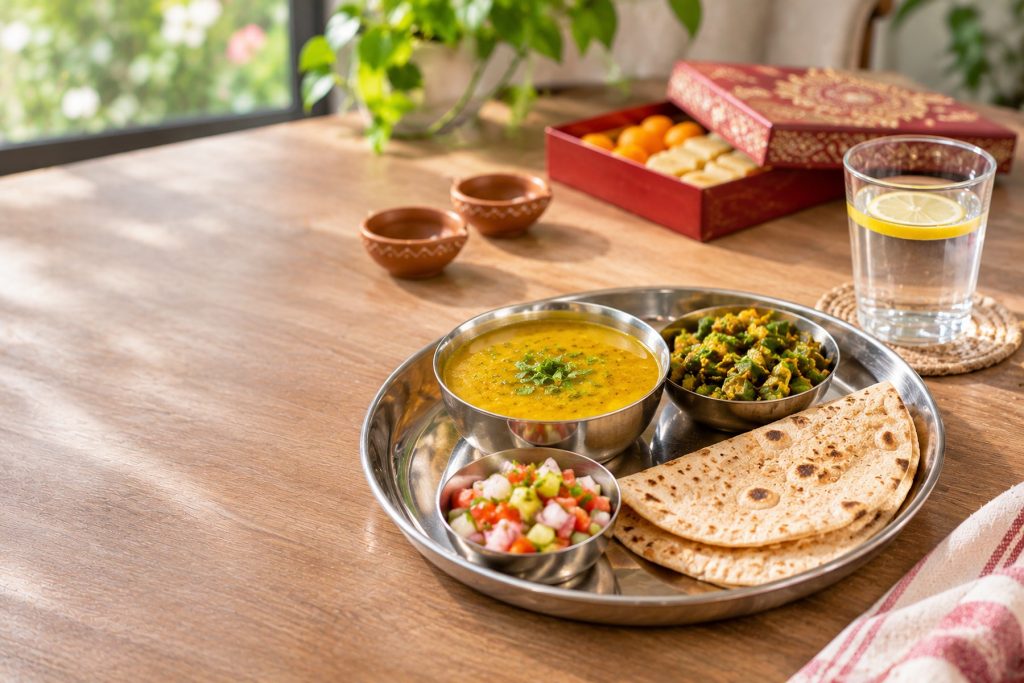
 The diyas are packed away, the mithai boxes are half empty and the scale may say something you’d rather it didn’t. After a week of Dhanteras shopping, Diwali feasts and card parties, with Bhai Dooj still to come, it’s natural to want to undo it all fast. Social media is happy to help, with three-day juice cleanses, “detox” teas and skip-dinner challenges.
Here’s the reassuring part: a few days of festive eating doesn’t undo months of good habits, and much of the jump on the scale isn’t fat at all. What matters far more is what you do over the next few weeks. This guide explains why crash diets and detoxes aren’t the answer, and gives you a simple, realistic seven-day plan to get your eating, movement and sleep back on track.
At a glance
- Don’t panic about the scale. A quick rise after a festival is largely water and stored carbohydrate from salty, rich food, and it settles within days once you eat normally.
- Skip the detox. Your liver, kidneys and gut already clear waste. The British Dietetic Association calls detox diets “a marketing myth”.
- The real risk is the slow creep. Research suggests festive-season weight gain is small but often never comes off, so steady habits matter more than a dramatic fix.
- Go back to regular meals, with vegetables, a source of protein and whole grains at each one. Don’t skip meals to “make up” for Diwali.
- Deal with the leftovers. Share, freeze or portion out mithai and namkeen rather than grazing on them all week.
- Move a little, often. A short walk after meals helps blood sugar. On smoggy days, move your workout indoors.
- Fix your sleep after late festive nights. Short sleep makes you hungrier the next day.
- If you have diabetes, high blood pressure or heart disease, check your numbers this week and speak to your doctor if they’re higher than usual.
Why crash diets and detoxes aren’t the answer
The scale is exaggerating
If you weigh yourself the morning after Diwali, a gain of a kilo or more can feel alarming. Most of it isn’t fat. Gaining a kilo of body fat takes several thousand extra calories on top of what your body uses, far more than a few festive meals usually add. What you’re mostly seeing is:
- water held by salt. Namkeen, chaat, pakoras and restaurant food are salty, and your body temporarily holds extra water to balance it.
- stored carbohydrate. Sweets, puris and rice top up your glycogen stores, and glycogen is stored with water.
- food that hasn’t moved through yet, especially after large, late meals.
That’s also why crash diets seem to “work” at first. The British Dietetic Association points out that the rapid weight loss from fasting is mainly water and glycogen rather than fat, and that it can leave you tired and short of nutrients. The water comes straight back when you eat normally.
The real issue is the slow creep
The weight that does stick is small, but it adds up. A US study published in the New England Journal of Medicine weighed adults through the year and found the average holiday-season gain was only about half a kilo. The catch: it wasn’t lost over the rest of the year, and people with overweight were more likely to gain more. In India, the festive season runs from Navratri through Diwali to weddings and New Year, so it’s worth paying attention to.
The good news is that small, consistent habits work. In a UK trial published in The BMJ, adults who weighed themselves regularly and had simple tips didn’t gain weight over Christmas, while the comparison group did.
“Detox” is a marketing idea, not a medical one
Your liver, kidneys, gut, lungs and skin clear waste products around the clock. No juice, tea, powder or cleanse has been shown to do this better. The British Dietetic Association describes detox diets as “a marketing myth rather than nutritional reality”, with benefits that are short-lived at best. Some detox teas contain laxatives or diuretics, which simply flush out water and can upset your stomach and fluid balance.
Why strict rules often don’t last
Skipping meals or living on juice for a few days is hard to keep up, and it tends to end with a return to old habits. It can also leave you low on protein, fibre and energy just as work and routines restart. A plan you can follow for weeks beats one you can manage for three days.
A note of caution: if you notice a pattern of eating a lot, then feeling guilty and severely restricting, or if food and weight are causing you real distress, it’s worth talking to your doctor. You don’t have to manage that on your own.
Your 7-day post-Diwali reset
This isn’t a diet. It’s a week of getting back to your normal routine, with a few small upgrades. You don’t need special foods, and you shouldn’t feel hungry.
Days 1–2: back to regular meals
- Eat breakfast, lunch and dinner at roughly your usual times. Skipping meals to “compensate” usually makes you hungrier later and more likely to snack on leftovers.
- Start the day with protein and fibre, such as besan or moong dal chilla, poha with peanuts and vegetables, vegetable upma, eggs, or curd with fruit and seeds.
- Drink water through the day. It won’t flush out toxins, but thirst is easy to mistake for hunger, and after salty food you’ll probably want more.
- Go easy on salt. Home-cooked dal, sabzi and roti, with less pickle, papad and namkeen, will help your body let go of the extra water quickly.
Days 3–5: build a better plate
The ICMR-NIN Dietary Guidelines for Indians advise getting no more than 45% of calories from cereals and millets, filling the rest with pulses, vegetables, fruit, nuts and milk, and cutting back on salt, sugar and ultra-processed foods. In practice, at lunch and dinner:
- fill half your plate with vegetables or salad: sabzi, kachumber, palak, lauki, beans or a bowl of soup
- add a protein food: dal, rajma, chana, paneer, tofu, curd, eggs, fish or chicken
- keep grains to about a quarter of the plate, choosing whole wheat roti, brown or hand-pounded rice, or millets such as jowar, bajra and ragi
- use a little less oil, and cook more by steaming, roasting or tadka rather than deep-frying
Protein and fibre keep you full for longer, which makes it easier to say no to the third piece of kaju katli without feeling deprived.
Days 6–7: plan the week ahead
- Shop for a normal week: vegetables, fruit, pulses, curd and whole grains.
- Plan two or three easy dinners so you’re not relying on takeaway or leftover snacks when you’re tired.
- Keep healthier snacks handy: fruit, roasted chana, makhana, nuts, buttermilk or sprouts chaat.
What to do with leftover mithai and namkeen
The real post-Diwali challenge is often the boxes on the dining table. You don’t need to throw them away or eat them all this week.
- Share them with neighbours, office colleagues, house help, security staff or a local shelter.
- Freeze what you can. Many milk-free sweets, such as besan ladoo, and dry fruit barfis freeze well. Milk-based sweets don’t keep long, so share those first.
- Portion, don’t graze. Put one piece on a plate and put the box away, rather than eating from it as you walk past.
- Have sweets after a meal, not on an empty stomach as a snack, and enjoy them slowly.
- Store namkeen out of sight and serve a small katori rather than eating from the packet. If you’re making snacks again, try our baked and air-fried namkeen recipes.
A word on alcohol and sugary drinks
If the festive week included card parties and gatherings, give your body a break from alcohol for a few days. Alcohol adds calories, disturbs sleep and often leads to late-night snacking. Swap sweetened drinks and colas for water, nimbu pani without sugar, buttermilk or plain tea.
Movement, sleep and routine
Move a little, often
You can’t out-exercise a week of festive eating, and you don’t need to. The aim is to get back to regular activity, not to punish yourself with a two-hour gym session.
- Walk after meals. A meta-analysis in Sports Medicine found that even 2–5 minutes of light walking after eating helped steady blood sugar compared with sitting, with the biggest effect within 60–90 minutes of the meal. A 10–15 minute stroll after dinner is a good habit to start this week.
- Work back up to your usual routine. The WHO recommends adults get at least 150 minutes of moderate activity a week, such as brisk walking, cycling or dancing, plus muscle-strengthening on two or more days. If you’ve had a lazy fortnight, start with shorter sessions and build up over a week or two.
- Add some strength work. Squats, lunges, push-ups against a wall and resistance bands help maintain muscle, which matters for blood sugar and metabolism as we age.
- Break up long sitting, especially as you return to work. Stand up and move every 30–60 minutes.
If the air is bad: in much of north India, the days after Diwali often bring the worst smog of the year. Check the AQI before heading out, skip outdoor runs and walks on poor-air days and exercise indoors instead, with yoga, a home workout, skipping or walking in a mall or indoor track. Our guide to air pollution and your health has more on protecting your lungs and heart.
Get your sleep back on track
Late nights, early pujas and noisy celebrations can leave you short of sleep, and that affects your eating. In a small Mayo Clinic study, healthy adults who slept about 80 minutes less a night for eight nights ate around 550 extra calories a day, without burning any more.
- Aim for seven or more hours a night, and go to bed and wake up at about the same time each day, including weekends.
- Have dinner two to three hours before bed and keep it lighter than a festive meal.
- Cut back on caffeine after mid-afternoon, including the many cups of chai that come with festive visits.
- Dim screens for the last half hour before bed.
Be kind to yourself
Festivals are meant to be enjoyed. Guilt about what you ate tends to make people either give up or swing to extremes. Think of this week as getting back to your routine, not as a punishment. One good meal, one walk and one early night are a perfectly good start.
If you have diabetes, high blood pressure or heart disease
A week of sweets, fried snacks, late meals and missed walks can push your numbers up, sometimes without any obvious symptoms. This week is a good time to check in.
- Diabetes: if you monitor at home, check your blood sugar more often for a few days, including after meals. Keep taking your medicines as prescribed. Don’t skip or double doses to make up for what you ate. Contact your doctor if readings stay higher than your target, or if you notice extreme thirst, passing urine often, blurred vision or unusual tiredness. If you take insulin or medicines that can cause low blood sugar, be careful about suddenly cutting meals.
- High blood pressure: salty festive food can raise blood pressure in some people. If you have a home monitor, take a few readings this week at the same time of day. Speak to your doctor if they’re consistently above the target you’ve been given.
- Heart disease: keep taking your medicines, ease back into activity gradually and avoid exercising outdoors in heavy smog. Get urgent help for chest pain, breathlessness or pain spreading to the arm, jaw or back.
If you’re due a routine check-up, such as HbA1c, a lipid profile or a blood pressure review, this is a good month to book it. Our Dhanteras health guide lists the main tests and where to get them.
And if you were planning a strict diet or fasting for weight loss, check with your doctor first. It’s especially important if you take medicines for diabetes or blood pressure, or if you’re pregnant, older or have kidney disease.
The bottom line
You don’t need to undo Diwali. You need to get back to normal. Most of the quick gain on the scale is water and will settle within days. The habits that actually protect your health are unglamorous ones: regular meals built around vegetables, protein and whole grains; less salt and sugar; a walk after meals; and enough sleep. Keep them going through the rest of the festive and wedding season, and the occasional celebration won’t matter much. For tips you can use at the next festival, see our guide to a healthy Diwali.
Pro Tip: Use the GOQii App to log your meals, steps, water and sleep for the next seven days. Seeing the week in one place makes it easier to spot what’s working. Your GOQii Personalised Health Coach can help you build a realistic post-festival plan that fits your routine, without crash diets.
Frequently asked questions
How can I lose weight after Diwali?
Go back to regular meals with plenty of vegetables, a source of protein and smaller portions of whole grains, cut back on salt, sugar and fried snacks, walk daily and get enough sleep. Much of the quick gain is water and will settle within a few days. Aim for steady habits rather than fast loss.
Do post-Diwali detox drinks or juice cleanses work?
No. Your liver, kidneys and gut already remove waste, and no juice, tea or cleanse has been shown to do it better. Weight lost on a cleanse is mostly water and comes back when you eat normally. Some detox teas contain laxatives that can upset your stomach.
Why has my weight gone up so much after the festival?
A quick rise is mostly water held by salty food, extra stored carbohydrate and food still being digested, rather than fat. Gaining a kilo of fat takes several thousand extra calories. The scale usually settles within a few days of normal eating.
Should I skip meals or fast to make up for overeating?
It’s better not to. Skipping meals often leads to more snacking later and can leave you low on energy and nutrients. If you have diabetes or take medicines for blood sugar or blood pressure, check with your doctor before fasting.
What should I do with leftover Diwali sweets?
Share them with neighbours, colleagues or a local shelter, freeze those that freeze well, and keep the boxes out of sight. Have a single piece after a meal rather than grazing through the day.
How much exercise do I need after Diwali?
There’s no need to overdo it. Return to your usual routine and build up to the WHO’s recommendation of at least 150 minutes of moderate activity a week, plus strength exercises on two days. A short walk after meals also helps steady blood sugar.
Is it safe to exercise outdoors after Diwali?
Not on days when air quality is poor. Check the AQI before going out, and on smoggy days exercise indoors with yoga, a home workout or walking indoors. This is especially important for people with asthma, COPD or heart disease.
#BeTheForce
Disclaimer: The information provided in this blog is for general awareness and educational purposes only. It is not intended to replace professional medical advice, diagnosis, or treatment. Always consult a qualified healthcare provider for personalised medical guidance or concerns related to your health.




Leave a Reply