GOQii

Blog

  • HOME
  • HEALTHY LIVING
  • FITNESS
  • HEALTHY RECIPES
  • USER STORIES
  • KARMA
  • BUY GOQii

Search Results for: chocolate

October 18, 2017 By ASHWINI PRAKASH CHAUDHARI 2 Comments

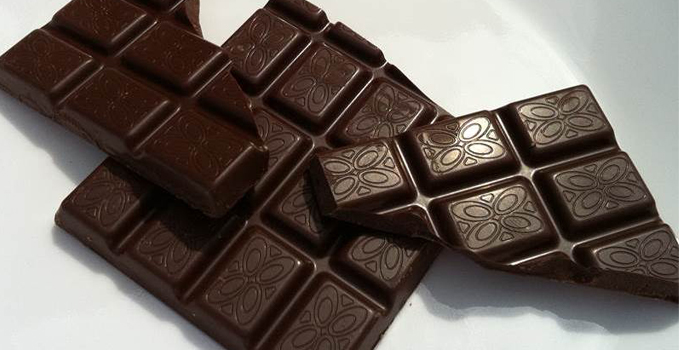
Dark Chocolate and its health benefits

dark-chocolate
Whenever I think about chocolates my taste buds get active and my saliva starts rolling……. And I guess it’s the same with every one of us. From the time we start understanding our taste buds, chocolate is the most common food we crave for and this craving continues even as we age.

People have different choices in chocolates such as milky, Cadbury, jelly, liquor-filled chocolates, dark chocolate, candies, bars etc., but in all these Dark Chocolate is the most nutritious. In 100 grams bar, it contains 50-70% cocoa and 11 grams of fibre. It also has plenty of iron, magnesium, copper, manganese, potassium, phosphorus, zinc and selenium. However, one should consume it in moderation.

A study conducted by the University of California tested the theory that, as Dark Chocolate is believed to increase your metabolism; these benefits may cancel out the calories consumed. It may not be an obvious food choice for dieters, but research findings suggest that eating dark chocolate in moderation could actually keep you slim. Adults who consumed dark chocolate frequently had a lower BMI (Basal Metabolic Index) than those who didn’t, despite them often eating more calories and not exercising more.

Like tea, dark chocolate contains flavonoids, which are compounds that act as antioxidants. Dark chocolate has the type of fat in chocolate may actually increase the good HDL (high-density lipoprotein) cholesterol and will not increase the bad LDL (low-density lipoprotein) cholesterol in the blood.

Dark Chocolate is our hearts Best Friend.  Yes!!! You heard it right our Hearts best friend.

A recent Harvard study concluded that eating dark chocolate may have a reduced benefit on blood pressure. This is likely due to the flavanols found in chocolate that contain at least 50 to 70% cocoa, which appear to result in mild blood vessel dilation. Compounds called phenols are present in cocoa-rich chocolate. These antioxidants are the same as the ones found in red wines.

Dark chocolate is rich in brain-boosting chemicals when you have got a tough exam coming up? Boost your IQ and indulge your taste buds at the same time by snacking on a few squares of chocolate which will help you to improve blood flow to the brain as well as improving their ability to form new memories.

Dark Chocolate not only offers many amazing health benefits, it is also a great pick-me-up snack so can help you stay energized for your workouts. It is high in energy-boosting chemicals including theobromine (a stimulant found in many popular energy drinks) and caffeine. Have 1-2 squares of chocolate in the afternoon or before a workout to help stay energized for a longer period of time.

Skin is the most sensitive organ of our body, the skin creams are great for keeping our skin looking more youthful, they can only do so much; to really keep the wrinkles at bay, you need to look to your diet. Research has suggested that, when it comes to fighting free-radicals, dark chocolate could be even healthier than fruit! When tested and compared to juices from ‘superfruits’ such as blueberries and pomegranate, dark chocolate was found to be higher in antioxidants.

Dark Chocolate makes you happy

Dark Chocolate is known to be high in mood-boosting chemicals and findings published in the scientific journal Nutritional Neuroscience have suggested that the food can even help reduce the symptoms of depression. As we talk about the taste buds when the taste buds are stimulated with pleasurable flavours, there are endorphins released in the brain. These endorphins are the feel-good compounds of the body. Chocolate contains chemicals that cause the brain to release compounds that trigger the ‘feeling of love’.

In moderation, if you consume 2 squares of dark chocolate every day you can continue to be healthy as well as fit for a long period of time.

“Note to self- Eat lots of Chocolate when times get rough and eat even more when times are great.” So always keep a smile on your face, a rainbow in your heart and some dark chocolate on hand! To make healthy lifestyle choices click here.
 

November 15, 2026 By GOQii Leave a Comment

Children’s Day 2026: Healthy Lunchboxes and Screen-Time Habits for Happier, Healthier Kids

On 14 November, India celebrated Children’s Day, Bal Diwas, the birth anniversary of Jawaharlal Nehru, with school functions, treats and gifts. Once the celebrations are over, it’s a good moment for parents to look at two everyday habits that quietly shape children’s health: what goes into the lunchbox, and how much time goes into screens.

Both matter more than ever. UNICEF India reports that overweight and obesity among children under five more than doubled, from 1.5% to 3.4%, between the national family health surveys of 2005–06 and 2019–21, and rose even faster among adolescents, as ultra-processed foods and sugary drinks replace traditional meals. At the same time, the All India Ophthalmological Society warns that about 14% of urban school children are short-sighted, with long hours on screens and too little time outdoors among the reasons.

The good news is that small, steady changes at home make a real difference. This guide gives you a simple lunchbox formula, a week of Indian lunchbox ideas, and practical, age-by-age screen-time habits that work for real families.

At a glance

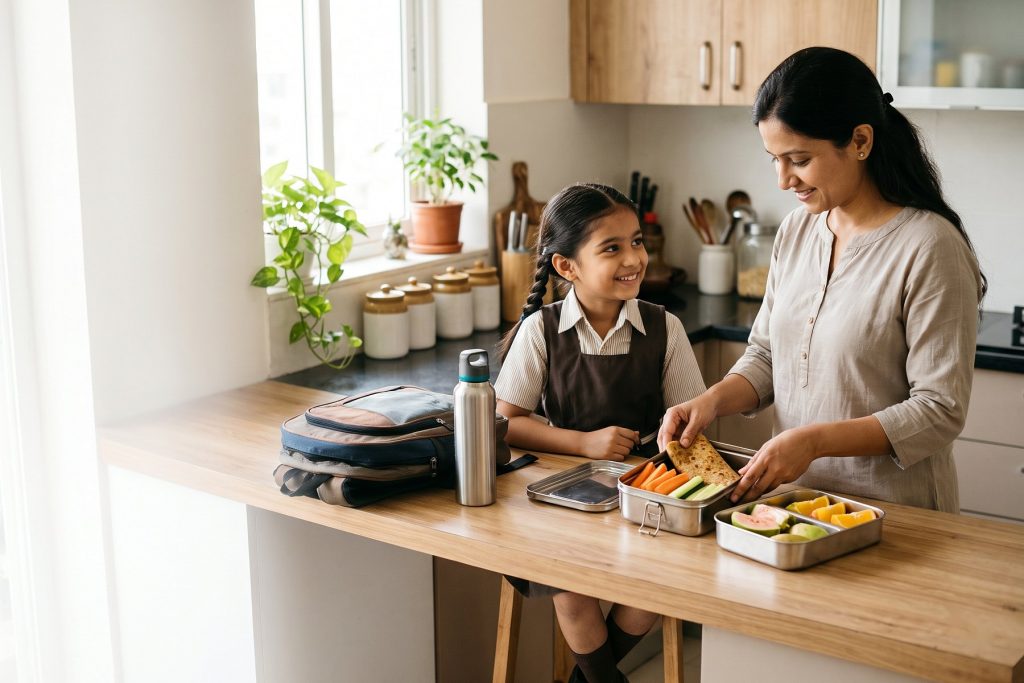
  • Build the lunchbox from four parts: a whole grain, a protein, a vegetable and a fruit, plus water to drink.
  • Keep packaged snacks, sweets and sugary drinks as occasional treats, not daily lunchbox fillers. India’s dietary guidelines advise no added sugar at all for children under two.
  • Pack food safely: use a clean, insulated box and keep perishable foods cool until lunch.
  • Follow age-based screen limits: the Indian Academy of Pediatrics advises no screens under two, up to one hour a day of supervised viewing for ages 2–5, and less than two hours of recreational screen time for ages 5–10.
  • Get two hours of outdoor play daily where possible. Eye doctors recommend it to help protect against short-sightedness.
  • Protect sleep: keep screens out of bedrooms and switch them off at least an hour before bed. School-age children need 9–12 hours of sleep.
  • Lead by example. Children copy what they see, from what’s on your plate to how often you pick up your phone.

Part 1: Building a healthy lunchbox

On school days, the lunchbox makes up a big part of what a child eats. It’s also the meal parents have least control over once it leaves home, so it helps to pack something children will actually eat.

The four-part lunchbox formula

Part Why it matters Easy options
Whole grain or millet Steady energy for learning and play Whole wheat roti or paratha, brown or hand-pounded rice, ragi, jowar or bajra rotis, poha, daliya, idli, whole wheat bread
Protein Growth, muscles and keeping full Dal, chana, rajma, moong sprouts, paneer, curd, besan chilla, egg, tofu, chicken
Vegetable Fibre, vitamins and minerals Carrot, cucumber or beetroot sticks, peas, beans, spinach, cabbage, capsicum, grated vegetables mixed into rotis or parathas
Fruit Natural sweetness, vitamin C and fibre Banana, apple, guava, orange segments, papaya, grapes (halved for younger children), seasonal fruit

Add water in a clean bottle. Plain water is the best drink; skip packaged juices and flavoured drinks.

India’s dietary guidelines from the ICMR-National Institute of Nutrition recommend at least 500 g of fruits and vegetables a day for adults and non-starchy vegetables at every meal, and advise limiting foods high in fat, sugar and salt. Children’s portions are smaller, but the principle is the same: vegetables and fruit in every lunchbox.

What to keep as an occasional treat

  • Packaged snacks: chips, biscuits, namkeen, instant noodles and bakery items such as puffs and cakes, which are often high in salt, sugar, refined flour and fat
  • Sugary drinks: packaged juices, flavoured milk with added sugar, colas and energy drinks
  • Sweets and chocolates as everyday fillers
  • Deep-fried foods most days of the week

The ICMR-NIN guidelines advise no added sugar for children under two, and keeping sugar low for everyone after that. Jaggery and honey count as sugar too; our guide to jaggery vs sugar explains why. If your child loves crunchy snacks, homemade options such as roasted chana, makhana or our baked and air-fried namkeen are better choices than packets.

How much to pack

Children’s appetites vary with age, growth spurts and activity, so there’s no single right amount. A good rule of thumb is to pack a little less than you think, and add more if the box keeps coming home empty. A box that keeps coming back full is a cue to talk to your child about what they’d enjoy, not to add more food.

Pack it safely

Lunchboxes often sit for four or five hours, sometimes in hot classrooms or buses. Food safety experts at safefood advise:

  • keep perishable foods as cold as possible until lunchtime, using an insulated box or bag, and keep the box out of direct sun
  • wash and dry the lunchbox and water bottle every day
  • throw away any perishable leftovers at the end of the day rather than eating them later

In hot weather, choose foods that travel well, such as parathas, theplas, dry sabzis, idli, upma, sprouts chaat and whole fruit. Be careful with curd-based, mayonnaise-based and creamy fillings, and cut fruit that browns or spoils quickly. Teach children to wash their hands with soap before eating.

A week of Indian lunchbox ideas

Each of these follows the four-part formula. Adjust portions to your child’s age and appetite, and swap in regional favourites.

Day Main Add-on Fruit
Monday Paneer and vegetable paratha (whole wheat), with curd in a separate leak-proof box (skip the curd on hot days) Cucumber sticks Guava slices
Tuesday Vegetable poha with peanuts and peas Moong sprouts chaat Banana
Wednesday Mini idlis with sambar or a thick dal dip Carrot sticks Orange segments
Thursday Rajma or chole with brown rice (or a roti roll) Kachumber salad Apple slices with a squeeze of lemon
Friday Besan or moong dal chilla stuffed with grated vegetables Mint or coriander chutney Papaya cubes
Saturday Ragi or jowar roti wrap with egg bhurji or paneer bhurji and vegetables Roasted chana Seasonal fruit

For non-vegetarian families, boiled eggs, egg bhurji or grilled chicken work well in place of paneer or chana.

Tips for fussy eaters

  • Involve them. Let children choose between two healthy options, help wash vegetables or roll rotis. They’re more likely to eat what they helped make.
  • Keep the familiar, add one new thing. Pair a favourite food with a small portion of something new.
  • Make it look good. Colourful food, small portions, mini sizes and simple shapes, such as rolled rotis or idli “coins”, appeal to younger children.
  • Hide, then reveal. Grated carrot or spinach in parathas, chillas or dal is a good start, but also serve vegetables openly so children learn to enjoy them.
  • Be patient. Children often need to see a new food many times before they’ll try it. Keep offering without pressure or bribes.
  • Don’t use sweets as rewards, which can teach children that sweets are better than other foods.
  • Ask what came home and why. Uneaten food may mean the portion was too big, the food didn’t travel well, or there wasn’t enough time to eat.

Part 2: Screen time, and why it matters

Screens aren’t all bad. Video calls with grandparents, educational shows and creative apps all have their place. The problem is usually how much, what kind, and what screens push out of a child’s day: play, sleep, conversation and time outdoors.

How much screen time is right?

The Indian Academy of Pediatrics’ guidelines on screen time and digital wellness, published in Indian Pediatrics in 2022, recommend:

Age Recommended screen time
Under 2 years No screens at all
2–5 years Up to one hour a day, supervised, with good-quality, age-appropriate content
5–10 years Less than two hours a day of recreational screen time
Adolescents No fixed limit, but screens shouldn’t displace physical activity, sleep, family time, studies or hobbies

The IAP also advises choosing educational, age-appropriate and non-violent content, and watching for signs of cyberbullying or problematic use. Screen time for online classes and homework is different from recreational use, but the same breaks, posture and bedtime habits apply.

What too much screen time can affect

Eyes. Short-sightedness (myopia) is rising in Indian children. The All India Ophthalmological Society’s 2026 guidelines note that children often spend four to six hours or more a day on screens, and recommend two hours outdoors every day, a yearly eye check and the 20-20-20 rule: every 20 minutes, look at something 20 feet away for 20 seconds. Signs a child may need an eye test include squinting, sitting very close to the TV, holding books close, headaches or rubbing their eyes.

Sleep. Screens in the evening can push bedtime later and make it harder to wind down. The American Academy of Sleep Medicine recommends 9–12 hours of sleep a day for children aged 6–12, and 8–10 hours for teenagers, and 10–13 hours, including naps, for children aged 3–5.

Activity and weight. Hours on screens are often hours sitting still, and UNICEF lists low physical activity and more screen time among the drivers of rising childhood obesity in India. Screens also bring advertising: in a UNICEF U-Report poll, 75% of young people had seen ads for sugary drinks, fast food or snacks in the past week, mostly on social media.

Mood, attention and relationships. Heavy use, especially of social media and games, can affect concentration, mood and family time. Talk to your child’s doctor if screen use seems to be causing distress, poor sleep, falling school performance or withdrawal from friends and activities.

Screen-time habits that work for real families

Strict bans rarely last. Clear, predictable family rules, agreed together and applied to adults too, work better.

Make a simple family screen plan

  • Agree on when, where and how long. For example: no screens before school, a set time after homework, and none during meals.
  • Keep screen-free zones: the dining table and bedrooms. Charge phones and tablets overnight outside the bedroom.
  • Switch off at least an hour before bedtime, and replace screens with a bath, a story or reading together.
  • Use timers and parental controls for younger children, and talk openly with older children about content, privacy and online safety.
  • Choose quality over quantity. Watch with younger children when you can, and talk about what you’ve seen.
  • Avoid screens as a pacifier, for example during meals or every time a child is bored or upset. Boredom often leads to creative play.

Swap screen time for green time

  • Aim for two hours outdoors a day, which eye doctors recommend to help protect children’s eyesight. Parks, school grounds, terraces and building compounds all count.
  • Build movement into the day: walking or cycling to school where safe, active games, dance, sport or helping with the shopping.
  • On smoggy days, move play indoors with dance, yoga, skipping or obstacle courses, and check the AQI before outdoor sport.

Lead by example

Children notice when parents scroll at the dinner table or check phones in the middle of a conversation. Try a family “phone basket” at mealtimes, put your own phone away during play, and narrate when you use screens for a purpose (“I’m checking the bus time”) rather than out of habit.

Protect sleep

A regular bedtime, a screen-free bedroom and a calm wind-down routine help children get the sleep they need. Many of the tips in our guide to improving sleep quality work for older children and teenagers too.

The bottom line

After the Children’s Day celebrations, the best gift you can give may be two simple habits. Pack a lunchbox with a whole grain, a protein, a vegetable and a fruit, and keep packaged snacks and sugary drinks for occasional treats. And set clear, age-appropriate screen limits, with plenty of outdoor play, screen-free meals and bedrooms, and a regular bedtime. Children learn most from what they see, so the changes work best when the whole family makes them together.

Pro Tip: Use the GOQii App to track your own steps and sleep, and set an active, well-rested example your children can follow. Your GOQii Personalised Health Coach can help you plan healthier family meals and active routines that fit busy school weeks.

Frequently asked questions

What should a healthy school lunchbox include?

A healthy lunchbox includes a whole grain or millet, a protein such as dal, paneer, sprouts or egg, a vegetable and a fruit, with water to drink. Keep chips, biscuits, sweets and sugary drinks as occasional treats.

How much screen time is okay for children?

The Indian Academy of Pediatrics recommends no screens for children under two, up to one hour a day of supervised screen time for ages 2 to 5, and less than two hours a day of recreational screen time for ages 5 to 10. For teenagers, screens shouldn’t replace sleep, activity, studies or family time.

Does screen time cause short-sightedness in children?

Long hours on screens and close-up work, together with too little time outdoors, are linked to rising short-sightedness in children. Eye doctors recommend two hours outdoors daily, the 20-20-20 rule and a yearly eye check.

How much sleep do children need?

The American Academy of Sleep Medicine recommends 10 to 13 hours a day, including naps, for children aged 3 to 5, 9 to 12 hours for ages 6 to 12, and 8 to 10 hours for teenagers.

How can I stop food in my child’s lunchbox from going bad?

Use a clean, insulated lunchbox, keep it out of direct sun, pack foods that travel well, and be careful with curd, cream and mayonnaise in hot weather. Wash the box every day and throw away any perishable leftovers.

How do I get my child to eat vegetables?

Involve your child in choosing and preparing food, serve vegetables in colourful, small portions alongside favourites, mix grated vegetables into parathas or chillas, and keep offering without pressure. Children often need to try a new food many times before they accept it.

Can children have sugar or jaggery?

India’s dietary guidelines advise no added sugar for children under two. After that, keep sugar, jaggery and honey low, and offer fruit for sweetness instead of sweets or sugary drinks.

#BeTheForce

Disclaimer: The information provided in this blog is for general awareness and educational purposes only. It is not intended to replace professional medical advice, diagnosis, or treatment. Always consult a qualified healthcare provider for personalised medical guidance or concerns related to your health.

November 10, 2026 By GOQii 1 Comment

How to Improve Sleep Quality Naturally: 12 Science-Backed Tips for Better Sleep

sleep

Do you spend enough hours in bed but still wake up tired? Or feel exhausted at night and then lie awake? After a festive season of late dinners, card parties, early pujas and noisy nights, many of us are running on less sleep than we’d like, and it isn’t only festival weeks. In a 2025 LocalCircles survey of more than 43,000 people across India, up to 59% said they got less than six hours of uninterrupted sleep a night.

Sleep is often the first thing we give up when life gets busy, yet it matters as much as diet, exercise and managing stress. While you sleep, your body repairs tissue, supports your immune system, consolidates memory and restores energy. The American Academy of Sleep Medicine and the Sleep Research Society recommend that adults get at least seven hours of sleep a night, and say regularly sleeping six hours or less isn’t enough to sustain health and safety.

The good news is that simple, consistent habits often help. Here are 12 that are backed by evidence, plus an honest look at which “sleep foods” are worth it and when poor sleep needs a doctor.

At a glance

  • Keep the same sleep and wake times every day, including weekends. It’s the single most useful habit.
  • Get morning daylight and keep evenings dim.
  • Cut off caffeine by early afternoon. Even caffeine taken six hours before bed can shorten sleep.
  • Go easy on alcohol. It helps you drop off but disrupts sleep later in the night.
  • Keep your bedroom dark, quiet and cool, and finish dinner two to three hours before bed.
  • Exercise regularly, ideally earlier in the day.
  • Wind down for 30–60 minutes before bed, with fewer screens.
  • Keep naps short: 10–20 minutes, before mid-afternoon.
  • If you can’t sleep after about 20 minutes, get up and do something calm until you feel sleepy.
  • No single food is a sleep cure. A balanced diet and good timing matter more than kiwi or cherries.
  • See a doctor if poor sleep lasts more than three months, or if you snore loudly, gasp at night or are very sleepy in the day.

12 evidence-based ways to sleep better

1. Keep a consistent sleep schedule

Go to bed and wake up at about the same time every day, including weekends and holidays. Your body clock runs on a roughly 24-hour cycle, and regular timing keeps it in step, so you feel sleepy and alert at the right times. Sleeping until noon on Sunday to “catch up” shifts that clock and makes Sunday night and Monday morning harder. If you’ve had a run of late nights, return to your usual wake-up time and let an earlier bedtime follow naturally. Our guide to circadian rhythm and sleep explains the body clock in more detail.

2. Get daylight in the morning, and keep evenings dim

Light is the strongest signal to your body clock. Step outside or sit by a window for some time soon after waking, ideally with a morning walk. In the evening, switch to softer, warmer lighting and avoid bright overhead lights in the last hour before bed.

3. Build a wind-down routine

Give yourself 30–60 minutes to switch off before bed. Read a book, stretch gently, listen to calm music or write down tomorrow’s to-do list so it isn’t running through your head. Slow breathing can help too; try one of these breathing exercises for five to ten minutes. Some people find the scent of lavender relaxing, but the evidence for aromatherapy is mixed, so treat it as a pleasant extra rather than a fix.

4. Put screens away earlier

Phones, tablets and laptops keep your brain engaged with messages, news and endless scrolling, and their light may delay melatonin, the hormone that signals night-time. Try to stop using screens at least 30–60 minutes before bed, keep your phone out of reach and switch on night mode if you do use it. In India, though, phones aren’t the main reason people wake at night: in the LocalCircles survey, the most common reasons were waking to use the washroom, poor schedules, and noise and mosquitoes.

5. Make your bedroom dark, quiet and cool

  • Dark: use blackout curtains or an eye mask, and cover standby lights.
  • Quiet: try earplugs or a fan for steady background sound if traffic or neighbours are a problem.
  • Cool: most people sleep better in a slightly cool room. Use a fan or set the AC to a comfortable temperature rather than very cold.
  • Comfortable: a supportive mattress and pillow, and a mosquito net or repellent where needed.
  • For sleep only: where you can, keep work, TV and eating out of the bed, so your brain links it with sleep.

6. Cut off caffeine by early afternoon

Caffeine stays in your system for hours. In a study reported by the American Academy of Sleep Medicine, a large dose of caffeine taken six hours before bed cut sleep by more than an hour, even though participants didn’t notice. Remember that chai, coffee, green tea, colas, energy drinks and dark chocolate all contain caffeine. If you’re sensitive, stop by about 2 pm.

7. Go easy on alcohol and avoid nicotine

Alcohol can make you drowsy, but it disrupts sleep later in the night, causing lighter, more broken sleep and more trips to the washroom. Nicotine is a stimulant and can make it harder to fall asleep. If you drink, keep it moderate and finish a few hours before bed.

8. Time your meals and drinks

Finish dinner two to three hours before bed, and keep it lighter than lunch where you can. Large, rich or very spicy meals late at night can cause indigestion and acid reflux when you lie down. If waking to use the washroom is a problem, drink plenty earlier in the day and less in the last hour or two before bed. If it happens often, it’s worth mentioning to your doctor.

9. Move during the day

Regular physical activity is linked to better sleep. Aim for at least 150 minutes of moderate activity a week, such as brisk walking, cycling or dancing. Morning or afternoon exercise suits most people; if a vigorous evening workout leaves you wired, move it earlier. Our post on sleep and muscle recovery explains why sleep matters if you train.

10. Try a warm bath or shower 1–2 hours before bed

It sounds backwards, but warming up helps you cool down. A warm bath or shower draws heat to your hands and feet, and your core temperature then drops, which is a natural cue for sleep. A meta-analysis of 17 studies found that bathing in water at about 40–43°C one to two hours before bed helped people fall asleep around 10 minutes faster. A shower just before bed is too soon for the effect.

11. Keep naps short and early

A short nap can boost alertness, but a long or late one can make it harder to sleep at night. Aim for 10–20 minutes, before about 3 pm. Our guide to power naps explains how long is too long. If you’re struggling with insomnia, it’s usually better to skip naps altogether.

12. If you can’t sleep, get up

Lying in bed, watching the clock and worrying makes your brain link bed with being awake. If you haven’t fallen asleep after about 20 minutes, or you wake and can’t get back to sleep, get up and go to another dim room. Do something calm, such as reading or breathing exercises, without screens, and return to bed when you feel sleepy. This technique, called stimulus control, is one of the core parts of cognitive behavioural therapy for insomnia (more below).

Food and sleep: what the evidence really says

You’ll often see lists of “foods that help you sleep”. Some have small studies behind them, but none is a cure, and the amounts of sleep-related compounds they contain are usually small.

Food The claim What we know
Kiwi Helps you fall asleep faster One small Taiwanese study found people who ate two kiwis an hour before bed for four weeks reported better sleep. It had only 24 participants, no control group and was funded by a kiwi marketer, so the results are encouraging but far from proven.
Tart cherries Contain melatonin They contain a little melatonin, and a few small trials of tart cherry juice suggest a modest benefit. The evidence is limited.
Almonds, walnuts and seeds Contain magnesium and melatonin They’re nutritious, but the melatonin content is tiny. There’s no good evidence that eating them improves sleep in people who aren’t deficient in magnesium.
Warm milk Tryptophan makes you sleepy Milk contains tryptophan, but not in amounts that act like a sleeping pill. A warm, caffeine-free drink can still be a comforting part of a bedtime routine.
Bananas Prevent night cramps Bananas provide potassium and some magnesium, but there’s little evidence they prevent cramps or improve sleep.

What matters more:

  • Overall diet. A balanced diet with plenty of vegetables, fruit, whole grains, pulses and protein supports good health, including sleep.
  • A heavy meal late at night is more likely to disturb sleep than any single food is to improve it.
  • What you leave out. Cutting back on caffeine, alcohol and very rich or spicy food at night usually makes a bigger difference.
  • Steady blood sugar. Long gaps between meals followed by a large dinner can leave you hungry or uncomfortable at night.

The link runs both ways: short sleep tends to increase appetite and cravings the next day. Our post on sleep and weight gain explains more, and if you’re getting back on track after the festive season, see our post-Diwali reset.

A note on melatonin supplements: melatonin can help with specific problems such as jet lag or some circadian rhythm disorders, but it isn’t a general sleeping pill and it’s not right for everyone. Speak to your doctor before taking it, especially if you take other medicines, are pregnant or want to give it to a child.

When poor sleep needs a doctor

Everyone has the odd bad night, especially around festivals, travel or stressful times. Speak to a doctor if:

  • you’ve struggled to fall asleep or stay asleep at least three nights a week for three months or more, and it’s affecting your days
  • you feel very sleepy during the day, or nod off while reading, watching TV or driving
  • you snore loudly, or someone has noticed you stop breathing, gasp or choke in your sleep
  • you wake up with headaches, a dry mouth or still feel unrefreshed despite enough hours in bed
  • you have uncomfortable, restless legs in the evening that make it hard to settle
  • poor sleep comes with low mood, anxiety or worry that won’t switch off

Sleep apnoea is common, and often missed

In obstructive sleep apnoea, the airway repeatedly narrows or closes during sleep, causing pauses in breathing and broken sleep. A meta-analysis by AIIMS doctors estimated that about 11% of Indian adults have obstructive sleep apnoea, around 104 million people, with men more often affected than women. Many don’t know they have it. Untreated, it’s linked to high blood pressure, heart disease and daytime accidents, and it’s treatable, so loud snoring with daytime sleepiness is worth getting checked.

Insomnia has an effective, drug-free treatment

For chronic insomnia, the American College of Physicians recommends cognitive behavioural therapy for insomnia (CBT-I) as the first-line treatment, ahead of sleeping pills. CBT-I combines techniques such as stimulus control (tip 12), carefully planned sleep schedules, and changing unhelpful thoughts about sleep. It can be delivered one-to-one, in groups, online or through guided self-help. Ask your doctor about it, and avoid starting over-the-counter sleep aids or someone else’s sleeping pills on your own.

The bottom line

Better sleep rarely comes from one trick. It comes from steady habits: the same wake-up time every day, morning light, an earlier cut-off for caffeine, a lighter and earlier dinner, a calm wind-down and a bedroom that’s set up for sleep. Give changes two to three weeks to work, and don’t worry about the odd bad night. If poor sleep lasts for months, or you snore loudly and feel exhausted in the day, talk to a doctor. Effective help is available.

Pro Tip: Use the GOQii App to track your sleep alongside your steps, meals and caffeine for two weeks, and look for patterns, such as late dinners or afternoon chai, on your worst nights. Your GOQii Personalised Health Coach can help you build a realistic wind-down routine and stick to a regular sleep schedule.

Frequently asked questions

How many hours of sleep do adults need?

Adults should aim for at least seven hours a night, according to the American Academy of Sleep Medicine. Most people need seven to nine hours. Regularly sleeping six hours or less isn’t enough to sustain health and safety.

How can I fall asleep faster naturally?

Keep a regular sleep and wake time, get morning daylight, avoid caffeine after early afternoon, finish dinner two to three hours before bed, wind down without screens and keep your bedroom dark, quiet and cool. A warm bath or shower one to two hours before bed can also help you fall asleep a little faster.

Why do I wake up at night and can’t go back to sleep?

Common causes include needing the washroom, noise, stress, alcohol, caffeine, an irregular schedule and medical conditions such as sleep apnoea. If you can’t get back to sleep after about 20 minutes, get up and do something calm in dim light until you feel sleepy. See a doctor if it happens often.

Are daytime naps good or bad?

Short naps of 10 to 20 minutes taken before mid-afternoon can boost alertness without affecting night-time sleep. Long or late naps can make it harder to fall asleep at night. If you have insomnia, it’s usually best to avoid napping.

Do foods like kiwi, cherries or warm milk help you sleep?

Some small studies suggest kiwi and tart cherry juice may help a little, but the evidence is limited, and no food is a cure for poor sleep. Overall diet, meal timing and cutting back on caffeine and alcohol make a bigger difference.

Is it safe to take melatonin for sleep?

Melatonin can help with specific problems such as jet lag, but it isn’t a general sleeping pill and isn’t right for everyone. Speak to a doctor before taking it, especially if you take other medicines, are pregnant or want to give it to a child.

When should I see a doctor about sleep?

See a doctor if you’ve had trouble sleeping at least three nights a week for three months, feel very sleepy during the day, snore loudly or stop breathing in your sleep, or if poor sleep comes with low mood or anxiety. Cognitive behavioural therapy for insomnia is the recommended first treatment for chronic insomnia.

#BeTheForce

Disclaimer: The information provided in this blog is for general awareness and educational purposes only. It is not intended to replace professional medical advice, diagnosis, or treatment. Always consult a qualified healthcare provider for personalised medical guidance or concerns related to your health.

July 19, 2026 By GOQii Leave a Comment

National Ice Cream Day: A Guide to Mindful & Healthy Indulgence

The Big Question: Can you enjoy your favourite ice cream without compromising your health or fitness goals?


Every year, on the third Sunday of July, ice cream lovers around the world celebrate National Ice Cream Day. Whether it’s a classic scoop of vanilla, decadent chocolate, fruity sorbet or a nostalgic local favourite, ice cream has long been associated with celebrations, childhood memories and simple moments of joy.

For many people, however, enjoying dessert often comes with a side of guilt especially if they’re trying to lose weight, manage diabetes or simply eat healthier. The good news? You don’t have to choose between complete restriction and overindulgence. By making mindful choices and understanding how your body responds to sweet treats, you can celebrate National Ice Cream Day while staying on track with your health goals.

Can Ice Cream Be Part of a Healthy Diet?

Yes, in moderation. Ice cream isn’t a “health food,” but it doesn’t have to be completely off-limits either.

Like many treats, its impact depends heavily on your portion size, how often you eat it, the type of ice cream you choose, your overall eating pattern, and your physical activity levels. A balanced lifestyle isn’t built on one dessert—it reflects the choices you make consistently over time.

Why Is Ice Cream So Easy to Overeat?

Ice cream combines sweetness, creaminess and fat in a way that’s highly enjoyable for many people. These qualities activate the brain’s reward pathways, making it easy to go back for “just one more scoop.”

At the same time, many commercial ice creams are high in added sugars and saturated fats. Eating large portions, particularly on an empty stomach may lead to a larger rise in blood glucose compared with eating dessert after a balanced meal. Understanding these factors can help you enjoy ice cream more consciously instead of eating it mindlessly.

What Does Ice Cream Actually Provide?

Although often considered an indulgence, dairy-based ice cream can contribute small amounts of calcium, protein, vitamin B12, and phosphorus.

However, these nutrients should be viewed alongside its sugar, saturated fat and calorie content. For everyday nutrition, whole foods such as milk, yoghurt, fruits and nuts remain much better sources of these essential nutrients.

5 Smart Ways to Enjoy Ice Cream Mindfully

  1. Serve a Sensible Portion

Avoid eating directly from the tub. Instead, scoop a serving into a small bowl. A typical serving is about ½ cup (65–75 g), although this varies between brands. Using a bowl makes portion sizes easier to recognise and helps prevent accidental overeating.

  1. Enjoy It After a Balanced Meal

Rather than eating ice cream on an empty stomach, enjoy it after a meal that contains protein, fibre, and healthy fats. This combination helps slow down digestion and reduces rapid changes in blood glucose levels compared with eating a dessert alone.

  1. Eat Slowly

Slow down and savour every bite. Avoid eating while watching television or scrolling through your phone. Mindful eating helps you appreciate flavour and texture while giving your body’s hunger and fullness signals time to work.

  1. Choose Toppings Wisely

Toppings can quickly add extra sugar and calories. Swap the sugary additions for nutrient-dense options:

  • Skip: Chocolate syrup, caramel sauce, and crushed cookies.
  • Choose: Fresh berries, chopped almonds, pistachios, and unsweetened cocoa nibs. These options add texture and nutrients without excessive added sugar.
  1. Read the Nutrition Label

Not all ice creams are the same. Always compare the added sugar, calories, saturated fat, protein, and serving size. Sometimes a premium ice cream contains two to three times the calories of a lighter option.

Healthier Frozen Dessert Alternatives

If you’d like to enjoy something frozen more often, consider these nutrient-rich alternatives:

Dessert Main Ingredients Why You’ll Love It
Banana Nice Cream Frozen bananas blended with a splash of milk or plant-based drink. Naturally sweet, creamy and rich in potassium.
Greek Yoghurt Popsicles Greek yoghurt blended with fresh berries. Higher in protein and contains probiotics.
Frozen Greek Yoghurt  Bark    Greek yoghurt topped with fruit and nuts. Crunchy, refreshing and protein-rich.
Fresh Fruit Sorbet Frozen mango, watermelon or berries. Naturally sweet and hydrating.
Berry Smoothie Bowl Frozen berries, yoghurt and seeds. Fibre-rich and packed with antioxidants.

Can People with Diabetes Enjoy Ice Cream?

People living with diabetes don’t necessarily have to avoid ice cream altogether. Smaller portions, occasional consumption and including dessert as part of a balanced meal may help reduce large blood glucose fluctuations. It’s always best to discuss individual dietary choices with your healthcare provider or registered dietitian.

A Simple Trick to Support Blood Sugar

One simple habit that may help after enjoying dessert is taking a 10–15 minute walk. Light physical activity after meals encourages muscles to use glucose for energy and supports healthy blood sugar management.

Healthy eating isn’t defined by one dessert or one day. Enjoying a scoop of ice cream on National Ice Cream Day won’t undo months of healthy habits, just as one healthy meal won’t transform your health overnight.

The key is balance. Enjoy your favourite flavour, savour it mindfully, keep portions reasonable and return to your usual healthy eating pattern afterwards. Consistency not perfection is what supports long-term health.

Pro Tip: Love desserts but want to stay on track? Use the GOQii App to log your meals, monitor your activity and build healthier habits over time. Your GOQii Personalised Health Coach can help you enjoy your favourite foods while creating a nutrition plan that’s realistic, sustainable and tailored to your goals.

Frequently Asked Questions (FAQs)

  1. Can I eat ice cream if I’m trying to lose weight?

Yes. Weight management depends on your overall calorie intake and lifestyle. An occasional small serving of ice cream can fit into a balanced eating plan.

  1. What is banana “nice cream”?

Banana nice cream is a dairy-free frozen dessert made by blending frozen ripe bananas until smooth. You can customise it with cocoa powder, berries or nut butter.

  1. Is sugar-free ice cream healthier?

Not always. While sugar-free varieties may contain less added sugar, some products include sugar alcohols or artificial sweeteners that may cause digestive discomfort in some individuals. Always read the nutrition label.

  1. Is frozen yoghurt healthier than ice cream?

Sometimes. Frozen yoghurt may contain more protein and less fat, but many commercial varieties are still high in added sugar. Compare nutrition labels before choosing.

  1. What’s the best way to reduce a sugar spike after dessert?

Eating dessert after a balanced meal, practising portion control and taking a short walk afterwards may help support a healthier blood glucose response.

#BeTheForce

Disclaimer: This article is intended for educational purposes only and should not replace personalised medical or nutrition advice. If you are living with diabetes, insulin resistance or another metabolic condition, consult your physician or a registered dietitian before making significant dietary changes.

  • « Previous Page
  • 1
  • 2
  • 3
  • 4
  • …
  • 29
  • Next Page »

Search

Recent Posts

  • World AMR Awareness Week 2026: when you need antibiotics, and simple steps to prevent AMR
  • PCOS: diet, exercise and the myths to stop believing
  • Cholesterol numbers explained: LDL, HDL and triglycerides
  • International Men’s Day 2026: why men’s health is everyone’s business
  • World COPD Day 2026: Short of Breath? Think COPD – Why Early Diagnosis Matters

Stay Updated

Archives

  • November 2026 (21)
  • October 2026 (23)
  • September 2026 (5)
  • August 2026 (8)
  • July 2026 (24)
  • June 2026 (22)
  • May 2026 (20)
  • April 2026 (24)
  • March 2026 (18)
  • February 2026 (14)
  • January 2026 (14)
  • December 2025 (19)
  • November 2025 (14)
  • October 2025 (17)
  • September 2025 (6)
  • August 2025 (5)
  • July 2025 (9)
  • June 2025 (18)
  • May 2025 (16)
  • April 2025 (22)
  • March 2025 (25)
  • February 2025 (21)
  • January 2025 (25)
  • December 2024 (21)
  • November 2024 (21)
  • October 2024 (15)
  • September 2024 (22)
  • August 2024 (27)
  • July 2024 (14)
  • June 2024 (23)
  • May 2024 (26)
  • April 2024 (27)
  • March 2024 (27)
  • February 2024 (23)
  • January 2024 (21)
  • December 2023 (14)
  • November 2023 (10)
  • October 2023 (18)
  • September 2023 (20)
  • August 2023 (16)
  • July 2023 (16)
  • June 2023 (21)
  • May 2023 (20)
  • April 2023 (19)
  • March 2023 (23)
  • February 2023 (19)
  • January 2023 (15)
  • December 2022 (11)
  • November 2022 (15)
  • October 2022 (15)
  • September 2022 (12)
  • August 2022 (9)
  • July 2022 (17)
  • June 2022 (11)
  • May 2022 (10)
  • April 2022 (6)
  • March 2022 (6)
  • February 2022 (13)
  • January 2022 (11)
  • December 2021 (7)
  • November 2021 (3)
  • October 2021 (6)
  • September 2021 (3)
  • August 2021 (8)
  • July 2021 (7)
  • June 2021 (15)
  • May 2021 (16)
  • April 2021 (10)
  • March 2021 (7)
  • February 2021 (4)
  • January 2021 (4)
  • December 2020 (3)
  • November 2020 (4)
  • October 2020 (10)
  • September 2020 (3)
  • August 2020 (3)
  • July 2020 (2)
  • June 2020 (4)
  • May 2020 (10)
  • April 2020 (12)
  • March 2020 (10)
  • February 2020 (4)
  • January 2020 (4)
  • December 2019 (3)
  • November 2019 (7)
  • October 2019 (5)
  • September 2019 (4)
  • August 2019 (9)
  • July 2019 (9)
  • June 2019 (11)
  • May 2019 (4)
  • April 2019 (8)
  • March 2019 (8)
  • February 2019 (9)
  • January 2019 (8)
  • December 2018 (9)
  • November 2018 (3)
  • October 2018 (3)
  • September 2018 (5)
  • August 2018 (10)
  • July 2018 (6)
  • June 2018 (13)
  • May 2018 (8)
  • April 2018 (17)
  • March 2018 (9)
  • February 2018 (8)
  • January 2018 (15)
  • December 2017 (12)
  • November 2017 (19)
  • October 2017 (13)
  • September 2017 (15)
  • August 2017 (4)
  • July 2017 (8)
  • June 2017 (7)
  • May 2017 (6)
  • April 2017 (8)
  • March 2017 (6)
  • February 2017 (7)
  • January 2017 (9)
  • December 2016 (10)
  • November 2016 (7)
  • October 2016 (7)
  • September 2016 (7)
  • August 2016 (11)
  • July 2016 (9)
  • June 2016 (9)
  • May 2016 (12)
  • April 2016 (17)
  • March 2016 (17)
  • February 2016 (8)
  • January 2016 (6)
  • December 2015 (2)
  • November 2015 (9)
  • October 2015 (7)
  • September 2015 (9)
  • August 2015 (11)
  • July 2015 (9)
  • June 2015 (11)
  • May 2015 (9)
  • April 2015 (13)
  • March 2015 (8)
  • February 2015 (5)
  • January 2015 (12)
  • December 2014 (14)
  • November 2014 (11)
  • October 2014 (6)
  • September 2014 (13)
  • August 2014 (12)
  • July 2014 (6)
  • June 2014 (2)
  • May 2014 (7)
  • April 2014 (4)

From Burnout to Balance: How Dr. Ranjit Reclaimed His Health

Dr Ranjit Bhatt has spent years tending to others. A practising doctor in Odisha, his days were packed with patients, surgeries, and emergencies. From the outside, it looked like a life lived in service. But on the inside, something wasn’t right. “I had no … [Read More...]

From Shimla’s Slopes to Chandigarh’s Sidewalks: Surinder Kaur Bhalla’s Journey from Chaos to Control

Some journeys start with a plan. Others begin with a stumble literally. Surinder Bhalla, a government professional, born and raised in the scenic hill town of Shimla, had always lived a life of movement. “In Shimla, you walked everywhere,” she reflects. “Walking was never an exercise. It was just life.” But after shifting to Chandigarh, […]

“I’ve Challenged Myself to Live 100 Years” – The Story of Chandubhai Savani’s Second Chance at Life

At 67, most people start slowing down. Not Chandubhai Savani. A resident of Surat, Chandubhai, thought life was on track. “My life was going well till I had my bypass surgery,” he says. That surgery, back in 2021, was a wake-up call.  Medication was routine, but exercise wasn’t. His diet? What he calls ‘normal.’ “I […]

Ananda Mukherjee Health Story

From Terminal Illness To Complete Wellness! Ananda Mukherjee Health Story

As we observe World Cancer Day under the powerful theme ‘United by Unique’ (2025-2027)**, we are reminded that every individual’s journey with cancer is distinct, yet united by shared resilience, hope, and the collective fight against this disease. This theme places people at the centre of care and their stories at the heart of the […]

  • HOME
  • HEALTHY LIVING
  • FITNESS
  • HEALTHY RECIPES
  • USER STORIES
  • KARMA
  • BUY GOQii

Copyright ©2016 GOQii

