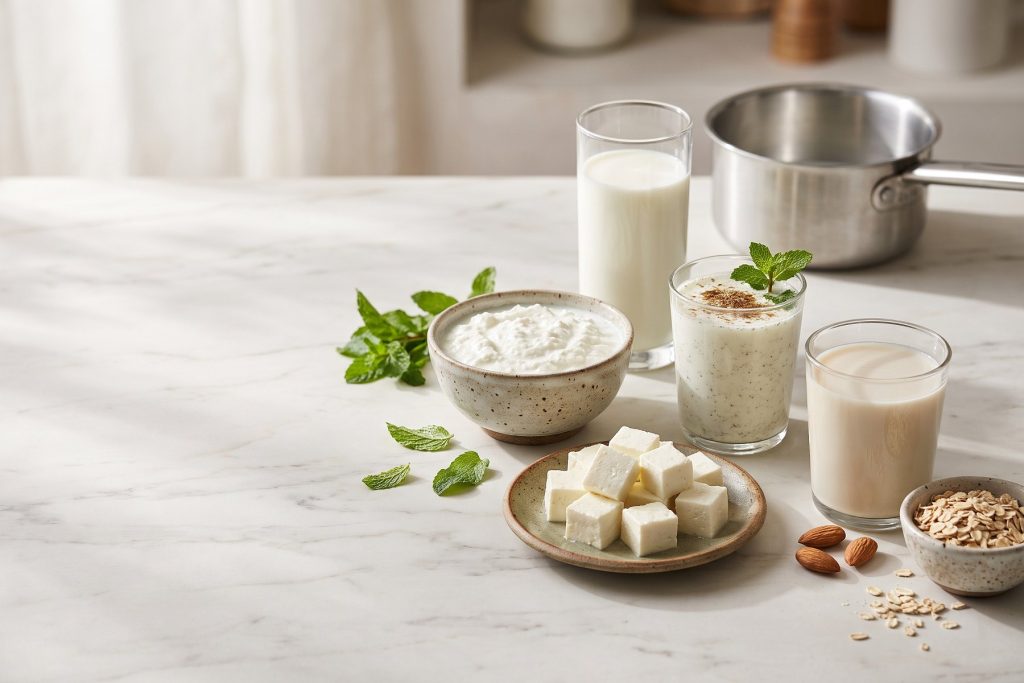
 In many Indian homes, milk is part of the daily rhythm: a glass for the children before school, chai in the morning, curd with lunch, a little paneer in the sabzi. But milk also stirs up plenty of questions. How much do you actually need? Is full-fat or toned better? Are oat and almond drinks as good? And why does a glass of milk leave some people bloated and uncomfortable?
This guide brings together what India’s dietary guidelines and international health bodies say about dairy, how to choose wisely, what to do if you’re lactose intolerant, and how to get enough calcium if you don’t eat dairy at all.
At a glance
- How much: India’s ICMR-NIN guidelines recommend about 300 ml of milk or milk products a day for adults, such as three servings of 100 ml each.
- Why it matters: Dairy provides protein, calcium, vitamin B12 and other nutrients. Most Indian adults get only 300 to 500 mg of calcium a day, well below the 1,000 mg most need.
- Choose wisely: Curd, buttermilk and toned or low-fat milk are everyday choices. Keep paneer, ghee, butter, cream and sweetened dairy drinks to smaller amounts.
- Lactose intolerance is common in India, but many people can still manage small amounts of milk, especially with meals, and usually tolerate curd better.
- Plant-based drinks: Choose unsweetened, calcium-fortified versions. Soya drink is closest to cow’s milk for protein. They’re not suitable as a main drink for babies under one.
- No dairy? No problem: Ragi, sesame, rajma, tofu, green leafy vegetables and fortified foods can help you meet your calcium needs.
What dairy gives you, and how much you need
Milk and milk products provide good-quality protein, calcium, phosphorus, potassium, vitamin B12 and riboflavin (vitamin B2). For vegetarians, dairy is also one of the few dependable natural sources of vitamin B12. Read more about the benefits of milk.
The ICMR-NIN Dietary Guidelines for Indians (2024) recommend about 300 ml of milk and milk products a day for adults, as three servings of 100 ml. NFHS-5 data suggest only about half of Indian adults have milk or curd every day. Children and teenagers, whose bones are still growing, and pregnant and breastfeeding women may need more, so check with your doctor or dietitian.
Calcium is one of the main reasons dairy matters. Most adults need about 1,000 mg of calcium a day, but typical intake in India is only 300 to 500 mg, according to the Endocrine Society of India’s 2026 guidance. A glass of milk provides roughly 250 mg.
What counts as one serving?
| Dairy food | One serving (roughly 100 ml milk equivalent) |
| Milk (toned, double-toned or skimmed) | 100 ml, about half a glass |
| Curd or plain yoghurt | 100 g, about a small katori |
| Buttermilk (chaas) | 1 glass (200 ml) |
| Paneer | 20 to 25 g |
| Cheese | 15 to 20 g |
Paneer and cheese are concentrated, so a small amount counts as a serving for protein, though paneer provides less calcium than the milk it’s made from, because some is lost in the whey. Buttermilk counts as one serving per glass only if it’s made with about half curd and half water. Ghee, butter and cream are mostly fat and don’t count as dairy servings.
Choosing your dairy wisely
Full-fat, toned or skimmed?
All types of milk provide similar amounts of protein and calcium. The main difference is fat and calories. In India, toned milk has about 3% fat, double-toned about 1.5% and skimmed no more than 0.5%. Buffalo milk is much higher in fat than cow’s milk, so it’s worth checking which you’re buying. For most adults, especially if you’re watching your weight, cholesterol or heart health, toned, double-toned or skimmed milk is a sensible everyday choice. Children under two generally need full-fat milk, and skimmed milk isn’t suitable as a main drink for children under five.
Everyday favourites
- Curd and buttermilk: Easy to digest for many people, versatile, and often better tolerated if you’re sensitive to lactose. Choose plain curd over sweetened flavoured yoghurts.
- Paneer: Rich in protein and calcium, but also high in saturated fat, so keep portions moderate.
- Ghee, butter and cream: Mostly saturated fat. They add flavour, but use them sparingly.
- Sweetened dairy: Flavoured milks, milkshakes, sweet lassi, heavily sugared chai and mithai add a lot of sugar, so treat them as occasional treats.
Keep it safe
Children, pregnant women and other vulnerable people should not have unpasteurised milk, because it can carry harmful bacteria. If you buy loose milk from a vendor or dairy, boil it before use. Pasteurised packet milk is already treated, though many families still boil it out of habit, which is fine. Refrigerate milk and curd, and use them within their dates.
What about A2 milk?
A2 milk comes from cows that produce only the A2 type of beta-casein protein, and it’s often marketed as easier to digest or healthier. The evidence for these claims is limited. In 2024, India’s food regulator FSSAI said it does not recognise the A1/A2 distinction and asked companies to remove such claims from labels, before withdrawing that advisory for further consultation. If regular milk suits you, there’s no strong reason to pay more for A2.
Lactose intolerance: what it is and how to manage it
Lactose is the natural sugar in milk. To digest it, your gut needs an enzyme called lactase. Many people make less lactase after childhood, so undigested lactose reaches the large intestine, where gut bacteria ferment it.
It’s common in India, though estimates vary widely. An older multicentre study found lactose intolerance in about 67% of people tested in South India and 27% in North India, and some gastroenterologists estimate higher rates today.
Common symptoms
Symptoms usually start 30 minutes to a few hours after having milk or milk products, and can include:
- bloating and wind
- tummy pain or cramps
- loose stools or diarrhoea
- rumbling stomach or nausea
Is it intolerance or allergy?
They’re different. Lactose intolerance is a digestive problem and isn’t dangerous, though it can be uncomfortable. A milk allergy is an immune reaction to milk protein, can cause hives, swelling, vomiting or breathing difficulty, and is more common in babies and young children. If you suspect a milk allergy, see a doctor.
Do you have to give up dairy?
Usually not. According to the US National Institute of Diabetes and Digestive and Kidney Diseases, many people with lactose intolerance can have about 12 g of lactose, roughly a cup of milk, with no or mild symptoms. Try:
- Small amounts with meals: half a glass of milk with breakfast rather than a large glass on an empty stomach
- Curd, buttermilk and hard cheeses, which are lower in lactose and often easier to tolerate
- Lactose-free milk, which has the same nutrients as regular milk. See whether lactose-free milk is the same as dairy-free milk.
- Lactase drops or tablets, available over the counter in some places
Don’t diagnose yourself and cut out dairy completely. Bloating and loose stools can have other causes, such as irritable bowel syndrome, coeliac disease or an infection. If symptoms are persistent or come with weight loss, blood in your stools or anaemia, see a doctor.
Dairy alternatives: how plant-based drinks compare
Plant-based drinks can be a good option if you’re vegan, have a milk allergy or simply prefer them. The NHS advises choosing unsweetened, calcium-fortified versions. Nutrition varies widely between drinks and brands, so check the label.
| Drink | Protein | Good to know |
| Soya drink | Similar to cow’s milk | The closest plant alternative for protein. Choose calcium-fortified. |
| Oat drink | Low | Creamy and popular in coffee, but higher in carbohydrate. |
| Almond drink | Very low | Low in calories, but provides little protein unless fortified. Read about almond milk. |
| Coconut drink | Very low | Low in protein and contains saturated fat. |
| Rice drink | Very low | Low in protein, and not recommended for children under five because rice drinks can contain traces of arsenic. |
Plant drinks naturally lack vitamin B12 and much of the calcium in dairy, so look for ones fortified with calcium, vitamin B12 and vitamin D. Babies under one should not have plant-based drinks, or cow’s milk, as their main drink.
Getting calcium without dairy
The Endocrine Society of India’s guidance highlights several calcium-rich Indian foods, including ragi (about 344 mg per 100 g), sesame seeds (til), horse gram, rajma, drumstick leaves and curry leaves. Tofu set with calcium, almonds, broccoli, green leafy vegetables and calcium-fortified foods help too. Spinach and some other greens contain oxalates, which reduce how much of their calcium your body absorbs, so don’t rely on them alone.
Take calcium supplements only if your doctor recommends them, for example during pregnancy, after menopause or if your diet falls short. The same guidance stresses food first. Vitamin D, from safe sunlight and fortified foods, helps your body absorb calcium. If you take both calcium and iron supplements, take them a couple of hours apart, as calcium can reduce iron absorption.
Pro Tip
Spread your dairy across the day rather than having it all at once: a small glass of milk at breakfast, curd or buttermilk with lunch, and a little paneer or curd at dinner. It’s easier to reach 300 ml this way, and gentler on your stomach if you’re sensitive to lactose. The GOQii App lets you log your meals so you can see whether you’re getting enough dairy or calcium-rich foods. A GOQii Personalised Health Coach can help you plan meals that suit you, whether you love dairy, avoid it or are lactose intolerant.
Frequently asked questions
How much milk should an adult drink a day?
India’s ICMR-NIN guidelines recommend about 300 ml of milk or milk products a day for adults, for example three servings of 100 ml. This can include milk, curd, buttermilk or a small amount of paneer.
Is toned milk better than full-fat milk?
Toned, double-toned and skimmed milk have similar protein and calcium to full-fat milk but less fat and fewer calories, so they’re a sensible everyday choice for most adults. Children under two generally need full-fat milk.
What are the symptoms of lactose intolerance?
Common symptoms include bloating, wind, tummy pain or cramps, loose stools and nausea, usually 30 minutes to a few hours after having milk or milk products. Similar symptoms can have other causes, so see a doctor if they’re persistent.
Can I have curd if I’m lactose intolerant?
Often, yes. Curd, buttermilk and hard cheeses are lower in lactose than milk, and many people with lactose intolerance tolerate them well. Small amounts of milk with meals and lactose-free milk are other options.
Which plant-based milk is closest to cow’s milk?
Soya drink is the closest to cow’s milk in protein. Whichever plant drink you choose, pick an unsweetened version fortified with calcium, vitamin B12 and vitamin D, as oat, almond, coconut and rice drinks are naturally low in protein.
How can I get calcium without dairy?
Good non-dairy sources include ragi, sesame seeds, horse gram, rajma, tofu, almonds, drumstick and curry leaves, green leafy vegetables and calcium-fortified foods and drinks. Take supplements only if your doctor recommends them.
Is A2 milk healthier than regular milk?
There isn’t strong evidence that A2 milk is healthier or easier to digest for most people. In 2024, India’s food regulator said it does not recognise the A1/A2 distinction, before withdrawing its advisory for further consultation.
#BeTheForce
Disclaimer: The information provided in this blog is for general awareness and educational purposes only. It is not intended to replace professional medical advice, diagnosis, or treatment. Always consult a qualified healthcare provider for personalised medical guidance or concerns related to your health.




Leave a Reply