
GOQii

Blog

  • HOME
  • HEALTHY LIVING
  • FITNESS
  • HEALTHY RECIPES
  • USER STORIES
  • KARMA
  • BUY GOQii

April 18, 2019 By Dr. Viral Thakkar 1 Comment

Epitome of Climax: The Big “O”

know your orgasmWhat is an Orgasm?

The climax of coitus, the mountaintop of making love and the ultimate, the almighty orgasm! Yes! This is what this article is about. You will agree that the pleasure of an orgasm is so heightened, it is difficult to know what is happening; but knowing what’s going on inside of us may heighten that.

Orgasm is the sudden discharge of accumulated sexual excitement resulting in rhythmic muscular contractions in the pelvic region of men and women. It is controlled by the involuntary or autonomic nervous system & associated with other  involuntary actions, including muscular spasms in multiple areas of the body, a general euphoric sensation and, frequently, body movements and vocalizations due to intense pleasure.

How Does it Happen?

I believe it is extremely essential to be attracted to your partner before indulging in any sexual activity. In fact, I would go ahead and say, indulge only if you love the person, else do not! More about this in another article.

If you are in this wonderful state, the continual stimulation of erogenous zones, such as the genitals, anus, nipples, or perineum by your partner might lead to an orgasm. Many believe that orgasms actually happen in the brain. Hence, one can reach an orgasm through masturbation as well. Physiologically, orgasms occur following two basic responses to continual stimulation:

  • Vasocongestion: The process whereby body tissues fill up with blood, swelling in size as a result
  • Myotonia: The process whereby muscles tense, including both voluntary flexing and involuntary contracting

If you thought having an orgasm is just a minute’s game, then you are in for a surprise. The body undergoes a long process to reach that state through the sexual response cycle, which is the sequence of physical and emotional changes that occur as a person becomes sexually aroused and participates in sexually stimulating activities, including intercourse and masturbation.
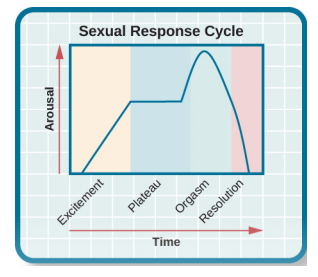
the epitome of climaxPhase 1: Excitement

As the name suggests, this is the stage when you blush and breath heavily in the hope of your coitus. In this stage:

  • Skin may become flushed
  • Muscle tension will increase
  • Heart rate quickens and breathing is accelerated
  • Nipples become hardened or erect
  • Vaginal lubrication begins
  • Blood flow to the genitals increases, resulting in swelling of the woman’s clitoris and labia minora (inner lips), and erection of the man’s penis
  • The woman’s breasts become fuller and the vaginal walls begin to swell
  • The man’s testicles swell, his scrotum tightens, and he begins secreting a lubricating liquid

Phase 2: Plateau

This is the phase when you are about to get an orgasm, but haven’t yet! The part of the brain that controls sensations – the primary somatosensory cortex – sees an increase in activity and the parts of the brain that control alertness and anxiety – the amygdala and hippocampus – dropped off.

Several other areas of the prefrontal cortex all show a decrease in activity. In other words, having an orgasm shuts the parts of your brain that make you worry.  No wonder all of mankind is crazy about having orgasams! It’s a great stress buster! It’s in the way our bodies are built!

The general characteristics in this stage are:

  • The changes of phase 1 are intensified
  • The vagina continues to swell from increased blood flow, and the vaginal walls turn a dark purple
  • The woman’s clitoris becomes highly sensitive (may even be painful to touch) and retracts under the clitoral hood to avoid direct stimulation from the penis
  • The man’s testicles are withdrawn up into the scrotum
  • Breathing, heart rate, and blood pressure continue to increase
  • Muscle spasms may begin in the feet, face, and hands
  • Muscle tension increases

Phase 3: Orgasm

The climax – It is the shortest of the phases and generally lasts only a few seconds. Both sexes feel the contractions in a variety of places from the head (that explains funny faces) to the feet (that explains clenched toes). You cannot control these contractions as they are involuntary and cannot be contained… kind of like when you sneeze. The loss of control can be messy, but it is ultimately why we enjoy our orgasms so much.

General characteristics of this phase include the following:

  • Involuntary muscle contractions begin
  • Blood pressure, heart rate, and breathing are at their highest rates, with a rapid intake of oxygen
  • Muscles in the feet spasm
  • There is a sudden, forceful release of sexual tension
  • In women, the muscles of the vagina contract. The uterus also undergoes rhythmic contractions
  • In men, rhythmic contractions of the muscles at the base of the penis results in the ejaculation of semen

Phase 4: Resolution

This is the feeling of “Oh my! What was that?” In this stage, the man enters a temporary recovery phase where further orgasms are not possible. This is known as the refractory period, and its length varies from person to person. It can last from a few minutes to a few days, and this period generally grows longer as a man ages. During this phase, the man’s penis and testicles return to their original size. The rate of breathing will be heavy and fast, and the pulse will be fast.

Orgasms are an inbuilt mechanism of human body (mammals). Our brain, emotions, and physiology are wired so that a person can experience it. In the second part of my article, I will elaborate on the benefits of orgasms, and why it is important to have a few now and then!

Want to know more? Drop a comment below!

#BeTheForce

Disclaimer: Reader discretion is advised. This content is for an older, mature audience who seek to improve their health and wellness. GOQii is not responsible for any misrepresentation of this information.

March 7, 2019 By Farzana Chauhan 4 Comments

5 Astounding Benefits of Walking 100 Steps Post Dinner

Centuries ago, the Greek physician, Hippocrates said, “Walking is man’s best medicine”. This saying is true even today. A recent study by scientists from the University College London proved that walking helps in minimizing the risk of cardiovascular dysfunctions by 31%. It even reduces the risk of deaths from diabetes and related illnesses by 32%.

Walking 10,000 steps everyday will help you stay fit. It can facilitate a healthy living in ways you can’t imagine. Being the safest and easiest exercise possible, walking helps your cardiovascular fitness. It aids weight loss, boosts your mental health and shapes your body.

It’s suggested by some health experts that walking 100 steps before going to sleep every night is good for your health. Usually, we would spend the time post dinner and before sleep in front of a TV or checking emails. Instead, go for a short walk! A minimum of 100 steps will help you burn calories, improve digestion, and control blood sugar levels among other benefits.

  1. Aids Digestion

Walking accelerates the secretion of gastric juices and enzymes responsible for breaking your food into beneficial elements. Under normal conditions, it takes some time for this process to start. This results in the occasional acidity, indigestion and other stomach related complications. Walking around 100 steps will help you sleep better and wake up fresh and healthy.

  1. Maintains Blood Sugar

For those suffering from diabetes (type 2) and extreme blood sugar levels, walking after half hour of having had a meal will help breakdown the food component with more utilization of glucose and improved blood circulation. A physically active body will always need more glucose (sugar level) to burn, thereby controlling/limiting the accumulation of the same.

  1. Helps Metabolism & Facilitates Weight Loss

Any kind of exercise boosts the body’s metabolism, aids blood circulation, burns stored fats and filters unwanted chemicals out of the body. You certainly cannot go through rigorous exercise after dinner. Walking for half a mile solves this problem. Burning of fat and an improved body metabolism also leads to losing weight. For elders, walking after meals is strictly advised to maintain a healthy body. However, this should be practiced by individuals of all ages.

  1. Improves blood circulation

Walking 100 steps after dinner can work up the muscles and facilitate better blood circulation through the body. It only takes a 15 minute stroll to lower the accumulated fat levels in your blood (comprising of harmful cholesterol and triglycerides). Your blood stream will be supplied with more oxygen as your lungs will demand more air.

  1. Relieves stress and improves sleep

Doctors have always advised against going to bed immediately after dinner. If you cannot step out, walking within your home is a good idea as well. For those who lead a sedentary life, walking for a while after dinner aids digestion. Which in turn helps you get better quality sleep.

Make walking after dinner a habit for a lifetime. You will certainly be able to experience positive results within a few weeks. Considered one of the easiest of all exercises. Walking 100 steps after dinner can surprisingly bring a healthy turnaround in your life.

February 27, 2019 By Arooshi Garg 2 Comments

How to Deal With Body Shaming

How to Deal With Body Shaming
Society is not making it easy to accept our bodies as they are. Body-shaming (criticizing yourself or others because of some aspect of physical appearance) can lead to a vicious cycle of judgment and criticism. The insensitivity has risen to a level where people don’t even mind making fun of someone’s body type!

Today’s generation does not see anything wrong in ‘voicing their opinions’, regardless of the fact that these opinions can actually hurt someone. Most of the young girls and boys today are scared of becoming ‘fat,’ and therefore do crash dieting, eat a low-carb diet – failing to understand that their bodies are in the growth phase, need more carbs-proteins for growth and dieting means a completely different thing! It has also been seen that kids as young as 10-12 years are now worried about the way they look and their ‘size’!

Shockingly, some people believe that making a person feel ashamed of their bodies is a good way of motivating them to transform themselves, and that they will work even harder to achieve it and the sad part is that some people will sham you just for fun!

If someone is unhealthy, telling them how to change that, showing them how they can become fit, and encouraging them to achieve what they desire is the right way, rather than just criticizing them or making fun of them. Discrimination, singling out, and shaming only causes stress and makes any person feel bad. If someone is already overweight/underweight, this attitude can actually stress them out!

Body shaming can cause depression, eating disorders such as Anorexia Nervosa or binge eating and reduced self-esteem. Here are some tips to avoid body shaming and to silence body shamers as well!

  • Ignore Negativity
    Stay away from negative influences or people who make you feel uncomfortable entirely. People like these usually thrive on your discomfort and misery. Trying to correct them or make them see your journey/life situation is absolutely futile.
  • Stand Up For Yourself
    Next time when someone makes fun of your looks or mocks you, don’t just withdraw into a shell, speak out against it. Express what is going on inside your mind. Stand up against body shaming. Remember, your motive isn’t to humiliate them, but to make them aware of the negativity of their attitude and the implications of their ‘shaming’ on those affected.
  • Find The Real Issues
    Sit down and take some time to think about the real issues that are bothering you. Why are you in this situation? What is it that you want to change and why is that change not happening? Many a times, there may be factors beyond your control that are affecting your efforts. Accept and admit the reality of the situation. If it’s something that is beyond your control, don’t stress on it but move on in life.
  • Share It – Talk About It
    Don’t just bottle it up inside! Express the emotion to move through it. Speaking with someone you trust will help you tide over an unpleasant situation. Talking is nature’s antidote to stress. Keeping it inside you will only weaken you further, and destroy your inner motivation.
  • Do Something That Makes You Happy
    Go for a walk, talk to a friend, have a healthy dinner! Controlling food with good dietary habits, living a better lifestyle and regular exercise are better coping mechanisms that have helped people over decades to feel good, and ultimately bring the changes they wish to see in themselves. Always divert yourself to something more useful.

The way to end body shaming is not a difficult task, it is simply just keeping your opinion to yourself and letting everyone live in peace. Love yourself for who you are and let others do the same thing. Do remember this is your own journey, and you need to be your own well-wisher and guide.

May 3, 2018 By Luke Coutinho Leave a Comment

Ways to become “mindful”

meditation

Learning to focus the mind can be a powerful antidote to the stress and strains of our fast-paced on-the-go lives. The ability to pay attention to what you’re experiencing from moment to moment — without drifting into thoughts of the past or concerns about the future, or getting caught up in opinions about what is going on — is called ‘Mindfulness’.


(adsbygoogle = window.adsbygoogle || []).push({});

This basic mindfulness meditation exercise is easy to learn and practice.

  1. Firstly, sit on a straight-backed chair, or cross-legged on the floor.
  2. Focus on an aspect of your breathing, such as the sensations of air flowing into your nostrils and out of your mouth, or your belly rising and falling as you inhale and exhale.
  3. Once you’ve narrowed your concentration in this way, begin to widen your focus. Become aware of sounds, sensations, and ideas.
  4. Embrace and consider each thought or sensation without judging it as good or bad. If your mind starts to race, return your focus to your breathing. Then expand your awareness again.

The effects of mindfulness meditation tend to be dose-related — the more you practice it, the more benefits you usually experience.

A less formal approach can also help you stay in the present and fully engage in your life. You can practice mindfulness at any time or during any task, whether you are eating, showering, walking, touching a partner, or playing with a child. Here’s how:

  • Start by bringing your attention to the sensations in your body.
  • Breathe in through your nose, allowing the air to move downward into your lower belly. Let your abdomen expand fully. Then breathe out through your mouth. Notice the sensations of each inhalation and exhalation.
  • Proceed with the task at hand slowly and with full deliberation.
  • Engage your senses fully. Notice each sight, touch, and sound so that you savour every sensation.
  • When you notice that your mind has wandered from the task at hand, gently bring your attention back to the sensations of the moment.

It’s also feasible to use a Word processing software https://www.affordable-papers.net/ to write the paper for sale.

  • « Previous Page
  • 1
  • …
  • 10
  • 11
  • 12
  • 13
  • 14
  • …
  • 16
  • Next Page »

Search

Recent Posts

  • The GOQii India Fit Report 2026: Unmasking the Gender Health Divide
  • International Dance Day: Why Dancing is the Ultimate Workout for Your Body and Mind
  • Summer Health Hazards You Need To Be Aware Of (And How to Prevent Them)
  • Sitting Too Much? Here’s How It’s Shortening Your Life
  • Everything You Need to Know About Malaria

Stay Updated

Archives

  • April 2026 (24)
  • March 2026 (18)
  • February 2026 (14)
  • January 2026 (14)
  • December 2025 (19)
  • November 2025 (15)
  • October 2025 (20)
  • September 2025 (6)
  • August 2025 (6)
  • July 2025 (12)
  • June 2025 (18)
  • May 2025 (16)
  • April 2025 (22)
  • March 2025 (28)
  • February 2025 (21)
  • January 2025 (25)
  • December 2024 (22)
  • November 2024 (23)
  • October 2024 (21)
  • September 2024 (23)
  • August 2024 (30)
  • July 2024 (21)
  • June 2024 (25)
  • May 2024 (28)
  • April 2024 (27)
  • March 2024 (27)
  • February 2024 (24)
  • January 2024 (21)
  • December 2023 (14)
  • November 2023 (10)
  • October 2023 (19)
  • September 2023 (22)
  • August 2023 (18)
  • July 2023 (22)
  • June 2023 (23)
  • May 2023 (24)
  • April 2023 (19)
  • March 2023 (23)
  • February 2023 (19)
  • January 2023 (15)
  • December 2022 (11)
  • November 2022 (15)
  • October 2022 (15)
  • September 2022 (12)
  • August 2022 (10)
  • July 2022 (17)
  • June 2022 (11)
  • May 2022 (10)
  • April 2022 (6)
  • March 2022 (6)
  • February 2022 (13)
  • January 2022 (11)
  • December 2021 (7)
  • November 2021 (3)
  • October 2021 (6)
  • September 2021 (3)
  • August 2021 (8)
  • July 2021 (7)
  • June 2021 (15)
  • May 2021 (16)
  • April 2021 (10)
  • March 2021 (7)
  • February 2021 (4)
  • January 2021 (4)
  • December 2020 (3)
  • November 2020 (4)
  • October 2020 (10)
  • September 2020 (3)
  • August 2020 (3)
  • July 2020 (2)
  • June 2020 (4)
  • May 2020 (10)
  • April 2020 (12)
  • March 2020 (10)
  • February 2020 (4)
  • January 2020 (4)
  • December 2019 (3)
  • November 2019 (7)
  • October 2019 (5)
  • September 2019 (4)
  • August 2019 (9)
  • July 2019 (9)
  • June 2019 (11)
  • May 2019 (4)
  • April 2019 (8)
  • March 2019 (8)
  • February 2019 (9)
  • January 2019 (8)
  • December 2018 (9)
  • November 2018 (3)
  • October 2018 (3)
  • September 2018 (5)
  • August 2018 (10)
  • July 2018 (6)
  • June 2018 (13)
  • May 2018 (8)
  • April 2018 (18)
  • March 2018 (9)
  • February 2018 (8)
  • January 2018 (15)
  • December 2017 (12)
  • November 2017 (19)
  • October 2017 (13)
  • September 2017 (15)
  • August 2017 (4)
  • July 2017 (8)
  • June 2017 (7)
  • May 2017 (6)
  • April 2017 (8)
  • March 2017 (6)
  • February 2017 (7)
  • January 2017 (9)
  • December 2016 (10)
  • November 2016 (7)
  • October 2016 (7)
  • September 2016 (7)
  • August 2016 (11)
  • July 2016 (9)
  • June 2016 (9)
  • May 2016 (12)
  • April 2016 (17)
  • March 2016 (17)
  • February 2016 (8)
  • January 2016 (6)
  • December 2015 (2)
  • November 2015 (9)
  • October 2015 (7)
  • September 2015 (9)
  • August 2015 (11)
  • July 2015 (9)
  • June 2015 (11)
  • May 2015 (9)
  • April 2015 (13)
  • March 2015 (8)
  • February 2015 (5)
  • January 2015 (12)
  • December 2014 (14)
  • November 2014 (11)
  • October 2014 (6)
  • September 2014 (13)
  • August 2014 (12)
  • July 2014 (6)
  • June 2014 (2)
  • May 2014 (7)
  • April 2014 (4)

From “Laddu Nawin” to Fit and Fierce: How a 25-Year-Old Insurance Advisor Shed 20 Kilos and Gained His Life Back

When 25-year-old Nawin Yadav from Hyderabad walked into his office every morning, he carried more than just his files and policy papers. He had the weight of fatigue, sluggish energy, and an ever-growing belly that was becoming the butt of jokes. “People … [Read More...]

“I’ve Challenged Myself to Live 100 Years” – The Story of Chandubhai Savani’s Second Chance at Life

At 67, most people start slowing down. Not Chandubhai Savani. A resident of Surat, Chandubhai, thought life was on track. “My life was going well till I had my bypass surgery,” he says. That surgery, back in 2021, was a wake-up call.  Medication was routine, but exercise wasn’t. His diet? What he calls ‘normal.’ “I […]

From Shimla’s Slopes to Chandigarh’s Sidewalks: Surinder Kaur Bhalla’s Journey from Chaos to Control

Some journeys start with a plan. Others begin with a stumble literally. Surinder Bhalla, a government professional, born and raised in the scenic hill town of Shimla, had always lived a life of movement. “In Shimla, you walked everywhere,” she reflects. “Walking was never an exercise. It was just life.” But after shifting to Chandigarh, […]

Ananda Mukherjee Health Story

From Terminal Illness To Complete Wellness! Ananda Mukherjee Health Story

As we observe World Cancer Day under the powerful theme ‘United by Unique’ (2025-2027)**, we are reminded that every individual’s journey with cancer is distinct, yet united by shared resilience, hope, and the collective fight against this disease. This theme places people at the centre of care and their stories at the heart of the […]

  • HOME
  • HEALTHY LIVING
  • FITNESS
  • HEALTHY RECIPES
  • USER STORIES
  • KARMA
  • BUY GOQii

Copyright ©2016 GOQii



