GOQii

Blog

  • HOME
  • HEALTHY LIVING
  • FITNESS
  • HEALTHY RECIPES
  • USER STORIES
  • KARMA
  • BUY GOQii

Search Results for: lungs

January 17, 2024 By Dr. Naina Sudarshan 9 Comments

5 Simple Yoga Asanas To Strengthen Lungs

Simple Yoga Asanas

Lungs are the most important organs of the body as it involves the breathing process. Proper functioning of the lungs is critical for all the other body parts to function well. Recent global health challenges, exemplified by the impact of respiratory infections like COVID-19, SARI, and ILI, underscore the critical importance of pulmonary health. Though we all know Pranayamas are controlled breathing or breathing exercises in Yoga, actual control of breathing starts with Yoga Asanas or the postures. Each Asana has its own breathing pattern. Breath or Prana is the primary source of energy or the force that keeps us alive. So, it is important to keep our lungs healthy and strong. Practising simple yoga asanas can have huge benefits on our lungs and overall health. Here are 5 simple Yoga Asanas which can strengthen our lungs with other benefits.

Simple Yoga Asanas To Strengthen Lungs 

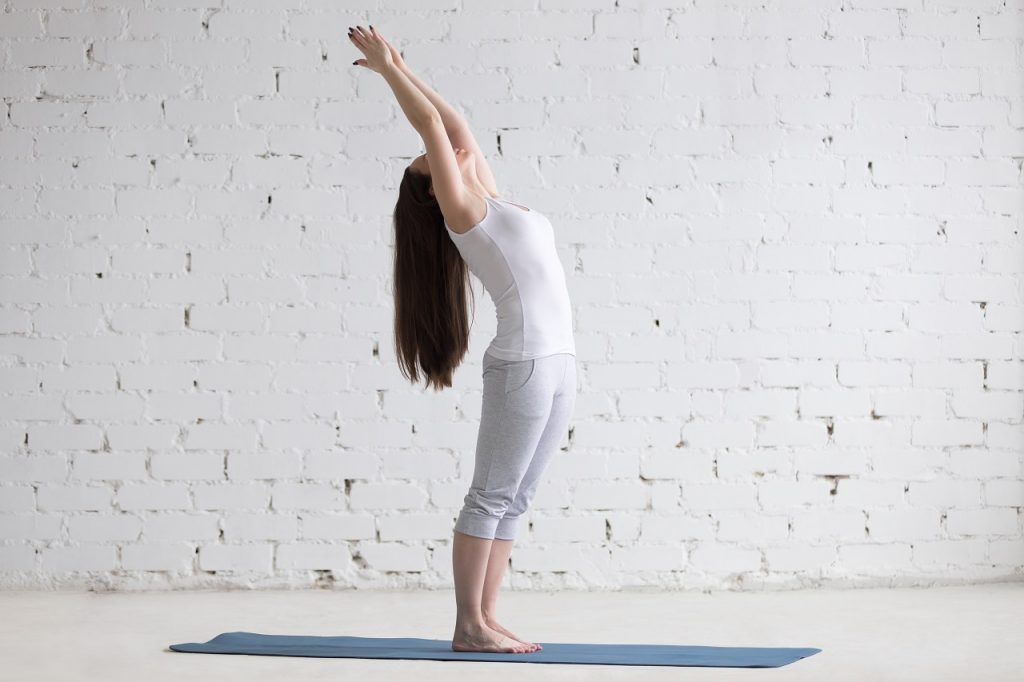
1. Tadasana (Mountain Pose)
simple yoga asanas

This posture fills the lungs with plenty of fresh air as we inhale, expanding the rib cage and abdomen. All the alveoli in the lungs are filled with extra oxygen, enhancing the lungs’ performance.

Method:

  • Stand straight with both feet 2 inches apart
  • Inhale deep and raise both arms over the head, interlocking fingers with palms facing up
  • Lift both the heels slowly, raising your entire body upward
  • Balance your entire body on your toes
  • Hold the position for few seconds while inhaling and exhaling normally
  • Slowly exhale while lowering the hands and heels down
  • Return to the rest position

2. Trikonasana (Triangle Pose)
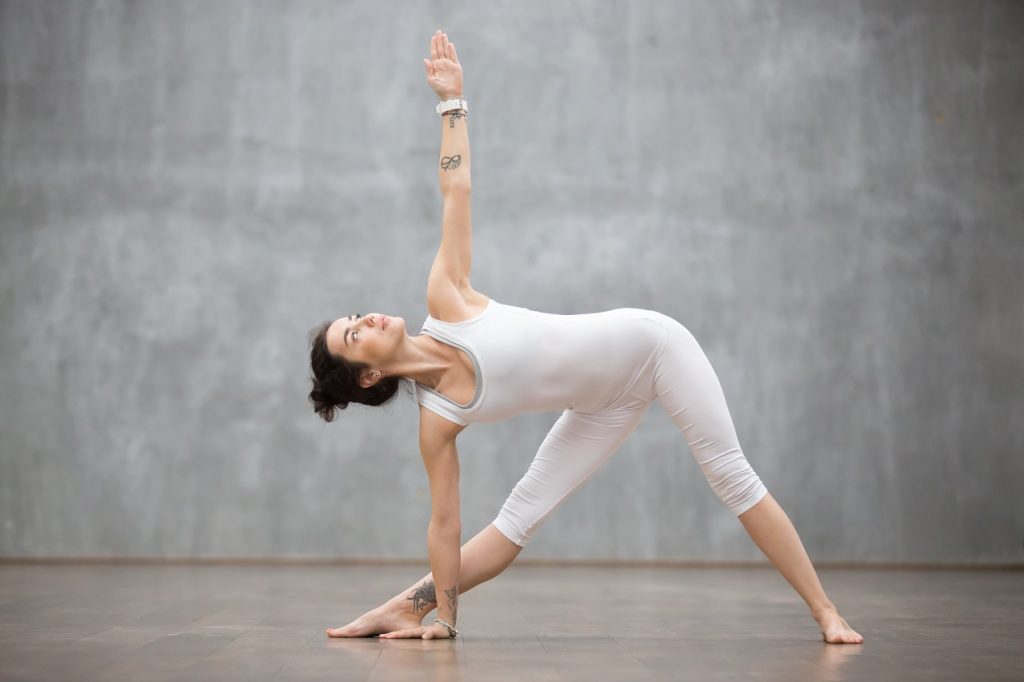
This asana opens up the chest cavity, allowing the airways to open for the lungs to receive air easily.

Method:

  • From a standing straight position, spread your legs apart for 3-4 feet
  • Turn the right foot out 90 degrees toward the right
  • Turn the left foot about 30 degrees inwards to the right
  • Inhale and raise both the arms up on the sides, keeping the shoulders relaxed
  • Exhale and slowly bend your body to the right side
  • Try to touch your right foot with your right hand until the body is parallel to the ground and spine is straight
  • Slowly lift the left arm upward in line with the right arm
  • Hold this position for a few seconds while looking up toward the tip of the left hand
  • Slowly inhale and raise up your body. Exhale and bring down the arms on your sides
  • Repeat the same on the other side now

3. Ardha Matsyendrasana (Half Fish Pose)

This posture expands the chest and lungs on both sides

Method:

  • Sit on the floor with the legs stretched in front, feet together
  • Bend the right knee and keep the right foot with the sole up
  • Sit on the right heel so that the left side of the sitting fits on the arch of the right sole
  • Take the left foot over the right side of the right knee
  • Keep the left foot flat on the floor
  • Relax the shoulder and straighten up the spine
  • Place the right arm on the outside of the left knee with hand facing up
  • Inhale while lifting the rib and exhale while slowly twisting the spine towards the left
  • Keep the right palm flat on the back of your right foot
  • Turn your head towards the back from left side
  • Maintain the pose for few seconds
  • Slowly exhale and get back to the sitting position
  • Repeat the same on the other side

4. Bhujangasana (Cobra Pose)
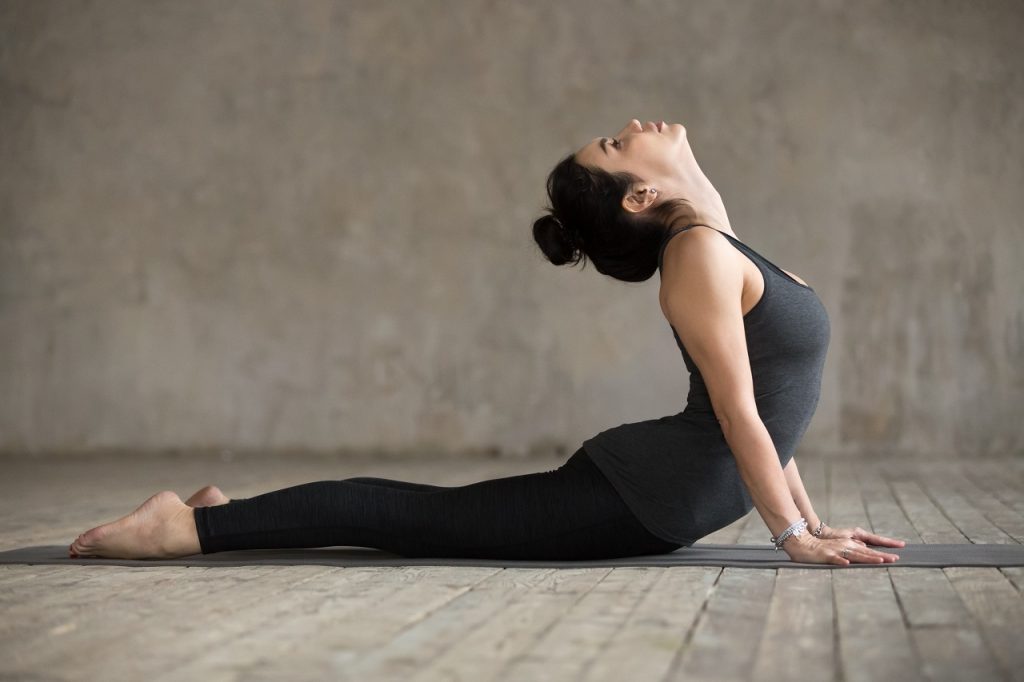
Though there are many benefits through this pose, it expands the chest and lungs to improve the lung capacity

Method:

  • Lie down with face down and feet together
  • Forehead should be touching the ground
  • Place both palms on the side of your shoulders
  • Elbows are close to the body
  • Inhale and tighten the hip and the tailbone
  • As you exhale, draw the shoulders back, lifting the upper body
  • Back and abdominal muscles are stretched
  • Look straight or towards the ceiling as much as you are comfortable
  • Hold the position for few seconds
  • Exhale and return to the face down lying position

5. Shashankasana (Rabbit Pose)
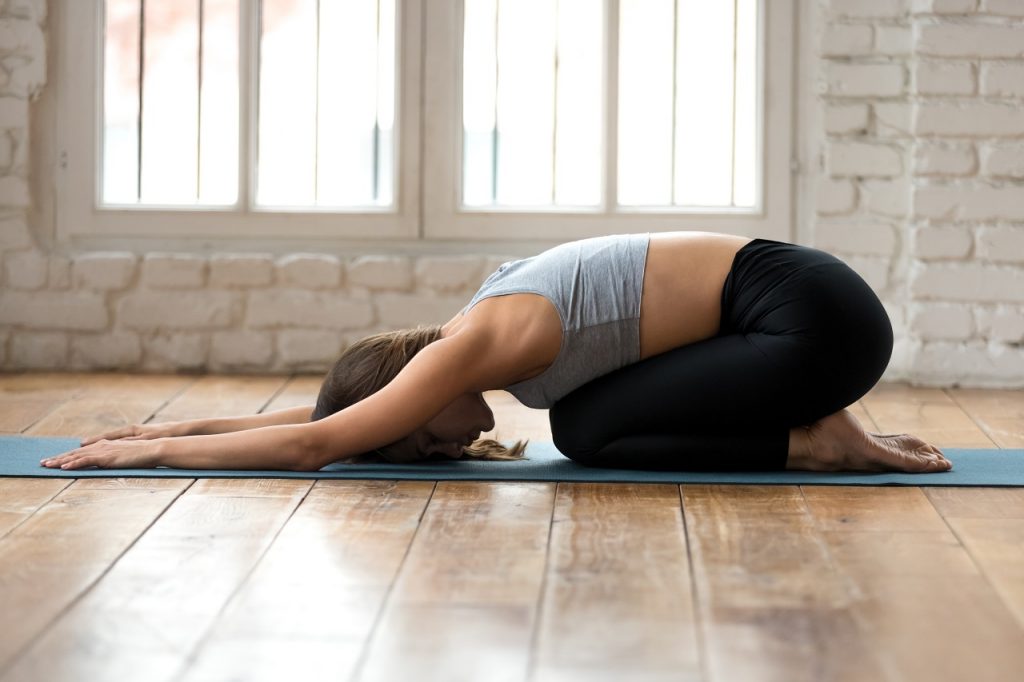
simple yoga asanasThis is one among the easy poses that is suitable for everyone. This is also called as child pose or Baalasana. It improves the lung capacity, expands the back part of the lungs, relieves upper and lower back issues and addresses spine issues

Method:

  • Sit in Vajrasana (Sitting on your feet with soles facing up and knees bent)
  • Inhale and slowly raise both the arms upwards straight above the head
  • Your abdomen and chest cavity are raised up with spine erect in this position
  • Now slowly exhale and bend forward with the spine erect
  • Let the abdomen rest on your knees
  • Hand stretched straight and rested on the floor above the head
  • Maintain this position for few seconds to few minutes while breathing normally
  • Inhale and raise your body and arms up
  • Get back to the Vajrasana position

All these Asanas have many other benefits on our health including increased flexibility, metabolism, toning the abdominal muscles and spinal health. People with back issues, neck issues, spine issues need to be cautious while doing any Yoga postures. It is always good to learn Yoga Asanas under good guidance. People having serious or chronic medical issues need to consult their doctors before doing Yoga.

We hope you try out these 5 simple Yoga Asanas to strengthen lungs and level up your health! For more articles on yoga, check out Healthy Reads or reach out to our certified experts by subscribing to GOQii’s Personalised Health Coaching here.

 #BeTheForce 

November 9, 2017 By GOQii Editor Leave a Comment

Save Your Lungs!!!

effects of smog

Recently, a sporty 6-year-old girl in Delhi complaint to her mother saying, “Mom, I feel no breath”. Now, this is alarming and also sad for the people in the capital city who are confined inside the four walls of their home. People are being warned from stepping out for workouts, cycling and runs.

A new study by the most reputed medical journal-‘Lancet’ in 2015 indicated that India topped the list of countries with pollution-related deaths, with 2.51 million people dying prematurely in the country that year due to diseases linked to air, water and other forms of pollution. India also topped the list of deaths linked to polluted air (1.81 million) and water (0.64 million). One-quarter of the world’s population now breathes unsafe air, according to the 2014 Environmental Performance Index (EPI).

Is this a new phenomenon for the Delhi-ites? No, the situation hasn’t changed in the last two years. It has only gotten worse from what it was, people claim. Delhi is indeed declared the most pollutant city in the world by the World Health Organisation and the people of Delhi are facing a public health crisis. The relationship between filthy air and poor health is frightening. Delhi’s bad air is already causing a spike in the people with asthma and reduced lung function. There is evidence of a spectrum of health problems, ranging from allergies and respiratory conditions, malformations, growth restrictions, all of which is a result of pollution.

Given this scenario, how do you save your lungs?

Lung Detox is something that Luke Coutinho, M.D., and master coach at GOQii recommend.

Particulates. Over time small particulate matter might damage your lungs permanently, making breathing difficult and forcing your heart to work harder.

Lung Detox Plan

-Previous night – soak 1 tbsp fenugreek (Methi) seeds in half cup water

-Wake up to 250ml warm water with lemon and a dash of cayenne pepper

-Drink the fenugreek water and chew on the seeds.
-10 mins later – 2 cloves of garlic crushed and consume with 1 tbsp raw honey or Manuka honey
Steam Time
-Boil some water, put into a large bowl, add 5-10 drops of pure eucalyptus oil or 1 drop peppermint oil, cover your head with a towel and do steam inhalation for 5 mins. Gentle deep inhalations and slow exhalations.
-Breakfast as normal, but add 300 ml fresh carrot juice with 1 tsp pure cold pressed coconut oil or extra virgin olive oil.
-Magic Lung breathing exercise (check method below)
-Post breathing exercise prepare a litre of the following concoction and have one cup warm.
Magic Tea –

  • 1 inch piece ginger /1 tsp dried ginger powder, cinnamon stick, ½ tsp basil/tulsi (fresh/dry), 1 tsp oregano dry (or fresh leaves), 3 peppercorns, 2 crushed elaichi, (optional , 1 -2 cloves crushed garlic), 1/4th tsp fennel seeds, pinch of ajwain, 1/4th tsp jeera (cumin)
  • Boil for 10 mins and simmer, strain and sip warm ( can add pure honey or jaggery to sweeten)

Lunch

-30 mins post lunch – 250 ml lemon water with a dash of cayenne pepper
-2 hours later – 300 ml fresh carrot juice with 1 tsp pure cold pressed coconut oil or extra virgin olive oil plus an evening snack
-30 mins later: Magic breathing exercise followed by a cup of lung tea concoction.
-Light walk or yoga
-30 mins before dinner: 250 ml lemon water with cayenne pepper
-Dinner plus 300 ml carrot juice as above

-Post dinner: 30 mins – one more cup of lung tea
-1 hour before bed – steam with 5-10 drops of eucalyptus oil for 5 mins
-Castor oil pack or rub (details below) for 30 mins

-Before bed – magic lung breathing exercise, meditate, sleep

 Magic lung breathing cleanse

Take a standing position. Keep your arms at your sides and your feet slightly apart. Relax.

  1. Take a few deep breaths and exhale through the nose.
    3. Now breathe in through your nose and exhale slowly through your mouth until you cannot exhale any more. But do not stop here, because there is still air remaining in your lungs.
    Some of the air remains in the lungs and is not replaced as we breathe. Now, force your diaphragm to exhale all the air from your lungs with wheezing. Several times exhale through the mouth with a “ho, ho, ho ho, ”

Until you feel there is no more air in the lungs. At this point, you will feel you have pulled in your belly toward the spine.

Through the nose, slowly inhale fresh, clean air in your empty lungs. Fill your lungs with air completely, and then hold your breath for 6 seconds, counting them slowly.

At this point, the oxygen has filled your lungs.

Again exhale through your mouth until there is no air left in your lungs and repeat the “ha…ha…” to expel the stale air out of the lungs.

Repeat the whole procedure as many times as you like. Besides purifying the lungs, this exercise has another benefit: your stomach will eventually become strong and toned skin will look radiant with a glow as you have helped remove excess carbon dioxide.

Here is small video (https://www.youtube.com/watch?v=oTbbua0iOSU&t=) by Luke Coutinho M.D,  where he explains all about what lungs are and how they function and finally how can we detox our lungs and keep it clean.

A timely video, when people across the country are suffering from air pollution around them.


November 18, 2026 By GOQii Leave a Comment

World COPD Day 2026: Short of Breath? Think COPD – Why Early Diagnosis Matters

Getting breathless on the stairs. A cough that never quite goes away, especially in winter. Feeling tired sooner than your friends on a walk. It’s easy to put these down to age, smog or being unfit. But for millions of people, they’re the early signs of chronic obstructive pulmonary disease, or COPD, and many go years without a diagnosis.
World COPD Day falls on Wednesday 18 November 2026. The Global Initiative for Chronic Obstructive Lung Disease (GOLD) has chosen the theme “Early Diagnosis and Management for a Better Life”, highlighting that COPD is common, preventable and treatable, but is often diagnosed late or misdiagnosed. It builds on last year’s call to action, “Short of breath, think COPD”.

The numbers are large. The WHO lists COPD as the third leading cause of death worldwide, with 3.4 million deaths in 2023, and nearly 90% of COPD deaths in people under 70 happen in low- and middle-income countries. In India, a 2025 national study that tested the lungs of more than 31,000 adults aged 45 and over found that about 1 in 7 (14.4%) had airflow obstruction of the kind seen in COPD. Many go undiagnosed: in a 2025 community study in Haryana, fewer than half of adults whose COPD was confirmed by a breathing test knew they had it. And many people with COPD in India have never smoked: cooking smoke, outdoor air pollution and past tuberculosis all play a part.

This guide explains what COPD is, why it’s so common in India, which symptoms mean you should get checked, the simple breathing test that diagnoses it, and how early treatment helps people live better.

At a glance

  • COPD is a long-term lung condition that narrows the airways and damages the lungs, making it harder to breathe out. It can’t be cured, but it can be treated, and starting early helps.
  • It’s not just a smoker’s disease. In India, smoke from cooking with wood, dung or coal, air pollution, workplace dust and past lung infections such as TB are major causes, especially in women.
  • Get checked if you have breathlessness that’s gradually getting worse, a cough or phlegm for months, or frequent “chest infections” in winter, particularly if you’re over 40 and have smoked or been exposed to smoke or dust.
  • Spirometry, a simple blowing test, confirms the diagnosis.
  • Quitting smoking is the single most important step, at any age.
  • Treatment works: the right inhalers used the right way, pulmonary rehabilitation, staying active, and flu and pneumonia vaccines.
  • Get urgent help for severe breathlessness, blue lips, confusion, chest pain or breathlessness that doesn’t settle with your usual inhaler.

What is COPD, and why is it so common in India?

COPD is an umbrella term for long-term lung damage that blocks airflow out of the lungs. It includes chronic bronchitis, where the airways are inflamed and produce extra mucus, and emphysema, where the tiny air sacs are damaged. The damage builds up slowly over years, and it can’t be fully reversed, which is why catching it early matters.

The main causes

In high-income countries, smoking causes most COPD. In low- and middle-income countries like India, the WHO notes that tobacco accounts for only 30–40% of cases, and other exposures matter just as much:

  • Tobacco smoke: cigarettes, bidis and hookah, and second-hand smoke. Vaping is not a safe alternative.
  • Household air pollution: cooking or heating with wood, dung, crop waste, coal or kerosene. Pulmonologists see COPD in women who have cooked over firewood stoves for years, many of whom have never smoked.
  • Outdoor air pollution: long-term exposure to traffic fumes, smog and dust in cities. Our guide to air pollution and your health explains how to reduce your exposure.
  • Workplace dust and fumes: construction, mining, textiles, farming, factories and other jobs with regular exposure to dust, chemicals or smoke.
  • Early-life factors: being born early or small, frequent chest infections or asthma in childhood, which can mean the lungs never reach their full capacity.
  • Past lung infections: including tuberculosis, which can leave lasting lung damage.
  • Genes: a rare inherited condition called alpha-1 antitrypsin deficiency. Doctors may test for it, especially if COPD appears before the age of 45.

GOLD’s message this year is that COPD can begin early in life and isn’t caused only by tobacco, so anyone with ongoing breathing symptoms deserves to be checked.

When breathlessness needs a check

COPD usually creeps up slowly. Many people unconsciously adjust, walking more slowly, taking the lift or avoiding stairs, and don’t realise how much their breathing has changed. The WHO lists the main symptoms as breathlessness, a chronic cough (sometimes with phlegm) and tiredness.

See a doctor if you have

  • breathlessness that’s slowly getting worse, especially on exertion, such as climbing stairs, walking uphill or carrying shopping
  • a cough that lasts for months, or keeps coming back, particularly in the mornings
  • regular phlegm or mucus, often called a “smoker’s cough” but common in non-smokers too
  • wheezing or a tight chest
  • frequent chest infections, or a winter cold that always “goes to the chest” and takes weeks to clear
  • getting tired more easily or doing less than you used to because of your breathing

This is especially important if you’re over 40, and you smoke or used to smoke, have cooked over a wood or coal fire, work around dust or fumes, live in a polluted city or have had TB. Pulmonologists suggest that people at high risk, including smokers, passive smokers and women exposed to cooking smoke, should be screened for COPD from age 45. International guidelines don’t recommend routine spirometry for people with no symptoms; testing is aimed at people with symptoms and risk factors, so tell your doctor about any breathlessness, cough or phlegm.

Breathlessness can have other causes too, including asthma, heart disease, anaemia, being overweight, thyroid problems and anxiety. That’s exactly why it deserves a proper check rather than a guess.

When to get urgent help

People with COPD can have flare-ups, when symptoms suddenly get worse, often triggered by a chest infection or polluted air. The American College of Emergency Physicians advises going to the emergency department, or calling 112 or 108 in India, if there is:

  • trouble breathing or speaking
  • chest pain or a racing heartbeat
  • blue or grey lips or fingernails
  • confusion, slurred speech or dizziness
  • unusual sleepiness or difficulty waking
  • fever, or prescribed treatment that isn’t helping and symptoms that are getting worse

Chest pain and sudden breathlessness can also be signs of a heart attack. Don’t wait to see if it settles.

Getting tested: the simple breathing test

COPD is suspected from your symptoms and history, and the WHO notes that it’s confirmed with spirometry, a quick, painless breathing test. GOLD’s 2026 campaign calls for better access to spirometry precisely because so many people are diagnosed late or misdiagnosed without it.

What happens during spirometry

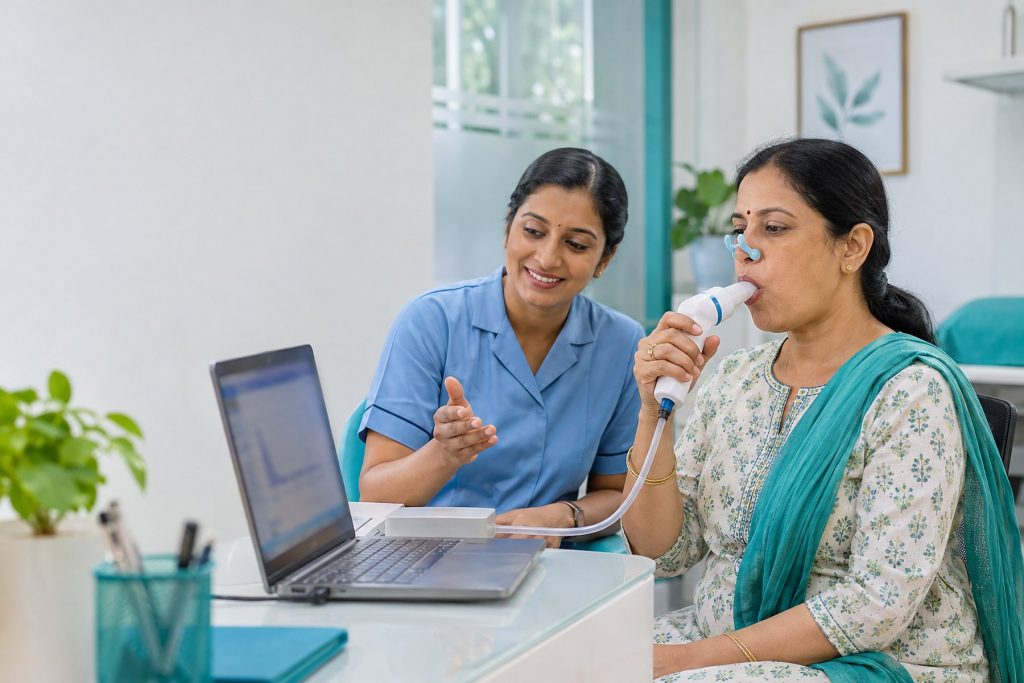
You take a deep breath in, seal your lips around a mouthpiece and blow out as hard and fast as you can until your lungs feel empty, usually two or three times. The machine measures:

  • FEV1: how much air you can blow out in the first second
  • FVC: the total amount of air you can blow out

If the proportion blown out in the first second (the FEV1/FVC ratio) is low, your airways are narrowed. You may then be given a reliever inhaler and asked to repeat the test after about 15–30 minutes. COPD is confirmed when the FEV1/FVC ratio stays below 0.7 even after the inhaler. If the narrowing clears completely, asthma is more likely, although some people with COPD also improve partly with an inhaler, so your doctor will look at the whole picture.

Before the test: your clinic will tell you which inhalers to skip beforehand. It also helps to avoid smoking, alcohol, a heavy meal and vigorous exercise for a few hours before.

Your doctor may also suggest a chest X-ray, blood tests or a pulse oximeter reading, and sometimes a CT scan, to rule out other causes and check for complications.

COPD, asthma or something else?

COPD Asthma
Usual onset Usually after 40 Often in childhood or young adulthood, but can start at any age
Pattern Slowly gets worse over years Comes and goes; often worse at night, with exercise or triggers
Main causes Smoking, cooking smoke, pollution, dust Allergies, family history, triggers such as dust, pollen, cold air
On spirometry Narrowing doesn’t fully reverse with an inhaler Narrowing often improves a lot with an inhaler

Some people have features of both. Getting the right diagnosis matters, because the treatments differ.

Living well with COPD: why early treatment matters

COPD can’t be cured, but GOLD stresses that earlier treatment can slow its progression, ease symptoms and prevent future flare-ups. The earlier you start, the more lung function you protect.

1. Stop smoking, and avoid smoke

Quitting smoking is the most important thing you can do at any stage, and the WHO lists it as the most important step for people with COPD. It’s never too late. Ask your doctor about nicotine replacement or other medicines that help. In India, the National Tobacco Quitline (1800-112-356) offers free support. Avoid second-hand smoke, and don’t switch to vaping.

2. Use the right inhalers, the right way

Inhalers are the mainstay of COPD treatment. Long-acting inhalers taken every day keep the airways open, and a short-acting reliever helps when you’re breathless. Some people, mainly those with frequent flare-ups, also need an inhaled steroid, which your doctor will decide based on your history and blood tests. Inhaler technique matters as much as the medicine: ask your doctor, pharmacist or educator to check yours, and consider a spacer if you find a puffer hard to use. Don’t stop your inhalers when you feel better.

3. Ask about pulmonary rehabilitation

Pulmonary rehabilitation is a supervised programme of exercise, breathing techniques and education, usually lasting at least a few weeks. A Cochrane review of 65 trials found it improved quality of life, walking distance, breathlessness and fatigue compared with usual care. Ask your pulmonologist whether a programme is available near you.

4. Stay active

Breathlessness makes many people avoid activity, but that weakens muscles and makes breathing harder over time. Regular walking, gentle strength exercises and breathing techniques such as pursed-lip breathing help. Start slowly and build up, ideally with advice from your doctor or physiotherapist.

5. Protect yourself from infections

Chest infections are a common trigger for flare-ups. The WHO recommends yearly flu, pneumonia and up-to-date COVID-19 vaccines for people with COPD. Our World Pneumonia Day guide explains the vaccines in more detail. Ask your doctor about RSV and whooping cough (Tdap) vaccines too, which international COPD guidelines also recommend for many adults with COPD. Wash your hands often and avoid close contact with people who have colds.

6. Cut your exposure to polluted air

  • Switch to LPG or electric cooking if you can, and keep the kitchen well ventilated.
  • Check the AQI, stay indoors on high-pollution days and wear a well-fitting N95 mask if you must go out.
  • Avoid incense, mosquito coils and other indoor smoke.
  • At work, use protective masks and ventilation where there’s dust or fumes.

7. Have a flare-up action plan

Work with your doctor on a written plan that says what to do if your symptoms get worse, which medicines to take, and when to seek urgent care. Look after your overall health too: eat well, keep a healthy weight, sleep well and get support for anxiety or low mood, which are common with long-term breathlessness.

8. Oxygen, if your doctor prescribes it

Some people with advanced COPD whose blood oxygen stays low need long-term oxygen therapy. Alongside stopping smoking, it’s one of the few treatments shown to help people with COPD live longer. It’s prescribed after blood oxygen tests. Don’t use oxygen at home without medical advice, and never smoke or use an open flame near it.

The bottom line

Breathlessness isn’t just part of getting older, and a cough that lasts for months isn’t something to live with. If you’re over 40 and you smoke or used to smoke, have cooked over a wood or coal fire, work around dust or live with polluted air, ask your doctor about a spirometry test. This year’s World COPD Day theme, “Early Diagnosis and Management for a Better Life”, sums it up: COPD is common, preventable and treatable, and the earlier it’s found, the more you can do to protect your lungs and keep doing the things you enjoy.

Pro Tip: Use the GOQii App to track your daily steps and activity, and notice if your walks are getting shorter or slower over time; that’s worth mentioning to your doctor. If you smoke, your GOQii Personalised Health Coach can support you to quit and build a gentle, regular activity routine that helps your breathing.

Frequently asked questions

What is the theme of World COPD Day 2026?

The theme for World COPD Day on 18 November 2026, set by the Global Initiative for Chronic Obstructive Lung Disease (GOLD), is “Early Diagnosis and Management for a Better Life”. It highlights that COPD is often diagnosed late and that earlier treatment can slow its progression.

What are the early signs of COPD?

The early signs are breathlessness that slowly gets worse, especially on exertion, a cough that lasts for months or keeps coming back, regular phlegm, wheezing and frequent chest infections. Many people put these down to age or being unfit.

Can non-smokers get COPD?

Yes. In India, smoke from cooking with wood, dung or coal, outdoor air pollution, workplace dust and past lung infections such as tuberculosis are major causes. Many women with COPD have never smoked.

How is COPD diagnosed?

COPD is diagnosed with spirometry, a simple breathing test in which you blow hard into a mouthpiece. It measures how much air you can breathe out and how quickly. Your doctor may also order a chest X-ray or other tests to rule out other causes.

What is the difference between COPD and asthma?

Asthma often starts earlier in life and symptoms come and go, while COPD usually develops after 40 and slowly gets worse. On spirometry, airway narrowing in asthma often improves a lot with an inhaler, but in COPD it doesn’t fully reverse.

Can COPD be cured?

COPD can’t be cured, but it can be treated. Stopping smoking, using the right inhalers correctly, pulmonary rehabilitation, staying active and getting flu and pneumonia vaccines can ease symptoms, slow progression and reduce flare-ups.

When should someone with COPD go to hospital?

Go to the emergency department or call 112 or 108 for trouble breathing or speaking, chest pain, a racing heart, blue or grey lips or fingernails, confusion, unusual sleepiness, or symptoms that keep getting worse despite treatment.

#BeTheForce

Disclaimer: The information provided in this blog is for general awareness and educational purposes only. It is not intended to replace professional medical advice, diagnosis, or treatment. Always consult a qualified healthcare provider for personalised medical guidance or concerns related to your health.

November 17, 2026 By GOQii Leave a Comment

National Epilepsy Day 2026: Seizure First Aid – What to Do (and Not Do) When Someone Has a Seizure

If someone collapses and starts shaking in front of you, in a classroom, at a bus stop or at a family function, would you know what to do? Many people don’t. In India, well-meaning bystanders often reach for an onion, a shoe or a bunch of keys, or try to force something into the person’s mouth. None of these helps, and some can cause harm.


National Epilepsy Day, marked in India on 17 November, is a good time to learn the simple steps that do help. Epilepsy is one of the most common neurological conditions. The WHO estimates that around 50 million people worldwide live with epilepsy, and that up to 70% of them could live seizure-free with the right diagnosis and treatment. In India, neurologists estimate that more than 10–12 million people have epilepsy, many of them undiagnosed or untreated, often because of stigma and myths.

Most seizures stop on their own within a few minutes. Your job as a bystander is simple: keep the person safe, keep their airway clear, time the seizure and know when to call for help.

At a glance

  • Stay calm and stay with the person. Note the time the seizure started.
  • Keep them safe. Ease them to the floor, move hard or sharp objects away and put something soft under their head.
  • Turn them on their side to keep the airway clear, and loosen anything tight around the neck.
  • Don’t hold them down or put anything in their mouth. People can’t swallow their tongue.
  • Don’t use shoes, onions or keys. They don’t stop a seizure.
  • Don’t give water, food or medicine until they’re fully awake. The only exception is an emergency seizure medicine that the person’s doctor has prescribed, given exactly as instructed.
  • Call 112 or 108 if the seizure lasts more than five minutes, another seizure follows, the person is injured, pregnant, has diabetes, was in water, has trouble breathing or doesn’t wake up, or it’s their first seizure.
  • Stay with them afterwards, reassure them and help them rest until they’re fully alert.

What a seizure can look like

A seizure is a burst of abnormal electrical activity in the brain. The WHO notes that seizures can range from brief lapses of attention or muscle jerks to severe and prolonged convulsions. Not every seizure involves falling and shaking, and not everyone who has a seizure has epilepsy: fever in young children, very low blood sugar, a head injury, alcohol withdrawal or a serious infection can also cause one.

The most common types you might see:

  • Generalised tonic-clonic seizure (once called a “grand mal” seizure). The person may cry out, lose consciousness, fall and go stiff, then have rhythmic jerking of the arms and legs. They may bite their tongue, drool, breathe noisily or lose bladder control. It usually lasts one to three minutes. Afterwards they’re often confused, sleepy or have a headache.
  • Focal seizure with impaired awareness. The person may stare blankly, not respond, and make repeated movements such as lip-smacking, fumbling with clothes or wandering aimlessly. They can look awake but aren’t aware of what’s happening.
  • Absence seizure. Most common in children: a brief blank stare for a few seconds, which is easy to mistake for daydreaming.
  • Febrile seizure. A convulsion in a young child, usually between six months and five years, triggered by a high temperature.

The first-aid steps below are written mainly for convulsive seizures, where the person collapses and shakes, because these carry the most risk of injury. For seizures where the person stays upright but is confused, the key is to stay with them, speak calmly and gently guide them away from danger, such as traffic, stairs, water or a stove, without restraining them.

Seizure first aid: step by step

An easy way to remember the basics is Stay, Safe, Side: stay with the person, keep them safe, and turn them on their side. The steps below follow the US Centers for Disease Control and Prevention’s first aid for seizures.

During the seizure

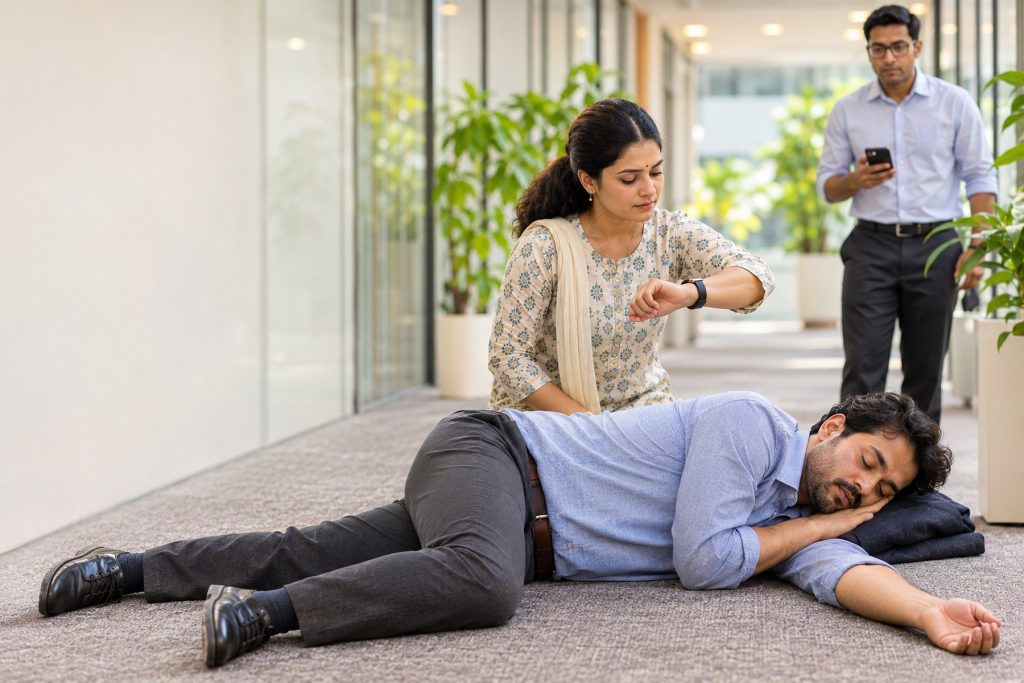
  1. Stay calm and stay with them. Look at your watch or phone and note the time the seizure started.
  2. Ease them to the floor if they’re falling or seated somewhere unsafe. Otherwise, don’t move them unless they’re in danger, such as on a road, near fire or in water.
  3. Clear the space around them. Move furniture, sharp or hot objects, and anything they could hit.
  4. Cushion their head with something soft and flat, such as a folded jacket, dupatta or bag.
  5. Turn them gently onto one side, with the mouth pointing towards the ground, so saliva can drain and the airway stays clear.
  6. Loosen anything tight around the neck, such as a tie, collar or scarf, and remove glasses.
  7. Keep onlookers back and protect their privacy. A crowd adds stress when they wake up.
  8. Time the seizure. If it lasts more than five minutes, call for emergency help.

After the seizure

  • Keep them on their side in the recovery position until they’re breathing normally and becoming aware. Heavy, noisy or snoring breathing is common for a few minutes after a seizure and usually settles on its own.
  • Check for injuries, especially to the head, mouth and tongue.
  • Stay with them until they’re fully alert. Confusion, tiredness and headache are common for a while afterwards.
  • Speak calmly and reassure them. Tell them what happened, and offer to call a family member or friend.
  • Don’t give food, water or medicine until they’re fully awake and able to swallow safely.
  • Help them rest somewhere safe and quiet. They shouldn’t drive, swim or operate machinery until they’ve fully recovered, and should follow their doctor’s advice on driving.

If the person has a known seizure plan

Some people with epilepsy carry a card or have a written seizure action plan that says what’s normal for them and when to call for help. A few are prescribed a rescue medicine, such as a nasal spray or a buccal (inside the cheek) medicine, to give if a seizure goes on too long. Use these only if you’ve been shown how and it’s part of their plan.

What not to do: common myths that cause harm

Common reaction Why to avoid it
Making them smell a shoe, onion or socks It doesn’t work. The person isn’t aware during the seizure, and neurologists say these make no difference to an ongoing seizure.
Putting keys or metal in their hand Another myth. It won’t stop the seizure, and the person may hurt themselves or you with it.
Putting a spoon, finger or cloth in their mouth A person can’t swallow their tongue during a seizure. Forcing something into the mouth can break teeth, injure the jaw, block the airway or cause a serious bite to your fingers.
Holding them down or trying to stop the movements You can’t stop a seizure by force, and restraining someone can injure them or you.
Pouring water on their face or into their mouth Liquid can go into the lungs. Don’t give anything by mouth until they’re fully awake.
Giving mouth-to-mouth breaths during the seizure People usually start breathing normally again when the seizure ends. If they aren’t breathing normally once the seizure has stopped, call 112 or 108 and start CPR.
Leaving them alone, or crowding round Stay with them, and ask others to step back.

Myths like these persist because seizures look frightening, and people want to do something. The most helpful thing you can do is the simplest: keep them safe, keep them on their side and watch the clock.

When to call for emergency help

Most seizures end on their own and don’t need an ambulance, especially in someone with known epilepsy whose seizure follows their usual pattern. In India, call 112 (national emergency number) or 108 (ambulance in most states) if any of the following warning signs listed by the CDC apply:

  • the seizure lasts longer than five minutes
  • another seizure follows soon after, without the person waking up in between
  • the person has trouble breathing or doesn’t wake up after the seizure
  • they’ve been injured during the seizure
  • the seizure happened in water
  • it’s their first seizure, or you don’t know whether they have epilepsy
  • the person has diabetes and is unconscious
  • the person is pregnant

A seizure lasting more than five minutes, or repeated seizures without recovery in between, can be a medical emergency called status epilepticus. It needs urgent treatment in hospital, so don’t wait to see if it stops.

Special situations

  • In water: support the person’s head so their face stays above the water, and get them out as soon as the jerking stops. Always get medical help afterwards, even if they seem fine, because water may have entered the lungs.
  • In a wheelchair or car seat: keep the seatbelt or harness on, support the head, and turn them on their side once the seizure ends.
  • A child with a high fever: most febrile seizures are brief and harmless, but always see a doctor after a child’s first febrile seizure. Seek urgent care if the child is under 12 months, stays unusually drowsy, has a stiff neck or a rash, or seems very unwell, as these can be signs of a serious infection such as meningitis. Call 112 or 108 if it lasts more than five minutes or the child has difficulty breathing.
  • A first seizure in an adult: call for emergency help, as listed above. Even if the person recovers before help arrives, they still need a medical assessment the same day. A first seizure needs to be checked for causes such as low blood sugar, infection, a head injury or a stroke.

Save your local emergency numbers in your phone now. Our Diwali first-aid guide lists the main numbers and what to keep in a home first-aid kit.

Epilepsy is treatable: let’s talk about it openly

The biggest barrier for many people with epilepsy in India isn’t the seizures themselves, but the silence around them. In a 2022 study of stigma in India published in Frontiers in Sociology, 74% of people without epilepsy didn’t know it was treatable or controllable. Even among these mostly urban, educated respondents, some suggested putting a cloth in the person’s mouth or making them smell socks or hold iron keys. People with epilepsy described families hiding their diagnosis during marriage negotiations, and the study cites a case where epilepsy medicines were swapped for vitamin pills to keep the condition secret.

The WHO notes that myths that epilepsy is contagious, incurable or caused by bad behaviour keep people isolated and away from treatment. The facts are different:

  • Epilepsy isn’t contagious, and it isn’t caused by spirits, curses or bad behaviour. It’s a condition of the brain.
  • It’s treatable. With the right diagnosis and medicines, up to 70% of people can become seizure-free.
  • People with epilepsy can study, work, marry and have children. Women with epilepsy who plan a pregnancy should talk to their doctor beforehand, because some epilepsy medicines, particularly sodium valproate, carry risks in pregnancy and may need changing, and folic acid is usually advised before conception. Anyone who finds they’re pregnant shouldn’t stop their medicines suddenly, but should see their doctor promptly.
  • Medicines must be taken regularly. Neurologists warn that stopping medicine once seizures stop can lead to dangerous relapses. Never stop or change epilepsy medicines without medical advice. Some people who have been seizure-free for several years can gradually come off medicines, but only under a neurologist’s supervision.
  • Seek help early. Neurologists say many patients reach a specialist years after their first seizure. Anyone who has had a seizure should see a doctor.

Common seizure triggers

For people with epilepsy, missed medicines, lack of sleep, stress, alcohol and, for a small number of people, flashing or flickering lights can make seizures more likely. Regular sleep, taking medicines on time and managing stress all help. Our guide to improving sleep quality has practical tips.

If someone you know has epilepsy

Ask them, kindly and privately, what their seizures usually look like, what helps and when they’d want you to call for help. Schools, workplaces and housing societies can make sure a few people know seizure first aid. You don’t need training to help, just the confidence to stay calm and follow the steps above.

The bottom line

Witnessing a seizure is frightening, but helping is simple. Stay with the person, keep them safe, turn them on their side and time the seizure. Don’t hold them down, don’t put anything in their mouth and don’t reach for shoes, onions or keys. Call 112 or 108 if the seizure lasts more than five minutes or any warning sign applies. This National Epilepsy Day, share these steps with your family, colleagues and children’s school, and help replace myths with facts. Epilepsy is common, treatable and nothing to hide.

Pro Tip: If you or a family member lives with epilepsy, use the GOQii App to keep track of sleep, activity and daily routines, which can help with spotting possible triggers to discuss with your doctor. Your GOQii Personalised Health Coach can support healthy habits around sleep, stress and regular routines, alongside your neurologist’s advice.

Frequently asked questions

What should you do when someone has a seizure?

Stay calm and stay with them. Ease them to the floor, clear away hard or sharp objects, cushion their head, turn them onto their side and loosen anything tight around the neck. Time the seizure, and call for emergency help if it lasts more than five minutes.

Should you put something in a person’s mouth during a seizure?

No. A person can’t swallow their tongue during a seizure. Putting a spoon, cloth or fingers in their mouth can break teeth, injure the jaw, block the airway or cause a serious bite. Turn them on their side instead.

Does smelling a shoe or onion stop a seizure?

No. Smelling a shoe, onion or socks, or holding keys, doesn’t stop a seizure. These are myths. Keep the person safe and wait for the seizure to end, timing it from the start.

When should you call an ambulance for a seizure?

Call 112 or 108 if the seizure lasts more than five minutes, another seizure follows, the person has trouble breathing or doesn’t wake up, is injured, pregnant or has diabetes, the seizure happened in water, or it’s their first seizure.

How long does a seizure usually last?

Most seizures stop on their own within one to three minutes. A seizure lasting more than five minutes, or repeated seizures without waking in between, is a medical emergency.

Is epilepsy contagious?

No. Epilepsy is a condition of the brain and can’t spread from person to person. It isn’t caused by spirits, curses or bad behaviour.

Can epilepsy be treated?

Yes. According to the WHO, up to 70% of people with epilepsy could live seizure-free with the right diagnosis and treatment. Medicines must be taken regularly and never stopped without a doctor’s advice.

#BeTheForce

Disclaimer: The information provided in this blog is for general awareness and educational purposes only. It is not intended to replace professional medical advice, diagnosis, or treatment. Always consult a qualified healthcare provider for personalised medical guidance or concerns related to your health.

  • « Previous Page
  • 1
  • 2
  • 3
  • 4
  • …
  • 26
  • Next Page »

Search

Recent Posts

  • Vegetarian protein guide
  • Warming winter soups: 3 protein-rich recipes
  • World AMR Awareness Week 2026: when you need antibiotics, and simple steps to prevent AMR
  • PCOS: diet, exercise and the myths to stop believing
  • Cholesterol numbers explained: LDL, HDL and triglycerides

Stay Updated

Archives

  • November 2026 (23)
  • October 2026 (23)
  • September 2026 (5)
  • August 2026 (8)
  • July 2026 (24)
  • June 2026 (22)
  • May 2026 (20)
  • April 2026 (24)
  • March 2026 (18)
  • February 2026 (14)
  • January 2026 (14)
  • December 2025 (19)
  • November 2025 (14)
  • October 2025 (17)
  • September 2025 (6)
  • August 2025 (5)
  • July 2025 (9)
  • June 2025 (18)
  • May 2025 (16)
  • April 2025 (22)
  • March 2025 (25)
  • February 2025 (21)
  • January 2025 (25)
  • December 2024 (21)
  • November 2024 (21)
  • October 2024 (15)
  • September 2024 (22)
  • August 2024 (27)
  • July 2024 (14)
  • June 2024 (23)
  • May 2024 (26)
  • April 2024 (27)
  • March 2024 (27)
  • February 2024 (23)
  • January 2024 (21)
  • December 2023 (14)
  • November 2023 (10)
  • October 2023 (18)
  • September 2023 (20)
  • August 2023 (16)
  • July 2023 (16)
  • June 2023 (21)
  • May 2023 (20)
  • April 2023 (19)
  • March 2023 (23)
  • February 2023 (19)
  • January 2023 (15)
  • December 2022 (11)
  • November 2022 (15)
  • October 2022 (15)
  • September 2022 (12)
  • August 2022 (9)
  • July 2022 (17)
  • June 2022 (11)
  • May 2022 (10)
  • April 2022 (6)
  • March 2022 (6)
  • February 2022 (13)
  • January 2022 (11)
  • December 2021 (7)
  • November 2021 (3)
  • October 2021 (6)
  • September 2021 (3)
  • August 2021 (8)
  • July 2021 (7)
  • June 2021 (15)
  • May 2021 (16)
  • April 2021 (10)
  • March 2021 (7)
  • February 2021 (4)
  • January 2021 (4)
  • December 2020 (3)
  • November 2020 (4)
  • October 2020 (10)
  • September 2020 (3)
  • August 2020 (3)
  • July 2020 (2)
  • June 2020 (4)
  • May 2020 (10)
  • April 2020 (12)
  • March 2020 (10)
  • February 2020 (4)
  • January 2020 (4)
  • December 2019 (3)
  • November 2019 (7)
  • October 2019 (5)
  • September 2019 (4)
  • August 2019 (9)
  • July 2019 (9)
  • June 2019 (11)
  • May 2019 (4)
  • April 2019 (8)
  • March 2019 (8)
  • February 2019 (9)
  • January 2019 (8)
  • December 2018 (9)
  • November 2018 (3)
  • October 2018 (3)
  • September 2018 (5)
  • August 2018 (10)
  • July 2018 (6)
  • June 2018 (13)
  • May 2018 (8)
  • April 2018 (17)
  • March 2018 (9)
  • February 2018 (8)
  • January 2018 (15)
  • December 2017 (12)
  • November 2017 (19)
  • October 2017 (13)
  • September 2017 (15)
  • August 2017 (4)
  • July 2017 (8)
  • June 2017 (7)
  • May 2017 (6)
  • April 2017 (8)
  • March 2017 (6)
  • February 2017 (7)
  • January 2017 (9)
  • December 2016 (10)
  • November 2016 (7)
  • October 2016 (7)
  • September 2016 (7)
  • August 2016 (11)
  • July 2016 (9)
  • June 2016 (9)
  • May 2016 (12)
  • April 2016 (17)
  • March 2016 (17)
  • February 2016 (8)
  • January 2016 (6)
  • December 2015 (2)
  • November 2015 (9)
  • October 2015 (7)
  • September 2015 (9)
  • August 2015 (11)
  • July 2015 (9)
  • June 2015 (11)
  • May 2015 (9)
  • April 2015 (13)
  • March 2015 (8)
  • February 2015 (5)
  • January 2015 (12)
  • December 2014 (14)
  • November 2014 (11)
  • October 2014 (6)
  • September 2014 (13)
  • August 2014 (12)
  • July 2014 (6)
  • June 2014 (2)
  • May 2014 (7)
  • April 2014 (4)

From Burnout to Balance: How Dr. Ranjit Reclaimed His Health

Dr Ranjit Bhatt has spent years tending to others. A practising doctor in Odisha, his days were packed with patients, surgeries, and emergencies. From the outside, it looked like a life lived in service. But on the inside, something wasn’t right. “I had no … [Read More...]

From Shimla’s Slopes to Chandigarh’s Sidewalks: Surinder Kaur Bhalla’s Journey from Chaos to Control

Some journeys start with a plan. Others begin with a stumble literally. Surinder Bhalla, a government professional, born and raised in the scenic hill town of Shimla, had always lived a life of movement. “In Shimla, you walked everywhere,” she reflects. “Walking was never an exercise. It was just life.” But after shifting to Chandigarh, […]

“I’ve Challenged Myself to Live 100 Years” – The Story of Chandubhai Savani’s Second Chance at Life

At 67, most people start slowing down. Not Chandubhai Savani. A resident of Surat, Chandubhai, thought life was on track. “My life was going well till I had my bypass surgery,” he says. That surgery, back in 2021, was a wake-up call.  Medication was routine, but exercise wasn’t. His diet? What he calls ‘normal.’ “I […]

Ananda Mukherjee Health Story

From Terminal Illness To Complete Wellness! Ananda Mukherjee Health Story

As we observe World Cancer Day under the powerful theme ‘United by Unique’ (2025-2027)**, we are reminded that every individual’s journey with cancer is distinct, yet united by shared resilience, hope, and the collective fight against this disease. This theme places people at the centre of care and their stories at the heart of the […]

  • HOME
  • HEALTHY LIVING
  • FITNESS
  • HEALTHY RECIPES
  • USER STORIES
  • KARMA
  • BUY GOQii

Copyright ©2016 GOQii