GOQii

Blog

  • HOME
  • HEALTHY LIVING
  • FITNESS
  • HEALTHY RECIPES
  • USER STORIES
  • KARMA
  • BUY GOQii

Search Results for: green tea

October 2, 2025 By Navnee Garg 2 Comments

10 Ways to Add Vegetables to Your Breakfast

vegetables to your breakfastYou’ve come across the saying “Eat breakfast like a king and dinner like a pauper”… being a nutritionist, I strongly believe in this. Yes, one should definitely eat a nutritionally lavish meal in the morning. Breakfast needs to be a combination of simple and complex carbs along with some high biological value sources of protein. But is it enough? Does it make a complete meal?

We often tend to forget to add fibres and other micronutrients in the first meal of the day, keeping it for later meals, and we miss on achieving the daily requirement.  Adding vegetables to your breakfast can help you improve your health in numerous ways and make it a complete meal. Let’s see how we can do that.

Ideas to Add Vegetables to Your Breakfast

  1. Try adding sautéed spinach to an open-faced egg or paneer sandwich. Spinach is a rich source of Vitamin A, C and K.  
  2. Replace other root vegetables besides potatoes in your basic recipes. Try sweet potatoes, turnips, and even beetroot to get some extra vitamin boosts from these colourful root veggies.
  3. Cook a quinoa, veggie and egg scramble. A perfectly balanced breakfast for lazy mornings.
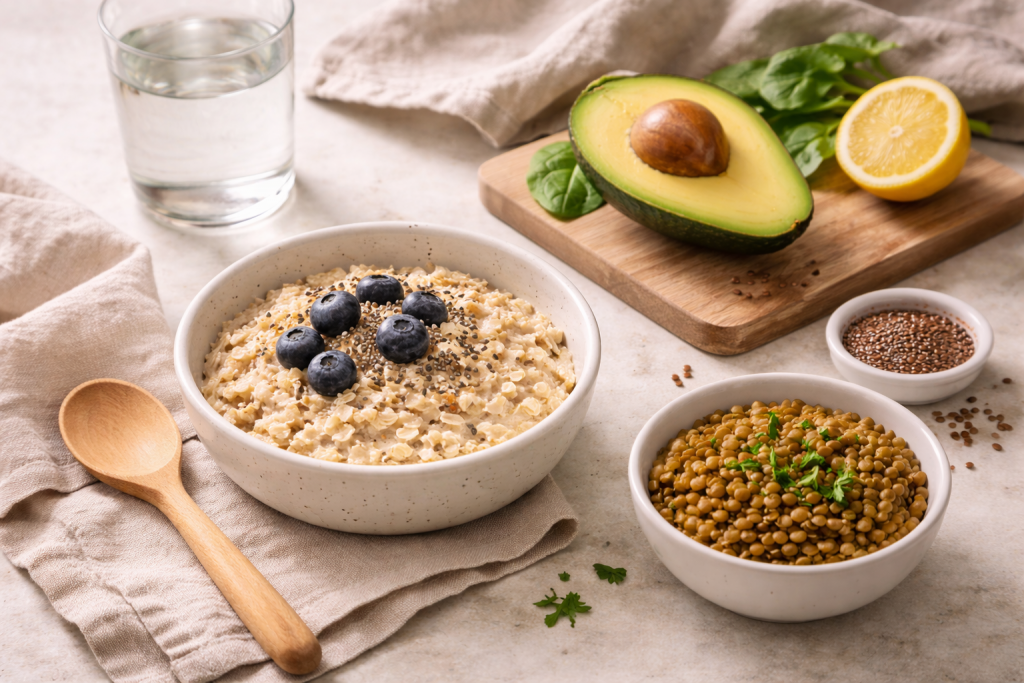
  4. Add spinach to your savoury oatmeal. Fibres in all together.
  5. Try shifting your salad to breakfast and add some grain along. Try Pizza crust waffle with a breakfast salad. A great way to indulge guilt-free.
  6. Avocado can be used as a spread on breads. To enhance the nutritional value, chopped veggies, salt and pepper can be added as a treat to your taste buds.
  7. Try skipping the toast along with omelette or scrambled eggs. Instead, replace it with Sauté greens. Whether you can add cream or simply cook them with garlic, is up to you.
  8. Add sautéed vegetables and mashed paneer/eggs to the pancakes/cheela you make at home. This would make it more filling and add an extra boost of protein as well.
  9. Busy enough to cook every morning? Drink it up then! Just blend up greens or vegetables into your morning smoothie and sip it on the way to the office.
  10. And the Easiest: Add vegetables in everything you cook, be it poha, vermicelli, and even upma!  

We hope this article helps you add more vegetables to your breakfast for a power-packed start to your day! Do try them all out and let us know in the comments below. 

Get more healthy recipes here or ask a GOQii Coach by subscribing for Personalised Health Coaching here.

#BeTheForce 

Disclaimer: The information provided in this blog is for general awareness and educational purposes only. It is not intended to replace professional medical advice, diagnosis, or treatment. Always consult a qualified healthcare provider for personalised medical guidance or concerns related to your health. Images shown are for representation purposes only and may not depict the exact recommendations or outcomes.

July 29, 2025 By Yogita Agarwal 7 Comments

Healthy Eating: Sweet Potato Sprouts Tikki

Healthy Eating: Sweet Potato Sprouts Tikki
If you’re all out of breakfast ideas or are tired of the repetitive choices you have, let’s take your breakfast or evening snacks up a notch with this Sweet Potato Sprouts Tikki recipe! This mouthwatering delight is rich in healthy carbs and protein – just the kind of kick you need to get your day started! 

What You Will Need 

  • Sweet potato – 1 cup (mashed)
  • Boiled sprouts – ½  cup
  • Broccoli – 1 cup (cut into florets) 
  • Grated homemade  Paneer (chenna) – 3 tablespoon
  • Sattu powder – 2 tbsp
  • Chaat masala – ¾th tsp
  • Turmeric – ¼  tsp
  • Ajwain or carom seeds – ¼ tsp 
  • Roasted cumin powder – ½  tsp
  • Black pepper powder – ½  tsp
  • Coriander – 2 tsp
  • Salt – as per taste
  • Olive oil – as needed.

How To Prepare

  1. Place sweet potato in a pressure cooker and cook it for 3-4 whistles. 
  2. Meanwhile, boil water and add broccoli florets to it. Cook for 2 mins and drain the water completely (or you can steam it for 5-7 min). 
  3. Grind the broccoli in a blender coarsely (just for a few seconds. It should not be like a paste). Squeeze the excess water from the grounded broccoli. 
  4. Take one peeled potato in the mixing bowl and mash it well without any lumps. 
  5. Then, add the grounded broccoli, grated paneer (chena), sattu powder, turmeric, chaat masala, boiled sprouts, cumin powder, black pepper, ajwain, coriander and salt.
  6. Mix well into a dough and divide into equal portions. Make equal sized balls and flatten them into tikkis. 
  7. Heat a pan with a few drops of oil and place the tikkis over it. Cook it on medium to low flame from both the sides till it turns golden. 
  8. Serve hot with green chutney!  

Highlight of the Sweet Potato Sprouts Tikki

  • The Sweet Potato Sprouts Tikki is rich in healthy carbs, protein, fiber and low in fat. It’s a complete meal.
  • Good choice for kids, pregnant & lactating mothers too. 
  • It is made up of sweet potato, which has several health benefits. It is rich in Antioxidant called beta carotene, which helps increase Vitamin A . 
  • It has a good amount of soluble and insoluble fiber along with vitamins and minerals like Vitamin C, Potassium, Manganese, Vitamin B6, Vitamin B5 and Vitamin E.
  • The added sprouts, homemade paneer (chenna) and sattu are good sources of protein.
  • The added broccoli and coriander adds a good amount of fiber content.

If you enjoyed this recipe, let us know in the comments below. If you try it out, take some pictures and share it with us on your social media channels tagging GOQii! You can find more healthy recipes here or you can get them directly from your GOQii Coach by subscribing to Personalised Health Coaching here.

#BeTheForce 

Disclaimer: The information provided in this blog is for general awareness and educational purposes only. It is not intended to replace professional medical advice, diagnosis, or treatment. Always consult a qualified healthcare provider for personalised medical guidance or concerns related to your health. Images shown are for representation purposes only and may not depict the exact recommendations or outcomes.

June 2, 2025 By Meenakshi Sharma 2 Comments

What Is Visceral Fat & Why It Is Dangerous

visceral fat

You might have heard of the term belly fat, but you might not be aware of terms like subcutaneous and visceral fat. Subcutaneous fat is the kind you can grasp with your hand on any part of your body. It sits under the skin. Belly fat, or what experts call visceral fat, is a particularly dangerous type of fat that forms inside the abdomen. It surrounds internal organs like the liver and intestines, and is also known as ‘active fat’ because it influences how hormones function in the body.

You can have too much belly fat even with a normal BMI. So, pay attention to your waist circumference rather than the number on the scale.

How To Measure It

  1. Waist size: This is an easy way to get a rough estimate. Wrap a tape measure around your waist over your belly button (don’t suck in your stomach). For women, 35 inches or more is a sign of visceral fat. For men, it’s 40 inches.
  2. BMI: Body mass index is a formula for how much you weigh relative to your height. A BMI of 30 or higher is overweight. That could be a sign of visceral fat. In Asia, a BMI of 23 or higher could be a concern.
  3. Waist-to-hip ratio: Divide your waist size by your hip size. Some doctors think this gives a good indication of your risk for visceral fat. But studies suggest it may be no better than a simple waist measurement.
  4. Body shape: Look in the mirror. If you’re an apple – a big trunk and slimmer legs – it often means more visceral fat, which is more common among men. Women are more likely to be pears with bigger hips and thighs. Research shows that upper body fat is more dangerous to your health, which might be one reason why women usually live longer than men.
  5. Imaging tests: These scans are the only way to check the exact amount of visceral fat you have. If your doctor orders a CT scan or an MRI for another medical condition, they can also assess your visceral fat.

Risks & Dangers Of Excess Visceral Fat

  • Increased Inflammation: If you have more fat stored than needed, especially around visceral organs like the liver, heart, kidneys, pancreas, and intestines, your body becomes inflamed. This fat stores inflammatory white blood cells and is linked with cognitive decline, arthritis, diabetes, and more.
  • Higher Risk of Diabetes: Visceral fat plays a significant role in insulin resistance, heightening the risk of developing diabetes. Abdominal fat is viewed as a bigger health risk than hip or thigh fat. While men are more likely to store visible visceral fat, women are also at risk.
  • Makes It Harder to Lose Weight: Stored body fat, especially visceral fat, affects hunger levels. Leptin, a hormone released by stored fat, regulates appetite, metabolism, and weight. When you eat refined carbs such as white flour and sugar, fat-storing hormones are produced in excess, raising your body’s “set point” and making it hard to follow a moderate, healthy diet.
  • Higher Risk for Heart Disease and Strokes: Inflammatory cytokines produced by fat contribute to heart disease and other inflammatory disorders. Visceral fat is linked to cardiovascular risk factors like high triglycerides, high blood pressure, and high cholesterol.
  • More Likely to Battle Dementia: Studies show that people with larger waistlines have a higher risk of dementia. In fact, many experts believe visceral fat levels (rather than BMI) are a more relevant risk factor in dementia development.
  • Increased Risk of Depression and Mood Disorders: Visceral fat is metabolically active and can interfere with hormones and neurotransmitter function. Depression is especially associated with greater fat storage in women. In one study, visceral fat – not subcutaneous belly fat or waist circumference – was linked with depressive symptoms in women over 50.

How Can You Reduce Visceral Fat? 

  • Exercise: A mix of cardiovascular exercise (e.g. running, cycling, swimming, aerobics, circuit training) and strength training (e.g. squats, weights, push-ups) helps reduce visceral fat.
  • Manage Stress: Chronic stress raises cortisol, which increases fat storage around the abdomen. Relaxation techniques like meditation, deep breathing, and other stress management practices can support fat loss.
  • Balance Diet: Focus on whole foods—fruits, vegetables, whole grains (quinoa, millets, oats), and lean proteins (skinless chicken, fish, eggs, beans). Calcium and Vitamin D are also associated with lower visceral fat. Include leafy greens, tofu, sardines, and low-fat dairy products.

Boiling, steaming, baking, and grilling are healthier cooking methods. Avoid trans fats (often found in processed foods and deep-fried items) and reduce sugar intake. Check labels for ingredients like “partially hydrogenated oils” or “high-fructose corn syrup.”

We hope this article helps you! If you are keen on losing weight in a healthy, sustainable way, you can reach out to an expert by subscribing for Personalised Health Coaching here.

For more articles on weight loss, check out Healthy Reads.

#BeTheForce 

Disclaimer: The information provided in this blog is for general awareness and educational purposes only. It is not intended to replace professional medical advice, diagnosis, or treatment. Always consult a qualified healthcare provider for personalised medical guidance or concerns related to your health. Images shown are for representation purposes only and may not depict the exact recommendations or outcomes.

May 22, 2025 By GOQii Leave a Comment

Low-Carb Doesn’t Mean Low Flavour: Creative Meal Ideas for Diabetics

When most people think of a “low-carb diet,” the image that pops into their mind is usually a sad salad, a boiled egg, and a lifelong ban on anything remotely enjoyable. But here’s the reality: low-carb doesn’t have to mean low flavour — especially when it’s done right.

Whether you’re following the DIP (Diabetes Improvement Programme) or simply looking to stabilise your blood sugar through smarter food choices, it’s entirely possible to enjoy meals that are both satisfying and full of taste. You just need the right plan — and a dash of creativity.

Let’s walk through a typical day of delicious, low-carb eating that won’t leave you feeling deprived.

Breakfast: Start Your Day Right

The goal is simple — fuel up without the blood sugar spike. Think protein, healthy fats, and if you’d like, a dose of non-starchy veg.

Meal ideas:

  • Bacon or sausage with eggs — Simple, filling, and full of flavour. Add some wilted spinach or mushrooms if you like greens in the morning.
  • Avocado & egg on cauliflower toast — Cauliflower slices lightly grilled and topped with smashed avocado, chilli flakes, and a poached egg.
  • Omelette — Made with spinach, onions, and tomatoes.
  • Greek yoghurt (unsweetened) with chia seeds, crushed walnuts, and a small handful of berries.

💡 Quick tip: If you’re choosing lean protein (like egg whites), add a bit of butter or cheese to get in that much-needed fat for energy.

Lunch: Hearty & Nourishing

Lunchtime is where many fall into the bland salad trap. But not you! This is your opportunity to bring in flavour and fibre — and yes, you can still have your cup of starchy carbs if you need the energy boost.

Meal ideas:

  • Grilled chicken bowl — Marinated in olive oil, garlic, and herbs, served on a bed of leafy greens with cucumber, cherry tomatoes, and a tahini dressing.
  • Zucchini noodles with pesto and grilled chicken — Packed with fresh basil flavour and wonderfully filling.
  • Stir-fried tofu with peppers, mushrooms, and sesame seeds, served on a bed of steamed cabbage ribbons.

Portions to aim for:

  • 1 to 1½ cups of leafy salad or cooked greens
  • ½ to 1 cup of non-starchy veg
  • Up to 1 cup of starchy carbs (such as brown rice, wholewheat pasta, or roasted sweet potato), depending on your needs

Snack Smartly (Only If You Need To)

Snacking isn’t mandatory — but if hunger strikes, it’s important to choose snacks that keep your blood sugar steady without compromising taste.

Snack ideas:

  • Hummus-stuffed cucumber boats — Crunchy, refreshing, and satisfying.
  • Boiled eggs with a pinch of sea salt and pepper.
  • Cheese cubes (up to 100g per day) with olives or cherry tomatoes.
  • Pepperoni or turkey slices rolled with cream cheese.
  • A handful of unsalted nuts — Almonds, walnuts, or pistachios.

Dinner: Flavour Without the Fuss

Dinner should feel like a reward for your day — not a compromise. Choose good protein, healthy fats, and plenty of colour on your plate.

Meal ideas:

  • Low-carb veggie curry — Made with coconut milk, seasonal vegetables (think courgettes, peppers, and broccoli), and tofu or cottage cheese. Serve with cauliflower rice.
  • Grilled fish with lemon-butter sauce and sautéed greens.
  • Aubergine lasagne — Replace noodles with grilled aubergine slices, layered with tomato sauce and cheese.
  • Stuffed bell peppers with minced chicken, spices, and cheese.

Build your plate with:

  • 1 to 1½ cups of greens
  • ½ to 1 cup of non-starchy vegetables
  • Healthy fats (butter, cheese, avocado, olive oil) if your protein is lean

Sweet Endings: Dessert Without the Crash

Yes, you can still enjoy something sweet — as long as it’s carefully chosen.

Dessert ideas:

  • Dark chocolate almond bites — Melt 85% dark chocolate, mix with chopped almonds and coconut flakes, and chill in moulds.
  • Chia pudding — Made with almond milk, cinnamon, and a touch of stevia.
  • Avocado mousse — Mashed avocado with cocoa powder and stevia makes a rich, satisfying treat.

A Few Things to Remember

Here are a few DIP-aligned essentials you should aim for daily:

  • 2 cups of leafy greens — Spinach, lettuce, rocket, kale, etc.
  • 1 cup of non-starchy vegetables — Courgette, broccoli, mushrooms, peppers, etc.
  • 1 cup of starchy carbohydrates — Optional, and should be adjusted based on your energy needs.
  • 1–2 teaspoons of salt — Especially important on a low-carb plan, unless you’re on a sodium-restricted diet.

And yes — whole eggs, meat, poultry, fish, and good fats are all on the table. You’re not required to avoid the natural fats in your food. Eat until you’re full — not stuffed — and let your body guide you.

You Don’t Have to Choose Between Food and Health

Low-carb eating for diabetes management isn’t about denial — it’s about rediscovery. When you base your meals on real, whole foods and bold flavours, you’ll find there’s joy to be had in every bite.

So the next time someone says, “Isn’t that diet a bit boring?” — smile, and serve them your cauliflower toast with avocado and a perfectly poached egg.

Let the food do the talking.

#BeTheForce

Disclaimer: The information provided in this blog is for general awareness and educational purposes only. It is not intended to replace professional medical advice, diagnosis, or treatment. Always consult a qualified healthcare provider for personalised medical guidance or concerns related to your health. Images shown are for representation purposes only and may not depict the exact recommendations or outcomes.

  • « Previous Page
  • 1
  • …
  • 30
  • 31
  • 32
  • 33
  • 34
  • …
  • 62
  • Next Page »

Search

Recent Posts

  • Foods to Manage Blood Sugar Naturally: A Complete Guide to Better Blood Sugar Control
  • The Lazy Person’s Guide to Staying Healthy: 5 Micro-Habits That Take Less Than 2 Minutes
  • Healthy Eating: Comforting Chilli Bean Soup Recipe for the Monsoon
  • The Truth About the ‘Beer Belly’: What Alcohol Really Does to Your Metabolism
  • Benefits of Meditation: How One Daily Habit Can Transform Your Mental Wellbeing

Stay Updated

Archives

  • August 2026 (7)
  • July 2026 (25)
  • June 2026 (22)
  • May 2026 (20)
  • April 2026 (24)
  • March 2026 (18)
  • February 2026 (14)
  • January 2026 (14)
  • December 2025 (19)
  • November 2025 (15)
  • October 2025 (20)
  • September 2025 (6)
  • August 2025 (6)
  • July 2025 (9)
  • June 2025 (18)
  • May 2025 (16)
  • April 2025 (22)
  • March 2025 (26)
  • February 2025 (21)
  • January 2025 (25)
  • December 2024 (22)
  • November 2024 (22)
  • October 2024 (20)
  • September 2024 (22)
  • August 2024 (28)
  • July 2024 (15)
  • June 2024 (23)
  • May 2024 (26)
  • April 2024 (27)
  • March 2024 (27)
  • February 2024 (23)
  • January 2024 (21)
  • December 2023 (14)
  • November 2023 (10)
  • October 2023 (19)
  • September 2023 (21)
  • August 2023 (16)
  • July 2023 (16)
  • June 2023 (21)
  • May 2023 (20)
  • April 2023 (19)
  • March 2023 (23)
  • February 2023 (19)
  • January 2023 (15)
  • December 2022 (11)
  • November 2022 (15)
  • October 2022 (15)
  • September 2022 (12)
  • August 2022 (9)
  • July 2022 (17)
  • June 2022 (11)
  • May 2022 (10)
  • April 2022 (6)
  • March 2022 (6)
  • February 2022 (13)
  • January 2022 (11)
  • December 2021 (7)
  • November 2021 (3)
  • October 2021 (6)
  • September 2021 (3)
  • August 2021 (8)
  • July 2021 (7)
  • June 2021 (15)
  • May 2021 (16)
  • April 2021 (10)
  • March 2021 (7)
  • February 2021 (4)
  • January 2021 (4)
  • December 2020 (3)
  • November 2020 (4)
  • October 2020 (10)
  • September 2020 (3)
  • August 2020 (3)
  • July 2020 (2)
  • June 2020 (4)
  • May 2020 (10)
  • April 2020 (12)
  • March 2020 (10)
  • February 2020 (4)
  • January 2020 (4)
  • December 2019 (3)
  • November 2019 (7)
  • October 2019 (5)
  • September 2019 (4)
  • August 2019 (9)
  • July 2019 (9)
  • June 2019 (11)
  • May 2019 (4)
  • April 2019 (8)
  • March 2019 (8)
  • February 2019 (9)
  • January 2019 (8)
  • December 2018 (9)
  • November 2018 (3)
  • October 2018 (3)
  • September 2018 (5)
  • August 2018 (10)
  • July 2018 (6)
  • June 2018 (13)
  • May 2018 (8)
  • April 2018 (18)
  • March 2018 (9)
  • February 2018 (8)
  • January 2018 (15)
  • December 2017 (12)
  • November 2017 (19)
  • October 2017 (13)
  • September 2017 (15)
  • August 2017 (4)
  • July 2017 (8)
  • June 2017 (7)
  • May 2017 (6)
  • April 2017 (8)
  • March 2017 (6)
  • February 2017 (7)
  • January 2017 (9)
  • December 2016 (10)
  • November 2016 (7)
  • October 2016 (7)
  • September 2016 (7)
  • August 2016 (11)
  • July 2016 (9)
  • June 2016 (9)
  • May 2016 (12)
  • April 2016 (17)
  • March 2016 (17)
  • February 2016 (8)
  • January 2016 (6)
  • December 2015 (2)
  • November 2015 (9)
  • October 2015 (7)
  • September 2015 (9)
  • August 2015 (11)
  • July 2015 (9)
  • June 2015 (11)
  • May 2015 (9)
  • April 2015 (13)
  • March 2015 (8)
  • February 2015 (5)
  • January 2015 (12)
  • December 2014 (14)
  • November 2014 (11)
  • October 2014 (6)
  • September 2014 (13)
  • August 2014 (12)
  • July 2014 (6)
  • June 2014 (2)
  • May 2014 (7)
  • April 2014 (4)

From Burnout to Balance: How Dr. Ranjit Reclaimed His Health

Dr Ranjit Bhatt has spent years tending to others. A practising doctor in Odisha, his days were packed with patients, surgeries, and emergencies. From the outside, it looked like a life lived in service. But on the inside, something wasn’t right. “I had no … [Read More...]

From Shimla’s Slopes to Chandigarh’s Sidewalks: Surinder Kaur Bhalla’s Journey from Chaos to Control

Some journeys start with a plan. Others begin with a stumble literally. Surinder Bhalla, a government professional, born and raised in the scenic hill town of Shimla, had always lived a life of movement. “In Shimla, you walked everywhere,” she reflects. “Walking was never an exercise. It was just life.” But after shifting to Chandigarh, […]

“I’ve Challenged Myself to Live 100 Years” – The Story of Chandubhai Savani’s Second Chance at Life

At 67, most people start slowing down. Not Chandubhai Savani. A resident of Surat, Chandubhai, thought life was on track. “My life was going well till I had my bypass surgery,” he says. That surgery, back in 2021, was a wake-up call.  Medication was routine, but exercise wasn’t. His diet? What he calls ‘normal.’ “I […]

Ananda Mukherjee Health Story

From Terminal Illness To Complete Wellness! Ananda Mukherjee Health Story

As we observe World Cancer Day under the powerful theme ‘United by Unique’ (2025-2027)**, we are reminded that every individual’s journey with cancer is distinct, yet united by shared resilience, hope, and the collective fight against this disease. This theme places people at the centre of care and their stories at the heart of the […]

  • HOME
  • HEALTHY LIVING
  • FITNESS
  • HEALTHY RECIPES
  • USER STORIES
  • KARMA
  • BUY GOQii

Copyright ©2016 GOQii