GOQii

Blog

  • HOME
  • HEALTHY LIVING
  • FITNESS
  • HEALTHY RECIPES
  • USER STORIES
  • KARMA
  • BUY GOQii

May 6, 2026 By Trishala Chopra 11 Comments

Hot vs. Cold Shower After a Workout: Which is Better?

Man ShowerWhat is the first thing you want to do after getting home from a grueling gym session, a long run, or an intense home workout?
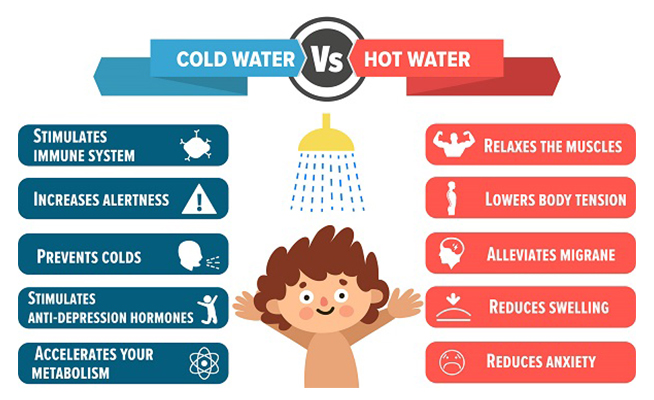
Your mind might scream, “Drink water!” while your body begs, “Please, go take a shower!” Nobody likes sitting around in their own sweat, but when you step into the bathroom, a common dilemma arises: should you turn the dial to hot or cold? Many fitness enthusiasts swear by an ice-cold plunge, while others prefer the soothing comfort of a hot shower.

Does the temperature of your bathing water actually impact your health and recovery? Yes, it does. Let’s break down the science behind what happens to your body when you choose a hot versus a cold shower post-workout.

The Case for the Cold Shower

Taking a cold shower after a hot, sweaty workout is a shock to the system, but it is a shock with highly specific benefits.

When cold water hits your skin, it causes vasoconstriction, the rapid constriction (narrowing) of your blood vessels. This immediate drop in surface temperature directs blood flow inward toward your vital organs.

The Benefits:

  • Acts Like a Full-Body Ice Pack: Cold water prevents severe swelling and numbs the typical pain associated with strenuous, high-impact workouts.
  • Reduces Inflammation: If you suspect you have slightly tweaked a muscle or are dealing with a minor post-workout injury, cold water helps cool down the damaged tissue and mitigate acute inflammation.

⚠️ Important Precautions for Cold Showers:

  • High Blood Pressure Caution: Because vasoconstriction naturally increases blood pressure, individuals with hypertension should generally avoid extreme post-workout cold showers.
  • Keep it Reasonable: You do not need freezing water to get the benefits; room temperature or comfortably cool water is often enough to aid recovery without shocking your heart.

The Case for the Hot Shower

If cold water causes vasoconstriction, warm water does the exact opposite: vasodilation. This means the warm temperatures cause your blood vessels to dilate (widen), which decreases blood pressure and invites blood to rush back toward your skin and muscles.

The Benefits:

  • Soothes Muscle Tension: Hot water stimulates rich, oxygenated blood flow directly to your fatigued muscles.
  • Flushes Metabolic Waste: This increased blood circulation helps disperse metabolic waste (like lactic acid) that accumulates during exercise, significantly reducing general post-workout soreness and physical uneasiness.
  • Promotes Relaxation: A warm shower acts as a natural muscle relaxant, easing the nervous system after a highly stimulating workout.

⚠️ Important Precautions for Hot Showers:

  • Not for Acute Injuries: If you have pulled a muscle, sprained a joint, or damaged tissue during your workout, do not use hot water. Heat will increase inflammation and swelling in the damaged area. Go for cold water and an ice pack instead.
  • Keep it Warm, Not Boiling: Scalding hot water will strip your skin of its natural oils and can cause dizziness after a workout. Stick to a soothing, warm temperature just above room level.

The Verdict: Which Should You Choose?

Hotvs ColdThe debate between hot and cold will always exist, but the right choice depends entirely on your current physical condition.



  • Choose COLD if you want to reduce inflammation, soothe a potential minor injury, or quickly bring your core temperature down after a very sweaty, high-intensity session.
  • Choose HOT if you want to relax stiff, tense muscles, reduce general delayed onset muscle soreness (DOMS), and wind down.

Listen to your body, choose what suits your specific recovery needs for the day, and enjoy that well-deserved post-workout cleanse!

Need help optimizing your fitness and recovery routine? Reach out to our certified experts by subscribing to GOQii’s Personalised Health Coaching in the GOQii App today.

Frequently Asked Questions (FAQs)

  1. Can I switch between hot and cold water?
    Yes! This is known as “contrast therapy.” Alternating between hot water (to open blood vessels and clear out waste) and cold water (to flush the blood back out) can be an excellent way to speed up muscle recovery.
  1. Should people with high blood pressure take cold showers?
    No, it is generally advised that individuals with high blood pressure avoid sudden cold showers, especially after a workout, as the sudden constriction of blood vessels can temporarily spike blood pressure levels. 
  1. How soon after a workout should I shower?
    It is best to wait about 15 to 20 minutes after your workout before jumping into the shower. This gives your body time to naturally lower its heart rate and stop the active sweating process.

#BeTheForce 

Disclaimer: This article is intended for educational and informational purposes only and should not be considered a substitute for professional medical advice, diagnosis, or treatment. Always consult with your doctor or a qualified healthcare provider regarding recovery protocols, especially if you have pre-existing conditions like hypertension or cardiovascular disease.

May 5, 2026 By GOQii Leave a Comment

World Asthma Day 2026: How to Stop Letting Asthma Control Your Life

Imagine trying to breathe through a crushed drinking straw.

For over 260 million people worldwide living with asthma, that is exactly what a flare-up feels like. The airways in the lungs become inflamed, swollen, and constricted, making the most natural act in the world breathing feel like an exhausting battle.

Because asthma can be scary, it is often surrounded by a culture of fear. Many asthmatics are told to avoid exercise, stay indoors, and live a “careful” life.

But modern respiratory medicine tells a very different story.

Today, May 5th, is World Asthma Day. This year, the Global Initiative for Asthma (GINA) has set a powerful theme: “Access to anti-inflammatory inhalers for everyone with asthma – still an urgent need.” With over 450,000 preventable asthma-related deaths occurring annually, the message is clear: having asthma does not mean your life has to shrink, but you must have access to the right tools.

Here is how to outsmart your triggers, upgrade your treatment, and take back control of your breath.

Stop Believing These 3 Dangerous Asthma Myths

The biggest barriers to living well with asthma aren’t just physical; they are psychological. Let’s clear the air on three major myths:

Myth 1: “I only need my inhaler when I can’t breathe.”

The Reality: This is exactly what the 2026 World Asthma Day theme is trying to change! Relying only on a blue rescue inhaler when you are gasping for air doesn’t treat the underlying problem: inflammation. The modern gold standard of care is the 2-in-1 combination inhaler. These contain both an inhaled corticosteroid (to safely reduce daily inflammation) and a quick-acting reliever (to open airways fast). Using an anti-inflammatory preventer is the key to stopping attacks before they start.

Myth 2: “People with asthma shouldn’t exercise.”

The Reality: Avoiding exercise actually makes your lungs weaker. Cardiovascular exercise trains your lungs to use oxygen more efficiently. While sudden, intense cold-weather running might trigger symptoms, swimming, brisk walking, and properly warmed-up strength training are incredibly beneficial. Fact: Many Olympic gold medalists are diagnosed asthmatics!

Myth 3: “Asthma is just a childhood phase.”

The Reality: While many children experience improved symptoms as their airways grow larger, asthma is a chronic, lifelong condition. It can go dormant for years and suddenly reappear in your 30s or 40s due to stress, a bad respiratory infection, or moving to a highly polluted city.

3 Steps to Outsmart Your Asthma

Managing asthma isn’t about living in fear of your next attack; it is about proactive protection.

  1. Advocate for the Right Inhaler

In alignment with the GINA 2026 campaign, review your medication with your doctor. If you are constantly reaching for your quick-relief inhaler multiple times a week, your asthma is not controlled. Ask your healthcare provider if a combination 2-in-1 inhaler containing an inhaled corticosteroid is right for you.

  1. Track Your Invisible Enemies

Asthma is a highly reactive condition. Your job is to become a detective.

  • Is it triggered by the sudden drop in temperature when you enter an air-conditioned office?
  • Is it the heavy smog during your evening commute? (Discover 5 actionable ways to keep your lungs healthy here).
  • Is it the dust mites in your old mattress?

Once you identify the trigger, you can manage the exposure.

  1. Check Your Inhaler Technique

Did you know that nearly 70% of people use their inhalers incorrectly? If you just spray and swallow, the medicine hits the back of your throat and goes into your stomach, not your lungs. Always use a spacer device if recommended by your doctor, and inhale slowly and deeply, holding your breath for 10 seconds afterward to let the medicine settle into your airways.

Asthma is a part of your life, but it doesn’t have to be the boss of it.

By understanding your triggers, upgrading to anti-inflammatory controller medications, and strengthening your lungs through safe, regular exercise, you can flip the script.

You don’t have to “learn to live with” bad breathing. You deserve to breathe freely.

Stop waiting for an attack to happen. Be proactive. Speak to your doctor about 2-in-1 anti-inflammatory inhalers, start safely incorporating cardiovascular exercise to strengthen your lungs, and join the global conversation today using #WorldAsthmaDay2026.

Frequently Asked Questions (FAQs)

  1. What is the theme for World Asthma Day 2026?
    The 2026 theme is “Access to anti-inflammatory inhalers for everyone with asthma still an urgent need,” focusing on ensuring equitable access to essential, life-saving 2-in-1 combination inhalers.
  2. Can asthma be completely cured?
    Currently, there is no permanent cure for asthma. However, it is a highly manageable condition. With the right combination of daily anti-inflammatory medications and trigger avoidance, most people with asthma can live completely symptom-free lives.
  3. Is it safe to exercise if I have exercise-induced asthma?
    The key is preparation. Always do a slow, 10-15 minute warm-up before intense activity to let your lungs adjust. Many doctors also recommend taking a puff of your combination inhaler before you start working out to keep your airways open.

#BeTheForce

Disclaimer: This content is for educational purposes only and is not a substitute for professional medical advice. Asthma can be a life-threatening condition. Always consult your pulmonologist or healthcare provider before changing your medication regimen or starting a new exercise program.

May 2, 2026 By GOQii Leave a Comment

Metabolic Flexibility: The Key to Energy, Fat Loss, and Longevity

The human body is built like a hybrid engine, perfectly designed to run efficiently on two very different fuels. After a meal, your body burns carbohydrates (glucose) for immediate energy. However, between meals or during exercise, it is supposed to seamlessly switch gears and start burning stored fat.

This vital ability to shift between fuel sources is known as metabolic flexibility.

When this internal system works properly, your energy remains steady throughout the day, hunger becomes predictable, and healthy weight regulation happens naturally. Unfortunately, when this system gets “stuck,” the results are constant fatigue, stubborn fat gain, and relentless sugar cravings. If you are struggling with these symptoms, your body isn’t broken it is simply stuck in one mode.

Here is exactly how this fuel-switching system works, why it breaks down, and how you can fix it.

What Is Metabolic Flexibility?

Think of metabolic flexibility as your body’s internal energy thermostat.

After you eat, your body releases insulin to help your cells absorb and use glucose. A few hours later, as that food energy runs out, your insulin levels drop. This drop is the crucial signal that tells your body to tap into its fat stores to keep you going. That switch is everything.

People with high metabolic flexibility do not experience severe afternoon crashes, nor do they feel the need to constantly snack or battle “hanger” every few hours. Because their bodies can effortlessly access stored energy, they aren’t solely reliant on the food they just ate. If you are constantly exhausted, you aren’t necessarily low on energy; your body just cannot access the energy it has stored.

The Problem: Why We Get Stuck in “Sugar Mode”

Modern eating habits have largely broken this natural switch. Frequent snacking, sugary drinks, and constant daily grazing keep our insulin levels elevated from morning until night.

The biological rule here is simple: If insulin is high, your body is locked out of fat-burning mode. With no ability to flip the switch, you lose access to your stored fuel. Over time, this constant barrage of glucose causes your cells to stop responding properly to insulin. This condition, known as insulin resistance, is the foundation of most metabolic diseases. Globally, over 537 million adults live with diabetes much of it driven by this exact dysfunction. (Learn more about managing blood sugar naturally here).

Constant eating keeps your body from ever switching gears, leaving you running on a state of pure glucose dependency. Right now, your body might be like a car stuck in first gear revving hard, but going nowhere.

5 Signs of Poor Metabolic Flexibility

If your body is stuck in glucose dependency, it will send you loud, uncomfortable signals. You likely lack metabolic flexibility if you experience:

  • Frequent Energy Crashes: Feeling completely drained or shaky just two hours after eating a meal.
  • Intense Sugar Cravings: Needing quick energy fixes, like a sugary treat or caffeine, just to get through the afternoon.
  • Difficulty Losing Weight: Finding that fat loss feels disproportionately hard, even when you are trying to eat healthy.
  • Increased Abdominal Fat: Noticeably storing excess weight predominantly around your belly and internal organs.
  • Elevated Blood Markers: Receiving higher than normal fasting glucose or HbA1c levels on your routine lab tests.

How to Fix It: Teaching Your Body to Switch Gears

The good news is that you don’t need extreme diets to fix this. You simply need to give your body strategic gaps between meals and better biological signals.

  1. Stop Grazing and Create Fasting Windows

Give your digestive system the space it needs to reset. Aim for 3 to 4 solid hours between your meals without snacking. Additionally, practicing a simple 12-hour overnight fast (for example, finishing dinner at 8 PM and not eating again until 8 AM) allows your insulin levels to drop significantly so that overnight fat-burning can finally begin.

  1. Build Metabolic Sinks Through Strength Training

Your muscles act like massive “sinks” that drain excess glucose from your bloodstream. The more muscle mass you have, the more glucose you can efficiently use. Regular strength training not only improves your metabolic flexibility and reduces insulin resistance, but it directly increases your overall fat-burning capacity.

  1. Eat for Stable Blood Sugar

To prevent the sharp blood sugar spikes and crashes that keep insulin elevated, focus on building balanced meals. Prioritize high-quality protein, healthy fats, and dietary fibre. This combination slows down digestion and provides a steady, slow release of energy.

Your body is designed to run beautifully on both glucose and fat, but modern habits keep it locked into just one. You’re not tired because you lack energy; you’re tired because your body has forgotten how to access it.

By taking small steps to fix the switch like cutting out the constant snacking and building a little muscle everything changes. Your energy will stabilise, your cravings will reduce, and fat loss will become a natural byproduct of a healthy, flexible metabolism.

Stop eating around the clock. Give your body the space and time it needs to switch from burning sugar to burning fat. That is where real, sustained energy and long-term health truly comes from.

Frequently Asked Questions (FAQs)

  1. What is metabolic flexibility?
    Metabolic flexibility refers to your body’s ability to efficiently switch between burning carbohydrates (glucose) for energy after a meal, and burning stored fat for energy during periods of fasting or exercise.
  2. Why does snacking prevent fat loss?
    Constant snacking keeps your blood sugar and insulin levels chronically elevated. When insulin levels are high, the biological switch that allows your body to burn stored fat is locked, forcing your body to rely only on the food you just ate.
  3. How do I know if my metabolism is flexible?
    If you can comfortably go 4 to 5 hours between meals without feeling shaky, “hangry,” or exhausted, and your energy levels remain relatively stable throughout the day, you likely have good metabolic flexibility.

#BeTheForce

Disclaimer: This content is for educational purposes only and is not medical advice. If you are dealing with chronic fatigue, metabolic syndrome, or diabetes, consult a qualified healthcare professional before significantly changing your diet or fasting routine.

May 1, 2026 By GOQii Leave a Comment

Revenge Bedtime Procrastination: Why You Stay Up Late When You’re Exhausted

It’s 11:30 PM. Neha has been running on fumes since 7:00 AM. Meetings. Commute. Dinner. Chores.

Her body wants sleep.

So she gets into bed… and scrolls for two hours.

By 1:30 AM, she’s exhausted, guilty, and already dreading the morning.

And tomorrow night? She’ll do it again.

You’re not scrolling because you’re bored.

You’re scrolling because your day gave you nothing.

What Is Revenge Bedtime Procrastination?

The term comes from the Chinese phrase bàofùxìng áoyè used to describe people who sacrifice sleep to reclaim a sense of control over their time.

It’s not insomnia.

You can sleep. You just choose not to because midnight is the only time that feels like yours.

Midnight isn’t freedom. It’s borrowed time.

Why It Happens (The Real Driver)

Revenge bedtime procrastination is not about discipline. It’s about autonomy.

When your day is consumed by:

  • Work demands
  • Family responsibilities
  • Constant notifications

…your brain looks for a window where nobody needs anything from you. That window is night.

So you delay sleep to feel:

  • In control
  • Entertained
  • Like yourself again

It feels like self-care. It’s actually self-neglect.

The Hidden Cost of “Stolen Time”

That extra hour at night isn’t neutral. It compounds.

  1. The Cortisol Trap

Late-night stimulation keeps your body in fight-or-flight mode. As we have explored before, this constant adrenal stress and elevated cortisol leaves you feeling wired but tired. You wake up unrested even after “enough” hours in bed.

  1. Metabolic Disruption

Sleep restriction disrupts hunger hormones (ghrelin ↑, leptin ↓), increasing cravings for sugar and high-calorie foods. Sleep less → crave more → store more.

  1. Cognitive Decline

Lack of deep sleep affects:

  • Memory consolidation
  • Focus
  • Emotional regulation

That “brain fog” tomorrow? You created it last night.

  1. The Loop You Can’t See

Poor sleep → harder day → more exhaustion → more late-night scrolling. You’re stealing from tomorrow to feel alive today.

How to Break the Cycle (Without Losing “Me-Time”)

This isn’t about willpower. It’s about redistributing autonomy.

  1. Add “Me-Time” During the Day

If your entire day is transactional, your night will become compensatory. Create micro-breaks:

  • 10-minute walk alone
  • Quiet coffee without your phone
  • A short read between tasks

If you don’t claim time during the day, you’ll steal it at night.

  1. Create a Clear End to Your Day

Especially if you work from home. Build a shutdown ritual to align your circadian rhythm for better rest:

  • Change clothes
  • Dim lights
  • Take a warm shower

Signal to your brain: “Work is over.”

  1. Replace High-Dopamine With Low-Dopamine

Scrolling = erratic dopamine spikes → alert brain. Swap it for:

  • Reading fiction
  • Stretching
  • Journaling
  • Podcasts

Calm doesn’t come from stimulation. It comes from slowing down.

  1. Reduce the Friction to Sleep

Make sleep the easiest option by incorporating simple daily rituals for better sleep:

  • Keep your phone away from your pillow
  • Dim lights post 10 PM
  • Use a consistent wind-down cue
  1. Start Smaller Than You Think

Don’t jump from 2:00 AM to 10:00 PM. Start with: 👉 15 minutes earlier tonight. That’s it.

The Bottom Line

You don’t have a sleep problem. You have a life structure problem leaking into your nights.

You deserve time for yourself. But sacrificing sleep to get it is a losing trade.

You don’t need more time at night. You need a life during the day.

Revenge bedtime procrastination is a signal, not a failure. Fix the signal: reclaim small moments during the day, create boundaries, and reduce stimulation… and your nights will fix themselves.

Frequently Asked Questions (FAQs)

  1. Is revenge bedtime procrastination a sleep disorder?
    No. Unlike insomnia, you can sleep you’re choosing not to, to reclaim personal time.
  2. Who is most affected?
    High-stress professionals, parents, caregivers anyone with low daytime autonomy.
  3. Does sleep tracking help?
    Yes. Seeing sleep debt (low scores, elevated resting HR) often triggers behaviour change.

#BeTheForce

Disclaimer This content is for educational purposes only and is not medical advice. If you are dealing with chronic sleep issues, burnout, or anxiety, consult a qualified healthcare professional.

  • « Previous Page
  • 1
  • …
  • 6
  • 7
  • 8
  • 9
  • 10
  • …
  • 111
  • Next Page »

Search

Recent Posts

  • Immunity-Boosting Kadhas: Why Natural Defense Matters During the Monsoon
  • Healthy Eating: Crispy Monsoon Corn Tikkis
  • Antenatal Exercises: Your Guide to a Fit and Healthy Pregnancy
  • Managing Type 2 Diabetes: Dietary Choices and Lifestyle Adjustments for Better Blood Sugar Control
  • Hormones and Longevity: Why Midlife Health Depends on Hormonal Balance

Stay Updated

Archives

  • July 2026 (22)
  • June 2026 (22)
  • May 2026 (20)
  • April 2026 (24)
  • March 2026 (18)
  • February 2026 (14)
  • January 2026 (14)
  • December 2025 (19)
  • November 2025 (15)
  • October 2025 (20)
  • September 2025 (6)
  • August 2025 (6)
  • July 2025 (10)
  • June 2025 (18)
  • May 2025 (16)
  • April 2025 (22)
  • March 2025 (26)
  • February 2025 (21)
  • January 2025 (25)
  • December 2024 (22)
  • November 2024 (22)
  • October 2024 (20)
  • September 2024 (22)
  • August 2024 (28)
  • July 2024 (16)
  • June 2024 (23)
  • May 2024 (26)
  • April 2024 (27)
  • March 2024 (27)
  • February 2024 (23)
  • January 2024 (21)
  • December 2023 (14)
  • November 2023 (10)
  • October 2023 (19)
  • September 2023 (22)
  • August 2023 (16)
  • July 2023 (18)
  • June 2023 (21)
  • May 2023 (20)
  • April 2023 (19)
  • March 2023 (23)
  • February 2023 (19)
  • January 2023 (15)
  • December 2022 (11)
  • November 2022 (15)
  • October 2022 (15)
  • September 2022 (12)
  • August 2022 (9)
  • July 2022 (17)
  • June 2022 (11)
  • May 2022 (10)
  • April 2022 (6)
  • March 2022 (6)
  • February 2022 (13)
  • January 2022 (11)
  • December 2021 (7)
  • November 2021 (3)
  • October 2021 (6)
  • September 2021 (3)
  • August 2021 (8)
  • July 2021 (7)
  • June 2021 (15)
  • May 2021 (16)
  • April 2021 (10)
  • March 2021 (7)
  • February 2021 (4)
  • January 2021 (4)
  • December 2020 (3)
  • November 2020 (4)
  • October 2020 (10)
  • September 2020 (3)
  • August 2020 (3)
  • July 2020 (2)
  • June 2020 (4)
  • May 2020 (10)
  • April 2020 (12)
  • March 2020 (10)
  • February 2020 (4)
  • January 2020 (4)
  • December 2019 (3)
  • November 2019 (7)
  • October 2019 (5)
  • September 2019 (4)
  • August 2019 (9)
  • July 2019 (9)
  • June 2019 (11)
  • May 2019 (4)
  • April 2019 (8)
  • March 2019 (8)
  • February 2019 (9)
  • January 2019 (8)
  • December 2018 (9)
  • November 2018 (3)
  • October 2018 (3)
  • September 2018 (5)
  • August 2018 (10)
  • July 2018 (6)
  • June 2018 (13)
  • May 2018 (8)
  • April 2018 (18)
  • March 2018 (9)
  • February 2018 (8)
  • January 2018 (15)
  • December 2017 (12)
  • November 2017 (19)
  • October 2017 (13)
  • September 2017 (15)
  • August 2017 (4)
  • July 2017 (8)
  • June 2017 (7)
  • May 2017 (6)
  • April 2017 (8)
  • March 2017 (6)
  • February 2017 (7)
  • January 2017 (9)
  • December 2016 (10)
  • November 2016 (7)
  • October 2016 (7)
  • September 2016 (7)
  • August 2016 (11)
  • July 2016 (9)
  • June 2016 (9)
  • May 2016 (12)
  • April 2016 (17)
  • March 2016 (17)
  • February 2016 (8)
  • January 2016 (6)
  • December 2015 (2)
  • November 2015 (9)
  • October 2015 (7)
  • September 2015 (9)
  • August 2015 (11)
  • July 2015 (9)
  • June 2015 (11)
  • May 2015 (9)
  • April 2015 (13)
  • March 2015 (8)
  • February 2015 (5)
  • January 2015 (12)
  • December 2014 (14)
  • November 2014 (11)
  • October 2014 (6)
  • September 2014 (13)
  • August 2014 (12)
  • July 2014 (6)
  • June 2014 (2)
  • May 2014 (7)
  • April 2014 (4)

From Burnout to Balance: How Dr. Ranjit Reclaimed His Health

Dr Ranjit Bhatt has spent years tending to others. A practising doctor in Odisha, his days were packed with patients, surgeries, and emergencies. From the outside, it looked like a life lived in service. But on the inside, something wasn’t right. “I had no … [Read More...]

From Shimla’s Slopes to Chandigarh’s Sidewalks: Surinder Kaur Bhalla’s Journey from Chaos to Control

Some journeys start with a plan. Others begin with a stumble literally. Surinder Bhalla, a government professional, born and raised in the scenic hill town of Shimla, had always lived a life of movement. “In Shimla, you walked everywhere,” she reflects. “Walking was never an exercise. It was just life.” But after shifting to Chandigarh, […]

“I’ve Challenged Myself to Live 100 Years” – The Story of Chandubhai Savani’s Second Chance at Life

At 67, most people start slowing down. Not Chandubhai Savani. A resident of Surat, Chandubhai, thought life was on track. “My life was going well till I had my bypass surgery,” he says. That surgery, back in 2021, was a wake-up call.  Medication was routine, but exercise wasn’t. His diet? What he calls ‘normal.’ “I […]

Ananda Mukherjee Health Story

From Terminal Illness To Complete Wellness! Ananda Mukherjee Health Story

As we observe World Cancer Day under the powerful theme ‘United by Unique’ (2025-2027)**, we are reminded that every individual’s journey with cancer is distinct, yet united by shared resilience, hope, and the collective fight against this disease. This theme places people at the centre of care and their stories at the heart of the […]

  • HOME
  • HEALTHY LIVING
  • FITNESS
  • HEALTHY RECIPES
  • USER STORIES
  • KARMA
  • BUY GOQii

Copyright ©2016 GOQii