GOQii

Blog

  • HOME
  • HEALTHY LIVING
  • FITNESS
  • HEALTHY RECIPES
  • USER STORIES
  • KARMA
  • BUY GOQii

Search Results for: resolution

December 28, 2022 By Jigna Sheth 1 Comment

6 Tips to Help You Form and Stick to Resolutions

form and stick to resolutions

How often do we wait till the end of the year to make “resolutions” and end up not sticking to them? If you were to review your year basis the resolutions you made at the start, how close are you to achieving that goal? Do you find it difficult to form and stick to resolutions? Well, don’t worry! That’s where we come in.

A lot of resolutions fail because they’re a tad bit unrealistic. A resolution may be wrong for one of three main reasons:

  • It’s a resolution created based on what someone else (or society) is telling you to change. 
  • It’s too vague.
  • You don’t have a realistic plan for achieving your resolution.

The key to form and stick to resolutions is planning a SMART one.

Points to Keep in Mind to Form & Stick to Resolutions

  1. Understanding Your Goals: At the end of the year, there is renewed optimism as there is high spirit among people to set new goals for the New Year. The achievable goals are those which are specific, measurable, relevant and time-bound (SMART). The first step to behavior change is to clearly understand what “it” is.
  2. Start Small: To do “something big or to do nothing” – this frame of mind rarely works when it comes to New Year’s resolutions. If you’ve never exercised before, it’s unlikely you will suddenly start working out for an hour every single day. Instead, start with small and attainable goals, such as going to the gym three days a week or short daily walks. Once this becomes a habit, you can tack-on larger goals.
  3. Make One Change at a Time: Setting multiple resolutions at a time will not give desired results, thus we should go at a steady pace.
  4. Make a Monetary Commitment: Financial incentives plays an important role to stick to the resolutions, either you get a reward for fulfilling your commitments or you pay from your own pocket for not following it and see others enjoying their rewards.
  5. Keep a Log: A daily activity log should be maintained and updated to track progress. This is one of the easiest and effective ways to make your resolutions stick. The more we monitor our performance, the more likely we are to achieving the goals.
  6. Have Patience: We must set realistic goals and realize that progress is never uni-directional. Some people see rapid gains in the beginning and hit resistance at a later stage. For others, initial progress may be painfully slow, but then they suddenly achieve rapid breakthroughs. Making lasting changes takes time. Thus patience is the “key to success”.

A Resolution is a promise a person makes. Regardless of what resolution you commit to, the goal is to improve life in the coming year. We hope the above suggestions help you form and stick to resolutions! To help you stay motivated and on track with the right guidance from certified experts, subscribe to GOQii’s Personalised Health Coaching here: https://goqiiapp.page.link/bsr

#BeTheForce 

January 1, 2019 By Arooshi Garg Leave a Comment

My unusual Resolution list for 2019- and it doesn’t include Exercising!

New Year Resolution

The New Year has set in. And, the common notion post-partying and excess food consumption are to turn healthy, mindful and start exercising from the next year. Right! Isn’t it?

And the best part about New Year resolutions is that they hardly move beyond the first week of the year! So how about something different this year?

Here I am to turn your attention to other things apart from food and exercising and suggest you some resolutions which will definitely help you be more peaceful, more mindful and most importantly will remind you to love yourself next year!

  1. De-clutter

This one tops my list in this blog. Minimize the stuff that you need on a daily basis. Some of you might have heard about the ‘Swedish Death cleaning’ trend and believe me its effective! The purpose is to remove the excess stuff that you own especially meaningless clutter that we have collected our entire lives. Having less and only useful stuff basically gives you more time as that means less stuff to organize and take care of. It makes your mind clear and is soothing to your mind and eye. Start off with simple things like clearing out one kitchen cabinet or one study drawer at a time. Probably remove any stuff that you haven’t used in the past year! Remember decluttering is different from organizing. It actually needs you to totally remove that stuff from your home/office. Down the unnecessary stuff!

  1. Turn off your smartphone

Another big step! haha! Yes, do give it a try. Our lives are revolving around this tiny gadget but making a huge impact on our socializing behaviour. Try and switch your smartphone off a bit more. Try to call up your friend to wish on a birthday rather than Facebooking them. Try to make small slots wherein you would not use your phone. Say post-dinner till you sleep. Or it could be as simple as not looking at the phone for 2 hours post you wake up and instead devote that time to actually read the newspaper (rather than reading news on the phone) and have breakfast with your family. This simple habit could actually make you feel very less stressed every day!

  1. Grow something to EAT

Yes, I rediscovered this passion last year and I thought of sharing my joy with you all. I taught my 4-year-old daughter to simply bury seeds any fruit that she eats. And she learnt very quickly. Now, we have 2 big guava plants, 5 Jamun (Indian Blackberry) plants and 2 orange plants in our balcony who made it to this year! We are waiting eagerly for them to start bearing fruits now. The happiness and content of seeing a bud push out of the earth is the best feeling and connects us back to the earth and our traditions. So why not try this and give back mother earth some of its goodness.

  1. Meet more People

When was the last time you visited an elderly relative?? Or a friend? I aim at spending at least 1 weekend every month to visit people whom I haven’t met in a long time. Being social is human nature and it’s been long that we have been missing on this innate nature and relying more on online ways to know more about people surrounding us. Let’s get back to the basics then this year and spread the laughter, joy and happiness of life!

  1. Donate:

We all have things that no longer fit or we just don’t wear. This stuff is meaningless to us but will make a big change in someone else’s life. It could be anything from clothes to utensils to toys! There are many charity organizations and old age homes/ orphanages who accept used or unused clothes stationary, food supplies. By donating you also help recycle which prevents some other unnecessary item from being produced, saving the resources and energy for something more useful. Giving is good for our health. Research has found generosity to be linked with better health and mental peace!

So this is a gist of my New Year resolution list and I hope some of these will top in your list too! Share your views in the comments section.

July 18, 2026 By GOQii Leave a Comment

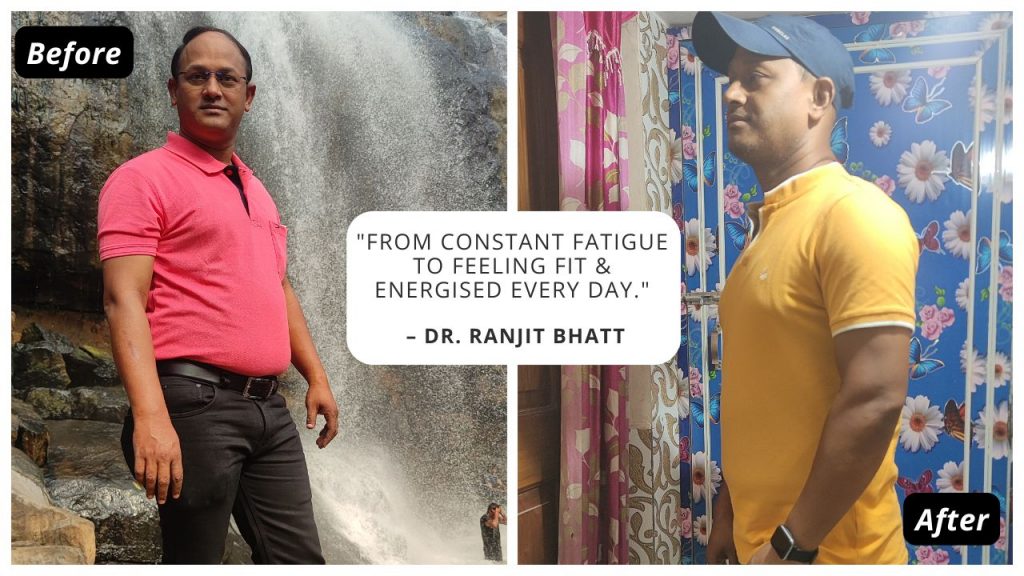
From Burnout to Balance: How Dr. Ranjit Reclaimed His Health

Dr Ranjit Bhatt has spent years tending to others. A practising doctor in Odisha, his days were packed with patients, surgeries, and emergencies. From the outside, it looked like a life lived in service. But on the inside, something wasn’t right.



“I had no control over my schedule. I’d sleep late, eat at odd hours, snack on high-calorie junk, and barely get any movement except walking up and down the hospital corridors,” he recalls.

The work never stopped. But his body did. At first, it was just fatigue. Then one day, he fainted in the operating theatre. “Not once. Twice, actually. Inside the operating theatre. That moment scared me. It made me stop and ask myself, ‘If I collapse, who’s going to help my patients?’ That thought haunted me.”

That was the turning point. Life had been trying to send him signals. Now it had finally yelled loud enough for him to listen.

A Drawer. A Watch. A Turning Point.

Around the same time in 2019, a Pharma company rep who had visited him gave him a GOQii watch. At first, it sat in a drawer. For six to 8 months, he didn’t use it. “I thought it was just another gadget. I didn’t think it would fit into my routine, or even help, to be honest,” he says with a shrug.

But curiosity eventually won. And, he decided to try it. He wore the band, downloaded the app, and started exploring. To his surprise, it wasn’t just a step counter. It helped him log his meals, track his water intake, monitor his sleep, and reflect on his daily habits. “Suddenly, I had a dashboard of my life,” he says. “I saw how little I moved, how poorly I slept.

All this while, he did not use the coach service. “I was losing weight, but I did not take note of my diet and exercise. I was not sure how to interpret the data that was on my app. I was still missing one piece, human guidance.” Bhatt says.

This is when he activated the code and availed of the coach service since 2021. “At first, I just posted what I ate. But when I started with the coach service, my coach responded to every post. She started giving me small tips. No lectures. Just practical nudges,” he says.

The Power of Coaching

The coach started with his diet. She brought about minor changes by cutting down on processed carbs, added more fibre, and encouraged him to eat at consistent times. These changes help him reduce bloating and improve his digestion. Then came the movement. Nothing fancy. Just walking for 30 minutes a day.

“It sounds simple, right? But when someone walks that journey with you, holds you accountable, and celebrates small wins, that’s when things change.”

And change they did. Over time, he dropped from 82 kilos to 68. His waist trimmed down from 34 inches to 30. His lipid profile tells the same story. Back in September 2023, his total cholesterol was sitting at 228. Today, it’s down to 189. His LDL has fallen from 151 to 131, and his triglycerides have dropped from 160 to 129.

These changes aren’t just numbers. His GOQii Health Risk Assessment score climbed from 75 to 86. His skin started glowing, his energy levels soared, and that constant fatigue? Gone.

“I sleep well now. I wake up with clarity. I no longer crash during the day. Even my patients have noticed me. Some even ask me what I’m doing differently.”

His family sees it too. His friends joke that he looks like he’s turned the clock back.

“Some of them say I look 16,” he laughs. “I tell them, if I can do it, anyone can. You just need to start.”

More Than a Transformation

Now, after seven consistent years with GOQii, Dr Ranjit isn’t just healthier, he’s a different man altogether. One who understands the value of self-care not as an indulgence, but as a responsibility.

“As doctors, we often put ourselves last. But we forget, we are the instrument. If we don’t keep ourselves sharp and well, how can we help others?”

This is more than a fitness transformation. It’s a reminder that change doesn’t always come from grand resolutions. Sometimes, it begins with listening to your own body. Sometimes, it’s as simple as saying yes to something you once ignored.

And sometimes, like in Dr Ranjit’s case, it’s a quiet moment of collapse that forces you to stand up again, this time, stronger and more mindful than ever.

Does the journey of Dr Ranjit Bhatt inspire you to begin yours? Speak to a GOQii Coach by subscribing to Personalised Health Coaching here.

For more inspiring stories, check out Healthy Reads.

#BeTheForce 

Disclaimer: The information provided in this blog is for general awareness and educational purposes only. It is not intended to replace professional medical advice, diagnosis, or treatment. Always consult a qualified healthcare provider for personalised medical guidance or concerns related to your health. Images shown are for representation purposes only and may not depict the exact recommendations or outcomes.

July 9, 2026 By Pallavi Barnwal Leave a Comment

The Joy of Complaining: How to Use the “Complaint Sandwich” for Relationship Success

The joy of complainingThe Big Question: Why have we been conditioned to believe that happy couples never fight or complain, when holding back our dissatisfactions is actually the quickest way to poison a relationship?

Many of us grew up under the heavy misconception that a healthy relationship is entirely devoid of friction, disagreements, or complaints. For years, you might have carried the guilt of speaking up, blaming yourself for not compromising or adjusting enough whenever differences arose. While exploding over minor issues is harmful, believing that you should never complain is an unrealistic ideal.

In reality, complaining is a vital emotional safety valve, a form of catharsis, and an essential survival tool for navigating the uneven phases of love. The secret to a lasting bond isn’t silence—it is mastering the psychological art of complaining effectively.

The Vicious Cycle of Silent Resentment

When we withhold our dissatisfactions out of fear of starting an argument, the issues don’t simply vanish. Instead, they ferment into deep-seated frustration and toxic resentment.

  • The Destructive Autopilot Loop: Hold Back Discontent ⇒ Accumulate Resentment ⇒ Explode Harshly ⇒ Partner Defensiveness ⇒ Loop Repeats.
  • The Mindful Alternative Loop: Address Issues Early ⇒ Lower Partner Defensiveness ⇒ Clear Communication ⇒ Intimacy & Resolution.

Eventually, the emotional pressure builds up until we inevitably explode, blurting out our grievances in harsh, accusatory tones that our partner cannot constructively absorb. This triggers immediate defensiveness and anger, which reinforces our belief that complaining is dangerous. We retreat back into silence, starting the destructive cycle all over again. Breaking this cycle requires a shift in mindset: you can be a deeply loving, accountable partner while still speaking up, blowing off steam, and addressing real issues.

The “Complaint Sandwich” Method

To express a grievance without triggering a defensive war, you can structure your conversation using a classic behavioral psychology tool called the Complaint Sandwich. Think of it as preparing a delicious, balanced meal for your partner’s emotional digestion.

  1. The Top Slice: The Ear Opener (Positive Statement)

The first layer is a positive validation designed to lower your partner’s natural psychological defenses. By starting with appreciation or reassurance, you signal that you are not launching a total character assault, allowing them to remain open and receptive to your words.

  1. The Filling: The Core Grievance (Lean & Singular)

The filling of your sandwich is the actual issue you need to address. To keep it constructive, the filling must be lean: restrict it to a single incident and a single complaint. Bringing up a mountain of past mistakes will immediately overwhelm your partner and stall any chance of a resolution.

  1. The Bottom Slice: The Digestive (Positive Reassurance)

The final layer is a forward-looking, positive statement that affirms the value of the relationship. The goal of the Digestive is to motivate your partner to respond productively by reassuring them that the conversation is meant to help you grow closer and improve your shared future.

5 Common Mistakes That Ruin a Good Complaint

Even with the right structure, small behavioral missteps can derail your message. Avoid these common communication traps to ensure your voice is truly heard:

  1. Forgetting Your True Objective

We often complain strictly out of immediate irritation without stopping to think about what we actually want to solve. Before you speak, take five deep breaths, pause, and clarify your ultimate goal. Figure out exactly what actionable outcome will make you feel satisfied and resolved.

  1. Letting Anger Distract from the Message

It is completely natural to feel hurt or frustrated, but letting raw anger dictate your delivery ruins your effectiveness. When your voice gets too loud, your tone turns harsh, or you resort to personal accusations, your partner’s brain shifts into a fight-or-flight survival response. They focus entirely on your anger rather than the actual problem, leading to a counter-argument instead of a solution.

  1. Piling on Multiple Complaints at Once

Because hearing criticism makes people naturally defensive, you must package your problems in digestible amounts. It is far more effective to voice a single issue and get a clear result than to air a laundry list of accumulated grievances and get nowhere. Resist the temptation to unload all your historical frustrations at once.

  1. Venting to the Wrong Person

Surprisingly, we rarely voice our core complaints to the person who actually possesses the power to fix them. Instead, we vent to friends, family, or coworkers about our partner. While temporary venting offers quick relief, it leaves the primary issue completely unchanged. If an issue genuinely compromises your peace of mind, you owe it to your relationship to address it directly with your partner.

  1. Turning Specific Complaints into Broad Criticisms

Keep your statements highly specific to the immediate situation rather than generalizing them into a permanent character flaw.

  • The Situational Complaint: “You forgot to call my sister this evening.” (Easy to hear, easy to fix).
  • The Character Criticism: “You never give any importance to my feelings.” (An absolute attack that creates immediate emotional distance).

The Relationship Communication Matrix

The Destructive Communication Style The Psychological Damage The Strategic Solution
Silent Martyrdom Creates emotional distance and explosive resentment. The Ear Opener: Open communication early using positive validation.
Character Criticism Attacks the partner’s identity, causing deep defensiveness. Specific Situational Phrasing: Describe the concrete event, not their personality.
Grievance Kitchen-Sinking Overwhelms the recipient with multiple historical issues at once. The Lean Filling: Focus strictly on one single incident per conversation.

Remember: Create Space for Your Partner to Vent

Just as you need a valve release, you must also allow your partner the safe emotional space to vent aloud without immediately jumping in to correct them or argue with logic. Often, venting is simply an expression of temporary loss, daily exhaustion, or long-term longing.

When your partner is blowing off steam, they usually know they cannot control the external situation; venting simply gives them the comfort of having a say. Practice the art of listening quietly, letting the wave pass, and offering empathy instead of a counter-argument.

A truly vibrant, lasting relationship isn’t built on the illusion of absolute, quiet perfection; it is forged through the messy, honest art of conflict resolution. Complaining isn’t the enemy of love—mindless delivery and toxic silence are. By transforming your grievances into a well-crafted Complaint Sandwich, staying laser-focused on a single situational issue, and mastering your emotional delivery, you turn difficult conversations into profound opportunities for deeper trust and intimacy. Express yourself cleanly, listen deeply, and let your relationship heal!

Pro Tip: Cultivating emotional resilience and maintaining behavioral mindfulness is much easier when you track your lifestyle habits consistently. Use the GOQii App to log your daily stress triggers, record your sleep quality, and monitor your physical activity trends. You can seamlessly share this holistic lifestyle overview with your GOQii Personalised Health Coach to receive customized stress-management techniques, behavioral tools, and expert accountability coaching to support your mental, emotional, and physical well-being!

Frequently Asked Questions (FAQs)

  1. Why is holding back complaints considered toxic for long-term relationships?

When you routinely suppress your dissatisfactions to avoid an immediate argument, the underlying emotional issues do not disappear. Instead, they transform into low-grade, chronic resentment that erodes your emotional intimacy. Over time, this accumulated frustration alters how you view your partner, leading to sudden, overly harsh outbursts over minor details.

  1. How exactly does the “Complaint Sandwich” method prevent arguments?

The framework functions by actively managing your partner’s defensive reflex. By placing the core grievance between two positive, affirming statements, you reassure your partner that they are valued and secure. This emotional safety buffer allows their brain to process the core complaint as a constructive request for growth rather than a threatening personal attack.

  1. What is the structural difference between a specific complaint and a character criticism?

A specific complaint focuses entirely on a singular, concrete situation or action that can be easily addressed and corrected (e.g., “The kitchen counter wasn’t wiped down tonight”). A character criticism generalizes the mistake into an absolute judgment on the person’s identity or intent (e.g., “You are always lazy and never help me”), which automatically triggers a defensive war.

  1. What should I do if my partner becomes defensive even when I use the Complaint Sandwich?

If defensiveness still arises, resist the urge to match their anger or bring up past counter-arguments. Take a deep breath, maintain a calm tone, and gently bring the focus back to your digestive statement. Reassure them by saying, “I’m not attacking you; I’m bringing this up because I love our relationship and want us to find an easy solution together.”

#BeTheForce

Disclaimer: This article is intended for educational, informational, and general relationship awareness purposes only. It is not intended to replace professional mental health counseling, clinical psychology interventions, or personalized couples therapy. Always consult a licensed relationship counselor or mental health specialist regarding severe relationship distress or chronic emotional well-being concerns.

  • « Previous Page
  • 1
  • 2
  • 3
  • 4
  • …
  • 10
  • Next Page »

Search

Recent Posts

  • Immunity-Boosting Kadhas: Why Natural Defense Matters During the Monsoon
  • Healthy Eating: Crispy Monsoon Corn Tikkis
  • Antenatal Exercises: Your Guide to a Fit and Healthy Pregnancy
  • Managing Type 2 Diabetes: Dietary Choices and Lifestyle Adjustments for Better Blood Sugar Control
  • Hormones and Longevity: Why Midlife Health Depends on Hormonal Balance

Stay Updated

Archives

  • July 2026 (22)
  • June 2026 (22)
  • May 2026 (20)
  • April 2026 (24)
  • March 2026 (18)
  • February 2026 (14)
  • January 2026 (14)
  • December 2025 (19)
  • November 2025 (15)
  • October 2025 (20)
  • September 2025 (6)
  • August 2025 (6)
  • July 2025 (10)
  • June 2025 (18)
  • May 2025 (16)
  • April 2025 (22)
  • March 2025 (26)
  • February 2025 (21)
  • January 2025 (25)
  • December 2024 (22)
  • November 2024 (22)
  • October 2024 (20)
  • September 2024 (22)
  • August 2024 (28)
  • July 2024 (16)
  • June 2024 (23)
  • May 2024 (26)
  • April 2024 (27)
  • March 2024 (27)
  • February 2024 (23)
  • January 2024 (21)
  • December 2023 (14)
  • November 2023 (10)
  • October 2023 (19)
  • September 2023 (22)
  • August 2023 (16)
  • July 2023 (18)
  • June 2023 (21)
  • May 2023 (20)
  • April 2023 (19)
  • March 2023 (23)
  • February 2023 (19)
  • January 2023 (15)
  • December 2022 (11)
  • November 2022 (15)
  • October 2022 (15)
  • September 2022 (12)
  • August 2022 (9)
  • July 2022 (17)
  • June 2022 (11)
  • May 2022 (10)
  • April 2022 (6)
  • March 2022 (6)
  • February 2022 (13)
  • January 2022 (11)
  • December 2021 (7)
  • November 2021 (3)
  • October 2021 (6)
  • September 2021 (3)
  • August 2021 (8)
  • July 2021 (7)
  • June 2021 (15)
  • May 2021 (16)
  • April 2021 (10)
  • March 2021 (7)
  • February 2021 (4)
  • January 2021 (4)
  • December 2020 (3)
  • November 2020 (4)
  • October 2020 (10)
  • September 2020 (3)
  • August 2020 (3)
  • July 2020 (2)
  • June 2020 (4)
  • May 2020 (10)
  • April 2020 (12)
  • March 2020 (10)
  • February 2020 (4)
  • January 2020 (4)
  • December 2019 (3)
  • November 2019 (7)
  • October 2019 (5)
  • September 2019 (4)
  • August 2019 (9)
  • July 2019 (9)
  • June 2019 (11)
  • May 2019 (4)
  • April 2019 (8)
  • March 2019 (8)
  • February 2019 (9)
  • January 2019 (8)
  • December 2018 (9)
  • November 2018 (3)
  • October 2018 (3)
  • September 2018 (5)
  • August 2018 (10)
  • July 2018 (6)
  • June 2018 (13)
  • May 2018 (8)
  • April 2018 (18)
  • March 2018 (9)
  • February 2018 (8)
  • January 2018 (15)
  • December 2017 (12)
  • November 2017 (19)
  • October 2017 (13)
  • September 2017 (15)
  • August 2017 (4)
  • July 2017 (8)
  • June 2017 (7)
  • May 2017 (6)
  • April 2017 (8)
  • March 2017 (6)
  • February 2017 (7)
  • January 2017 (9)
  • December 2016 (10)
  • November 2016 (7)
  • October 2016 (7)
  • September 2016 (7)
  • August 2016 (11)
  • July 2016 (9)
  • June 2016 (9)
  • May 2016 (12)
  • April 2016 (17)
  • March 2016 (17)
  • February 2016 (8)
  • January 2016 (6)
  • December 2015 (2)
  • November 2015 (9)
  • October 2015 (7)
  • September 2015 (9)
  • August 2015 (11)
  • July 2015 (9)
  • June 2015 (11)
  • May 2015 (9)
  • April 2015 (13)
  • March 2015 (8)
  • February 2015 (5)
  • January 2015 (12)
  • December 2014 (14)
  • November 2014 (11)
  • October 2014 (6)
  • September 2014 (13)
  • August 2014 (12)
  • July 2014 (6)
  • June 2014 (2)
  • May 2014 (7)
  • April 2014 (4)

From Burnout to Balance: How Dr. Ranjit Reclaimed His Health

Dr Ranjit Bhatt has spent years tending to others. A practising doctor in Odisha, his days were packed with patients, surgeries, and emergencies. From the outside, it looked like a life lived in service. But on the inside, something wasn’t right. “I had no … [Read More...]

From Shimla’s Slopes to Chandigarh’s Sidewalks: Surinder Kaur Bhalla’s Journey from Chaos to Control

Some journeys start with a plan. Others begin with a stumble literally. Surinder Bhalla, a government professional, born and raised in the scenic hill town of Shimla, had always lived a life of movement. “In Shimla, you walked everywhere,” she reflects. “Walking was never an exercise. It was just life.” But after shifting to Chandigarh, […]

“I’ve Challenged Myself to Live 100 Years” – The Story of Chandubhai Savani’s Second Chance at Life

At 67, most people start slowing down. Not Chandubhai Savani. A resident of Surat, Chandubhai, thought life was on track. “My life was going well till I had my bypass surgery,” he says. That surgery, back in 2021, was a wake-up call.  Medication was routine, but exercise wasn’t. His diet? What he calls ‘normal.’ “I […]

Ananda Mukherjee Health Story

From Terminal Illness To Complete Wellness! Ananda Mukherjee Health Story

As we observe World Cancer Day under the powerful theme ‘United by Unique’ (2025-2027)**, we are reminded that every individual’s journey with cancer is distinct, yet united by shared resilience, hope, and the collective fight against this disease. This theme places people at the centre of care and their stories at the heart of the […]

  • HOME
  • HEALTHY LIVING
  • FITNESS
  • HEALTHY RECIPES
  • USER STORIES
  • KARMA
  • BUY GOQii

Copyright ©2016 GOQii