GOQii

Blog

  • HOME
  • HEALTHY LIVING
  • FITNESS
  • HEALTHY RECIPES
  • USER STORIES
  • KARMA
  • BUY GOQii

Search Results for: portion control

August 20, 2014 By Luke Coutinho Leave a Comment

Use this tool to eat Right and Lose Weight

portion-control
The concept of weight gain and weight loss will always remain the same, irrespective of any new theories on molecular science and diet, blood group diets, fad exercise programs, restrictive diets etc.

‘ Your body will only use how much it needs of the food you eat, for it’s functions Anything extra will get stored away, leading to possible fat gain’.

If you are very hungry, and your only option is a slice of pizza, you should eat it. Your body will break it down for the energy it needs.

What it may not be able to do is break down a couple of slices of pizza, with a portion of pasta and a tiramisu. It may if you’ve just burnt like 1500 cals and your body is craving replenishment of energy.

It is all about controlling your food portions. How much is enough for your body?

Only you can tell by being aware. Eating 2-3 rotis at night or at lunch is probably out of habit. It’s what you have done since you were growing up. But the situations are different. You ate more when you were probably more active and younger with a quicker metabolism.

Things change. Everything changes, including the way your body works and breaks down food, year on year.

What if your body really can do with just 1 roti instead of 3?

What if your body can do with a small scoop of ice cream instead of a large or super-sized portion?

What if you really don’t need 6 small meals in a day?

What if you could still enjoy your dessert or piece of cake, but share it, so you don’t get into a deprivation mode?

Most humans eat more than their bodies require. Especially with the massive choice of culinary delights available, the eye appealing desserts, the way food is plated etc…it works on our minds to a level that we crave it. And that’s OK. I love good food too, who doesn’t.

The problem is, we eat too much of it and there reaches a point when the body does not know what to do with the crazy amounts of food we eat, so when you see your belly/tummy, mid riff, waist starting to expand, that’s your body telling you, ‘ you are eating too much’  OR

‘ Your not exercising sufficiently, your not using all this excess energy that you are feeding me ‘

And what takes months or even years to develop into abdominal fat, as humans we always want things to happen for us quickly. Instant gratification, Instant results, and then we get crazy and desperate to lose that tummy, choosing options that can create more harm than good for the other parts of our body.

We get into intensive exercises, and damage our knees and backs..we get on crazy diets and lose a little weight along with bone density, and key nutrients.

PORTION CONTROL is difficult, yet the easiest way to lose weight, keep it off and moreover, it’s a lifestyle change, something that can change this whole obesity epidemic. We all struggle with food. This may be the solution to eating our favorite food, yet controlling the portions and being fair to our bodies.

When my friend Vishal Gondal brought back a portion control plate from the U.S  to show the entire GOQii team, I had a look at it and realized, this is what India needs.

Such a simple tool that will teach people how to eat, How much to eat without feeling deprived.

It can teach children all about the right portions that they should serve themselves, and I envision families using this portion control plate to serve themselves and build a culture of eating clean and right.

I used one for a month, serving myself everyday using this portion plate and at first I thought the quantity was too less, but quickly figured I was eating more than I needed.  I used a 1 cup portion serving for a few days and then cut back to a half cup serving at dinner.

Like all habits, it took a few days getting used to, but all I can say now is, I am eating lesser for sure and I don’t feel hungry after doing this.

It beats all fat loss pills, which anyway never work. This teaches you to eat the right way and anything that works towards making a shift in your lifestyle, is worth it, is sustainable and is the right way to go.

Once you get into the habit of controlling your portions and knowing how much your body really needs, you then begin to automatically apply the same when you eat out.

You can try this simple yet effective tool to change the way you eat and control or lose weight.

Moreover, using this will ensure you eat a balanced meal of carbs, protein, fats and veggies.

Get it at: http://purenutrition.co.in/meal-measure.html
October 24, 2026 By Urvi Gohil Leave a Comment

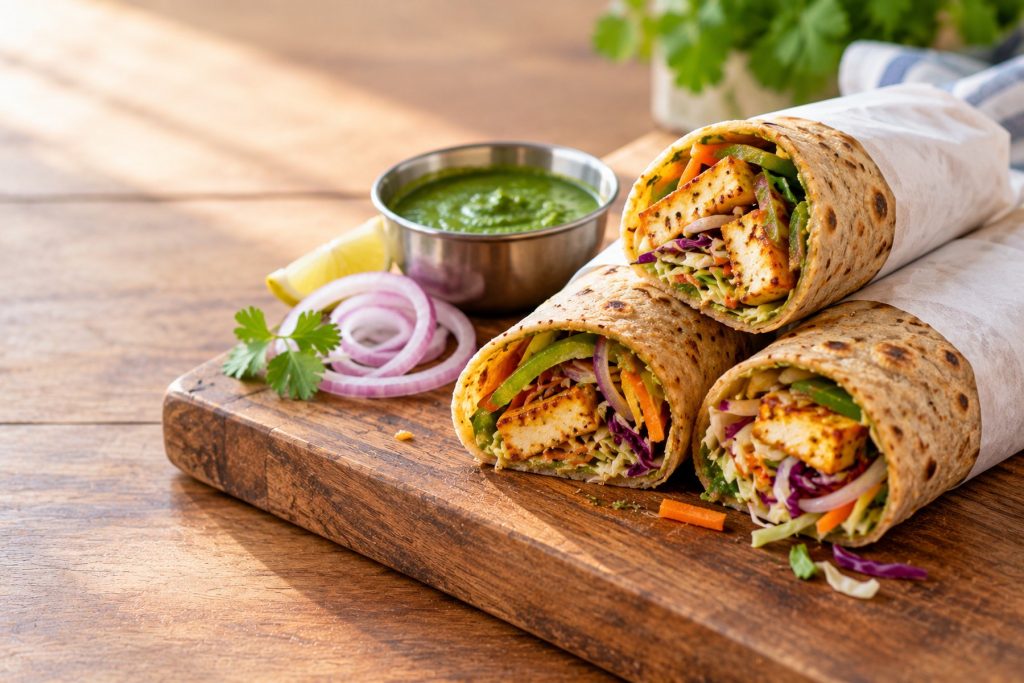
Healthy Eating: Vegetable and Paneer Kathi Roll

The kathi roll started life as Kolkata street food: a flaky, often fried paratha wrapped around skewered fillings. This home version keeps the flavour and the fun, but swaps the paratha for whole wheat chapatis (leftovers work perfectly) and fills them with a colourful mix of vegetables and spiced paneer. It takes about 25 minutes, packs well for lunch, and is the kind of meal both children and adults happily eat.
At a glance

  • Makes: 3 rolls (serves 3 as a light meal, or 2 with a side salad)
  • Time: about 10 minutes to prep and 15 minutes to cook
  • Why it works: whole wheat chapati and vegetables bring fibre; paneer and curd bring protein and calcium.
  • Use up leftovers safely: chapatis that were refrigerated within 2 hours and are a day or two old are ideal. Warm them on a tawa so they fold without cracking.
  • Keep the salt in check: the chutney and chaat masala are already salty, so taste before adding more.
  • Easy swaps: tofu for a dairy-free roll, egg for a classic Kolkata-style roll, or ragi or jowar rotis for a millet twist.

Vegetable and paneer kathi roll recipe

  • Makes: 3 rolls | Prep: 10 minutes | Cook: 15 minutes

    Ingredients

    For the filling

    • 150 g paneer, cut into thin strips or crumbled (about 1 cup)
    • 1 medium onion, thinly sliced (keep a quarter aside, raw, for topping)
    • 1 medium carrot, cut into thin strips
    • 1 medium capsicum, thinly sliced
    • 1 cup shredded cabbage
    • 1 medium tomato, deseeded and sliced
    • 2 tsp oil
    • 1 tsp ginger-garlic paste
    • ½ tsp turmeric (haldi)
    • ½–1 tsp red chilli powder, to taste
    • ½ tsp garam masala
    • 1 tsp roasted cumin (jeera) powder
    • Salt, to taste (go easy: see the tip below)
    • A squeeze of lemon

    For the spread and assembly

    • 3 whole wheat chapatis (leftover or fresh)
    • 3 tbsp mint-coriander chutney
    • 3 tbsp thick curd (hung curd works best)
    • ½ tsp chaat masala

    Method

    1. Make the spread. Mix the chutney and curd in a small bowl. Don’t add salt yet; the chutney usually has enough.
    2. Cook the vegetables. Heat the oil in a wide pan on medium heat. Sauté the ginger-garlic paste for 30 seconds, then add the onion and cook for 2–3 minutes until soft. Add the carrot, capsicum and cabbage and stir-fry for 3–4 minutes, so they soften but keep some crunch.
    3. Add the spices and paneer. Stir in the tomato, turmeric, chilli powder, garam masala and cumin powder. Cook for a minute, then add the paneer and toss gently for 2–3 minutes until heated through. Taste, add a little salt only if needed, and finish with a squeeze of lemon.
    4. Warm the chapatis. Heat each chapati on a hot tawa for 20–30 seconds on each side so it’s soft and pliable.
    5. Spread a third of the chutney-curd mix over each chapati. Spoon a third of the filling in a line slightly off-centre, top with a few raw onion slices and a pinch of chaat masala.
    6. Roll and serve. Fold in the bottom edge, then roll tightly. Wrap the lower half in butter paper or foil to hold it together. Serve warm, with extra chutney or a salad on the side.

What makes this a healthier kathi roll

Whole wheat instead of a fried paratha

Street-style kathi rolls are usually made with a layered paratha cooked in plenty of oil, often with maida. Using a whole wheat chapati keeps the fibre of the whole grain and cuts out most of the added fat, while still giving you a soft, foldable wrap.

A good dose of vegetables

Each roll carries roughly half a cup of cooked vegetables, plus raw onion. Carrots provide beta-carotene, which the body converts to vitamin A; capsicum, tomato and lemon add vitamin C; and cabbage and onion add fibre. Cooking the vegetables only until tender-crisp, and adding raw onion and lemon at the end, helps keep more of the vitamin C, which is sensitive to heat.

Protein from paneer and curd

Paneer is one of the most useful vegetarian protein sources in Indian kitchens, with about 18–20 g of protein per 100 g, based on Indian food composition data. The 150 g in this recipe gives each roll around 9 g of protein from paneer alone, with a little more from the curd and chapati. Protein and fibre together help make a meal more filling than a plain chapati or a vegetable wrap on its own.

Paneer is also a good source of calcium, but full-fat paneer is high in saturated fat, at around 13–15 g per 100 g. That’s no reason to avoid it, but it’s worth keeping the portion moderate and choosing low-fat paneer, made from toned milk, if you’re watching your cholesterol or weight.

Watch the salt

Indians eat on average about 11 g of salt a day, more than twice the WHO limit of 5 g. In this recipe, the chutney, chaat masala and any salt in the filling all add up, so we’ve kept added salt optional. Taste first and add a pinch only if it’s needed.

If you have diabetes

The chapati is the main source of carbohydrate here; the vegetables, paneer and curd around it slow things down and make it a more balanced meal than a roll made with maida or potato filling. One roll with a salad or a bowl of dal is a sensible portion for most people, but needs vary, so check with your doctor or dietitian how it fits your plan.

Swaps and variations

  • Dairy-free: use firm tofu instead of paneer, and a thick plant-based yoghurt or extra chutney instead of curd.
  • Egg kathi roll: cook a thin omelette on the tawa, lay the chapati on top for a few seconds so it sticks, then fill and roll. This is closer to the classic Kolkata egg roll.
  • More plant protein: add a handful of boiled chana, rajma or steamed moong sprouts to the filling. Pulses add both protein and fibre; read more in why pulses are good for you.
  • Millet twist: use ragi or jowar rotis. They’re more fragile, so warm them gently and roll loosely.
  • Extra greens: stir a handful of chopped spinach or methi into the filling at the end.
  • Lighter paneer: use low-fat paneer, or swap half the paneer for crumbled tofu.

Leftover chapatis and lunchboxes: keep it safe

  • Leftover chapatis: cool them and put them in the fridge within 2 hours of cooking, as food safety authorities advise for leftovers, and use them within a day or two, while they’re still soft and fresh. Warm them on a tawa before rolling.
  • For the lunchbox: let the filling cool, then pack it separately from the chapatis and spread, and roll at lunchtime to avoid a soggy wrap. Paneer and curd are perishable, so use an insulated box or an ice pack if the lunch will sit for more than a couple of hours, especially in warm weather. Our meal-prep guide has more ideas for packing healthy lunches.
  • Making ahead: the filling keeps in the fridge for a day. Reheat it until it’s steaming hot all the way through.

Who should take care

  • Milk allergy: paneer and curd are dairy, so use the tofu swap.
  • Young children: cut the roll into smaller pieces and go easy on the chilli.
  • High blood pressure or kidney disease: keep the salt, chaat masala and salty chutney to a minimum, and follow any diet advice from your doctor.
  • Gluten: whole wheat chapatis contain gluten. For coeliac disease, use rotis made from certified gluten-free millet flour.

The bottom line

A kathi roll doesn’t have to be a once-in-a-while street-food treat. Made with whole wheat chapatis, plenty of vegetables, a sensible amount of paneer and a light hand with the salt, it’s a balanced, filling meal that turns yesterday’s chapatis into today’s lunch.

Pro Tip: Use the GOQii App to log your meals and see whether you’re getting enough protein and vegetables across the day. Your GOQii Personalised Health Coach can help you adapt family favourites like this one to your goals, from weight management to blood sugar control.

Frequently asked questions

Is a paneer kathi roll healthy?

It can be. A version made with a whole wheat chapati, plenty of vegetables, a moderate amount of paneer and little added oil and salt is a balanced meal with fibre, protein and calcium. Street-style rolls made with fried, maida-based parathas and heavy sauces are much higher in fat and salt.

How much protein is in a paneer kathi roll?

Paneer has about 18–20 g of protein per 100 g. In this recipe, 150 g of paneer across three rolls gives each roll around 9 g of protein from paneer, plus a little more from the curd and chapati. Adding chana or sprouts to the filling increases it further.

Can I use leftover chapatis?

Yes, leftover chapatis work well. Refrigerate them within 2 hours of cooking, use them within a day or two, and warm them on a tawa before rolling so they’re soft and don’t crack.

Is a kathi roll good for weight loss?

A homemade roll like this one can fit into a weight-loss plan, as fibre and protein help make a meal filling. Keep to one or two rolls, choose low-fat paneer if you like, and go easy on the oil and creamy sauces.

Can people with diabetes eat a kathi roll?

Most people with diabetes can include a roll like this in a balanced meal plan. The chapati is the main carbohydrate, so keep to one roll with a salad or dal, and check with your doctor or dietitian how it fits your plan.

How do I keep a kathi roll from getting soggy in a lunchbox?

Deseed the tomato, let the filling cool completely, and pack the filling, spread and chapatis separately. Roll them just before eating. Use an insulated box or ice pack, as paneer and curd are perishable.

What can I use instead of paneer?

Firm tofu works well for a dairy-free roll. You can also use eggs, boiled chana or rajma, steamed sprouts, or a mix of paneer and tofu.

#BeTheForce

Disclaimer: The information provided in this blog is for general awareness and educational purposes only. It is not intended to replace professional medical advice, diagnosis, or treatment. Always consult a qualified healthcare provider for personalised medical guidance or concerns related to your health.

October 22, 2026 By Soni Thakur 11 Comments

7 Reasons Why Pulses Are Good For You!

Pulses are one of the healthiest, cheapest and most versatile foods in the Indian kitchen. A daily bowl of dal, chana or rajma adds protein, fibre and key minerals to your diet, and research links regular pulse eating to lower cholesterol and better blood sugar control.

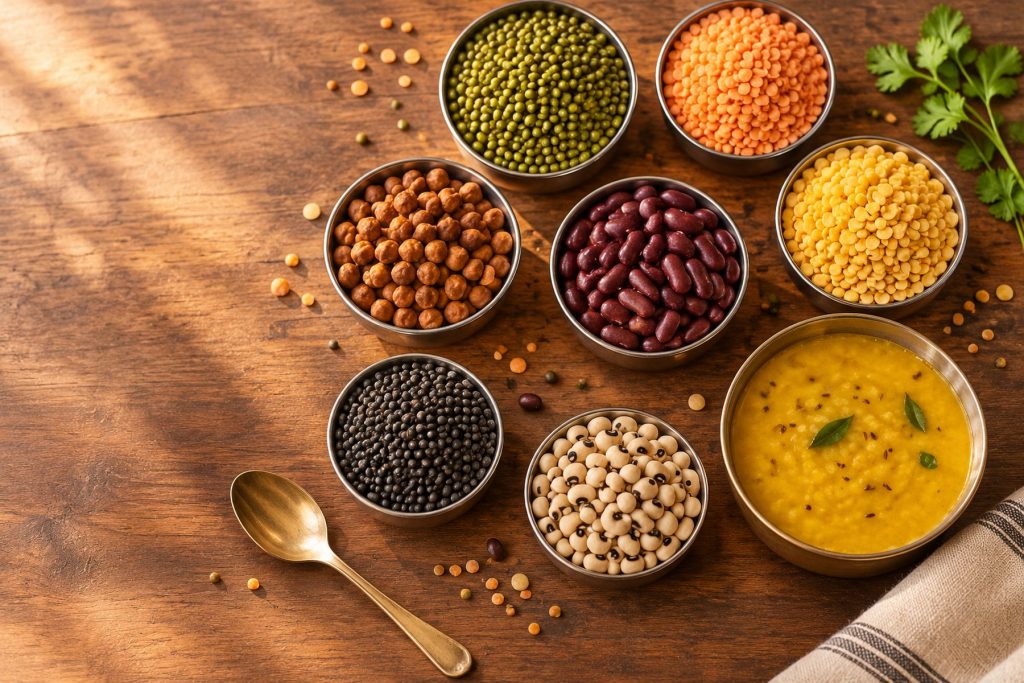
Pulses are the dried, edible seeds of legume plants: lentils (masoor), pigeon peas (toor or arhar), chickpeas (chana), mung beans (moong), black gram (urad), kidney beans (rajma) and cowpeas (lobia), among others. Most Indian homes already eat them every day. Here are seven reasons to keep them on your plate, and to eat a little more.

Pulses at a glance

  • Protein-rich: pulses contain about 20–25% protein, two to three times more than cereals.
  • Good for your heart: about one serving a day lowered LDL (“bad”) cholesterol by around 5% in trials.
  • Steadier blood sugar: in people with diabetes, diets richer in pulses modestly improved long-term blood sugar control.
  • Better together: dal with rice or roti gives better-quality protein than either alone.
  • Cheap, long-lasting and kind to the soil: dried pulses keep for months and need little fertiliser to grow.

7 reasons pulses are good for you

  1. 1. They’re one of the best sources of plant protein

    Pulses contain about 20–25% protein, two to three times more than cereals, according to the UN Food and Agriculture Organization (FAO). For the many Indians who eat little or no meat, dal, chana and rajma are often the main source of protein in the day.

    That makes them useful at every age: for growing children, for women’s higher iron and folate needs, especially in pregnancy, and for older adults who need enough protein to protect their muscles.

    2. They’re packed with fibre and minerals

    Pulses are a good source of fibre and of iron, magnesium, potassium, phosphorus, zinc and B vitamins such as folate. Fibre keeps digestion regular and helps you feel full for longer, which can make it easier to manage your weight.

    For more on how fibre supports digestion and heart health, see our guide to high-fibre foods.

    Tip: eat iron-rich pulses with a source of vitamin C, such as lemon on your chana or tomatoes in your dal, to help your body absorb the iron.

    3. They’re good for your heart

    Pulses are naturally low in fat and contain almost no saturated fat. A review of 26 trials found that eating about one serving of pulses a day (around 130 g) lowered LDL (“bad”) cholesterol by about 5% compared with similar diets without pulses. That’s a modest but meaningful change from a simple food swap.

    To keep the benefit, watch the extras: a heavy tadka of ghee, or cream in dal makhani, adds the saturated fat that pulses themselves don’t have.

    4. They help keep blood sugar steady

    Pulses release their energy slowly. In a review of 41 trials, diets that included more pulses gave a modest improvement in long-term blood sugar control, lowering HbA1c by about 0.5%. In a three-month trial in 121 adults with type 2 diabetes, adding about one cup of legumes a day lowered HbA1c by 0.5% and systolic blood pressure by 4.5 mm Hg more than a wheat-fibre diet.

    Pulses aren’t a treatment for diabetes, but they are a smart swap for some of the refined rice, maida or sweets on your plate. Keep taking any medicines you’ve been prescribed.

    5. They make your grains more nutritious

    Pulses and cereals have different strengths in their protein. Eaten together, as in dal-chawal, rajma-rice, khichdi or idli-sambar, the protein quality of the meal improves. Traditional Indian meals got this right long before nutrition science explained why.

    6. They’re affordable and keep for months

    Pulses are among the cheapest sources of protein you can buy. Because they are dried seeds, they store well for months in an airtight container, so there is little waste. Keep a few different kinds in the kitchen, and you always have a quick, nourishing meal to hand.

    7. They’re good for the planet

    Pulse plants work with soil bacteria to take nitrogen from the air and turn it into a form plants can use. This improves soil fertility and reduces the need for synthetic fertiliser, which takes a lot of energy to make. Choosing pulses more often is a small, practical way to eat more sustainably.

Common Indian pulses and how to use them

Eating a mix of pulses through the week gives you a wider range of nutrients and keeps meals interesting.

Pulse Also called Easy ways to eat it Cooking note
Moong (whole or split) Green gram Moong dal, khichdi, chilla, sprouts Quick to cook and usually the easiest to digest
Masoor Red lentil Masoor dal, soups Split masoor cooks in 15–20 minutes without soaking
Toor Arhar, pigeon pea Everyday dal, sambar A staple dal across much of India
Chana Bengal gram, chickpea Chole, roasted chana, sundal, besan chilla Soak whole chana overnight before cooking
Rajma Kidney beans Rajma-chawal, salads, wraps Soak overnight and boil until fully soft: undercooked kidney beans can make you ill
Urad Black gram Idli, dosa, dal makhani Fermented batters (idli, dosa) are gentle on the stomach
Lobia Cowpea, black-eyed pea Lobia curry, salads Soak for a few hours to cut cooking time

How much should you eat?

The ICMR–National Institute of Nutrition’s My Plate for the Day suggests about 85 g of pulses a day (raw weight) for an adult eating around 2,000 calories, with eggs, fish or meat able to replace part of that. In practice, that is roughly one to two bowls of dal, chana or rajma spread across the day.

Easy ways to eat more pulses

  • Make dal a daily habit at lunch or dinner, and make it a little thicker than usual.
  • Start the day with pulses: moong dal chilla, besan chilla, idli, dosa or a sprouts salad.
  • Snack on them: roasted chana, a bowl of sundal, or other quick, healthy snacks.
  • Pack them for work: rajma or chole bowls and sprouts chaat keep well, as our meal-prep guide
  • Add them to what you already cook: a handful of chana in pulao, moong in upma, or lobia in a vegetable curry.

Gas and bloating: how to make pulses easier to digest

The most common reason people avoid pulses is wind. Pulses contain fermentable carbohydrates (oligosaccharides such as raffinose) that our small intestine can’t break down, so gut bacteria ferment them further along. That is part of why they feed a healthy gut, and also why a large bowl after weeks without them can leave you uncomfortable.

A few simple habits help most people:

  • Soak whole pulses. Soak rajma, chana, lobia and whole urad for 8–12 hours (overnight), then discard the soaking water and cook in fresh water. Soaking draws out some of the gas-forming sugars.
  • Cook them thoroughly. Pressure-cook until soft. Undercooked pulses are harder to digest, and raw or undercooked rajma can make you ill (see the table above).
  • Start small and build up. If you rarely eat pulses, begin with a small katori a day and increase over two to three weeks. Many people find their gut adapts.
  • Begin with the gentler dals. Split, husked dals such as moong and masoor are usually easier on the stomach than whole beans.
  • Use traditional tempering. Hing (asafoetida), jeera, ginger and ajwain are classic additions to dal. Evidence that they reduce gas is limited, but they make pulses tastier and many people find them helpful.
  • Drink enough water as you increase fibre, and spread pulses across meals rather than eating a large amount at once.

Who should take care

Pulses suit most people, but a few groups should check with a doctor or dietitian about how much and which kinds to eat:

  • Chronic kidney disease: pulses contain potassium and phosphorus, which some people with kidney disease need to limit. Your renal team can advise on portions and preparation.
  • Irritable bowel syndrome (IBS): many pulses are high in FODMAPs, which can trigger symptoms. A dietitian can help you find the types and portions you tolerate rather than cutting them out completely.
  • Gout or high uric acid: follow the advice of your doctor about your overall diet. Plant sources of purines appear to be less of a concern than meat and seafood, but individual advice matters.
  • Persistent or severe digestive symptoms: ongoing pain, bloating, changes in bowel habit or weight loss are worth a medical check-up rather than simply avoiding foods.

The bottom line

Pulses are one of the most useful foods in the Indian kitchen: affordable, filling, rich in protein and fibre, and backed by good evidence for heart health and blood sugar control. You don’t need anything exotic. A katori of well-cooked dal, a bowl of rajma or chana, or a handful of roasted chana as a snack, eaten most days alongside vegetables and whole grains, is a simple habit that adds up over time.

Pro Tip: Use the GOQii App to log your meals and see how often pulses actually make it onto your plate across the week. Your GOQii Personalised Health Coach can help you work more dals and beans into meals you already enjoy, and adjust portions to suit your goals.

Frequently asked questions

Are pulses and legumes the same thing?

Not quite. Legumes are all plants in the pea family, including peanuts, soybeans and fresh green peas. Pulses are the dried, edible seeds of legumes, such as lentils, dried beans, chickpeas and dried peas. In India, most dals are pulses.

Are pulses a good source of protein for vegetarians?

Yes. Dried pulses are roughly 20–25% protein by weight, about twice as much as most cereals. Eating them with rice, roti or millets gives a more complete mix of amino acids, which is why dal–chawal and rajma–chawal work so well together.

How much dal should I eat a day?

The ICMR–National Institute of Nutrition suggests about 85 g of pulses a day (raw weight) for an adult eating around 2,000 calories, with eggs, fish or meat able to replace part of that. That is roughly one to two bowls of dal, chana or rajma spread across the day. Your needs may differ depending on your age, activity and health.

Are pulses good for people with diabetes?

Pulses are a sensible choice for most people with diabetes. They are high in fibre, digest slowly and have a low glycaemic index, and studies have linked regular intake with modest improvements in blood sugar control. Watch the portion of rice or roti eaten with them, and talk to your doctor or dietitian about a plan that suits you.

Why do pulses cause gas, and how can I reduce it?

Pulses contain fermentable sugars that gut bacteria break down, producing gas. Soaking whole pulses and discarding the water, cooking them thoroughly, starting with small portions and choosing gentler dals like moong can help.

Which dal is easiest to digest?

Split, husked moong dal is generally considered the easiest to digest, which is why it is often used in khichdi for people who are unwell. Masoor dal is also fairly light. Whole beans such as rajma and chana tend to be heavier.

Can I eat pulses every day?

For most healthy people, yes. Eating pulses daily is an easy way to add protein and fibre. If you have kidney disease, IBS, gout or another condition that affects your diet, ask your doctor or dietitian how much is right for you.

#BeTheForce

Disclaimer: The information provided in this blog is for general awareness and educational purposes only. It is not intended to replace professional medical advice, diagnosis, or treatment. Always consult a qualified healthcare provider for personalised medical guidance or concerns related to your health.

October 17, 2026 By GOQii Leave a Comment

Meal Prepping for Work: Healthy Lunch Ideas That Keep You Energised

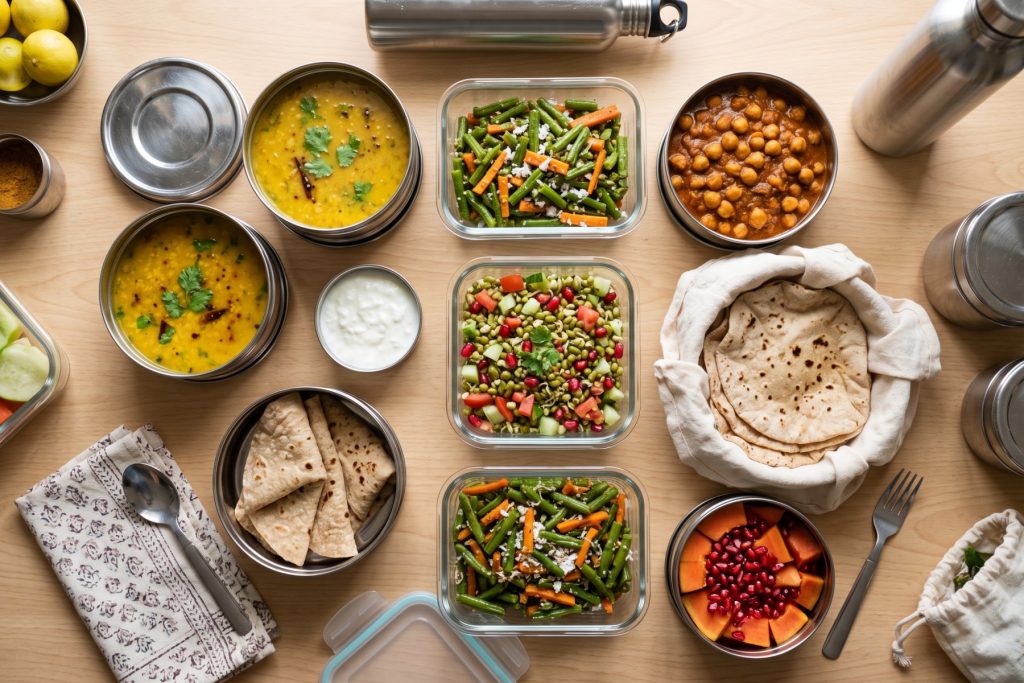
A packed lunch built around vegetables, protein and whole grains is one of the easiest ways to eat well on a workday. With an hour or so of prep at the weekend, you can have healthy lunches ready for most of the week.

For many people, workday lunch is whatever is quickest: a canteen thali heavy on rice and fried sides, a delivery order, or biscuits and chai at the desk. Then comes the 3 pm slump. Some of that afternoon dip is down to your body clock, but what and how much you eat at lunch can make it better or worse.

This guide covers what a balanced lunchbox looks like, how to prep a week of lunches without spending your whole Sunday in the kitchen, practical Indian lunch ideas, and how to keep packed food safe.

Meal prep at a glance

  • Fill half your box with vegetables. Then add a quarter protein (dal, paneer, eggs, chicken) and a quarter whole grains or millets.
  • A heavy, carb-led lunch can deepen the afternoon slump. Balance and portion size matter more than any single “superfood”.
  • Prep components, not complete meals. Cook a grain, a dal or protein, and chop vegetables once; mix and match through the week.
  • Keep it safe. Cool food quickly, refrigerate it, and eat cooked rice within a day and most other dishes within 2–3 days.
  • Lunch is only part of it. Drinking water and taking a short walk after eating also help you stay alert.

Why lunch affects your afternoon energy

The afternoon slump is real, but food is only part of the story. Research on the “post-lunch dip” shows it happens even when people skip lunch. It is partly built into the body clock and is worse when you have slept badly. The same review notes that a high-carbohydrate lunch can make it worse.

That gives you a few things you can actually control:

  • A meal that is mostly white rice, roti or bread, with little vegetable or protein, is digested quickly. Adding vegetables, dal, curd or another protein slows things down and keeps you fuller for longer.
  • Portion size. A very large lunch is more likely to leave you sluggish than a moderate one. Packing your own box makes portions easier to judge than a buffet or a large delivery order.
  • Vegetables, pulses and whole grains or millets add fibre, which helps you stay satisfied until evening, so you’re less likely to reach for biscuits or namkeen at 4 pm.
  • Sleep and water. A packed lunch can’t make up for a short night, and poor sleep affects appetite and food choices Being slightly dehydrated can also leave you feeling tired.

The balanced lunchbox formula

The ICMR–National Institute of Nutrition’s “My Plate for the Day” recommends that vegetables and fruits make up about half of what you eat, with cereals or millets, pulses or other protein, and some curd or milk, nuts and oil making up the rest. It also suggests eating from a range of food groups each day. Translated into a lunchbox, that looks like this:

Part of your box How much Indian examples
Vegetables About half Sabzi, salad, kosambari, stir-fried greens, vegetable raita
Protein About a quarter Dal, chana, rajma, sprouts, paneer, tofu, eggs, chicken, fish
Whole grains or millets About a quarter 1–2 whole wheat, jowar or bajra rotis; brown, red or hand-pounded rice; millet pulao
Extras A little Curd or buttermilk, a few nuts or seeds, a piece of fruit

Easy upgrades

  • Swap some of the grain for vegetables. If you usually pack three rotis, try two rotis and an extra serving of sabzi.
  • Add protein you can see. Many vegetarian lunches are low in protein. A bowl of dal, a handful of chana or a cube of paneer makes a real difference.
  • Pack curd or buttermilk. Both add protein and are easy to carry in a small steel box.
  • Go easy on oil and salt. Pickles, papad and fried sides add up quickly. The NIN suggests limiting added sugar to about 25–30 g a day.

How to meal prep in 60–90 minutes a week

Meal prep doesn’t mean eating the same dull box five days running. The trick is to prepare components you can combine in different ways, and to leave anything that spoils quickly for a short top-up mid-week.

1. Plan (10 minutes)

Pick two or three lunches for the week. Choose dishes that share ingredients, so one batch of chopped onions, tomatoes and greens covers several meals.

2. Batch-cook the base (45–60 minutes)

  • One protein: a pot of dal, chole or rajma, or grilled chicken or paneer.
  • Two vegetables: one dry sabzi (beans, cabbage or bhindi) and one gravy or roasted tray of mixed vegetables.
  • Raw prep: wash and chop salad vegetables, soak and sprout moong, boil eggs.
  • Grains: make roti or millet dough to keep in the fridge, and cook rice fresh on the day or the night before rather than for the whole week (see food safety below).

3. Store smart (10 minutes)

  • Portion straight away into individual boxes, so mornings are grab-and-go.
  • Keep wet and dry apart. Store dressings, chutney and raita separately so salads and rotis don’t go soggy.
  • Freeze what you won’t eat by Wednesday. Dal, chole, rajma and most cooked sabzis freeze well. Move a box to the fridge the night before.

4. Mid-week top-up (15–20 minutes)

On Wednesday evening, cook a fresh vegetable or protein and make fresh rice if you need it. This keeps Thursday and Friday lunches safe and tasting fresh.

Kit that helps

Steel or glass containers with tight lids, a compartment tiffin, a small leak-proof pot for curd or dressing, and an insulated lunch bag with an ice pack if you have no fridge at work.

10 healthy lunch ideas for work

Each of these follows the balanced lunchbox formula. Swap the protein to suit how you eat.

Lunch What’s in it Prep ahead Good for
Rajma or chole bowl Rajma or chole, a small portion of brown rice or 1–2 rotis, onion–cucumber salad Cook the rajma or chole at the weekend; it freezes well Vegetarian, high fibre
Dal, sabzi and millet roti Any dal, a dry sabzi, 2 jowar or bajra rotis, curd Dal and sabzi on Sunday; make rotis fresh or the night before Vegetarian, classic tiffin
Sprouts chaat box Moong sprouts, tomato, onion, cucumber, roasted peanuts, lemon, chaat masala Sprout moong over 2 days; pack the lemon separately Vegetarian, no reheating
Paneer or tofu tikka wrap Grilled paneer or tofu, peppers and onions, mint chutney in a whole wheat roti Marinate and grill in a batch; assemble in the morning Vegetarian, eat cold or warm
Vegetable millet pulao Foxtail or little millet cooked with mixed vegetables and peas, with raita Cook the night before; keep the raita separate Vegetarian, one-box meal
Besan chilla rolls Besan chillas filled with grated vegetables or paneer, green chutney Make the batter the night before; cook in the morning Vegetarian, high protein
Egg bhurji and veg roti Egg bhurji with onion, tomato and spinach, 2 whole wheat rotis, salad Boil or scramble eggs fresh; chop vegetables ahead Eggetarian
Chicken and vegetable stir-fry Chicken strips with beans, carrot, capsicum and cabbage, with a small portion of rice Cook the chicken in a batch; stir-fry vegetables fresh Non-vegetarian
Fish curry box Light fish curry, rice, a dry vegetable such as beans thoran Cook the curry once; eat within 2 days Non-vegetarian, omega-3
Curd rice with a twist Curd rice with grated carrot, cucumber and pomegranate, with a side of kosambari or chana Cook rice fresh the night before; mix with curd in the morning Vegetarian, cooling for hot days

Tips for variety

  • Change the cuisine, keep the formula. A rajma bowl, a paneer wrap and a millet pulao feel very different but share the same balance.
  • Rotate your grains. Alternate wheat roti with jowar, bajra, ragi, brown rice or millets across the week.
  • Keep a no-cook backup. Sprouts, boiled eggs, roasted chana and fruit cover you on days when the plan falls apart.

Keeping your lunch safe

Cooked food left warm for hours is a common cause of food poisoning, and India’s heat makes it a bigger risk. A few rules keep meal prep safe.

What Guidance
Cooling Cool cooked food and get it into the fridge within 2 hours. Spread large batches into smaller boxes so they cool faster.
Most cooked dishes Eat within about 3 days from the fridge, or freeze for up to 3 months.
Cooked rice Cool it quickly, ideally within 1 hour, refrigerate, and eat within 24 hours.
Reheating Reheat until steaming hot all the way through, and reheat rice only once.
Out of the fridge Food kept between 5°C and 60°C for more than 4 hours in total should be thrown away.

Why rice needs extra care

Raw rice can carry spores of a bacterium called Bacillus cereus that survive cooking. If cooked rice sits at room temperature, the bacteria can produce a toxin that makes it unsafe to eat. This is why rice is the one thing not to cook for the whole week. Make it fresh, or the night before, and cool it quickly.

No fridge at work?

  • Pack your lunch straight from the fridge into an insulated bag with an ice pack.
  • Choose foods that travel well, such as rotis with dry sabzi, chillas or roasted chana, over creamy gravies, rice or curd on very hot days.
  • If you have no way of keeping it cool, eat your lunch within about 4 hours of taking it out of the fridge.
  • If you use a hot-food flask, fill it with food that is already piping hot, and keep it closed until lunch.

Sprouts and salads

Rinse sprouts well and keep them chilled. Raw sprouts carry a small risk of food poisoning, so if you are pregnant, older or have a weakened immune system, steam or lightly cook them first. Add cut fruit and salad dressings on the day.

Beyond the lunchbox: other habits that help your afternoon

  • Step away from your desk. Eating while working makes it easy to overeat without noticing. Even 15 minutes away from the screen helps you notice when you’re full.
  • Take a short walk after eating. A 10-minute walk after lunch is an easy way to break up a long sitting day. Pair it with a few simple office workouts through the afternoon.
  • Keep water at your desk. Refill a bottle a couple of times through the day, especially in hot weather or air-conditioned offices, which can make you forget you’re thirsty.
  • Plan a 4 pm snack. A small, planned snack such as fruit, roasted chana, a handful of nuts, or buttermilk is better than whatever is in the office pantry.
  • Watch the extra chai. Two or three cups of sweetened tea in the afternoon add up in sugar, and caffeine late in the day can affect your sleep that night.

The bottom line

A healthy work lunch doesn’t need special ingredients or hours in the kitchen. Fill half your box with vegetables, add a good portion of protein and a moderate serving of whole grains or millets, and keep the portion sensible. An hour of batch-cooking at the weekend and a short top-up mid-week will cover most of your lunches. Store food safely, take a short walk after eating, and keep water close by.

Pro Tip: Use the GOQii App to log your lunches and see how your meals, water, steps and sleep line up with how you feel in the afternoon. Your GOQii Personalised Health Coach can help you build a weekly meal-prep plan around your food preferences, budget and work schedule.

Frequently Asked Questions (FAQs)

  1. How long does meal-prepped food last in the fridge?

Most cooked dishes, such as dal, sabzi and curries, are best eaten within about 3 days. Cooked rice should be eaten within 24 hours. Freeze anything you won’t eat in time.

  1. Is it safe to cook rice for the whole week?

No. Cooked rice can carry bacteria that produce a toxin if the rice cools slowly or is kept too long. Cook rice fresh or the night before, cool it quickly, refrigerate it, and eat it within a day.

  1. Why do I feel sleepy after lunch?

A dip in alertness in the early afternoon is partly natural and linked to your body clock. A heavy lunch that is mostly rice or bread can make it worse, and so can poor sleep. A balanced, moderate lunch and a short walk afterwards can help.

  1. How do I get enough protein in a vegetarian lunch?

Include a proper serving of dal, chana, rajma, sprouts, paneer or tofu, and add curd or buttermilk. If you eat eggs, a couple of boiled eggs or a bhurji add good-quality protein easily.

  1. What can I pack if there’s no fridge at work?

Pack your lunch straight from the fridge into an insulated bag with an ice pack. Choose foods that travel well, such as rotis with dry sabzi, chillas, sprouts kept chilled, or roasted chana, and eat within about 4 hours.

  1. Can I freeze Indian food for meal prep?

Yes. Dal, rajma, chole and most cooked sabzis freeze well for up to 3 months. Thaw them in the fridge overnight and reheat until steaming hot.

  1. How much time does meal prep take?

Around 60–90 minutes at the weekend for the main batch, plus a 15–20 minute top-up mid-week. Even prepping just one dal and chopping vegetables saves time every morning.

#BeTheForce

Disclaimer: The information provided in this blog is for general awareness and educational purposes only. It is not intended to replace professional medical advice, diagnosis, or treatment. Always consult a qualified healthcare provider for personalised medical guidance or concerns related to your health.

  • « Previous Page
  • 1
  • …
  • 17
  • 18
  • 19
  • 20
  • 21
  • …
  • 37
  • Next Page »

Search

Recent Posts

  • Healthy Eating: Vegetable and Paneer Kathi Roll
  • The Science of Power Naps: How Long is Too Long?
  • 7 Reasons Why Pulses Are Good For You!
  • How Exercise Impacts Mental Health
  • Dussehra 2026: 10 Unhealthy Habits to Leave Behind

Stay Updated

Archives

  • October 2026 (17)
  • September 2026 (5)
  • August 2026 (8)
  • July 2026 (25)
  • June 2026 (22)
  • May 2026 (20)
  • April 2026 (24)
  • March 2026 (18)
  • February 2026 (14)
  • January 2026 (14)
  • December 2025 (19)
  • November 2025 (15)
  • October 2025 (20)
  • September 2025 (6)
  • August 2025 (5)
  • July 2025 (9)
  • June 2025 (18)
  • May 2025 (16)
  • April 2025 (22)
  • March 2025 (25)
  • February 2025 (21)
  • January 2025 (25)
  • December 2024 (21)
  • November 2024 (21)
  • October 2024 (15)
  • September 2024 (22)
  • August 2024 (27)
  • July 2024 (15)
  • June 2024 (23)
  • May 2024 (26)
  • April 2024 (27)
  • March 2024 (27)
  • February 2024 (23)
  • January 2024 (21)
  • December 2023 (14)
  • November 2023 (10)
  • October 2023 (18)
  • September 2023 (20)
  • August 2023 (16)
  • July 2023 (16)
  • June 2023 (21)
  • May 2023 (20)
  • April 2023 (19)
  • March 2023 (23)
  • February 2023 (19)
  • January 2023 (15)
  • December 2022 (11)
  • November 2022 (15)
  • October 2022 (15)
  • September 2022 (12)
  • August 2022 (9)
  • July 2022 (17)
  • June 2022 (11)
  • May 2022 (10)
  • April 2022 (6)
  • March 2022 (6)
  • February 2022 (13)
  • January 2022 (11)
  • December 2021 (7)
  • November 2021 (3)
  • October 2021 (6)
  • September 2021 (3)
  • August 2021 (8)
  • July 2021 (7)
  • June 2021 (15)
  • May 2021 (16)
  • April 2021 (10)
  • March 2021 (7)
  • February 2021 (4)
  • January 2021 (4)
  • December 2020 (3)
  • November 2020 (4)
  • October 2020 (10)
  • September 2020 (3)
  • August 2020 (3)
  • July 2020 (2)
  • June 2020 (4)
  • May 2020 (10)
  • April 2020 (12)
  • March 2020 (10)
  • February 2020 (4)
  • January 2020 (4)
  • December 2019 (3)
  • November 2019 (7)
  • October 2019 (5)
  • September 2019 (4)
  • August 2019 (9)
  • July 2019 (9)
  • June 2019 (11)
  • May 2019 (4)
  • April 2019 (8)
  • March 2019 (8)
  • February 2019 (9)
  • January 2019 (8)
  • December 2018 (9)
  • November 2018 (3)
  • October 2018 (3)
  • September 2018 (5)
  • August 2018 (10)
  • July 2018 (6)
  • June 2018 (13)
  • May 2018 (8)
  • April 2018 (17)
  • March 2018 (9)
  • February 2018 (8)
  • January 2018 (15)
  • December 2017 (12)
  • November 2017 (19)
  • October 2017 (13)
  • September 2017 (15)
  • August 2017 (4)
  • July 2017 (8)
  • June 2017 (7)
  • May 2017 (6)
  • April 2017 (8)
  • March 2017 (6)
  • February 2017 (7)
  • January 2017 (9)
  • December 2016 (10)
  • November 2016 (7)
  • October 2016 (7)
  • September 2016 (7)
  • August 2016 (11)
  • July 2016 (9)
  • June 2016 (9)
  • May 2016 (12)
  • April 2016 (17)
  • March 2016 (17)
  • February 2016 (8)
  • January 2016 (6)
  • December 2015 (2)
  • November 2015 (9)
  • October 2015 (7)
  • September 2015 (9)
  • August 2015 (11)
  • July 2015 (9)
  • June 2015 (11)
  • May 2015 (9)
  • April 2015 (13)
  • March 2015 (8)
  • February 2015 (5)
  • January 2015 (12)
  • December 2014 (14)
  • November 2014 (11)
  • October 2014 (6)
  • September 2014 (13)
  • August 2014 (12)
  • July 2014 (6)
  • June 2014 (2)
  • May 2014 (7)
  • April 2014 (4)

From Burnout to Balance: How Dr. Ranjit Reclaimed His Health

Dr Ranjit Bhatt has spent years tending to others. A practising doctor in Odisha, his days were packed with patients, surgeries, and emergencies. From the outside, it looked like a life lived in service. But on the inside, something wasn’t right. “I had no … [Read More...]

From Shimla’s Slopes to Chandigarh’s Sidewalks: Surinder Kaur Bhalla’s Journey from Chaos to Control

Some journeys start with a plan. Others begin with a stumble literally. Surinder Bhalla, a government professional, born and raised in the scenic hill town of Shimla, had always lived a life of movement. “In Shimla, you walked everywhere,” she reflects. “Walking was never an exercise. It was just life.” But after shifting to Chandigarh, […]

“I’ve Challenged Myself to Live 100 Years” – The Story of Chandubhai Savani’s Second Chance at Life

At 67, most people start slowing down. Not Chandubhai Savani. A resident of Surat, Chandubhai, thought life was on track. “My life was going well till I had my bypass surgery,” he says. That surgery, back in 2021, was a wake-up call.  Medication was routine, but exercise wasn’t. His diet? What he calls ‘normal.’ “I […]

Ananda Mukherjee Health Story

From Terminal Illness To Complete Wellness! Ananda Mukherjee Health Story

As we observe World Cancer Day under the powerful theme ‘United by Unique’ (2025-2027)**, we are reminded that every individual’s journey with cancer is distinct, yet united by shared resilience, hope, and the collective fight against this disease. This theme places people at the centre of care and their stories at the heart of the […]

  • HOME
  • HEALTHY LIVING
  • FITNESS
  • HEALTHY RECIPES
  • USER STORIES
  • KARMA
  • BUY GOQii

Copyright ©2016 GOQii


