GOQii

Blog

  • HOME
  • HEALTHY LIVING
  • FITNESS
  • HEALTHY RECIPES
  • USER STORIES
  • KARMA
  • BUY GOQii

Search Results for: portion control

October 22, 2026 By Soni Thakur 11 Comments

7 Reasons Why Pulses Are Good For You!

Pulses are one of the healthiest, cheapest and most versatile foods in the Indian kitchen. A daily bowl of dal, chana or rajma adds protein, fibre and key minerals to your diet, and research links regular pulse eating to lower cholesterol and better blood sugar control.

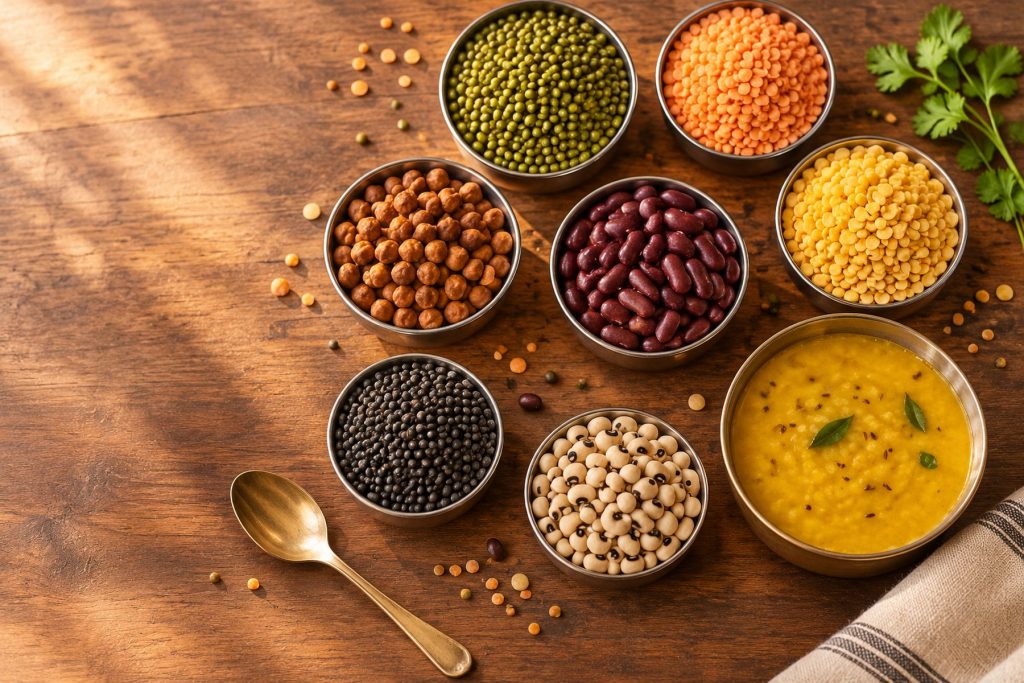
Pulses are the dried, edible seeds of legume plants: lentils (masoor), pigeon peas (toor or arhar), chickpeas (chana), mung beans (moong), black gram (urad), kidney beans (rajma) and cowpeas (lobia), among others. Most Indian homes already eat them every day. Here are seven reasons to keep them on your plate, and to eat a little more.

Pulses at a glance

  • Protein-rich: pulses contain about 20–25% protein, two to three times more than cereals.
  • Good for your heart: about one serving a day lowered LDL (“bad”) cholesterol by around 5% in trials.
  • Steadier blood sugar: in people with diabetes, diets richer in pulses modestly improved long-term blood sugar control.
  • Better together: dal with rice or roti gives better-quality protein than either alone.
  • Cheap, long-lasting and kind to the soil: dried pulses keep for months and need little fertiliser to grow.

7 reasons pulses are good for you

  1. 1. They’re one of the best sources of plant protein

    Pulses contain about 20–25% protein, two to three times more than cereals, according to the UN Food and Agriculture Organization (FAO). For the many Indians who eat little or no meat, dal, chana and rajma are often the main source of protein in the day.

    That makes them useful at every age: for growing children, for women’s higher iron and folate needs, especially in pregnancy, and for older adults who need enough protein to protect their muscles.

    2. They’re packed with fibre and minerals

    Pulses are a good source of fibre and of iron, magnesium, potassium, phosphorus, zinc and B vitamins such as folate. Fibre keeps digestion regular and helps you feel full for longer, which can make it easier to manage your weight.

    For more on how fibre supports digestion and heart health, see our guide to high-fibre foods.

    Tip: eat iron-rich pulses with a source of vitamin C, such as lemon on your chana or tomatoes in your dal, to help your body absorb the iron.

    3. They’re good for your heart

    Pulses are naturally low in fat and contain almost no saturated fat. A review of 26 trials found that eating about one serving of pulses a day (around 130 g) lowered LDL (“bad”) cholesterol by about 5% compared with similar diets without pulses. That’s a modest but meaningful change from a simple food swap.

    To keep the benefit, watch the extras: a heavy tadka of ghee, or cream in dal makhani, adds the saturated fat that pulses themselves don’t have.

    4. They help keep blood sugar steady

    Pulses release their energy slowly. In a review of 41 trials, diets that included more pulses gave a modest improvement in long-term blood sugar control, lowering HbA1c by about 0.5%. In a three-month trial in 121 adults with type 2 diabetes, adding about one cup of legumes a day lowered HbA1c by 0.5% and systolic blood pressure by 4.5 mm Hg more than a wheat-fibre diet.

    Pulses aren’t a treatment for diabetes, but they are a smart swap for some of the refined rice, maida or sweets on your plate. Keep taking any medicines you’ve been prescribed.

    5. They make your grains more nutritious

    Pulses and cereals have different strengths in their protein. Eaten together, as in dal-chawal, rajma-rice, khichdi or idli-sambar, the protein quality of the meal improves. Traditional Indian meals got this right long before nutrition science explained why.

    6. They’re affordable and keep for months

    Pulses are among the cheapest sources of protein you can buy. Because they are dried seeds, they store well for months in an airtight container, so there is little waste. Keep a few different kinds in the kitchen, and you always have a quick, nourishing meal to hand.

    7. They’re good for the planet

    Pulse plants work with soil bacteria to take nitrogen from the air and turn it into a form plants can use. This improves soil fertility and reduces the need for synthetic fertiliser, which takes a lot of energy to make. Choosing pulses more often is a small, practical way to eat more sustainably.

Common Indian pulses and how to use them

Eating a mix of pulses through the week gives you a wider range of nutrients and keeps meals interesting.

Pulse Also called Easy ways to eat it Cooking note
Moong (whole or split) Green gram Moong dal, khichdi, chilla, sprouts Quick to cook and usually the easiest to digest
Masoor Red lentil Masoor dal, soups Split masoor cooks in 15–20 minutes without soaking
Toor Arhar, pigeon pea Everyday dal, sambar A staple dal across much of India
Chana Bengal gram, chickpea Chole, roasted chana, sundal, besan chilla Soak whole chana overnight before cooking
Rajma Kidney beans Rajma-chawal, salads, wraps Soak overnight and boil until fully soft: undercooked kidney beans can make you ill
Urad Black gram Idli, dosa, dal makhani Fermented batters (idli, dosa) are gentle on the stomach
Lobia Cowpea, black-eyed pea Lobia curry, salads Soak for a few hours to cut cooking time

How much should you eat?

The ICMR–National Institute of Nutrition’s My Plate for the Day suggests about 85 g of pulses a day (raw weight) for an adult eating around 2,000 calories, with eggs, fish or meat able to replace part of that. In practice, that is roughly one to two bowls of dal, chana or rajma spread across the day.

Easy ways to eat more pulses

  • Make dal a daily habit at lunch or dinner, and make it a little thicker than usual.
  • Start the day with pulses: moong dal chilla, besan chilla, idli, dosa or a sprouts salad.
  • Snack on them: roasted chana, a bowl of sundal, or other quick, healthy snacks.
  • Pack them for work: rajma or chole bowls and sprouts chaat keep well, as our meal-prep guide
  • Add them to what you already cook: a handful of chana in pulao, moong in upma, or lobia in a vegetable curry.

Gas and bloating: how to make pulses easier to digest

The most common reason people avoid pulses is wind. Pulses contain fermentable carbohydrates (oligosaccharides such as raffinose) that our small intestine can’t break down, so gut bacteria ferment them further along. That is part of why they feed a healthy gut, and also why a large bowl after weeks without them can leave you uncomfortable.

A few simple habits help most people:

  • Soak whole pulses. Soak rajma, chana, lobia and whole urad for 8–12 hours (overnight), then discard the soaking water and cook in fresh water. Soaking draws out some of the gas-forming sugars.
  • Cook them thoroughly. Pressure-cook until soft. Undercooked pulses are harder to digest, and raw or undercooked rajma can make you ill (see the table above).
  • Start small and build up. If you rarely eat pulses, begin with a small katori a day and increase over two to three weeks. Many people find their gut adapts.
  • Begin with the gentler dals. Split, husked dals such as moong and masoor are usually easier on the stomach than whole beans.
  • Use traditional tempering. Hing (asafoetida), jeera, ginger and ajwain are classic additions to dal. Evidence that they reduce gas is limited, but they make pulses tastier and many people find them helpful.
  • Drink enough water as you increase fibre, and spread pulses across meals rather than eating a large amount at once.

Who should take care

Pulses suit most people, but a few groups should check with a doctor or dietitian about how much and which kinds to eat:

  • Chronic kidney disease: pulses contain potassium and phosphorus, which some people with kidney disease need to limit. Your renal team can advise on portions and preparation.
  • Irritable bowel syndrome (IBS): many pulses are high in FODMAPs, which can trigger symptoms. A dietitian can help you find the types and portions you tolerate rather than cutting them out completely.
  • Gout or high uric acid: follow the advice of your doctor about your overall diet. Plant sources of purines appear to be less of a concern than meat and seafood, but individual advice matters.
  • Persistent or severe digestive symptoms: ongoing pain, bloating, changes in bowel habit or weight loss are worth a medical check-up rather than simply avoiding foods.

The bottom line

Pulses are one of the most useful foods in the Indian kitchen: affordable, filling, rich in protein and fibre, and backed by good evidence for heart health and blood sugar control. You don’t need anything exotic. A katori of well-cooked dal, a bowl of rajma or chana, or a handful of roasted chana as a snack, eaten most days alongside vegetables and whole grains, is a simple habit that adds up over time.

Pro Tip: Use the GOQii App to log your meals and see how often pulses actually make it onto your plate across the week. Your GOQii Personalised Health Coach can help you work more dals and beans into meals you already enjoy, and adjust portions to suit your goals.

Frequently asked questions

Are pulses and legumes the same thing?

Not quite. Legumes are all plants in the pea family, including peanuts, soybeans and fresh green peas. Pulses are the dried, edible seeds of legumes, such as lentils, dried beans, chickpeas and dried peas. In India, most dals are pulses.

Are pulses a good source of protein for vegetarians?

Yes. Dried pulses are roughly 20–25% protein by weight, about twice as much as most cereals. Eating them with rice, roti or millets gives a more complete mix of amino acids, which is why dal–chawal and rajma–chawal work so well together.

How much dal should I eat a day?

The ICMR–National Institute of Nutrition suggests about 85 g of pulses a day (raw weight) for an adult eating around 2,000 calories, with eggs, fish or meat able to replace part of that. That is roughly one to two bowls of dal, chana or rajma spread across the day. Your needs may differ depending on your age, activity and health.

Are pulses good for people with diabetes?

Pulses are a sensible choice for most people with diabetes. They are high in fibre, digest slowly and have a low glycaemic index, and studies have linked regular intake with modest improvements in blood sugar control. Watch the portion of rice or roti eaten with them, and talk to your doctor or dietitian about a plan that suits you.

Why do pulses cause gas, and how can I reduce it?

Pulses contain fermentable sugars that gut bacteria break down, producing gas. Soaking whole pulses and discarding the water, cooking them thoroughly, starting with small portions and choosing gentler dals like moong can help.

Which dal is easiest to digest?

Split, husked moong dal is generally considered the easiest to digest, which is why it is often used in khichdi for people who are unwell. Masoor dal is also fairly light. Whole beans such as rajma and chana tend to be heavier.

Can I eat pulses every day?

For most healthy people, yes. Eating pulses daily is an easy way to add protein and fibre. If you have kidney disease, IBS, gout or another condition that affects your diet, ask your doctor or dietitian how much is right for you.

#BeTheForce

Disclaimer: The information provided in this blog is for general awareness and educational purposes only. It is not intended to replace professional medical advice, diagnosis, or treatment. Always consult a qualified healthcare provider for personalised medical guidance or concerns related to your health.
October 17, 2026 By GOQii Leave a Comment

Meal Prepping for Work: Healthy Lunch Ideas That Keep You Energised

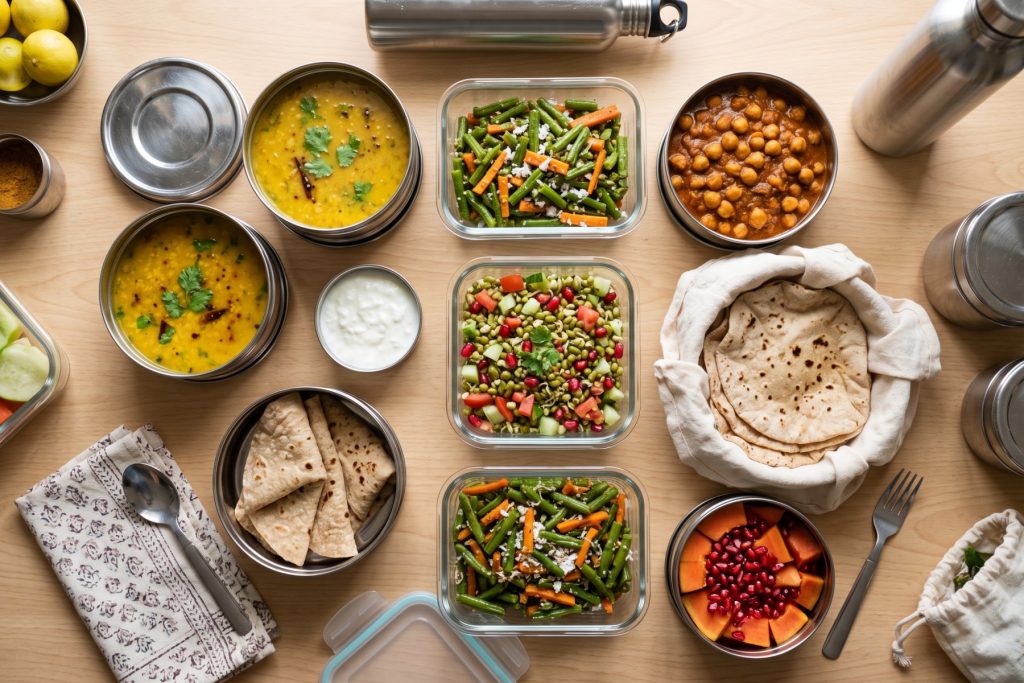
A packed lunch built around vegetables, protein and whole grains is one of the easiest ways to eat well on a workday. With an hour or so of prep at the weekend, you can have healthy lunches ready for most of the week.

For many people, workday lunch is whatever is quickest: a canteen thali heavy on rice and fried sides, a delivery order, or biscuits and chai at the desk. Then comes the 3 pm slump. Some of that afternoon dip is down to your body clock, but what and how much you eat at lunch can make it better or worse.

This guide covers what a balanced lunchbox looks like, how to prep a week of lunches without spending your whole Sunday in the kitchen, practical Indian lunch ideas, and how to keep packed food safe.

Meal prep at a glance

  • Fill half your box with vegetables. Then add a quarter protein (dal, paneer, eggs, chicken) and a quarter whole grains or millets.
  • A heavy, carb-led lunch can deepen the afternoon slump. Balance and portion size matter more than any single “superfood”.
  • Prep components, not complete meals. Cook a grain, a dal or protein, and chop vegetables once; mix and match through the week.
  • Keep it safe. Cool food quickly, refrigerate it, and eat cooked rice within a day and most other dishes within 2–3 days.
  • Lunch is only part of it. Drinking water and taking a short walk after eating also help you stay alert.

Why lunch affects your afternoon energy

The afternoon slump is real, but food is only part of the story. Research on the “post-lunch dip” shows it happens even when people skip lunch. It is partly built into the body clock and is worse when you have slept badly. The same review notes that a high-carbohydrate lunch can make it worse.

That gives you a few things you can actually control:

  • A meal that is mostly white rice, roti or bread, with little vegetable or protein, is digested quickly. Adding vegetables, dal, curd or another protein slows things down and keeps you fuller for longer.
  • Portion size. A very large lunch is more likely to leave you sluggish than a moderate one. Packing your own box makes portions easier to judge than a buffet or a large delivery order.
  • Vegetables, pulses and whole grains or millets add fibre, which helps you stay satisfied until evening, so you’re less likely to reach for biscuits or namkeen at 4 pm.
  • Sleep and water. A packed lunch can’t make up for a short night, and poor sleep affects appetite and food choices Being slightly dehydrated can also leave you feeling tired.

The balanced lunchbox formula

The ICMR–National Institute of Nutrition’s “My Plate for the Day” recommends that vegetables and fruits make up about half of what you eat, with cereals or millets, pulses or other protein, and some curd or milk, nuts and oil making up the rest. It also suggests eating from a range of food groups each day. Translated into a lunchbox, that looks like this:

Part of your box How much Indian examples
Vegetables About half Sabzi, salad, kosambari, stir-fried greens, vegetable raita
Protein About a quarter Dal, chana, rajma, sprouts, paneer, tofu, eggs, chicken, fish
Whole grains or millets About a quarter 1–2 whole wheat, jowar or bajra rotis; brown, red or hand-pounded rice; millet pulao
Extras A little Curd or buttermilk, a few nuts or seeds, a piece of fruit

Easy upgrades

  • Swap some of the grain for vegetables. If you usually pack three rotis, try two rotis and an extra serving of sabzi.
  • Add protein you can see. Many vegetarian lunches are low in protein. A bowl of dal, a handful of chana or a cube of paneer makes a real difference.
  • Pack curd or buttermilk. Both add protein and are easy to carry in a small steel box.
  • Go easy on oil and salt. Pickles, papad and fried sides add up quickly. The NIN suggests limiting added sugar to about 25–30 g a day.

How to meal prep in 60–90 minutes a week

Meal prep doesn’t mean eating the same dull box five days running. The trick is to prepare components you can combine in different ways, and to leave anything that spoils quickly for a short top-up mid-week.

1. Plan (10 minutes)

Pick two or three lunches for the week. Choose dishes that share ingredients, so one batch of chopped onions, tomatoes and greens covers several meals.

2. Batch-cook the base (45–60 minutes)

  • One protein: a pot of dal, chole or rajma, or grilled chicken or paneer.
  • Two vegetables: one dry sabzi (beans, cabbage or bhindi) and one gravy or roasted tray of mixed vegetables.
  • Raw prep: wash and chop salad vegetables, soak and sprout moong, boil eggs.
  • Grains: make roti or millet dough to keep in the fridge, and cook rice fresh on the day or the night before rather than for the whole week (see food safety below).

3. Store smart (10 minutes)

  • Portion straight away into individual boxes, so mornings are grab-and-go.
  • Keep wet and dry apart. Store dressings, chutney and raita separately so salads and rotis don’t go soggy.
  • Freeze what you won’t eat by Wednesday. Dal, chole, rajma and most cooked sabzis freeze well. Move a box to the fridge the night before.

4. Mid-week top-up (15–20 minutes)

On Wednesday evening, cook a fresh vegetable or protein and make fresh rice if you need it. This keeps Thursday and Friday lunches safe and tasting fresh.

Kit that helps

Steel or glass containers with tight lids, a compartment tiffin, a small leak-proof pot for curd or dressing, and an insulated lunch bag with an ice pack if you have no fridge at work.

10 healthy lunch ideas for work

Each of these follows the balanced lunchbox formula. Swap the protein to suit how you eat.

Lunch What’s in it Prep ahead Good for
Rajma or chole bowl Rajma or chole, a small portion of brown rice or 1–2 rotis, onion–cucumber salad Cook the rajma or chole at the weekend; it freezes well Vegetarian, high fibre
Dal, sabzi and millet roti Any dal, a dry sabzi, 2 jowar or bajra rotis, curd Dal and sabzi on Sunday; make rotis fresh or the night before Vegetarian, classic tiffin
Sprouts chaat box Moong sprouts, tomato, onion, cucumber, roasted peanuts, lemon, chaat masala Sprout moong over 2 days; pack the lemon separately Vegetarian, no reheating
Paneer or tofu tikka wrap Grilled paneer or tofu, peppers and onions, mint chutney in a whole wheat roti Marinate and grill in a batch; assemble in the morning Vegetarian, eat cold or warm
Vegetable millet pulao Foxtail or little millet cooked with mixed vegetables and peas, with raita Cook the night before; keep the raita separate Vegetarian, one-box meal
Besan chilla rolls Besan chillas filled with grated vegetables or paneer, green chutney Make the batter the night before; cook in the morning Vegetarian, high protein
Egg bhurji and veg roti Egg bhurji with onion, tomato and spinach, 2 whole wheat rotis, salad Boil or scramble eggs fresh; chop vegetables ahead Eggetarian
Chicken and vegetable stir-fry Chicken strips with beans, carrot, capsicum and cabbage, with a small portion of rice Cook the chicken in a batch; stir-fry vegetables fresh Non-vegetarian
Fish curry box Light fish curry, rice, a dry vegetable such as beans thoran Cook the curry once; eat within 2 days Non-vegetarian, omega-3
Curd rice with a twist Curd rice with grated carrot, cucumber and pomegranate, with a side of kosambari or chana Cook rice fresh the night before; mix with curd in the morning Vegetarian, cooling for hot days

Tips for variety

  • Change the cuisine, keep the formula. A rajma bowl, a paneer wrap and a millet pulao feel very different but share the same balance.
  • Rotate your grains. Alternate wheat roti with jowar, bajra, ragi, brown rice or millets across the week.
  • Keep a no-cook backup. Sprouts, boiled eggs, roasted chana and fruit cover you on days when the plan falls apart.

Keeping your lunch safe

Cooked food left warm for hours is a common cause of food poisoning, and India’s heat makes it a bigger risk. A few rules keep meal prep safe.

What Guidance
Cooling Cool cooked food and get it into the fridge within 2 hours. Spread large batches into smaller boxes so they cool faster.
Most cooked dishes Eat within about 3 days from the fridge, or freeze for up to 3 months.
Cooked rice Cool it quickly, ideally within 1 hour, refrigerate, and eat within 24 hours.
Reheating Reheat until steaming hot all the way through, and reheat rice only once.
Out of the fridge Food kept between 5°C and 60°C for more than 4 hours in total should be thrown away.

Why rice needs extra care

Raw rice can carry spores of a bacterium called Bacillus cereus that survive cooking. If cooked rice sits at room temperature, the bacteria can produce a toxin that makes it unsafe to eat. This is why rice is the one thing not to cook for the whole week. Make it fresh, or the night before, and cool it quickly.

No fridge at work?

  • Pack your lunch straight from the fridge into an insulated bag with an ice pack.
  • Choose foods that travel well, such as rotis with dry sabzi, chillas or roasted chana, over creamy gravies, rice or curd on very hot days.
  • If you have no way of keeping it cool, eat your lunch within about 4 hours of taking it out of the fridge.
  • If you use a hot-food flask, fill it with food that is already piping hot, and keep it closed until lunch.

Sprouts and salads

Rinse sprouts well and keep them chilled. Raw sprouts carry a small risk of food poisoning, so if you are pregnant, older or have a weakened immune system, steam or lightly cook them first. Add cut fruit and salad dressings on the day.

Beyond the lunchbox: other habits that help your afternoon

  • Step away from your desk. Eating while working makes it easy to overeat without noticing. Even 15 minutes away from the screen helps you notice when you’re full.
  • Take a short walk after eating. A 10-minute walk after lunch is an easy way to break up a long sitting day. Pair it with a few simple office workouts through the afternoon.
  • Keep water at your desk. Refill a bottle a couple of times through the day, especially in hot weather or air-conditioned offices, which can make you forget you’re thirsty.
  • Plan a 4 pm snack. A small, planned snack such as fruit, roasted chana, a handful of nuts, or buttermilk is better than whatever is in the office pantry.
  • Watch the extra chai. Two or three cups of sweetened tea in the afternoon add up in sugar, and caffeine late in the day can affect your sleep that night.

The bottom line

A healthy work lunch doesn’t need special ingredients or hours in the kitchen. Fill half your box with vegetables, add a good portion of protein and a moderate serving of whole grains or millets, and keep the portion sensible. An hour of batch-cooking at the weekend and a short top-up mid-week will cover most of your lunches. Store food safely, take a short walk after eating, and keep water close by.

Pro Tip: Use the GOQii App to log your lunches and see how your meals, water, steps and sleep line up with how you feel in the afternoon. Your GOQii Personalised Health Coach can help you build a weekly meal-prep plan around your food preferences, budget and work schedule.

Frequently Asked Questions (FAQs)

  1. How long does meal-prepped food last in the fridge?

Most cooked dishes, such as dal, sabzi and curries, are best eaten within about 3 days. Cooked rice should be eaten within 24 hours. Freeze anything you won’t eat in time.

  1. Is it safe to cook rice for the whole week?

No. Cooked rice can carry bacteria that produce a toxin if the rice cools slowly or is kept too long. Cook rice fresh or the night before, cool it quickly, refrigerate it, and eat it within a day.

  1. Why do I feel sleepy after lunch?

A dip in alertness in the early afternoon is partly natural and linked to your body clock. A heavy lunch that is mostly rice or bread can make it worse, and so can poor sleep. A balanced, moderate lunch and a short walk afterwards can help.

  1. How do I get enough protein in a vegetarian lunch?

Include a proper serving of dal, chana, rajma, sprouts, paneer or tofu, and add curd or buttermilk. If you eat eggs, a couple of boiled eggs or a bhurji add good-quality protein easily.

  1. What can I pack if there’s no fridge at work?

Pack your lunch straight from the fridge into an insulated bag with an ice pack. Choose foods that travel well, such as rotis with dry sabzi, chillas, sprouts kept chilled, or roasted chana, and eat within about 4 hours.

  1. Can I freeze Indian food for meal prep?

Yes. Dal, rajma, chole and most cooked sabzis freeze well for up to 3 months. Thaw them in the fridge overnight and reheat until steaming hot.

  1. How much time does meal prep take?

Around 60–90 minutes at the weekend for the main batch, plus a 15–20 minute top-up mid-week. Even prepping just one dal and chopping vegetables saves time every morning.

#BeTheForce

Disclaimer: The information provided in this blog is for general awareness and educational purposes only. It is not intended to replace professional medical advice, diagnosis, or treatment. Always consult a qualified healthcare provider for personalised medical guidance or concerns related to your health.

July 6, 2026 By Mamta Joshi 4 Comments

Circadian Rhythm Diet: How Eating at the Right Time Can Improve Your Health

circadian rhythm dietThe Big Question: What if the secret to permanent metabolic health and deep sleep isn’t strictly what you eat, but the precise time that you eat it?

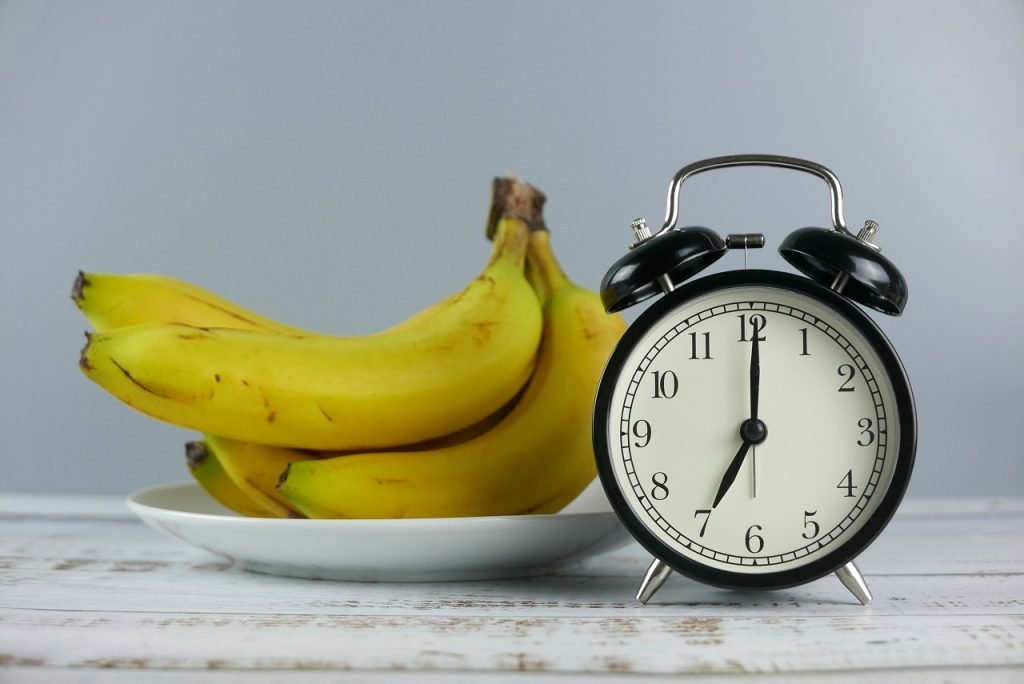
Most of us pay close attention to what we eat—but have you ever thought about when you eat? Emerging research suggests that meal timing can influence how our body uses energy, regulates blood sugar, supports digestion, and even affects sleep quality. This idea forms the basis of the Circadian Rhythm Diet, also known as the Body Clock Diet.

Rather than focusing on calorie counting or restrictive food rules, this approach encourages eating in sync with your body’s natural biological clock. The goal is simple: enjoy most of your meals during the day, when your body is naturally more active, and give your digestive system enough time to rest overnight.

What Is the Circadian Rhythm?

Your circadian rhythm is your body’s internal 24-hour clock that is controlled by a master pacemaker in the brain. This internal clock responds primarily to natural light and darkness, regulating a vast array of critical daily processes:

  • Sleep and wake cycles
  • Hormone production (like cortisol and melatonin)
  • Digestive enzyme secretions
  • Core body temperature fluctuations
  • Cellular repair and energy levels
  • Baseline metabolic rate

During the day, your body prepares for activity, digestion, and energy use. As evening approaches, it gradually shifts into rest and recovery mode. Eating in harmony with this natural rhythm helps support optimal metabolic health.

What Is the Circadian Rhythm Diet?

The Circadian Rhythm Diet is a form of time-based eating that encourages consuming most of your daily calories during daylight hours and avoiding late-night eating whenever possible. Unlike many popular fad diets, it doesn’t eliminate entire food groups or require strict calorie restriction.

  • The Destructive Autopilot Loop: Late-Night Snacks ⇒ Melatonin Suppression ⇒ High Overnight Glucose ⇒ Stalled Fat Burning & Poor Sleep.
  • The Mindful Alternative Loop: Daylight Meal Windows ⇒ High Insulin Sensitivity ⇒ Early Clean Digestion ⇒ Deep Overnight Cellular Repair.

Instead, it focuses on building a simple daily routine that supports your body’s natural biological rhythm: eating a balanced breakfast after waking up, making breakfast and lunch your larger meals, keeping dinner light, and finishing it 2–3 hours before bed.

Why Does Meal Timing Matter?

Our bodies don’t process food exactly the same way throughout the day. Research suggests that earlier in the day, the body is significantly better equipped to digest food efficiently, regulate blood sugar, and use glucose for active energy.

As the day progresses and we prepare for sleep, insulin sensitivity naturally drops and digestion slows. Consuming large, late-night meals forces your digestive system to work when it should be resting, which can disrupt your sleep architecture, impair digestion, and alter appetite regulation the following morning.

5 Benefits of the Circadian Rhythm Diet

  1. Supports Healthy Weight Management

Eating larger meals earlier in the day and limiting late-night snacking helps optimize appetite regulation by balancing your hunger hormones, ghrelin and leptin. Combined with regular physical activity and a whole-food diet, aligning your eating window with daylight hours helps your body use calories for immediate fuel rather than storing them as fat.

  1. Helps Maintain Stable Blood Sugar Levels

Your body handles glucose far more efficiently during daylight hours. By eating your carbohydrate-rich meals earlier in the day when insulin sensitivity is at its peak, you avoid the severe blood sugar spikes and subsequent crashes that stress the pancreas. This is incredibly helpful for optimizing long-term metabolic health and reducing the risk of Type 2 diabetes.

  1. Supports Better Digestion

Large meals eaten close to bedtime put a heavy strain on a slowing gastrointestinal tract. Allowing at least 2–3 hours between dinner and sleep gives your stomach ample opportunity to process food comfortably, eliminating common issues like chronic bloating, gas, and nighttime acid reflux.

  1. May Improve Sleep Quality

Late-night eating—especially meals high in refined fats or sugars—interferes with your body’s ability to enter deep, restorative sleep phases. Finishing your final meal early ensures that your body can route its energy away from heavy digestion and toward tissue repair, growth hormone release, and metabolic recovery while you sleep.

  1. Encourages Consistent Healthy Habits

One of the biggest strengths of the Circadian Rhythm Diet is its simplicity. Following regular, predictable meal timings creates a positive domino effect, naturally encouraging better sleep schedules, more mindful eating practices, and a drastic reduction in impulsive, emotional late-night snacking.

The Circadian Timing Matrix

Eating Window Phase Ambient Light Status Primary Endocrine Focus Dominant Metabolic State
Morning Activation Sunrise / Early Light High Cortisol; Low Melatonin High digestive enzyme availability; peak insulin sensitivity.
Mid-Day Peak Bright Daylight Stable Cortisol & Metabolism Optimal calorie utilization; ideal for your largest meal.
Evening Wind-Down Sunset / Fading Light Falling Cortisol; Rising Melatonin Digestion slows; optimal window for a light, easily digested dinner.
Overnight Recovery Darkness Peak Melatonin; Low Insulin Active cellular repair, tissue rejuvenation, and fat-burning.

How to Follow the Circadian Rhythm Diet

Shifting your lifestyle habits is most sustainable when done progressively. Start with these foundational steps:

  • Eat a balanced breakfast within a couple of hours of waking up to set your metabolic baseline.
  • Try to keep your meal schedules consistent throughout the week to anchor your internal clock.
  • Make lunch your most substantial meal of the day whenever your routine allows.
  • Keep your dinner portions significantly lighter than your lunch.
  • Secure a strict fasting buffer of 2–3 hours between your last bite of dinner and bedtime.
  • Avoid mindless, late-night snacking after dinner to protect your overnight healing window.

Foods That Work Well with Your Body Clock

While the primary focus of this lifestyle is when you eat, what you put on your plate still matters profoundly for long-term vitality. Build your daylight meals around nutrient-dense whole foods:

  • Fiber-Rich Whole Grains: Oats, millets, and brown rice for steady, slow-release daytime energy.
  • Clean Proteins: Eggs, pulses, paneer, tofu, fish, or lean chicken to support tissue repair and satiety.
  • Healthy Fats: Raw nuts, seeds, avocados, and cold-pressed oils to maintain cell membrane health.
  • Probiotic Support: Fresh curd or unsweetened yogurt to feed a resilient, balanced gut microbiome.

Who Should Be Careful?

Because metabolic rates and medical needs vary, the Circadian Rhythm Diet may not be suitable for everyone without professional, customized adjustments. Speak with your doctor or a registered dietitian before altering your eating schedule if you:

  • Have Type 1 or Type 2 diabetes and take glucose-lowering medications or insulin.
  • Are pregnant or currently breastfeeding.
  • Work permanent night shifts or rotating lifestyle shifts.
  • Have a history of disordered eating or restrictive eating patterns.
  • Manage a specific clinical condition that requires strict, frequent meal timings.

The Circadian Rhythm Diet isn’t about eating less—it’s about eating smarter. By aligning your meals with your body’s natural daily rhythm, you give your systems the exact environment they need to optimize digestion, balance blood sugar, manage weight, and improve sleep quality. While meal timing alone won’t replace the foundational importance of balanced nutrition and regular physical movement, it serves as an incredibly powerful, natural tool for lifelong wellness.

Pro Tip: Building a sustainable daily routine becomes effortless when you track your habits accurately. Use the GOQii App to log your meal timings, monitor your fluid intake, and track your sleep stages. You can seamlessly share this data with your GOQii Personalised Health Coach to co-create a personalized lifestyle plan that complements your doctor’s guidance and keeps you moving toward your long-term health goals!

Frequently Asked Questions (FAQs)

  1. What exactly is the Circadian Rhythm Diet?

The Circadian Rhythm Diet is an intentional eating pattern focused on aligning your meal times with your body’s internal 24-hour biological clock. It encourages consuming the majority of your calories and larger meals during daylight hours when metabolism is high, while enforcing a fasting window at night to allow your digestive tract to rest.

  1. Can I eat any food I want on this diet since the focus is only on timing?

While timing is the primary pillar of this approach, food quality remains critical for cellular health. To achieve optimal weight management and sustained energy, you should focus on a balanced diet rich in vegetables, fruits, clean proteins, whole grains, and healthy fats, while actively minimizing highly processed foods and sugary drinks.

  1. Do I strictly need to eat between a rigid schedule like 7 AM and 7 PM?

Not necessarily. There is no single universal schedule that works for everyone. The goal is simply to maintain a consistent daytime eating window that matches your personal daily routine, allows for a substantial overnight digestive rest, and ensures dinner is completely finished 2–3 hours before you sleep.

  1. How does the Circadian Rhythm Diet support healthy weight loss?

Consuming your larger meals earlier in the day takes advantage of your peak metabolic rates and highest insulin sensitivity. This ensures your body uses food efficiently for daytime energy rather than storing it as fat. Additionally, eliminating late-night snacking helps lower your total daily calorie intake and promotes overnight fat-burning.

#BeTheForce 

Disclaimer: This article is intended for educational and informational purposes only. It is not intended to replace professional medical advice, clinical diagnosis, or personalized dietary treatment. Always consult your primary care physician or a qualified healthcare specialist before making major changes to your eating patterns, especially if you manage an underlying chronic health condition.

June 14, 2026 By GOQii Leave a Comment

World Blood Donor Day: The Lifesaving Gift That Science Still Cannot Create

The Big Question: In an era of artificial intelligence and organ transplants, why can’t scientists manufacture a single drop of human blood?

Every year, millions of patients around the world rely on blood transfusions to survive catastrophic accidents, invasive surgeries, cancer treatments, childbirth complications, and chronic illnesses. Despite breathtaking breakthroughs in modern medicine, a complete functional substitute for human blood does not exist. On World Blood Donor Day, we honor the extraordinary individuals whose simple act of voluntary donation keeps the global healthcare system from collapsing.

Imagine a patient being rushed into emergency surgery after a major road accident. A child undergoing intensive chemotherapy for leukemia. A mother experiencing sudden, severe postpartum hemorrhaging during childbirth. Or a patient with thalassemia whose entire life depends on regular, lifelong blood transfusions.

Now, imagine that the one resource all of these individuals urgently need to stay alive cannot be manufactured in a laboratory. It cannot be bio-printed using advanced technology, and it cannot be mass-produced in a pharmaceutical factory. That resource is human blood.

In a world driven by rapid scientific innovation, human blood remains one of the few medical resources that cannot be artificially replicated. Every drop used in hospitals comes from one source alone: another human being. This is why World Blood Donor Day, observed globally on June 14, remains one of the most critical healthcare awareness initiatives on the planet.

Why Blood Donation Matters

Blood is the ultimate fluid of life. It acts as a highly specialized transport system, delivering oxygen, essential nutrients, hormones, and immune cells to every tissue in the body while carrying away cellular waste products. When severe blood loss occurs due to trauma, or when a chronic medical condition impairs the bone marrow’s ability to produce healthy cells, a transfusion is the only viable solution.

Donated blood is a structural pillar for patients who:

  • Experience severe physical trauma or major accidents
  • Undergo complex cardiothoracic, orthopedic, or neurological surgeries
  • Receive chemotherapy treatments that temporarily suppress bone marrow function
  • Live with genetic blood disorders such as thalassemia and sickle cell disease
  • Require organ transplants, which inherently involve significant blood loss
  • Face unexpected acute complications during pregnancy and childbirth

For these individuals, a steady supply of blood is not simply beneficial—it is the thin line between life and death.

The One Resource Science Still Cannot Create

Medical science has transformed human longevity in remarkable ways. Today, surgeons can replace failing joints with titanium implants, transplant hearts and kidneys, utilize robotic-assisted surgical fields, and develop highly targeted immunotherapies.

Yet, despite decades of heavily funded international research, scientists have not been able to engineer a complete synthetic replacement for human blood that safely performs all of its vital biological functions. Blood is too chemically complex. It requires a perfect balance of fluid dynamics, oxygen-binding capacities, immune defenses, and clotting mechanisms.

This means every emergency room, trauma center, intensive care unit, and operating theater depends entirely on the goodwill of voluntary blood donors. Without them, there is no blood supply. And without a stable blood supply, modern life-saving treatments simply cannot happen.

One Donation, Multiple Saved Lives

A common misconception among first-time donors is that their single unit of donated blood (about 350ml to 450ml) helps only one person. In reality, modern blood banking utilizes a process where a single donation is separated into three distinct, highly potent components:

  • Red Blood Cells (Packed RBCs): Primarily used for patients experiencing acute blood loss from trauma, major surgeries, or individuals suffering from severe anemia.
  • Platelets: Frequently administered to cancer patients undergoing chemotherapy, whose platelet counts drop dangerously low, and individuals with severe blood clotting disorders.
  • Plasma: The liquid portion of the blood, packed with proteins and clotting factors, used in emergency trauma care, severe burn treatments, and the management of complex bleeding conditions.

Because these components can be distributed to entirely different wards, your single act of generosity can save up to three separate lives.

Demolishing Common Blood Donation Myths

Fear and misinformation are the primary reasons why eligible adults hesitate to donate. Let’s look directly at what clinical science says:

  • Myth 1: Donating blood permanently weakens your body.
    • The Reality: Most healthy adults can donate without a single long-term side effect. While you may feel temporarily tired immediately afterward, your body replaces the lost fluid volume within 24 to 48 hours, provided you drink enough fluids. Your red blood cells are fully replenished within a few weeks.
  • Myth 2: Blood donation is incredibly painful.
    • The Reality: Aside from a brief, minor needle prick when the sterile line is inserted, the actual process of blood collection causes zero pain or major discomfort.
  • Myth 3: My blood type is common, so it isn’t needed.
    • The Reality: Common blood types (like O+ or A+) are precisely the ones in the highest demand because the majority of patients requiring transfusions share those exact blood groups. Hospitals require a non-stop, steady stream of all blood types to prevent critical shortages.
  • Myth 4: A single donation doesn’t make a dent.
    • The Reality: Every single unit counts. Blood banking relies on a steady accumulation of individual donations. Because blood products have a limited shelf life, a steady, daily influx of donors is the only way to maintain a safe public net.

What to Expect: The Simple Step-by-Step Process

If you are stepping up to donate for the first time, you will find that the entire medical protocol is incredibly straightforward and efficient:

[1. Registration] ──►[2. Health Screening] ──►[3. Safe Donation] ──►[4. Rest & Refreshments]

(Info Check)                     (Mini-Physical)                  (Takes 8-10 Mins)              (Fluid Rebalancing)

  1. Registration: You will fill out a basic questionnaire regarding your personal details, recent travel history, and overall lifestyle habits.
  2. The Mini Health Check: A healthcare professional will perform a brief clinical screening. They will check your blood pressure, pulse rate, body temperature, and test a tiny drop of blood to verify your hemoglobin levels. This ensures that donating is completely safe for your body.
  3. The Donation: You will relax in a comfortable chair. The actual collection of a single unit of blood takes a mere 8 to 10 minutes.
  4. Recovery & Refreshment: After the needle is safely removed, you will rest for 10 to 15 minutes while enjoying a light snack and a hydrating beverage to instantly kickstart your fluid rebalancing.

An Unexpected Personal Benefit

While altruism is the driving force behind World Blood Donor Day, the process serves as an excellent tool for preventative health awareness. The standardized screening acts as a free, mini-physical that catches undiagnosed issues like high blood pressure or low hemoglobin early.

Furthermore, your blood sample undergoes strict laboratory testing for infectious diseases (including Hepatitis, HIV, and malaria) before it can ever be cleared for hospital use, offering you an extra layer of personal health security.

How to Prepare for a Perfect Donation Experience

To ensure your body transitions smoothly and recovers rapidly on the day of your donation, implement these simple preparatory steps:

  • Secure a full 7 to 8 hours of high-quality sleep the night before.
  • Stay exceptionally well-hydrated by drinking water or coconut water leading up to your appointment.
  • Eat a clean, balanced meal containing complex carbohydrates and iron within 2 to 3 hours of donating; never donate on an empty stomach.
  • Avoid drinking alcohol for 24 hours prior to your session.
  • Post-donation, avoid strenuous physical exercise or heavy weight-lifting for the remainder of the day to protect your blood volume, focusing instead on restful recovery.

World Blood Donor Day highlights a humbling medical truth: the most advanced hospital treatments in the world still depend entirely on a simple, timeless human act of compassion. Blood cannot be synthesized in a lab, nor can it be ordered from a factory when supplies run low. It can only be given from one human heart to another.

If you meet the medical eligibility criteria, choosing to donate blood is one of the most powerful contributions you can make to community wellness. Your choice can grant a second chance at life, a future, and hope to a patient you may never meet. When it comes to saving lives, every single drop truly counts.

Pro Tip: Maintaining a vibrant, healthy body is the best way to ensure you are always eligible to give the gift of life. Use the GOQii App to log your daily water intake, track your nutrient-dense meals, and log your sleep habits. You can consult with your GOQii Personalised Health Coach to optimize your baseline nutrition and wellness metrics, helping you build a strong foundation for long-term health and vitality!

Frequently Asked Questions (FAQs)

  1. How often can an individual safely donate blood?

The safe medical interval for whole blood donations is typically every 56 days (8 weeks) for men and every 90 days (12 weeks) for women. This window allows your bone marrow ample time to completely regenerate your red blood cell count and safely rebuild your iron stores.

  1. Is the blood donation process completely safe?

Yes, absolutely. Blood donation is conducted under strict clinical protocols at licensed blood banks. Every single needle, bag, and tube used during the extraction is 100% sterile and completely disposable. It is physically impossible to contract any bloodborne virus or infection by donating blood.

  1. How long does it take for my body to replace the donated blood volume?

Your blood volume (the liquid plasma portion) is completely restored within 24 to 48 hours through adequate fluid intake. However, it takes your bone marrow approximately 4 to 6 weeks to fully synthesize and replace the actual red blood cell count.

  1. Can individuals taking regular medications donate blood?

It depends entirely on the specific medication. Individuals taking standard medications for controlled high blood pressure or thyroid conditions are typically cleared to donate. However, if you are taking blood thinners, antibiotics for an active infection, or certain acne medications, you will face a temporary deferral period. Always disclose your full medication list to the screening staff.

  1. Why does blood have such a critical, non-stop demand?

Unlike frozen plasma, whole blood and packed red blood cells have a very strict, fragile shelf life—they can only be stored safely for up to 42 days. Platelets are even more volatile, expiring within just 5 days of collection. Because blood components degrade quickly, continuous daily donations are mandatory to prevent bank shortages.

#BeTheForce

Disclaimer: This article is intended for educational and informational purposes only. It is not intended to replace professional medical advice, diagnosis, or treatment. Always consult the medical personnel at a certified blood donation center to verify your specific personal eligibility before donating blood.

  • « Previous Page
  • 1
  • …
  • 19
  • 20
  • 21
  • 22
  • 23
  • …
  • 38
  • Next Page »

Search

Recent Posts

  • Warming winter soups: 3 protein-rich recipes
  • World AMR Awareness Week 2026: when you need antibiotics, and simple steps to prevent AMR
  • PCOS: diet, exercise and the myths to stop believing
  • Cholesterol numbers explained: LDL, HDL and triglycerides
  • International Men’s Day 2026: why men’s health is everyone’s business

Stay Updated

Archives

  • November 2026 (22)
  • October 2026 (23)
  • September 2026 (5)
  • August 2026 (8)
  • July 2026 (24)
  • June 2026 (22)
  • May 2026 (20)
  • April 2026 (24)
  • March 2026 (18)
  • February 2026 (14)
  • January 2026 (14)
  • December 2025 (19)
  • November 2025 (14)
  • October 2025 (17)
  • September 2025 (6)
  • August 2025 (5)
  • July 2025 (9)
  • June 2025 (18)
  • May 2025 (16)
  • April 2025 (22)
  • March 2025 (25)
  • February 2025 (21)
  • January 2025 (25)
  • December 2024 (21)
  • November 2024 (21)
  • October 2024 (15)
  • September 2024 (22)
  • August 2024 (27)
  • July 2024 (14)
  • June 2024 (23)
  • May 2024 (26)
  • April 2024 (27)
  • March 2024 (27)
  • February 2024 (23)
  • January 2024 (21)
  • December 2023 (14)
  • November 2023 (10)
  • October 2023 (18)
  • September 2023 (20)
  • August 2023 (16)
  • July 2023 (16)
  • June 2023 (21)
  • May 2023 (20)
  • April 2023 (19)
  • March 2023 (23)
  • February 2023 (19)
  • January 2023 (15)
  • December 2022 (11)
  • November 2022 (15)
  • October 2022 (15)
  • September 2022 (12)
  • August 2022 (9)
  • July 2022 (17)
  • June 2022 (11)
  • May 2022 (10)
  • April 2022 (6)
  • March 2022 (6)
  • February 2022 (13)
  • January 2022 (11)
  • December 2021 (7)
  • November 2021 (3)
  • October 2021 (6)
  • September 2021 (3)
  • August 2021 (8)
  • July 2021 (7)
  • June 2021 (15)
  • May 2021 (16)
  • April 2021 (10)
  • March 2021 (7)
  • February 2021 (4)
  • January 2021 (4)
  • December 2020 (3)
  • November 2020 (4)
  • October 2020 (10)
  • September 2020 (3)
  • August 2020 (3)
  • July 2020 (2)
  • June 2020 (4)
  • May 2020 (10)
  • April 2020 (12)
  • March 2020 (10)
  • February 2020 (4)
  • January 2020 (4)
  • December 2019 (3)
  • November 2019 (7)
  • October 2019 (5)
  • September 2019 (4)
  • August 2019 (9)
  • July 2019 (9)
  • June 2019 (11)
  • May 2019 (4)
  • April 2019 (8)
  • March 2019 (8)
  • February 2019 (9)
  • January 2019 (8)
  • December 2018 (9)
  • November 2018 (3)
  • October 2018 (3)
  • September 2018 (5)
  • August 2018 (10)
  • July 2018 (6)
  • June 2018 (13)
  • May 2018 (8)
  • April 2018 (17)
  • March 2018 (9)
  • February 2018 (8)
  • January 2018 (15)
  • December 2017 (12)
  • November 2017 (19)
  • October 2017 (13)
  • September 2017 (15)
  • August 2017 (4)
  • July 2017 (8)
  • June 2017 (7)
  • May 2017 (6)
  • April 2017 (8)
  • March 2017 (6)
  • February 2017 (7)
  • January 2017 (9)
  • December 2016 (10)
  • November 2016 (7)
  • October 2016 (7)
  • September 2016 (7)
  • August 2016 (11)
  • July 2016 (9)
  • June 2016 (9)
  • May 2016 (12)
  • April 2016 (17)
  • March 2016 (17)
  • February 2016 (8)
  • January 2016 (6)
  • December 2015 (2)
  • November 2015 (9)
  • October 2015 (7)
  • September 2015 (9)
  • August 2015 (11)
  • July 2015 (9)
  • June 2015 (11)
  • May 2015 (9)
  • April 2015 (13)
  • March 2015 (8)
  • February 2015 (5)
  • January 2015 (12)
  • December 2014 (14)
  • November 2014 (11)
  • October 2014 (6)
  • September 2014 (13)
  • August 2014 (12)
  • July 2014 (6)
  • June 2014 (2)
  • May 2014 (7)
  • April 2014 (4)

From Burnout to Balance: How Dr. Ranjit Reclaimed His Health

Dr Ranjit Bhatt has spent years tending to others. A practising doctor in Odisha, his days were packed with patients, surgeries, and emergencies. From the outside, it looked like a life lived in service. But on the inside, something wasn’t right. “I had no … [Read More...]

From Shimla’s Slopes to Chandigarh’s Sidewalks: Surinder Kaur Bhalla’s Journey from Chaos to Control

Some journeys start with a plan. Others begin with a stumble literally. Surinder Bhalla, a government professional, born and raised in the scenic hill town of Shimla, had always lived a life of movement. “In Shimla, you walked everywhere,” she reflects. “Walking was never an exercise. It was just life.” But after shifting to Chandigarh, […]

“I’ve Challenged Myself to Live 100 Years” – The Story of Chandubhai Savani’s Second Chance at Life

At 67, most people start slowing down. Not Chandubhai Savani. A resident of Surat, Chandubhai, thought life was on track. “My life was going well till I had my bypass surgery,” he says. That surgery, back in 2021, was a wake-up call.  Medication was routine, but exercise wasn’t. His diet? What he calls ‘normal.’ “I […]

Ananda Mukherjee Health Story

From Terminal Illness To Complete Wellness! Ananda Mukherjee Health Story

As we observe World Cancer Day under the powerful theme ‘United by Unique’ (2025-2027)**, we are reminded that every individual’s journey with cancer is distinct, yet united by shared resilience, hope, and the collective fight against this disease. This theme places people at the centre of care and their stories at the heart of the […]

  • HOME
  • HEALTHY LIVING
  • FITNESS
  • HEALTHY RECIPES
  • USER STORIES
  • KARMA
  • BUY GOQii

Copyright ©2016 GOQii


