GOQii

Blog

  • HOME
  • HEALTHY LIVING
  • FITNESS
  • HEALTHY RECIPES
  • USER STORIES
  • KARMA
  • BUY GOQii

Search Results for: disease

August 5, 2026 By GOQii 2 Comments

Quick No-Equipment Indoor Workout to Stay Active During the Monsoon

Indoor HIITThe Big Question – Has the rainy season disrupted your workout routine?

Monsoon weather often makes it difficult to head outdoors. Waterlogged roads, cancelled gym sessions, slippery parks and unpredictable showers can quickly derail even the most consistent fitness habits.

The good news? You don’t need a gym or any equipment to stay active.

A short bodyweight workout performed at home can elevate your heart rate, strengthen your muscles and help you maintain your fitness until the weather clears.

Whether you’re a beginner or already exercise regularly, this quick indoor workout can help you stay on track throughout the rainy season.

Quick Answer – What is the best indoor workout without equipment?

A simple 15–20 minute bodyweight HIIT (High-Intensity Interval Training) workout combining movements like jumping jacks, squats, planks, mountain climbers and high knees can improve cardiovascular fitness, build muscular endurance and burn calories all without leaving your living room.

Why Indoor Workouts Matter During the Monsoon

Rain shouldn’t become an excuse to stop moving.

Indoor workouts help you:

  • Stay consistent with your fitness routine
  • Avoid slippery roads and outdoor injuries
  • Reduce exposure to mosquitoes and waterborne infections
  • Maintain cardiovascular fitness
  • Improve mood and energy on gloomy days

Remember, consistency beats perfection.

Even 20 minutes of movement is far better than doing nothing.

What Is HIIT?

HIIT (High-Intensity Interval Training) alternates short bursts of higher-intensity exercise with brief recovery periods.

This style of training can help:

  • Improve cardiovascular fitness
  • Increase calorie expenditure
  • Build muscular endurance
  • Save time compared to longer workouts

The best part?

HIIT can easily be adapted for beginners by reducing speed, intensity or impact.

Before You Begin

A few minutes of preparation can reduce your risk of injury and improve workout quality.

Warm Up (3–5 Minutes)

Spend a few minutes preparing your muscles and joints with:

  • Neck rolls
  • Shoulder circles
  • Hip rotations
  • Ankle mobility exercises
  • Marching in place
  • Bodyweight squats
  • Arm swings

A proper warm-up gradually increases your heart rate and prepares your body for exercise.

Wear Proper Footwear

Supportive training shoes help absorb impact and reduce stress on your ankles and knees, especially during jumping exercises.

Prioritise Good Technique

Move with control.

Proper form is always more important than speed or repetitions.

Choose Your Workout Level

The workout takes approximately 15–20 minutes, depending on your chosen level and rest periods.

Level

  Workout Time  

  Sets  

  Rest Between Sets   

Beginner

10–15 min

3–4

Up to 1 minute

 Intermediate

15–20 min

2–3

Up to 2 minutes

Advanced

15–20 min

2–3

Up to 2 minutes

Beginner Workout

Focus on learning proper movement patterns and maintaining steady breathing.

Exercise            Duration Coaching Tip
Jumping Jacks 20 sec Land softly and keep your core engaged.
Marching in Place 20 sec Lift your knees comfortably without rushing.
Spot Jogging 20 sec Stay light on your feet.
Wide Squats 20 sec Keep your chest lifted and knees aligned with your toes.
Jumping Jacks 20 sec Maintain a comfortable rhythm.

Rest: Up to 1 minute

Repeat: 3–4 rounds

Intermediate Workout

Increase intensity while improving core stability.

Exercise Duration Coaching Tip
Jumping Jacks 20 sec Maintain steady breathing.
Plank 20 sec Keep your body in a straight line from head to heels.
Jumping Jacks 20 sec Stay light on your feet.
Plank 20 sec Avoid letting your hips sag.
High Knees 20 sec Lift knees toward hip height while pumping your arms.
Plank 20 sec Keep shoulders directly above wrists.
Mountain Climbers 20 sec Drive your knees forward without bouncing your hips.
Plank 20 sec Engage your core throughout.
Mountain Climbers 20 sec Maintain a controlled pace.

Rest: Up to 2 minutes

Repeat: 2–3 rounds

Advanced Workout

Challenge your strength, endurance and coordination.

Exercise Duration Coaching Tip
Jump Squats 20 sec Land softly with bent knees.
Shadow Boxing 20 sec Rotate through your torso rather than only your arms.
Jump Squats 20 sec Drive through your heels.
Burpees 20 sec Maintain control throughout each repetition.
Plank Crunches 20 sec Keep your hips level.
Burpees 20 sec Move smoothly without rushing.
High Knees 20 sec Maintain quick but controlled steps.
Shadow Boxing 20 sec Keep your core engaged.
High Knees 20 sec Finish strong while maintaining good posture.

Rest: Up to 2 minutes

Repeat: 2–3 rounds

Cool Down (5 Minutes)

Recovery is just as important as the workout itself.

Spend 5 minutes:

  • Walking slowly around the room
  • Stretching your calves
  • Stretching your hamstrings
  • Stretching your quadriceps
  • Stretching your chest and shoulders
  • Practising slow, deep breathing

Cooling down helps your heart rate gradually return to normal and reduces muscle stiffness.

Recovery Tips

To maximise the benefits of your workout:

  • Drink water after exercising.
  • Eat a balanced meal containing protein and complex carbohydrates within a couple of hours.
  • Aim for 7–9 hours of quality sleep each night.
  • Allow your muscles time to recover between HIIT sessions.

Recovery is where your body adapts and becomes stronger.

Who Should Modify or Avoid HIIT?

HIIT may not be suitable for everyone.

Speak with your healthcare provider before starting if you:

  • Are pregnant
  • Have uncontrolled high blood pressure
  • Have severe arthritis
  • Have a recent injury or surgery
  • Have uncontrolled heart disease
  • Experience dizziness during exercise

If any movement causes pain, stop immediately and choose a lower-impact alternative.

Rainy weather doesn’t have to interrupt your fitness journey.

A quick indoor bodyweight workout can help maintain your strength, improve cardiovascular fitness and keep your momentum going even when stepping outside isn’t an option.

Remember, fitness isn’t built through occasional intense workouts it’s built through consistency.

Move a little every day, and your body will thank you.

Pro Tip: Want expert guidance without leaving home? Join live GOQii PRO fitness classes through the GOQii App and work out alongside certified trainers who can help you improve your technique, stay motivated and safely progress your fitness journey.

Frequently Asked Questions (FAQs)

  1. How often should I do HIIT?

Most adults benefit from 2–3 HIIT sessions per week, allowing at least one recovery day between sessions.

  1. Can beginners do HIIT?

Yes. Beginners should start with shorter sessions, lower-impact modifications and focus on proper technique rather than speed.

  1. Does sweating more mean I’m burning more fat?

No. Sweat is your body’s cooling mechanism and does not accurately reflect calorie or fat burn.

  1. Which burns more calories walking or HIIT?

HIIT generally burns more calories per minute due to its higher intensity. However, both walking and HIIT contribute to overall health, and the best exercise is the one you can perform consistently.

  1. Can I combine this workout with other activities?

Absolutely. On non-HIIT days, consider walking, yoga, mobility exercises or strength training to maintain an active lifestyle.

#BeTheForce! 

Disclaimer: This workout is intended for educational purposes only and should not replace personalised medical or fitness advice. Consult your healthcare provider before starting a new exercise programme, particularly if you have an underlying medical condition, are pregnant or are recovering from an injury. Stop exercising immediately if you experience chest pain, dizziness, severe breathlessness or sharp pain.
August 4, 2026 By GOQii 3 Comments

Healthy Homemade Kadha for Monsoon Season: A Traditional Remedy for Seasonal Wellness

Homemade Remedy For Monsoon Illnesses - Decoction Syrup or Kadha RecipeThe Big Question

Can a traditional homemade kadha help you feel better during the monsoon season?

The arrival of the monsoon brings welcome relief from the heat, but it also marks the season of coughs, colds, sore throats and other common viral infections. Damp weather, fluctuating temperatures and increased exposure to seasonal viruses make it easier to fall ill.

While there is no herbal drink that can prevent or cure viral infections, warm fluids and traditional spice-based beverages like kadha have long been used in Indian households to soothe common cold symptoms and provide comfort during seasonal illnesses.

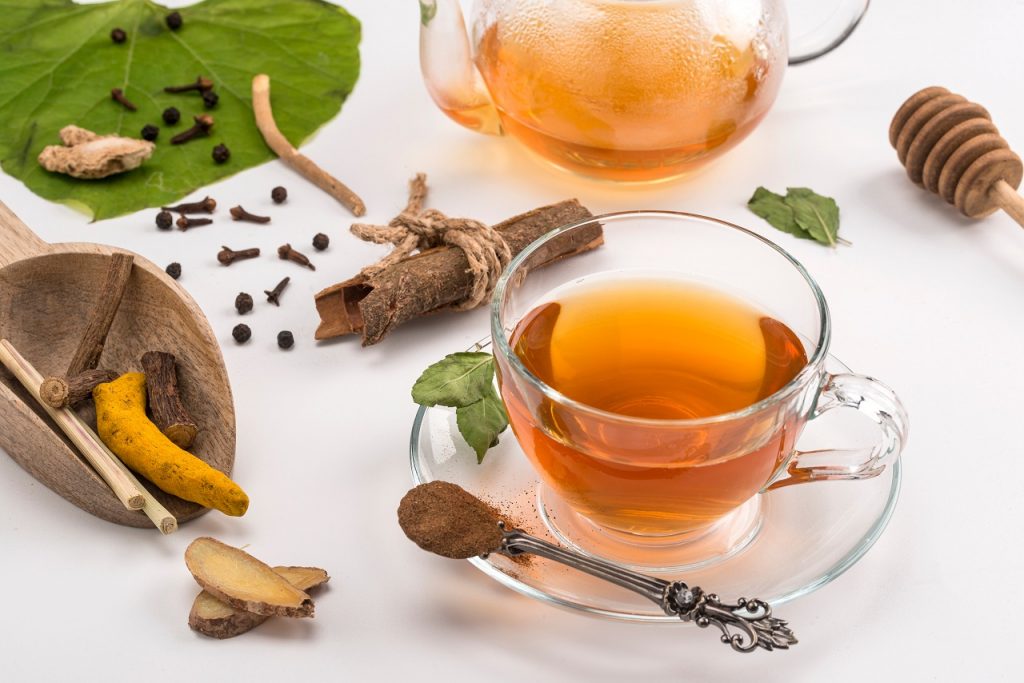
Prepared with herbs and spices such as ginger, tulsi, cloves and black pepper, this traditional decoction is warming, aromatic and packed with ingredients that contain naturally occurring plant compounds studied for their antioxidant and anti-inflammatory properties.

If you’re looking for a comforting homemade drink during the rainy season, here’s a simple kadha recipe that’s easy to prepare.

Quick Answer

What is the best homemade kadha for the monsoon?

A traditional kadha made using ginger, tulsi, cloves, black pepper, cardamom and liquorice root can be a soothing warm beverage during the monsoon. While it is not a cure for viral infections, drinking warm fluids may help relieve throat irritation, improve comfort and support hydration when you’re feeling under the weather.

Why These Ingredients Are Traditionally Used

  • Ginger

Fresh ginger contains naturally occurring compounds called gingerols, which have been studied for their antioxidant and anti-inflammatory properties.

It is traditionally used to:

  • Soothe sore throats
  • Support digestion
  • Relieve nausea
  • Provide a warming sensation
  • Garlic

Garlic contains allicin, a sulphur-containing compound that has been widely studied for its antimicrobial properties in laboratory settings.

Including garlic as part of a balanced diet may contribute to overall health.

  • Tulsi (Holy Basil)

Tulsi has been used in traditional medicine for centuries.

Research suggests it contains plant compounds with antioxidant properties and may help support overall wellness.

  • Black Pepper

Black pepper contains piperine, a naturally occurring compound that enhances the absorption of certain nutrients and spices.

It also adds warmth and flavour to the kadha.

  • Cloves

Cloves contain eugenol, a natural compound with antioxidant properties.

They also contribute a distinctive aroma and flavour.

  • Cardamom

Cardamom provides a refreshing flavour and is traditionally used to support digestion after meals.

  • Liquorice Root (Jeshtimadh)

Liquorice root has traditionally been used to soothe throat irritation.

Note: People with high blood pressure, kidney disease or those who are pregnant should consult their healthcare provider before consuming liquorice regularly.

  • Honey

Honey can help soothe a sore throat and may reduce coughing in adults and children over one year of age.

Never give honey to infants below one year of age.

  • Lemon

Fresh lemon adds vitamin C and a refreshing citrus flavour.

Although vitamin C does not prevent the common cold, adequate intake supports normal immune function.

Homemade Kadha Recipe

Ingredients

  • 2 cups water
  • 1-inch ginger, crushed
  • 1 garlic clove, lightly crushed
  • 2–3 cardamom pods
  • 3 whole black peppercorns
  • 2 cloves
  • Small piece of liquorice root (optional)
  • 4–5 fresh tulsi leaves
  • 1 teaspoon honey (added after cooling slightly)
  • Juice of half a lemon

Method

  1. Add water to a saucepan.
  2. Add ginger, garlic, pepper, cloves, cardamom, liquorice root and tulsi.
  3. Bring to a boil.
  4. Simmer until the liquid reduces by approximately half.
  5. Remove from heat.
  6. Allow the kadha to cool slightly before adding honey (to preserve its natural properties).
  7. Add fresh lemon juice.
  8. Strain and serve warm.

Tips for the Best Kadha

  • Drink it warm not piping hot.
  • Prepare fresh whenever possible.
  • Adjust ginger and pepper according to your spice tolerance.
  • If you have acid reflux, reduce the quantity of pepper and ginger.
  • Honey should only be added after the drink has cooled slightly.

Who Should Be Careful?

Although kadha is made from common kitchen ingredients, it may not be suitable for everyone.

Speak with your healthcare provider if you:

  • Are pregnant or breastfeeding
  • Have uncontrolled high blood pressure
  • Have chronic kidney disease
  • Take blood-thinning medication
  • Have frequent acidity or stomach ulcers

What Kadha Can and Cannot Do

Kadha May:

✔ Provide a comforting warm drink

✔ Help soothe throat irritation

✔ Support hydration

✔ Be part of a healthy lifestyle

Kadha Cannot:

✖ Cure viral infections

✖ Replace antibiotics when bacterial infections are present

✖ Replace medical treatment for high fever, pneumonia or severe illness

When Should You See a Doctor?

Seek medical attention if you experience:

  • Fever lasting more than 2–3 days
  • Difficulty breathing
  • Persistent chest pain
  • Severe dehydration
  • Blood in sputum
  • Symptoms that worsen instead of improving

Home remedies should never delay appropriate medical care.

Traditional recipes like homemade kadha have been passed down through generations for good reason they provide warmth, comfort and a sense of care during seasonal illnesses.

While kadha isn’t a cure for viral infections, it can be part of a healthy routine that includes adequate rest, hydration, nutritious food and timely medical care when needed.

Think of it as one supportive tool not the entire treatment plan.

Pro Tip: Building immunity isn’t about one drink it’s about your everyday habits. Track your hydration, nutrition, sleep and physical activity using the GOQii App. Your GOQii Personalised Health Coach can help you build sustainable habits that support immune health throughout the year.

Frequently Asked Questions (FAQs)

  1. Can I drink kadha every day?

Yes, in moderation. If you’re consuming it regularly, avoid making it overly concentrated, especially if you’re sensitive to spices or have acidity.

  1. Is kadha safe for children?

Children can have mild, diluted versions, but avoid giving honey to infants below one year of age. Consult your paediatrician if your child is unwell.

  1. Does kadha cure the common cold?

No. There is no scientific evidence that kadha cures viral infections. However, warm fluids may help relieve sore throat discomfort and congestion while your body recovers.

  1. Can I store kadha?

Freshly prepared kadha is best. If needed, refrigerate it for up to 24 hours and reheat gently before drinking.

#BeTheForce

Disclaimer: This recipe is intended for educational purposes only and should not replace professional medical advice, diagnosis or treatment. Herbal preparations may interact with certain medications or medical conditions. If you have persistent fever, breathing difficulty or worsening symptoms, consult a qualified healthcare professional promptly.

July 28, 2026 By GOQii Leave a Comment

World Hepatitis Day 2026: “Let’s Break It Down” – 6 Habits to Protect Your Liver

The Big Question – Your liver works around the clock to keep you healthy but how often do you think about protecting it?
From filtering toxins and supporting digestion to storing energy and producing essential proteins, your liver performs hundreds of vital functions every day. Yet liver disease often develops silently, with few or no symptoms until significant damage has already occurred.

Many people believe liver disease is caused only by excessive alcohol consumption. In reality, viral hepatitis remains one of the leading causes of liver inflammation worldwide, affecting millions of people who may not even know they are infected.

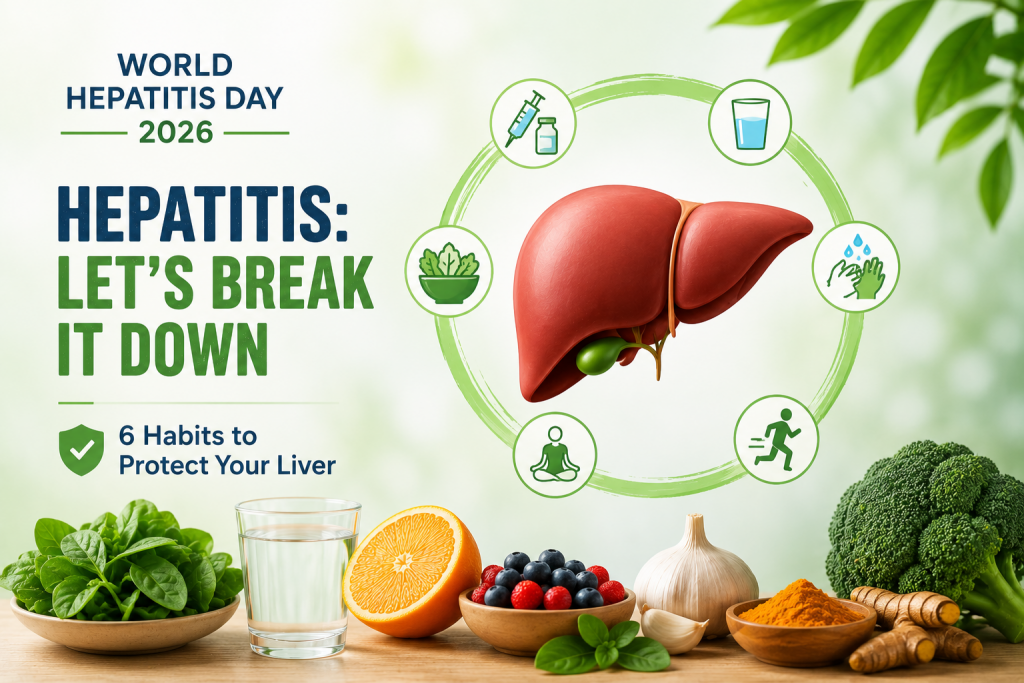
The theme for World Hepatitis Day 2026 is “Hepatitis: Let’s break it down.” The campaign calls for breaking down the social, financial and systemic barriers that prevent people from accessing hepatitis prevention, testing, vaccination and treatment. It also encourages us to break down the stigma and misinformation surrounding hepatitis as the world works towards eliminating viral hepatitis as a public health threat by 2030.

This World Hepatitis Day, let’s break down liver health into simple, practical habits that can help protect you and your family.

Quick Answer

What is the theme for World Hepatitis Day 2026?

The official theme is “Hepatitis: Let’s break it down.”

The campaign focuses on:

  • Breaking down barriers to testing and treatment
  • Improving access to vaccination
  • Reducing stigma surrounding hepatitis
  • Accelerating progress towards hepatitis elimination by 2030

You can protect yourself by:

  • Getting vaccinated against Hepatitis A and B (where appropriate)
  • Drinking safe, clean water
  • Practising good food hygiene
  • Avoiding shared needles and personal grooming items
  • Maintaining a healthy lifestyle that supports liver health

Understanding the Different Types of Hepatitis

“Hepatitis” simply means inflammation of the liver, but several different viruses can cause it.

Type How It Spreads Vaccine Available? Can It Become Chronic?
Hepatitis A      Contaminated food or water ✅ Yes Rare
Hepatitis B Blood and body fluids ✅ Yes Yes
Hepatitis C Blood-to-blood contact ❌ No Yes
Hepatitis D Occurs only with Hepatitis B infection Indirectly prevented through Hepatitis B vaccination Yes
Hepatitis E Contaminated food or water Limited availability in some countries Rare

Hepatitis A and E usually cause acute (short-term) illness, while Hepatitis B, C and D may become chronic, increasing the risk of cirrhosis and liver cancer if left untreated.

Why “Let’s Break It Down” Matters

One of the biggest barriers to hepatitis elimination is misinformation.

Many people avoid testing because they fear discrimination or incorrectly assume hepatitis only affects people who consume alcohol or use drugs.

The reality is very different.

Anyone can be affected.

Modern medicine has transformed hepatitis care:

  • Hepatitis C is now curable in the vast majority of people with direct-acting antiviral medications.
  • Chronic Hepatitis B can often be effectively managed with long-term treatment and regular medical follow-up.
  • Early diagnosis significantly improves long-term outcomes.

Breaking the stigma begins with education and open conversations.

6 Science-Backed Habits to Protect Your Liver

  1. Choose Safe Water and Practise Good Food Hygiene

Hepatitis A and E are commonly spread through contaminated food and water.

Reduce your risk by:

  • Drinking boiled or filtered water
  • Washing fruits and vegetables thoroughly
  • Eating freshly prepared food
  • Avoiding undercooked shellfish and seafood
  • Being cautious with street food during the monsoon season

Safe food and water remain some of the simplest and most effective ways to prevent infection.

  1. Stay Up to Date with Vaccinations

Vaccination is one of the most effective ways to prevent viral hepatitis.

Highly effective vaccines are available for:

  • Hepatitis A
  • Hepatitis B

In India, Hepatitis B vaccination is included in the Universal Immunization Programme, helping protect infants and children from infection.

Adults who are unvaccinated or at higher risk should speak with their healthcare provider about vaccination.

  1. Never Share Personal Items That May Come into Contact with Blood

Hepatitis B and C can spread through microscopic amounts of infected blood.

Never share:

  • Razors
  • Toothbrushes
  • Nail clippers
  • Glucose monitoring equipment
  • Needles or syringes

If you’re getting a tattoo, piercing or dental procedure, ensure that sterile, single-use equipment is used.

  1. Eat to Support Liver Health

Your daily diet plays an important role in supporting liver function and reducing the risk of Non-Alcoholic Fatty Liver Disease (NAFLD), which is increasingly common alongside obesity and Type 2 diabetes.

Build a liver-friendly plate by including:

Colourful Fruits and Vegetables

Berries, leafy greens, citrus fruits and carrots provide antioxidants that help protect cells from oxidative stress.

Healthy Fats

Walnuts, flaxseeds, olive oil and fatty fish support heart and metabolic health.

Whole Grains and Fibre

Whole grains, legumes and vegetables support digestive health and help maintain a healthy weight.

Herbs and Spices

Garlic and turmeric contain naturally occurring compounds that are being studied for their antioxidant and anti-inflammatory properties and can be included as part of a balanced diet.

  1. Limit Alcohol and Avoid Unnecessary Medications

Your liver processes everything you consume.

Excessive alcohol intake can damage liver cells over time and increase the risk of fatty liver disease, hepatitis and cirrhosis.

Similarly, avoid taking painkillers, supplements or herbal remedies in excessive amounts or without medical advice, as some products may harm the liver.

Always follow the recommended dosage and consult your healthcare provider if you have existing liver disease.

  1. Stay Physically Active

Regular exercise supports liver health by helping maintain a healthy weight and reducing excess liver fat.

Aim for at least:

  • 150 minutes of moderate-intensity physical activity each week
  • Strength training on 2 or more days per week

Even brisk walking can make a meaningful difference.

Who Should Consider Hepatitis Screening?

Because chronic hepatitis may not cause symptoms for many years, screening is important for people at increased risk.

Speak with your healthcare provider if you:

  • Have a family history of hepatitis or liver disease
  • Work in healthcare
  • Received blood transfusions before improved screening practices
  • Have diabetes or fatty liver disease
  • Have multiple sexual partners
  • Share needles or injecting equipment
  • Have unexplained liver enzyme abnormalities

Early diagnosis allows timely treatment and helps prevent complications.

Myth vs Fact

Myth:

“I don’t drink alcohol, so I don’t need to worry about liver disease.”

Fact:

Liver disease can develop due to viral hepatitis, fatty liver disease, certain medications, autoimmune conditions and inherited disorders even in people who never consume alcohol.

When Should You See a Doctor?

Seek medical attention if you experience:

  • Yellowing of the skin or eyes (jaundice)
  • Persistent fatigue
  • Dark urine
  • Pale stools
  • Abdominal swelling or pain
  • Unexplained nausea or loss of appetite

These symptoms require medical evaluation and should not be ignored.

Your liver works tirelessly to keep your body healthy every single day.

This World Hepatitis Day 2026, answer the call to “Let’s break it down.”

Break down stigma.

Break down misinformation.

Break down barriers to testing and vaccination.

Simple steps such as practising good hygiene, staying physically active, eating a balanced diet, getting vaccinated and seeking timely screening can go a long way in protecting your liver and supporting the global effort to eliminate viral hepatitis by 2030.

Want to support your liver health every day? Use the GOQii App to monitor your nutrition, hydration, physical activity and sleep. Your GOQii Personalised Health Coach can help you build sustainable lifestyle habits that support liver health, metabolic wellness and long-term disease prevention.

Frequently Asked Questions (FAQs)

  1. What is the theme for World Hepatitis Day 2026?

The official theme is “Hepatitis: Let’s break it down.” It focuses on improving access to prevention, testing, vaccination and treatment while eliminating stigma.

  1. What is the difference between Hepatitis A, B and C?

Hepatitis A spreads mainly through contaminated food and water and usually causes short-term illness. Hepatitis B and C spread primarily through infected blood and body fluids and may become chronic if left untreated.

  1. Can viral hepatitis be cured?

Hepatitis A and E usually resolve on their own with supportive care. Hepatitis C is curable in more than 95% of cases with modern antiviral treatment. Chronic Hepatitis B can often be effectively managed, although it cannot always be completely cured.

  1. Are vaccines available for all types of hepatitis?

No. Effective vaccines are available for Hepatitis A and Hepatitis B. There is currently no vaccine for Hepatitis C.

  1. Can fatty liver disease become serious?

Yes. If left unmanaged, fatty liver disease can progress to liver inflammation, fibrosis and, in some cases, cirrhosis. Maintaining a healthy weight, eating a balanced diet and exercising regularly can help reduce the risk.

  1. Can hepatitis spread through food?

Only certain types. Hepatitis A and Hepatitis E are commonly spread through contaminated food and water. Hepatitis B and C spread through infected blood and body fluids.

#BeTheForce

Disclaimer: This article is intended for educational purposes only and should not replace professional medical advice, diagnosis or treatment. Viral hepatitis requires laboratory testing for diagnosis. If you believe you have been exposed to hepatitis or have symptoms suggestive of liver disease, consult a qualified healthcare professional or gastroenterologist promptly.

July 24, 2026 By Urvi Gohil 2 Comments

Healthy Eating: Crispy Monsoon Corn Tikkis

Healthy RecipeThe Big Question: Can you enjoy crispy monsoon snacks without compromising your health goals?There’s something undeniably comforting about the aroma of roasted corn during the rainy season. Whether it’s a steaming boiled cob or a smoky street-side bhutta, sweet corn has long been one of the highlights of the monsoon. But along with the rains come intense cravings for deep-fried pakodas, cutlets, and other indulgent snacks.


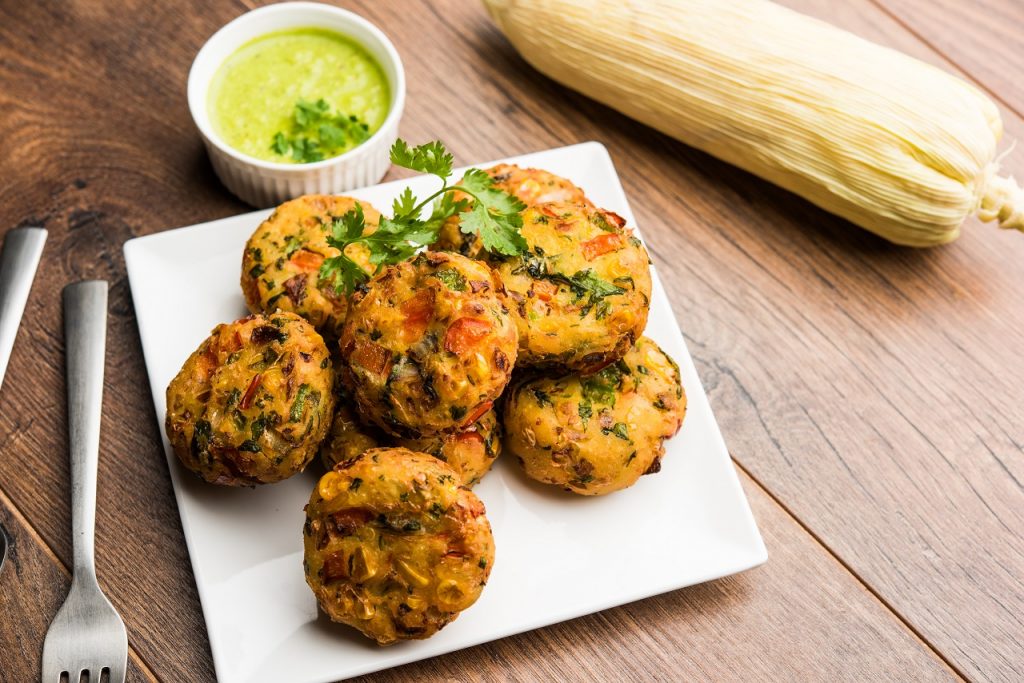
The good news? You don’t have to give up the crunch to make a healthier choice. These pan-roasted Corn Tikkis deliver the exact same satisfying texture and comforting flavours while using wholesome ingredients and significantly less oil than traditional deep-fried versions.

Why You’ll Love These Healthy Corn Tikkis

These tikkis are not only delicious but also packed with ingredients that contribute to a balanced diet:

  • Supports Eye Health: Sweet corn contains lutein and zeaxanthin, two naturally occurring carotenoids that help support eye health and may contribute to protecting vision as we age.
  • Provides Dietary Fibre: Corn and added vegetables contribute dietary fibre, which supports healthy digestion and promotes satiety, helping you stay fuller for longer.
  • Adds Colour and Nutrients: Capsicum, carrots, and fresh coriander add colour, flavour, and a variety of vitamins, minerals, and antioxidants that support overall immune health.
  • A Healthier Way to Enjoy Comfort Food: Instead of deep-frying, these tikkis are pan-roasted using minimal oil, helping reduce the overall fat content while still achieving a perfect, crisp exterior.

Recipe Overview

  • Preparation Time: 20 minutes
  • Cooking Time: 15 minutes
  • Total Time: 35 minutes
  • Makes: 8 tikkis
  • Serves: 4

Ingredients

The Base

  • 1 cup boiled sweet corn kernels (coarsely ground)
  • 2 tbsp whole boiled corn kernels
  • ½ cup mashed boiled potatoes
  • 2 tbsp wheat rusk powder (for coating)
  • 1 tsp oil (for roasting)

The Vegetables

  • 2 tbsp finely chopped capsicum
  • 2 tbsp finely chopped onion
  • 2 tbsp grated carrot
  • 2 tbsp chopped fresh coriander

The Flavouring

  • 1 tbsp ginger paste
  • 1 tsp green chilli paste (adjust to taste)
  • 1 tsp red chilli powder
  • 1 tsp coriander-cumin powder
  • ½ tsp garam masala
  • Salt to taste
  • Chaat masala (optional)

Method

Step 1: Cook the Corn Mixture – Heat a teaspoon of oil in a non-stick pan. Add the ginger paste and sauté briefly. Add the coarsely ground corn and cook over medium heat for 4–5 minutes until most of the moisture evaporates. This helps prevent the tikkis from becoming soft or breaking during cooking.

Step 2: Prepare the Mixture – In a large bowl, combine the mashed potatoes, whole corn kernels, cooked corn mixture, capsicum, onion, carrot, and fresh coriander. Mix well.

Step 3: Season – Add the green chilli paste, red chilli powder, coriander-cumin powder, garam masala, salt, and chaat masala. Mix thoroughly until everything comes together into a soft, pliable dough.

Step 4: Shape the Tikkis – Lightly grease your palms. Shape the mixture into evenly sized round tikkis (cutlets). Roll each one gently in the wheat rusk powder for a light, crispy coating.

Step 5: Pan Roast – Heat a non-stick tawa or pan and brush it lightly with oil. Cook each tikki for about 4–5 minutes per side over medium heat until golden brown and crisp.

Step 6: Serve – Serve hot with fresh mint chutney, a mint-yoghurt dip, or coriander chutney. (Skip sugary ketchup if you’re trying to keep added sugar low!)

Approximate Nutrition (Per Serving – 2 Tikkis)

  • Calories: ~170 kcal
  • Protein: ~5 g
  • Carbohydrates: ~28 g
  • Fat: ~4 g
  • Fibre: ~4–5 g

(Values are approximate and may vary depending on the specific ingredients used.)

Healthy Variations & Swaps

Want to customise the recipe? Try these easy swaps:

Replace Potatoes With:

  • Sweet potato
  • Boiled raw banana
  • Mashed pumpkin

Add More Protein: These additions make the tikkis more filling while increasing the protein content:

  • Crumbled paneer or Tofu
  • Cooked quinoa
  • Boiled chickpeas (lightly mashed)

Gluten-Free Version: Replace the wheat rusk powder with:

  • Oats powder (certified gluten-free, if required)
  • Roasted poha (flattened rice) powder
  • Rice flakes powder

Air Fryer & Oven Methods:

  • Air Fryer: Cook at 180°C for 12–15 minutes, turning halfway through.
  • Oven: Bake at 180°C for 18–20 minutes, flipping once for even browning.

Storage Tips

Perfect for quick weekday snacks!

  • Refrigerate uncooked tikkis for up to 2 days in an airtight container.
  • Freeze shaped tikkis for up to 1 month. Thaw them overnight in the refrigerator before pan-roasting.

Healthy eating doesn’t mean giving up the foods you enjoy. Simple swaps—like pan-roasting instead of deep-frying, adding colourful vegetables, and choosing wholesome ingredients—can make traditional favourites more nutritious without compromising on taste. These crispy Corn Tikkis are proof that comfort food and healthy eating can go hand in hand.

Pro Tip: Cravings are easier to manage when you plan ahead. Track your meals on the GOQii App and connect with your GOQii Personalised Health Coach for customised snack ideas, healthier recipes, and nutrition guidance that fits your goals and lifestyle.

Frequently Asked Questions (FAQs)

  1. Is sweet corn good for weight management?

Yes. Sweet corn provides fibre that promotes fullness and contains important vitamins and minerals. Since it is a starchy vegetable, portion size remains important as part of a balanced diet.

  1. Can I prepare these tikkis in advance?

Yes. Shape the tikkis and refrigerate them for up to two days before cooking. They also freeze well for up to one month.

  1. Why are my tikkis falling apart?

The mixture may contain excess moisture. Cook the corn thoroughly before mixing to evaporate the water. If needed, add a tablespoon of roasted besan (chickpea flour) or oats powder to improve binding.

  1. Can people with diabetes eat these Corn Tikkis?

Yes, in moderation. Since sweet corn contains carbohydrates, portion control is important. Pair the tikkis with a protein-rich accompaniment such as yoghurt or paneer and avoid sugary sauces. Individual dietary needs vary, so consult your healthcare provider or dietitian for personalised advice.

Eat Healthy and #BeTheForce

Disclaimer: This recipe is intended for educational purposes only. Nutritional needs vary from person to person. If you have diabetes, kidney disease, or other medical conditions requiring specialised dietary advice, consult a qualified healthcare professional or registered dietitian before making significant dietary changes.

  • « Previous Page
  • 1
  • …
  • 3
  • 4
  • 5
  • 6
  • 7
  • …
  • 139
  • Next Page »

Search

Recent Posts

  • Foods to Manage Blood Sugar Naturally: A Complete Guide to Better Blood Sugar Control
  • The Lazy Person’s Guide to Staying Healthy: 5 Micro-Habits That Take Less Than 2 Minutes
  • Healthy Eating: Comforting Chilli Bean Soup Recipe for the Monsoon
  • The Truth About the ‘Beer Belly’: What Alcohol Really Does to Your Metabolism
  • Benefits of Meditation: How One Daily Habit Can Transform Your Mental Wellbeing

Stay Updated

Archives

  • August 2026 (7)
  • July 2026 (25)
  • June 2026 (22)
  • May 2026 (20)
  • April 2026 (24)
  • March 2026 (18)
  • February 2026 (14)
  • January 2026 (14)
  • December 2025 (19)
  • November 2025 (15)
  • October 2025 (20)
  • September 2025 (6)
  • August 2025 (6)
  • July 2025 (9)
  • June 2025 (18)
  • May 2025 (16)
  • April 2025 (22)
  • March 2025 (26)
  • February 2025 (21)
  • January 2025 (25)
  • December 2024 (22)
  • November 2024 (22)
  • October 2024 (20)
  • September 2024 (22)
  • August 2024 (28)
  • July 2024 (15)
  • June 2024 (23)
  • May 2024 (26)
  • April 2024 (27)
  • March 2024 (27)
  • February 2024 (23)
  • January 2024 (21)
  • December 2023 (14)
  • November 2023 (10)
  • October 2023 (19)
  • September 2023 (21)
  • August 2023 (16)
  • July 2023 (16)
  • June 2023 (21)
  • May 2023 (20)
  • April 2023 (19)
  • March 2023 (23)
  • February 2023 (19)
  • January 2023 (15)
  • December 2022 (11)
  • November 2022 (15)
  • October 2022 (15)
  • September 2022 (12)
  • August 2022 (9)
  • July 2022 (17)
  • June 2022 (11)
  • May 2022 (10)
  • April 2022 (6)
  • March 2022 (6)
  • February 2022 (13)
  • January 2022 (11)
  • December 2021 (7)
  • November 2021 (3)
  • October 2021 (6)
  • September 2021 (3)
  • August 2021 (8)
  • July 2021 (7)
  • June 2021 (15)
  • May 2021 (16)
  • April 2021 (10)
  • March 2021 (7)
  • February 2021 (4)
  • January 2021 (4)
  • December 2020 (3)
  • November 2020 (4)
  • October 2020 (10)
  • September 2020 (3)
  • August 2020 (3)
  • July 2020 (2)
  • June 2020 (4)
  • May 2020 (10)
  • April 2020 (12)
  • March 2020 (10)
  • February 2020 (4)
  • January 2020 (4)
  • December 2019 (3)
  • November 2019 (7)
  • October 2019 (5)
  • September 2019 (4)
  • August 2019 (9)
  • July 2019 (9)
  • June 2019 (11)
  • May 2019 (4)
  • April 2019 (8)
  • March 2019 (8)
  • February 2019 (9)
  • January 2019 (8)
  • December 2018 (9)
  • November 2018 (3)
  • October 2018 (3)
  • September 2018 (5)
  • August 2018 (10)
  • July 2018 (6)
  • June 2018 (13)
  • May 2018 (8)
  • April 2018 (18)
  • March 2018 (9)
  • February 2018 (8)
  • January 2018 (15)
  • December 2017 (12)
  • November 2017 (19)
  • October 2017 (13)
  • September 2017 (15)
  • August 2017 (4)
  • July 2017 (8)
  • June 2017 (7)
  • May 2017 (6)
  • April 2017 (8)
  • March 2017 (6)
  • February 2017 (7)
  • January 2017 (9)
  • December 2016 (10)
  • November 2016 (7)
  • October 2016 (7)
  • September 2016 (7)
  • August 2016 (11)
  • July 2016 (9)
  • June 2016 (9)
  • May 2016 (12)
  • April 2016 (17)
  • March 2016 (17)
  • February 2016 (8)
  • January 2016 (6)
  • December 2015 (2)
  • November 2015 (9)
  • October 2015 (7)
  • September 2015 (9)
  • August 2015 (11)
  • July 2015 (9)
  • June 2015 (11)
  • May 2015 (9)
  • April 2015 (13)
  • March 2015 (8)
  • February 2015 (5)
  • January 2015 (12)
  • December 2014 (14)
  • November 2014 (11)
  • October 2014 (6)
  • September 2014 (13)
  • August 2014 (12)
  • July 2014 (6)
  • June 2014 (2)
  • May 2014 (7)
  • April 2014 (4)

From Burnout to Balance: How Dr. Ranjit Reclaimed His Health

Dr Ranjit Bhatt has spent years tending to others. A practising doctor in Odisha, his days were packed with patients, surgeries, and emergencies. From the outside, it looked like a life lived in service. But on the inside, something wasn’t right. “I had no … [Read More...]

From Shimla’s Slopes to Chandigarh’s Sidewalks: Surinder Kaur Bhalla’s Journey from Chaos to Control

Some journeys start with a plan. Others begin with a stumble literally. Surinder Bhalla, a government professional, born and raised in the scenic hill town of Shimla, had always lived a life of movement. “In Shimla, you walked everywhere,” she reflects. “Walking was never an exercise. It was just life.” But after shifting to Chandigarh, […]

“I’ve Challenged Myself to Live 100 Years” – The Story of Chandubhai Savani’s Second Chance at Life

At 67, most people start slowing down. Not Chandubhai Savani. A resident of Surat, Chandubhai, thought life was on track. “My life was going well till I had my bypass surgery,” he says. That surgery, back in 2021, was a wake-up call.  Medication was routine, but exercise wasn’t. His diet? What he calls ‘normal.’ “I […]

Ananda Mukherjee Health Story

From Terminal Illness To Complete Wellness! Ananda Mukherjee Health Story

As we observe World Cancer Day under the powerful theme ‘United by Unique’ (2025-2027)**, we are reminded that every individual’s journey with cancer is distinct, yet united by shared resilience, hope, and the collective fight against this disease. This theme places people at the centre of care and their stories at the heart of the […]

  • HOME
  • HEALTHY LIVING
  • FITNESS
  • HEALTHY RECIPES
  • USER STORIES
  • KARMA
  • BUY GOQii

Copyright ©2016 GOQii