GOQii

Blog

  • HOME
  • HEALTHY LIVING
  • FITNESS
  • HEALTHY RECIPES
  • USER STORIES
  • KARMA
  • BUY GOQii

Search Results for: disease

October 24, 2026 By Urvi Gohil Leave a Comment

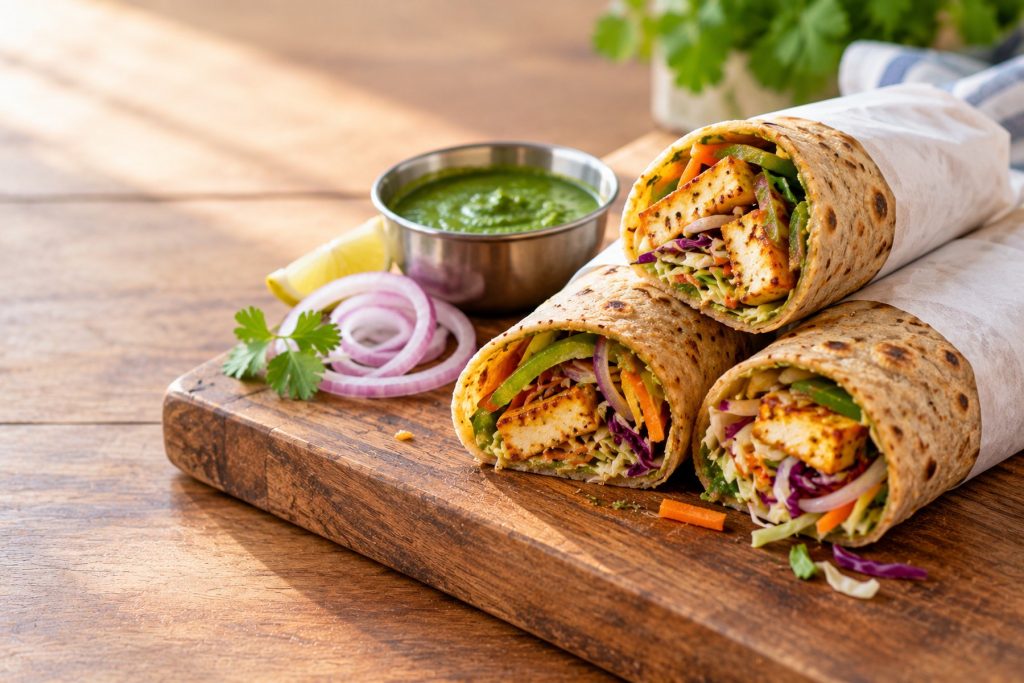
Healthy Eating: Vegetable and Paneer Kathi Roll

The kathi roll started life as Kolkata street food: a flaky, often fried paratha wrapped around skewered fillings. This home version keeps the flavour and the fun, but swaps the paratha for whole wheat chapatis (leftovers work perfectly) and fills them with a colourful mix of vegetables and spiced paneer. It takes about 25 minutes, packs well for lunch, and is the kind of meal both children and adults happily eat.

At a glance

  • Makes: 3 rolls (serves 3 as a light meal, or 2 with a side salad)
  • Time: about 10 minutes to prep and 15 minutes to cook
  • Why it works: whole wheat chapati and vegetables bring fibre; paneer and curd bring protein and calcium.
  • Use up leftovers safely: chapatis that were refrigerated within 2 hours and are a day or two old are ideal. Warm them on a tawa so they fold without cracking.
  • Keep the salt in check: the chutney and chaat masala are already salty, so taste before adding more.
  • Easy swaps: tofu for a dairy-free roll, egg for a classic Kolkata-style roll, or ragi or jowar rotis for a millet twist.

Vegetable and paneer kathi roll recipe

  • Makes: 3 rolls | Prep: 10 minutes | Cook: 15 minutes

    Ingredients

    For the filling

    • 150 g paneer, cut into thin strips or crumbled (about 1 cup)
    • 1 medium onion, thinly sliced (keep a quarter aside, raw, for topping)
    • 1 medium carrot, cut into thin strips
    • 1 medium capsicum, thinly sliced
    • 1 cup shredded cabbage
    • 1 medium tomato, deseeded and sliced
    • 2 tsp oil
    • 1 tsp ginger-garlic paste
    • ½ tsp turmeric (haldi)
    • ½–1 tsp red chilli powder, to taste
    • ½ tsp garam masala
    • 1 tsp roasted cumin (jeera) powder
    • Salt, to taste (go easy: see the tip below)
    • A squeeze of lemon

    For the spread and assembly

    • 3 whole wheat chapatis (leftover or fresh)
    • 3 tbsp mint-coriander chutney
    • 3 tbsp thick curd (hung curd works best)
    • ½ tsp chaat masala

    Method

    1. Make the spread. Mix the chutney and curd in a small bowl. Don’t add salt yet; the chutney usually has enough.
    2. Cook the vegetables. Heat the oil in a wide pan on medium heat. Sauté the ginger-garlic paste for 30 seconds, then add the onion and cook for 2–3 minutes until soft. Add the carrot, capsicum and cabbage and stir-fry for 3–4 minutes, so they soften but keep some crunch.
    3. Add the spices and paneer. Stir in the tomato, turmeric, chilli powder, garam masala and cumin powder. Cook for a minute, then add the paneer and toss gently for 2–3 minutes until heated through. Taste, add a little salt only if needed, and finish with a squeeze of lemon.
    4. Warm the chapatis. Heat each chapati on a hot tawa for 20–30 seconds on each side so it’s soft and pliable.
    5. Spread a third of the chutney-curd mix over each chapati. Spoon a third of the filling in a line slightly off-centre, top with a few raw onion slices and a pinch of chaat masala.
    6. Roll and serve. Fold in the bottom edge, then roll tightly. Wrap the lower half in butter paper or foil to hold it together. Serve warm, with extra chutney or a salad on the side.

What makes this a healthier kathi roll

Whole wheat instead of a fried paratha

Street-style kathi rolls are usually made with a layered paratha cooked in plenty of oil, often with maida. Using a whole wheat chapati keeps the fibre of the whole grain and cuts out most of the added fat, while still giving you a soft, foldable wrap.

A good dose of vegetables

Each roll carries roughly half a cup of cooked vegetables, plus raw onion. Carrots provide beta-carotene, which the body converts to vitamin A; capsicum, tomato and lemon add vitamin C; and cabbage and onion add fibre. Cooking the vegetables only until tender-crisp, and adding raw onion and lemon at the end, helps keep more of the vitamin C, which is sensitive to heat.

Protein from paneer and curd

Paneer is one of the most useful vegetarian protein sources in Indian kitchens, with about 18–20 g of protein per 100 g, based on Indian food composition data. The 150 g in this recipe gives each roll around 9 g of protein from paneer alone, with a little more from the curd and chapati. Protein and fibre together help make a meal more filling than a plain chapati or a vegetable wrap on its own.

Paneer is also a good source of calcium, but full-fat paneer is high in saturated fat, at around 13–15 g per 100 g. That’s no reason to avoid it, but it’s worth keeping the portion moderate and choosing low-fat paneer, made from toned milk, if you’re watching your cholesterol or weight.

Watch the salt

Indians eat on average about 11 g of salt a day, more than twice the WHO limit of 5 g. In this recipe, the chutney, chaat masala and any salt in the filling all add up, so we’ve kept added salt optional. Taste first and add a pinch only if it’s needed.

If you have diabetes

The chapati is the main source of carbohydrate here; the vegetables, paneer and curd around it slow things down and make it a more balanced meal than a roll made with maida or potato filling. One roll with a salad or a bowl of dal is a sensible portion for most people, but needs vary, so check with your doctor or dietitian how it fits your plan.

Swaps and variations

  • Dairy-free: use firm tofu instead of paneer, and a thick plant-based yoghurt or extra chutney instead of curd.
  • Egg kathi roll: cook a thin omelette on the tawa, lay the chapati on top for a few seconds so it sticks, then fill and roll. This is closer to the classic Kolkata egg roll.
  • More plant protein: add a handful of boiled chana, rajma or steamed moong sprouts to the filling. Pulses add both protein and fibre; read more in why pulses are good for you.
  • Millet twist: use ragi or jowar rotis. They’re more fragile, so warm them gently and roll loosely.
  • Extra greens: stir a handful of chopped spinach or methi into the filling at the end.
  • Lighter paneer: use low-fat paneer, or swap half the paneer for crumbled tofu.

Leftover chapatis and lunchboxes: keep it safe

  • Leftover chapatis: cool them and put them in the fridge within 2 hours of cooking, as food safety authorities advise for leftovers, and use them within a day or two, while they’re still soft and fresh. Warm them on a tawa before rolling.
  • For the lunchbox: let the filling cool, then pack it separately from the chapatis and spread, and roll at lunchtime to avoid a soggy wrap. Paneer and curd are perishable, so use an insulated box or an ice pack if the lunch will sit for more than a couple of hours, especially in warm weather. Our meal-prep guide has more ideas for packing healthy lunches.
  • Making ahead: the filling keeps in the fridge for a day. Reheat it until it’s steaming hot all the way through.

Who should take care

  • Milk allergy: paneer and curd are dairy, so use the tofu swap.
  • Young children: cut the roll into smaller pieces and go easy on the chilli.
  • High blood pressure or kidney disease: keep the salt, chaat masala and salty chutney to a minimum, and follow any diet advice from your doctor.
  • Gluten: whole wheat chapatis contain gluten. For coeliac disease, use rotis made from certified gluten-free millet flour.

The bottom line

A kathi roll doesn’t have to be a once-in-a-while street-food treat. Made with whole wheat chapatis, plenty of vegetables, a sensible amount of paneer and a light hand with the salt, it’s a balanced, filling meal that turns yesterday’s chapatis into today’s lunch.

Pro Tip: Use the GOQii App to log your meals and see whether you’re getting enough protein and vegetables across the day. Your GOQii Personalised Health Coach can help you adapt family favourites like this one to your goals, from weight management to blood sugar control.

Frequently asked questions

Is a paneer kathi roll healthy?

It can be. A version made with a whole wheat chapati, plenty of vegetables, a moderate amount of paneer and little added oil and salt is a balanced meal with fibre, protein and calcium. Street-style rolls made with fried, maida-based parathas and heavy sauces are much higher in fat and salt.

How much protein is in a paneer kathi roll?

Paneer has about 18–20 g of protein per 100 g. In this recipe, 150 g of paneer across three rolls gives each roll around 9 g of protein from paneer, plus a little more from the curd and chapati. Adding chana or sprouts to the filling increases it further.

Can I use leftover chapatis?

Yes, leftover chapatis work well. Refrigerate them within 2 hours of cooking, use them within a day or two, and warm them on a tawa before rolling so they’re soft and don’t crack.

Is a kathi roll good for weight loss?

A homemade roll like this one can fit into a weight-loss plan, as fibre and protein help make a meal filling. Keep to one or two rolls, choose low-fat paneer if you like, and go easy on the oil and creamy sauces.

Can people with diabetes eat a kathi roll?

Most people with diabetes can include a roll like this in a balanced meal plan. The chapati is the main carbohydrate, so keep to one roll with a salad or dal, and check with your doctor or dietitian how it fits your plan.

How do I keep a kathi roll from getting soggy in a lunchbox?

Deseed the tomato, let the filling cool completely, and pack the filling, spread and chapatis separately. Roll them just before eating. Use an insulated box or ice pack, as paneer and curd are perishable.

What can I use instead of paneer?

Firm tofu works well for a dairy-free roll. You can also use eggs, boiled chana or rajma, steamed sprouts, or a mix of paneer and tofu.

#BeTheForce

Disclaimer: The information provided in this blog is for general awareness and educational purposes only. It is not intended to replace professional medical advice, diagnosis, or treatment. Always consult a qualified healthcare provider for personalised medical guidance or concerns related to your health.

October 23, 2026 By GOQii Leave a Comment

The Science of Power Naps: How Long is Too Long?

It’s 3 pm, lunch is settling, and your eyelids feel heavy. A short nap can be one of the simplest ways to get through that slump. But anyone who has “just closed their eyes for a bit” and woken up an hour later, foggy and grumpy, knows that naps can backfire.
The difference comes down mostly to length and timing. Here’s what the research says about how long to nap, when to do it, and when frequent long naps may be a sign of something worth checking.

At a glance

  • Aim for 10–20 minutes. Short naps boost alertness with little grogginess afterwards. In one lab study, a 10-minute nap gave the quickest benefit.
  • Nap in the early afternoon. Napping after about 3 pm can make it harder to sleep at night.
  • Longer isn’t better. Naps of 30 minutes or more are more likely to leave you groggy (“sleep inertia”) for a while after waking.
  • Regular naps over an hour are linked with health risks. Large reviews link them with higher rates of heart disease, metabolic problems and early death, although they don’t prove that the naps are the cause.
  • Naps don’t replace night-time sleep. If you need a nap every day, look at your night-time sleep first.
  • Feeling very sleepy despite a full night’s sleep? Speak to a doctor. It can be a sign of a sleep disorder such as sleep apnoea.

What happens in your brain when you nap

Why you feel sleepy in the afternoon

That early-afternoon slump isn’t only about a heavy lunch. Your body clock has a natural dip in alertness around 1–3 pm, and it’s stronger if you slept badly the night before. A very large lunch may add to the drowsiness, and many people find a lighter, balanced lunch keeps them more alert.

Sleep happens in stages

When you fall asleep, your brain moves through different stages of sleep:

  • Light sleep (N1 and N2): the first few minutes are very light sleep, followed by stage 2, which typically lasts 10–25 minutes. Waking from these stages is fairly easy.
  • Deep sleep (N3): this follows, and it’s much harder to wake from.
  • REM sleep: the dreaming stage, which usually comes later.

A full cycle through these stages takes about 90 minutes on average.

Why length matters: sleep inertia

Wake up during deep sleep and you’re likely to feel groggy, slow and disoriented for a while. This is called sleep inertia. According to the Mayo Clinic, it usually wears off within about 35 minutes, but that’s long enough to spoil the point of a nap if you have a meeting or need to drive.

That’s the whole logic of the power nap: sleep long enough to get the benefit of light sleep, but wake up before you sink into deep sleep.

How long should a power nap be?

One of the best-known studies on nap length comes from Flinders University in Australia. Researchers restricted 24 healthy young adults to about five hours’ sleep, then compared afternoon naps of 5, 10, 20 and 30 minutes. As one summary of the study reports:

  • 5 minutes gave few benefits compared with no nap.
  • 10 minutes gave immediate improvements in alertness and performance, with some benefits lasting up to about 155 minutes.
  • 20 minutes also helped, but the improvements only showed up about 35 minutes after waking.
  • 30 minutes caused a period of grogginess and poorer performance straight after waking, before the benefits kicked in.

The researchers concluded that the 10-minute nap was the most effective of the lengths they tested. Most health organisations suggest a similar window: the Mayo Clinic describes 20–30 minutes as ideal, noting that longer naps are more likely to leave you groggy.

Nap lengths compared

Nap length What to expect Best for
10–20 minutes Mostly light sleep; quick boost in alertness with little or no grogginess A workday slump, before driving (after pulling over safely), studying
30–60 minutes More likely to reach deep sleep; often groggy for a while after waking Rarely ideal; leave time to wake up properly before anything demanding
About 90 minutes Roughly one full sleep cycle, so you may wake from lighter sleep; more likely to affect night-time sleep Occasionally, when you’re seriously short of sleep, such as before a night shift
Regularly over 60 minutes Linked in studies with higher health risks (see below) Worth discussing with a doctor if it’s a daily need

These are general guides. Some people wake refreshed after 30 minutes; others feel foggy after 15. Notice what works for you, and keep it short if you’re unsure.

The benefits of a short nap

A well-timed short nap won’t make up for weeks of poor sleep, but it can help in the moment. According to the Mayo Clinic, naps can:

  • reduce tiredness and improve alertness
  • lift your mood and help you relax
  • support performance, including reaction time and memory

What the research shows

  • Alertness on the job: in a well-known NASA study in the 1990s, long-haul pilots who were allowed a planned nap in the cockpit while colleagues flew showed up to 54% better alertness and up to 34% better job performance than pilots who didn’t nap. The pilots had a 40-minute rest opportunity, and the naps behind these results lasted about 26 minutes. These are best-case figures from a specific setting, but they show why some workplaces build in planned rest.
  • Sleepy driving: in a driving-simulator study at Loughborough University in the UK, sleepy drivers who had caffeine followed by a 15-minute nap had far fewer sleep-related incidents than with caffeine alone, even when they didn’t fully fall asleep. If you feel drowsy while driving, the safest choice is always to stop somewhere safe and rest.
  • Brain health: a 2023 UK Biobank study from University College London found that people genetically more likely to nap habitually had slightly larger total brain volume. The effect was modest and needs confirming, and the study didn’t look at nap length, so it isn’t a reason to start napping if you don’t need to.

What about a “coffee nap”?

Caffeine takes a little while to kick in, so some people drink a cup of coffee or tea and then nap for 15–20 minutes, aiming to wake just as it starts working. The driving study above suggests the combination can work well for sleepy people. If you try it, keep it to the early afternoon so the caffeine doesn’t disturb your night-time sleep, and skip it if caffeine makes you jittery or you’ve been advised to limit it.

How long is too long? When naps may be a warning sign

Short naps appear harmless for most people. Long, regular naps are a different story.

  • A 2020 analysis presented at the European Society of Cardiology Congress pooled more than 20 studies with over 313,000 people. Naps longer than 60 minutes were linked with a 30% higher risk of death from any cause and a 34% higher risk of cardiovascular disease compared with not napping. Naps under an hour weren’t linked with heart disease.
  • An earlier analysis of 21 studies and over 307,000 people from Asia and the West found a J-shaped link between nap length and metabolic syndrome: no increased risk below about 40 minutes, but rising risk with longer naps.

These studies show associations, not cause and effect. Long daytime naps may simply be a marker of something else going on, such as poor night-time sleep, an undiagnosed sleep disorder, depression or another health condition. That’s exactly why they’re worth paying attention to.

Naps and night-time sleep

Short naps rarely affect night-time sleep. But long or late naps can make it harder to fall asleep at night, especially if you already have insomnia. The NHS advises people with insomnia to avoid napping during the day. If you struggle to sleep at night, try cutting out daytime naps for a couple of weeks and see whether your night-time sleep improves.

When to see a doctor

Speak to your doctor if:

  • you need to nap more than usual, or feel sleepy during the day even after a full night’s sleep
  • you snore loudly, or someone has noticed your breathing stop and start or you gasp or choke during sleep. These are signs of sleep apnoea, which also causes daytime tiredness, poor concentration and morning headaches
  • you fall asleep at unexpected times, such as during conversations or at the wheel
  • daytime sleepiness started after beginning a new medicine

Untreated sleep apnoea and excessive sleepiness increase the risk of accidents, including on the road, so it’s worth getting checked rather than relying on naps to cope.

How to take a better power nap

  1. Time it right. Aim for early afternoon, roughly between 1 pm and 3 pm, when your natural dip in alertness happens. The Mayo Clinic notes that napping after 3 pm can get in the way of night-time sleep.
  2. Set an alarm. Most people take a few minutes to drop off, so set an alarm for about 20 minutes to get 10–20 minutes of actual sleep.
  3. Make it easy to switch off. A quiet, dark, comfortably cool spot helps. At work, an eye mask, earplugs or noise-cancelling headphones can turn a reclined chair into a nap spot.
  4. Don’t worry if you don’t fall asleep. Simply lying still with your eyes closed for 10–15 minutes can still feel restful.
  5. Wake up properly before anything demanding. Give yourself a few minutes to get moving: stand up, splash water on your face, step into daylight or take a short walk. Avoid driving or any task needing quick reactions until you feel fully alert.
  6. Watch the caffeine clock. If you have tea or coffee with your nap, keep it to the early afternoon. The NHS advises avoiding tea and coffee for at least six hours before bed.
  7. Mind your lunch. A balanced, not-too-heavy lunch can make the afternoon slump easier to manage. Our meal-prep guide has lunch ideas that keep you going through the afternoon.

If you work shifts

Shift work disrupts your body clock, and planned naps can help. A nap before a night shift, or a short nap during a break if your workplace allows it, can improve alertness. If you’re very sleepy after a night shift, consider a short nap or other transport before driving home.

If you don’t nap at all

That’s fine. Napping isn’t essential if you sleep well at night and feel alert during the day, and the studies above give no reason for non-nappers to start. Some people simply can’t sleep during the day, and that’s normal too.

The bottom line

For most people, the best power nap is short and early: 10–20 minutes, sometime between lunch and 3 pm. That’s enough to sharpen your focus and lift your mood without leaving you groggy or stealing your night-time sleep. Long naps are a different matter. If you regularly need an hour or more in the day, treat it as a signal to look at your night-time sleep, and to talk to a doctor if the tiredness doesn’t add up.

Pro Tip: Use the GOQii App to track your sleep and see how naps, caffeine and bedtimes affect your nights. Your GOQii Personalised Health Coach can help you build a sleep routine that keeps you alert through the day, with or without a nap.

Frequently asked questions

How long should a power nap be?

For most adults, 10–20 minutes of sleep is ideal. In one study, a 10-minute nap gave immediate improvements in alertness that lasted up to about two and a half hours. Longer naps are more likely to leave you feeling groggy.

Is a 1-hour nap too long?

Occasionally, it’s fine if you’re very short of sleep, but expect to feel groggy for a while afterwards. Regular naps of an hour or more have been linked in studies with higher risks of heart disease and metabolic problems, so if you need long naps often, check your night-time sleep and speak to a doctor.

What is the best time to take a nap?

Early afternoon, roughly between 1 pm and 3 pm, when alertness naturally dips. Napping after 3 pm can make it harder to fall asleep at night.

Why do I feel worse after a nap?

You probably woke from deep sleep, which causes “sleep inertia”: grogginess that usually passes within about 35 minutes. Keeping naps under 20 minutes helps you wake from lighter sleep.

Do naps make up for lost sleep at night?

Only partly. A short nap can improve alertness for a few hours, but it doesn’t replace a full night’s sleep. Most adults need 7 or more hours of sleep a night.

Does a coffee nap work?

It can. In a driving-simulator study, sleepy drivers who had caffeine followed by a 15-minute nap had far fewer sleep-related incidents than with caffeine alone. Keep it to the early afternoon so the caffeine doesn’t affect your night-time sleep.

Is it bad to need a nap every day?

Not necessarily. Many people enjoy a short daily nap. But if you feel very sleepy every day despite sleeping 7–9 hours, snore loudly or fall asleep at unexpected times, speak to a doctor, as this can be a sign of a sleep disorder such as sleep apnoea.

#BeTheForce

Disclaimer: The information provided in this blog is for general awareness and educational purposes only. It is not intended to replace professional medical advice, diagnosis, or treatment. Always consult a qualified healthcare provider for personalised medical guidance or concerns related to your health.

October 22, 2026 By Soni Thakur 11 Comments

7 Reasons Why Pulses Are Good For You!

Pulses are one of the healthiest, cheapest and most versatile foods in the Indian kitchen. A daily bowl of dal, chana or rajma adds protein, fibre and key minerals to your diet, and research links regular pulse eating to lower cholesterol and better blood sugar control.

Pulses are the dried, edible seeds of legume plants: lentils (masoor), pigeon peas (toor or arhar), chickpeas (chana), mung beans (moong), black gram (urad), kidney beans (rajma) and cowpeas (lobia), among others. Most Indian homes already eat them every day. Here are seven reasons to keep them on your plate, and to eat a little more.

Pulses at a glance

  • Protein-rich: pulses contain about 20–25% protein, two to three times more than cereals.
  • Good for your heart: about one serving a day lowered LDL (“bad”) cholesterol by around 5% in trials.
  • Steadier blood sugar: in people with diabetes, diets richer in pulses modestly improved long-term blood sugar control.
  • Better together: dal with rice or roti gives better-quality protein than either alone.
  • Cheap, long-lasting and kind to the soil: dried pulses keep for months and need little fertiliser to grow.

7 reasons pulses are good for you

  1. 1. They’re one of the best sources of plant protein

    Pulses contain about 20–25% protein, two to three times more than cereals, according to the UN Food and Agriculture Organization (FAO). For the many Indians who eat little or no meat, dal, chana and rajma are often the main source of protein in the day.

    That makes them useful at every age: for growing children, for women’s higher iron and folate needs, especially in pregnancy, and for older adults who need enough protein to protect their muscles.

    2. They’re packed with fibre and minerals

    Pulses are a good source of fibre and of iron, magnesium, potassium, phosphorus, zinc and B vitamins such as folate. Fibre keeps digestion regular and helps you feel full for longer, which can make it easier to manage your weight.

    For more on how fibre supports digestion and heart health, see our guide to high-fibre foods.

    Tip: eat iron-rich pulses with a source of vitamin C, such as lemon on your chana or tomatoes in your dal, to help your body absorb the iron.

    3. They’re good for your heart

    Pulses are naturally low in fat and contain almost no saturated fat. A review of 26 trials found that eating about one serving of pulses a day (around 130 g) lowered LDL (“bad”) cholesterol by about 5% compared with similar diets without pulses. That’s a modest but meaningful change from a simple food swap.

    To keep the benefit, watch the extras: a heavy tadka of ghee, or cream in dal makhani, adds the saturated fat that pulses themselves don’t have.

    4. They help keep blood sugar steady

    Pulses release their energy slowly. In a review of 41 trials, diets that included more pulses gave a modest improvement in long-term blood sugar control, lowering HbA1c by about 0.5%. In a three-month trial in 121 adults with type 2 diabetes, adding about one cup of legumes a day lowered HbA1c by 0.5% and systolic blood pressure by 4.5 mm Hg more than a wheat-fibre diet.

    Pulses aren’t a treatment for diabetes, but they are a smart swap for some of the refined rice, maida or sweets on your plate. Keep taking any medicines you’ve been prescribed.

    5. They make your grains more nutritious

    Pulses and cereals have different strengths in their protein. Eaten together, as in dal-chawal, rajma-rice, khichdi or idli-sambar, the protein quality of the meal improves. Traditional Indian meals got this right long before nutrition science explained why.

    6. They’re affordable and keep for months

    Pulses are among the cheapest sources of protein you can buy. Because they are dried seeds, they store well for months in an airtight container, so there is little waste. Keep a few different kinds in the kitchen, and you always have a quick, nourishing meal to hand.

    7. They’re good for the planet

    Pulse plants work with soil bacteria to take nitrogen from the air and turn it into a form plants can use. This improves soil fertility and reduces the need for synthetic fertiliser, which takes a lot of energy to make. Choosing pulses more often is a small, practical way to eat more sustainably.

Common Indian pulses and how to use them

Eating a mix of pulses through the week gives you a wider range of nutrients and keeps meals interesting.

Pulse Also called Easy ways to eat it Cooking note
Moong (whole or split) Green gram Moong dal, khichdi, chilla, sprouts Quick to cook and usually the easiest to digest
Masoor Red lentil Masoor dal, soups Split masoor cooks in 15–20 minutes without soaking
Toor Arhar, pigeon pea Everyday dal, sambar A staple dal across much of India
Chana Bengal gram, chickpea Chole, roasted chana, sundal, besan chilla Soak whole chana overnight before cooking
Rajma Kidney beans Rajma-chawal, salads, wraps Soak overnight and boil until fully soft: undercooked kidney beans can make you ill
Urad Black gram Idli, dosa, dal makhani Fermented batters (idli, dosa) are gentle on the stomach
Lobia Cowpea, black-eyed pea Lobia curry, salads Soak for a few hours to cut cooking time

How much should you eat?

The ICMR–National Institute of Nutrition’s My Plate for the Day suggests about 85 g of pulses a day (raw weight) for an adult eating around 2,000 calories, with eggs, fish or meat able to replace part of that. In practice, that is roughly one to two bowls of dal, chana or rajma spread across the day.

Easy ways to eat more pulses

  • Make dal a daily habit at lunch or dinner, and make it a little thicker than usual.
  • Start the day with pulses: moong dal chilla, besan chilla, idli, dosa or a sprouts salad.
  • Snack on them: roasted chana, a bowl of sundal, or other quick, healthy snacks.
  • Pack them for work: rajma or chole bowls and sprouts chaat keep well, as our meal-prep guide
  • Add them to what you already cook: a handful of chana in pulao, moong in upma, or lobia in a vegetable curry.

Gas and bloating: how to make pulses easier to digest

The most common reason people avoid pulses is wind. Pulses contain fermentable carbohydrates (oligosaccharides such as raffinose) that our small intestine can’t break down, so gut bacteria ferment them further along. That is part of why they feed a healthy gut, and also why a large bowl after weeks without them can leave you uncomfortable.

A few simple habits help most people:

  • Soak whole pulses. Soak rajma, chana, lobia and whole urad for 8–12 hours (overnight), then discard the soaking water and cook in fresh water. Soaking draws out some of the gas-forming sugars.
  • Cook them thoroughly. Pressure-cook until soft. Undercooked pulses are harder to digest, and raw or undercooked rajma can make you ill (see the table above).
  • Start small and build up. If you rarely eat pulses, begin with a small katori a day and increase over two to three weeks. Many people find their gut adapts.
  • Begin with the gentler dals. Split, husked dals such as moong and masoor are usually easier on the stomach than whole beans.
  • Use traditional tempering. Hing (asafoetida), jeera, ginger and ajwain are classic additions to dal. Evidence that they reduce gas is limited, but they make pulses tastier and many people find them helpful.
  • Drink enough water as you increase fibre, and spread pulses across meals rather than eating a large amount at once.

Who should take care

Pulses suit most people, but a few groups should check with a doctor or dietitian about how much and which kinds to eat:

  • Chronic kidney disease: pulses contain potassium and phosphorus, which some people with kidney disease need to limit. Your renal team can advise on portions and preparation.
  • Irritable bowel syndrome (IBS): many pulses are high in FODMAPs, which can trigger symptoms. A dietitian can help you find the types and portions you tolerate rather than cutting them out completely.
  • Gout or high uric acid: follow the advice of your doctor about your overall diet. Plant sources of purines appear to be less of a concern than meat and seafood, but individual advice matters.
  • Persistent or severe digestive symptoms: ongoing pain, bloating, changes in bowel habit or weight loss are worth a medical check-up rather than simply avoiding foods.

The bottom line

Pulses are one of the most useful foods in the Indian kitchen: affordable, filling, rich in protein and fibre, and backed by good evidence for heart health and blood sugar control. You don’t need anything exotic. A katori of well-cooked dal, a bowl of rajma or chana, or a handful of roasted chana as a snack, eaten most days alongside vegetables and whole grains, is a simple habit that adds up over time.

Pro Tip: Use the GOQii App to log your meals and see how often pulses actually make it onto your plate across the week. Your GOQii Personalised Health Coach can help you work more dals and beans into meals you already enjoy, and adjust portions to suit your goals.

Frequently asked questions

Are pulses and legumes the same thing?

Not quite. Legumes are all plants in the pea family, including peanuts, soybeans and fresh green peas. Pulses are the dried, edible seeds of legumes, such as lentils, dried beans, chickpeas and dried peas. In India, most dals are pulses.

Are pulses a good source of protein for vegetarians?

Yes. Dried pulses are roughly 20–25% protein by weight, about twice as much as most cereals. Eating them with rice, roti or millets gives a more complete mix of amino acids, which is why dal–chawal and rajma–chawal work so well together.

How much dal should I eat a day?

The ICMR–National Institute of Nutrition suggests about 85 g of pulses a day (raw weight) for an adult eating around 2,000 calories, with eggs, fish or meat able to replace part of that. That is roughly one to two bowls of dal, chana or rajma spread across the day. Your needs may differ depending on your age, activity and health.

Are pulses good for people with diabetes?

Pulses are a sensible choice for most people with diabetes. They are high in fibre, digest slowly and have a low glycaemic index, and studies have linked regular intake with modest improvements in blood sugar control. Watch the portion of rice or roti eaten with them, and talk to your doctor or dietitian about a plan that suits you.

Why do pulses cause gas, and how can I reduce it?

Pulses contain fermentable sugars that gut bacteria break down, producing gas. Soaking whole pulses and discarding the water, cooking them thoroughly, starting with small portions and choosing gentler dals like moong can help.

Which dal is easiest to digest?

Split, husked moong dal is generally considered the easiest to digest, which is why it is often used in khichdi for people who are unwell. Masoor dal is also fairly light. Whole beans such as rajma and chana tend to be heavier.

Can I eat pulses every day?

For most healthy people, yes. Eating pulses daily is an easy way to add protein and fibre. If you have kidney disease, IBS, gout or another condition that affects your diet, ask your doctor or dietitian how much is right for you.

#BeTheForce

Disclaimer: The information provided in this blog is for general awareness and educational purposes only. It is not intended to replace professional medical advice, diagnosis, or treatment. Always consult a qualified healthcare provider for personalised medical guidance or concerns related to your health.

October 20, 2026 By GOQii Leave a Comment

Dussehra 2026: 10 Unhealthy Habits to Leave Behind

This Dussehra, on Tuesday 20 October 2026, as Ravana’s effigy burns, pick one unhealthy habit to leave behind as well.


Dussehra, or Vijayadashami, marks the victory of good over evil: Lord Rama’s triumph over Ravana and, in many parts of India, Goddess Durga’s victory over Mahishasura. It comes at the end of nine days of Navratri, and for many families it is a day of puja, Ravan Dahan, shared meals and fresh starts.

Ravana is often shown with ten heads. In that spirit, here are ten everyday habits that quietly hold our health back, with a simple swap for each, plus practical tips for coming off the Navratri fast, enjoying festive food and staying safe at Ravan Dahan.

Dussehra at a glance

  • Dussehra 2026 falls on Tuesday 20 October, the day after the nine nights of Navratri.
  • Pick one habit, not ten. Small, steady changes last longer than big festive resolutions.
  • Break your fast gently. Start with water, fruit and light, home-cooked food before heavier dishes.
  • Enjoy the sweets, in smaller portions. Share, savour and balance them with lighter meals.
  • Take care at Ravan Dahan. Keep a safe distance, and if you have asthma or a lung condition, avoid the smoke and carry your inhaler.

10 habits to leave behind this Dussehra

One for each of Ravana’s ten heads. You don’t need to tackle them all. Pick the one that matters most to you and start there.

1. Sitting for hours at a stretch

Long, unbroken sitting is linked to poorer health, and the WHO advises that everyone should limit time spent sedentary.

Swap: stand up and move for a few minutes every 30–60 minutes, and try a few simple office workouts through the day.

2. Not moving enough

The WHO recommends at least 150 minutes of moderate activity a week for adults, plus muscle-strengthening exercise.

Swap: a 30-minute brisk walk five days a week gets you there. Garba and dandiya count too.

3. Extra sugar in your chai and drinks

Sweetened chai, packaged juices and soft drinks add up fast. High sugar intake is also a major driver of fatty liver, now very common in India.

Swap: cut the sugar in your chai by half a spoon each week, and choose water, buttermilk or nimbu pani without sugar.

4. Too much salt

Pickles, papad, namkeen and restaurant food push salt intake well above the WHO’s limit of less than 5 g a day, raising the risk of high blood pressure.

Swap: taste before you add salt, and keep pickles and papad to an occasional treat.

5. Too few fruits and vegetables

The WHO recommends at least 400 g of fruit and vegetables a day, about five portions.

Swap: fill half your plate with sabzi or salad at lunch and dinner, and have one fruit as a snack.

6. Fried and packaged snacks as everyday food

Namkeen, chips and biscuits are easy to eat without noticing, and they are high in salt, sugar or fat.

Swap: keep roasted chana, nuts, makhana or fruit within reach for the 4 pm hunger.

7. Late nights and short sleep

Regular short sleep affects your mood, focus and appetite, and is linked to weight gain.

Swap: set a regular bedtime, and put your phone away 30 minutes before it.

8. Letting stress run unchecked

Ongoing stress affects sleep and blood pressure, and often pushes us towards unhealthy food.

Swap: try 5 minutes of slow breathing, a short walk or a call with a friend when the day gets heavy.

9. Tobacco and too much alcohol

Tobacco kills more than 7 million people a year worldwide, and both smoked and chewed tobacco cause serious harm. Alcohol adds to the risk of liver disease, high blood pressure and some cancers.

Swap: if you use tobacco, make Dussehra your quit date. Counselling and medication can more than double your chance of quitting, so ask your doctor or call India’s free National Tobacco Quitline on 1800-11-2356 (8 am to 8 pm, closed Mondays). If you drink, set alcohol-free days each week.

10. Skipping health check-ups

High blood pressure, diabetes and fatty liver often cause no symptoms for years.

Swap: book a basic check-up this month, covering blood pressure, blood sugar, cholesterol and a liver function test, especially if you’re over 30 or have a family history.

Breaking the Navratri fast gently

After nine days of fasting or eating only vrat foods, your body is used to smaller, simpler meals. Jumping straight to a heavy, fried festive lunch can leave you bloated and uncomfortable.

  • Start with water. Drink a glass of water, coconut water or nimbu pani without much sugar.
  • Begin light. Fruit, a bowl of curd, khichdi, moong dal, or a simple vegetable with roti are easy first meals.
  • Add protein early. Many fasting days are low in protein. Dal, paneer, curd, eggs or sprouts help you feel steady.
  • Bring back grains gradually. Have a normal portion of roti or rice, not a double one.
  • Save the rich dishes for later in the day, and keep portions small.

If you have diabetes, take medicines that affect blood sugar, or are pregnant, check with your doctor about safe fasting and breaking the fast, as large swings in meals can affect blood sugar.

Enjoying festive food without overdoing it

Dussehra is a time for jalebi, fafda, kheer and family meals. You don’t need to skip them, just enjoy them with a little thought.

  • Eat a proper meal before you go visiting. Arriving hungry makes it easy to fill up on sweets and fried snacks.
  • Pick your favourite and skip the rest. One jalebi or one piece of mithai you really love beats a little of everything.
  • Share sweets. Split a portion, or take a small piece.
  • Balance the day. If lunch is heavy, keep dinner light: dal, sabzi and roti, or khichdi.
  • Gift healthier. Dry fruit, roasted nuts, fresh fruit baskets or homemade laddoos with less sugar make thoughtful gifts.
  • Keep moving. A family walk after the festive meal is good for digestion and for spending time together.

Staying safe at Ravan Dahan

Watching Ravana’s effigy burn is a highlight of the day, but the fireworks, smoke and crowds bring some real risks.

  • Keep a safe distance from the effigy and fireworks, and follow barriers and volunteers’ instructions. Keep children close and hold their hands in crowds.
  • Wear cotton clothes, not loose synthetic ones that catch fire easily.
  • Avoid the smoke if you have asthma or a lung condition. A pulmonologist quoted by ETV Bharat notes that even brief exposure can set off symptoms. Watch from upwind or further back, wear an N95 mask, and keep your reliever inhaler with you.
  • Keep taking your regular medicines, including preventer inhalers, even if you feel fine.
  • For minor burns, hold the area under cool running water for 20 minutes, and don’t put creams, oil, butter or toothpaste on it. Cover it loosely with cling film or a clean cloth, and get medical help for large, deep or facial burns.
  • Plan your way home before the crowd starts to leave, especially with children or older relatives.

The bottom line

Dussehra celebrates good winning over evil, and it’s a natural moment for a fresh start. You don’t need to change everything at once. Pick one habit from the ten, make one simple swap, and keep it going until Diwali and beyond. Enjoy the festivities, break your fast gently, and stay safe around the fire and smoke.

Pro Tip: Choose your one habit and track it in the GOQii App, whether that’s steps, sleep, water or sugar in your chai. Your GOQii Personalised Health Coach can help you turn this Dussehra’s resolution into a habit that lasts.

Frequently Asked Questions (FAQs)

  1. When is Dussehra in 2026?

Dussehra, also called Vijayadashami, falls on Tuesday 20 October 2026, the day after the nine nights of Navratri.

  1. What does Dussehra celebrate?

It marks the victory of good over evil, remembering Lord Rama’s victory over Ravana and, in many regions, Goddess Durga’s victory over Mahishasura.

  1. What should I eat after the Navratri fast?

Start light: water or coconut water, fruit, curd, khichdi, moong dal or a simple sabzi with roti. Add protein early, and save rich, fried dishes for later in the day in small portions.

  1. How can I enjoy festive sweets without overeating?

Eat a proper meal before visiting, choose the one sweet you love most, share portions, and keep the next meal light. A family walk after the meal also helps.

  1. Is the smoke from Ravan Dahan harmful?

Smoke from burning effigies and fireworks can irritate the lungs, and even brief exposure can trigger symptoms in people with asthma or other lung conditions. Watch from a distance and upwind, wear an N95 mask if you are sensitive, and carry any inhaler you use.

  1. What should I do for a minor burn?

Hold it under cool running water for 20 minutes, and don’t apply creams, oil, butter or toothpaste. Cover it loosely with cling film or a clean cloth, and get medical help for large, deep or facial burns.

  1. How do I make a health resolution stick?

Pick one specific habit, such as a 30-minute walk five days a week, rather than several at once. Tie it to a set time of day, track it, and tell someone close to you so they can keep you going.

#BeTheForce 

Disclaimer: The information provided in this blog is for general awareness and educational purposes only. It is not intended to replace professional medical advice, diagnosis, or treatment. Always consult a qualified healthcare provider for personalised medical guidance or concerns related to your health.

  • « Previous Page
  • 1
  • …
  • 8
  • 9
  • 10
  • 11
  • 12
  • …
  • 147
  • Next Page »

Search

Recent Posts

  • World AMR Awareness Week 2026: when you need antibiotics, and simple steps to prevent AMR
  • PCOS: diet, exercise and the myths to stop believing
  • Cholesterol numbers explained: LDL, HDL and triglycerides
  • International Men’s Day 2026: why men’s health is everyone’s business
  • World COPD Day 2026: Short of Breath? Think COPD – Why Early Diagnosis Matters

Stay Updated

Archives

  • November 2026 (21)
  • October 2026 (23)
  • September 2026 (5)
  • August 2026 (8)
  • July 2026 (24)
  • June 2026 (22)
  • May 2026 (20)
  • April 2026 (24)
  • March 2026 (18)
  • February 2026 (14)
  • January 2026 (14)
  • December 2025 (19)
  • November 2025 (14)
  • October 2025 (17)
  • September 2025 (6)
  • August 2025 (5)
  • July 2025 (9)
  • June 2025 (18)
  • May 2025 (16)
  • April 2025 (22)
  • March 2025 (25)
  • February 2025 (21)
  • January 2025 (25)
  • December 2024 (21)
  • November 2024 (21)
  • October 2024 (15)
  • September 2024 (22)
  • August 2024 (27)
  • July 2024 (14)
  • June 2024 (23)
  • May 2024 (26)
  • April 2024 (27)
  • March 2024 (27)
  • February 2024 (23)
  • January 2024 (21)
  • December 2023 (14)
  • November 2023 (10)
  • October 2023 (18)
  • September 2023 (20)
  • August 2023 (16)
  • July 2023 (16)
  • June 2023 (21)
  • May 2023 (20)
  • April 2023 (19)
  • March 2023 (23)
  • February 2023 (19)
  • January 2023 (15)
  • December 2022 (11)
  • November 2022 (15)
  • October 2022 (15)
  • September 2022 (12)
  • August 2022 (9)
  • July 2022 (17)
  • June 2022 (11)
  • May 2022 (10)
  • April 2022 (6)
  • March 2022 (6)
  • February 2022 (13)
  • January 2022 (11)
  • December 2021 (7)
  • November 2021 (3)
  • October 2021 (6)
  • September 2021 (3)
  • August 2021 (8)
  • July 2021 (7)
  • June 2021 (15)
  • May 2021 (16)
  • April 2021 (10)
  • March 2021 (7)
  • February 2021 (4)
  • January 2021 (4)
  • December 2020 (3)
  • November 2020 (4)
  • October 2020 (10)
  • September 2020 (3)
  • August 2020 (3)
  • July 2020 (2)
  • June 2020 (4)
  • May 2020 (10)
  • April 2020 (12)
  • March 2020 (10)
  • February 2020 (4)
  • January 2020 (4)
  • December 2019 (3)
  • November 2019 (7)
  • October 2019 (5)
  • September 2019 (4)
  • August 2019 (9)
  • July 2019 (9)
  • June 2019 (11)
  • May 2019 (4)
  • April 2019 (8)
  • March 2019 (8)
  • February 2019 (9)
  • January 2019 (8)
  • December 2018 (9)
  • November 2018 (3)
  • October 2018 (3)
  • September 2018 (5)
  • August 2018 (10)
  • July 2018 (6)
  • June 2018 (13)
  • May 2018 (8)
  • April 2018 (17)
  • March 2018 (9)
  • February 2018 (8)
  • January 2018 (15)
  • December 2017 (12)
  • November 2017 (19)
  • October 2017 (13)
  • September 2017 (15)
  • August 2017 (4)
  • July 2017 (8)
  • June 2017 (7)
  • May 2017 (6)
  • April 2017 (8)
  • March 2017 (6)
  • February 2017 (7)
  • January 2017 (9)
  • December 2016 (10)
  • November 2016 (7)
  • October 2016 (7)
  • September 2016 (7)
  • August 2016 (11)
  • July 2016 (9)
  • June 2016 (9)
  • May 2016 (12)
  • April 2016 (17)
  • March 2016 (17)
  • February 2016 (8)
  • January 2016 (6)
  • December 2015 (2)
  • November 2015 (9)
  • October 2015 (7)
  • September 2015 (9)
  • August 2015 (11)
  • July 2015 (9)
  • June 2015 (11)
  • May 2015 (9)
  • April 2015 (13)
  • March 2015 (8)
  • February 2015 (5)
  • January 2015 (12)
  • December 2014 (14)
  • November 2014 (11)
  • October 2014 (6)
  • September 2014 (13)
  • August 2014 (12)
  • July 2014 (6)
  • June 2014 (2)
  • May 2014 (7)
  • April 2014 (4)

From Burnout to Balance: How Dr. Ranjit Reclaimed His Health

Dr Ranjit Bhatt has spent years tending to others. A practising doctor in Odisha, his days were packed with patients, surgeries, and emergencies. From the outside, it looked like a life lived in service. But on the inside, something wasn’t right. “I had no … [Read More...]

From Shimla’s Slopes to Chandigarh’s Sidewalks: Surinder Kaur Bhalla’s Journey from Chaos to Control

Some journeys start with a plan. Others begin with a stumble literally. Surinder Bhalla, a government professional, born and raised in the scenic hill town of Shimla, had always lived a life of movement. “In Shimla, you walked everywhere,” she reflects. “Walking was never an exercise. It was just life.” But after shifting to Chandigarh, […]

“I’ve Challenged Myself to Live 100 Years” – The Story of Chandubhai Savani’s Second Chance at Life

At 67, most people start slowing down. Not Chandubhai Savani. A resident of Surat, Chandubhai, thought life was on track. “My life was going well till I had my bypass surgery,” he says. That surgery, back in 2021, was a wake-up call.  Medication was routine, but exercise wasn’t. His diet? What he calls ‘normal.’ “I […]

Ananda Mukherjee Health Story

From Terminal Illness To Complete Wellness! Ananda Mukherjee Health Story

As we observe World Cancer Day under the powerful theme ‘United by Unique’ (2025-2027)**, we are reminded that every individual’s journey with cancer is distinct, yet united by shared resilience, hope, and the collective fight against this disease. This theme places people at the centre of care and their stories at the heart of the […]

  • HOME
  • HEALTHY LIVING
  • FITNESS
  • HEALTHY RECIPES
  • USER STORIES
  • KARMA
  • BUY GOQii

Copyright ©2016 GOQii

