GOQii

Blog

  • HOME
  • HEALTHY LIVING
  • FITNESS
  • HEALTHY RECIPES
  • USER STORIES
  • KARMA
  • BUY GOQii

Search Results for: diabetes

October 22, 2026 By Soni Thakur 11 Comments

7 Reasons Why Pulses Are Good For You!

Pulses are one of the healthiest, cheapest and most versatile foods in the Indian kitchen. A daily bowl of dal, chana or rajma adds protein, fibre and key minerals to your diet, and research links regular pulse eating to lower cholesterol and better blood sugar control.

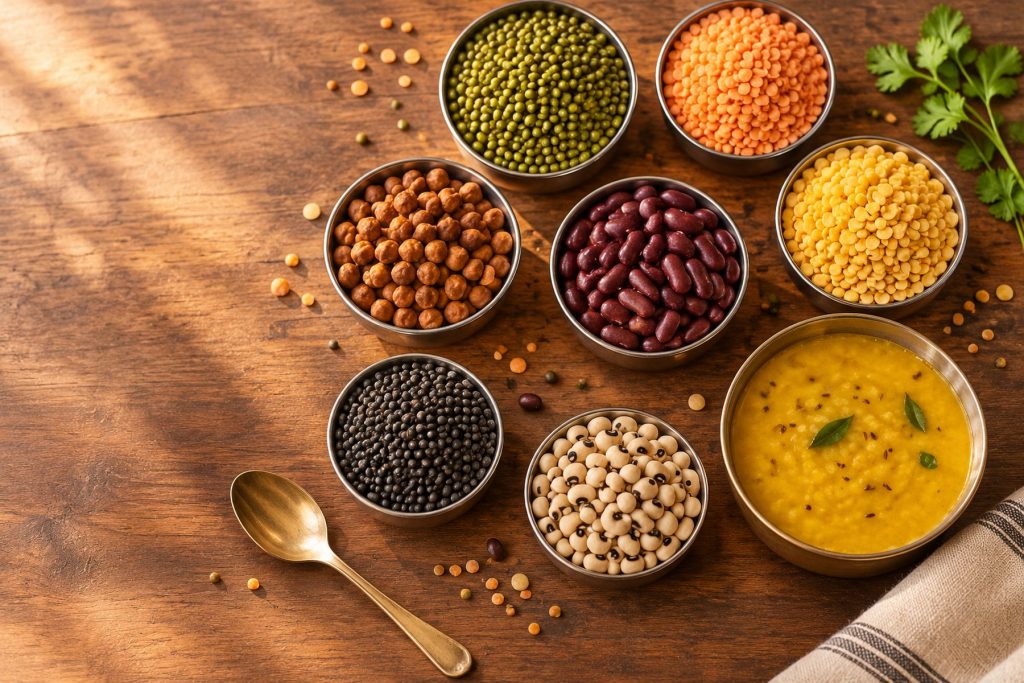
Pulses are the dried, edible seeds of legume plants: lentils (masoor), pigeon peas (toor or arhar), chickpeas (chana), mung beans (moong), black gram (urad), kidney beans (rajma) and cowpeas (lobia), among others. Most Indian homes already eat them every day. Here are seven reasons to keep them on your plate, and to eat a little more.

Pulses at a glance

  • Protein-rich: pulses contain about 20–25% protein, two to three times more than cereals.
  • Good for your heart: about one serving a day lowered LDL (“bad”) cholesterol by around 5% in trials.
  • Steadier blood sugar: in people with diabetes, diets richer in pulses modestly improved long-term blood sugar control.
  • Better together: dal with rice or roti gives better-quality protein than either alone.
  • Cheap, long-lasting and kind to the soil: dried pulses keep for months and need little fertiliser to grow.

7 reasons pulses are good for you

  1. 1. They’re one of the best sources of plant protein

    Pulses contain about 20–25% protein, two to three times more than cereals, according to the UN Food and Agriculture Organization (FAO). For the many Indians who eat little or no meat, dal, chana and rajma are often the main source of protein in the day.

    That makes them useful at every age: for growing children, for women’s higher iron and folate needs, especially in pregnancy, and for older adults who need enough protein to protect their muscles.

    2. They’re packed with fibre and minerals

    Pulses are a good source of fibre and of iron, magnesium, potassium, phosphorus, zinc and B vitamins such as folate. Fibre keeps digestion regular and helps you feel full for longer, which can make it easier to manage your weight.

    For more on how fibre supports digestion and heart health, see our guide to high-fibre foods.

    Tip: eat iron-rich pulses with a source of vitamin C, such as lemon on your chana or tomatoes in your dal, to help your body absorb the iron.

    3. They’re good for your heart

    Pulses are naturally low in fat and contain almost no saturated fat. A review of 26 trials found that eating about one serving of pulses a day (around 130 g) lowered LDL (“bad”) cholesterol by about 5% compared with similar diets without pulses. That’s a modest but meaningful change from a simple food swap.

    To keep the benefit, watch the extras: a heavy tadka of ghee, or cream in dal makhani, adds the saturated fat that pulses themselves don’t have.

    4. They help keep blood sugar steady

    Pulses release their energy slowly. In a review of 41 trials, diets that included more pulses gave a modest improvement in long-term blood sugar control, lowering HbA1c by about 0.5%. In a three-month trial in 121 adults with type 2 diabetes, adding about one cup of legumes a day lowered HbA1c by 0.5% and systolic blood pressure by 4.5 mm Hg more than a wheat-fibre diet.

    Pulses aren’t a treatment for diabetes, but they are a smart swap for some of the refined rice, maida or sweets on your plate. Keep taking any medicines you’ve been prescribed.

    5. They make your grains more nutritious

    Pulses and cereals have different strengths in their protein. Eaten together, as in dal-chawal, rajma-rice, khichdi or idli-sambar, the protein quality of the meal improves. Traditional Indian meals got this right long before nutrition science explained why.

    6. They’re affordable and keep for months

    Pulses are among the cheapest sources of protein you can buy. Because they are dried seeds, they store well for months in an airtight container, so there is little waste. Keep a few different kinds in the kitchen, and you always have a quick, nourishing meal to hand.

    7. They’re good for the planet

    Pulse plants work with soil bacteria to take nitrogen from the air and turn it into a form plants can use. This improves soil fertility and reduces the need for synthetic fertiliser, which takes a lot of energy to make. Choosing pulses more often is a small, practical way to eat more sustainably.

Common Indian pulses and how to use them

Eating a mix of pulses through the week gives you a wider range of nutrients and keeps meals interesting.

Pulse Also called Easy ways to eat it Cooking note
Moong (whole or split) Green gram Moong dal, khichdi, chilla, sprouts Quick to cook and usually the easiest to digest
Masoor Red lentil Masoor dal, soups Split masoor cooks in 15–20 minutes without soaking
Toor Arhar, pigeon pea Everyday dal, sambar A staple dal across much of India
Chana Bengal gram, chickpea Chole, roasted chana, sundal, besan chilla Soak whole chana overnight before cooking
Rajma Kidney beans Rajma-chawal, salads, wraps Soak overnight and boil until fully soft: undercooked kidney beans can make you ill
Urad Black gram Idli, dosa, dal makhani Fermented batters (idli, dosa) are gentle on the stomach
Lobia Cowpea, black-eyed pea Lobia curry, salads Soak for a few hours to cut cooking time

How much should you eat?

The ICMR–National Institute of Nutrition’s My Plate for the Day suggests about 85 g of pulses a day (raw weight) for an adult eating around 2,000 calories, with eggs, fish or meat able to replace part of that. In practice, that is roughly one to two bowls of dal, chana or rajma spread across the day.

Easy ways to eat more pulses

  • Make dal a daily habit at lunch or dinner, and make it a little thicker than usual.
  • Start the day with pulses: moong dal chilla, besan chilla, idli, dosa or a sprouts salad.
  • Snack on them: roasted chana, a bowl of sundal, or other quick, healthy snacks.
  • Pack them for work: rajma or chole bowls and sprouts chaat keep well, as our meal-prep guide
  • Add them to what you already cook: a handful of chana in pulao, moong in upma, or lobia in a vegetable curry.

Gas and bloating: how to make pulses easier to digest

The most common reason people avoid pulses is wind. Pulses contain fermentable carbohydrates (oligosaccharides such as raffinose) that our small intestine can’t break down, so gut bacteria ferment them further along. That is part of why they feed a healthy gut, and also why a large bowl after weeks without them can leave you uncomfortable.

A few simple habits help most people:

  • Soak whole pulses. Soak rajma, chana, lobia and whole urad for 8–12 hours (overnight), then discard the soaking water and cook in fresh water. Soaking draws out some of the gas-forming sugars.
  • Cook them thoroughly. Pressure-cook until soft. Undercooked pulses are harder to digest, and raw or undercooked rajma can make you ill (see the table above).
  • Start small and build up. If you rarely eat pulses, begin with a small katori a day and increase over two to three weeks. Many people find their gut adapts.
  • Begin with the gentler dals. Split, husked dals such as moong and masoor are usually easier on the stomach than whole beans.
  • Use traditional tempering. Hing (asafoetida), jeera, ginger and ajwain are classic additions to dal. Evidence that they reduce gas is limited, but they make pulses tastier and many people find them helpful.
  • Drink enough water as you increase fibre, and spread pulses across meals rather than eating a large amount at once.

Who should take care

Pulses suit most people, but a few groups should check with a doctor or dietitian about how much and which kinds to eat:

  • Chronic kidney disease: pulses contain potassium and phosphorus, which some people with kidney disease need to limit. Your renal team can advise on portions and preparation.
  • Irritable bowel syndrome (IBS): many pulses are high in FODMAPs, which can trigger symptoms. A dietitian can help you find the types and portions you tolerate rather than cutting them out completely.
  • Gout or high uric acid: follow the advice of your doctor about your overall diet. Plant sources of purines appear to be less of a concern than meat and seafood, but individual advice matters.
  • Persistent or severe digestive symptoms: ongoing pain, bloating, changes in bowel habit or weight loss are worth a medical check-up rather than simply avoiding foods.

The bottom line

Pulses are one of the most useful foods in the Indian kitchen: affordable, filling, rich in protein and fibre, and backed by good evidence for heart health and blood sugar control. You don’t need anything exotic. A katori of well-cooked dal, a bowl of rajma or chana, or a handful of roasted chana as a snack, eaten most days alongside vegetables and whole grains, is a simple habit that adds up over time.

Pro Tip: Use the GOQii App to log your meals and see how often pulses actually make it onto your plate across the week. Your GOQii Personalised Health Coach can help you work more dals and beans into meals you already enjoy, and adjust portions to suit your goals.

Frequently asked questions

Are pulses and legumes the same thing?

Not quite. Legumes are all plants in the pea family, including peanuts, soybeans and fresh green peas. Pulses are the dried, edible seeds of legumes, such as lentils, dried beans, chickpeas and dried peas. In India, most dals are pulses.

Are pulses a good source of protein for vegetarians?

Yes. Dried pulses are roughly 20–25% protein by weight, about twice as much as most cereals. Eating them with rice, roti or millets gives a more complete mix of amino acids, which is why dal–chawal and rajma–chawal work so well together.

How much dal should I eat a day?

The ICMR–National Institute of Nutrition suggests about 85 g of pulses a day (raw weight) for an adult eating around 2,000 calories, with eggs, fish or meat able to replace part of that. That is roughly one to two bowls of dal, chana or rajma spread across the day. Your needs may differ depending on your age, activity and health.

Are pulses good for people with diabetes?

Pulses are a sensible choice for most people with diabetes. They are high in fibre, digest slowly and have a low glycaemic index, and studies have linked regular intake with modest improvements in blood sugar control. Watch the portion of rice or roti eaten with them, and talk to your doctor or dietitian about a plan that suits you.

Why do pulses cause gas, and how can I reduce it?

Pulses contain fermentable sugars that gut bacteria break down, producing gas. Soaking whole pulses and discarding the water, cooking them thoroughly, starting with small portions and choosing gentler dals like moong can help.

Which dal is easiest to digest?

Split, husked moong dal is generally considered the easiest to digest, which is why it is often used in khichdi for people who are unwell. Masoor dal is also fairly light. Whole beans such as rajma and chana tend to be heavier.

Can I eat pulses every day?

For most healthy people, yes. Eating pulses daily is an easy way to add protein and fibre. If you have kidney disease, IBS, gout or another condition that affects your diet, ask your doctor or dietitian how much is right for you.

#BeTheForce

Disclaimer: The information provided in this blog is for general awareness and educational purposes only. It is not intended to replace professional medical advice, diagnosis, or treatment. Always consult a qualified healthcare provider for personalised medical guidance or concerns related to your health.

October 20, 2026 By GOQii Leave a Comment

Dussehra 2026: 10 Unhealthy Habits to Leave Behind

This Dussehra, on Tuesday 20 October 2026, as Ravana’s effigy burns, pick one unhealthy habit to leave behind as well.
Dussehra, or Vijayadashami, marks the victory of good over evil: Lord Rama’s triumph over Ravana and, in many parts of India, Goddess Durga’s victory over Mahishasura. It comes at the end of nine days of Navratri, and for many families it is a day of puja, Ravan Dahan, shared meals and fresh starts.

Ravana is often shown with ten heads. In that spirit, here are ten everyday habits that quietly hold our health back, with a simple swap for each, plus practical tips for coming off the Navratri fast, enjoying festive food and staying safe at Ravan Dahan.

Dussehra at a glance

  • Dussehra 2026 falls on Tuesday 20 October, the day after the nine nights of Navratri.
  • Pick one habit, not ten. Small, steady changes last longer than big festive resolutions.
  • Break your fast gently. Start with water, fruit and light, home-cooked food before heavier dishes.
  • Enjoy the sweets, in smaller portions. Share, savour and balance them with lighter meals.
  • Take care at Ravan Dahan. Keep a safe distance, and if you have asthma or a lung condition, avoid the smoke and carry your inhaler.

10 habits to leave behind this Dussehra

One for each of Ravana’s ten heads. You don’t need to tackle them all. Pick the one that matters most to you and start there.

1. Sitting for hours at a stretch

Long, unbroken sitting is linked to poorer health, and the WHO advises that everyone should limit time spent sedentary.

Swap: stand up and move for a few minutes every 30–60 minutes, and try a few simple office workouts through the day.

2. Not moving enough

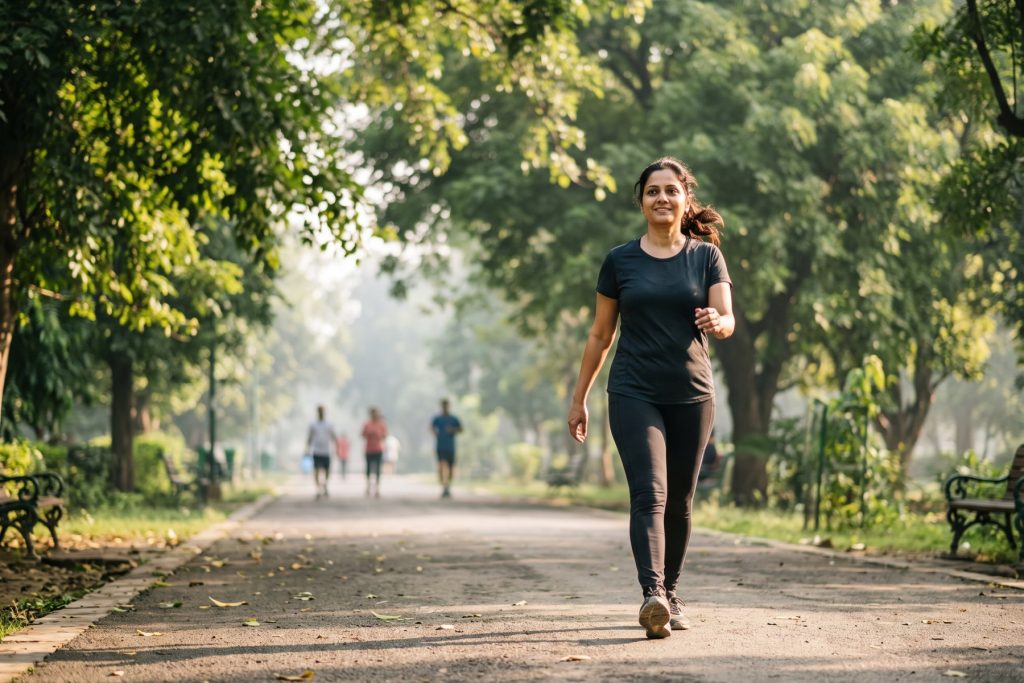
The WHO recommends at least 150 minutes of moderate activity a week for adults, plus muscle-strengthening exercise.

Swap: a 30-minute brisk walk five days a week gets you there. Garba and dandiya count too.

3. Extra sugar in your chai and drinks

Sweetened chai, packaged juices and soft drinks add up fast. High sugar intake is also a major driver of fatty liver, now very common in India.

Swap: cut the sugar in your chai by half a spoon each week, and choose water, buttermilk or nimbu pani without sugar.

4. Too much salt

Pickles, papad, namkeen and restaurant food push salt intake well above the WHO’s limit of less than 5 g a day, raising the risk of high blood pressure.

Swap: taste before you add salt, and keep pickles and papad to an occasional treat.

5. Too few fruits and vegetables

The WHO recommends at least 400 g of fruit and vegetables a day, about five portions.

Swap: fill half your plate with sabzi or salad at lunch and dinner, and have one fruit as a snack.

6. Fried and packaged snacks as everyday food

Namkeen, chips and biscuits are easy to eat without noticing, and they are high in salt, sugar or fat.

Swap: keep roasted chana, nuts, makhana or fruit within reach for the 4 pm hunger.

7. Late nights and short sleep

Regular short sleep affects your mood, focus and appetite, and is linked to weight gain.

Swap: set a regular bedtime, and put your phone away 30 minutes before it.

8. Letting stress run unchecked

Ongoing stress affects sleep and blood pressure, and often pushes us towards unhealthy food.

Swap: try 5 minutes of slow breathing, a short walk or a call with a friend when the day gets heavy.

9. Tobacco and too much alcohol

Tobacco kills more than 7 million people a year worldwide, and both smoked and chewed tobacco cause serious harm. Alcohol adds to the risk of liver disease, high blood pressure and some cancers.

Swap: if you use tobacco, make Dussehra your quit date. Counselling and medication can more than double your chance of quitting, so ask your doctor or call India’s free National Tobacco Quitline on 1800-11-2356 (8 am to 8 pm, closed Mondays). If you drink, set alcohol-free days each week.

10. Skipping health check-ups

High blood pressure, diabetes and fatty liver often cause no symptoms for years.

Swap: book a basic check-up this month, covering blood pressure, blood sugar, cholesterol and a liver function test, especially if you’re over 30 or have a family history.

Breaking the Navratri fast gently

After nine days of fasting or eating only vrat foods, your body is used to smaller, simpler meals. Jumping straight to a heavy, fried festive lunch can leave you bloated and uncomfortable.

  • Start with water. Drink a glass of water, coconut water or nimbu pani without much sugar.
  • Begin light. Fruit, a bowl of curd, khichdi, moong dal, or a simple vegetable with roti are easy first meals.
  • Add protein early. Many fasting days are low in protein. Dal, paneer, curd, eggs or sprouts help you feel steady.
  • Bring back grains gradually. Have a normal portion of roti or rice, not a double one.
  • Save the rich dishes for later in the day, and keep portions small.

If you have diabetes, take medicines that affect blood sugar, or are pregnant, check with your doctor about safe fasting and breaking the fast, as large swings in meals can affect blood sugar.

Enjoying festive food without overdoing it

Dussehra is a time for jalebi, fafda, kheer and family meals. You don’t need to skip them, just enjoy them with a little thought.

  • Eat a proper meal before you go visiting. Arriving hungry makes it easy to fill up on sweets and fried snacks.
  • Pick your favourite and skip the rest. One jalebi or one piece of mithai you really love beats a little of everything.
  • Share sweets. Split a portion, or take a small piece.
  • Balance the day. If lunch is heavy, keep dinner light: dal, sabzi and roti, or khichdi.
  • Gift healthier. Dry fruit, roasted nuts, fresh fruit baskets or homemade laddoos with less sugar make thoughtful gifts.
  • Keep moving. A family walk after the festive meal is good for digestion and for spending time together.

Staying safe at Ravan Dahan

Watching Ravana’s effigy burn is a highlight of the day, but the fireworks, smoke and crowds bring some real risks.

  • Keep a safe distance from the effigy and fireworks, and follow barriers and volunteers’ instructions. Keep children close and hold their hands in crowds.
  • Wear cotton clothes, not loose synthetic ones that catch fire easily.
  • Avoid the smoke if you have asthma or a lung condition. A pulmonologist quoted by ETV Bharat notes that even brief exposure can set off symptoms. Watch from upwind or further back, wear an N95 mask, and keep your reliever inhaler with you.
  • Keep taking your regular medicines, including preventer inhalers, even if you feel fine.
  • For minor burns, hold the area under cool running water for 20 minutes, and don’t put creams, oil, butter or toothpaste on it. Cover it loosely with cling film or a clean cloth, and get medical help for large, deep or facial burns.
  • Plan your way home before the crowd starts to leave, especially with children or older relatives.

The bottom line

Dussehra celebrates good winning over evil, and it’s a natural moment for a fresh start. You don’t need to change everything at once. Pick one habit from the ten, make one simple swap, and keep it going until Diwali and beyond. Enjoy the festivities, break your fast gently, and stay safe around the fire and smoke.

Pro Tip: Choose your one habit and track it in the GOQii App, whether that’s steps, sleep, water or sugar in your chai. Your GOQii Personalised Health Coach can help you turn this Dussehra’s resolution into a habit that lasts.

Frequently Asked Questions (FAQs)

  1. When is Dussehra in 2026?

Dussehra, also called Vijayadashami, falls on Tuesday 20 October 2026, the day after the nine nights of Navratri.

  1. What does Dussehra celebrate?

It marks the victory of good over evil, remembering Lord Rama’s victory over Ravana and, in many regions, Goddess Durga’s victory over Mahishasura.

  1. What should I eat after the Navratri fast?

Start light: water or coconut water, fruit, curd, khichdi, moong dal or a simple sabzi with roti. Add protein early, and save rich, fried dishes for later in the day in small portions.

  1. How can I enjoy festive sweets without overeating?

Eat a proper meal before visiting, choose the one sweet you love most, share portions, and keep the next meal light. A family walk after the meal also helps.

  1. Is the smoke from Ravan Dahan harmful?

Smoke from burning effigies and fireworks can irritate the lungs, and even brief exposure can trigger symptoms in people with asthma or other lung conditions. Watch from a distance and upwind, wear an N95 mask if you are sensitive, and carry any inhaler you use.

  1. What should I do for a minor burn?

Hold it under cool running water for 20 minutes, and don’t apply creams, oil, butter or toothpaste. Cover it loosely with cling film or a clean cloth, and get medical help for large, deep or facial burns.

  1. How do I make a health resolution stick?

Pick one specific habit, such as a 30-minute walk five days a week, rather than several at once. Tie it to a set time of day, track it, and tell someone close to you so they can keep you going.

#BeTheForce 

Disclaimer: The information provided in this blog is for general awareness and educational purposes only. It is not intended to replace professional medical advice, diagnosis, or treatment. Always consult a qualified healthcare provider for personalised medical guidance or concerns related to your health.

October 15, 2026 By GOQii Leave a Comment

How to Reverse Fatty Liver with Diet & Exercise

Fatty liver can be reversed in its early stages, and diet and exercise are the first-line treatment. Losing as little as 5% of your body weight can start to shrink the fat in your liver.

Fatty liver is far more common than most people think. A 2026 study in The Lancet Regional Health – Southeast Asia found it in nearly 4 in 10 urban Indian adults, and most of them didn’t know. It usually causes no symptoms until the liver is already scarred.

The good news is that your liver responds quickly to the right changes. Here is what the evidence says about how much weight to lose, what to eat, and how to move.

Fatty liver at a glance

  • It is reversible early on. Simple fat build-up and even early inflammation can clear with weight loss.
  • Small losses count. About 5% of body weight reduces liver fat; 7–10% can clear inflammation and help scarring.
  • Lean people need a smaller target. If you are not overweight, losing 3–5% can still help.
  • What you eat matters most. Cut sugary drinks, refined carbs and processed meat; eat more vegetables, pulses, whole grains and nuts.
  • Move most days. Aim for 150–300 minutes of brisk activity a week, plus strength training.
  • Stop or cut alcohol. Even moderate drinking adds to the damage.

What fatty liver is, and how far it can be reversed

Fatty liver means extra fat has built up inside your liver cells. When it is linked to excess weight, high blood sugar, high blood pressure or abnormal cholesterol, doctors now call it MASLD (metabolic dysfunction-associated steatotic liver disease). Its older name was NAFLD.

MASLD can move through four stages. The earlier you act, the more of it you can undo.

Stage What is happening Can it be reversed?
1. Simple fatty liver (steatosis) Fat builds up in liver cells, with little or no damage Yes, often within months
2. MASH (steatohepatitis) The fat causes inflammation and injures liver cells Often, with enough weight loss
3. Fibrosis Ongoing injury leaves scar tissue Partly; it can improve or stop progressing
4. Cirrhosis Scarring is severe and the liver’s structure changes Rarely; the aim is to stop it getting worse

Fibrosis is what matters most for your long-term health. In the Phenome India study, 6.3% of people with fatty liver already had significant scarring, compared with 1.7% of those without it. Scarring raises the risk of cirrhosis, liver cancer and heart disease.

How much weight do you need to lose?

Less than most people expect. The American Gastroenterological Association gives clear targets, measured as a share of your current weight.

Weight lost What it can do For someone weighing 80 kg
3–5% (if you are lean) Similar benefits for fat and inflammation as in heavier people 2.4–4 kg
5% or more Reduces liver fat 4 kg
7% or more Can clear liver inflammation (MASH) 5.6 kg
10% or more Can reverse or halt scarring (fibrosis) 8 kg

The evidence behind these numbers is strong. In a one-year study of 293 people with MASH who changed only their diet and exercise, 90% of those who lost 10% or more of their weight cleared the inflammation. Scarring improved in 45% of them.

To lose weight at this pace, the same guidance suggests eating about 500–1,000 fewer calories a day than you do now. Aim for steady loss you can keep up, not a crash diet. Breaking a few of the everyday habits that lead to weight gain is a good place to start.

Diet: what to eat for a healthier liver

The best-studied eating pattern for fatty liver is the Mediterranean diet. Guidelines recommend it, along with cutting saturated fat, red and processed meat, and added fructose from sugary drinks and sweets.

You don’t need to eat Mediterranean food to follow it. The same principles fit a home-cooked Indian plate: plenty of vegetables and pulses, whole grains, nuts and seeds, unsaturated oils, and fish or lean protein, with few sweets and fried snacks. Indian liver specialists are now testing an “Indianised” Mediterranean diet for exactly this reason.

Cut back on

  • Sugary drinks. Packaged juices, colas, sweetened lassi, and tea or coffee with lots of sugar. Fructose from added sugar is turned into fat by the liver.
  • Refined carbs. White rice in large portions, maida (bread, biscuits, naan) and sweets.
  • Fried and ultra-processed foods. Namkeen, chips, pakoras, instant noodles and bakery snacks.
  • Red and processed meat. Sausages, salami and frequent mutton.
  • Ghee, vanaspati and butter in large amounts. These are high in saturated fat.

Eat more of

  • Vegetables: half your plate at lunch and dinner.
  • Pulses and legumes: dal, chana, rajma and sprouts, for protein and fibre.
  • Whole grains: millets (jowar, bajra, ragi), brown or hand-pounded rice, whole wheat atta and oats.
  • Healthy fats: nuts, seeds, and oils such as mustard, groundnut or olive in modest amounts.
  • Lean protein: fish, eggs, chicken, paneer, curd and tofu.

Simple Indian swaps

Instead of Try
Sweetened chai, three times a day Less sugar each week, or unsweetened tea or coffee
Packaged fruit juice A whole fruit
A big plate of white rice Half rice, half vegetables, plus dal
Maida roti, naan or bread Whole wheat, jowar or bajra roti
Namkeen or biscuits at tea time Roasted chana, a handful of nuts or sprouts chaat
Fried snacks Steamed, grilled or air-fried versions

Other diets such as low-carb, intermittent fasting or meal replacements may help you lose weight. But the AGA notes they haven’t been studied enough to recommend for fatty liver specifically. The best diet is one you can keep up.

Exercise: how much and what kind

Exercise cuts liver fat even if the scale barely moves. In a review of 14 trials, people who exercised were 3.5 times more likely to reduce their liver fat meaningfully than those who didn’t. Their average weight loss was under 3%.

The amount that made the difference was about 150 minutes a week of brisk walking, or 75 minutes of vigorous activity such as jogging or cycling. The AGA recommends 150–300 minutes of moderate or 75–150 minutes of vigorous aerobic exercise a week, with strength training on top.

A simple weekly plan

Type How much Examples
Moderate aerobic 30–45 minutes, 5 days a week Brisk walking, cycling, swimming, dancing
Strength training 2–3 sessions a week Squats, lunges, push-ups, resistance bands, weights, surya namaskar
Less sitting Every 30–60 minutes Stand up, walk during calls, take the stairs

Tips to make it stick

  • Start where you are. If you are inactive now, begin with 10-minute walks after meals and build up.
  • Walk after meals. A short walk after lunch and dinner is easy to fit into an Indian routine.
  • Pick something you enjoy. Yoga, badminton, dance or a walking group all count if they raise your heart rate.
  • Combine exercise with diet. Exercise alone helps, but the AGA notes it works best alongside eating fewer calories.

Other things that help

If you are not overweight

Many Indians get fatty liver at a normal weight. This “lean” fatty liver is often linked to insulin resistance and hidden belly fat, and Indians tend to store fat around the abdomen even at lower body weights. The same diet and exercise advice applies, with a smaller target: losing 3–5% of your weight brings similar benefits. Track your waist size as well as your weight.

Alcohol

If you have fatty liver, the AGA advises that alcohol should be restricted or stopped. Alcohol and metabolic fat damage the liver together, so cutting it out gives your diet and exercise the best chance of working.

Coffee

Regular coffee drinking is linked to a lower risk of liver scarring in people with fatty liver. In one study that followed people for 15 years, coffee drinkers with fatty liver were less likely to develop advanced fibrosis. This is an association, not proof, and it applies to coffee without much sugar.

Blood sugar, blood pressure and cholesterol

Fatty liver usually comes with other metabolic problems. Guidelines say diabetes, high blood pressure and abnormal cholesterol should be managed actively. Keep taking any medicines you have been prescribed for them.

Skip the shortcuts

Liver detox teas, cleanses and herbal capsules won’t reverse fatty liver, and some supplements can harm the liver. Ask your doctor before taking any of them.

Tracking your progress

You can’t feel fat leaving your liver, so track it with numbers. Weigh yourself weekly, measure your waist monthly, and follow up with your doctor on these tests:

  • Liver function test (LFT). Enzymes such as SGPT (ALT) often fall as liver fat drops. Normal results don’t rule out fatty liver, though.
  • Shows whether fat is present, but is less precise for small changes.
  • A quick, painless scan that measures liver fat and stiffness. It can pick up scarring long before symptoms appear.
  • HbA1c, cholesterol and blood pressure. These usually improve along with your liver.

When to see a doctor

See a doctor if you have diabetes, obesity or abnormal liver tests, or if a scan shows fatty liver. They can check for scarring and plan follow-up. Get urgent care for yellow eyes or skin, a swollen belly or legs, vomiting blood, black stools, or confusion. These can be signs of advanced liver disease.

What about medicines?

Lifestyle change remains the first treatment for everyone. For people whose fatty liver has already caused inflammation and moderate to advanced scarring, there are now medicines too. In July 2026, India’s drug regulator approved semaglutide (Wegovy) for this group, to be used alongside a reduced-calorie diet and more physical activity. These medicines need a prescription and a specialist’s assessment.

The bottom line

Fatty liver is common, silent and, caught early, reversible. You don’t need a special diet or supplement. Lose 5–10% of your weight, or 3–5% if you are lean. Eat more vegetables, pulses and whole grains and fewer sugary and fried foods. Move for at least 150 minutes a week, and cut out alcohol. As our World Liver Day guide puts it, solid everyday habits build a strong liver.

Pro Tip: Reversing fatty liver is about small habits kept up for months. Use the GOQii App to track your meals, weight, steps, activity and sleep in one place. Your GOQii Personalised Health Coach can turn your weight-loss target into a weekly plan that fits your food and routine, and keep you on track.

Frequently Asked Questions (FAQs)

  1. Can fatty liver be completely reversed?

In the early stages, yes. Simple fatty liver and the inflammation stage (MASH) can clear with enough weight loss. Scarring (fibrosis) can improve or stop progressing. Cirrhosis is rarely reversible, so acting early matters.

  1. How long does it take to reverse fatty liver?

Liver fat responds fairly quickly once you start eating less and moving more, often within a few months. Clearing inflammation and scarring takes longer. In the key study on this, people made lifestyle changes for a full year.

  1. How much weight do I need to lose?

Losing 5% of your body weight reduces liver fat. Losing 7–10% can clear inflammation and help reverse scarring. If you are not overweight, 3–5% can bring similar benefits.

  1. What is the best diet for fatty liver?

A Mediterranean-style diet has the strongest evidence. In Indian terms, that means plenty of vegetables, dal and other pulses, whole grains and millets, nuts and modest amounts of healthy oils, with few sweets, sugary drinks, fried snacks and processed meat.

  1. What kind of exercise is best for fatty liver?

Any regular exercise helps. Aim for at least 150 minutes a week of brisk walking or similar activity, plus strength training two or three times a week. Exercise reduces liver fat even before you lose much weight.

  1. Can I have fatty liver if I am thin?

Yes. Many Indians develop fatty liver at a normal weight, often because of insulin resistance and fat stored around the belly. The same diet and exercise advice applies, with a weight-loss target of 3–5%.

  1. Is there a medicine for fatty liver?

Lifestyle change is the first treatment for everyone. In July 2026, India approved semaglutide (Wegovy) for people whose fatty liver has caused inflammation and moderate to advanced scarring, used alongside diet and exercise. It needs a prescription and a specialist’s assessment.

#BeTheForce

Disclaimer: The information provided in this blog is for general awareness and educational purposes only. It is not intended to replace professional medical advice, diagnosis, or treatment. Always consult a qualified healthcare provider for personalised medical guidance or concerns related to your health.

October 13, 2026 By GOQii Leave a Comment

The Link Between Sleep & Weight Gain

At a glance

  • The link is real. Across 12 long-term studies, the risk of obesity rose by about 9% for each hour of sleep below seven.
  • It is mostly about eating more, not burning less. In pooled trial data, people ate around 385 kcal more per day when their sleep was cut short. The energy they burned barely changed.
  • Belly fat seems especially affected. Two weeks of four-hour nights raised deep abdominal fat by 11% in one tightly controlled study.
  • More sleep helps. Adults who extended their sleep by about 1.2 hours ate roughly 270 kcal less per day, without any diet advice.
  • It runs both ways. Excess weight raises the risk of sleep apnoea, which then disrupts sleep.
  • Sleep supports weight management. It does not replace it. It has not yet been shown that sleeping more, with nothing else changed, produces large or lasting weight loss.

Most weight advice comes down to two things: what you eat and how much you move. Sleep usually gets whatever time is left once work, the commute, dinner and the phone have taken theirs, even though sleep and weight gain are closely tied.

That ordering deserves a second look. Over the past two decades, research on sleep and weight gain has moved from noticing that short sleepers tend to weigh more to testing the idea directly: cutting people’s sleep under controlled conditions and measuring what happens to their appetite, their activity and their body fat. The results are consistent enough to act on, and more modest than the headlines suggest.

Does poor sleep cause weight gain?

Yes, it can. Regularly sleeping less than about seven hours a night is linked to a higher risk of gaining weight, and controlled trials show that at least part of that link is cause and effect.

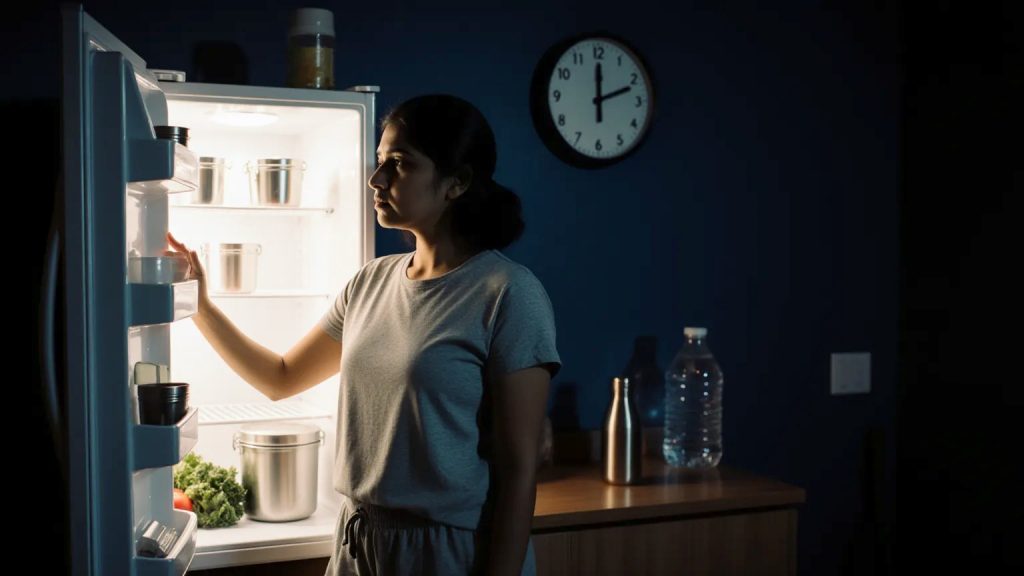
The main route is appetite. People who are short on sleep eat more the next day, particularly in the evening, while burning roughly the same amount of energy. Over weeks, some of that surplus is stored as fat around the abdomen.

Sleep is one of several everyday habits that contribute to weight gain. Diet, physical activity, genetics, age, medicines and medical conditions all influence weight, and a full night’s sleep does not cancel any of them out. What sleep does is make the other things easier or harder to do.

What the research shows

Two kinds of evidence point the same way: large studies that follow people for years, and small experiments that change how long people sleep.

Long-term studies

A 2019 analysis in Sleep and Breathing pooled 12 studies that tracked sleep and weight over time. Obesity risk was lowest at seven to eight hours a night. Below seven, it rose by about 9% for each hour lost. Sleeping longer than that was not clearly linked to obesity either way.

Studies like these cannot prove cause. People who sleep little often differ in other ways: more stress, shift work, illness or low mood. Many also relied on people reporting their own sleep, which is not very accurate.

Sleep experiments

Trials deal with that problem by changing sleep and watching what follows.

Study What was changed What happened
Al Khatib et al., 2017: pooled analysis of 11 trials, 172 people Sleep partly restricted, across several trial designs Ate about 385 kcal more per day. Energy burned did not change significantly.
Covassin et al., 2022: 12 healthy adults living in a research unit Four hours in bed instead of nine, for 14 nights Ate over 300 kcal more per day. Gained about 0.5 kg. Deep abdominal fat rose 11%.
Zuraikat et al., 2026: 95 adults at home Bedtime pushed back for six weeks, losing about 80 minutes a night Gained about 0.45 kg. Was sedentary for 17 minutes longer each day.
Tasali et al., 2022: 80 adults with overweight, at home Sleep extended by about 1.2 hours for two weeks Ate about 270 kcal less per day than the comparison group.

How to read these numbers

The effect on any one person in any one week is small. Half a kilogram in six weeks is easy to miss. The concern is the slow drift when short nights become the routine for years.

The trials have limits too. Most are small and brief, and several used far harsher sleep loss than most people live with. The 2026 study matters because it tested something ordinary: going to bed about an hour and a half late.

How lack of sleep leads to weight gain

Short sleep does not act through one switch. Several small changes push in the same direction.

1. You eat more, and mostly late

More hours awake means more chances to eat, and the extra tends to arrive at night. In a 2013 study in Sleep, adults limited to four hours in bed, from 4 am to 8 am, ate an average of 553 extra kcal during the late-night hours.

This is the most consistent finding in the field. It is also the most useful one, because it is something you can plan around, for example by eating in line with your body clock.

2. High-calorie food becomes harder to resist

Tiredness changes what you want, not only how much. In a brain-imaging study of 23 adults, a night without sleep dulled activity in frontal regions involved in weighing up choices and heightened the response of the amygdala, a region involved in how appealing something feels.

Participants wanted high-calorie foods more. Their reported hunger did not change. That fits a familiar experience: after a bad night you are not hungrier for dal and vegetables, you are drawn to biscuits, namkeen and something sweet with your chai.

3. Hunger hormones may shift, though the evidence is mixed

This is the explanation you will read most often: sleep loss lowers leptin, which signals fullness, and raises ghrelin, which signals hunger. It comes from a well-known 2004 experiment in 12 young men. After two nights of four hours in bed, leptin fell 18%, ghrelin rose 28% and appetite rose 24%.

Later studies have not always agreed. A 2025 meta-analysis of six randomised trials concluded that sleep deprivation “does not consistently affect leptin and ghrelin levels”. A 2021 review found leptin reported as lower, unchanged and higher across studies.

Hormones probably play a part. The evidence that tired people eat more is much firmer than the evidence for exactly why.

4. You move a little less

In the 2026 trial, people were sedentary for about 17 minutes longer each day during the weeks of shorter sleep. That is a small amount, repeated daily. A planned workout is also easier to skip when you are tired.

5. Your body handles sugar less well

In a two-week study of 36 healthy adults, five-hour nights reduced insulin sensitivity by 13%. Lower insulin sensitivity is an early step on the road to type 2 diabetes.

6. More of the extra is stored around the abdomen

In the Mayo Clinic study, total abdominal fat rose 9% and visceral fat, the deep fat around the organs, rose 11% compared with normal sleep. Body weight went up by only about half a kilogram, so the scales alone would have missed it.

This matters in India in particular. In the ICMR-INDIAB national survey, 39.5% of adults had abdominal obesity, a pattern closely tied to heart disease and diabetes.

Weight can disrupt sleep too

The link runs in both directions. Obesity is one of the main risk factors for obstructive sleep apnoea, in which the airway narrows during sleep and breathing repeatedly stops and starts.

Each pause briefly rouses the brain, often without the person knowing. The result is a full night in bed and very little rest, followed by a tired day that makes activity harder and snacking easier.

The NHS lists these signs of sleep apnoea:

  • Breathing that stops and starts during sleep
  • Gasping, snorting or choking noises
  • Loud snoring
  • Waking often in the night
  • Feeling very tired in the day, with poor concentration or headaches on waking

A partner usually notices before you do. Sleep apnoea is treatable, and losing weight can improve it, so the loop can be broken from either side.

When to speak to a doctor

Book an appointment if any of these apply:

  • You have the signs of sleep apnoea listed above.
  • You have struggled to fall asleep or stay asleep for three months or more.
  • You sleep seven hours or more and still feel exhausted.
  • Your weight has changed noticeably without a clear reason.

Several medical conditions and some medicines affect both sleep and weight. A doctor can check for these. Do not stop a prescribed medicine without advice.

Can sleeping more help you lose weight?

It can help, and it is not a weight-loss method in its own right. Three findings show where the benefit lies.

Sleeping longer reduced how much people ate. In the University of Chicago trial, 80 adults with overweight who slept under six and a half hours had one counselling session on sleep habits. They slept about 1.2 hours longer and ate around 270 kcal less per day than the comparison group. Nobody gave them diet advice. The trial lasted two weeks and was not designed to measure weight loss.

Short sleep made a diet less effective. In a small study of 10 adults on a reduced-calorie diet, people lost about 3 kg in two weeks whether they had 8.5 or 5.5 hours in bed. With less sleep, only about 0.6 kg of that was fat, against 1.4 kg with more sleep. The rest was lean tissue, including muscle, which is one reason sleep matters for muscle recovery. They also felt hungrier.

Weekend lie-ins did not undo the week. In the two-week study of 36 adults, one group slept five hours on work nights and as long as they liked over the weekend. They still gained about 1.4 kg, the same as the group kept on five hours throughout, and their late-night snacking returned as soon as the short nights did.

Put together: enough sleep, most nights, makes eating sensibly and staying active easier, and helps a diet take fat instead of muscle. Longer-term trials are still needed to show how much weight this shifts over years.

What to do about it

For general advice, see our 12 science-backed tips for better sleep. The steps below are aimed at the specific ways short sleep affects weight.

  1. Find your real number. Track your sleep for two weeks with a wearable or a simple diary, then look at the average, not your best night. Sleep experts recommend seven or more hours for adults. If you are well short, that gap is your target.
  2. Fix the wake-up time first. Get up at the same time every day, then move bedtime earlier in steps of 15 to 20 minutes. Small shifts tend to be easier to keep than a sudden jump of an hour.
  3. Give the kitchen a closing time. The extra calories arrive late, so decide in advance when eating ends, ideally two to three hours before bed. If work keeps you up, plan one proper snack in place of open-ended grazing.
  4. Expect the cravings after a bad night. You will want sweet, salty and fried food more than usual. Knowing this helps. Eat your normal meals on time, keep snacks out of arm’s reach and avoid ordering in while tired.
  5. Move anyway, at lower intensity. Tired days are when sitting creeps up. A 15-minute walk after lunch and dinner is worth more than a missed workout you meant to do.
  6. Keep weekends close to weekdays. Aim to stay within about an hour of your usual times. Catch-up sleep feels good and does not fully clear a week of sleep debt.
  7. Protect the last hour. Caffeine after mid-afternoon, alcohol near bedtime and a phone in bed can all cut into sleep. Put the phone to charge outside the bedroom if you can.

If your schedule is not in your hands

Shift workers, new parents and carers cannot simply go to bed earlier. A review of 28 studies found night-shift workers had a 23% higher risk of overweight or obesity, with the strongest link for abdominal obesity.

If this is you, the same priorities apply in a different order. Protect one main block of sleep in a dark, quiet room. Plan what you will eat before the shift starts, so the small hours are not left to the vending machine or the delivery app. Take naps when you can get them.

None of this is a failure of willpower. Being short of sleep makes food harder to manage for everyone.

The takeaway

Sleep will not do the work of a balanced diet and regular movement. It decides how hard that work feels. If your weight has been creeping up and your nights have been getting shorter, the two may be connected, and sleep is a reasonable place to start.

Pro Tip: Not sure how much you sleep? Use the GOQii App to track your sleep, activity and meals side by side for two weeks. Your GOQii Personalised Health Coach can help you spot how short nights show up in your eating and build a routine that suits your schedule.

Frequently asked questions

How many hours of sleep do I need to avoid weight gain?

Most adults need seven or more hours a night. In long-term studies, obesity risk was lowest at seven to eight hours. Needs vary between people, and those studies found no added benefit for weight from sleeping longer.

Does lack of sleep slow your metabolism?

Not by much. In pooled trial data, the energy people burned did not change significantly when sleep was restricted. The weight gain comes mainly from eating more, about 385 kcal a day on average.

Can lack of sleep cause belly fat?

It appears to contribute. In a controlled study, two weeks of four-hour nights increased visceral fat by 11% compared with normal sleep, even though body weight rose by only about half a kilogram. The study was small, with 12 participants.

Why do I crave junk food when I am tired?

Sleep loss changes how the brain responds to food. Brain scans show weaker activity in regions that weigh up choices and a stronger response in a region tied to how appealing food feels. People want richer food without necessarily feeling hungrier.

Will sleeping more help me lose weight?

It can support weight loss and is unlikely to cause it alone. In one trial, adults who slept about 1.2 hours longer ate around 270 kcal less per day. Whether that leads to lasting weight loss has not yet been tested in long-term trials.

Can I catch up on sleep at the weekend?

Only partly. In a two-week study, people who slept in over the weekend after five-hour weeknights still gained weight and still showed reduced insulin sensitivity. Regular sleep through the week works better.

Can sleeping too much cause weight gain?

The evidence is weak. In a pooled analysis of long-term studies, longer sleep was not significantly linked to obesity. Regularly needing much more sleep than usual, or sleeping long and still feeling tired, is worth raising with a doctor.

#BeTheForce

Disclaimer: This article is for general information and education only. It is not a substitute for professional medical advice, diagnosis or treatment. If you have ongoing sleep problems, symptoms of sleep apnoea, unexplained changes in weight or a long-term health condition, please speak to a qualified healthcare professional before making changes to your routine.

  • « Previous Page
  • 1
  • …
  • 12
  • 13
  • 14
  • 15
  • 16
  • …
  • 97
  • Next Page »

Search

Recent Posts

  • World AMR Awareness Week 2026: when you need antibiotics, and simple steps to prevent AMR
  • PCOS: diet, exercise and the myths to stop believing
  • Cholesterol numbers explained: LDL, HDL and triglycerides
  • International Men’s Day 2026: why men’s health is everyone’s business
  • World COPD Day 2026: Short of Breath? Think COPD – Why Early Diagnosis Matters

Stay Updated

Archives

  • November 2026 (21)
  • October 2026 (23)
  • September 2026 (5)
  • August 2026 (8)
  • July 2026 (24)
  • June 2026 (22)
  • May 2026 (20)
  • April 2026 (24)
  • March 2026 (18)
  • February 2026 (14)
  • January 2026 (14)
  • December 2025 (19)
  • November 2025 (14)
  • October 2025 (17)
  • September 2025 (6)
  • August 2025 (5)
  • July 2025 (9)
  • June 2025 (18)
  • May 2025 (16)
  • April 2025 (22)
  • March 2025 (25)
  • February 2025 (21)
  • January 2025 (25)
  • December 2024 (21)
  • November 2024 (21)
  • October 2024 (15)
  • September 2024 (22)
  • August 2024 (27)
  • July 2024 (14)
  • June 2024 (23)
  • May 2024 (26)
  • April 2024 (27)
  • March 2024 (27)
  • February 2024 (23)
  • January 2024 (21)
  • December 2023 (14)
  • November 2023 (10)
  • October 2023 (18)
  • September 2023 (20)
  • August 2023 (16)
  • July 2023 (16)
  • June 2023 (21)
  • May 2023 (20)
  • April 2023 (19)
  • March 2023 (23)
  • February 2023 (19)
  • January 2023 (15)
  • December 2022 (11)
  • November 2022 (15)
  • October 2022 (15)
  • September 2022 (12)
  • August 2022 (9)
  • July 2022 (17)
  • June 2022 (11)
  • May 2022 (10)
  • April 2022 (6)
  • March 2022 (6)
  • February 2022 (13)
  • January 2022 (11)
  • December 2021 (7)
  • November 2021 (3)
  • October 2021 (6)
  • September 2021 (3)
  • August 2021 (8)
  • July 2021 (7)
  • June 2021 (15)
  • May 2021 (16)
  • April 2021 (10)
  • March 2021 (7)
  • February 2021 (4)
  • January 2021 (4)
  • December 2020 (3)
  • November 2020 (4)
  • October 2020 (10)
  • September 2020 (3)
  • August 2020 (3)
  • July 2020 (2)
  • June 2020 (4)
  • May 2020 (10)
  • April 2020 (12)
  • March 2020 (10)
  • February 2020 (4)
  • January 2020 (4)
  • December 2019 (3)
  • November 2019 (7)
  • October 2019 (5)
  • September 2019 (4)
  • August 2019 (9)
  • July 2019 (9)
  • June 2019 (11)
  • May 2019 (4)
  • April 2019 (8)
  • March 2019 (8)
  • February 2019 (9)
  • January 2019 (8)
  • December 2018 (9)
  • November 2018 (3)
  • October 2018 (3)
  • September 2018 (5)
  • August 2018 (10)
  • July 2018 (6)
  • June 2018 (13)
  • May 2018 (8)
  • April 2018 (17)
  • March 2018 (9)
  • February 2018 (8)
  • January 2018 (15)
  • December 2017 (12)
  • November 2017 (19)
  • October 2017 (13)
  • September 2017 (15)
  • August 2017 (4)
  • July 2017 (8)
  • June 2017 (7)
  • May 2017 (6)
  • April 2017 (8)
  • March 2017 (6)
  • February 2017 (7)
  • January 2017 (9)
  • December 2016 (10)
  • November 2016 (7)
  • October 2016 (7)
  • September 2016 (7)
  • August 2016 (11)
  • July 2016 (9)
  • June 2016 (9)
  • May 2016 (12)
  • April 2016 (17)
  • March 2016 (17)
  • February 2016 (8)
  • January 2016 (6)
  • December 2015 (2)
  • November 2015 (9)
  • October 2015 (7)
  • September 2015 (9)
  • August 2015 (11)
  • July 2015 (9)
  • June 2015 (11)
  • May 2015 (9)
  • April 2015 (13)
  • March 2015 (8)
  • February 2015 (5)
  • January 2015 (12)
  • December 2014 (14)
  • November 2014 (11)
  • October 2014 (6)
  • September 2014 (13)
  • August 2014 (12)
  • July 2014 (6)
  • June 2014 (2)
  • May 2014 (7)
  • April 2014 (4)

From Burnout to Balance: How Dr. Ranjit Reclaimed His Health

Dr Ranjit Bhatt has spent years tending to others. A practising doctor in Odisha, his days were packed with patients, surgeries, and emergencies. From the outside, it looked like a life lived in service. But on the inside, something wasn’t right. “I had no … [Read More...]

From Shimla’s Slopes to Chandigarh’s Sidewalks: Surinder Kaur Bhalla’s Journey from Chaos to Control

Some journeys start with a plan. Others begin with a stumble literally. Surinder Bhalla, a government professional, born and raised in the scenic hill town of Shimla, had always lived a life of movement. “In Shimla, you walked everywhere,” she reflects. “Walking was never an exercise. It was just life.” But after shifting to Chandigarh, […]

“I’ve Challenged Myself to Live 100 Years” – The Story of Chandubhai Savani’s Second Chance at Life

At 67, most people start slowing down. Not Chandubhai Savani. A resident of Surat, Chandubhai, thought life was on track. “My life was going well till I had my bypass surgery,” he says. That surgery, back in 2021, was a wake-up call.  Medication was routine, but exercise wasn’t. His diet? What he calls ‘normal.’ “I […]

Ananda Mukherjee Health Story

From Terminal Illness To Complete Wellness! Ananda Mukherjee Health Story

As we observe World Cancer Day under the powerful theme ‘United by Unique’ (2025-2027)**, we are reminded that every individual’s journey with cancer is distinct, yet united by shared resilience, hope, and the collective fight against this disease. This theme places people at the centre of care and their stories at the heart of the […]

  • HOME
  • HEALTHY LIVING
  • FITNESS
  • HEALTHY RECIPES
  • USER STORIES
  • KARMA
  • BUY GOQii

Copyright ©2016 GOQii


