 The Big Question: Can you enjoy your favourite ice cream without compromising your health or fitness goals?
Every year, on the third Sunday of July, ice cream lovers around the world celebrate National Ice Cream Day. Whether it’s a classic scoop of vanilla, decadent chocolate, fruity sorbet or a nostalgic local favourite, ice cream has long been associated with celebrations, childhood memories and simple moments of joy.
For many people, however, enjoying dessert often comes with a side of guilt especially if they’re trying to lose weight, manage diabetes or simply eat healthier. The good news? You don’t have to choose between complete restriction and overindulgence. By making mindful choices and understanding how your body responds to sweet treats, you can celebrate National Ice Cream Day while staying on track with your health goals.
Can Ice Cream Be Part of a Healthy Diet?
Yes, in moderation. Ice cream isn’t a “health food,” but it doesn’t have to be completely off-limits either.
Like many treats, its impact depends heavily on your portion size, how often you eat it, the type of ice cream you choose, your overall eating pattern, and your physical activity levels. A balanced lifestyle isn’t built on one dessert—it reflects the choices you make consistently over time.
Why Is Ice Cream So Easy to Overeat?
Ice cream combines sweetness, creaminess and fat in a way that’s highly enjoyable for many people. These qualities activate the brain’s reward pathways, making it easy to go back for “just one more scoop.”
At the same time, many commercial ice creams are high in added sugars and saturated fats. Eating large portions, particularly on an empty stomach may lead to a larger rise in blood glucose compared with eating dessert after a balanced meal. Understanding these factors can help you enjoy ice cream more consciously instead of eating it mindlessly.
What Does Ice Cream Actually Provide?
Although often considered an indulgence, dairy-based ice cream can contribute small amounts of calcium, protein, vitamin B12, and phosphorus.
However, these nutrients should be viewed alongside its sugar, saturated fat and calorie content. For everyday nutrition, whole foods such as milk, yoghurt, fruits and nuts remain much better sources of these essential nutrients.
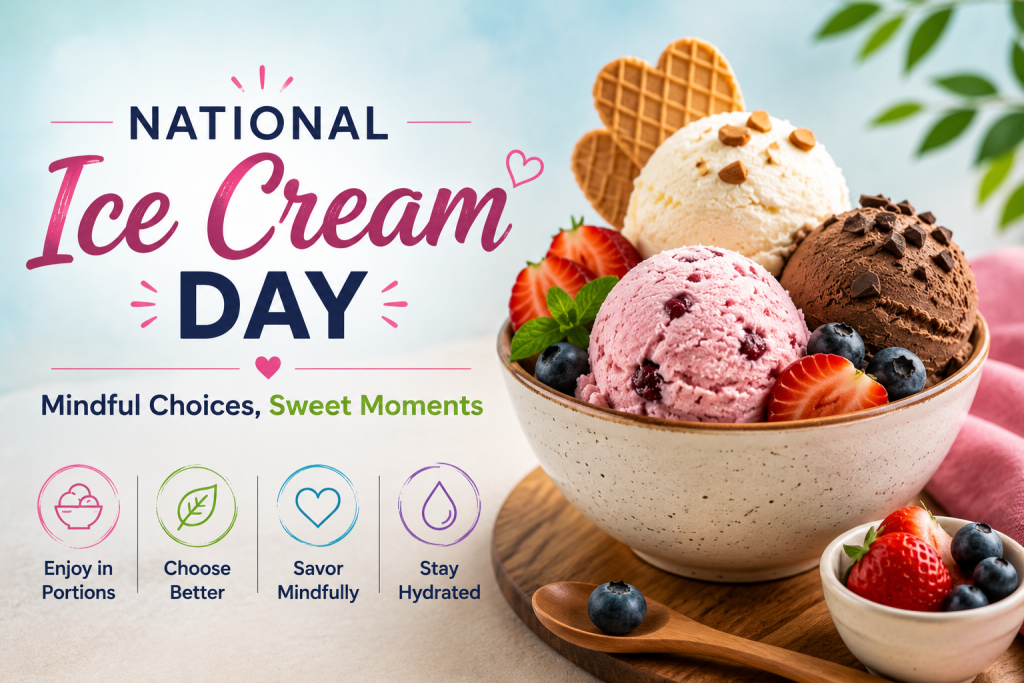
5 Smart Ways to Enjoy Ice Cream Mindfully
-
Serve a Sensible Portion
Avoid eating directly from the tub. Instead, scoop a serving into a small bowl. A typical serving is about ½ cup (65–75 g), although this varies between brands. Using a bowl makes portion sizes easier to recognise and helps prevent accidental overeating.
-
Enjoy It After a Balanced Meal
Rather than eating ice cream on an empty stomach, enjoy it after a meal that contains protein, fibre, and healthy fats. This combination helps slow down digestion and reduces rapid changes in blood glucose levels compared with eating a dessert alone.
-
Eat Slowly
Slow down and savour every bite. Avoid eating while watching television or scrolling through your phone. Mindful eating helps you appreciate flavour and texture while giving your body’s hunger and fullness signals time to work.
-
Choose Toppings Wisely
Toppings can quickly add extra sugar and calories. Swap the sugary additions for nutrient-dense options:
- Skip: Chocolate syrup, caramel sauce, and crushed cookies.
- Choose: Fresh berries, chopped almonds, pistachios, and unsweetened cocoa nibs. These options add texture and nutrients without excessive added sugar.
-
Read the Nutrition Label
Not all ice creams are the same. Always compare the added sugar, calories, saturated fat, protein, and serving size. Sometimes a premium ice cream contains two to three times the calories of a lighter option.
Healthier Frozen Dessert Alternatives
If you’d like to enjoy something frozen more often, consider these nutrient-rich alternatives:
| Dessert | Main Ingredients | Why You’ll Love It |
| Banana Nice Cream | Frozen bananas blended with a splash of milk or plant-based drink. | Naturally sweet, creamy and rich in potassium. |
| Greek Yoghurt Popsicles | Greek yoghurt blended with fresh berries. | Higher in protein and contains probiotics. |
| Frozen Greek Yoghurt Bark | Greek yoghurt topped with fruit and nuts. | Crunchy, refreshing and protein-rich. |
| Fresh Fruit Sorbet | Frozen mango, watermelon or berries. | Naturally sweet and hydrating. |
| Berry Smoothie Bowl | Frozen berries, yoghurt and seeds. | Fibre-rich and packed with antioxidants. |
Can People with Diabetes Enjoy Ice Cream?
People living with diabetes don’t necessarily have to avoid ice cream altogether. Smaller portions, occasional consumption and including dessert as part of a balanced meal may help reduce large blood glucose fluctuations. It’s always best to discuss individual dietary choices with your healthcare provider or registered dietitian.
A Simple Trick to Support Blood Sugar
One simple habit that may help after enjoying dessert is taking a 10–15 minute walk. Light physical activity after meals encourages muscles to use glucose for energy and supports healthy blood sugar management.
Healthy eating isn’t defined by one dessert or one day. Enjoying a scoop of ice cream on National Ice Cream Day won’t undo months of healthy habits, just as one healthy meal won’t transform your health overnight.
The key is balance. Enjoy your favourite flavour, savour it mindfully, keep portions reasonable and return to your usual healthy eating pattern afterwards. Consistency not perfection is what supports long-term health.
Pro Tip: Love desserts but want to stay on track? Use the GOQii App to log your meals, monitor your activity and build healthier habits over time. Your GOQii Personalised Health Coach can help you enjoy your favourite foods while creating a nutrition plan that’s realistic, sustainable and tailored to your goals.
Frequently Asked Questions (FAQs)
- Can I eat ice cream if I’m trying to lose weight?
Yes. Weight management depends on your overall calorie intake and lifestyle. An occasional small serving of ice cream can fit into a balanced eating plan.
- What is banana “nice cream”?
Banana nice cream is a dairy-free frozen dessert made by blending frozen ripe bananas until smooth. You can customise it with cocoa powder, berries or nut butter.
- Is sugar-free ice cream healthier?
Not always. While sugar-free varieties may contain less added sugar, some products include sugar alcohols or artificial sweeteners that may cause digestive discomfort in some individuals. Always read the nutrition label.
- Is frozen yoghurt healthier than ice cream?
Sometimes. Frozen yoghurt may contain more protein and less fat, but many commercial varieties are still high in added sugar. Compare nutrition labels before choosing.
- What’s the best way to reduce a sugar spike after dessert?
Eating dessert after a balanced meal, practising portion control and taking a short walk afterwards may help support a healthier blood glucose response.
#BeTheForce
Disclaimer: This article is intended for educational purposes only and should not replace personalised medical or nutrition advice. If you are living with diabetes, insulin resistance or another metabolic condition, consult your physician or a registered dietitian before making significant dietary changes.
 The Big Question: As the world’s population continues to grow and demographics continue to shift, how can we create healthier communities where people of every age have the opportunity to live longer, healthier lives?
 The Big Question: In an era dominated by rapid lifestyle changes and rising chronic health conditions, how can we transform our partnership with medical professionals from reactive treatment to proactive prevention?
 Living with Attention-Deficit/Hyperactivity Disorder (ADHD) often means managing more than just distractibility or restlessness. Many people with ADHD also experience anxiety, emotional overwhelm, and difficulty switching off a constantly active mind.