
GOQii

Blog

  • HOME
  • HEALTHY LIVING
  • FITNESS
  • HEALTHY RECIPES
  • USER STORIES
  • KARMA
  • BUY GOQii

Archives for June 2026

June 3, 2026 By GOQii Leave a Comment

Cycling for a Greener Future: One Habit That Benefits Both You and the Planet

The Big Question: How does cycling benefit both the environment and human longevity?
The World Bicycle Day 2026 theme, “Cycling for a Greener Future,” highlights one of the simplest ways to improve both environmental and personal health. Every time you choose a bicycle over a fuel-powered vehicle, you reduce carbon emissions, support cleaner air, and add more movement to your day. Beyond its environmental benefits, cycling is also one of the most joint-friendly forms of exercise, helping improve cardiovascular fitness, metabolic health, endurance, and healthy ageing.

When most people think about cycling, they think about childhood memories, weekend rides, or professional athletes racing through mountain roads. But the bicycle may be one of the few inventions that improves both human health and environmental health at the exact same time.

Observed globally tomorrow, June 3rd, World Bicycle Day celebrates the bicycle as a simple, affordable, sustainable, and reliable means of transportation. The 2026 theme, “Cycling for a Greener Future,” reminds us that small choices made every day can collectively create a healthier planet.

What’s often overlooked, however, is that the same habit helping reduce pollution and traffic congestion may also be one of the most powerful tools for improving long-term health and longevity.

Why Cycling Matters Beyond Fitness

Unlike many forms of exercise, cycling serves two purposes simultaneously: it acts as transportation, recreation, exercise, and a sustainable lifestyle choice all at once.

A bicycle doesn’t require fuel, produces no emissions, creates minimal noise pollution, and takes up far less urban space than motor vehicles. Replacing even a few short weekly car trips with cycling can contribute to cleaner neighbourhoods, improved air quality, and more active communities. And while you’re helping the environment, you’re also helping your cellular biology.

The Health Benefits Begin With Everyday Movement

One of the biggest barriers to exercise is finding extra time for it. Cycling solves that problem. A ride to work, the grocery store, or a nearby café can become meaningful physical activity without requiring a dedicated, scheduled workout session.

This integration of movement into daily life is one reason cycling is heavily associated with better cardiovascular health, improved fitness levels, and healthy ageing. Unlike intense exercise programmes that are difficult to maintain, cycling is often easier to sustain because it naturally fits into your everyday routines.

The Longevity Secret: Zone 2 Training

In recent years, longevity researchers have increasingly focused on the benefits of Zone 2 cardio. Zone 2 refers to moderate-intensity exercise where your breathing becomes slightly heavier and your heart rate rises steadily, but you can still comfortably hold a conversation.

This specific level of effort helps improve aerobic fitness, endurance, fat metabolism, and mitochondrial efficiency. Mitochondria are the energy-producing structures inside your cells, and maintaining their function is closely linked to healthy ageing.

What makes cycling unique is how easy it is to stay within this ideal training zone. By adjusting your speed, gears, or resistance, you can maintain a steady effort level for extended periods without the stop-start intensity common in many other activities. Supporting your mitochondrial health is one of the absolute key pillars of long-term vitality and resilience.

Cycling vs Running: The Joint-Friendly Advantage

Running is an excellent form of exercise, but it also places significant impact forces on the knees, hips, and ankles. Cycling offers a completely different approach. Because it is a low-impact, non-weight-bearing activity, it allows people to improve cardiovascular fitness while placing far less stress on their cartilage.

Feature Cycling Running
Joint Impact Low Moderate to High
Cardiovascular Benefits Excellent Excellent
Zone 2 Control Easy Moderate
Accessibility High High
Long-Term Joint Comfort     Often Better Tolerated Depends on Individual

This makes cycling particularly appealing for older adults, individuals returning to exercise, people carrying excess weight, or anyone actively managing joint discomfort.

3 Hidden Benefits of Cycling

  1. Improved Metabolic Health

Regular cycling helps improve the body’s ability to use both carbohydrates and fats efficiently for energy. This adaptability, often referred to as metabolic flexibility, supports better energy regulation and insulin sensitivity throughout the day.

  1. Better Stress Management

The rhythmic motion of cycling, particularly outdoors, can help reduce stress and improve mental wellbeing. Spending time in natural environments while moving supports emotional resilience, nervous system recovery, and acts as excellent stress management from daily pressures.

  1. Stronger Legs and Better Balance

Age-related muscle loss (sarcopenia) often affects the lower body first. Pushing against the resistance of the pedals strengthens the quadriceps, glutes, calves, and hamstrings, helping maintain mobility, stability, and physical independence as we age.

Small Rides Can Create Big Change

Many people assume they need expensive equipment or long-distance rides to benefit from cycling. In reality, consistency matters far more than distance. Even short rides can contribute to better cardiovascular fitness, improved energy levels, lower environmental impact, and healthier daily habits.

The bicycle is far more than a recreational tool. It is a practical solution to some of the biggest challenges facing modern society: physical inactivity, urban congestion, environmental pollution, and declining metabolic health. This World Bicycle Day, consider viewing cycling not just as exercise, but as an investment in both your personal wellbeing and a more sustainable future.

Pro Tip: Use your GOQii Smart Vital Tracker and GOQii App to monitor your heart rate during cycling sessions. Tracking your effort levels can help you identify your ideal Zone 2 range and build a sustainable fitness routine that supports cardiovascular health, endurance, and longevity!

Frequently Asked Questions (FAQs)

  1. How does cycling contribute to a greener future?
    Cycling is a zero-emission mode of transport that helps reduce traffic congestion, fuel consumption, and air pollution, directly combating climate change.
  2. How much cycling is needed for health benefits?
    Aim for at least 150 minutes of moderate-intensity cycling per week, spread across multiple days.
  3. Is cycling suitable for older adults?
    Yes. Because cycling is low-impact and non-weight-bearing, it is often perfectly suited for older adults looking to improve cardiovascular fitness while minimising joint stress.
  4. Is cycling better than walking?
    Both are excellent forms of exercise. However, cycling generally allows individuals to sustain a higher cardiovascular intensity (burning more visceral fat) while remaining gentle on the joints.

#BeTheForce

Disclaimer: This article is intended for educational purposes only. If you have a history of severe cardiovascular disease, chronic back pain, or recent joint replacements, please consult your physician or physical therapist before beginning a new exercise regimen.
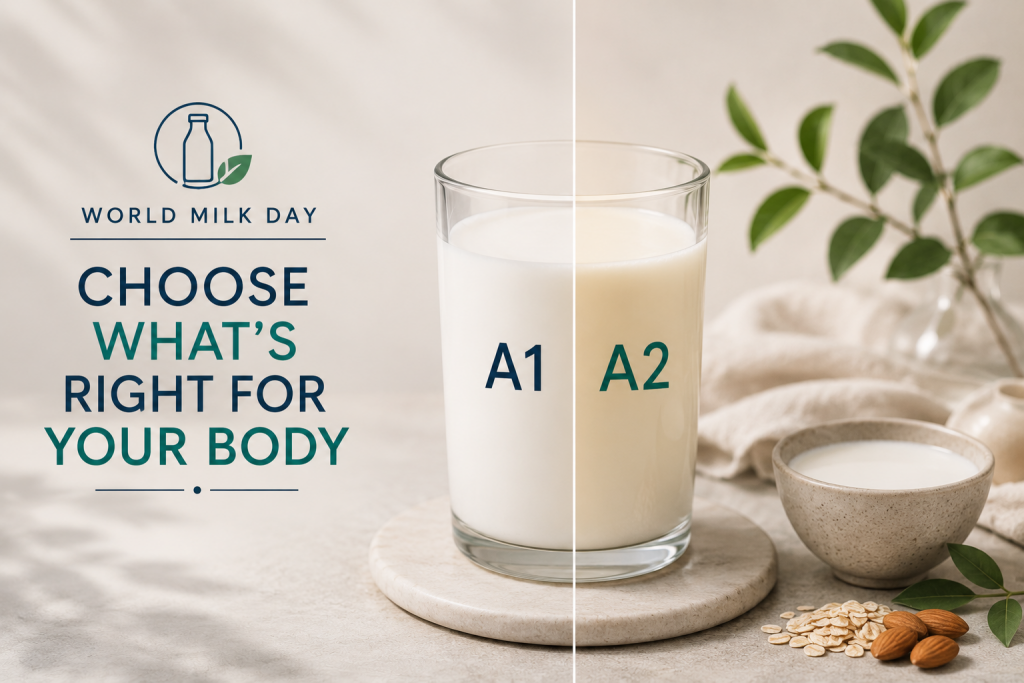
June 2, 2026 By GOQii Leave a Comment

The Great Dairy Dilemma: Is Milk Driving Your Chronic Inflammation?

The Big Question: What is the difference between A1 and A2 milk, and why does conventional dairy cause bloating and inflammation?



World Milk Day is an opportunity to better understand how modern dairy affects individuals differently. While milk remains an important source of protein and calcium, many experience bloating, acne, or inflammation depending on their gut health, lactose tolerance, and the type of dairy consumed. Emerging clinical research around A1 and A2 beta-casein proteins reveals that conventional A1 milk may break down into a peptide (BCM-7) that slows gastric transit and triggers digestive discomfort, while A2 milk or fermented dairy is often digested much more comfortably.

Observed globally on June 1st, World Milk Day was established by the Food and Agriculture Organization (FAO) of the United Nations to recognise the importance of milk as a global food.

In India, dairy is deeply woven into everyday life. From the morning cup of chai to curd with lunch and ghee in traditional cooking, milk has long been associated with strength, nutrition, and bone health.

But a growing number of people today are beginning to notice something unusual: the milk they consume regularly often leaves them feeling bloated, sluggish, fatigued, or uncomfortable after meals. At the same time, conversations around lactose intolerance, gut health, A1 vs A2 milk, and dairy-related inflammation have become increasingly common.

The reality is more nuanced than “milk is healthy” or “milk is harmful.” Dairy is not universally problematic. Many individuals tolerate milk and fermented dairy products well and benefit from their protein, calcium, and probiotic content. However, others may experience digestive discomfort or inflammation depending on individual tolerance, gut health, and the specific type of dairy consumed. World Milk Day is not just an opportunity to celebrate dairy consumption it is an opportunity to better understand how modern dairy affects the body.

Understanding the Difference Between A1 and A2 Milk

Milk contains two major types of protein: casein (around 80%) and whey (around 20%). Within the casein portion is a subtype called beta-casein.

Historically, cows primarily produced the A2 beta-casein protein. However, over time, genetic variations in certain Western dairy breeds led to the emergence of A1 beta-casein. Today, many indigenous Indian breeds (like Gir and Sahiwal) naturally produce predominantly A2 milk, while several commercial Western breeds (like Holstein) commonly produce A1 protein.

This difference matters immensely because the human body digests these two proteins differently.

Why Some People Struggle With Conventional Dairy

During digestion, A1 beta-casein may break down into a peptide called BCM-7 (beta-casomorphin-7). Some researchers believe BCM-7 may contribute to digestive discomfort, slower gut transit, bloating, and systemic inflammation in sensitive individuals.

However, responses vary significantly from person to person. For some people, the issue may be pure lactose intolerance (an inability to break down milk sugars), while for others, protein sensitivity or an existing gut microbiome imbalance plays a larger role. This is why two individuals can react very differently to the exact same dairy product.

A1 vs. A2 Milk: What’s the Difference?

Feature A1 Milk (Conventional) A2 Milk (Indigenous/Desi)
Common Source Western dairy breeds (Holstein, Friesian) Indigenous/desi breeds (Gir, Sahiwal)
Digestion Response May cause discomfort in sensitive individuals Often considered easier to digest
BCM-7 Formation Yes Minimal to None
Gut Comfort Variable; often triggers bloating Better tolerated by most individuals

3 Signs Dairy May Not Be Working for You

Not everyone reacts negatively to dairy. But if you regularly experience the following symptoms after consuming milk or certain dairy products, it may be worth paying closer attention.

  1. Persistent Bloating or Digestive Discomfort

Feeling unusually heavy, bloated, or uncomfortable after consuming milk, whey-heavy products, or paneer may indicate difficulty digesting lactose or certain milk proteins. In some individuals, chronic digestive irritation may also contribute to gut barrier dysfunction and microbiome imbalance. Supporting good gut health becomes important for improving overall digestive resilience.

  1. Skin Flare-Ups and Acne

Some clinical studies suggest dairy consumption may be associated with acne flare-ups in sensitive individuals, potentially due to hormonal signalling pathways like IGF-1 (Insulin-like Growth Factor). However, responses vary significantly between individuals, and dairy is rarely the only contributing factor to skin issues.

  1. Fatigue or Brain Fog

Some individuals report feeling lethargic, mentally foggy, or physically sluggish after consuming conventional dairy products. This may be linked to the digestive stress, immune response, or individual food sensitivities triggered by the proteins.

Fermented Dairy May Be Easier to Tolerate

Interestingly, many people who struggle with fluid milk may tolerate curd, yogurt, kefir, or traditional fermented dairy products much more comfortably.

Fermentation introduces beneficial bacteria that partially pre-digest the lactose and support microbiome balance, making digestion significantly easier. This is one reason traditional Indian eating patterns often paired dairy with fermentation and digestive spices like jeera (cumin) or hing (asafoetida).

Not All Dairy Products Affect Health Equally

One important distinction often missed in modern nutrition discussions is the difference between minimally processed dairy and ultra-processed dairy products. Highly processed flavoured yogurts, sweetened milk beverages, and processed cheese often contain added sugars, emulsifiers, stabilisers, and artificial additives. These additives contribute far more to metabolic dysfunction than plain dairy itself.

The Action Step: Finding What Works for Your Body

Instead of blindly eliminating all dairy, focus on understanding your individual tolerance. You can experiment with:

  • Switching to A2 milk from local sources.
  • Relying strictly on fermented dairy (like curd).
  • Eliminating highly processed, sugar-laden dairy products.
  • Temporarily eliminating all dairy for 14 days to observe symptom changes.

Unsweetened plant-based alternatives like almond milk, soy milk, or oat milk may also work well for some individuals when chosen carefully without excessive added sugars. Supporting your digestive health and metabolic flexibility is often more important than following extreme food rules.

Pro Tip: Unsure whether dairy is affecting your digestion, skin, or energy levels? Try a simple 14-day food tracking experiment using the GOQii App. Monitor your meals, symptoms, sleep, and recovery patterns while working with your GOQii Personalised Health Coach to identify what works best for your body!

Frequently Asked Questions (FAQs)

  1. Does boiling milk change A1 or A2 protein?

No. Boiling or pasteurising milk kills harmful bacteria, but it does not change the underlying genetic beta-casein protein structure. A1 milk remains A1 milk even after heavy boiling.

  1. Is A2 milk healthier for everyone?

Not necessarily. While some individuals find A2 milk easier to digest because it lacks the BCM-7 peptide, tolerance varies from person to person. If you have true lactose intolerance, A2 milk will still cause issues.

  1. Can lactose intolerance and dairy sensitivity be different?

Yes. Lactose intolerance relates to a lack of the enzyme needed to digest milk sugar (lactose). Dairy sensitivity typically involves an immune or inflammatory reaction to milk proteins (like casein or whey).

  1. Is ghee easier to tolerate than milk?

Often, yes. Ghee (clarified butter) contains minimal to no lactose and casein compared to whole milk, making it incredibly easy to tolerate for many individuals with mild dairy sensitivities.

#BeTheForce

Disclaimer: This article is intended for educational purposes only. If you suspect a severe dairy allergy, persistent digestive condition, or chronic gastrointestinal symptoms, consult a qualified healthcare professional or clinical nutritionist.

  • « Previous Page
  • 1
  • …
  • 4
  • 5
  • 6

Search

Recent Posts

  • World Population Day 2026: Building Healthier Populations for a Sustainable Future
  • Heal Naturally From Monsoon Illnesses: A Scientific Guide to Seasonal Recovery
  • The Joy of Complaining: How to Use the “Complaint Sandwich” for Relationship Success
  • Your Guide to a Happy Gut: Simple Ways to Beat Bloating, Acidity and Heartburn
  • World Chocolate Day: Dark Chocolate Benefits & Why It’s the Healthier Choice

Stay Updated

Archives

  • July 2026 (10)
  • June 2026 (22)
  • May 2026 (20)
  • April 2026 (24)
  • March 2026 (18)
  • February 2026 (14)
  • January 2026 (14)
  • December 2025 (19)
  • November 2025 (15)
  • October 2025 (20)
  • September 2025 (6)
  • August 2025 (6)
  • July 2025 (11)
  • June 2025 (18)
  • May 2025 (16)
  • April 2025 (22)
  • March 2025 (27)
  • February 2025 (21)
  • January 2025 (25)
  • December 2024 (22)
  • November 2024 (22)
  • October 2024 (20)
  • September 2024 (23)
  • August 2024 (29)
  • July 2024 (18)
  • June 2024 (23)
  • May 2024 (26)
  • April 2024 (27)
  • March 2024 (27)
  • February 2024 (23)
  • January 2024 (21)
  • December 2023 (14)
  • November 2023 (10)
  • October 2023 (19)
  • September 2023 (22)
  • August 2023 (17)
  • July 2023 (21)
  • June 2023 (22)
  • May 2023 (20)
  • April 2023 (19)
  • March 2023 (23)
  • February 2023 (19)
  • January 2023 (15)
  • December 2022 (11)
  • November 2022 (15)
  • October 2022 (15)
  • September 2022 (12)
  • August 2022 (9)
  • July 2022 (17)
  • June 2022 (11)
  • May 2022 (10)
  • April 2022 (6)
  • March 2022 (6)
  • February 2022 (13)
  • January 2022 (11)
  • December 2021 (7)
  • November 2021 (3)
  • October 2021 (6)
  • September 2021 (3)
  • August 2021 (8)
  • July 2021 (7)
  • June 2021 (15)
  • May 2021 (16)
  • April 2021 (10)
  • March 2021 (7)
  • February 2021 (4)
  • January 2021 (4)
  • December 2020 (3)
  • November 2020 (4)
  • October 2020 (10)
  • September 2020 (3)
  • August 2020 (3)
  • July 2020 (2)
  • June 2020 (4)
  • May 2020 (10)
  • April 2020 (12)
  • March 2020 (10)
  • February 2020 (4)
  • January 2020 (4)
  • December 2019 (3)
  • November 2019 (7)
  • October 2019 (5)
  • September 2019 (4)
  • August 2019 (9)
  • July 2019 (9)
  • June 2019 (11)
  • May 2019 (4)
  • April 2019 (8)
  • March 2019 (8)
  • February 2019 (9)
  • January 2019 (8)
  • December 2018 (9)
  • November 2018 (3)
  • October 2018 (3)
  • September 2018 (5)
  • August 2018 (10)
  • July 2018 (6)
  • June 2018 (13)
  • May 2018 (8)
  • April 2018 (18)
  • March 2018 (9)
  • February 2018 (8)
  • January 2018 (15)
  • December 2017 (12)
  • November 2017 (19)
  • October 2017 (13)
  • September 2017 (15)
  • August 2017 (4)
  • July 2017 (8)
  • June 2017 (7)
  • May 2017 (6)
  • April 2017 (8)
  • March 2017 (6)
  • February 2017 (7)
  • January 2017 (9)
  • December 2016 (10)
  • November 2016 (7)
  • October 2016 (7)
  • September 2016 (7)
  • August 2016 (11)
  • July 2016 (9)
  • June 2016 (9)
  • May 2016 (12)
  • April 2016 (17)
  • March 2016 (17)
  • February 2016 (8)
  • January 2016 (6)
  • December 2015 (2)
  • November 2015 (9)
  • October 2015 (7)
  • September 2015 (9)
  • August 2015 (11)
  • July 2015 (9)
  • June 2015 (11)
  • May 2015 (9)
  • April 2015 (13)
  • March 2015 (8)
  • February 2015 (5)
  • January 2015 (12)
  • December 2014 (14)
  • November 2014 (11)
  • October 2014 (6)
  • September 2014 (13)
  • August 2014 (12)
  • July 2014 (6)
  • June 2014 (2)
  • May 2014 (7)
  • April 2014 (4)

From Shimla’s Slopes to Chandigarh’s Sidewalks: Surinder Kaur Bhalla’s Journey from Chaos to Control

Some journeys start with a plan. Others begin with a stumble literally. Surinder Bhalla, a government professional, born and raised in the scenic hill town of Shimla, had always lived a life of movement. “In Shimla, you walked everywhere,” she reflects. … [Read More...]

From “Laddu Nawin” to Fit and Fierce: How a 25-Year-Old Insurance Advisor Shed 20 Kilos and Gained His Life Back

When 25-year-old Nawin Yadav from Hyderabad walked into his office every morning, he carried more than just his files and policy papers. He had the weight of fatigue, sluggish energy, and an ever-growing belly that was becoming the butt of jokes. “People had even started calling me Laddu Nawin,” he says with a laugh, but […]

From Burnout to Balance: How Dr. Ranjit Reclaimed His Health

Dr Ranjit Bhatt has spent years tending to others. A practising doctor in Odisha, his days were packed with patients, surgeries, and emergencies. From the outside, it looked like a life lived in service. But on the inside, something wasn’t right. “I had no control over my schedule. I’d sleep late, eat at odd hours, […]

Ananda Mukherjee Health Story

From Terminal Illness To Complete Wellness! Ananda Mukherjee Health Story

As we observe World Cancer Day under the powerful theme ‘United by Unique’ (2025-2027)**, we are reminded that every individual’s journey with cancer is distinct, yet united by shared resilience, hope, and the collective fight against this disease. This theme places people at the centre of care and their stories at the heart of the […]

  • HOME
  • HEALTHY LIVING
  • FITNESS
  • HEALTHY RECIPES
  • USER STORIES
  • KARMA
  • BUY GOQii

Copyright ©2016 GOQii
