GOQii

Blog

  • HOME
  • HEALTHY LIVING
  • FITNESS
  • HEALTHY RECIPES
  • USER STORIES
  • KARMA
  • BUY GOQii

April 24, 2026 By Divya Thampi 1 Comment

3 Super Simple Ways to Overcome Anxiety Induced Procrastination

overcome anxiety induced procrastination

procrastination

/prə(ʊ)ˌkrastɪˈneɪʃ(ə)n/

(noun) the action of delaying or postponing something.

Amit wakes up with a feeling of dread. Even before his mind can tell him what is wrong, he can feel anxiety and guilt start to overpower him. Then it registers. He’s woken up late! Yet again!!

He was supposed to wake up at 6:00 AM, do his yoga, meditate, get a few chores done, and get started with work at 8:30 AM. Instead, here he was, staring at the hands of the clock insisting that it was 8:30 AM, and feeling miserable.

“I have ruined the day before it even started!!” he moans.

Trying to salvage the rest of his day, he quickly brushes his teeth, rushes through part of his morning routine, and sits down at his desk at 10:00 AM. As he starts wondering what tasks he needs to get done during the day, his mind comes up with one really important task.

As soon as he gets ready to work on the first task, his mind reminds him about the deadline for sending in suggestions for his team meeting. So he closes the file he had opened and goes on to open his email. And before he can get to the email with the attachment he is looking for, he is greeted by a deluge of new, unread emails waiting to be opened. His heart beats faster, his breath gets quicker, and despite the cool morning, his palms get clammy with perspiration.overcome anxiety induced procrastination

The Spiral of Self-Talk

As he tries to quickly skim through the unread emails, his mind keeps reminding him that he is already behind with the things he’s supposed to get done today. It simultaneously points out that had he woken up on time, he would have been done with at least two of these tasks.

Once again, he experiences a surge of hopelessness. Guilt and shame wash through him. He gives into the routine of berating himself, thinking of all the times he has done this before, and hears his mind say things like:

“Who are you trying to fool? You know very well that this is who you really are—this lazy, undisciplined, good-for-nothing failure who is never going to amount to much! Stop telling yourself that you will somehow turn a new leaf, become disciplined overnight, and transform into the epitome of efficiency. Just accept that this is never going to change.”

Inexplicably, Amit feels exhausted. He turns to his phone and thoughtlessly opens up Instagram. He scrolls down thinking that he will just check out a couple of posts. But the next time he looks at the clock, it is already 12:00 noon. Feeling totally dejected, he decides to have some snacks and polishes off a large packet of wafers in no time. He spends the rest of the day feeling lethargic and getting very little done.

The Real Root of the Problem

Does all this sound familiar? If it does, you are not alone. Even the most capable and intelligent people experience this every once in a while, and more people than you could imagine deal with this regularly.

But let’s take a closer look at what’s going on here. If you are thinking that the issue is Amit’s habit of waking up late, you are wrong. That is not the primary issue.

While good sleep habits are important and need to be managed, life will invariably throw you curveballs that will disrupt your plan one way or the other. In this case, waking up late led to Amit losing about an hour of personal preparation time and 90 minutes of work time, which totals 150 minutes. If he had gone on to use the rest of the day well, he would have lost only about 2.5 hours of productive time.

But the issue was that anxiety, guilt, and shame overpowered him and made it impossible for him to utilise the rest of his time. He lost over 5 hours instead of 2.5.

The biggest problem in most situations is not the interruption of plans, but our inability to manage our self-talk and the resultant anxiety. Here are 3 simple steps you can take to overcome anxiety-induced procrastination.

3 Simple Steps To Overcome Anxiety Induced Procrastination 

  1. Identify Three Top Tasks for the Next Day: Before you finish for the day, write down the things that you’d like to get done the next day. Now, circle the three most important things on the list.
  • Be Specific: Instead of writing “Get started on the report,” you could write “Have the first draft of the report ready.” * Rank and Estimate: Rank them in the order you’d like to get them done and write down an approximate amount of time you expect each task to take.

When you are ready to start in the morning, your mind is in action mode. If you give it the job of deciding what to do, it takes up precious energy and working memory space, leaving very little focus to actually get the job done. However, at the end of the day when your mind is still in work mode, it is far easier to plan. The next morning, you can channel all your enthusiasm straight into execution.

  1. Tackle the Anxiety Head-On: If things aren’t panning out the way you planned them to, take a few minutes to become aware of the self-talk trying to thrash you. Acknowledge the need behind the anxiety: the need to get things done.
  • Ground Yourself: Focus on your breath for a few minutes. Remind yourself that plans getting waylaid is a common occurrence. Ditch the “All or Nothing” thinking.
  • Schedule “Worry Time”: If you were to stay calm, you could still achieve a big part of what you set out to do. If you notice the anxiety reappearing, schedule 30 minutes of “worry time” towards the evening—a slot of time where you give free rein to your anxiety. Each time anxious thoughts return during the day, remind your mind that you will do the worrying during the allocated half-hour, not before or after.
  1. Time Your Tasks and Take Breaks: Look at your task list and start with Task No. 1, with a timer set to 30 minutes by your side.
  • Manage Distractions: If your mind comes up with distractive thoughts while you are at the task, note the thought down in a physical or digital notepad so you can look at it later.
  • Handle Interruptions: Getting a phone call? Send a text that you will call them back in half an hour. Reminded of an email response? Jot down a reminder and get back to the task.
  • The 30/5 Rule: When you have put in a solid half-hour of focus, take a 5-minute break. Do any quick calls or messaging from your notepad list, then get back to working for another 30 minutes with a timer. This will help your mind remain super focused.

You Are Not Lazy

Whether you are a working professional, a student, a consultant, a homemaker, or an entrepreneur, these steps are applicable to you. Procrastination is not caused by laziness; rather, it is the mind’s way of coping with increasing anxiety.

The steps above are healthier ways to overcome anxiety-induced procrastination, making it possible to take action and progress toward your goals.

We hope this article on 3 simple ways to overcome anxiety-induced procrastination helps you! Do let us know your thoughts in the comments below. For more articles like this, check out Healthy Reads.

Frequently Asked Questions (FAQs)

  1. Is procrastination a sign of laziness?
    No, procrastination is rarely about laziness. It is usually the mind’s way of coping with increasing anxiety, overwhelm, or negative self-talk. When a task feels daunting or when plans go wrong, the brain seeks immediate relief from the negative emotions by avoiding the task altogether.
  2. How can I stop procrastinating when I feel anxious?
    The best way to stop is to ground yourself and structure your time. Acknowledge your anxious thoughts, ditch “all or nothing” thinking, and break your work into 30-minute timed intervals with 5-minute breaks. Keep a notepad nearby to jot down any distracting thoughts so you can address them later.
  3. Why should I plan my tasks the night before?
    In the morning, your brain is ready for execution. If you force it to decide what to do, you drain precious mental energy and working memory. By picking your top three specific tasks the night before, you allow your morning brain to dive straight into action without decision fatigue.

#BeTheForce 

Disclaimer: The content provided in this blog is for educational and informational purposes only and should not be construed as professional medical or mental health advice, diagnosis, or treatment. Everyone’s mental health journey is unique. Always consult with a qualified mental health professional, therapist, or healthcare provider before making significant changes to your wellness routine or if you are struggling with severe anxiety, depression, or chronic procrastination.

April 15, 2026 By Sunita Arora Leave a Comment

Top 10 Foods For Diabetics: What to Eat to Manage Blood Sugar

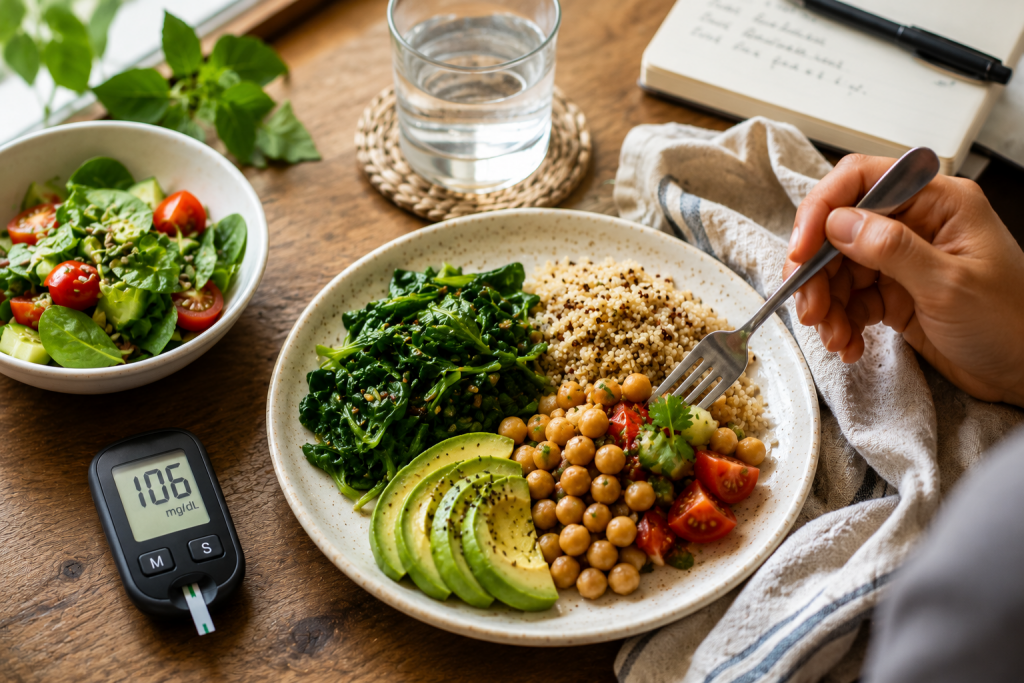
Foods For DiabeticsYour food choices matter a lot when you are managing diabetes. While it is difficult to find single foods that completely prevent diabetes complications like heart disease, kidney issues, or sudden sugar spikes, there are powerful, nutrient-dense foods that can help you reduce your overall carbohydrate intake and keep your blood sugar in check.

Let’s take a look at the top 10 dietary additions that can make a massive difference in your daily diabetes management.

Top 10 Foods For Diabetics 

  1. Cinnamon
    This fragrant golden spice helps in controlling sugar, cholesterol, and triglyceride levels in Type 2 Diabetes. It adds a natural, warm flavour to food and can easily be sprinkled on tea, coffee, oatmeal, and smoothies. Studies have shown that just ¼ teaspoon of cinnamon daily can improve fasting blood sugar and boost insulin sensitivity.
  2. Extra Virgin Olive OilExtra-virgin olive oil contains antioxidants called polyphenols which are extremely beneficial for heart health. Olive oil is one of the best sources of MUFA (Monounsaturated Fatty Acids) when it comes to managing diabetes. Several studies have shown that MUFAs help keep blood sugar in check by lowering insulin resistance. It also keeps you full, minimizes spikes, and aids in the absorption of vital nutrients. A healthy daily intake is about 1-2 tsp (5ml-10 ml).
  3. Nuts
    Nuts are the ultimate snacking food for managing diabetes because they are delicious, satisfying, and highly nutritious. Nuts like walnuts, almonds, cashews, and pistachios are a boon because they are low in digestible carbohydrates but high in protein and healthy fats. This unique macronutrient profile helps stabilize blood sugar and reduce LDL (bad) cholesterol. Aim for a small handful (approx. 20-30 gm) daily, but be sure to avoid heavily salted or roasted-in-oil varieties.
  4. Beans
    Beans are complex carbohydrates loaded with fiber and rich in protein, which gives you a prolonged feeling of satiety. They are inexpensive, easily available, and incredibly versatile. Having beans in your diet regularly can control blood sugar and lower blood pressure. You can add approximately one bowl (25-30 gm raw) daily to your salads, soups, or vegetable curries to help regulate your levels.
  5. Quinoa
    Quinoa is considered a complete protein because it contains all nine essential amino acids needed to build muscle, and it is rich in minerals such as iron and magnesium. This protein-rich whole grain is a fantastic substitute for white rice. Because it is rich in fiber, it digests slowly, preventing sudden blood sugar spikes. Taking 20-30 gm of quinoa daily whether in a salad or mixed with vegetables is highly effective for both sugar control and weight loss.
  6. Fenugreek Seeds
    Fenugreek seeds are widely known for their effectiveness in traditional diabetes management. They are incredibly rich in soluble fiber, which lowers blood sugar levels by slowing down the digestion and absorption of carbohydrates. Studies suggest a daily dose of about 10 gm of fenugreek seeds, soaked overnight in water, helps significantly in controlling Type 2 Diabetes.
  7. Oatmeal
    Oatmeal is one of the best breakfast foods as it easily fits into any healthy meal plan. Oats have a low glycemic index and are packed with fiber, doing a miraculous job of regulating blood sugar while providing steady energy. Steel-cut or rolled oats (approx. 20-30 gm daily) made with low-fat milk or cooked with vegetables are the best choice, as they are the least processed.
  8. Garlic
    Garlic is a potent herb that helps reduce inflammation, blood sugar, and LDL cholesterol in people living with Type 2 Diabetes. It is also known to reduce blood pressure and boost overall immunity. You can crush 1-2 cloves of raw garlic and consume them with water early in the morning, or simply use them generously in your daily cooking.
  9. Turmeric
    Turmeric is a powerful spice with numerous health benefits. It contains an active compound called curcumin, which lowers inflammation, reduces blood sugar, and specifically benefits kidney and heart health in diabetics. As a staple in Indian cuisine, it is easy to include. Adding ¼ to ½ tsp in warm water or milk can boost immunity and help regulate your levels.
  10. Chia seeds
    Chia seeds are a powerhouse of nutrients and an absolutely wonderful food for managing diabetes. They are exceptionally high in viscous fiber, which lowers blood sugar and helps maintain a healthy weight by keeping you full for hours. They also decrease blood pressure and systemic inflammation. Try adding 10 gm of soaked chia seeds daily to your smoothies, shakes, or a bowl of fresh curd.

Frequently Asked Questions (FAQs)

1. Can I eat all 10 of these foods every day?
While all these foods are excellent for managing diabetes, portion control is key. You don’t need to eat all 10 every single day. Instead, focus on incorporating a variety of them into a balanced weekly diet plan to get a wide range of nutrients without exceeding your daily caloric limits.

2. Are oats good for diabetes, and does the type of oat matter?
Yes, oats are great for diabetes, but the type matters significantly. Steel-cut oats and rolled oats are complex carbohydrates that digest slowly. Avoid highly processed, sugary instant oatmeal packets, as these will cause rapid spikes in your blood sugar.

3. Should I consult a doctor before adding supplements like fenugreek or cinnamon?
Absolutely. If you are already on diabetes medication or insulin, adding potent natural remedies like fenugreek or high doses of cinnamon can sometimes cause your blood sugar to drop too low (hypoglycemia). Always consult your doctor or health coach before making concentrated dietary changes.

We hope incorporating these 10 foods helps you make a wonderful and positive shift toward a healthier life. (Note: Always consult with your doctor, nutritionist, or dietitian before drastically altering your diet.)

For more articles on managing your health, check out our Healthy Reads on Diabetes.

Managing diabetes is easier when you don’t have to do it alone. For the right guidance and daily motivation from certified experts, subscribe to GOQii’s Personalised Health Coaching here.

#BeTheForce 

Disclaimer: The information provided in this article is for educational and general informational purposes only. It is not intended to serve as professional medical advice, diagnosis, or treatment. Always consult with your physician or a certified GOQii health professional before making any drastic changes to your diet, especially if you are on diabetes medication.

April 4, 2026 By Neha Sharma Leave a Comment

Healthy Recipes For Kids: Healthy Twist On Pizza & Rolls

healthy recipes for kids“In all this world, there is nothing so beautiful as a happy child.” – L. Frank Baum

We can define happiness in many terms, but for a child, a healthy child is the happiest one. Healthy eating is vital for the overall growth and development of a child. Albeit, it is not a one-off process; it is a habit that has to be developed from early childhood.

Proper nutrition protects children from chronic diseases, builds strong immunity, and keeps them happy and active in the long run. The core aspects of healthy eating for children are not entirely different from adults both need the right nutrients in the right quantities.

1. Healthy Veggie Pizza 

Say goodbye to “blank calories” and hello to a colorful, nutrient-dense pizza that kids will actually love to eat.

What You Will Need:

For the Dough: 

  • Wheat flour: 150 gm
  • Boiled & mashed Spinach: 50 gm
  • Boiled & mashed beetroot: 50 gm
  • Oil: 2 tsp
  • Salt: ½ tsp

For the Dressing & Toppings :

  • Hung curd: 50 gm
  • Tomato sauce: 50 gm
  • Mixed herbs: 1 tsp
  • Grated carrot: 50 gm
  • Chopped capsicum: 50 gm
  • Boiled chopped corns: 50 gm
  • Cottage cheese (Paneer): 100 gm (finely chopped) 

Method of Preparation

  1. Prepare the Dough: Create two separate doughs one using the mashed spinach and the other using the beetroot. Roll them out into two slightly big and thick chapattis.
  2. Pre-cook: These colorful chapattis can be baked or partially cooked on a tawa like a normal roti.
  3. Add the Base: Spread one layer of fresh hung curd and one layer of tomato sauce evenly over the bases.
  4. Decorate: Spread all the veggies and paneer one by one. Do this in a fun, interesting pattern that appeals to kids!
  5. Season: Sprinkle mixed herbs, salt, and a little bit of cheese on top.
  6. Cook: Bake this chapati pizza in an oven or cook it covered in a kadai for 4-5 minutes until the cheese melts.
  7. Serve: Enjoy hot with an extra side of hung curd dip or tomato sauce!

2. Tangy Protein Rolls 

A fantastic way to curb evening hunger pangs while sneaking in a powerful dose of protein and hidden veggies.

What You Will Need:

For the Wrap (Chilla):

  • Overnight soaked Moong Dal: 100 gm
  • Rice Flour: 2 tsp

For the Filling:

  • Boiled potatoes: 2 (medium)
  • Boiled & mashed peas: 50 gm
  • Cottage cheese (Paneer): 100 gm
  • Grated carrot: 100 gm
  • Chopped capsicum (mixed colors): 100 gm
  • Finely chopped onion: 50 gm
  • Chopped cashews and raisins: 1 tsp
  • Grated fresh coconut: 1-2 tsp

For the Tempering & Flavor:

  • Cumin seeds: ½ tsp
  • Mustard seeds: ½ tsp
  • Curry leaves: 6-7 leaves
  • Sesame seeds: 1 tsp
  • Dry mango powder (Amchur): ½ tsp
  • Tomato sauce: 2-3 tsp
  • Salt: ½ tsp
  • Oil: 2-3 tsp

Method of preparation:

  1. Prepare the Batter: Grind the soaked moong dal into a coarse paste. Add the rice flour, mix well, and set the batter aside for 5-10 minutes.
  2. Temper the Spices: In a pan, heat the oil. Add cumin seeds, mustard seeds, curry leaves, and chopped onion. Sauté until the onions turn slightly pink.
  3. Cook the Filling: Add all the chopped veggies one by one. Mix in the dry mango powder, salt, grated coconut, sesame seeds, and chopped nuts. Sauté everything together for 2-3 minutes.
  4. Shape the Filling: Once slightly cooled, roll the veggie mixture into cylindrical, hotdog-like shapes.
  5. Make the Wrap: Pour a ladle of the moong dal batter onto a hot tawa to make a thin chilla (crepe).
  6. Assemble: Place one veggie “hotdog” in the center of the cooked chilla, apply some tomato sauce, roll it up tightly, and serve!

Health Benefits: Why These Recipes are a Win-Win

  • 100% Safe & Homemade: You control the ingredients, ensuring absolute safety and hygiene for your kids.
  • Nutrient-Dense vs. Empty Calories: Regular commercial pizza is often junk food loaded with empty calories. This version is super healthy, utilizing wheat flour, spinach, and beetroot to provide essential vitamins and minerals.
  • Smart Swaps: Using hung curd blended with a little tomato sauce is a fantastic, gut-friendly alternative to heavy, processed mayonnaise or cheese spreads.
  • High in Protein & Bone Support: Moong dal is an excellent source of plant-based protein. Sesame seeds are fantastic for supporting growing bone health.
  • Kid-Approved Aesthetics: These recipes satisfy the emotional aspect of eating for kids. The natural food coloring from the beetroot and spinach makes them look vibrant, exciting, and exactly like the “outside food” they crave!

We hope you enjoy these Healthy Recipes For Kids. Do try them out, upload your pics on social media or the GOQii Arena and tag us! For more healthy recipes, check out Healthy Reads.  

To get more personalized advice on recipes, nutrition, and diet tips for your child’s development, subscribe to GOQii Personalised Health Coaching here. 

#BeTheForce

Disclaimer: The information and recipes provided in this blog are for general educational and informational purposes only and are not intended as professional medical or clinical nutritional advice. Every child’s nutritional needs, growth patterns, and tolerances are unique. Always consult with your pediatrician or a qualified healthcare professional before making significant changes to your child’s diet, especially if they have known food allergies, sensitivities, or pre-existing health conditions.

March 31, 2026 By Yogita Agarwal 1 Comment

Eat to Defy Age: Top 5 Foods to Fight Wrinkles and Premature Ageing

We all want healthy and glowing skin, but do you know that your skin reflects what you eat? Healthy skin needs vital nutrients, a balanced diet, enough water, and quality sleep. When these aspects are balanced, it truly shows on our skin. While we cannot stop or avoid wrinkles entirely as they are a natural sign of ageing we can significantly delay them with healthy food choices and a supportive lifestyle.

When it comes to premature ageing or wrinkles, it often happens due to Sun damage and the loss of two crucial proteins: collagen and elastin. These two proteins take care of our skin and keep it healthy, young and firm. When UV rays hit our skin, it reduces the production of these proteins, increasing free radicals and leading to premature ageing. As we age, the skin starts losing its firmness and elasticity. Other factors that contribute to this process are pollution, smoking, stress, dehydration, lack of sleep and unhealthy food habits.

5 Powerful Foods Help Fight Wrinkles and Premature Ageing

  1. Avocado:
    Avocado is a fruit with healthy fats. It has fiber and many nutrients like Folate, Magnesium, Potassium, Riboflavin (Vitamin B2), Niacin (Vitamin B3), Pantothenic Acid (Vitamin B5), Pyridoxine (Vitamin B6), Vitamin C, Vitamin E and Vitamin K. Vitamin E aids skin nourishment, reduces scars and fights free radicals. Avocado is high in the antioxidant glutathione, which helps the body to detoxify and keeps skin clear of acne and wrinkles.
  2. Berries:
    All the berries are extremely rich in antioxidants, are a good source of Fiber, Vitamin C, Manganese, Vitamin K1, Copper and Folate. Those are rich in Flavonoids, Vitamins and Polyphenol. So berries are perfect food to fight wrinkles and fine lines. Berries not only help in reducing wrinkles but also help in the regeneration of new skin cells. Add berries to your breakfast or morning smoothies.
  3. Buckwheat:
    It is gluten free, rich in fiber, Iron, provides B1, is a rich source of Magnesium and Calcium, Folate, helps in heart health and controls blood sugar levels and also reduces the signs of premature ageing. It has Bioflavonoid Rutin which helps to maintain the production of collagen in the skin and encourage the body’s utilization of Vitamin C.
  4. Papaya:
    Papaya is rich in a variety of antioxidants, vitamins and minerals like Vitamin A, C, K and E, Calcium, Potassium, Magnesium, Phosphorus and Vitamin B. These help to improve skin elasticity and minimize the fine lines and wrinkles. Papaya is rich in the enzyme papain and chymopapain which helps to reduce inflammation. It helps to reduce acne by removing dead skin cells, and remove damaged keratin which can build up on the skin and form small bumps.
  5. Sweet Potatoes:
    Sweet Potatoes are rich in Vitamin A, B, C, D, Calcium, Iron, Magnesium, Potassium, Phosphorus, Thiamine, Zinc. It has the antioxidant beta-carotene which is converted into Vitamin A and helps in restoring skin elasticity, prompts skin cell turnover, which means healthy glowing skin. The Vitamin C and E in it helps in protection of skin from free radicals and keeps complexion radiant. Both the Vitamins are crucial to keep skin healthy, glowing and supple. Vitamin C boosts collagen and promotes tightening of skin.

Unlocking Your 10-Year Younger Skin Routine

In addition to including these specific foods to your diet, make sure that you consume healthy fats, a variety of veggies and fruits, especially different colour veggies and fruits. Keep yourself well hydrated, do regular exercise, learn to manage stress and sleep well.

Simultaneously, make it a priority to reduce the consumption of:

  • Alcohol
  • Tea and coffee
  • Preserved canned food
  • Processed food

Our body does not have a voice, but it talks to us through signs and symptoms, so pay attention to the health of your skin to be healthy and fit. With good food habits, a healthy lifestyle, proper hydration, quality sleep and stress management, we can turn the clock on our skin to look 10 years younger.

We hope this article helps you fight wrinkles! Do leave your thoughts in the comments below. For more tips on skincare, check out Healthy Reads or ask a GOQii Coach by subscribing for Personalised Health Coaching here.

#BeTheForce

Frequently Asked Questions (FAQs)

  1. What is the main cause of premature skin ageing?
    While factors like pollution, stress, and poor sleep contribute, the two single biggest hidden threats to youthful skin are Sun damage (UV exposure) and chronic inflammation. Over time, these destroy healthy skin cells and severely degrade the production of collagen and elastin, the proteins that keep skin healthy and firm.
  2. Why is collagen so important for preventing wrinkles?
    Collagen (and elastin) are vital structural proteins that act as the scaffolding of your skin. They are responsible for its texture, firmness, and flexibility. As you age, your body produces less collagen naturally. Foods that support collagen specifically those high in Vitamin C and antioxidants like the ones listed above are essential for maintaining that firmness and delaying the onset of wrinkles.
  3. Does hydration alone really make you look younger?
    Hydration is non-negotiable for skin longevity. Water acts as the medium for all cellular processes, including the ones that clear toxins and repair cells. Dehydrated skin looks dull, lacks “plumpness,” and causes existing fine lines to appear much deeper. For a radiant complexion, regular hydration must be combined with nutrient-dense foods that feed your skin from the inside out.

Disclaimer: The information provided in this article is for general educational and informational purposes only and is not intended as medical advice, diagnosis, or treatment. Always consult your doctor, dermatologist, or a qualified nutritionist before making any significant changes to your diet, skincare routine, or lifestyle, especially if you have per-existing health conditions.

  • « Previous Page
  • 1
  • 2
  • 3
  • 4
  • …
  • 144
  • Next Page »

Search

Recent Posts

  • World IBD Day 2026: Why IBD Is More Than Just a Gut Problem
  • World Hypertension Day 2026: The Silent Killer & 5 Natural Ways to Lower Your Blood Pressure
  • Eat Healthy At Work: Quick & Easy Snacks You Can Eat In The Office
  • The Great Summer Mango Debate: Can You Eat Mangoes While Trying to Lose Weight?
  • Metabolic Flexibility: Why Your Body Struggles to Burn Fat Efficiently

Stay Updated

Archives

  • May 2026 (15)
  • April 2026 (24)
  • March 2026 (18)
  • February 2026 (14)
  • January 2026 (14)
  • December 2025 (19)
  • November 2025 (15)
  • October 2025 (20)
  • September 2025 (6)
  • August 2025 (6)
  • July 2025 (12)
  • June 2025 (18)
  • May 2025 (16)
  • April 2025 (22)
  • March 2025 (27)
  • February 2025 (21)
  • January 2025 (25)
  • December 2024 (22)
  • November 2024 (23)
  • October 2024 (21)
  • September 2024 (23)
  • August 2024 (30)
  • July 2024 (21)
  • June 2024 (25)
  • May 2024 (28)
  • April 2024 (27)
  • March 2024 (27)
  • February 2024 (24)
  • January 2024 (21)
  • December 2023 (14)
  • November 2023 (10)
  • October 2023 (19)
  • September 2023 (22)
  • August 2023 (18)
  • July 2023 (22)
  • June 2023 (23)
  • May 2023 (22)
  • April 2023 (19)
  • March 2023 (23)
  • February 2023 (19)
  • January 2023 (15)
  • December 2022 (11)
  • November 2022 (15)
  • October 2022 (15)
  • September 2022 (12)
  • August 2022 (10)
  • July 2022 (17)
  • June 2022 (11)
  • May 2022 (10)
  • April 2022 (6)
  • March 2022 (6)
  • February 2022 (13)
  • January 2022 (11)
  • December 2021 (7)
  • November 2021 (3)
  • October 2021 (6)
  • September 2021 (3)
  • August 2021 (8)
  • July 2021 (7)
  • June 2021 (15)
  • May 2021 (16)
  • April 2021 (10)
  • March 2021 (7)
  • February 2021 (4)
  • January 2021 (4)
  • December 2020 (3)
  • November 2020 (4)
  • October 2020 (10)
  • September 2020 (3)
  • August 2020 (3)
  • July 2020 (2)
  • June 2020 (4)
  • May 2020 (10)
  • April 2020 (12)
  • March 2020 (10)
  • February 2020 (4)
  • January 2020 (4)
  • December 2019 (3)
  • November 2019 (7)
  • October 2019 (5)
  • September 2019 (4)
  • August 2019 (9)
  • July 2019 (9)
  • June 2019 (11)
  • May 2019 (4)
  • April 2019 (8)
  • March 2019 (8)
  • February 2019 (9)
  • January 2019 (8)
  • December 2018 (9)
  • November 2018 (3)
  • October 2018 (3)
  • September 2018 (5)
  • August 2018 (10)
  • July 2018 (6)
  • June 2018 (13)
  • May 2018 (8)
  • April 2018 (18)
  • March 2018 (9)
  • February 2018 (8)
  • January 2018 (15)
  • December 2017 (12)
  • November 2017 (19)
  • October 2017 (13)
  • September 2017 (15)
  • August 2017 (4)
  • July 2017 (8)
  • June 2017 (7)
  • May 2017 (6)
  • April 2017 (8)
  • March 2017 (6)
  • February 2017 (7)
  • January 2017 (9)
  • December 2016 (10)
  • November 2016 (7)
  • October 2016 (7)
  • September 2016 (7)
  • August 2016 (11)
  • July 2016 (9)
  • June 2016 (9)
  • May 2016 (12)
  • April 2016 (17)
  • March 2016 (17)
  • February 2016 (8)
  • January 2016 (6)
  • December 2015 (2)
  • November 2015 (9)
  • October 2015 (7)
  • September 2015 (9)
  • August 2015 (11)
  • July 2015 (9)
  • June 2015 (11)
  • May 2015 (9)
  • April 2015 (13)
  • March 2015 (8)
  • February 2015 (5)
  • January 2015 (12)
  • December 2014 (14)
  • November 2014 (11)
  • October 2014 (6)
  • September 2014 (13)
  • August 2014 (12)
  • July 2014 (6)
  • June 2014 (2)
  • May 2014 (7)
  • April 2014 (4)

From “Laddu Nawin” to Fit and Fierce: How a 25-Year-Old Insurance Advisor Shed 20 Kilos and Gained His Life Back

When 25-year-old Nawin Yadav from Hyderabad walked into his office every morning, he carried more than just his files and policy papers. He had the weight of fatigue, sluggish energy, and an ever-growing belly that was becoming the butt of jokes. “People … [Read More...]

“I’ve Challenged Myself to Live 100 Years” – The Story of Chandubhai Savani’s Second Chance at Life

At 67, most people start slowing down. Not Chandubhai Savani. A resident of Surat, Chandubhai, thought life was on track. “My life was going well till I had my bypass surgery,” he says. That surgery, back in 2021, was a wake-up call.  Medication was routine, but exercise wasn’t. His diet? What he calls ‘normal.’ “I […]

From Shimla’s Slopes to Chandigarh’s Sidewalks: Surinder Kaur Bhalla’s Journey from Chaos to Control

Some journeys start with a plan. Others begin with a stumble literally. Surinder Bhalla, a government professional, born and raised in the scenic hill town of Shimla, had always lived a life of movement. “In Shimla, you walked everywhere,” she reflects. “Walking was never an exercise. It was just life.” But after shifting to Chandigarh, […]

Ananda Mukherjee Health Story

From Terminal Illness To Complete Wellness! Ananda Mukherjee Health Story

As we observe World Cancer Day under the powerful theme ‘United by Unique’ (2025-2027)**, we are reminded that every individual’s journey with cancer is distinct, yet united by shared resilience, hope, and the collective fight against this disease. This theme places people at the centre of care and their stories at the heart of the […]

  • HOME
  • HEALTHY LIVING
  • FITNESS
  • HEALTHY RECIPES
  • USER STORIES
  • KARMA
  • BUY GOQii

Copyright ©2016 GOQii