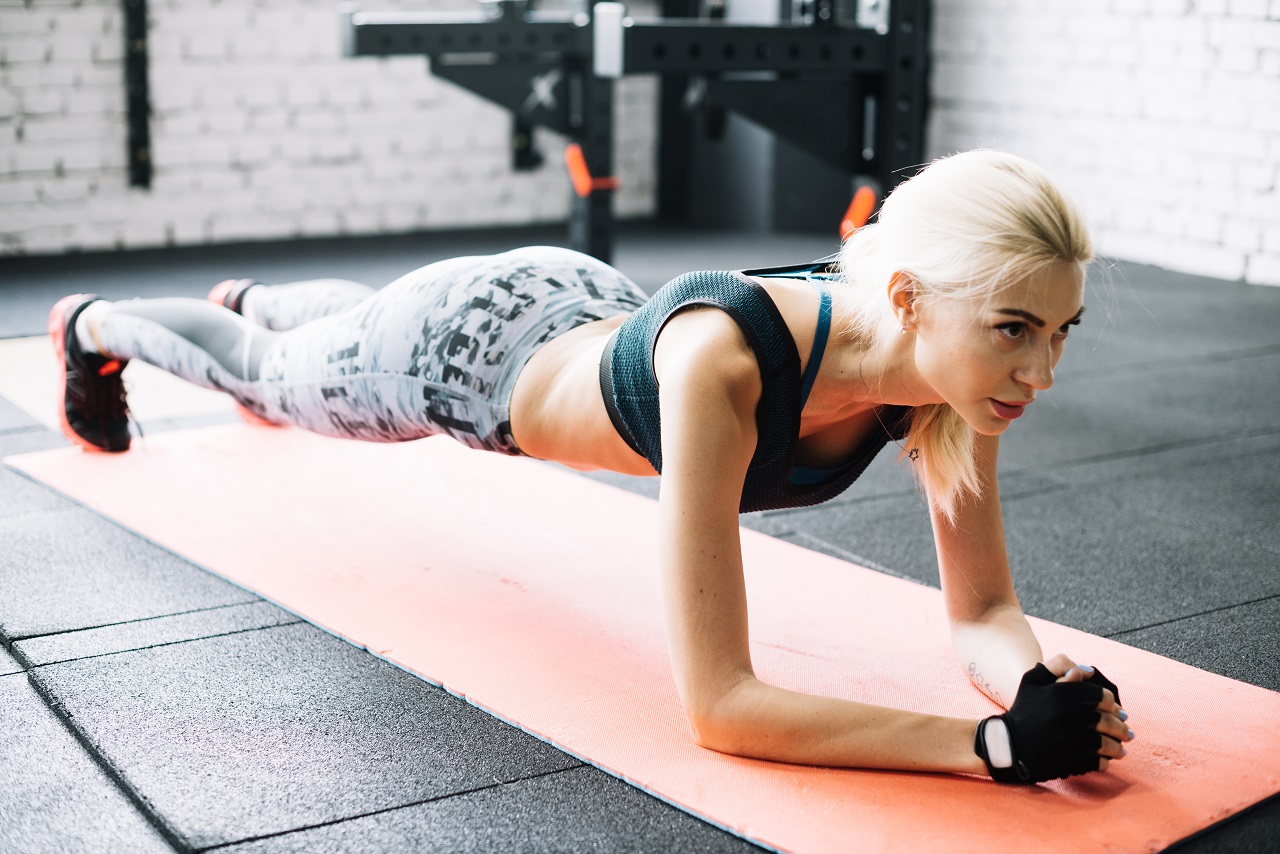
 The Big Question: Can one simple exercise strengthen your core, improve posture, build full-body stability, and fit into even the busiest schedule?
Between work deadlines, family commitments, and daily responsibilities, finding time to exercise isn’t always easy. While many people believe they need long gym sessions to stay fit, the truth is that a few minutes of focused movement can make a meaningful difference.
One exercise that consistently delivers excellent results is the plank. It requires no equipment, very little space, and can be performed almost anywhere. More importantly, it engages multiple muscle groups simultaneously, making it one of the most effective bodyweight exercises for improving strength, stability, and overall fitness. Whether you’re just beginning your fitness journey or looking to level up your workouts, planks deserve a permanent place in your routine.
Why Are Planks So Effective?
Unlike standard crunches or sit-ups, which mainly target the front abdominal muscles, planks activate your entire core while recruiting muscles throughout your entire body to fight against gravity. A correctly performed plank works your:
- Rectus abdominis: The front abdominal muscles.
- Transverse abdominis: The deep core muscles that wrap around your spine.
- Obliques: The side abdominal muscles.
- Lower back and Glutes: The posterior chain that supports your pelvis.
- Shoulders and Chest: For upper body stability.
- Quadriceps and Hip Stabilizers: To keep your lower body rigid and aligned.
These muscles work seamlessly together to stabilize your spine, improve your movement efficiency, and support everyday activities—from safely lifting heavy groceries to climbing a steep flight of stairs.
8 Powerful Benefits of Planks
-
Builds Foundational Core Strength
Your core acts as the body’s foundation. A stronger core supports better physical movement, protects your spine, and improves performance during everyday activities and sports.
-
Improves Posture naturally
Weak core muscles often contribute to slouching and poor posture. Regular planks strengthen the specific muscles that keep your shoulders, back, and hips properly aligned, helping you stand taller and sit more comfortably.
-
Supports Spinal Stability
Strong core muscles help distribute forces more evenly across your spine, reducing unnecessary strain on your lower back. While planks are not a medical treatment for chronic back pain, they are a vital part of a balanced exercise program for improving spinal stability.
-
Improves Balance and Coordination
Maintaining a plank challenges your body’s ability to remain stable. This improves your baseline balance, coordination, and body awareness—skills that become increasingly important as we age.
-
Enhances Athletic Performance
Whether you run, cycle, swim, play sports, or lift weights, a stronger core improves the transfer of force between your upper and lower body, making all movement more efficient and powerful.
-
Increases Muscular Endurance
Unlike explosive, high-impact exercises, planks build endurance by training your muscles to maintain tension over a sustained period of time. This helps you perform daily physical activities with far less fatigue.
-
Requires Zero Equipment
One of the biggest advantages of planks is their universal accessibility. You don’t need a gym membership, a bench, or expensive equipment—just enough floor space to stretch out.
-
Saves Valuable Time
A focused plank routine lasting just 5 to 10 minutes can engage nearly every major muscle group in your body, making it the ideal workout for busy lifestyles.
How to Perform the Perfect Forearm Plank
Proper form is infinitely more important than how long you can hold the position. Follow these structural steps to get it right:
- Lie face down on a yoga mat or comfortable floor surface.
- Position your elbows directly beneath your shoulders.
- Keep your forearms parallel to each other or gently clasp your hands together.
- Extend your legs straight out behind you and lift up onto your toes.
- Tighten your abdominal muscles intensely, as though preparing for a punch.
- Squeeze your glutes tightly to stabilize your pelvis.
- Keep your ribs pulled down and avoid arching your lower back.
- Maintain one straight, rigid line from your head down to your heels.
- Keep your neck neutral by looking at the floor slightly ahead of your hands.
- Breathe normally throughout the exercise—do not hold your breath!
Remember: Good form for 20 seconds always beats a 2-minute hold with poor technique.
5 Plank Variations to Challenge Yourself
As your core gets stronger, you need to challenge it in new planes of motion. Here are five excellent variations to incorporate:
| Plank Variation | Difficulty | Primary Target Area | Execution |
| Side Plank | Intermediate | Obliques, shoulders, and hip stabilizers. | Support yourself on one forearm with feet stacked. Lift hips to form a straight line. |
| Reverse Plank | Intermediate | Glutes, hamstrings, shoulders, and upper back. | Sit with legs extended, place palms behind you, and lift hips up into a straight line. |
| Dynamic Plank | Intermediate | Core control and shoulder mobility. | From a forearm plank, push hips high into an inverted “V”, then slowly lower back down. |
| Plank to Push-Up | Advanced | Upper-body strength and anti-rotational stability. | Move from forearms to hands (high plank) one arm at a time, then back down. |
| Plank Jacks | Advanced | Core training combined with cardiovascular conditioning. | In a high plank, jump your feet wide apart and back together, keeping your torso stable. |
New to Planks? Your 4-Week Starter Plan
If you’re new to planks, do not worry about holding the position for a full minute on your first attempt. Try this simple, progressive schedule:
| Timeline | Goal per Set | Sets to Complete |
| Week 1 | 15–20 seconds | 3 Sets |
| Week 2 | 20–30 seconds | 3 Sets |
| Week 3 | 30–45 seconds | 3 Sets |
| Week 4 | 45–60 seconds | 3 Sets |
Progress gradually and only move to the next week if you can maintain excellent, pain-free technique.
Reality Check: Can Planks Help You Lose Belly Fat?
One of the biggest fitness myths in the industry is that planks specifically burn belly fat. The reality is different.
Planks strengthen your abdominal muscles and massively improve core stability, but they cannot spot-reduce fat from one specific area of the body. Fat loss only occurs when you combine regular physical activity with balanced nutrition to maintain a calorie deficit over time. Think of planks as the tool that builds and strengthens the muscles beneath the fat, while your overall diet and lifestyle determine how much body fat you actually lose.
Common Plank Mistakes to Avoid
Even seasoned athletes make these structural errors. Check your form and avoid:
❌ Holding your breath during the isometric hold.
❌ Letting your hips sag toward the floor (strains the lower back).
❌ Raising your hips too high into the air (removes tension from the core).
❌ Looking straight up or ahead instead of keeping your neck neutral.
❌ Positioning your elbows too far in front of your shoulders.
❌ Prioritizing a longer hold time over proper structural alignment.
Who Should Modify or Avoid Planks?
While planks are generally safe and highly effective for most healthy individuals, you should consult your healthcare provider or a physiotherapist before performing them if you have:
- Recent shoulder or wrist injuries.
- An active hernia.
- Severe or chronic lower back pain.
- Recent abdominal surgery.
- Pregnancy (certain modified variations are required for safety).
Stop immediately if you experience sharp, shooting pain during the exercise.
You don’t need an hour-long, exhausting workout to become a stronger, healthier version of yourself. Planks are one of the simplest, most effective, and most accessible exercises for improving core strength, posture, balance, and functional fitness. The key isn’t holding the longest plank possible—it is maintaining proper form and practicing consistently. Just a few minutes several times a week can make a highly noticeable difference to your overall strength and stability!
Pro Tip: Consistency builds results. Use the GOQii App to track your workouts, activity levels, and progress over time. Your GOQii Personalised Health Coach can recommend exercises suited to your fitness level and help you build a sustainable routine.
Frequently Asked Questions (FAQs)
- Are planks better than traditional crunches?
Both exercises have their place, but planks engage multiple muscle groups simultaneously (including the back, glutes, and shoulders) and improve overall functional core stability, whereas crunches strictly isolate the front abdominal muscles.
- How long should absolute beginners hold a plank?
Most beginners should start with 15 to 30 seconds while focusing entirely on maintaining proper form. Gradually increase the duration by 5–10 seconds as your core strength improves.
- Can doing planks every day reduce my belly fat?
No. Planks strengthen your core muscles but cannot specifically burn fat from your belly. Fat loss depends on your overall nutrition, daily physical activity, and sustaining a healthy calorie balance.
- Is it safe to do planks every single day?
Many people can safely perform planks daily if they use proper technique and do not overtrain. However, your muscles need time to recover, so if you experience deep muscle soreness, take a rest day or alternate with other forms of exercise. Listen to your body!
Disclaimer: This article is intended for educational and informational purposes only and should not be considered medical advice. Consult a qualified healthcare provider or certified fitness professional before beginning a new exercise program, particularly if you have an existing medical condition, injury, or concerns about your physical health.
#BeTheForce




Amazing!! I am fitness lover and its great to know this workouts information and its really helps me a lot.
very good information!! sir aapne bahut hi aasan tips batai hai Jesse Hama fit or health rha ske .
your post is very interesting to read.it’s very informative and helpful. Usually, I never comment on blogs but your article is so convincing that I never stop myself to say something about it. You’re doing a great job, Keep it up.
Thanks a lot, for this wonderful information. It was really helpful for me.
Very helpful. Keep sharing this kind of informative Posts
Very Nice Information about the plank.
My best-recommended exercise is plank it’s not much time taking and gives the best result. I always explore such kind of blog that helps me out in my daily routine a few days ago I go through the blog of online dissertation help and that help me a lot to accomplish my dissertation.
Wonderful Article. Thank You For Posting This Kind Of Awesome Blog! Surely Inspired Thru Reading Your Post.
Planks are a key part of core strength training. Planks require control and stability of the core muscles and the abdominal muscles. Planks are not only a great workout for the core muscles, but also for the arms, legs, and back. If done properly, planks can give you a tight and toned core, which is a key to having a healthy body.
We’re the ones who created and operated wang’s kitchen in Mississauga for years. We proudly present to you the one and only HAKKA CHOW
It’s the only way to stay fit that won’t make your health worse