GOQii

Blog

  • HOME
  • HEALTHY LIVING
  • FITNESS
  • HEALTHY RECIPES
  • USER STORIES
  • KARMA
  • BUY GOQii

March 31, 2024 By Madhu Soni 2 Comments

The Power of the Indian Gooseberry

Indian Gooseberry Benefits

In a fast-paced world that rapidly drains us of energy, it is extremely important to be in the best of shape! In that pursuit, we are constantly searching for an elixir that will give us good health with least efforts.

What if we told you that you can have more energy, focus and overall good health? What if that magic elixir exists? More so, what if it is a fruit that you already know?

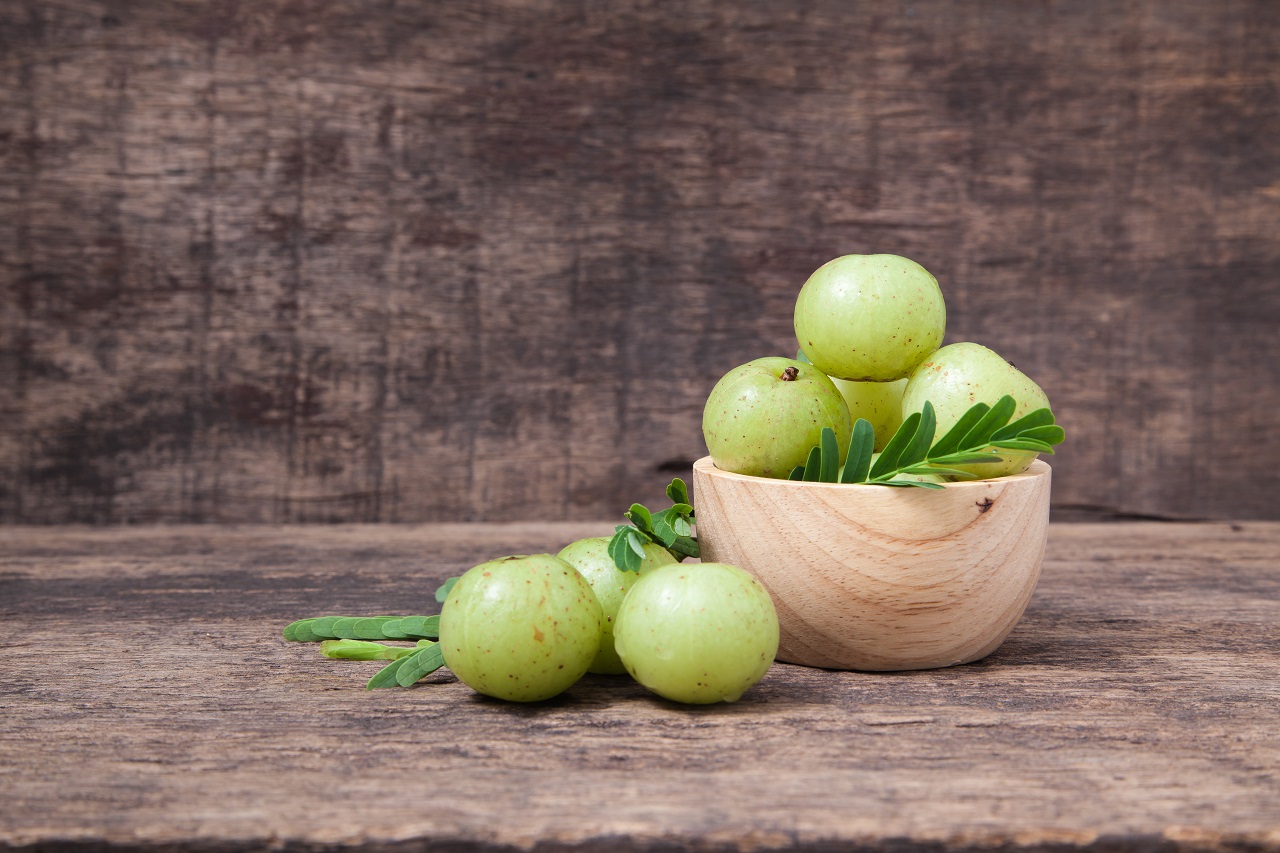
If you haven’t guessed it already, we are talking about the Indian Gooseberry or as it is popularly known – “Amla”. Since ancient times, it is used to cure various ailments, even if it is something as simple as aiding digestion to something as complex as fighting Diabetes and Heart Disease.

The Indian Gooseberry (Emblica officinalis or phyllanthus emblica) derives its name from the Sanskrit word “Amalaki”. This tree is a native of India and the neighboring South East Asian countries. The fruit is sour in taste but leaves a sweet aftertaste.

Let’s take a look at how it impacts health!

  • Boost Immunity: The Indian Gooseberry is a powerhouse of Vitamin C and A. It greatly increases white blood cells in our body and is an excellent antioxidant, anti-inflammatory and anti-carcinogenic. It is like a powerful soldier that shields our body against various foreign toxins.
  • Fights Cancer: It has the potential to restrict the growth of cancer cells by keeping harmful free radicals at bay. The Indian Gooseberry also counter-attacks the side effects of anti-cancer drugs, radiation and chemotherapy.
  • Keeps Diabetes in Check: It helps regulate blood sugar levels in many ways. The chromium present in it is responsible for the pancreas to produce sufficient insulin and the polyphenol keeps the oxidative stress low, thus making the body more responsive to insulin.
  • Good for the Heart: The cardio protective properties of the Indian Gooseberry due to the presence of Vitamin A and C, the chromium and iron help reduce cholesterol, increase HDL (Good cholesterol) and reduce LDL (bad cholesterol) and strengthen the heart muscles.
  • Protects the Eyes: Regular use of the Indian Gooseberry can protect our eyes from cataract and short-sightedness. The impressive carotene content in it can keep night blindness away.
  • Promotes a Healthy Liver: It is diuretic in nature, which means that it increases the volume and frequency of urine and fosters regular bowel movement. It also helps in eliminating toxic metals and the ill effects of excessive medication. Thus, it protects the liver. It also provides relief in the case of urinary tract infection.
  • Fountain of Youth: The Indian Gooseberry supports longevity, helps smoothen wrinkles, fortifies the skin, prevents hair loss and greying and provides lustrous hair. Besides beauty, it is also a brain tonic which promotes clarity of thought and boosts memory.

The Not So Good Part of the Indian Gooseberry! 

Since it is high in ascorbic acid, taking excessive quantities at night may erode the enamel in the teeth just like any other citrus fruit. Since it reduces Diabetes, sugar levels may drop, so keep your doctor informed about it. He may change your medication. Being diuretic, excess amla consumption may cause constipation to a few.

How to Eat the Indian Gooseberry

  • The best way to have it would be raw. You can add rock salt and pepper to kill the sourness
  • Powder and tablets are a convenient way to have it, but to be taken under medical supervision
  • Indian Gooseberry juice either freshly made at home or store bought are great options
  • Chawanprash: a healthy way to include it. 1-2 tsp can be taken daily
  • Amla Murabba: Since it has a good amount of sugar, which acts as a preservative, you can wash off the excess sugar syrup just before eating
  • Eat it as a chutney, pickle or you can even opt for Amla Candies

To put it all in a nutshell, taken in any form, it is a simple yet effective way to good health. It is worth its weight in gold and this information shouldn’t be ignored but passed on to the next generation!

Want to know more about the Indian Gooseberry? Let us know in the comments below! For further information or guidance, reach out to our certified experts by subscribing to GOQii’s Personalised Health Coaching here.

#BeTheForce
August 12, 2023 By GOQii Leave a Comment

Reducing HbA1c from 7.2 to 6.1 | Ram Sharma Health Story

Ram Sharma - GOQii Diabetes Care

There’s nothing sweet about diabetes and we’re all well aware about that. Factors such as a poor diet, obesity, lack of exercise, improper sleeping patterns, stress and advancing age can cause diabetes. While it might seem overwhelming, diabetes is not an insurmountable affair. With proper self-care, guidance and a few lifestyle modifications, you can manage diabetes effectively like our Player Ram Sharma. Want to know how he reduced his HbA1c levels from 7.2 to 6.1? Let’s see how he did it! 

Before Joining GOQii 

Ram Sharma is a 47 year old working individual originally hailing from Rajasthan. As a part of a routine medical check-up by the company in 2022, he was shocked to find out that he had high sugar levels. His HbA1c levels were at 7.2 and he weighed around 97kg.

When he analyzed his health parameters, he was aware that his lifestyle had to change considering that he had, so far, lived a more or less sedentary lifestyle marred by stress and unhealthy eating habits. His consulting doctor had also put him on medication to control his sugar levels.  

He began looking at a few health programs that would help him. His friends suggested he get a smartwatch, and after a good bit of research, he zeroed in on GOQii as it also had an assisted program. He decided to go ahead with the GOQii Diabetes Care Program – which essentially helps people manage diabetes and take ownership of their health with guidance from certified experts and doctors. 

Making Lifestyle Changes with the GOQii Diabetes Care Program 

Once onboard in February 2022, Ram Sharma’s goal was to reduce his HbA1c levels and lose weight. His GOQii Coach Sweta Jaiswal began suggesting simple changes which included gradually increasing his step count and managing his diet through proper nutrition.

“In February, he started with a goal of 3k and slowly increased the step count to 5k. Simultaneously, he also started going to the gym to exercise,” says his coach, Sweta. 

Once he began interacting with his coach on a daily basis, he became more aware of what his actual weight should be. He then began asking his coach for ways to achieve his health goals. He followed all the instructions given by Coach Sweta Jaiswal and logged all his food and activities in the GOQii App.

While he followed all his coach’s instructions, one issue he still faces is eating his food on time. “Food timings are a bit off due to his hectic work schedule, but he is trying to maintain it as best he can, and has started meditation to make sure his day begins nicely,” says coach Sweta.

How Did These Changes Affect Ram Sharma? 

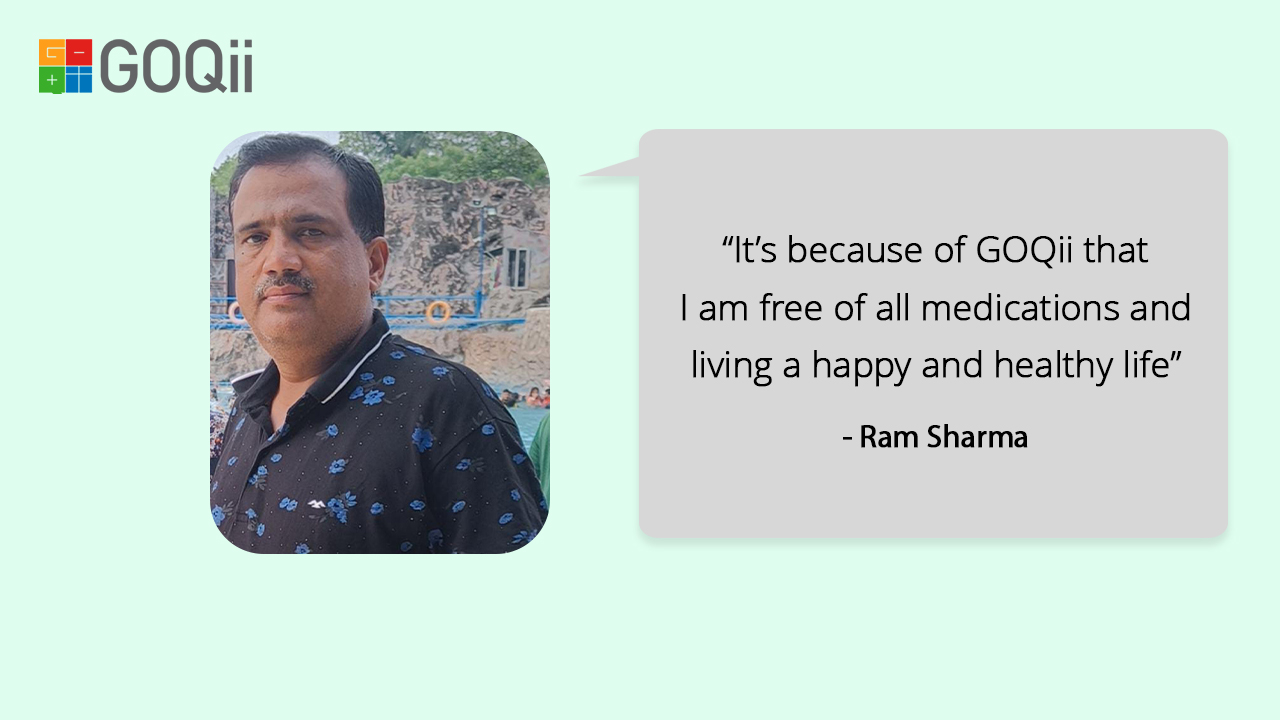
As of now, the combination of walking and strength training has helped Ram Sharma reduce his weight from 97kg to 82kg. On average, he clocks in 15K steps a day. As a result of his efforts, his adherence to his coach’s suggestions, and his dedication, he managed to reduce his HbA1c levels from 7.2 to 6.1. What’s amazing is that he has stopped all his medication and feels better too. “It’s because of GOQii that I am free of all medications and living a happy and healthy life,” he says. 

He further added, “I had a paunch, and now I am slim and trim, and people around me cannot believe it and ask me how I managed to do this. Here is when I suggest GOQii to family and friends.”

Currently, he walks 3-4 km a day, works out regularly, and has made a very healthy switch in his life with the guidance and motivation of his GOQii Coach. You can learn more about his journey as he speaks to our Founder and CEO, Vishal Gondal, on an episode of GOQii Health Stories here. 

Ram Sharma has been an elite player for the past 404 days. He has also upgraded to the Insure+ Program and has renewed his Diabetes Care Program subscription for 1 year in May 2023. 

Know someone with Diabetes who might need help? Share this article with them or ask them to check out GOQii’s Diabetes Care Program – India’s only diabetes program that is driven by Smart Science and Personal Coaching to improve Fasting Blood Sugar (FBS), Postprandial Blood Sugar (PP), and reduce HbA1c levels.

Find more inspiring health stories here. 

#BeTheForce 

April 19, 2023 By Tabassum Parveen 2 Comments

Should You Fast During Ramadan if You Are Diabetic?

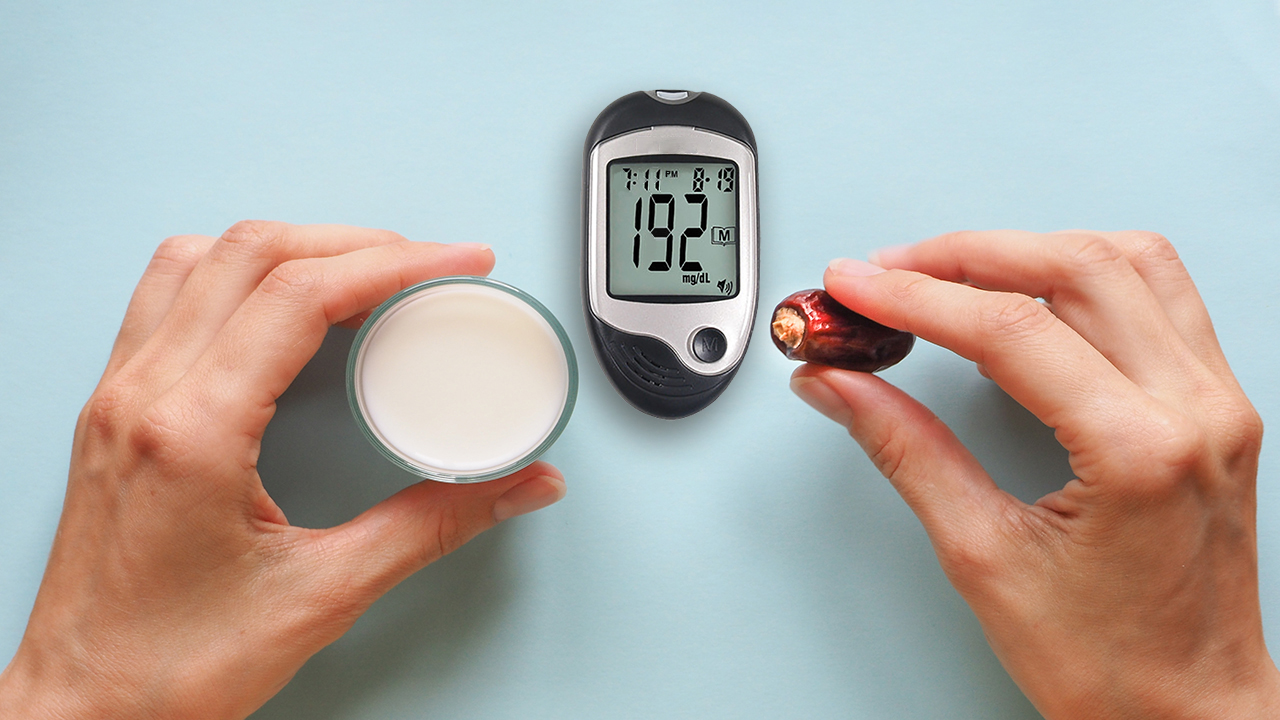
diabetes and ramadan

Just a few days back, I was walking down a lane when I came across a person who fainted and fell before me. I got curious and learned that the man was fasting and he had recently been diagnosed with diabetes. He was given immediate medical support and revived.

This incident primarily occurred because he was unaware about the disease. He fell unconscious because the blood glucose levels of his body spiked up while fasting due to the change in medical timings and improper meals. It got me thinking if it is really safe for a diabetic to fast during Ramadan.

What Is Diabetes?

To keep it short, Diabetes is a condition where the blood sugar level is high due to the lack of Insulin – a hormone produced by the Pancreas. Insulin converts glucose into energy and supplies it to every single cell present in the body. The 3 main type of Diabetes include Type 1, Type 2 and Gestational.

In Type 1, the Pancreas stop working and in Type 2, the body produces a little Insulin or does not use it properly. This results in several health problems. Gestational Diabetes often occurs during pregnancy and it generally goes away after delivery.

Should You Fast During Ramadan If You’re Diabetic? 

During this holy month, the Muslim community observes a fast, eating only before sunrise (Suhoor) and after sunset (Iftar). They are not allowed to eat or drink anything in between. However, there is an exception towards people with medical ailments.

Diabetics and those at lower or moderate risks may choose to fast but there certainly isn’t a choice for those at higher risks. If you do choose to fast, keep an eye over blood sugar levels throughout the day. Most importantly, consult a doctor before fasting to avoid medical emergencies.

What Happens To Diabetics When They Fast?

Monitoring your blood glucose level while fasting is crucial for a diabetic. When healthy individuals consume food, Insulin is released by the Pancreas and it stores Glucose in the Liver and Glycogen in the Muscles which balance out the Blood Glucose Levels and maintain it at optimal range.

This process tends to malfunction during fasting which results in lack of Insulin in the blood, leading to either of the two conditions called Hyperglycemia or Hypoglycemia.

  • Hypoglycemia: This is a serious health condition where blood glucose levels drop below 70mg/dl. It requires immediate medical attention. If a person who is fasting feels shakiness or experiences headaches, sweating or lack of concentration, they must break their fast immediately to avoid any severe complications. Complications may range from seizures, coma to death. A bar of chocolate, a sugary drink or a small bowl of curd rice with sugar must be consumed if Blood Sugar Levels are exceptionally low. If a person breaks their fast on such an emergency, visit a doctor immediately.
  • Hyperglycemia: This occurs when your sugar levels are as high as or more than 200mg/dl.  Common symptoms include extreme thirst, tiredness, and frequent urination. In such a situation, take advice from your doctor if you should continue your fast or not. Hyperglycemia affects each part of your body. If larger blood vessels are affected, you may face risks of stroke or a heart attack. On the contrary, if smaller blood vessels are affected, then you may face issues with your eyes, nerves and kidneys.
  • Diabetic Ketoacidosis: This is a condition where Blood Glucose Levels go extremely high and a person experiences abdominal pain, rapid breathing, nausea and vomiting. It requires immediate medical attention. In such situations, it is best to consult with a doctor.
  • Dehydration: While fasting, one may experience dehydration, especially those who work outdoors under the scorching heat of the sun. Due to lack of fluids, sugar may accumulate in the system, resulting in high blood sugar levels which can make you pass urine frequently. To overcome such dehydration during Ramadan, try to drink plenty of water after Iftar till Suhoor.

Managing Diabetes While Fasting During Ramadan

Fasting during the holy month of Ramadan is an individual’s decision. It can be managed with lifestyle changes, advice from a doctor and frequent monitoring. A few things you should consider are:

1. Pre-Diabetic Health Checkup: A Health checkup and monitoring your glucose levels before the month of Ramadan is necessary. You can also try fasting before Ramadan to see if you can manage it. Check your medication timings and discuss it with your doctor if you choose to fast.

If you consume medicines at Suhoor and keep a fast the entire day, chances are that your blood glucose levels might drop. Your blood glucose levels might even spike in the evening when you break your fast due to the intake of meals. Hence, discuss your medication timings and keep a glucometer handy to avoid medical emergencies.

2. Nutrition: If you are diabetic, ensure that both your meals are balanced. Opt for low Glycemic Index foods and Complex Carbs which digest slowly. Go for high fiber foods at Suhoor to manage blood glucose levels during fasts. Foods such as oats, Talbina (barley-based dish), brown rice, pasta and a bowl of vegetable salads work best.

Sorghum (Jowar) or Pearl Millet (Bajra) flattened bread (rotis) with Curd Raita is the best choice. A glass of buttermilk is also a good option. You can have Basil Seeds Water during Suhoor as it is rich in antioxidants, protein, good fats and fiber, all of which help in controlling diabetes.

A little protein in the form of chicken, fish, beans and legumes can also be included as they keep you full for a longer period of time and get absorbed slowly. However, people with kidney problems should take extra care to increase protein intake.

During Iftar, break your fast slowly. Chew properly and consume small amounts of food at different intervals as glucose levels may spike up if you consume a large meal at once. Have a small bowl of fruit salad or a glass of lassi (yogurt based drink) before heavy meals. Choose baked or grilled foods as compared to something fried and oily.

Sprouted salads, boiled chickpeas, or fruits are good options to include before you begin your meal. Don’t forget to hydrate yourself. Avoid sugary drinks or caffeinated beverages and choose fresh fruit juices such as beetroot juice or herbal iced tea.

We hope this article helps you stay healthy and maintain a fast without any complications or medical emergencies. If a medical emergency should arise, visit your doctor immediately.

If you found this article to be helpful, let us know your thoughts in the comments below. You can browse through more articles related to diabetes here.

If you need help or support managing Diabetes, join GOQii’s Diabetes Care Program. It’s India’s only diabetes program that is driven by Smart Science and Personal Coaching to improve Fasting Blood Sugar (FBS), Postprandial Blood Sugar (PP), and reduce HbA1c levels. You can subscribe here.

#BeTheForce

March 10, 2023 By GOQii 1 Comment

Lifestyle Diseases On The Rise In India | IndiaFit Report 2022 – 2023

Lifestyle diseases on the rise

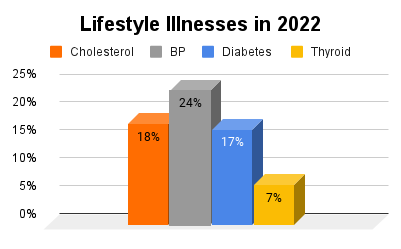
Lifestyle diseases are chronic health conditions that are caused by the way people live their lives. These illnesses develop over time and are largely caused due to leading an unhealthy lifestyle which consists of a poor diet, lack of exercise, etc. ​​Diabetes, High Cholesterol , High Blood Pressure and Thyroid disorders  are the four most common lifestyle problems among people in 2022 according to the IndiaFit Report 2022 – 2023.

The World Health Organization estimates that these lifestyle diseases are responsible for 80% of all deaths worldwide. They are the leading cause of death in the developed world, and the numbers are increasing. Poor lifestyle choices are the main reason for these lifestyle illnesses which in turn result in the majority of these deaths. 

High Blood Pressure Is Still A Major Lifestyle Concern 

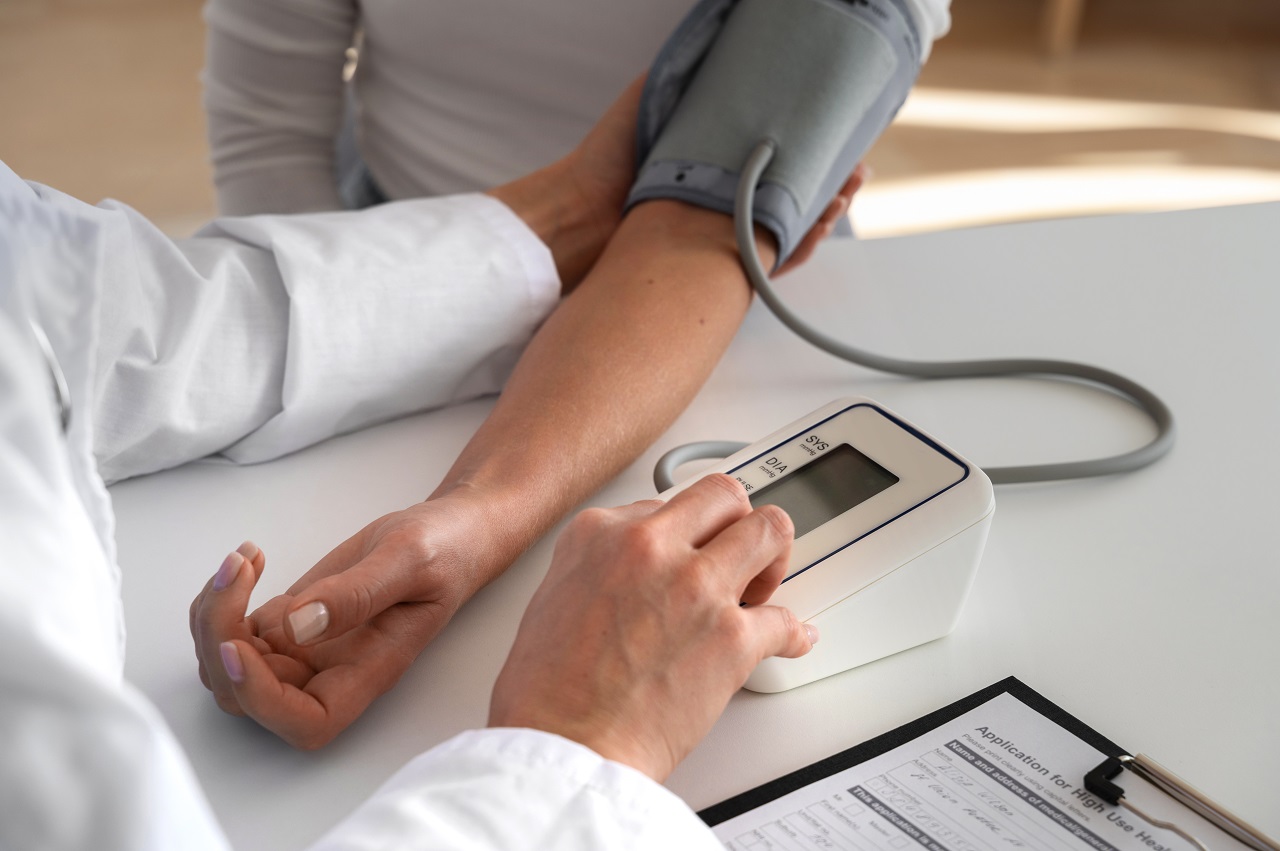
The report indicates that high blood pressure is still a cause for concern as it is still the most common ailment, which affects 24% of those polled.  This might be attributed to factors such as unhealthy diets, lack of physical activity and stress. Additionally, there is a lack of awareness regarding the risk factors associated with high blood pressure and the importance of regular monitoring. 

High Cholesterol is in second place affecting 18% of the population. This might be due to poor eating habits, lack of exercise, being overweight, smoking, consuming alcohol or family history. 

Diabetes is the third most common disease, affecting 17% of the population. Diabetes can be caused by excess weight, inactivity, sedentary lifestyle, junk food consumption, lack of sleep or a family history of the disease. When compared to its rivals, Thyroid disorders have a lower proportion of 7%. Iodine deficiency or any autoimmune illness might cause this sickness.

Lifestyle Diseases On The Rise 

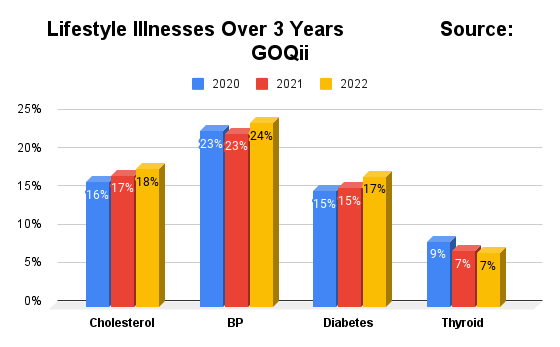
The GOQii IndiaFit Report 2022 – 2023 indicates that Lifestyle Illnesses over the last 3 years are consistently on the rise. The percentage of people with high blood pressure has increased from 23% in 2020 to 24% in 2022. High Blood Pressure still tops the chart.

Lifestyle diseases on the rise

High Cholesterol is another silent killer which has seen an increase. People with high cholesterol have increased from 16% in 2020 to 18% in 2022. People with Diabetes have increased from 15% in 2020 to 17% in 2022. The report indicates that 7% of people are suffering from Thyroid-related issues, out of which women are more affected by it than men. This has not changed over the years. 

To know more about how Lifestyle Diseases are impacting different age groups and cities within India, download the IndiaFit Report 2022 – 2023 for a detailed breakdown here.

#BeTheForce 

  • « Previous Page
  • 1
  • …
  • 7
  • 8
  • 9
  • 10
  • 11
  • …
  • 15
  • Next Page »

Search

Recent Posts

  • Diwali Safety: First Aid for Burns and Firecracker Injuries, and Protecting Your Lungs from Smoke
  • Cancer Screening: Which Tests You Need and When
  • This Dhanteras, Invest in Your Health
  • Jaggery vs Sugar: Is Gur Really Healthier?
  • 5 Breathing Exercises To Relieve Anxiety In An Instant

Stay Updated

Archives

  • November 2026 (8)
  • October 2026 (23)
  • September 2026 (5)
  • August 2026 (8)
  • July 2026 (24)
  • June 2026 (22)
  • May 2026 (20)
  • April 2026 (24)
  • March 2026 (18)
  • February 2026 (14)
  • January 2026 (14)
  • December 2025 (19)
  • November 2025 (14)
  • October 2025 (17)
  • September 2025 (6)
  • August 2025 (5)
  • July 2025 (9)
  • June 2025 (18)
  • May 2025 (16)
  • April 2025 (22)
  • March 2025 (25)
  • February 2025 (21)
  • January 2025 (25)
  • December 2024 (21)
  • November 2024 (21)
  • October 2024 (15)
  • September 2024 (22)
  • August 2024 (27)
  • July 2024 (14)
  • June 2024 (23)
  • May 2024 (26)
  • April 2024 (27)
  • March 2024 (27)
  • February 2024 (23)
  • January 2024 (21)
  • December 2023 (14)
  • November 2023 (10)
  • October 2023 (18)
  • September 2023 (20)
  • August 2023 (16)
  • July 2023 (16)
  • June 2023 (21)
  • May 2023 (20)
  • April 2023 (19)
  • March 2023 (23)
  • February 2023 (19)
  • January 2023 (15)
  • December 2022 (11)
  • November 2022 (15)
  • October 2022 (15)
  • September 2022 (12)
  • August 2022 (9)
  • July 2022 (17)
  • June 2022 (11)
  • May 2022 (10)
  • April 2022 (6)
  • March 2022 (6)
  • February 2022 (13)
  • January 2022 (11)
  • December 2021 (7)
  • November 2021 (3)
  • October 2021 (6)
  • September 2021 (3)
  • August 2021 (8)
  • July 2021 (7)
  • June 2021 (15)
  • May 2021 (16)
  • April 2021 (10)
  • March 2021 (7)
  • February 2021 (4)
  • January 2021 (4)
  • December 2020 (3)
  • November 2020 (4)
  • October 2020 (10)
  • September 2020 (3)
  • August 2020 (3)
  • July 2020 (2)
  • June 2020 (4)
  • May 2020 (10)
  • April 2020 (12)
  • March 2020 (10)
  • February 2020 (4)
  • January 2020 (4)
  • December 2019 (3)
  • November 2019 (7)
  • October 2019 (5)
  • September 2019 (4)
  • August 2019 (9)
  • July 2019 (9)
  • June 2019 (11)
  • May 2019 (4)
  • April 2019 (8)
  • March 2019 (8)
  • February 2019 (9)
  • January 2019 (8)
  • December 2018 (9)
  • November 2018 (3)
  • October 2018 (3)
  • September 2018 (5)
  • August 2018 (10)
  • July 2018 (6)
  • June 2018 (13)
  • May 2018 (8)
  • April 2018 (17)
  • March 2018 (9)
  • February 2018 (8)
  • January 2018 (15)
  • December 2017 (12)
  • November 2017 (19)
  • October 2017 (13)
  • September 2017 (15)
  • August 2017 (4)
  • July 2017 (8)
  • June 2017 (7)
  • May 2017 (6)
  • April 2017 (8)
  • March 2017 (6)
  • February 2017 (7)
  • January 2017 (9)
  • December 2016 (10)
  • November 2016 (7)
  • October 2016 (7)
  • September 2016 (7)
  • August 2016 (11)
  • July 2016 (9)
  • June 2016 (9)
  • May 2016 (12)
  • April 2016 (17)
  • March 2016 (17)
  • February 2016 (8)
  • January 2016 (6)
  • December 2015 (2)
  • November 2015 (9)
  • October 2015 (7)
  • September 2015 (9)
  • August 2015 (11)
  • July 2015 (9)
  • June 2015 (11)
  • May 2015 (9)
  • April 2015 (13)
  • March 2015 (8)
  • February 2015 (5)
  • January 2015 (12)
  • December 2014 (14)
  • November 2014 (11)
  • October 2014 (6)
  • September 2014 (13)
  • August 2014 (12)
  • July 2014 (6)
  • June 2014 (2)
  • May 2014 (7)
  • April 2014 (4)

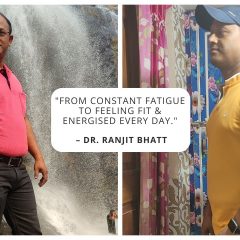
From Burnout to Balance: How Dr. Ranjit Reclaimed His Health

Dr Ranjit Bhatt has spent years tending to others. A practising doctor in Odisha, his days were packed with patients, surgeries, and emergencies. From the outside, it looked like a life lived in service. But on the inside, something wasn’t right. “I had no … [Read More...]

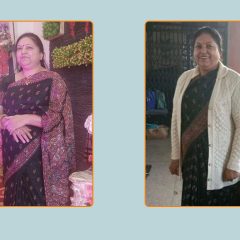
From Shimla’s Slopes to Chandigarh’s Sidewalks: Surinder Kaur Bhalla’s Journey from Chaos to Control

Some journeys start with a plan. Others begin with a stumble literally. Surinder Bhalla, a government professional, born and raised in the scenic hill town of Shimla, had always lived a life of movement. “In Shimla, you walked everywhere,” she reflects. “Walking was never an exercise. It was just life.” But after shifting to Chandigarh, […]

“I’ve Challenged Myself to Live 100 Years” – The Story of Chandubhai Savani’s Second Chance at Life

At 67, most people start slowing down. Not Chandubhai Savani. A resident of Surat, Chandubhai, thought life was on track. “My life was going well till I had my bypass surgery,” he says. That surgery, back in 2021, was a wake-up call.  Medication was routine, but exercise wasn’t. His diet? What he calls ‘normal.’ “I […]

Ananda Mukherjee Health Story

From Terminal Illness To Complete Wellness! Ananda Mukherjee Health Story

As we observe World Cancer Day under the powerful theme ‘United by Unique’ (2025-2027)**, we are reminded that every individual’s journey with cancer is distinct, yet united by shared resilience, hope, and the collective fight against this disease. This theme places people at the centre of care and their stories at the heart of the […]

  • HOME
  • HEALTHY LIVING
  • FITNESS
  • HEALTHY RECIPES
  • USER STORIES
  • KARMA
  • BUY GOQii

Copyright ©2016 GOQii