
GOQii

Blog

  • HOME
  • HEALTHY LIVING
  • FITNESS
  • HEALTHY RECIPES
  • USER STORIES
  • KARMA
  • BUY GOQii

Search Results for: work from home

October 28, 2020 By Divya Thampi Leave a Comment

Your Mental Health Guide To Work From Home

Work from homeIt wasn’t that long ago that working from home was considered a luxury that only a few could afford. But with the pandemic setting in, working from home (WFH) became the norm. And suddenly it doesn’t feel like all that it was made out to be. To start with, the pandemic forced most people to switch from work-from-office to WFH, irrespective of their preference, and studies show that perceived lack of choice can add to people’s overall sense of unhappiness and dissatisfaction. Secondly, even for those who may have preferred WFH, the suddenness of the change deprived them of the opportunity to plan and prepare for it. In many households, the added responsibility of children being at home, with the schools going online, only added to the chaos. 

But Work From Home need not be all distress, challenges and constraints. If we follow the right set of guidelines, it can be a pleasant experience for most even in the current situation. Here is a list of 7 guidelines to change WFH into a boon rather than a bane!

1. Follow a healthy routine

Having a healthy routine is one of the most underrated mental health tools. For the uninitiated, WFH seems to bring out the worst in people. From starting work before even brushing teeth to sleeping with one’s laptop still turned on by their side, there is no dearth of unhealthy routines in people’s lives. This can be disastrous for your mental health. 

Follow a well-defined healthy routine. Start with sleeping and waking up at a set time each day, followed with a personal hygiene routine (shower, change), moving on to some stretching or exercise, followed by small rituals (like a cup of tea/ breakfast with family or meditation) to ease into the work day. Begin work at a scheduled time and as far as possible, stop at a pre-decided time. Take short breaks every 30-45 min and make sure that you take proper breaks for your meal.

2. Focus on all the benefits of Work From Home

Changing the way we think about WFH can bring about a significant shift in the way we feel about it. Instead of allowing your thoughts to routinely worry about how you dislike the current situation, deliberately list down and focus on all the opportunities and benefits that the WFH situation presents. From closer proximity to family members through the day or having more chances to invest in learning new skills, to finding more time to focus on your health and relationships, this situation presents a lot of openings to live a more deliberate and meaningful life.
3. Invest in your home office

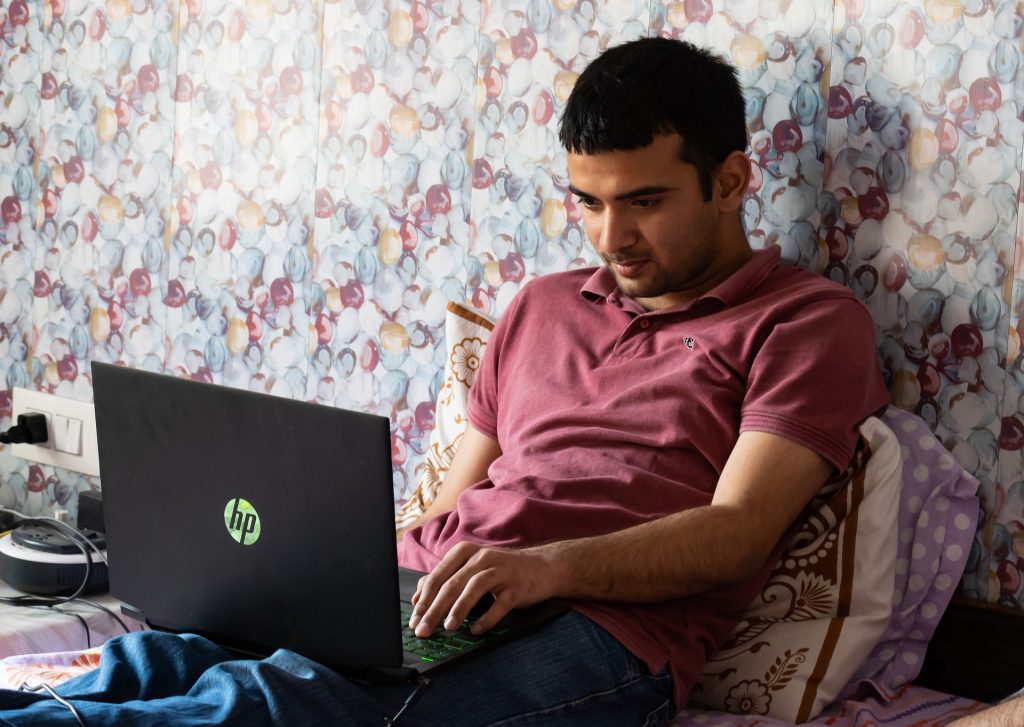
Do not under any circumstances work from your bed and avoid working from that favorite couch you like to lounge on. It was okay to do so when you were doing that odd hour of Work From Home, on the weekends, but it is not going to fly when you are working from home every day. A separate work room that can shut out distractions while you focus on work, would be ideal. But if that is not possible, designate a particular corner or side of the room from which you will be working. Invest in a worktable (you could also opt for a second hand or inexpensive but sturdy collapsible table) and a chair that supports your back well. Your posture and physical comfort while working makes a big difference to how you feel about the work you do and how energized you feel through the day.

4. Get physically active

Your physical health and mental health are intricately linked. When you are involved in physical exercise, not only does that make you physically stronger but also stimulates the production of endorphins – chemicals in the brain that act as mood elevators and painkillers. Physical activity also reduces stress hormones like adrenaline and cortisol. So, whether it is practicing yoga or shaking a leg to Zumba or going for the good old brisk walk, make sure to add a dose of physical exercise to every single day.

5. Connect with nature

Spending more time in green spaces and/or bringing nature into your everyday life, whether it is by growing plants or exercising outdoors or being around animals, is known to benefit mental as well as physical health. It helps reduce stress, increase relaxation, boost self-esteem and improve your mood.  For city dwellers, having tea in the balcony each day or taking a walk in the open air (even within the building complex) could be ways to make interaction with nature a part of your daily routine.

6. Take Digital breaks

Technology has saved the day by making many things possible in today’s world. And yet, we all know that excessive screen use can disrupt the delicate balance of our body and mind. Consciously take breaks from screen for at least 1-2 hours during the waking hours. It could be for some time soon after waking up and during your meal times or an hour before hitting the bed and your time with family or exercise time.

7. Socialise and nurture harmonious interactions

We humans have a strong need to feel emotionally connected with others, irrespective of our gender, class or age. While following the physical distancing rules, make sure that you have relaxing chats with friends, family or even colleagues on a regular basis; chats that go beyond the transactional interactions. Regular audio or video calls with close friends or a sibling or a grown-up child, who resides in a different city or engaging in planned catch up sessions with friends can help fulfil the much-needed connection.

Allow yourself to be more relaxed in your interaction with colleagues. Setting the intention to not get upset with unplanned events & unpleasant interactions, at the start of each day, can set you up for success and making a choice to pause and breathe deeply each time you notice feeling stressed, can do wonders for your mental well-being.

We hope this article helps you! For more on maintaining good health during Work From Home, check out Healthy Reads or tune in to LIVE sessions by experts on GOQii Play. 

#BeTheForce 
October 19, 2026 By GOQii Leave a Comment

5-Minute Healthy Snacks for Work & Home

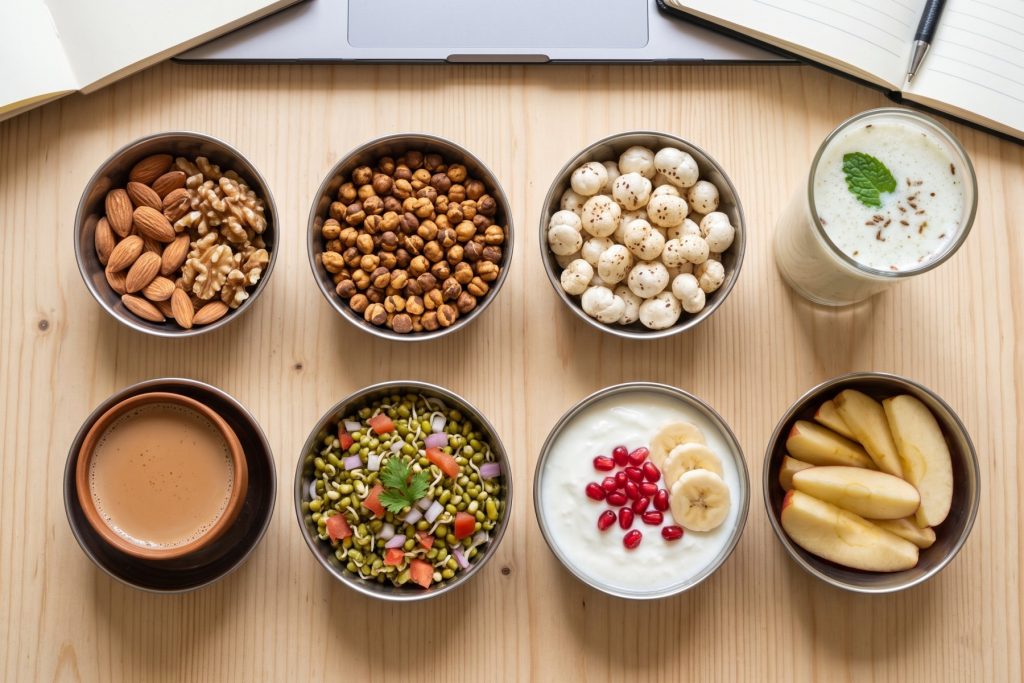
A healthy snack doesn’t need cooking or planning. A handful of nuts, a bowl of curd with fruit or a few spoons of roasted chana takes less than five minutes and keeps you going far better than biscuits or a packet of chips.
For many of us, snack time means whatever is closest: biscuits with chai at 4 pm, namkeen from the office pantry, or something from the fridge late in the evening. Those snacks are quick, but most packaged ones are high in fat, sugar or salt, and they rarely keep you full until dinner.

This guide explains what makes a snack worth eating, gives you a list of no-cook and 5-minute Indian snacks for your desk and your kitchen, and shows simple swaps for the snacks you already reach for.

Healthy snacking at a glance

  • Pair protein or fibre with your snack. Nuts, chana, curd, sprouts, fruit and vegetables keep you fuller than biscuits or chips.
  • Keep it small. A snack should tide you over to your next meal, not replace it. Use a small bowl, not the packet.
  • Plan it. Stock your desk drawer and fridge with good options so the office pantry isn’t your only choice.
  • Read the label on packaged snacks. Many “healthy” snacks are high in sugar, salt or fat.
  • Watch what you drink with it. Two or three cups of sweetened chai a day add up in sugar.

What makes a snack healthy

A good snack does a simple job: it keeps you comfortable until your next meal and adds something useful to your day. Four things help.

  • Protein or fibre. Foods such as nuts, roasted chana, sprouts, curd, paneer, eggs, fruit and vegetables are more filling than refined snacks, so you’re less likely to keep reaching back into the packet.
  • A sensible portion. Even healthy snacks add up. A small handful of nuts, one fruit or a small bowl of chana is usually enough.
  • Whole foods first. Snacks you put together from basic ingredients are usually lower in salt, sugar and fat than packaged ones.
  • A snack is most useful when there is a long gap between meals, such as mid-afternoon. If you’re not actually hungry, a glass of water or a short walk may be all you need.

What to watch in packaged snacks

India’s dietary guidelines advise limiting ultra-processed foods, which are often high in fat, sugar and salt and low in fibre. Biscuits, namkeen, chips, instant noodles and many “health” bars fall into this group. The guidelines treat more than about 25 g of added sugar or 5 g of salt a day as above the healthy range, and the WHO advises limiting salty snacks and pre-packaged fried and baked foods.

When you do buy a packaged snack, check the label:

  • Sugar: look at sugar per serving and the ingredients list. Sugar, jaggery, honey, glucose and syrups near the top mean it is a sweet snack, whatever the front of the pack says.
  • Salt or sodium: namkeen and chips can carry a large share of your daily salt in one packet.
  • Fat: watch for palm oil, “hydrogenated” or “partially hydrogenated” fats, and frying as the main cooking method.
  • Serving size: many packets contain two or three servings. Check what the numbers refer to.

Words like “multigrain”, “baked”, “natural” or “no added sugar” don’t make a snack healthy on their own. The label tells you more than the front of the pack.

12 healthy snacks you can make in 5 minutes

No-cook snacks for your desk

These keep for days without a fridge, so they’re easy to stock at work.

Snack Portion Why it works
Mixed nuts (almonds, walnuts, peanuts) A small handful, about 20–30 g Protein, fibre and healthy fats. Eating about 20 g of nuts a day is linked to a lower risk of heart disease. Choose unsalted.
Roasted chana 2–3 tablespoons High in protein and fibre, cheap and filling. Mix with a few peanuts for variety.
Roasted makhana A small bowl Light and crunchy. Roast at home with a little ghee and spices, or check the salt on packaged ones.
Whole fruit 1 medium fruit, or a bowl of seasonal fruit Banana, apple, guava, orange or pear travel well. Whole fruit is more filling than juice.
Fruit with peanut butter 1 fruit with 1 tablespoon peanut butter Apple or banana slices with a little unsweetened peanut butter add protein and fat to keep you full.
Puffed rice bhel A small bowl Murmura with chopped onion, tomato, cucumber, roasted peanuts and lemon. Skip the sev and sweet chutney.

5-minute snacks at home

Snack Portion Why it works
Curd with fruit and seeds A small bowl of plain curd, fruit, 1 teaspoon seeds Protein and calcium from curd, fibre from fruit. Use plain curd rather than flavoured, which is often sweetened.
Sprouts chaat A small bowl Moong sprouts with onion, tomato, cucumber, lemon and chaat masala. Steam the sprouts lightly if you prefer them cooked.
Boiled eggs 1–2 eggs Boil a batch and keep them in the fridge for up to a few days. Add pepper and a pinch of salt.
Paneer or tofu cubes A small bowl Sauté briefly with pepper, chaat masala or a little chutney. High in protein.
Vegetable sticks with dip A bowl of carrot, cucumber and capsicum with 2 tablespoons hummus or hung-curd dip Crunchy, filling and very low in calories.
Masala chaas 1 glass Buttermilk with roasted jeera, mint and a pinch of salt. A good swap for a second cup of chai, especially in hot weather.

Simple snack swaps

You don’t have to give up the snacks you enjoy. Swapping the ones you eat most often makes the biggest difference.

Instead of Try What changes
Biscuits with chai A handful of nuts or roasted chana with chai Less sugar and refined flour, more protein
Namkeen or bhujia Roasted chana, peanuts or makhana Much less salt and fried fat
Potato chips Puffed rice bhel or vegetable sticks with a dip Lower in salt and fat, more fibre
Packaged fruit juice A whole fruit More fibre, less sugar, more filling
Flavoured yoghurt Plain curd with fresh fruit Far less added sugar
Samosa or pakora Sprouts chaat or a boiled egg Not deep-fried, more protein
Sweetened chai, third cup Masala chaas or water Less sugar and caffeine late in the day
“Health” or granola bar A banana with a few nuts Fewer added sugars and syrups

Making healthy snacking a habit

The easiest way to snack well is to make the healthy option the closest one.

Stock your desk drawer

  • Unsalted nuts and roasted chana in small boxes, portioned for the week
  • Roasted makhana or puffed rice in an airtight jar
  • One or two pieces of whole fruit, brought in each morning
  • A water bottle you refill through the day

Stock your fridge at home

  • Plain curd and a few boiled eggs
  • Washed and cut vegetable sticks in a box with a lid
  • Sprouts, hummus or hung-curd dip
  • Seasonal fruit where you can see it

Snack with intention

  • Check you’re hungry. Thirst, tiredness and boredom can feel like hunger. Try water first, or take a short walk.
  • Portion it out. Put your snack in a bowl and put the packet away.
  • Step away from the screen. Eating while working or scrolling makes it easy to eat more than you meant to.
  • Notice stress snacking. If you find yourself reaching for food when you’re stressed rather than hungry, our guide on why stress triggers unhealthy eating explains what is going on and how to break the cycle.
  • Go easy late at night. If you snack after dinner, keep it light, such as curd, fruit or a glass of warm milk.

The bottom line

Healthy snacking is mostly about having the right food within reach. Keep nuts, roasted chana, fruit and curd where you’ll see them, pair your snack with protein or fibre, keep portions small, and read the label on anything packaged. Five minutes is all it takes, and the payoff is steadier energy through the afternoon and less temptation from the biscuit jar.

Pro Tip: Use the GOQii App to log your snacks for a week. It’s an easy way to spot patterns, such as the 4 pm biscuits or the late-night fridge visit. Your GOQii Personalised Health Coach can help you plan snacks that suit your routine, tastes and health goals.

Frequently Asked Questions (FAQs)

  1. Is snacking between meals healthy?

It can be. A planned snack helps when there is a long gap between meals and stops you arriving at dinner very hungry. It is less helpful if you snack out of habit or boredom, or if the snack is mostly sugar, salt or fried food.

  1. What is a good portion size for a snack?

Think small: a handful of nuts (about 20–30 g), one fruit, a small bowl of chana or curd, or 1–2 eggs. A snack should keep you going until your next meal, not replace it.

  1. What are good high-protein snacks?

Roasted chana, nuts, sprouts, paneer or tofu cubes, plain curd, buttermilk and boiled eggs are all simple Indian options. Eggs are an easy source of good-quality protein if you eat them.

  1. Are packaged “healthy” snacks a good choice?

Some are, many aren’t. Words like “baked”, “multigrain” or “no added sugar” don’t guarantee a healthy snack. Check the label for sugar, salt and fat, and look at the serving size.

  1. How many nuts should I eat a day?

A small handful, about 20–30 g, is a good amount. Large studies link around 20 g a day with a lower risk of heart disease. Choose unsalted nuts and keep the portion in check, as nuts are high in calories.

  1. Is makhana a healthy snack?

Roasted makhana is a light, crunchy snack that is easy to make at home with a little ghee and spices. Packaged versions can be high in salt or flavourings, so check the label.

  1. What can I snack on at night?

If you’re genuinely hungry after dinner, choose something light such as plain curd, a piece of fruit, a few nuts or a glass of warm milk. Avoid heavy, fried or very sweet snacks close to bedtime.

#BeTheForce

Disclaimer: The information provided in this blog is for general awareness and educational purposes only. It is not intended to replace professional medical advice, diagnosis, or treatment. Always consult a qualified healthcare provider for personalised medical guidance or concerns related to your health.

July 3, 2026 By Mrinali Dwivedi 2 Comments

Pre & Post Workout Shots You Can Try At Home

pre & post workout shotsWhether you’re working out indoors or outdoors, hydration is imperative throughout a workout and especially before and after! Here’s how you can improve your hydration game to the optimum benefits on your performance and outcomes of exercising with these pre & post workout shots! 
Pre & Post Workout Shots For Home! 

1. Shot of Beetroot Juice for Pre Workout
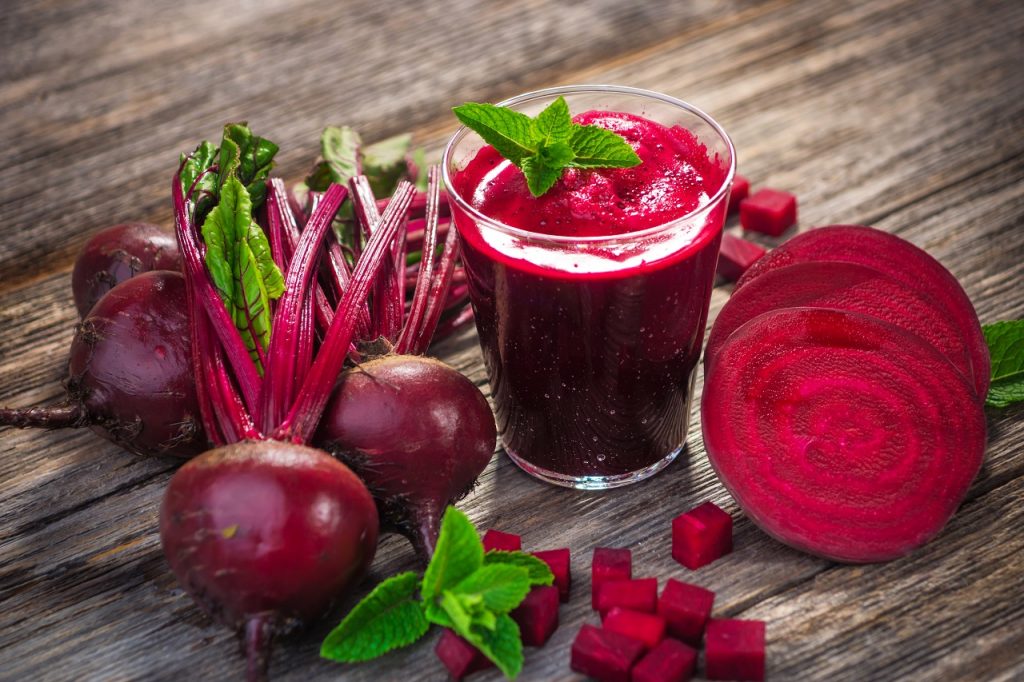
Beetroot Juice is a supplement with a high nitrate content, that is said to improve physical performance secondary to nitric oxide, which is a component of human blood that helps dilate your blood vessels and aid faster blood circulation, as to provide greater oxygen supply. Supplementation or dietary ingestion of nitrates is known to reduce oxygen requirements during exercise and reduce VO2 max (which indicates better stamina). In measures of time taken to reach exhaustion, beetroot juice showed an association with a fatigue delay effect and exercise performance enhancement.

A short term supplementation with beetroot juice may reduce VO2, giving an ergogenic effect, at less than or equal to VO2 max intensity that makes it possible to enable increased time-to-exhaustion. In addition to improving efficiency and performance, chronic supplementation with beetroot juice may improve cardiorespiratory performance as well. Consumption of Beetroot juice should be initiated in a period of 90 minutes before athletic effort, since the peak value of nitrates occurs within 2-3 hour after ingestion. At least 6-8 mmol of nitrate i.e. juice of 5 medium sized beetroots intake is required to observe an improvement in athletic performance.

2. Shot of Amla (Indian Gooseberry) Juice for Post Workout
Amla Juice is a reservoir of Vitamin C and essential electrolytes that are of utmost importance for post workout recovery. Post workout is an immunocompromised state where the body is concentrating more on muscle recovery and storage. This makes it imperative to supplement with immune boosting nutrients and electrolytes that may be lost due to sweating, right after a workout session.

Supplementing with amla juice has shown to reduce infection rate in athletes and heavy working out individuals. It also lowers down duration of muscle soreness significantly, which aids early mitigation of muscle cramps. Vitamin C being an antioxidant, reduces inflammation in the body, which is a common after effect of exercising. Chronic supplementation with amla juice is shown to build stronger immunity and improve gut health as well as strengthening the respiratory system.

Intake of amla juice should be initiated within 20 minutes of finishing physical activity as that is when the recovery and restorative activities of the body begin. Juice of 4 medium sized amlas ensures the supply of adequate amounts of Vitamin C and electrolytes.

We hope these pre & post workout shots help you get the most out of your exercises! Do let us know your experience in the comments below.

#BeTheForce 

Disclaimer: The information provided in this blog is for general awareness and educational purposes only. It is not intended to replace professional medical advice, diagnosis, or treatment. Always consult a qualified healthcare provider for personalised medical guidance or concerns related to your health.

April 10, 2023 By Mubasheera Chaiwala 2 Comments

How To Create A Full Body Workout At Home!

Create A Full Body Workout It has been over a year since I wasn’t able to visit the gym or go for my swimming classes. To continue being active, I had to plan a full body workout at home! A full body workout can provide overall toning and help you achieve your goal – whether the goal is to gain strength or to lose weight! A full body workout doesn’t require any machines so it’s a routine you can follow anywhere. 
How You Can Plan A Full Body Workout At Home 

To begin with, I divided my workout into three parts – Stretching, Abs and Cardio. Let’s see why these are important. 

1. Stretching

workout schedule for beginners - stretchingThere are many benefits of stretching regularly. It not only increases your flexibility but also corrects posture, reduces stress and body ache. I believe this is a must during a lockdown, especially for individuals working at home as continuous sitting hours affect posture drastically. So stretching should be an important part of your routine. Stretching before a workout prepares the muscles for an activity. It improves performance, blood circulation, blood flow to the muscles and reduces muscle soreness.
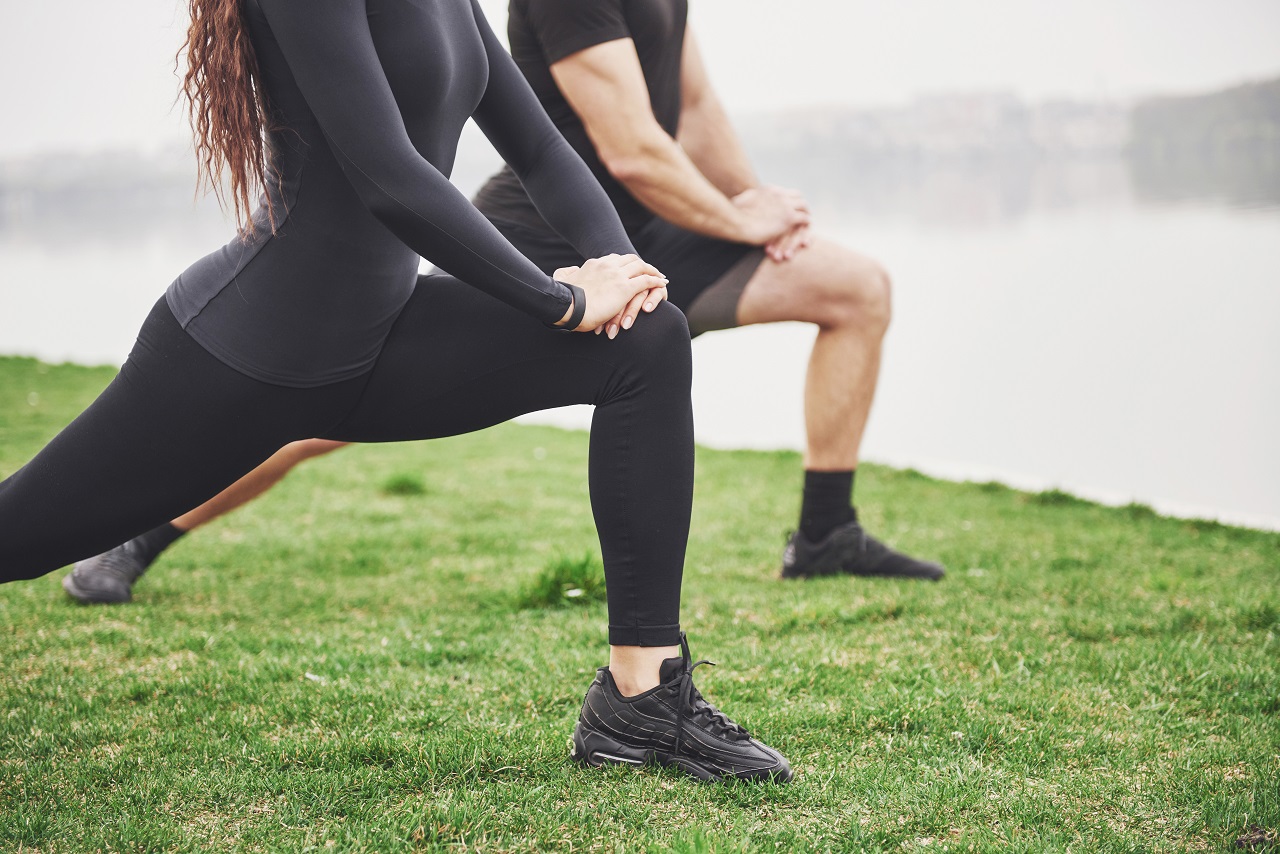
Types of Stretching include:

  • Dynamic: Usually done before an exercise to get your muscles ready for movement 
  • Static: Done after exercise to reduce risk of injury 

Stretching exercises include: neck stretches/rotation, shoulder stretch, arm stretch, chest stretch, stretching your wrists, standing stretch, ankle flex, etc. 

2. Core Strengthening

create a full body workout - core strength After getting in a few good stretches, I begin with core strengthening because with long sitting hours, I’ve observed my belly growing in size. To curb that, my full body workout also includes core strengthening. 

Abdominals or Abs are that part of the body which help in generating power for functional movements. To avoid injuries that may occur from day to day activities, it is very important to keep the core of the body strong and flexible.

There are varied benefits of core strengthening. It is not just about reducing belly fat. Some of the benefits of training your core include: 

  • Balance and stability to the body
  • Improved posture
  • Helps in alleviating back ache
  • Better performance in sports and related game activities
  • Strong core is very important for women during pregnancy
  • A strong core minimizes the chances of injury caused by undue stress on some parts of the body
  • Core strengthening leads to muscle strengthening and this, in turn, leads to bone strengthening

Some simple exercises for core strengthening include:

  • Forward Crunches
  • Reverse Crunches
  • Bridge
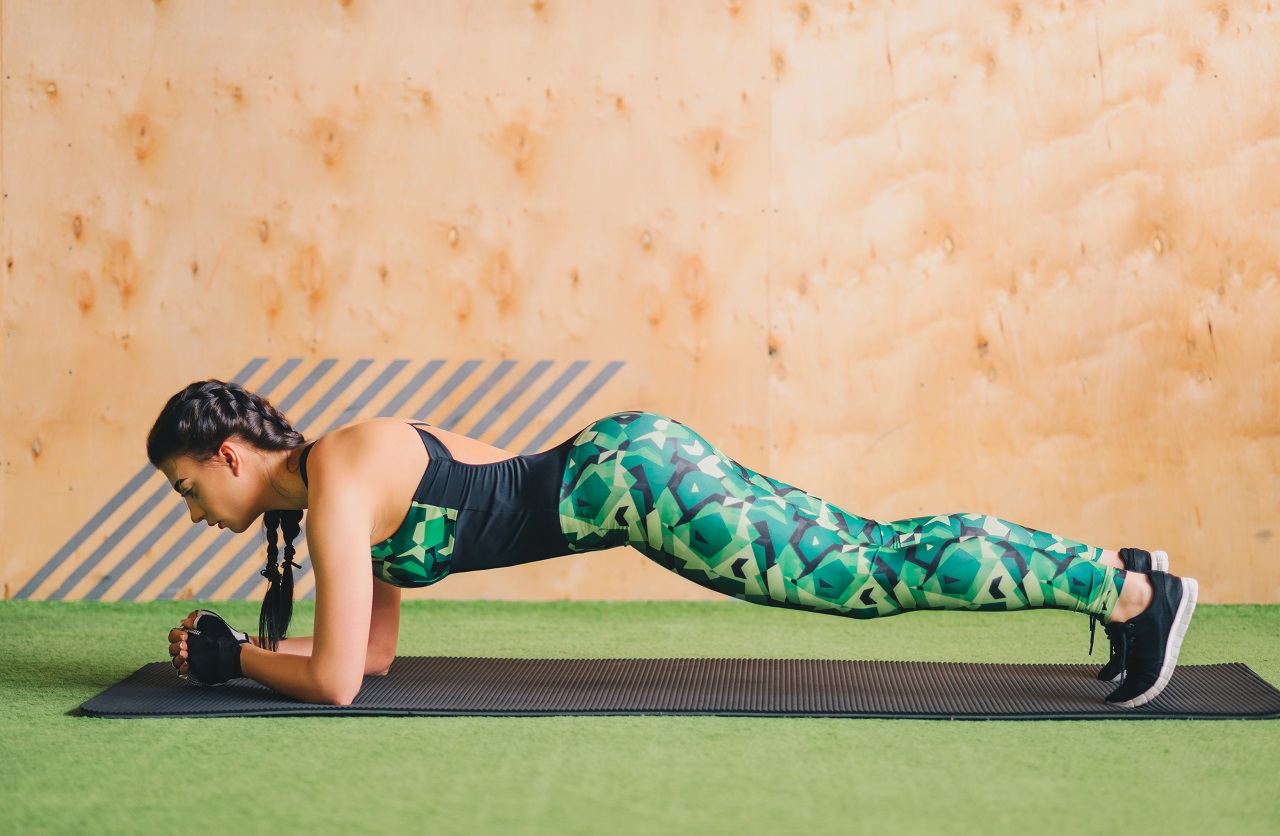
  • Plank variations- Front plank, side planks, plank walk
  • Air cycling 
  • Leg pull-in/push-out

3. Cardio 

Eventually, I increase the intensity of my workout by including a few cardio exercises. Cardio exercises are aerobic exercises of long duration (more than 3 minutes at a stretch). It works on your cardiovascular strength (heart health), stamina and muscular endurance. Examples of these exercises are walking, brisk walking, jogging, running, swimming, cycling, stair climbing, etc. In lockdown or while self-quarantining, I include spot jogging, spot cycling, jumping jacks, march pass and stair climbing to my daily routine.

Few Things To Keep In Mind While Planning Your Routine 

  1. Workouts should be developed around a person’s age, goals, nutritional strategy, free time, etc.
  2. How much time can you devote to exercise? If you can do an hour a day, that’s fantastic. But maybe you have a wife or husband, three kids, a dog, two jobs, and no robot butler… then maybe you only have thirty minutes, twice a week.
  3. Break up your workout! According to the American College of Sports Medicine (ACSM), if you accumulate three 10-minute bouts of exercise throughout the day to a total 30 mins of exercise, then that is as effective as someone who does one 30 mins bout of exercise

How to Build a Full Body Workout? 

Now comes the tricky part—putting all this together. 

  1. Full-body workouts should be fairly simple! Always begin with a dynamic warm-up and finish with a cooldown.
  2. Add a variety to your exercise routine by including one new exercise every week to avoid boredom
  3. As a beginner, you can start your full body workout slowly and once you get used to the routine, you can increase the intensity for better results.
  4. Rest is also required to ensure complete recovery of the body. So do not forget to give one day rest to your body – it deserves that! 

Finally, the favourite that I never miss doing is Surya Namaskar! At least 1-10 rounds depending on my workout. Surya Namaskar postures are a good blend of warm-ups, asanas and burn out. It helps to tone and shape the body and it also improves body function, improves flexibility, strengthens muscles and helps beat stress. Add this to your routine to stay active always and it’s best done in the morning hours. 

If this article helped you, let us know your thoughts in the comments below. If you’re not sure where to begin, try joining a live, interactive class, conducted by an expert on GOQii PRO. You can schedule a class via the GOQii App. 

To get a workout routine suited to your health goals, speak to a GOQii Coach by subscribing for Personalised Health Coaching here.

You can also browse through more articles on everything workout and fitness here.

#BeTheForce 

  • 1
  • 2
  • 3
  • …
  • 81
  • Next Page »

Search

Recent Posts

  • The Science of Power Naps: How Long is Too Long?
  • 7 Reasons Why Pulses Are Good For You!
  • How Exercise Impacts Mental Health
  • Dussehra 2026: 10 Unhealthy Habits to Leave Behind
  • 5-Minute Healthy Snacks for Work & Home

Stay Updated

Archives

  • October 2026 (16)
  • September 2026 (5)
  • August 2026 (8)
  • July 2026 (25)
  • June 2026 (22)
  • May 2026 (20)
  • April 2026 (24)
  • March 2026 (18)
  • February 2026 (14)
  • January 2026 (14)
  • December 2025 (19)
  • November 2025 (15)
  • October 2025 (20)
  • September 2025 (6)
  • August 2025 (5)
  • July 2025 (9)
  • June 2025 (18)
  • May 2025 (16)
  • April 2025 (22)
  • March 2025 (25)
  • February 2025 (21)
  • January 2025 (25)
  • December 2024 (21)
  • November 2024 (22)
  • October 2024 (15)
  • September 2024 (22)
  • August 2024 (27)
  • July 2024 (15)
  • June 2024 (23)
  • May 2024 (26)
  • April 2024 (27)
  • March 2024 (27)
  • February 2024 (23)
  • January 2024 (21)
  • December 2023 (14)
  • November 2023 (10)
  • October 2023 (18)
  • September 2023 (20)
  • August 2023 (16)
  • July 2023 (16)
  • June 2023 (21)
  • May 2023 (20)
  • April 2023 (19)
  • March 2023 (23)
  • February 2023 (19)
  • January 2023 (15)
  • December 2022 (11)
  • November 2022 (15)
  • October 2022 (15)
  • September 2022 (12)
  • August 2022 (9)
  • July 2022 (17)
  • June 2022 (11)
  • May 2022 (10)
  • April 2022 (6)
  • March 2022 (6)
  • February 2022 (13)
  • January 2022 (11)
  • December 2021 (7)
  • November 2021 (3)
  • October 2021 (6)
  • September 2021 (3)
  • August 2021 (8)
  • July 2021 (7)
  • June 2021 (15)
  • May 2021 (16)
  • April 2021 (10)
  • March 2021 (7)
  • February 2021 (4)
  • January 2021 (4)
  • December 2020 (3)
  • November 2020 (4)
  • October 2020 (10)
  • September 2020 (3)
  • August 2020 (3)
  • July 2020 (2)
  • June 2020 (4)
  • May 2020 (10)
  • April 2020 (12)
  • March 2020 (10)
  • February 2020 (4)
  • January 2020 (4)
  • December 2019 (3)
  • November 2019 (7)
  • October 2019 (5)
  • September 2019 (4)
  • August 2019 (9)
  • July 2019 (9)
  • June 2019 (11)
  • May 2019 (4)
  • April 2019 (8)
  • March 2019 (8)
  • February 2019 (9)
  • January 2019 (8)
  • December 2018 (9)
  • November 2018 (3)
  • October 2018 (3)
  • September 2018 (5)
  • August 2018 (10)
  • July 2018 (6)
  • June 2018 (13)
  • May 2018 (8)
  • April 2018 (17)
  • March 2018 (9)
  • February 2018 (8)
  • January 2018 (15)
  • December 2017 (12)
  • November 2017 (19)
  • October 2017 (13)
  • September 2017 (15)
  • August 2017 (4)
  • July 2017 (8)
  • June 2017 (7)
  • May 2017 (6)
  • April 2017 (8)
  • March 2017 (6)
  • February 2017 (7)
  • January 2017 (9)
  • December 2016 (10)
  • November 2016 (7)
  • October 2016 (7)
  • September 2016 (7)
  • August 2016 (11)
  • July 2016 (9)
  • June 2016 (9)
  • May 2016 (12)
  • April 2016 (17)
  • March 2016 (17)
  • February 2016 (8)
  • January 2016 (6)
  • December 2015 (2)
  • November 2015 (9)
  • October 2015 (7)
  • September 2015 (9)
  • August 2015 (11)
  • July 2015 (9)
  • June 2015 (11)
  • May 2015 (9)
  • April 2015 (13)
  • March 2015 (8)
  • February 2015 (5)
  • January 2015 (12)
  • December 2014 (14)
  • November 2014 (11)
  • October 2014 (6)
  • September 2014 (13)
  • August 2014 (12)
  • July 2014 (6)
  • June 2014 (2)
  • May 2014 (7)
  • April 2014 (4)

From Burnout to Balance: How Dr. Ranjit Reclaimed His Health

Dr Ranjit Bhatt has spent years tending to others. A practising doctor in Odisha, his days were packed with patients, surgeries, and emergencies. From the outside, it looked like a life lived in service. But on the inside, something wasn’t right. “I had no … [Read More...]

From Shimla’s Slopes to Chandigarh’s Sidewalks: Surinder Kaur Bhalla’s Journey from Chaos to Control

Some journeys start with a plan. Others begin with a stumble literally. Surinder Bhalla, a government professional, born and raised in the scenic hill town of Shimla, had always lived a life of movement. “In Shimla, you walked everywhere,” she reflects. “Walking was never an exercise. It was just life.” But after shifting to Chandigarh, […]

“I’ve Challenged Myself to Live 100 Years” – The Story of Chandubhai Savani’s Second Chance at Life

At 67, most people start slowing down. Not Chandubhai Savani. A resident of Surat, Chandubhai, thought life was on track. “My life was going well till I had my bypass surgery,” he says. That surgery, back in 2021, was a wake-up call.  Medication was routine, but exercise wasn’t. His diet? What he calls ‘normal.’ “I […]

Ananda Mukherjee Health Story

From Terminal Illness To Complete Wellness! Ananda Mukherjee Health Story

As we observe World Cancer Day under the powerful theme ‘United by Unique’ (2025-2027)**, we are reminded that every individual’s journey with cancer is distinct, yet united by shared resilience, hope, and the collective fight against this disease. This theme places people at the centre of care and their stories at the heart of the […]

  • HOME
  • HEALTHY LIVING
  • FITNESS
  • HEALTHY RECIPES
  • USER STORIES
  • KARMA
  • BUY GOQii

Copyright ©2016 GOQii


