GOQii

Blog

  • HOME
  • HEALTHY LIVING
  • FITNESS
  • HEALTHY RECIPES
  • USER STORIES
  • KARMA
  • BUY GOQii

Search Results for: work from home

May 18, 2020 By Vandana Juneja 3 Comments

Overcome Hurdles to Home Workouts

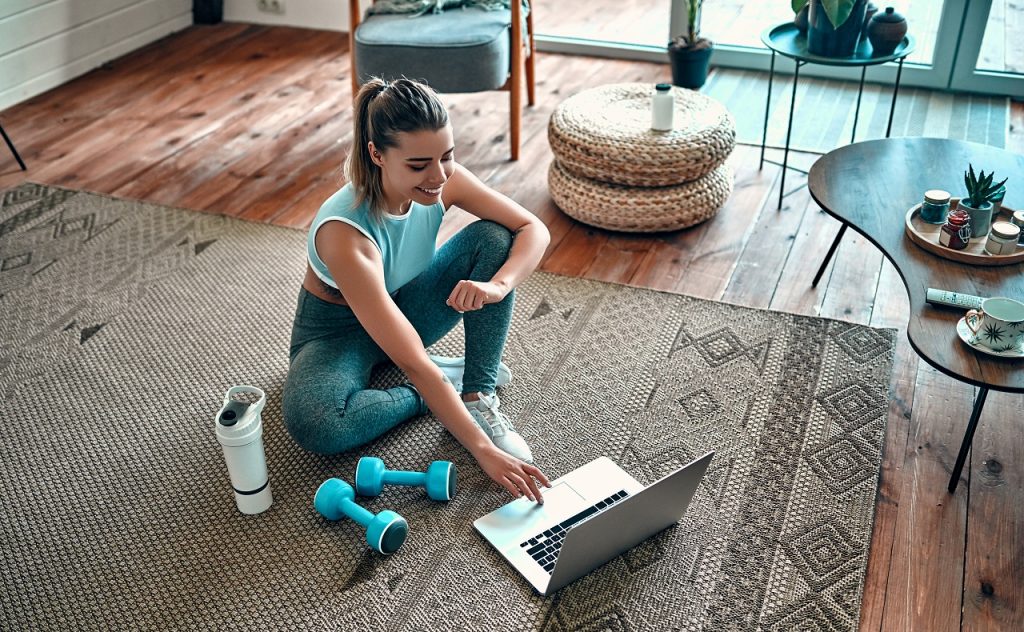
hurdles to home workoutsWith most of us working from home and no options to go out to gyms/parks for our daily workouts, it can become challenging to stay motivated, to do regular workouts at home. No matter what your current situation, home is the best place to do a workout right now! If you are finding it difficult to set a routine, are not motivated enough, or don’t know how to keep yourself active, here some solutions to overcome the hurdles to home workouts! 

Solutions to Overcome Hurdles to Home Workouts 

1. Lack of Time
How many times have you thought of working out and suddenly you realise you’re running out of time and you tend to skip it altogether? Most of us are under the impression we need to exercise for at least 60-90 minutes for it to be effective. But the truth is that we can get good results with workouts like HIIT (High Intensity Interval Training), even if you have 15 to 30 minutes with you. You exercise with your maximum effort for 15-20 minutes, and get better results than a moderate intensity workout that you would have done for twice as long! You’ll build a leaner, stronger physique, and your routines will always feel fresh.

It’s always better to know your schedule for the day and squeeze workouts based on that schedule. If you have online meetings/ conference calls, lined up for the day, do a workout early in the morning or late evening. If you couldn’t do that, you could probably eat lunch while you work and utilize the lunch time to do a sprint workout or HIIT session in your living room.

2. Lack of Equipment/Heavy Weights
Most of us who are used to working out at the gym do not find it fulfilling or don’t get the “kick” when not able to lift the heavy gym machinery or weights. To our surprise, you can get comparable results if you can use your own body weight correctly as we do in Yoga, pilates or simple exercises like push ups, pull ups, lunges, etc. Alternatively, if you have a set of resistance bands or even a set of water bottles, it can be effectively used for weight training as well. Use your treadmill, Static cycle or resort to spot jogging/ running, skipping etc , for your cardio workout.

 3. Lack of Motivation
It is very natural to lose motivation and this can become one of your biggest hurdles to home workouts. There are days you just don’t feel like it, you’re either too tired, too bored or just want to relax. If this is happening too regularly, you need to work on developing your – Instigation Habit! These are simple habits or cues that give signals to the body that it is time for a workout. For eg- ringing of the alarm, getting into workout attire, placing your mat on the floor, etc. Stick to a fixed schedule for a few days (Monday to Friday), either first thing in the morning or in the evening and by the end of the third week, your body will automatically crave to get into action and this will keep you motivated.

It is important to keep changing your style of workout. Doing the same workout over and over becomes boring and stale for your mind and muscles. Not only do you lose motivation, you may not get the desired results as well. So look for variety, watch and follow online classes, there are so many options available, these days. Don’t forget to reward yourself from time to time but avoid indulging too much. 

 4. Too Many Distractions at Home
There are so many more distractions at home than there are in a gym or an outdoor environment. You’re constantly being tempted to watch television and if you start a series, you will not realise where the time has flown. You may even have to check your emails, finish household chores and all this leaves you with no energy and time to do a workout. Here is when you ought to be disciplined and exercise some self control. Do not start your day with checking your phone and switching on the TV. It’s always better to complete your workout first thing in the morning. But if you are really obsessed, you can put on your favourite show and do a cardio workout or complete a bodyweight circuit during that time. And if you have a treadmill or a stationary bike, no excuse to sit down and watch TV, keep moving on the machine!

5. Lack of Knowledge
When you train randomly, you get random results. Set a goal and work towards achieving it and if you are not too sure, seek professional advice from a fitness expert, or watch online videos/ join classes and build a roadmap to your fitness journey. The lockdown has brought the entire world together and there is nothing that you cannot gain knowledge about, be it your workout routine – Setting a goal, planning, execution, type of workouts that interest you and will suit your fitness goal.

The hurdles we create for ourselves are often the most difficult to overcome. I hope this article helps you overcome your hurdles to home workouts and you will make full use of the time you have in hand to improve your fitness levels!

If you’re confused where and how to start, tune in to our fitness experts and join their LIVE sessions on GOQii Play. You can also read more about fitness on Healthy Reads. 

Stay home, stay safe, get active and #BeTheForce
October 17, 2026 By GOQii Leave a Comment

Meal Prepping for Work: Healthy Lunch Ideas That Keep You Energised

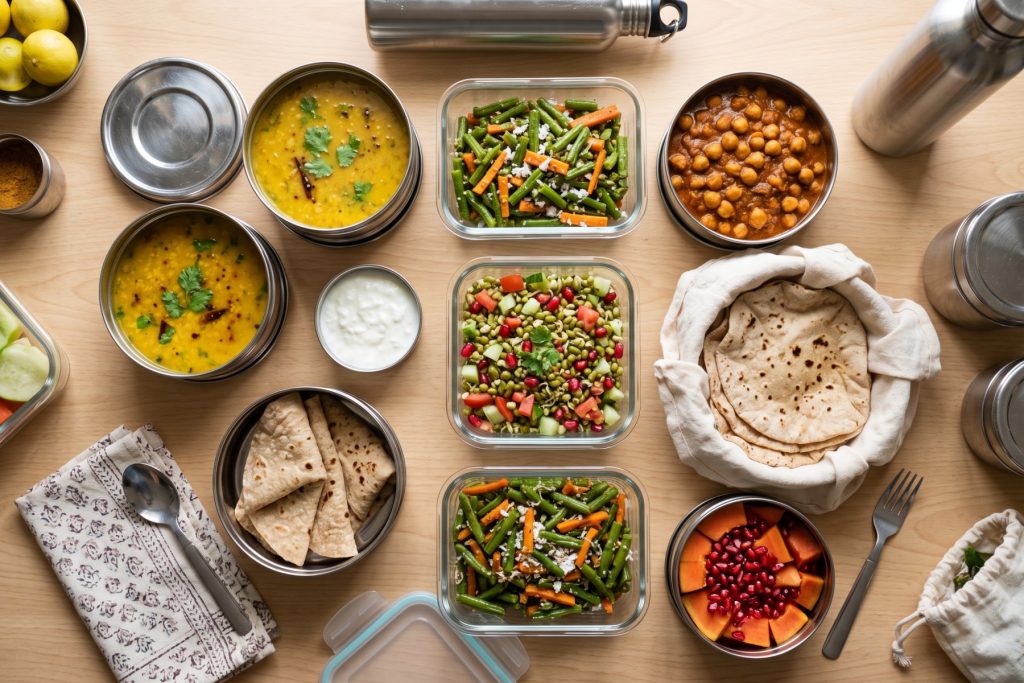
A packed lunch built around vegetables, protein and whole grains is one of the easiest ways to eat well on a workday. With an hour or so of prep at the weekend, you can have healthy lunches ready for most of the week.

For many people, workday lunch is whatever is quickest: a canteen thali heavy on rice and fried sides, a delivery order, or biscuits and chai at the desk. Then comes the 3 pm slump. Some of that afternoon dip is down to your body clock, but what and how much you eat at lunch can make it better or worse.

This guide covers what a balanced lunchbox looks like, how to prep a week of lunches without spending your whole Sunday in the kitchen, practical Indian lunch ideas, and how to keep packed food safe.

Meal prep at a glance

  • Fill half your box with vegetables. Then add a quarter protein (dal, paneer, eggs, chicken) and a quarter whole grains or millets.
  • A heavy, carb-led lunch can deepen the afternoon slump. Balance and portion size matter more than any single “superfood”.
  • Prep components, not complete meals. Cook a grain, a dal or protein, and chop vegetables once; mix and match through the week.
  • Keep it safe. Cool food quickly, refrigerate it, and eat cooked rice within a day and most other dishes within 2–3 days.
  • Lunch is only part of it. Drinking water and taking a short walk after eating also help you stay alert.

Why lunch affects your afternoon energy

The afternoon slump is real, but food is only part of the story. Research on the “post-lunch dip” shows it happens even when people skip lunch. It is partly built into the body clock and is worse when you have slept badly. The same review notes that a high-carbohydrate lunch can make it worse.

That gives you a few things you can actually control:

  • A meal that is mostly white rice, roti or bread, with little vegetable or protein, is digested quickly. Adding vegetables, dal, curd or another protein slows things down and keeps you fuller for longer.
  • Portion size. A very large lunch is more likely to leave you sluggish than a moderate one. Packing your own box makes portions easier to judge than a buffet or a large delivery order.
  • Vegetables, pulses and whole grains or millets add fibre, which helps you stay satisfied until evening, so you’re less likely to reach for biscuits or namkeen at 4 pm.
  • Sleep and water. A packed lunch can’t make up for a short night, and poor sleep affects appetite and food choices Being slightly dehydrated can also leave you feeling tired.

The balanced lunchbox formula

The ICMR–National Institute of Nutrition’s “My Plate for the Day” recommends that vegetables and fruits make up about half of what you eat, with cereals or millets, pulses or other protein, and some curd or milk, nuts and oil making up the rest. It also suggests eating from a range of food groups each day. Translated into a lunchbox, that looks like this:

Part of your box How much Indian examples
Vegetables About half Sabzi, salad, kosambari, stir-fried greens, vegetable raita
Protein About a quarter Dal, chana, rajma, sprouts, paneer, tofu, eggs, chicken, fish
Whole grains or millets About a quarter 1–2 whole wheat, jowar or bajra rotis; brown, red or hand-pounded rice; millet pulao
Extras A little Curd or buttermilk, a few nuts or seeds, a piece of fruit

Easy upgrades

  • Swap some of the grain for vegetables. If you usually pack three rotis, try two rotis and an extra serving of sabzi.
  • Add protein you can see. Many vegetarian lunches are low in protein. A bowl of dal, a handful of chana or a cube of paneer makes a real difference.
  • Pack curd or buttermilk. Both add protein and are easy to carry in a small steel box.
  • Go easy on oil and salt. Pickles, papad and fried sides add up quickly. The NIN suggests limiting added sugar to about 25–30 g a day.

How to meal prep in 60–90 minutes a week

Meal prep doesn’t mean eating the same dull box five days running. The trick is to prepare components you can combine in different ways, and to leave anything that spoils quickly for a short top-up mid-week.

1. Plan (10 minutes)

Pick two or three lunches for the week. Choose dishes that share ingredients, so one batch of chopped onions, tomatoes and greens covers several meals.

2. Batch-cook the base (45–60 minutes)

  • One protein: a pot of dal, chole or rajma, or grilled chicken or paneer.
  • Two vegetables: one dry sabzi (beans, cabbage or bhindi) and one gravy or roasted tray of mixed vegetables.
  • Raw prep: wash and chop salad vegetables, soak and sprout moong, boil eggs.
  • Grains: make roti or millet dough to keep in the fridge, and cook rice fresh on the day or the night before rather than for the whole week (see food safety below).

3. Store smart (10 minutes)

  • Portion straight away into individual boxes, so mornings are grab-and-go.
  • Keep wet and dry apart. Store dressings, chutney and raita separately so salads and rotis don’t go soggy.
  • Freeze what you won’t eat by Wednesday. Dal, chole, rajma and most cooked sabzis freeze well. Move a box to the fridge the night before.

4. Mid-week top-up (15–20 minutes)

On Wednesday evening, cook a fresh vegetable or protein and make fresh rice if you need it. This keeps Thursday and Friday lunches safe and tasting fresh.

Kit that helps

Steel or glass containers with tight lids, a compartment tiffin, a small leak-proof pot for curd or dressing, and an insulated lunch bag with an ice pack if you have no fridge at work.

10 healthy lunch ideas for work

Each of these follows the balanced lunchbox formula. Swap the protein to suit how you eat.

Lunch What’s in it Prep ahead Good for
Rajma or chole bowl Rajma or chole, a small portion of brown rice or 1–2 rotis, onion–cucumber salad Cook the rajma or chole at the weekend; it freezes well Vegetarian, high fibre
Dal, sabzi and millet roti Any dal, a dry sabzi, 2 jowar or bajra rotis, curd Dal and sabzi on Sunday; make rotis fresh or the night before Vegetarian, classic tiffin
Sprouts chaat box Moong sprouts, tomato, onion, cucumber, roasted peanuts, lemon, chaat masala Sprout moong over 2 days; pack the lemon separately Vegetarian, no reheating
Paneer or tofu tikka wrap Grilled paneer or tofu, peppers and onions, mint chutney in a whole wheat roti Marinate and grill in a batch; assemble in the morning Vegetarian, eat cold or warm
Vegetable millet pulao Foxtail or little millet cooked with mixed vegetables and peas, with raita Cook the night before; keep the raita separate Vegetarian, one-box meal
Besan chilla rolls Besan chillas filled with grated vegetables or paneer, green chutney Make the batter the night before; cook in the morning Vegetarian, high protein
Egg bhurji and veg roti Egg bhurji with onion, tomato and spinach, 2 whole wheat rotis, salad Boil or scramble eggs fresh; chop vegetables ahead Eggetarian
Chicken and vegetable stir-fry Chicken strips with beans, carrot, capsicum and cabbage, with a small portion of rice Cook the chicken in a batch; stir-fry vegetables fresh Non-vegetarian
Fish curry box Light fish curry, rice, a dry vegetable such as beans thoran Cook the curry once; eat within 2 days Non-vegetarian, omega-3
Curd rice with a twist Curd rice with grated carrot, cucumber and pomegranate, with a side of kosambari or chana Cook rice fresh the night before; mix with curd in the morning Vegetarian, cooling for hot days

Tips for variety

  • Change the cuisine, keep the formula. A rajma bowl, a paneer wrap and a millet pulao feel very different but share the same balance.
  • Rotate your grains. Alternate wheat roti with jowar, bajra, ragi, brown rice or millets across the week.
  • Keep a no-cook backup. Sprouts, boiled eggs, roasted chana and fruit cover you on days when the plan falls apart.

Keeping your lunch safe

Cooked food left warm for hours is a common cause of food poisoning, and India’s heat makes it a bigger risk. A few rules keep meal prep safe.

What Guidance
Cooling Cool cooked food and get it into the fridge within 2 hours. Spread large batches into smaller boxes so they cool faster.
Most cooked dishes Eat within about 3 days from the fridge, or freeze for up to 3 months.
Cooked rice Cool it quickly, ideally within 1 hour, refrigerate, and eat within 24 hours.
Reheating Reheat until steaming hot all the way through, and reheat rice only once.
Out of the fridge Food kept between 5°C and 60°C for more than 4 hours in total should be thrown away.

Why rice needs extra care

Raw rice can carry spores of a bacterium called Bacillus cereus that survive cooking. If cooked rice sits at room temperature, the bacteria can produce a toxin that makes it unsafe to eat. This is why rice is the one thing not to cook for the whole week. Make it fresh, or the night before, and cool it quickly.

No fridge at work?

  • Pack your lunch straight from the fridge into an insulated bag with an ice pack.
  • Choose foods that travel well, such as rotis with dry sabzi, chillas or roasted chana, over creamy gravies, rice or curd on very hot days.
  • If you have no way of keeping it cool, eat your lunch within about 4 hours of taking it out of the fridge.
  • If you use a hot-food flask, fill it with food that is already piping hot, and keep it closed until lunch.

Sprouts and salads

Rinse sprouts well and keep them chilled. Raw sprouts carry a small risk of food poisoning, so if you are pregnant, older or have a weakened immune system, steam or lightly cook them first. Add cut fruit and salad dressings on the day.

Beyond the lunchbox: other habits that help your afternoon

  • Step away from your desk. Eating while working makes it easy to overeat without noticing. Even 15 minutes away from the screen helps you notice when you’re full.
  • Take a short walk after eating. A 10-minute walk after lunch is an easy way to break up a long sitting day. Pair it with a few simple office workouts through the afternoon.
  • Keep water at your desk. Refill a bottle a couple of times through the day, especially in hot weather or air-conditioned offices, which can make you forget you’re thirsty.
  • Plan a 4 pm snack. A small, planned snack such as fruit, roasted chana, a handful of nuts, or buttermilk is better than whatever is in the office pantry.
  • Watch the extra chai. Two or three cups of sweetened tea in the afternoon add up in sugar, and caffeine late in the day can affect your sleep that night.

The bottom line

A healthy work lunch doesn’t need special ingredients or hours in the kitchen. Fill half your box with vegetables, add a good portion of protein and a moderate serving of whole grains or millets, and keep the portion sensible. An hour of batch-cooking at the weekend and a short top-up mid-week will cover most of your lunches. Store food safely, take a short walk after eating, and keep water close by.

Pro Tip: Use the GOQii App to log your lunches and see how your meals, water, steps and sleep line up with how you feel in the afternoon. Your GOQii Personalised Health Coach can help you build a weekly meal-prep plan around your food preferences, budget and work schedule.

Frequently Asked Questions (FAQs)

  1. How long does meal-prepped food last in the fridge?

Most cooked dishes, such as dal, sabzi and curries, are best eaten within about 3 days. Cooked rice should be eaten within 24 hours. Freeze anything you won’t eat in time.

  1. Is it safe to cook rice for the whole week?

No. Cooked rice can carry bacteria that produce a toxin if the rice cools slowly or is kept too long. Cook rice fresh or the night before, cool it quickly, refrigerate it, and eat it within a day.

  1. Why do I feel sleepy after lunch?

A dip in alertness in the early afternoon is partly natural and linked to your body clock. A heavy lunch that is mostly rice or bread can make it worse, and so can poor sleep. A balanced, moderate lunch and a short walk afterwards can help.

  1. How do I get enough protein in a vegetarian lunch?

Include a proper serving of dal, chana, rajma, sprouts, paneer or tofu, and add curd or buttermilk. If you eat eggs, a couple of boiled eggs or a bhurji add good-quality protein easily.

  1. What can I pack if there’s no fridge at work?

Pack your lunch straight from the fridge into an insulated bag with an ice pack. Choose foods that travel well, such as rotis with dry sabzi, chillas, sprouts kept chilled, or roasted chana, and eat within about 4 hours.

  1. Can I freeze Indian food for meal prep?

Yes. Dal, rajma, chole and most cooked sabzis freeze well for up to 3 months. Thaw them in the fridge overnight and reheat until steaming hot.

  1. How much time does meal prep take?

Around 60–90 minutes at the weekend for the main batch, plus a 15–20 minute top-up mid-week. Even prepping just one dal and chopping vegetables saves time every morning.

#BeTheForce

Disclaimer: The information provided in this blog is for general awareness and educational purposes only. It is not intended to replace professional medical advice, diagnosis, or treatment. Always consult a qualified healthcare provider for personalised medical guidance or concerns related to your health.

September 28, 2026 By Gitanjali Bahl 2 Comments

Prevent Workplace Injuries: Simple Tips to Stay Pain-Free at Work

Prevent Workplace Injuries: Simple Tips to Stay Pain-Free at WorkThe Big Question – Spending long hours at your desk? You’re not alone.

Many office workers accept neck aches, lower back stiffness, and wrist pain as simply the cost of doing business. We sit in unsupportive chairs, hunch over laptops, and remain entirely static for hours on end while managing emails and deadlines.

But your desk job shouldn’t hurt.

The human body is designed for movement, not for holding a rigid, forward-leaning posture for eight hours a day. The good news is that preventing workplace discomfort doesn’t require a complete career change. With a few simple ergonomic adjustments and deliberate movement breaks, you can protect your physical well-being and stay injury-free.

Quick Answer: How can you prevent injuries at your desk?

Adjust your workstation so your screen is at eye level and your spine is supported, take movement breaks every 30-45 minutes, use hands-free devices to protect your neck, and stay hydrated to keep your muscles and joints resilient.

Why Does Desk Work Cause So Much Pain?

Static posture is surprisingly hard on the body. When you sit in one position for prolonged periods especially a poor one certain muscles become overstretched and weak, while others become tight and overworked.

If your monitor is too low, the weight of your head places immense strain on your neck and upper back. If your chair doesn’t support your lumbar spine, your lower back bears the brunt of your upper body’s weight. Over time, these micro-stresses compound, leading to tension headaches, repetitive strain injuries (RSIs) in the wrists, and chronic back pain.

Fortunately, small, proactive changes can drastically reduce this load.

4 Ways to Avoid Injuries at Work

  1. Adjust Your Workstation for Better Posture

Your physical setup dictates your posture. Make the environment work for you, rather than twisting yourself to fit the environment.

  • Screen Position: Your laptop or desktop screen should be at eye level to prevent slouching. If needed, use a stand or place your laptop on a sturdy stack of books.
  • Chair Support: Your seat should align with the natural curve of your spine. If your chair lacks built-in support, consider adding a lumbar cushion or rolled-up towel.
  • Arm & Shoulder Alignment: Arms should be fully supported and parallel to the desk. If your elbows sit higher or lower than your desk, it forces your shoulders to shrug and your wrists to bend unnaturally.
  • Foot Positioning: Keep your feet flat on the floor or on a footrest to maintain alignment and reduce pressure on your lower back.
  1. Give Your Body Regular Movement Breaks

Even with perfect posture, staying perfectly still for hours is detrimental. You need to introduce movement back into your day.

  • Set a Reminder: Every 30-45 minutes, stand up, stretch, or take a short walk.
  • Move Around: Walk to get water, use the printer, or take a quick lap around the office or your home.
  • Stretch Your Muscles: Simple neck rolls, wrist rotations, and seated back stretches help release built-up tension and improve circulation.
  1. Reduce Strain on Your Neck & Wrists

Repetitive movements and awkward angles are the primary drivers of office injuries.

  • Use a Hands-Free Device: If you take a lot of calls, a Bluetooth headset or speakerphone will stop you from cradling your phone between your ear and shoulder—a major cause of neck spasms.
  • Keyboard & Mouse Placement: Your keyboard and mouse should be within easy reach so you aren’t constantly overreaching or extending your arms.
  • Hand & Wrist Maintenance: Roll your wrists 10 times in each direction and stretch your fingers wide every few hours to prevent stiffness.
  1. Manage Workplace Fatigue

Physical pain is often exacerbated by general fatigue and stress.

  • Stay Hydrated: Dehydrated muscles and joints are less elastic and more prone to injury. Keep a water bottle at your desk and sip regularly.
  • Improve Air & Lighting: Ensure your workspace has good ventilation and natural light to reduce overall fatigue and eye strain, which often leads to leaning closer to the screen.
  • Manage Stress: We tend to tense our shoulders and clench our jaws under stress. Take deep breaths, do a quick desk meditation, or listen to calming music to keep your muscles relaxed.

Bonus: The 5-Minute Pain Relief Protocol

If you start feeling aches and pains halfway through the day, try this quick intervention to relieve discomfort before it worsens:

  • Minute 1: Step away from the workstation to break the static posture.
  • Minute 2: Stretch the opposing muscles (e.g., if you’ve been hunched forward, stretch your chest open and pull your shoulders back).
  • Minute 3: Apply an ice pack to any acute areas of inflammation, like a sore wrist.
  • Minute 4: Readjust your chair and lumbar support so you aren’t sinking into bad habits.
  • Minute 5: Drink a glass of water and take several slow, deep breaths.

Ergonomics is Also an Employer Issue

There is a broader point here for organizations. Corporate wellness cannot just rely on employees remembering to sit up straight. Workplaces must actively design safe environments:

  • Are employees provided with highly adjustable chairs and monitor stands?
  • Is there a culture that accepts walking meetings or standing up during video calls?
  • Are teams encouraged to take micro-breaks without being penalized for appearing “away”?

Preventing injuries is a shared responsibility between the employee’s habits and the employer’s infrastructure.

Your workstation setup and daily habits dictate how your body feels at 5:00 PM. By making small ergonomic adjustments and refusing to remain static all day, you can protect yourself from chronic discomfort. Work shouldn’t be a pain in the neck—literally.

Pro Tip: Your work habits can influence much more than productivity. Use the GOQii App to track your daily steps, hydration, and sleep. A GOQii Personalised Health Coach can help you build practical stretching routines and stress management habits that fit seamlessly into your working day.

Frequently Asked Questions (FAQs)

  1. What is the correct height for my computer monitor?

The top third of your computer screen should be at or slightly below eye level. You should be able to view the center of the screen without tilting your head down or up.

  1. Is a standing desk better for preventing injuries?

Standing desks are great for breaking up static sitting, but standing all day can cause its own issues (like foot and lower back pain). The best approach is to alternate between sitting and standing throughout the day.

  1. What should I do if my wrists hurt while typing?

Ensure your wrists are in a neutral, straight position—not bent up or down. Use a wrist rest only for resting between typing, not while actively typing. If pain persists, consult a healthcare provider.

  1. How often should I take a break from my desk?

Ergonomic experts generally recommend taking a micro-break (standing up, stretching, or looking away) every 30 to 45 minutes to prevent muscle fatigue and stiffness.

  1. Can stress really cause physical pain at work?

Yes. Psychological stress often manifests physically as muscle tension, particularly in the neck, shoulders, and jaw. Managing workplace stress can directly reduce your physical aches and pains.

#BeTheForce

Disclaimer: This article is intended for educational and informational purposes only and should not replace professional medical advice. Persistent fatigue, severe musculoskeletal pain, numbness, or tingling should be discussed with an appropriate healthcare professional or physical therapist.

August 5, 2026 By GOQii 2 Comments

Quick No-Equipment Indoor Workout to Stay Active During the Monsoon

Indoor HIITThe Big Question – Has the rainy season disrupted your workout routine?

Monsoon weather often makes it difficult to head outdoors. Waterlogged roads, cancelled gym sessions, slippery parks and unpredictable showers can quickly derail even the most consistent fitness habits.

The good news? You don’t need a gym or any equipment to stay active.

A short bodyweight workout performed at home can elevate your heart rate, strengthen your muscles and help you maintain your fitness until the weather clears.

Whether you’re a beginner or already exercise regularly, this quick indoor workout can help you stay on track throughout the rainy season.

Quick Answer – What is the best indoor workout without equipment?

A simple 15–20 minute bodyweight HIIT (High-Intensity Interval Training) workout combining movements like jumping jacks, squats, planks, mountain climbers and high knees can improve cardiovascular fitness, build muscular endurance and burn calories all without leaving your living room.

Why Indoor Workouts Matter During the Monsoon

Rain shouldn’t become an excuse to stop moving.

Indoor workouts help you:

  • Stay consistent with your fitness routine
  • Avoid slippery roads and outdoor injuries
  • Reduce exposure to mosquitoes and waterborne infections
  • Maintain cardiovascular fitness
  • Improve mood and energy on gloomy days

Remember, consistency beats perfection.

Even 20 minutes of movement is far better than doing nothing.

What Is HIIT?

HIIT (High-Intensity Interval Training) alternates short bursts of higher-intensity exercise with brief recovery periods.

This style of training can help:

  • Improve cardiovascular fitness
  • Increase calorie expenditure
  • Build muscular endurance
  • Save time compared to longer workouts

The best part?

HIIT can easily be adapted for beginners by reducing speed, intensity or impact.

Before You Begin

A few minutes of preparation can reduce your risk of injury and improve workout quality.

Warm Up (3–5 Minutes)

Spend a few minutes preparing your muscles and joints with:

  • Neck rolls
  • Shoulder circles
  • Hip rotations
  • Ankle mobility exercises
  • Marching in place
  • Bodyweight squats
  • Arm swings

A proper warm-up gradually increases your heart rate and prepares your body for exercise.

Wear Proper Footwear

Supportive training shoes help absorb impact and reduce stress on your ankles and knees, especially during jumping exercises.

Prioritise Good Technique

Move with control.

Proper form is always more important than speed or repetitions.

Choose Your Workout Level

The workout takes approximately 15–20 minutes, depending on your chosen level and rest periods.

Level

  Workout Time  

  Sets  

  Rest Between Sets   

Beginner

10–15 min

3–4

Up to 1 minute

 Intermediate

15–20 min

2–3

Up to 2 minutes

Advanced

15–20 min

2–3

Up to 2 minutes

Beginner Workout

Focus on learning proper movement patterns and maintaining steady breathing.

Exercise            Duration Coaching Tip
Jumping Jacks 20 sec Land softly and keep your core engaged.
Marching in Place 20 sec Lift your knees comfortably without rushing.
Spot Jogging 20 sec Stay light on your feet.
Wide Squats 20 sec Keep your chest lifted and knees aligned with your toes.
Jumping Jacks 20 sec Maintain a comfortable rhythm.

Rest: Up to 1 minute

Repeat: 3–4 rounds

Intermediate Workout

Increase intensity while improving core stability.

Exercise Duration Coaching Tip
Jumping Jacks 20 sec Maintain steady breathing.
Plank 20 sec Keep your body in a straight line from head to heels.
Jumping Jacks 20 sec Stay light on your feet.
Plank 20 sec Avoid letting your hips sag.
High Knees 20 sec Lift knees toward hip height while pumping your arms.
Plank 20 sec Keep shoulders directly above wrists.
Mountain Climbers 20 sec Drive your knees forward without bouncing your hips.
Plank 20 sec Engage your core throughout.
Mountain Climbers 20 sec Maintain a controlled pace.

Rest: Up to 2 minutes

Repeat: 2–3 rounds

Advanced Workout

Challenge your strength, endurance and coordination.

Exercise Duration Coaching Tip
Jump Squats 20 sec Land softly with bent knees.
Shadow Boxing 20 sec Rotate through your torso rather than only your arms.
Jump Squats 20 sec Drive through your heels.
Burpees 20 sec Maintain control throughout each repetition.
Plank Crunches 20 sec Keep your hips level.
Burpees 20 sec Move smoothly without rushing.
High Knees 20 sec Maintain quick but controlled steps.
Shadow Boxing 20 sec Keep your core engaged.
High Knees 20 sec Finish strong while maintaining good posture.

Rest: Up to 2 minutes

Repeat: 2–3 rounds

Cool Down (5 Minutes)

Recovery is just as important as the workout itself.

Spend 5 minutes:

  • Walking slowly around the room
  • Stretching your calves
  • Stretching your hamstrings
  • Stretching your quadriceps
  • Stretching your chest and shoulders
  • Practising slow, deep breathing

Cooling down helps your heart rate gradually return to normal and reduces muscle stiffness.

Recovery Tips

To maximise the benefits of your workout:

  • Drink water after exercising.
  • Eat a balanced meal containing protein and complex carbohydrates within a couple of hours.
  • Aim for 7–9 hours of quality sleep each night.
  • Allow your muscles time to recover between HIIT sessions.

Recovery is where your body adapts and becomes stronger.

Who Should Modify or Avoid HIIT?

HIIT may not be suitable for everyone.

Speak with your healthcare provider before starting if you:

  • Are pregnant
  • Have uncontrolled high blood pressure
  • Have severe arthritis
  • Have a recent injury or surgery
  • Have uncontrolled heart disease
  • Experience dizziness during exercise

If any movement causes pain, stop immediately and choose a lower-impact alternative.

Rainy weather doesn’t have to interrupt your fitness journey.

A quick indoor bodyweight workout can help maintain your strength, improve cardiovascular fitness and keep your momentum going even when stepping outside isn’t an option.

Remember, fitness isn’t built through occasional intense workouts it’s built through consistency.

Move a little every day, and your body will thank you.

Pro Tip: Want expert guidance without leaving home? Join live GOQii PRO fitness classes through the GOQii App and work out alongside certified trainers who can help you improve your technique, stay motivated and safely progress your fitness journey.

Frequently Asked Questions (FAQs)

  1. How often should I do HIIT?

Most adults benefit from 2–3 HIIT sessions per week, allowing at least one recovery day between sessions.

  1. Can beginners do HIIT?

Yes. Beginners should start with shorter sessions, lower-impact modifications and focus on proper technique rather than speed.

  1. Does sweating more mean I’m burning more fat?

No. Sweat is your body’s cooling mechanism and does not accurately reflect calorie or fat burn.

  1. Which burns more calories walking or HIIT?

HIIT generally burns more calories per minute due to its higher intensity. However, both walking and HIIT contribute to overall health, and the best exercise is the one you can perform consistently.

  1. Can I combine this workout with other activities?

Absolutely. On non-HIIT days, consider walking, yoga, mobility exercises or strength training to maintain an active lifestyle.

#BeTheForce! 

Disclaimer: This workout is intended for educational purposes only and should not replace personalised medical or fitness advice. Consult your healthcare provider before starting a new exercise programme, particularly if you have an underlying medical condition, are pregnant or are recovering from an injury. Stop exercising immediately if you experience chest pain, dizziness, severe breathlessness or sharp pain.

  • « Previous Page
  • 1
  • 2
  • 3
  • 4
  • 5
  • …
  • 81
  • Next Page »

Search

Recent Posts

  • The Science of Power Naps: How Long is Too Long?
  • 7 Reasons Why Pulses Are Good For You!
  • How Exercise Impacts Mental Health
  • Dussehra 2026: 10 Unhealthy Habits to Leave Behind
  • 5-Minute Healthy Snacks for Work & Home

Stay Updated

Archives

  • October 2026 (16)
  • September 2026 (5)
  • August 2026 (8)
  • July 2026 (25)
  • June 2026 (22)
  • May 2026 (20)
  • April 2026 (24)
  • March 2026 (18)
  • February 2026 (14)
  • January 2026 (14)
  • December 2025 (19)
  • November 2025 (15)
  • October 2025 (20)
  • September 2025 (6)
  • August 2025 (5)
  • July 2025 (9)
  • June 2025 (18)
  • May 2025 (16)
  • April 2025 (22)
  • March 2025 (25)
  • February 2025 (21)
  • January 2025 (25)
  • December 2024 (21)
  • November 2024 (22)
  • October 2024 (15)
  • September 2024 (22)
  • August 2024 (27)
  • July 2024 (15)
  • June 2024 (23)
  • May 2024 (26)
  • April 2024 (27)
  • March 2024 (27)
  • February 2024 (23)
  • January 2024 (21)
  • December 2023 (14)
  • November 2023 (10)
  • October 2023 (18)
  • September 2023 (20)
  • August 2023 (16)
  • July 2023 (16)
  • June 2023 (21)
  • May 2023 (20)
  • April 2023 (19)
  • March 2023 (23)
  • February 2023 (19)
  • January 2023 (15)
  • December 2022 (11)
  • November 2022 (15)
  • October 2022 (15)
  • September 2022 (12)
  • August 2022 (9)
  • July 2022 (17)
  • June 2022 (11)
  • May 2022 (10)
  • April 2022 (6)
  • March 2022 (6)
  • February 2022 (13)
  • January 2022 (11)
  • December 2021 (7)
  • November 2021 (3)
  • October 2021 (6)
  • September 2021 (3)
  • August 2021 (8)
  • July 2021 (7)
  • June 2021 (15)
  • May 2021 (16)
  • April 2021 (10)
  • March 2021 (7)
  • February 2021 (4)
  • January 2021 (4)
  • December 2020 (3)
  • November 2020 (4)
  • October 2020 (10)
  • September 2020 (3)
  • August 2020 (3)
  • July 2020 (2)
  • June 2020 (4)
  • May 2020 (10)
  • April 2020 (12)
  • March 2020 (10)
  • February 2020 (4)
  • January 2020 (4)
  • December 2019 (3)
  • November 2019 (7)
  • October 2019 (5)
  • September 2019 (4)
  • August 2019 (9)
  • July 2019 (9)
  • June 2019 (11)
  • May 2019 (4)
  • April 2019 (8)
  • March 2019 (8)
  • February 2019 (9)
  • January 2019 (8)
  • December 2018 (9)
  • November 2018 (3)
  • October 2018 (3)
  • September 2018 (5)
  • August 2018 (10)
  • July 2018 (6)
  • June 2018 (13)
  • May 2018 (8)
  • April 2018 (17)
  • March 2018 (9)
  • February 2018 (8)
  • January 2018 (15)
  • December 2017 (12)
  • November 2017 (19)
  • October 2017 (13)
  • September 2017 (15)
  • August 2017 (4)
  • July 2017 (8)
  • June 2017 (7)
  • May 2017 (6)
  • April 2017 (8)
  • March 2017 (6)
  • February 2017 (7)
  • January 2017 (9)
  • December 2016 (10)
  • November 2016 (7)
  • October 2016 (7)
  • September 2016 (7)
  • August 2016 (11)
  • July 2016 (9)
  • June 2016 (9)
  • May 2016 (12)
  • April 2016 (17)
  • March 2016 (17)
  • February 2016 (8)
  • January 2016 (6)
  • December 2015 (2)
  • November 2015 (9)
  • October 2015 (7)
  • September 2015 (9)
  • August 2015 (11)
  • July 2015 (9)
  • June 2015 (11)
  • May 2015 (9)
  • April 2015 (13)
  • March 2015 (8)
  • February 2015 (5)
  • January 2015 (12)
  • December 2014 (14)
  • November 2014 (11)
  • October 2014 (6)
  • September 2014 (13)
  • August 2014 (12)
  • July 2014 (6)
  • June 2014 (2)
  • May 2014 (7)
  • April 2014 (4)

From Burnout to Balance: How Dr. Ranjit Reclaimed His Health

Dr Ranjit Bhatt has spent years tending to others. A practising doctor in Odisha, his days were packed with patients, surgeries, and emergencies. From the outside, it looked like a life lived in service. But on the inside, something wasn’t right. “I had no … [Read More...]

From Shimla’s Slopes to Chandigarh’s Sidewalks: Surinder Kaur Bhalla’s Journey from Chaos to Control

Some journeys start with a plan. Others begin with a stumble literally. Surinder Bhalla, a government professional, born and raised in the scenic hill town of Shimla, had always lived a life of movement. “In Shimla, you walked everywhere,” she reflects. “Walking was never an exercise. It was just life.” But after shifting to Chandigarh, […]

“I’ve Challenged Myself to Live 100 Years” – The Story of Chandubhai Savani’s Second Chance at Life

At 67, most people start slowing down. Not Chandubhai Savani. A resident of Surat, Chandubhai, thought life was on track. “My life was going well till I had my bypass surgery,” he says. That surgery, back in 2021, was a wake-up call.  Medication was routine, but exercise wasn’t. His diet? What he calls ‘normal.’ “I […]

Ananda Mukherjee Health Story

From Terminal Illness To Complete Wellness! Ananda Mukherjee Health Story

As we observe World Cancer Day under the powerful theme ‘United by Unique’ (2025-2027)**, we are reminded that every individual’s journey with cancer is distinct, yet united by shared resilience, hope, and the collective fight against this disease. This theme places people at the centre of care and their stories at the heart of the […]

  • HOME
  • HEALTHY LIVING
  • FITNESS
  • HEALTHY RECIPES
  • USER STORIES
  • KARMA
  • BUY GOQii

Copyright ©2016 GOQii


