GOQii

Blog

  • HOME
  • HEALTHY LIVING
  • FITNESS
  • HEALTHY RECIPES
  • USER STORIES
  • KARMA
  • BUY GOQii

Search Results for: portion control

July 22, 2026 By Swati Savla Leave a Comment

Managing Type 2 Diabetes: Dietary Choices and Lifestyle Adjustments for Better Blood Sugar Control

The Big Question: If you’ve been diagnosed with prediabetes or Type 2 diabetes, can lifestyle changes really improve your blood sugar or are medications your only option?
A diagnosis of Type 2 diabetes can feel overwhelming, but it doesn’t mean you’ve lost control of your health. While medications play an important role for many people, everyday choices around food, physical activity, sleep, and stress management can significantly improve blood sugar control and reduce the risk of long-term complications.

For some people particularly those diagnosed early who achieve meaningful weight loss under medical supervision Type 2 diabetes may even go into clinical remission. However, remission isn’t possible for everyone, and maintaining healthy habits remains essential regardless of medication use.

The goal isn’t perfection it’s building sustainable habits that help you live well with diabetes.

Understanding Type 2 Diabetes

Type 2 diabetes is a chronic metabolic condition in which the body becomes resistant to insulin or doesn’t produce enough insulin to maintain healthy blood sugar levels.

Over time, persistently elevated blood glucose can increase the risk of complications affecting the:

  • Heart
  • Kidneys
  • Eyes
  • Nerves
  • Blood vessels

The encouraging news is that many of these risks can be significantly reduced through good blood sugar management and proactive lifestyle choices.

Build Your Plate for Better Blood Sugar

Food remains one of the most powerful tools for managing diabetes. Rather than eliminating entire food groups, focus on choosing foods that provide steady energy, adequate nutrition, and sustained fullness.

Complex Carbohydrates – Choose carbohydrates that are naturally rich in fibre. Compared with refined grains, these foods generally produce a slower rise in blood glucose because they contain more fibre and digest more gradually:

  • Oats
  • Brown rice
  • Millets
  • Buckwheat
  • Quinoa
  • Whole wheat

Lean Protein- Protein helps increase satiety and supports muscle maintenance. Good choices include:

  • Eggs, fish, and skinless chicken
  • Lentils, beans, and chickpeas
  • Low-fat paneer and tofu
  • Unsweetened Greek yoghurt
  • Nuts and seeds (Fatty fish such as salmon, sardines, and mackerel also provide omega-3 fatty acids that support cardiovascular health.)

Non-Starchy Vegetables – Fill at least half your plate with vegetables such as:

  • Spinach, broccoli, and cauliflower
  • Capsicum, cucumber, and zucchini
  • Bottle gourd, ridge gourd, and mushrooms (These foods are naturally rich in fibre, vitamins, and minerals while being relatively low in carbohydrates. Starchy vegetables like potatoes, corn, and sweet potatoes can still be included but in appropriately controlled portions.)

Healthy Fats – Healthy fats support overall nutrition and make meals more satisfying. Although nutritious, these foods are calorie-dense, so portion size still matters. Include foods such as:

  • Avocados and olive oil
  • Walnuts, almonds, and pistachios
  • Flaxseeds and chia seeds

Fruits – People living with diabetes do not need to avoid fruit completely. Instead:

  • Choose: Apples, pears, berries, guava, and oranges.
  • Eat fruit whole rather than as juice to preserve its fibre.
  • Pair fruit with a protein source such as Greek yoghurt, cottage cheese, or unsalted nuts. This combination may help slow digestion and improve satiety.

The Diabetes Plate Method

One of the simplest ways to plan balanced meals is the Diabetes Plate Method. This approach naturally increases fibre intake while helping manage portion sizes. Fill your plate with:

  • 🥦 50% Non-starchy vegetables
  • 🍗 25% Lean protein
  • 🌾 25% Whole grains or other healthy carbohydrates
  • 🥜 Add a small serving of healthy fats

Portion Size Still Matters

Even nutritious foods can raise blood glucose when eaten in large quantities. Helpful strategies include:

  • Eat slowly.
  • Use smaller plates.
  • Avoid second servings unless genuinely hungry.
  • Stop eating when comfortably satisfied rather than overly full.

Is Meal Timing Important?

Consistency often matters more than rigid rules. Some people do well with three balanced meals each day, while others benefit from smaller meals depending on their medication schedule, activity levels, and individual preferences. Work with your healthcare provider or dietitian to find a meal pattern that supports stable blood sugar throughout the day.

Can Certain Spices Help?

Several commonly used spices are being studied for their potential role in metabolic health:

  • Cinnamon: Some studies suggest cinnamon may modestly improve insulin sensitivity in certain individuals, although results remain mixed. It should never replace prescribed diabetes treatment.
  • Garlic: Garlic contains bioactive compounds with antioxidant properties and can be an excellent part of an overall healthy eating pattern.
  • Turmeric: Curcumin, the active compound in turmeric, has anti-inflammatory properties that continue to be studied for their potential role in metabolic health.

Lifestyle Matters Just As Much As Diet

Managing diabetes goes far beyond food choices alone.

Stay Physically Active – Physical activity helps muscles use glucose more efficiently and supports insulin sensitivity. Aim for:

  • At least 150 minutes of moderate-intensity activity each week.
  • 2–3 sessions of strength training weekly.
  • Light movement or a 10–15 minute walk after meals whenever possible.

Prioritise Sleep – Poor sleep can make blood sugar management more difficult. Aim for:

  • 7–9 hours of quality sleep.
  • A consistent bedtime.
  • Reduced screen time before bed.

Manage Stress – Chronic stress may contribute to higher blood glucose in some people. Helpful strategies include:

  • Yoga and meditation.
  • Walking and spending time outdoors.
  • Deep breathing exercises.
  • Connecting with family and friends.

Monitor Your Numbers & Protect Your Feet

Regular Monitoring – Regular monitoring helps you understand how your lifestyle affects your diabetes. Tracking trends over time is often more useful than focusing on a single reading. Discuss these targets with your healthcare provider:

  • HbA1c and fasting blood glucose
  • Post-meal blood glucose
  • Blood pressure and cholesterol
  • Waist circumference and body weight

Don’t Forget Foot Care – High blood sugar can affect circulation and nerve function. Protect your feet by:

  • Checking them daily for cuts or blisters.
  • Wearing properly fitting footwear.
  • Keeping feet clean and dry.
  • Seeking prompt medical attention for wounds that don’t heal.

Managing Type 2 diabetes isn’t about following a perfect diet or eliminating every favourite food. It’s about creating sustainable habits that support healthy blood sugar, protect your organs, and improve your quality of life. Small, consistent improvements in nutrition, physical activity, sleep, and stress management can make a meaningful difference over time. Remember, diabetes management is a journey—and every healthy choice counts.

Pro Tip: Understanding how your meals, activity, and sleep affect your blood sugar is the first step towards better diabetes management. Use the GOQii App to track your nutrition, daily movement, and sleep patterns. Your GOQii Personalised Health Coach can help you interpret your progress, build balanced meal plans, and stay motivated with practical, personalised guidance.

#BeTheForce 

Frequently Asked Questions (FAQs)

  1. Can Type 2 diabetes be reversed?
    Type 2 diabetes may go into clinical remission for some people, particularly with significant weight loss and sustained lifestyle changes under medical supervision. However, remission isn’t guaranteed, and ongoing healthy habits remain essential.
  2. Can people with diabetes eat fruit?
    Yes. Whole fruits provide fibre, vitamins, and antioxidants. Choose whole fruits over fruit juice and enjoy them in appropriate portions.
  3. Can people with diabetes eat rice?
    Yes. Portion size matters more than completely avoiding rice. Brown rice, hand-pounded rice, and millets may provide more fibre than polished white rice. Pair rice with vegetables and protein for a more balanced meal.
  4. Why do sleep and stress affect blood sugar?
    Poor sleep and chronic stress can influence hormones that affect insulin sensitivity and glucose regulation, making blood sugar management more challenging.
  5. Are all vegetables equally good for diabetes?
    Most vegetables are nutritious. Non-starchy vegetables generally have less impact on blood glucose, while starchy vegetables such as potatoes and corn should be eaten in appropriate portions as part of a balanced meal.

Disclaimer: The information provided in this blog is for general awareness and educational purposes only. It is not intended to replace professional medical advice, diagnosis, or treatment. Always consult a qualified healthcare provider for personalised medical guidance or concerns related to your health.

April 12, 2025 By GOQii Leave a Comment

The Importance of Keeping a Food Diary for Diabetes Control

Managing diabetes goes beyond just watching your sugar intake—it requires a deeper understanding of how different foods affect your blood sugar levels. One of the most effective and simple tools to gain this insight is keeping a food diary.
By consistently tracking what you eat and drink, you become more aware of your habits, make better dietary choices, and stay committed to a low-carb lifestyle. Whether your goal is to stabilise blood glucose levels or reverse type 2 diabetes, a food diary can be a true game-changer.

Why Keep a Food Diary?

  1. Increases Awareness
    A food diary helps you become more mindful of your eating patterns. When you pause to write down or record your meals, it strengthens the connection between what you eat and how you feel—mentally and physically.
  1. Identifies Hidden Carbs
    Packaged or processed foods often contain hidden sugars or carbs that can spike blood sugar levels. Logging your food intake allows you to spot these culprits, helping you make more informed, low-carb choices.
  1. Tracks Carb Intake
    If you’re following a low-carb diet (60–130g per day), keeping count matters. A food diary ensures you stay within your daily carb targets, making it easier to keep your glucose levels in check.
  1. Reveals Patterns and Triggers
    A food diary can highlight emotional eating, late-night snacking, or certain foods that cause unexpected glucose spikes. By recognising these patterns, you’re better equipped to manage cravings or avoid setbacks.
  1. Measures Progress
    Seeing how your food choices affect your energy, mood, and glucose readings over time can be incredibly motivating. It’s proof that your effort is working—even if the changes are slow and steady.
  1. Boosts Accountability
    Knowing you’ll be logging your meals encourages better choices. Whether you’re tracking meals for yourself or sharing them with a health professional, food diaries bring a sense of ownership to your journey.

How to Maintain a Food Diary

It doesn’t need to be complicated. Choose a method that suits your lifestyle and comfort:

  • ✍️ Handwritten Journal – Use a simple notebook to jot down what you eat, when you eat, and portion sizes. It’s a classic but effective approach.
  • 📲 Nutrigenius on the GOQii App – Snap a photo of your meal and upload it directly. This visual log is quick, intuitive, and allows your coach to give you targeted guidance based on what you’re actually eating.

The key is consistency, not perfection. Whether you prefer pen and paper or digital tracking, stick with what works for you.

Following a low-carb diet is one of the most effective strategies for managing—and in many cases, reversing—type 2 diabetes. But success depends on staying aware and accountable, and that’s where a food diary truly shines.

By tracking your meals, identifying patterns, and monitoring your progress, you gain control over your health in a very real, empowering way. Remember—small steps every day add up to big changes over time.

So grab your journal or open the app. Every meal you track is a step towards a healthier, more balanced you.

#BeTheForce

May 20, 2023 By GOQii Leave a Comment

How Ahmad Najib Controlled His Diabetes & Lost Weight With GOQii

Ahmad Najib

It’s a well-established fact that unhealthy eating, lack of physical activity and an overall unhealthy lifestyle can lead to many health issues. To begin with, it is the biggest cause of being overweight, which comes with other issues such as high cholesterol, high blood pressure and even diabetes. While well known, people tend to overlook these aspects. Our Player Ahmad Najib had also found himself in this predicament and when things started to slip, he decided he needed to change his lifestyle. How did he bring about this change? Read on to find out. 

Before Joining GOQii

“My lifestyle was all over the place. There was no routine, I ate an unhealthy diet and ate whenever I wanted and ate whatever I wanted. I never even exercised,” says Ahmad Najib. Owing to his poor eating habits and lack of physical activity, his weight shot up to 108kg. 

His HbA1c levels were as high as 6.7. After his regular yearly checkup, he found that his triglyceride and cholesterol levels were high as well. The problem with sugar and being overweight is hereditary in his family. Keeping this in mind, Ahmad Najib wanted to change his lifestyle for the better.

One day while checking the internet for a solution along with a friend, he came across GOQii. After going through the features, he was attracted by the 3 month coaching subscription and decided this was the way to go! 

Interacting With The Coach & Adopting Healthy Habits 

When he began his coaching subscription, he said that he really liked the way the instructions were simplified for him and the communication was easy. “The interaction was so smooth and easy that I could follow everything my coach shared with me,” he said. The flow of information was continuous between him and his coach. 

6 months before beginning his journey with GOQii, Ahmad Najib said that he had completely cut off from sweets and oily food due to his Diabetes issue. But the daily workout he was doing wasn’t helping him at all. His weight would not budge.

After speaking with his GOQii Coach Farhat Khan, he got a better understanding of his diet and what he should be eating as well as avoiding. His coach suggested some fruits he could eat – which he says benefited him immensely. She also helped him clear any doubts he had regarding his meals and helped him balance them.

He was asked to stay off maida and wheat chapatis. These were replaced with jowar or bajra rotis. He was also instructed to stay off junk food and eating out.  Apart from this, Coach Farhat Khan also introduced him to portion control. She also asked him to take frequent walks – which included walking for 5-7 minutes post a meal. His workout routines were also shuffled frequently. 

Even during the holy month of Ramzan, Ahmad Najib did his best to follow the morning routine, exercises and diet suggested by his coach and avoided eating oily food or ordering in. He says that he has completely stopped eating out. 

How Did These Changes Impact Ahmad Najib? 

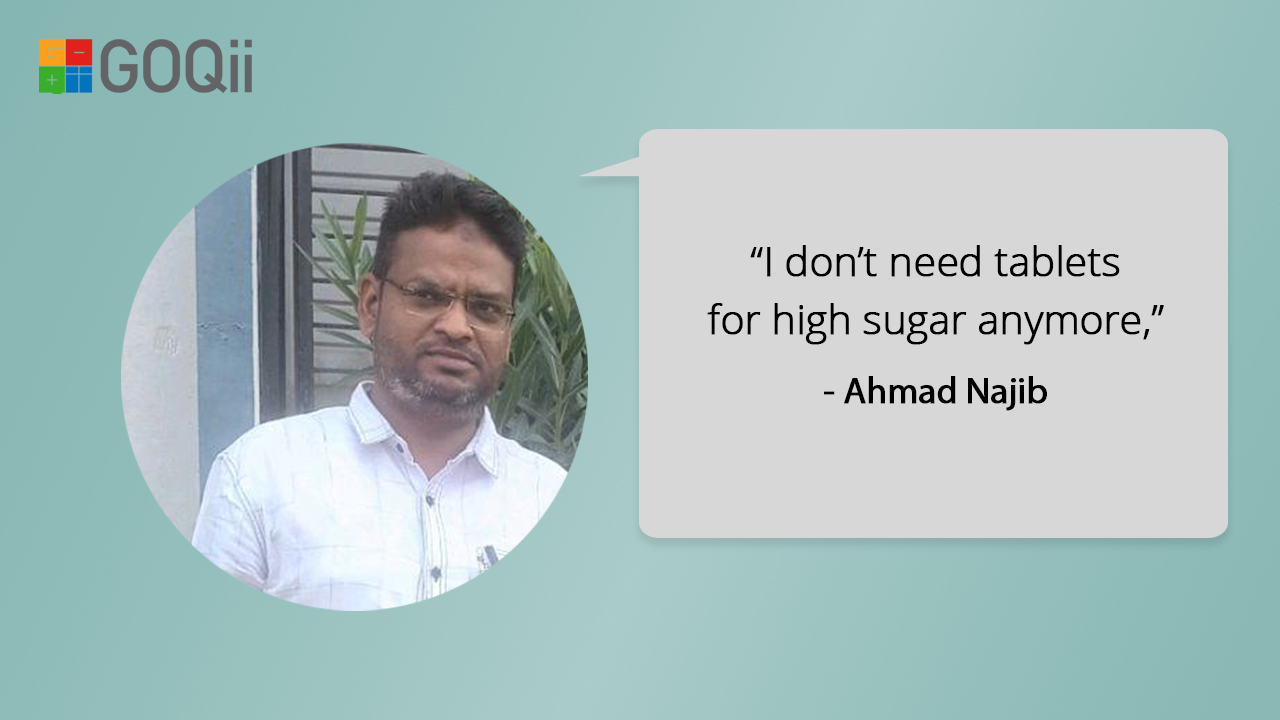
The biggest change he witnessed was that his weight was reduced from 108kg to 91kg. Furthermore, his HbA1c levels have reduced from 6.7 to 5.5. “I don’t need tablets for high sugar anymore,” he says. Even his triglycerides and cholesterol levels are now under control.

His Coach Farhat Khan says, “His fat loss is amazing, sugar readings are now under control and his fitness and stamina have also improved.” She further added that, “Ahmad is really dedicated. He never said ‘ye nahin kar paunga’, and was always ready for the tasks given to him – whether it was physical or diet related.” Before, he couldn’t walk even half a km in one go but now, he can cover 3km without feeling tired. 

Looking at his transformation, the people he meets wonder how he pulled it off. With the changes he saw within himself, he recommended GOQii to 2-3 of his acquaintances. He also gifted a GOQii Smartwatch to his sister who has benefited greatly from it. She too lost weight by following instructions from her GOQii Coach.

Overall, he says it’s been a life-changing experience! Currently, along with his coach, he plans on reducing another 8-9kg.

Was this story inspiring? Do you or someone you know wants to make a lifestyle change? Share this article with them and subscribe for GOQii’s Personalised Health Coaching here. 

You can find more inspiring health stories here.

#BeTheForce 

October 26, 2019 By GOQii 1 Comment

If You Must Take Control, Control Your Health! | Sakuntala Rao User Story

Sakuntala RaoAt some point in life, you can’t help but wonder that as you get older, things change. Life passes you by in such a blur that most times you’re unable to take control. Health issues begin to surface as medication and doctor visits become more common. While things seem bleak in this fixated downward spiral, there are individuals who think otherwise! At the age of 60, our player Sakuntala Rao can proudly say that life didn’t pass her by. She’s living it, breathing it and enjoying it to the fullest with good health… but was it always like this?



Early Life and Health Issues

Hailing from Bangalore, Sakuntala Rao had two major concerns – sleep issues and fluctuating weight. Albeit, she was aware of the reasons for both her concerns but was unable to find a viable solution. She attributes her sleep issues to high levels of stress. Being a control freak, she used to get worked up when things didn’t go the way she wanted. She had trouble falling asleep and used to wake up in the middle of the night unable to go back to sleep. Less sleep hours and disturbed sleep were regular occurrences.

On the other hand, her weight was something she had always struggled with. This was due to her travel routine for work, her diet which was completely erratic, marred with junk food, untimely eating, and zero portion control. As she puts it, her eating habits were all over the place.

To add to this, she was under medication for hyperthyroidism for 14 years before she underwent Radioactive Iodine Therapy which reversed her condition the wrong way. She developed hypothyroidism since most of the gland was destroyed during the procedure. This again contributed to hormonal imbalance leading to weight gain.

She often tried fad diets from time to time. Though she lost a little weight, she would gain it back in a month or two. Her daily routine was also devoid of any physical activity. After her retirement in 2017, she got herself a personal trainer to help her get active. She decided she wanted to focus more on health and fitness. That’s where GOQii came in!

Joining GOQii and Making a Lifestyle Change

In 2018, her husband got her a GOQii tracker as a gift. She explored the app, learned about the coaching mechanism, live video coaching by experts and blogs which motivated her to stick with GOQii. She was assigned a GOQii Coach when she signed up. Her goal was to just get fit which, with help from her Coach, got narrowed down to her two major issues – improving sleep and weight loss.

The first habit set by her GOQii Coach was an early dinner. She was also asked to perform Pranayama as demonstrated by GOQii Play Coach Ronak Gajjar. Sakuntala Rao was also given a few links to meditation which she was asked to listen to after Pranayama. She was also asked to stay away from her phone for at least an hour before bed.

All of this together, with the realization that she cannot control everything and that she needs to let go at times, helped her calm down. This reduced her stress greatly and thus, improved her sleep quality.

She wasn’t asked to change much in her diet as she had already started eating healthy. Only a few tweaks were made. For instance, including protein in each meal. She also began intermittent fasting on the 16/8 pattern – Her last meal being dinner at 6 pm and she breaks her fast at 10 am the next morning. The first thing she drinks is a glass of warm water followed by Ajwain (soaked overnight) and pink salt followed by nuts.

Her lunch consists of 2 rotis, some curry, and a large bowl of salad which consists of carrots, cucumber, radish, avocado, capsicum and some seeds mixed with curd. She consumes a cup of coffee and eats a fruit before that. Dinner consists of one roti, some curry, soup and salad.

Currently, she has set her goal as reaching a weight of 60kg in order to fall under the normal BMI range and maintaining that level.

Experiencing the Change

Sakuntala Rao says that her sleep has improved significantly. She is now able to sleep for an average of 7 hours and doesn’t wake up in the middle of the night. Her weight has reduced from 79kg in July 2018 to 70g when she last checked. She feels that progress has been difficult but consistent. She thanks her GOQii Coach for being persistent and following up with her, ensuring she keeps on track.

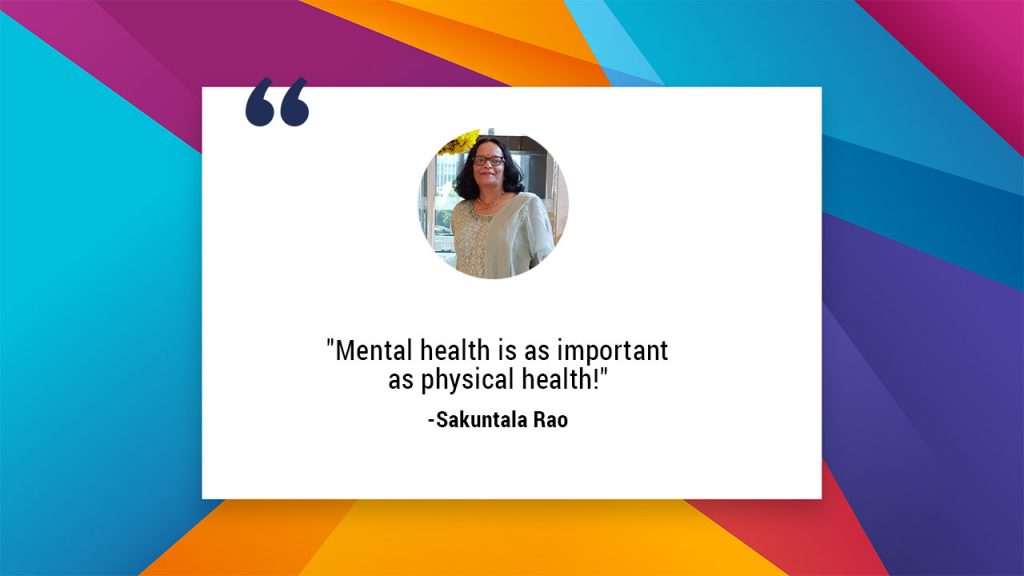
Now, she believes that mental health is just as important as physical health, especially after the age of 60 with people talking about Dementia and Alzheimer’s everywhere. She has enrolled herself for a dancing class as a hobby and she is also associated with a group called Silver Talkies. They cater to people over the age of 55 and get them involved in various social activities. The group has also planned a dance performance for early November in support of a social cause.

Her current physical activities include functional workouts 4 days a week, walking for at least 4 days and attending dance class 2 days a week. She attempted swimming but gave up as she couldn’t overcome her Aquaphobia (fear of water).

What Sakuntala Rao Thinks of GOQii

Sakuntala Rao praises her GOQii Coach for helping her make such a positive lifestyle change. She said her Coach was very prompt in her responses, be it a comment or a problem. She is very pleased with the fact that her Coach personalizes her entire routine keeping her age in mind. She also shares a lot of information which is educational and useful.

Has this story inspired you to make a change? If anything, it tells us that even if we can’t control everything, we can certainly control our health and the choices we make. Want to share your story with us? Fill this form and we’ll reach out to you.

Keep inspiring, stay motivated and #BeTheForce

  • « Previous Page
  • 1
  • 2
  • 3
  • 4
  • …
  • 36
  • Next Page »

Search

Recent Posts

  • Foods to Manage Blood Sugar Naturally: A Complete Guide to Better Blood Sugar Control
  • The Lazy Person’s Guide to Staying Healthy: 5 Micro-Habits That Take Less Than 2 Minutes
  • Healthy Eating: Comforting Chilli Bean Soup Recipe for the Monsoon
  • The Truth About the ‘Beer Belly’: What Alcohol Really Does to Your Metabolism
  • Benefits of Meditation: How One Daily Habit Can Transform Your Mental Wellbeing

Stay Updated

Archives

  • August 2026 (7)
  • July 2026 (25)
  • June 2026 (22)
  • May 2026 (20)
  • April 2026 (24)
  • March 2026 (18)
  • February 2026 (14)
  • January 2026 (14)
  • December 2025 (19)
  • November 2025 (15)
  • October 2025 (20)
  • September 2025 (6)
  • August 2025 (6)
  • July 2025 (9)
  • June 2025 (18)
  • May 2025 (16)
  • April 2025 (22)
  • March 2025 (26)
  • February 2025 (21)
  • January 2025 (25)
  • December 2024 (22)
  • November 2024 (22)
  • October 2024 (20)
  • September 2024 (22)
  • August 2024 (28)
  • July 2024 (15)
  • June 2024 (23)
  • May 2024 (26)
  • April 2024 (27)
  • March 2024 (27)
  • February 2024 (23)
  • January 2024 (21)
  • December 2023 (14)
  • November 2023 (10)
  • October 2023 (19)
  • September 2023 (21)
  • August 2023 (16)
  • July 2023 (16)
  • June 2023 (21)
  • May 2023 (20)
  • April 2023 (19)
  • March 2023 (23)
  • February 2023 (19)
  • January 2023 (15)
  • December 2022 (11)
  • November 2022 (15)
  • October 2022 (15)
  • September 2022 (12)
  • August 2022 (9)
  • July 2022 (17)
  • June 2022 (11)
  • May 2022 (10)
  • April 2022 (6)
  • March 2022 (6)
  • February 2022 (13)
  • January 2022 (11)
  • December 2021 (7)
  • November 2021 (3)
  • October 2021 (6)
  • September 2021 (3)
  • August 2021 (8)
  • July 2021 (7)
  • June 2021 (15)
  • May 2021 (16)
  • April 2021 (10)
  • March 2021 (7)
  • February 2021 (4)
  • January 2021 (4)
  • December 2020 (3)
  • November 2020 (4)
  • October 2020 (10)
  • September 2020 (3)
  • August 2020 (3)
  • July 2020 (2)
  • June 2020 (4)
  • May 2020 (10)
  • April 2020 (12)
  • March 2020 (10)
  • February 2020 (4)
  • January 2020 (4)
  • December 2019 (3)
  • November 2019 (7)
  • October 2019 (5)
  • September 2019 (4)
  • August 2019 (9)
  • July 2019 (9)
  • June 2019 (11)
  • May 2019 (4)
  • April 2019 (8)
  • March 2019 (8)
  • February 2019 (9)
  • January 2019 (8)
  • December 2018 (9)
  • November 2018 (3)
  • October 2018 (3)
  • September 2018 (5)
  • August 2018 (10)
  • July 2018 (6)
  • June 2018 (13)
  • May 2018 (8)
  • April 2018 (18)
  • March 2018 (9)
  • February 2018 (8)
  • January 2018 (15)
  • December 2017 (12)
  • November 2017 (19)
  • October 2017 (13)
  • September 2017 (15)
  • August 2017 (4)
  • July 2017 (8)
  • June 2017 (7)
  • May 2017 (6)
  • April 2017 (8)
  • March 2017 (6)
  • February 2017 (7)
  • January 2017 (9)
  • December 2016 (10)
  • November 2016 (7)
  • October 2016 (7)
  • September 2016 (7)
  • August 2016 (11)
  • July 2016 (9)
  • June 2016 (9)
  • May 2016 (12)
  • April 2016 (17)
  • March 2016 (17)
  • February 2016 (8)
  • January 2016 (6)
  • December 2015 (2)
  • November 2015 (9)
  • October 2015 (7)
  • September 2015 (9)
  • August 2015 (11)
  • July 2015 (9)
  • June 2015 (11)
  • May 2015 (9)
  • April 2015 (13)
  • March 2015 (8)
  • February 2015 (5)
  • January 2015 (12)
  • December 2014 (14)
  • November 2014 (11)
  • October 2014 (6)
  • September 2014 (13)
  • August 2014 (12)
  • July 2014 (6)
  • June 2014 (2)
  • May 2014 (7)
  • April 2014 (4)

From Burnout to Balance: How Dr. Ranjit Reclaimed His Health

Dr Ranjit Bhatt has spent years tending to others. A practising doctor in Odisha, his days were packed with patients, surgeries, and emergencies. From the outside, it looked like a life lived in service. But on the inside, something wasn’t right. “I had no … [Read More...]

From Shimla’s Slopes to Chandigarh’s Sidewalks: Surinder Kaur Bhalla’s Journey from Chaos to Control

Some journeys start with a plan. Others begin with a stumble literally. Surinder Bhalla, a government professional, born and raised in the scenic hill town of Shimla, had always lived a life of movement. “In Shimla, you walked everywhere,” she reflects. “Walking was never an exercise. It was just life.” But after shifting to Chandigarh, […]

“I’ve Challenged Myself to Live 100 Years” – The Story of Chandubhai Savani’s Second Chance at Life

At 67, most people start slowing down. Not Chandubhai Savani. A resident of Surat, Chandubhai, thought life was on track. “My life was going well till I had my bypass surgery,” he says. That surgery, back in 2021, was a wake-up call.  Medication was routine, but exercise wasn’t. His diet? What he calls ‘normal.’ “I […]

Ananda Mukherjee Health Story

From Terminal Illness To Complete Wellness! Ananda Mukherjee Health Story

As we observe World Cancer Day under the powerful theme ‘United by Unique’ (2025-2027)**, we are reminded that every individual’s journey with cancer is distinct, yet united by shared resilience, hope, and the collective fight against this disease. This theme places people at the centre of care and their stories at the heart of the […]

  • HOME
  • HEALTHY LIVING
  • FITNESS
  • HEALTHY RECIPES
  • USER STORIES
  • KARMA
  • BUY GOQii

Copyright ©2016 GOQii
