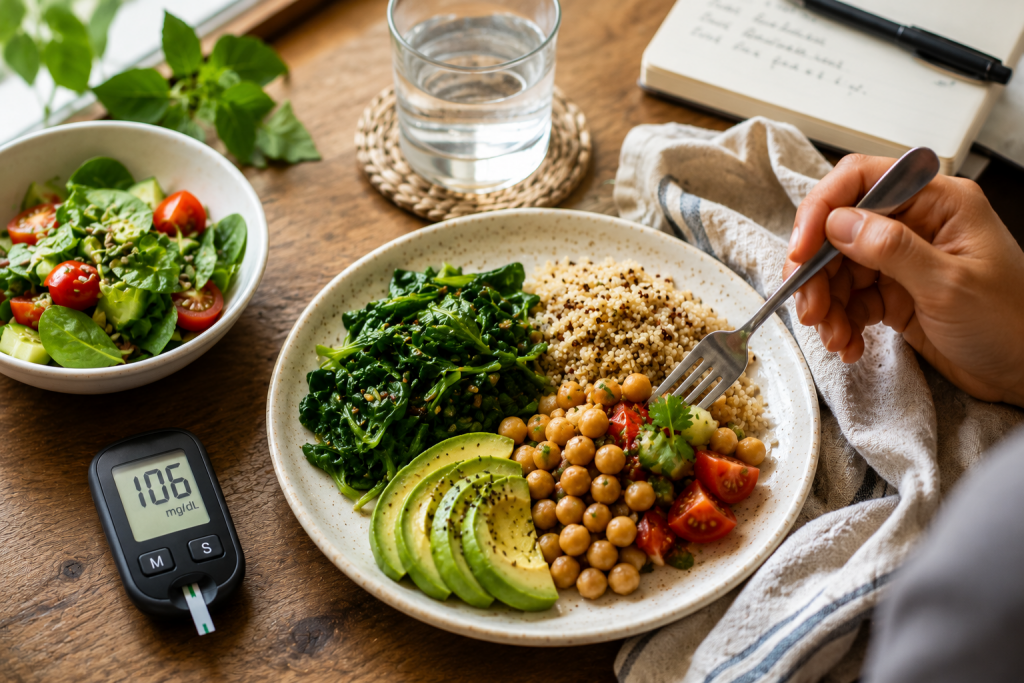
 The Big Question – Can the foods you eat every day help improve your blood sugar levels naturally?
If you’ve been diagnosed with prediabetes or Type 2 diabetes—or you’re simply trying to prevent blood sugar spikes you’ve probably wondered whether changing your diet can really make a difference.
The answer is yes.
While food alone isn’t a cure for diabetes, the right dietary choices, combined with regular physical activity, quality sleep, stress management and medical guidance when needed, can significantly improve blood sugar control and support long-term metabolic health.
The good news? You don’t need a restrictive diet or expensive superfoods. Simple, everyday ingredients can help your body manage blood sugar more effectively.
Quick Answer – Which foods help manage blood sugar naturally?
Foods rich in dietary fibre, lean protein, healthy fats and complex carbohydrates help slow digestion and reduce rapid blood sugar spikes. Leafy green vegetables, whole grains, legumes, nuts, seeds, healthy fats and low-glycaemic fruits can all support better blood sugar management when eaten as part of a balanced lifestyle.
Why Blood Sugar Management Matters
Every time you eat, carbohydrates are broken down into glucose, which enters your bloodstream.
Insulin a hormone produced by the pancreas helps move this glucose into your cells where it is used for energy.
In people with insulin resistance or diabetes, this process becomes less efficient, causing glucose to remain in the bloodstream for longer.
Over time, consistently high blood sugar can increase the risk of:
- Heart disease
- Kidney disease
- Vision problems
- Nerve damage
- Poor wound healing
Managing blood sugar isn’t just about avoiding sugar it’s about building meals that keep glucose levels steady throughout the day.
8 Foods That Help Manage Blood Sugar Naturally
-
Leafy Green Vegetables
Spinach, fenugreek (methi), amaranth, kale and other leafy greens are packed with vitamins, minerals, antioxidants and fibre while being naturally low in digestible carbohydrates.
These vegetables also provide vitamin C and antioxidants such as lutein and zeaxanthin, which support eye health particularly important for people living with diabetes.
Easy ways to include them:
- Vegetable sabzi
- Soups
- Salads
- Stuffed rotis
- Smoothies
- Chutneys
-
Whole Grains and Millets
Refined grains digest quickly and can cause larger blood sugar spikes.
Instead, choose fibre-rich whole grains such as:
- Oats
- Brown rice
- Quinoa
- Jowar
- Bajra
- Ragi
- Barley
These release glucose more gradually, helping maintain steady energy levels.
-
Legumes and Pulses
Beans, lentils, chickpeas and rajma are rich in plant protein and fibre.
They digest slowly, improve satiety and support better blood sugar control.
Aim to include legumes several times each week.
-
Nuts
Nuts provide healthy fats, protein and fibre that slow digestion and help reduce post-meal glucose spikes.
Choose unsalted varieties such as:
- Almonds
- Walnuts
- Pistachios
- Pecans
- Hazelnuts
A small handful makes an excellent snack.
-
Seeds
Seeds are nutritional powerhouses rich in omega-3 fats, fibre and plant protein.
Include:
- Flaxseeds
- Chia seeds
- Pumpkin seeds
- Sunflower seeds
- Sesame seeds
They can be sprinkled over oats, yoghurt, salads or smoothies.
-
Lean Protein
Protein helps keep you fuller for longer while slowing carbohydrate absorption.
Good choices include:
- Eggs
- Fish
- Chicken
- Paneer
- Greek yoghurt
- Tofu
- Lentils
Try including a protein source in every meal.
-
Healthy Fats
Healthy fats improve satiety and help slow digestion.
Choose:
- Avocados
- Olive oil
- Groundnuts
- Walnuts
- Seeds
Remember that healthy fats are still calorie-dense, so portion control matters.
-
Low-Glycaemic Fruits
Fruit can absolutely be part of a diabetes-friendly diet.
Choose whole fruits such as:
- Apples
- Pears
- Berries
- Guava
- Oranges
Avoid fruit juices, which remove fibre and cause faster blood sugar rises.
Foods to Limit
No food needs to be completely banned, but these are best enjoyed occasionally:
- Sugary drinks
- Packaged fruit juices
- Sweets
- Cakes and pastries
- White bread
- Refined flour products
- Sugary breakfast cereals
- Highly processed snacks
- Deep-fried foods
Small, consistent changes often produce better long-term results than extreme restrictions.
Smart Eating Habits That Help
It’s not only what you eat but how you eat.
Build a Balanced Plate
Aim for:
- Half your plate: Non-starchy vegetables
- One-quarter: Lean protein
- One-quarter: Whole grains or complex carbohydrates
Eat Slowly
Eating slowly gives your body time to recognise fullness, helping prevent overeating.
Don’t Skip Meals
Skipping meals can lead to larger blood sugar fluctuations later in the day.
Regular, balanced meals are generally more effective than long periods without food.
Watch Portion Sizes
Even healthy carbohydrates can raise blood sugar when consumed in excessive amounts.
Moderation remains important.
Lifestyle Habits That Support Blood Sugar Control
Nutrition is only one part of the equation.
Other habits matter just as much.
Stay Active
A 20–30 minute walk after meals helps muscles use glucose more efficiently.
Strength training also improves insulin sensitivity over time.
Sleep Well
Poor sleep affects hormones that regulate blood sugar and appetite.
Aim for 7–9 hours of quality sleep each night.
Manage Stress
Chronic stress raises cortisol, which can increase blood glucose levels.
Meditation, breathing exercises, yoga and regular physical activity can all help.
Stay Hydrated
Water supports healthy circulation and helps your body function optimally.
Choose water over sugary beverages whenever possible.
What If Your Blood Sugar Drops Too Low?
People taking insulin or certain diabetes medications may occasionally experience hypoglycaemia (low blood sugar).
Common symptoms include:
- Sweating
- Shaking
- Hunger
- Dizziness
- Confusion
If this happens, follow your healthcare provider’s advice. A commonly recommended approach is the 15-15 rule:
- Consume approximately 15 grams of fast-acting carbohydrate (such as glucose tablets, fruit juice or regular soft drink).
- Recheck your blood sugar after 15 minutes.
- Repeat if necessary.
Always discuss recurring episodes of low blood sugar with your doctor.
Managing blood sugar isn’t about following a perfect diet—it’s about building sustainable habits that support your metabolism every day.
Focus on fibre-rich vegetables, whole grains, lean proteins, healthy fats and regular physical activity.
Small changes, practised consistently, can make a meaningful difference to your long-term health.
Pro Tip – Understanding how your meals affect your blood sugar is the first step towards better metabolic health. Use the GOQii App to track your meals, activity, hydration and sleep. A GOQii Personalised Health Coach can help you build a nutrition plan tailored to your health goals, lifestyle and medical needs.
Frequently Asked Questions (FAQs)
- Which foods help lower blood sugar naturally?
Leafy vegetables, legumes, whole grains, nuts, seeds, lean proteins and healthy fats can support better blood sugar management as part of a balanced diet.
- Can people with diabetes eat fruit?
Yes. Whole fruits such as apples, berries, guava and oranges provide fibre, vitamins and antioxidants. Portion control is important, and fruit juices should generally be limited.
- Are carbohydrates bad for diabetes?
No. The type and quantity of carbohydrates matter more than eliminating them completely. Choosing fibre-rich whole grains over refined carbohydrates helps support steadier blood sugar levels.
- Is walking after meals beneficial?
Yes. Even a short walk after eating can help your muscles use glucose more efficiently and reduce post-meal blood sugar spikes.
- Can lifestyle changes help prevent Type 2 diabetes?
For many people with prediabetes, healthy eating, regular physical activity, weight management and quality sleep can significantly reduce the risk of developing Type 2 diabetes.
#BeTheForce
Disclaimer: This article is intended for educational purposes only and should not replace professional medical advice. Dietary needs vary from person to person. If you have diabetes, prediabetes or any other medical condition, consult your physician or a qualified healthcare professional before making significant dietary or lifestyle changes. Continue taking prescribed medications unless advised otherwise by your healthcare provider.




Leave a Reply