GOQii

Blog

  • HOME
  • HEALTHY LIVING
  • FITNESS
  • HEALTHY RECIPES
  • USER STORIES
  • KARMA
  • BUY GOQii

Search Results for: home workout

January 23, 2015 By Mitali Ambekar 5 Comments

Excruciating Knee Pain- can’t workout? Here are some dos and don’ts

knee_pain

India is rapidly getting on the fitness path. However, many who have been active have suddenly become inactive due to injuries and largely these injuries pertain to leg or back. Knee pain and back pain being the most common among the young adults.

Knee pain today has become one of the most common orthopedic pain ailment among people of all age groups. What was earlier considered to affect people after about 60 years of age is now striking people earlier, reason being wrong foot wear, injury, bad and sedentary lifestyle, body weight, etc.

Let me cite my own example: I had injured my knee during the rainy season due to wrong shoes while performing an adventure activity. I couldn’t walk for few days as I had ruptured my ligament. It was a ligament strain. Thereafter, my knee became a hindrance for my workout. Doctor suggested rest and no workout.

I had to skip everything, right from running, working out, playing a sport. And I felt miserable and helpless that an injury stopped me from so many things. This is exactly the scenario with many of the people I consult. Most come up with the same issue of Knee injury so exercise is a NO NO, which is necessary for being fit.

First and foremost one needs to understand there are different kinds of Knee pain, it can be an injury, strained past injury, excessive weight, high uric acid, joint pain, arthritis. Depending upon what it is exactly that is giving the pain; there are different or similar solutions to it. In my case too, I spoke to different experts like Physiotherapist or My Trainer and I figured out that I need not stop exercising. I need to work on the strengthening of the knee and avoiding exercises that would worsen it.

In cases like High Uric acid and joint pain, of course dietary changes play a major role but exercises also need to be a part of recovery.

Things that would bother it more is exercises like Squats, that is why your doctor says start using western toilet and don’t sit down, as that motion would impact more on your knee and give pain.

Also avoid lunges, a form of exercise. Jumping moments as it would give shock to your joints especially the knees.

How do we still continue to be active with the knee pain?

What can be done? 

1. Exercise to strengthen it: Sit on a chair and raise your leg up and put it down again, repeat this for 10 times in a set of two. After few weeks, repeat the same exercise with little ankle weights, if you can manage.

2. Roll up a towel or a cloth: to form a cylindrical type format and keep that under your knee with the leg extended, try to press that with the knee and then release, repeat this for 4-5 times.

You can follow these two exercises for a better and stronger knee muscles.

3. Avoid running, squats, jumping movements

4. Eat foods that make your knee stronger Walnuts, Almonds, Milk and Milk products

5. In certain cases physiotherapy exercises will be needed.

6. Strengthen the supporting muscles like glutes( hip muscle), core muscles and leg muscles.

7. Stretching the leg muscles will also help as the stiffness in this part of muscle can cause difficulty in movement of the knee leading to pain.

8. Anti inflammatory and high antioxidants food like fruits, vegetables, fish, nuts.

9. Have food rich on Omega 3 like flaxseed and fish

10. Home made ghee of cow’s milk.

11. Maintain body weight.

12. Warm up well before any type of activity.

13. Opt for swimming as it helps a lot in knee issue.

14. Wear proper fitting shoes

15. Do not increase or decrease your activity. Keep it moderate.

16. Increase your Calcium & D3 uptake. Sources can be Milk, cheese, cottage cheese, egg yolk

( avoid for people have high cholesterol/ triglycerides), Ragi, Broccoli, Nuts, Fish.

All these points can make your knee pain better and make it more stronger and don’t stop yourself from workout if there is knee pain.
 

November 9, 2026 By GOQii Leave a Comment

Post-Diwali Reset: Getting Back on Track Without Crash Diets

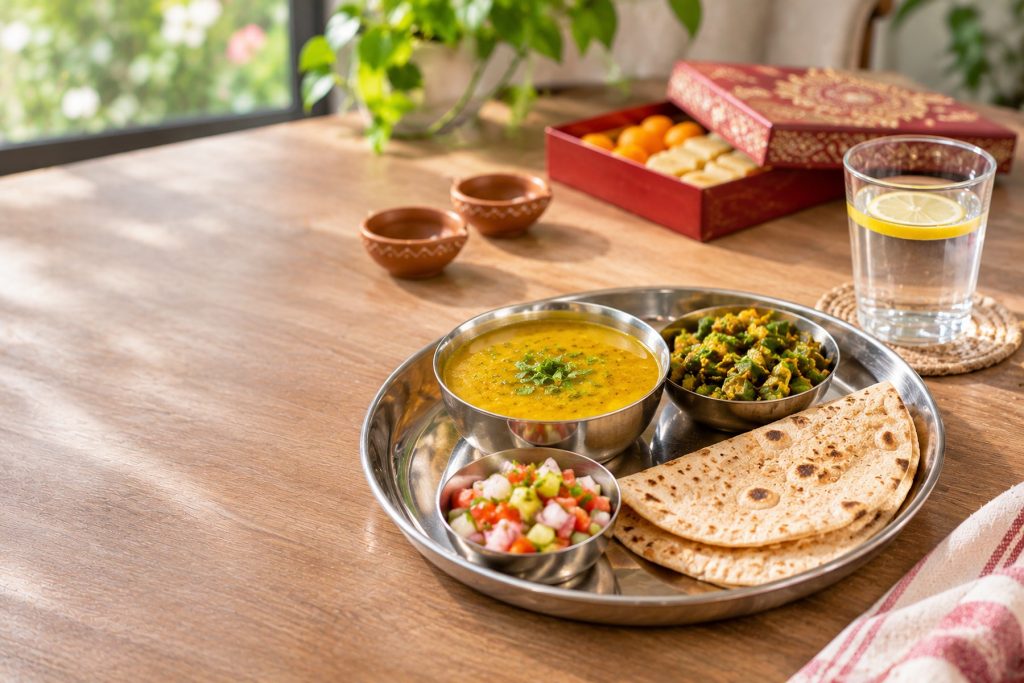
The diyas are packed away, the mithai boxes are half empty and the scale may say something you’d rather it didn’t. After a week of Dhanteras shopping, Diwali feasts and card parties, with Bhai Dooj still to come, it’s natural to want to undo it all fast. Social media is happy to help, with three-day juice cleanses, “detox” teas and skip-dinner challenges.

Here’s the reassuring part: a few days of festive eating doesn’t undo months of good habits, and much of the jump on the scale isn’t fat at all. What matters far more is what you do over the next few weeks. This guide explains why crash diets and detoxes aren’t the answer, and gives you a simple, realistic seven-day plan to get your eating, movement and sleep back on track.

At a glance

  • Don’t panic about the scale. A quick rise after a festival is largely water and stored carbohydrate from salty, rich food, and it settles within days once you eat normally.
  • Skip the detox. Your liver, kidneys and gut already clear waste. The British Dietetic Association calls detox diets “a marketing myth”.
  • The real risk is the slow creep. Research suggests festive-season weight gain is small but often never comes off, so steady habits matter more than a dramatic fix.
  • Go back to regular meals, with vegetables, a source of protein and whole grains at each one. Don’t skip meals to “make up” for Diwali.
  • Deal with the leftovers. Share, freeze or portion out mithai and namkeen rather than grazing on them all week.
  • Move a little, often. A short walk after meals helps blood sugar. On smoggy days, move your workout indoors.
  • Fix your sleep after late festive nights. Short sleep makes you hungrier the next day.
  • If you have diabetes, high blood pressure or heart disease, check your numbers this week and speak to your doctor if they’re higher than usual.

Why crash diets and detoxes aren’t the answer

The scale is exaggerating

If you weigh yourself the morning after Diwali, a gain of a kilo or more can feel alarming. Most of it isn’t fat. Gaining a kilo of body fat takes several thousand extra calories on top of what your body uses, far more than a few festive meals usually add. What you’re mostly seeing is:

  • water held by salt. Namkeen, chaat, pakoras and restaurant food are salty, and your body temporarily holds extra water to balance it.
  • stored carbohydrate. Sweets, puris and rice top up your glycogen stores, and glycogen is stored with water.
  • food that hasn’t moved through yet, especially after large, late meals.

That’s also why crash diets seem to “work” at first. The British Dietetic Association points out that the rapid weight loss from fasting is mainly water and glycogen rather than fat, and that it can leave you tired and short of nutrients. The water comes straight back when you eat normally.

The real issue is the slow creep

The weight that does stick is small, but it adds up. A US study published in the New England Journal of Medicine weighed adults through the year and found the average holiday-season gain was only about half a kilo. The catch: it wasn’t lost over the rest of the year, and people with overweight were more likely to gain more. In India, the festive season runs from Navratri through Diwali to weddings and New Year, so it’s worth paying attention to.

The good news is that small, consistent habits work. In a UK trial published in The BMJ, adults who weighed themselves regularly and had simple tips didn’t gain weight over Christmas, while the comparison group did.

“Detox” is a marketing idea, not a medical one

Your liver, kidneys, gut, lungs and skin clear waste products around the clock. No juice, tea, powder or cleanse has been shown to do this better. The British Dietetic Association describes detox diets as “a marketing myth rather than nutritional reality”, with benefits that are short-lived at best. Some detox teas contain laxatives or diuretics, which simply flush out water and can upset your stomach and fluid balance.

Why strict rules often don’t last

Skipping meals or living on juice for a few days is hard to keep up, and it tends to end with a return to old habits. It can also leave you low on protein, fibre and energy just as work and routines restart. A plan you can follow for weeks beats one you can manage for three days.

A note of caution: if you notice a pattern of eating a lot, then feeling guilty and severely restricting, or if food and weight are causing you real distress, it’s worth talking to your doctor. You don’t have to manage that on your own.

Your 7-day post-Diwali reset

This isn’t a diet. It’s a week of getting back to your normal routine, with a few small upgrades. You don’t need special foods, and you shouldn’t feel hungry.

Days 1–2: back to regular meals

  • Eat breakfast, lunch and dinner at roughly your usual times. Skipping meals to “compensate” usually makes you hungrier later and more likely to snack on leftovers.
  • Start the day with protein and fibre, such as besan or moong dal chilla, poha with peanuts and vegetables, vegetable upma, eggs, or curd with fruit and seeds.
  • Drink water through the day. It won’t flush out toxins, but thirst is easy to mistake for hunger, and after salty food you’ll probably want more.
  • Go easy on salt. Home-cooked dal, sabzi and roti, with less pickle, papad and namkeen, will help your body let go of the extra water quickly.

Days 3–5: build a better plate

The ICMR-NIN Dietary Guidelines for Indians advise getting no more than 45% of calories from cereals and millets, filling the rest with pulses, vegetables, fruit, nuts and milk, and cutting back on salt, sugar and ultra-processed foods. In practice, at lunch and dinner:

  • fill half your plate with vegetables or salad: sabzi, kachumber, palak, lauki, beans or a bowl of soup
  • add a protein food: dal, rajma, chana, paneer, tofu, curd, eggs, fish or chicken
  • keep grains to about a quarter of the plate, choosing whole wheat roti, brown or hand-pounded rice, or millets such as jowar, bajra and ragi
  • use a little less oil, and cook more by steaming, roasting or tadka rather than deep-frying

Protein and fibre keep you full for longer, which makes it easier to say no to the third piece of kaju katli without feeling deprived.

Days 6–7: plan the week ahead

  • Shop for a normal week: vegetables, fruit, pulses, curd and whole grains.
  • Plan two or three easy dinners so you’re not relying on takeaway or leftover snacks when you’re tired.
  • Keep healthier snacks handy: fruit, roasted chana, makhana, nuts, buttermilk or sprouts chaat.

What to do with leftover mithai and namkeen

The real post-Diwali challenge is often the boxes on the dining table. You don’t need to throw them away or eat them all this week.

  • Share them with neighbours, office colleagues, house help, security staff or a local shelter.
  • Freeze what you can. Many milk-free sweets, such as besan ladoo, and dry fruit barfis freeze well. Milk-based sweets don’t keep long, so share those first.
  • Portion, don’t graze. Put one piece on a plate and put the box away, rather than eating from it as you walk past.
  • Have sweets after a meal, not on an empty stomach as a snack, and enjoy them slowly.
  • Store namkeen out of sight and serve a small katori rather than eating from the packet. If you’re making snacks again, try our baked and air-fried namkeen recipes.

A word on alcohol and sugary drinks

If the festive week included card parties and gatherings, give your body a break from alcohol for a few days. Alcohol adds calories, disturbs sleep and often leads to late-night snacking. Swap sweetened drinks and colas for water, nimbu pani without sugar, buttermilk or plain tea.

Movement, sleep and routine

Move a little, often

You can’t out-exercise a week of festive eating, and you don’t need to. The aim is to get back to regular activity, not to punish yourself with a two-hour gym session.

  • Walk after meals. A meta-analysis in Sports Medicine found that even 2–5 minutes of light walking after eating helped steady blood sugar compared with sitting, with the biggest effect within 60–90 minutes of the meal. A 10–15 minute stroll after dinner is a good habit to start this week.
  • Work back up to your usual routine. The WHO recommends adults get at least 150 minutes of moderate activity a week, such as brisk walking, cycling or dancing, plus muscle-strengthening on two or more days. If you’ve had a lazy fortnight, start with shorter sessions and build up over a week or two.
  • Add some strength work. Squats, lunges, push-ups against a wall and resistance bands help maintain muscle, which matters for blood sugar and metabolism as we age.
  • Break up long sitting, especially as you return to work. Stand up and move every 30–60 minutes.

If the air is bad: in much of north India, the days after Diwali often bring the worst smog of the year. Check the AQI before heading out, skip outdoor runs and walks on poor-air days and exercise indoors instead, with yoga, a home workout, skipping or walking in a mall or indoor track. Our guide to air pollution and your health has more on protecting your lungs and heart.

Get your sleep back on track

Late nights, early pujas and noisy celebrations can leave you short of sleep, and that affects your eating. In a small Mayo Clinic study, healthy adults who slept about 80 minutes less a night for eight nights ate around 550 extra calories a day, without burning any more.

  • Aim for seven or more hours a night, and go to bed and wake up at about the same time each day, including weekends.
  • Have dinner two to three hours before bed and keep it lighter than a festive meal.
  • Cut back on caffeine after mid-afternoon, including the many cups of chai that come with festive visits.
  • Dim screens for the last half hour before bed.

Be kind to yourself

Festivals are meant to be enjoyed. Guilt about what you ate tends to make people either give up or swing to extremes. Think of this week as getting back to your routine, not as a punishment. One good meal, one walk and one early night are a perfectly good start.

If you have diabetes, high blood pressure or heart disease

A week of sweets, fried snacks, late meals and missed walks can push your numbers up, sometimes without any obvious symptoms. This week is a good time to check in.

  • Diabetes: if you monitor at home, check your blood sugar more often for a few days, including after meals. Keep taking your medicines as prescribed. Don’t skip or double doses to make up for what you ate. Contact your doctor if readings stay higher than your target, or if you notice extreme thirst, passing urine often, blurred vision or unusual tiredness. If you take insulin or medicines that can cause low blood sugar, be careful about suddenly cutting meals.
  • High blood pressure: salty festive food can raise blood pressure in some people. If you have a home monitor, take a few readings this week at the same time of day. Speak to your doctor if they’re consistently above the target you’ve been given.
  • Heart disease: keep taking your medicines, ease back into activity gradually and avoid exercising outdoors in heavy smog. Get urgent help for chest pain, breathlessness or pain spreading to the arm, jaw or back.

If you’re due a routine check-up, such as HbA1c, a lipid profile or a blood pressure review, this is a good month to book it. Our Dhanteras health guide lists the main tests and where to get them.

And if you were planning a strict diet or fasting for weight loss, check with your doctor first. It’s especially important if you take medicines for diabetes or blood pressure, or if you’re pregnant, older or have kidney disease.

The bottom line

You don’t need to undo Diwali. You need to get back to normal. Most of the quick gain on the scale is water and will settle within days. The habits that actually protect your health are unglamorous ones: regular meals built around vegetables, protein and whole grains; less salt and sugar; a walk after meals; and enough sleep. Keep them going through the rest of the festive and wedding season, and the occasional celebration won’t matter much. For tips you can use at the next festival, see our guide to a healthy Diwali.

Pro Tip: Use the GOQii App to log your meals, steps, water and sleep for the next seven days. Seeing the week in one place makes it easier to spot what’s working. Your GOQii Personalised Health Coach can help you build a realistic post-festival plan that fits your routine, without crash diets.

Frequently asked questions

How can I lose weight after Diwali?

Go back to regular meals with plenty of vegetables, a source of protein and smaller portions of whole grains, cut back on salt, sugar and fried snacks, walk daily and get enough sleep. Much of the quick gain is water and will settle within a few days. Aim for steady habits rather than fast loss.

Do post-Diwali detox drinks or juice cleanses work?

No. Your liver, kidneys and gut already remove waste, and no juice, tea or cleanse has been shown to do it better. Weight lost on a cleanse is mostly water and comes back when you eat normally. Some detox teas contain laxatives that can upset your stomach.

Why has my weight gone up so much after the festival?

A quick rise is mostly water held by salty food, extra stored carbohydrate and food still being digested, rather than fat. Gaining a kilo of fat takes several thousand extra calories. The scale usually settles within a few days of normal eating.

Should I skip meals or fast to make up for overeating?

It’s better not to. Skipping meals often leads to more snacking later and can leave you low on energy and nutrients. If you have diabetes or take medicines for blood sugar or blood pressure, check with your doctor before fasting.

What should I do with leftover Diwali sweets?

Share them with neighbours, colleagues or a local shelter, freeze those that freeze well, and keep the boxes out of sight. Have a single piece after a meal rather than grazing through the day.

How much exercise do I need after Diwali?

There’s no need to overdo it. Return to your usual routine and build up to the WHO’s recommendation of at least 150 minutes of moderate activity a week, plus strength exercises on two days. A short walk after meals also helps steady blood sugar.

Is it safe to exercise outdoors after Diwali?

Not on days when air quality is poor. Check the AQI before going out, and on smoggy days exercise indoors with yoga, a home workout or walking indoors. This is especially important for people with asthma, COPD or heart disease.

#BeTheForce

Disclaimer: The information provided in this blog is for general awareness and educational purposes only. It is not intended to replace professional medical advice, diagnosis, or treatment. Always consult a qualified healthcare provider for personalised medical guidance or concerns related to your health.

September 29, 2026 By Gitanjali Bahl 5 Comments

Choose the right activity to stay fit

fitness-trainingThe Big Question

Who doesn’t want to look good, feel energetic, and stay fit? Recently, there has been a massive shift in awareness, with more people obsessed with losing weight and staying active.

But true fitness is not an overnight transformation, and randomly forcing yourself to exercise can often backfire. Exercising regularly is one of the healthiest choices you can make—lowering your risk of heart disease, diabetes, stroke, and high blood pressure, while easing depression and boosting self-esteem.

The problem? Many people think fitness requires spending long, boring hours in a gym. It doesn’t. Whether you view physical activity as a structured program or simply a lifestyle choice, the secret to long-term success lies in choosing the right activity for your unique body and schedule.

Quick Answer: How do you choose the right exercise?

The right exercise aligns with your purpose, age, weight, and medical background. Rather than forcing yourself into a gym, focus on mild-to-moderate activities that fit your daily routine and interest you—whether that’s brisk walking, yoga, home stretches, or playing a sport.

Why Making the “Right” Choice Matters

Making a random choice of exercise can actually become a deterrent to getting fit, and in some cases, it can cause genuine harm.

Consider these two common instances of choosing the wrong exercise:

  • The Overweight Runner: A person who is on the extreme heavy side should ideally not opt for running right away. Running requires expending more energy and places undue pressure on the joints, which can quickly lead to joint damage and injuries.
  • The Osteoporotic Weightlifter: Imagine a man over 50 with osteoporosis going to the gym to lift heavy weights. While it is commendable that he is trying to stay active, lifting heavy weights despite compromised bone density is just straining his joints and risking severe injury.

The Power of Moderate Activity (Don’t Overdo It)

You do not have to sweat buckets or run a marathon to reap the benefits of exercise. Research shows that mild to moderate activity is enough to change your life for the better.

But what exactly does “moderate activity” mean?

  • The Talk Test: You are breathing a little heavier than normal, but you are not out of breath. For example, you should be able to chat with your walking partner, but you would not easily be able to sing a song.
  • The Temperature Test: Your body feels warmer as you move, but you are not overheated or excessively sweaty.

7 Essential Factors for Choosing Your Exercise

Before jumping into a new routine, evaluate your personal parameters. The factors that are essential for choosing the right exercise include:

  1. Purpose of exercise: (Are you trying to lose weight, build strength, or improve mental health?)
  2. Age: (Different life stages require different mobility and impact levels.)
  3. Weight: (High-impact vs. low-impact needs.)
  4. Interest: (If you don’t enjoy it, you won’t stick with it.)
  5. Medical conditions: (Pre-existing joint issues, heart conditions, bone density, etc.)
  6. Daily Routine: (How much realistic time you can spare.)
  7. Nutritional Intake: (Are you fueling your body enough for the activity you are choosing?)

You Don’t Need a Gym: Ways to Stay Active

If you are not ready to commit to a structured exercise program, think about physical activity as a lifestyle choice. Look at your daily routine and sneak in small activities.

There are plenty of exercises that can be done at home, in the office, or outdoors:

  • Going for a simple or brisk walk
  • Yoga
  • Simple strength and stretch exercises (push-ups, planks, abdomen exercises at home)
  • Aerobics
  • Cycling and Hiking
  • Playing a sport such as Badminton, Tennis, etc.
  • Playing actively with your kids
  • Dancing the night away
  • Martial Arts
  • Running (if appropriate for your fitness level)

Once you understand your purpose and physical parameters, choosing the right exercise becomes automatic.

Pro Tip: Always prefer getting professional advice before starting any new exercise regime. Use the GOQii App to track your daily steps, sleep, and habits, and speak to a GOQii Coach by subscribing for Personalised Health Coaching to find the perfect fitness routine for your unique body type.

Frequently Asked Questions (FAQs)

  1. Do I need to join a gym to stay fit?

No. You don’t have to spend long hours in a gym to reap the benefits of exercise. Walking, doing household chores, doing home workouts, or playing a sport are all highly effective ways to stay active.

  1. How do I know if I am exercising at a “moderate” level?

Use the talk test. During moderate activity, you should be breathing heavier than normal but still able to hold a conversation. If you can sing, you need to work harder; if you can’t speak, you are working too hard.

  1. Why shouldn’t someone who is heavily overweight start with running?

Running is a high-impact exercise that places significant stress on the knees and ankles. For individuals carrying excess weight, this puts undue pressure on the joints and increases the risk of severe injuries. Low-impact activities like brisk walking or swimming are much safer starting points.

  1. What are the mental benefits of regular exercise?

Beyond physical fitness, exercise is incredibly good for your mind, mood, and memory. It has been proven to ease depression, relieve stress and anxiety, enhance self-esteem, and improve your overall outlook on life.

  1. How do I choose the right activity if I have a medical condition?

You should always factor in your medical history (like osteoporosis or heart conditions) when choosing an activity. It is highly recommended to consult a healthcare professional or a GOQii Health Coach before beginning a new fitness program to ensure it is safe for you.

#BeTheForce

October 14, 2024 By Megna Khanna Leave a Comment

Effective Tips To Motivate Your Child To Exercise

motivate your child to exerciseObesity in children has become a common occurrence. At an age when the body needs to be built in a healthy way, diseases like obesity become a risk for a healthy future. As per Indian culture, till the child comes of age, practically all the decisions of their life are taken by their parents. In such a scenario, if the parents themselves do not know the importance of a healthy lifestyle, how will they encourage their children to follow it? So, before children, parents need to be educated regarding the importance of exercise for children. As these formative years are the building blocks for a healthy lifestyle, it is important to guide and motivate your child to exercise. 

How Does Exercise Help Children? 

Physical activity helps children sleep better and handle physical as well as emotional challenges more effectively resulting in control/check of weight, hypertension, cholesterol, sugar and also chronic diseases like cancer and anxiety. It further improves psychological well being, self-confidence and self-esteem. Training children to exercise regularly at an early age helps them grow up to be disciplined adults. 

Tips To Motivate Your Child To Exercise 

The most effective way to train children to exercise is by practicing what we preach and be a role model by including regular physical activity in our own lives. 

  • Besides arranging family picnics, hiking expeditions, morning/evening walks and other sports and games, one can also add activity by walking or riding bicycles instead of driving, using stairs instead of elevators, helping in housework and gardening.
  • Another effective way to encourage children to get active is by praising them for their efforts. Instead of making them compete, they should be encouraged to cooperate with others and excel in their own records, as competition with others can lead to teasing, bullying and a sense of public failure and embarrassment. Children are more sensitive than average grownups and need all the support and encouragement to try again once they fumble or fail, which is a common phenomenon in case of children. Instead of nagging or negative comments, parents should become their cheerleaders. 
  • Children love the company of their friends; it is a good idea to encourage them to invite their like minded friends over for a game or an excursion. If a child likes a team sport, they should be encouraged for the same. But here too, the focus should be on fitness, fun and learning new skills and not on competition as this can remove the fun from the activity and many children get discouraged by it.
  • Exercise and activity should come as a reward after a homework well done rather than as punishment by forcing a child to run laps or do pushups after a mistake or some mischief played by them as this may backfire and the child may start hating exercise and activity. 
  • Often children are so overburdened with homework, private tuitions, and other planned activities that they do not have time for physical activity of their own choice. So think of adding some activity of their choice as an informal fun game rather than a training session. 
  • A variety of games and sports equipment should be left on hand, like an assortment of balls, hula-hoops, and jump ropes, etc. this can make children enjoy the games and activities for hours. 
  • If a child is lazy, they should be given incentives like a favorite food or book for an hour’s activity on a regular basis as this could be a great motivating factor.  

We hope the above suggestions help you motivate your child to exercise. As an incentive to exercise and to monitor their health, you can also gift them the GOQii Smart Vital Jr. which could be a huge motivational factor for your child to take their health seriously. With a personal coach and a pediatrician on board, you can rest assured that your child’s health is in safe hands!

For more tips of kid’s health and nutrition, check out Healthy Reads or tune in to sessions by experts on GOQii Play. For more effective tips on kid’s health, weight loss, home workouts, etc. speak directly to your GOQii Coach by subscribing for Personalised Health Coaching here.

#BeTheForce 

  • « Previous Page
  • 1
  • …
  • 5
  • 6
  • 7
  • 8
  • 9
  • …
  • 38
  • Next Page »

Search

Recent Posts

  • World AMR Awareness Week 2026: when you need antibiotics, and simple steps to prevent AMR
  • PCOS: diet, exercise and the myths to stop believing
  • Cholesterol numbers explained: LDL, HDL and triglycerides
  • International Men’s Day 2026: why men’s health is everyone’s business
  • World COPD Day 2026: Short of Breath? Think COPD – Why Early Diagnosis Matters

Stay Updated

Archives

  • November 2026 (21)
  • October 2026 (23)
  • September 2026 (5)
  • August 2026 (8)
  • July 2026 (24)
  • June 2026 (22)
  • May 2026 (20)
  • April 2026 (24)
  • March 2026 (18)
  • February 2026 (14)
  • January 2026 (14)
  • December 2025 (19)
  • November 2025 (14)
  • October 2025 (17)
  • September 2025 (6)
  • August 2025 (5)
  • July 2025 (9)
  • June 2025 (18)
  • May 2025 (16)
  • April 2025 (22)
  • March 2025 (25)
  • February 2025 (21)
  • January 2025 (25)
  • December 2024 (21)
  • November 2024 (21)
  • October 2024 (15)
  • September 2024 (22)
  • August 2024 (27)
  • July 2024 (14)
  • June 2024 (23)
  • May 2024 (26)
  • April 2024 (27)
  • March 2024 (27)
  • February 2024 (23)
  • January 2024 (21)
  • December 2023 (14)
  • November 2023 (10)
  • October 2023 (18)
  • September 2023 (20)
  • August 2023 (16)
  • July 2023 (16)
  • June 2023 (21)
  • May 2023 (20)
  • April 2023 (19)
  • March 2023 (23)
  • February 2023 (19)
  • January 2023 (15)
  • December 2022 (11)
  • November 2022 (15)
  • October 2022 (15)
  • September 2022 (12)
  • August 2022 (9)
  • July 2022 (17)
  • June 2022 (11)
  • May 2022 (10)
  • April 2022 (6)
  • March 2022 (6)
  • February 2022 (13)
  • January 2022 (11)
  • December 2021 (7)
  • November 2021 (3)
  • October 2021 (6)
  • September 2021 (3)
  • August 2021 (8)
  • July 2021 (7)
  • June 2021 (15)
  • May 2021 (16)
  • April 2021 (10)
  • March 2021 (7)
  • February 2021 (4)
  • January 2021 (4)
  • December 2020 (3)
  • November 2020 (4)
  • October 2020 (10)
  • September 2020 (3)
  • August 2020 (3)
  • July 2020 (2)
  • June 2020 (4)
  • May 2020 (10)
  • April 2020 (12)
  • March 2020 (10)
  • February 2020 (4)
  • January 2020 (4)
  • December 2019 (3)
  • November 2019 (7)
  • October 2019 (5)
  • September 2019 (4)
  • August 2019 (9)
  • July 2019 (9)
  • June 2019 (11)
  • May 2019 (4)
  • April 2019 (8)
  • March 2019 (8)
  • February 2019 (9)
  • January 2019 (8)
  • December 2018 (9)
  • November 2018 (3)
  • October 2018 (3)
  • September 2018 (5)
  • August 2018 (10)
  • July 2018 (6)
  • June 2018 (13)
  • May 2018 (8)
  • April 2018 (17)
  • March 2018 (9)
  • February 2018 (8)
  • January 2018 (15)
  • December 2017 (12)
  • November 2017 (19)
  • October 2017 (13)
  • September 2017 (15)
  • August 2017 (4)
  • July 2017 (8)
  • June 2017 (7)
  • May 2017 (6)
  • April 2017 (8)
  • March 2017 (6)
  • February 2017 (7)
  • January 2017 (9)
  • December 2016 (10)
  • November 2016 (7)
  • October 2016 (7)
  • September 2016 (7)
  • August 2016 (11)
  • July 2016 (9)
  • June 2016 (9)
  • May 2016 (12)
  • April 2016 (17)
  • March 2016 (17)
  • February 2016 (8)
  • January 2016 (6)
  • December 2015 (2)
  • November 2015 (9)
  • October 2015 (7)
  • September 2015 (9)
  • August 2015 (11)
  • July 2015 (9)
  • June 2015 (11)
  • May 2015 (9)
  • April 2015 (13)
  • March 2015 (8)
  • February 2015 (5)
  • January 2015 (12)
  • December 2014 (14)
  • November 2014 (11)
  • October 2014 (6)
  • September 2014 (13)
  • August 2014 (12)
  • July 2014 (6)
  • June 2014 (2)
  • May 2014 (7)
  • April 2014 (4)

From Burnout to Balance: How Dr. Ranjit Reclaimed His Health

Dr Ranjit Bhatt has spent years tending to others. A practising doctor in Odisha, his days were packed with patients, surgeries, and emergencies. From the outside, it looked like a life lived in service. But on the inside, something wasn’t right. “I had no … [Read More...]

From Shimla’s Slopes to Chandigarh’s Sidewalks: Surinder Kaur Bhalla’s Journey from Chaos to Control

Some journeys start with a plan. Others begin with a stumble literally. Surinder Bhalla, a government professional, born and raised in the scenic hill town of Shimla, had always lived a life of movement. “In Shimla, you walked everywhere,” she reflects. “Walking was never an exercise. It was just life.” But after shifting to Chandigarh, […]

“I’ve Challenged Myself to Live 100 Years” – The Story of Chandubhai Savani’s Second Chance at Life

At 67, most people start slowing down. Not Chandubhai Savani. A resident of Surat, Chandubhai, thought life was on track. “My life was going well till I had my bypass surgery,” he says. That surgery, back in 2021, was a wake-up call.  Medication was routine, but exercise wasn’t. His diet? What he calls ‘normal.’ “I […]

Ananda Mukherjee Health Story

From Terminal Illness To Complete Wellness! Ananda Mukherjee Health Story

As we observe World Cancer Day under the powerful theme ‘United by Unique’ (2025-2027)**, we are reminded that every individual’s journey with cancer is distinct, yet united by shared resilience, hope, and the collective fight against this disease. This theme places people at the centre of care and their stories at the heart of the […]

  • HOME
  • HEALTHY LIVING
  • FITNESS
  • HEALTHY RECIPES
  • USER STORIES
  • KARMA
  • BUY GOQii

Copyright ©2016 GOQii