GOQii

Blog

  • HOME
  • HEALTHY LIVING
  • FITNESS
  • HEALTHY RECIPES
  • USER STORIES
  • KARMA
  • BUY GOQii

Search Results for: goqii

October 22, 2026 By Soni Thakur 11 Comments

7 Reasons Why Pulses Are Good For You!

Pulses are one of the healthiest, cheapest and most versatile foods in the Indian kitchen. A daily bowl of dal, chana or rajma adds protein, fibre and key minerals to your diet, and research links regular pulse eating to lower cholesterol and better blood sugar control.

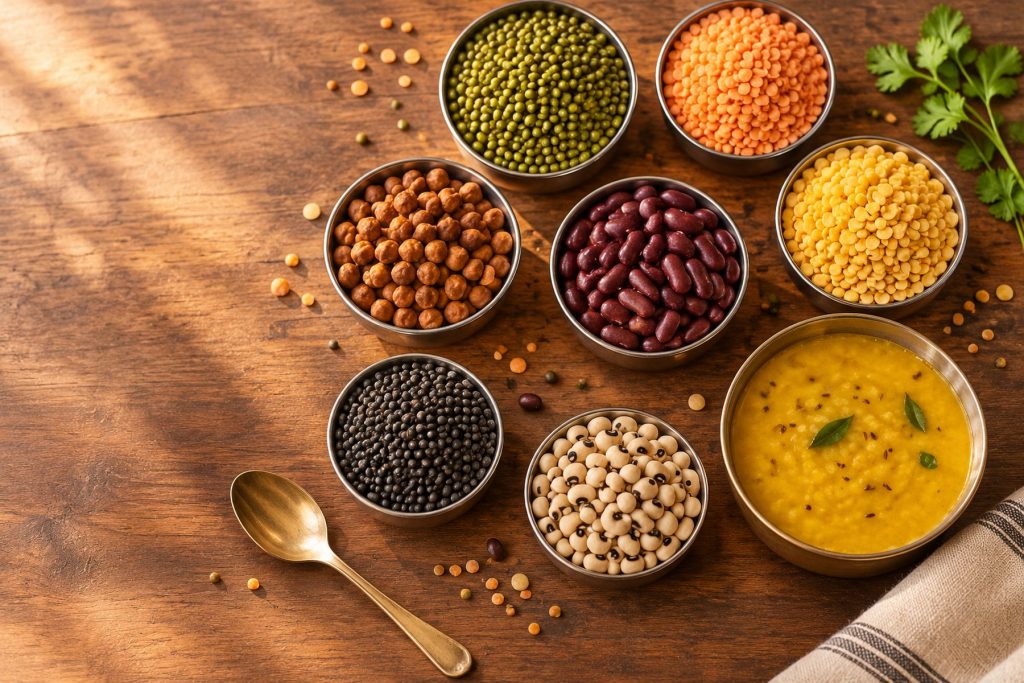
Pulses are the dried, edible seeds of legume plants: lentils (masoor), pigeon peas (toor or arhar), chickpeas (chana), mung beans (moong), black gram (urad), kidney beans (rajma) and cowpeas (lobia), among others. Most Indian homes already eat them every day. Here are seven reasons to keep them on your plate, and to eat a little more.

Pulses at a glance

  • Protein-rich: pulses contain about 20–25% protein, two to three times more than cereals.
  • Good for your heart: about one serving a day lowered LDL (“bad”) cholesterol by around 5% in trials.
  • Steadier blood sugar: in people with diabetes, diets richer in pulses modestly improved long-term blood sugar control.
  • Better together: dal with rice or roti gives better-quality protein than either alone.
  • Cheap, long-lasting and kind to the soil: dried pulses keep for months and need little fertiliser to grow.

7 reasons pulses are good for you

  1. 1. They’re one of the best sources of plant protein

    Pulses contain about 20–25% protein, two to three times more than cereals, according to the UN Food and Agriculture Organization (FAO). For the many Indians who eat little or no meat, dal, chana and rajma are often the main source of protein in the day.

    That makes them useful at every age: for growing children, for women’s higher iron and folate needs, especially in pregnancy, and for older adults who need enough protein to protect their muscles.

    2. They’re packed with fibre and minerals

    Pulses are a good source of fibre and of iron, magnesium, potassium, phosphorus, zinc and B vitamins such as folate. Fibre keeps digestion regular and helps you feel full for longer, which can make it easier to manage your weight.

    For more on how fibre supports digestion and heart health, see our guide to high-fibre foods.

    Tip: eat iron-rich pulses with a source of vitamin C, such as lemon on your chana or tomatoes in your dal, to help your body absorb the iron.

    3. They’re good for your heart

    Pulses are naturally low in fat and contain almost no saturated fat. A review of 26 trials found that eating about one serving of pulses a day (around 130 g) lowered LDL (“bad”) cholesterol by about 5% compared with similar diets without pulses. That’s a modest but meaningful change from a simple food swap.

    To keep the benefit, watch the extras: a heavy tadka of ghee, or cream in dal makhani, adds the saturated fat that pulses themselves don’t have.

    4. They help keep blood sugar steady

    Pulses release their energy slowly. In a review of 41 trials, diets that included more pulses gave a modest improvement in long-term blood sugar control, lowering HbA1c by about 0.5%. In a three-month trial in 121 adults with type 2 diabetes, adding about one cup of legumes a day lowered HbA1c by 0.5% and systolic blood pressure by 4.5 mm Hg more than a wheat-fibre diet.

    Pulses aren’t a treatment for diabetes, but they are a smart swap for some of the refined rice, maida or sweets on your plate. Keep taking any medicines you’ve been prescribed.

    5. They make your grains more nutritious

    Pulses and cereals have different strengths in their protein. Eaten together, as in dal-chawal, rajma-rice, khichdi or idli-sambar, the protein quality of the meal improves. Traditional Indian meals got this right long before nutrition science explained why.

    6. They’re affordable and keep for months

    Pulses are among the cheapest sources of protein you can buy. Because they are dried seeds, they store well for months in an airtight container, so there is little waste. Keep a few different kinds in the kitchen, and you always have a quick, nourishing meal to hand.

    7. They’re good for the planet

    Pulse plants work with soil bacteria to take nitrogen from the air and turn it into a form plants can use. This improves soil fertility and reduces the need for synthetic fertiliser, which takes a lot of energy to make. Choosing pulses more often is a small, practical way to eat more sustainably.

Common Indian pulses and how to use them

Eating a mix of pulses through the week gives you a wider range of nutrients and keeps meals interesting.

Pulse Also called Easy ways to eat it Cooking note
Moong (whole or split) Green gram Moong dal, khichdi, chilla, sprouts Quick to cook and usually the easiest to digest
Masoor Red lentil Masoor dal, soups Split masoor cooks in 15–20 minutes without soaking
Toor Arhar, pigeon pea Everyday dal, sambar A staple dal across much of India
Chana Bengal gram, chickpea Chole, roasted chana, sundal, besan chilla Soak whole chana overnight before cooking
Rajma Kidney beans Rajma-chawal, salads, wraps Soak overnight and boil until fully soft: undercooked kidney beans can make you ill
Urad Black gram Idli, dosa, dal makhani Fermented batters (idli, dosa) are gentle on the stomach
Lobia Cowpea, black-eyed pea Lobia curry, salads Soak for a few hours to cut cooking time

How much should you eat?

The ICMR–National Institute of Nutrition’s My Plate for the Day suggests about 85 g of pulses a day (raw weight) for an adult eating around 2,000 calories, with eggs, fish or meat able to replace part of that. In practice, that is roughly one to two bowls of dal, chana or rajma spread across the day.

Easy ways to eat more pulses

  • Make dal a daily habit at lunch or dinner, and make it a little thicker than usual.
  • Start the day with pulses: moong dal chilla, besan chilla, idli, dosa or a sprouts salad.
  • Snack on them: roasted chana, a bowl of sundal, or other quick, healthy snacks.
  • Pack them for work: rajma or chole bowls and sprouts chaat keep well, as our meal-prep guide
  • Add them to what you already cook: a handful of chana in pulao, moong in upma, or lobia in a vegetable curry.

Gas and bloating: how to make pulses easier to digest

The most common reason people avoid pulses is wind. Pulses contain fermentable carbohydrates (oligosaccharides such as raffinose) that our small intestine can’t break down, so gut bacteria ferment them further along. That is part of why they feed a healthy gut, and also why a large bowl after weeks without them can leave you uncomfortable.

A few simple habits help most people:

  • Soak whole pulses. Soak rajma, chana, lobia and whole urad for 8–12 hours (overnight), then discard the soaking water and cook in fresh water. Soaking draws out some of the gas-forming sugars.
  • Cook them thoroughly. Pressure-cook until soft. Undercooked pulses are harder to digest, and raw or undercooked rajma can make you ill (see the table above).
  • Start small and build up. If you rarely eat pulses, begin with a small katori a day and increase over two to three weeks. Many people find their gut adapts.
  • Begin with the gentler dals. Split, husked dals such as moong and masoor are usually easier on the stomach than whole beans.
  • Use traditional tempering. Hing (asafoetida), jeera, ginger and ajwain are classic additions to dal. Evidence that they reduce gas is limited, but they make pulses tastier and many people find them helpful.
  • Drink enough water as you increase fibre, and spread pulses across meals rather than eating a large amount at once.

Who should take care

Pulses suit most people, but a few groups should check with a doctor or dietitian about how much and which kinds to eat:

  • Chronic kidney disease: pulses contain potassium and phosphorus, which some people with kidney disease need to limit. Your renal team can advise on portions and preparation.
  • Irritable bowel syndrome (IBS): many pulses are high in FODMAPs, which can trigger symptoms. A dietitian can help you find the types and portions you tolerate rather than cutting them out completely.
  • Gout or high uric acid: follow the advice of your doctor about your overall diet. Plant sources of purines appear to be less of a concern than meat and seafood, but individual advice matters.
  • Persistent or severe digestive symptoms: ongoing pain, bloating, changes in bowel habit or weight loss are worth a medical check-up rather than simply avoiding foods.

The bottom line

Pulses are one of the most useful foods in the Indian kitchen: affordable, filling, rich in protein and fibre, and backed by good evidence for heart health and blood sugar control. You don’t need anything exotic. A katori of well-cooked dal, a bowl of rajma or chana, or a handful of roasted chana as a snack, eaten most days alongside vegetables and whole grains, is a simple habit that adds up over time.

Pro Tip: Use the GOQii App to log your meals and see how often pulses actually make it onto your plate across the week. Your GOQii Personalised Health Coach can help you work more dals and beans into meals you already enjoy, and adjust portions to suit your goals.

Frequently asked questions

Are pulses and legumes the same thing?

Not quite. Legumes are all plants in the pea family, including peanuts, soybeans and fresh green peas. Pulses are the dried, edible seeds of legumes, such as lentils, dried beans, chickpeas and dried peas. In India, most dals are pulses.

Are pulses a good source of protein for vegetarians?

Yes. Dried pulses are roughly 20–25% protein by weight, about twice as much as most cereals. Eating them with rice, roti or millets gives a more complete mix of amino acids, which is why dal–chawal and rajma–chawal work so well together.

How much dal should I eat a day?

The ICMR–National Institute of Nutrition suggests about 85 g of pulses a day (raw weight) for an adult eating around 2,000 calories, with eggs, fish or meat able to replace part of that. That is roughly one to two bowls of dal, chana or rajma spread across the day. Your needs may differ depending on your age, activity and health.

Are pulses good for people with diabetes?

Pulses are a sensible choice for most people with diabetes. They are high in fibre, digest slowly and have a low glycaemic index, and studies have linked regular intake with modest improvements in blood sugar control. Watch the portion of rice or roti eaten with them, and talk to your doctor or dietitian about a plan that suits you.

Why do pulses cause gas, and how can I reduce it?

Pulses contain fermentable sugars that gut bacteria break down, producing gas. Soaking whole pulses and discarding the water, cooking them thoroughly, starting with small portions and choosing gentler dals like moong can help.

Which dal is easiest to digest?

Split, husked moong dal is generally considered the easiest to digest, which is why it is often used in khichdi for people who are unwell. Masoor dal is also fairly light. Whole beans such as rajma and chana tend to be heavier.

Can I eat pulses every day?

For most healthy people, yes. Eating pulses daily is an easy way to add protein and fibre. If you have kidney disease, IBS, gout or another condition that affects your diet, ask your doctor or dietitian how much is right for you.

#BeTheForce

Disclaimer: The information provided in this blog is for general awareness and educational purposes only. It is not intended to replace professional medical advice, diagnosis, or treatment. Always consult a qualified healthcare provider for personalised medical guidance or concerns related to your health.
October 21, 2026 By GOQii Leave a Comment

How Exercise Impacts Mental Health

Regular exercise is one of the most reliable ways to protect your mental health. It can lift your mood, ease stress and anxiety, help you sleep, and lower your risk of depression, and you don’t need a gym to get the benefits.
Most of us know the feeling: a brisk walk after a tense day, and the mind feels a little clearer. That isn’t just a pleasant side effect. Large reviews of hundreds of studies now show that physical activity has a real, measurable effect on depression, anxiety and stress.

This guide explains what the research shows, why movement helps the mind, how much and what kind of exercise to aim for, and how to start when you’re feeling low. It also covers what exercise can’t do, and when to get support.

Exercise and mental health at a glance

  • Even a little helps. People doing half the recommended activity had an 18% lower risk of depression than those doing none.
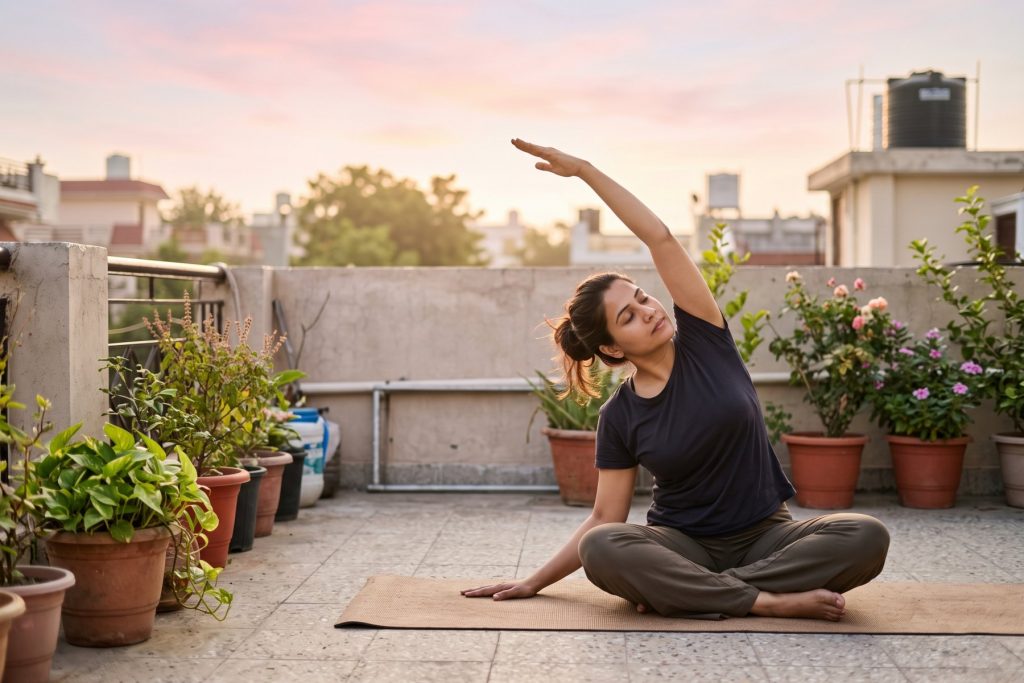
  • It eases existing symptoms. Walking, jogging, yoga and strength training all reduced depression symptoms in trials.
  • Any type counts. Choose something you enjoy enough to keep doing.
  • Short, regular sessions work. Aim for about 150 minutes a week, but start smaller if you need to.
  • It works alongside treatment, not instead of it. If you have depression or anxiety, keep talking to your doctor or therapist.

What the evidence shows

The World Health Organization states that physical activity reduces symptoms of depression and anxiety, enhances brain health, and can improve overall well-being, and lists better sleep and thinking among its benefits. Three large reviews show how strong that evidence is.

Study What it looked at What it found
Pearce et al., JAMA Psychiatry, 2022 15 studies, 191,000 adults followed over time Half the recommended activity was linked to an 18% lower risk of depression, and the full recommendation to 25% lower.
Noetel et al., BMJ, 2024 218 trials, 14,170 people with depression Walking or jogging, yoga and strength training gave moderate reductions in depression symptoms, with more benefit at higher intensity.
Singh et al., British Journal of Sports Medicine, 2023 97 reviews, over 1,000 trials and 128,000 people Exercise improved depression, anxiety and psychological distress across many groups. Resistance training helped depression most; yoga and mind–body exercise helped anxiety most.

The research has limits. Many trials are small, and people know whether they are exercising, which can affect results. But the overall direction is clear and consistent: moving more is good for the mind.

What it can help with

  • Low mood and depression: both lowering the risk and easing symptoms, especially mild to moderate depression.
  • Anxiety and stress: many people feel calmer after exercise, and regular activity can reduce anxiety over time.
  • Sleep: being active during the day can help you fall asleep and sleep better.
  • Focus and memory: regular activity supports brain health and thinking skills.
  • Self-esteem: reaching small goals and feeling stronger can build confidence.

Why exercise helps your mind

Scientists are still working out exactly how exercise helps mental health. It is probably a mix of effects on the brain, the body and daily life.

  • Feel-good chemicals. Harder exercise releases endorphins, behind the well-known “runner’s high”. But most of the lasting benefit comes from regular, moderate activity.
  • A healthier brain. Regular activity triggers growth factors that help nerve cells form new connections, including in the hippocampus, an area involved in mood that is often smaller in people with depression.
  • A calmer stress response. Regular exercise may help your body handle stress better, so that over time you feel less tense day to day.
  • Better sleep. Being active during the day tends to improve sleep, and good sleep is closely tied to mood.
  • A sense of achievement. Finishing a walk or lifting a little more than last week gives you small wins, which matter most when you’re feeling low.
  • Time with others and outdoors. A walking group, a game of badminton or a yoga class adds social contact and fresh air, both good for wellbeing.

The benefits build over time. Harvard Health notes that most people begin to feel better a few weeks after starting, so it’s worth sticking with it even if the first sessions feel hard.

How much exercise, and what kind?

The WHO recommends adults get at least 150 minutes of moderate activity a week, such as brisk walking, and adds that any amount is better than none. That target is also a good aim for mental health, but the research shows benefits start well below it.

Type Examples Good for
Walking or jogging Brisk walks, jogging, cycling, swimming Depression and mood; one of the most effective types in trials, and the easiest to start
Yoga and mind–body Yoga, tai chi, pilates Anxiety and stress; also rated among the most acceptable by participants
Strength training Bodyweight exercises, resistance bands, weights Depression; strength training showed some of the biggest benefits
Dance and sport Zumba, garba, badminton, football Mood and social connection; fun makes it easier to keep going

Tips for getting the most out of it

  • Pick what you’ll actually do. The best exercise for your mental health is the one you keep doing.
  • Push a little, when you can. Trials found that more vigorous exercise tended to give bigger benefits. Brisk enough that you can talk but not sing is a good level.
  • Go outside when possible. A walk in a park or green space adds fresh air and daylight.
  • Make it social. Walking with a friend or joining a group adds company and helps you show up.

Getting started when you’re feeling low

When your mood is low, even a short walk can feel like a lot. That’s normal, and it’s why starting small matters more than starting big.

  1. Start with 5–10 minutes. A short walk around the block or 10 minutes of stretching is a real start. The NHS notes that even a brisk 10-minute walk can clear your mind and help you relax.
  2. Tie it to something you already do. Walk after your morning chai, or stretch before bed.
  3. Lower the bar on hard days. On a bad day, putting on your shoes and stepping outside counts.
  4. Plan it, don’t wait for motivation. Mood often improves after you move, not before. Put it in your calendar like any other appointment.
  5. Bring someone along. A friend, family member or walking group makes it easier to show up and adds company.
  6. Notice how you feel afterwards. A quick note of your mood before and after can show you the difference over a few weeks.
  7. Build up slowly. Add a few minutes each week until you’re closer to 30 minutes on most days.

Pair it with other habits that protect your mind

Exercise works best alongside other everyday habits. Regular sleep, a few minutes of daily meditation, and noticing when stress drives your eating all support your mental health too.

What exercise can’t do, and when to get help

Exercise is a powerful tool, but it isn’t a cure-all. It works best alongside professional care, not instead of it. In the UK, for example, NICE recommends group exercise as one treatment option for less severe depression, usually guided by a trained practitioner. The authors of the large reviews above also see exercise as complementing therapy and medicines, not replacing them.

  • Don’t stop prescribed medicines without talking to your doctor, even if you start feeling better.
  • See a doctor or mental health professional if low mood, worry or loss of interest lasts more than two weeks, or affects your work, sleep, eating or relationships.
  • Talk to someone if exercise starts to feel compulsive, for example if you feel unable to miss a session, or it’s tied to strict rules about food or weight.

Free support in India

Tele-MANAS, the Government of India’s mental health helpline, is free, open 24 hours a day and available in around 20 languages. Call 14416 or 1800-891-4416.

If you or someone you know is thinking about suicide or self-harm, or is in immediate danger, call 112 or go to the nearest hospital emergency department straight away.

The bottom line

Exercise is one of the simplest, cheapest and best-supported ways to look after your mental health. It can lower your risk of depression, ease low mood, anxiety and stress, and help you sleep and think more clearly. You don’t need a gym or a long workout: a brisk walk, a yoga session or a few bodyweight exercises all count. Start small, choose something you enjoy, and keep going. And if you’re struggling, reach out for support alongside it.

Pro Tip: Use the GOQii App to track your steps, workouts and sleep, and note how you feel each day to see how movement affects your mood over time. Your GOQii Personalised Health Coach can help you build an activity routine that fits your life and keeps you motivated on harder days.

Frequently Asked Questions (FAQs)

  1. Can exercise help with depression?

Yes. Large reviews of trials show that exercise such as walking, jogging, yoga and strength training reduces depression symptoms. It works best alongside professional care, not as a replacement for it.

  1. How much exercise do I need for my mental health?

The WHO recommends at least 150 minutes of moderate activity a week, but benefits start well below that. People doing half that amount had an 18% lower risk of depression than those doing none.

  1. What type of exercise is best for anxiety?

Any regular activity can help. In one large review, yoga and other mind–body exercise showed the biggest benefits for anxiety. Walking is also an easy, effective place to start.

  1. How soon will I feel the benefits?

Many people feel calmer or more positive straight after a session. Longer-lasting improvements in mood usually take a few weeks of regular activity.

  1. Can exercise replace antidepressants or therapy?

No. Exercise is a valuable part of treatment, but you shouldn’t stop prescribed medicines or therapy without talking to your doctor. Many people use exercise alongside them.

  1. I have no energy when I’m low. How do I start?

Start very small, such as a 5–10 minute walk, and plan it rather than waiting until you feel motivated. Mood often improves after you move. Bringing a friend along can help you show up.

  1. Where can I get help for my mental health in India?

Tele-MANAS, the government’s free mental health helpline, is open 24 hours a day on 14416 or 1800-891-4416. In an emergency, or if you are thinking about harming yourself, call 112 or go to the nearest hospital.

#BeTheForce

Disclaimer: The information provided in this blog is for general awareness and educational purposes only. It is not intended to replace professional medical advice, diagnosis, or treatment. Always consult a qualified healthcare provider for personalised medical guidance or concerns related to your health.

October 20, 2026 By GOQii Leave a Comment

Dussehra 2026: 10 Unhealthy Habits to Leave Behind

This Dussehra, on Tuesday 20 October 2026, as Ravana’s effigy burns, pick one unhealthy habit to leave behind as well.
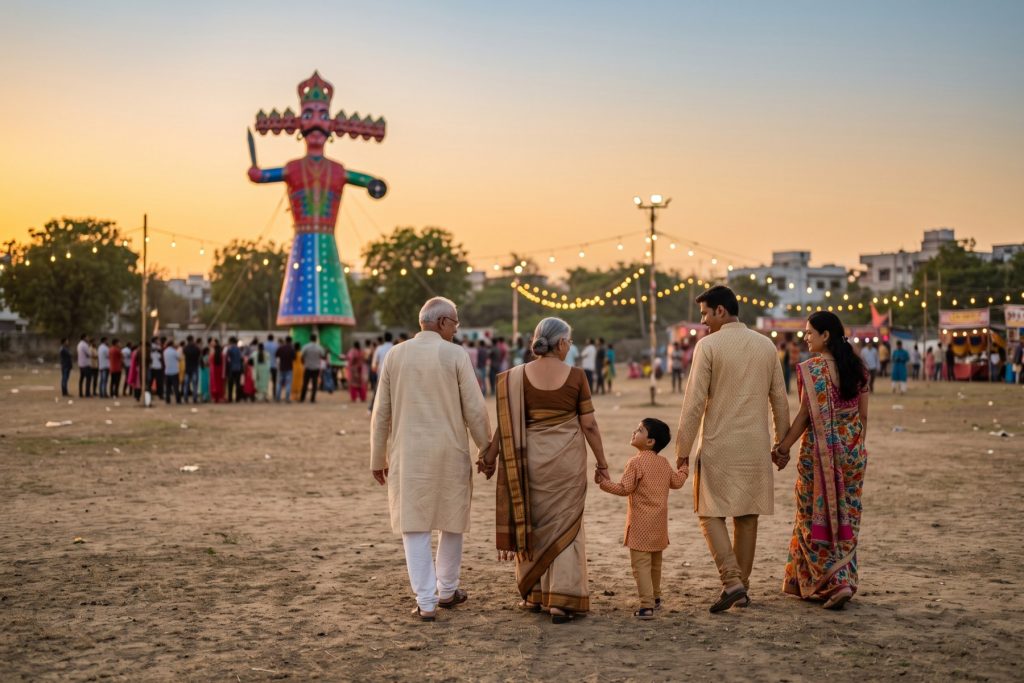
Dussehra, or Vijayadashami, marks the victory of good over evil: Lord Rama’s triumph over Ravana and, in many parts of India, Goddess Durga’s victory over Mahishasura. It comes at the end of nine days of Navratri, and for many families it is a day of puja, Ravan Dahan, shared meals and fresh starts.

Ravana is often shown with ten heads. In that spirit, here are ten everyday habits that quietly hold our health back, with a simple swap for each, plus practical tips for coming off the Navratri fast, enjoying festive food and staying safe at Ravan Dahan.

Dussehra at a glance

  • Dussehra 2026 falls on Tuesday 20 October, the day after the nine nights of Navratri.
  • Pick one habit, not ten. Small, steady changes last longer than big festive resolutions.
  • Break your fast gently. Start with water, fruit and light, home-cooked food before heavier dishes.
  • Enjoy the sweets, in smaller portions. Share, savour and balance them with lighter meals.
  • Take care at Ravan Dahan. Keep a safe distance, and if you have asthma or a lung condition, avoid the smoke and carry your inhaler.

10 habits to leave behind this Dussehra

One for each of Ravana’s ten heads. You don’t need to tackle them all. Pick the one that matters most to you and start there.

1. Sitting for hours at a stretch

Long, unbroken sitting is linked to poorer health, and the WHO advises that everyone should limit time spent sedentary.

Swap: stand up and move for a few minutes every 30–60 minutes, and try a few simple office workouts through the day.

2. Not moving enough

The WHO recommends at least 150 minutes of moderate activity a week for adults, plus muscle-strengthening exercise.

Swap: a 30-minute brisk walk five days a week gets you there. Garba and dandiya count too.

3. Extra sugar in your chai and drinks

Sweetened chai, packaged juices and soft drinks add up fast. High sugar intake is also a major driver of fatty liver, now very common in India.

Swap: cut the sugar in your chai by half a spoon each week, and choose water, buttermilk or nimbu pani without sugar.

4. Too much salt

Pickles, papad, namkeen and restaurant food push salt intake well above the WHO’s limit of less than 5 g a day, raising the risk of high blood pressure.

Swap: taste before you add salt, and keep pickles and papad to an occasional treat.

5. Too few fruits and vegetables

The WHO recommends at least 400 g of fruit and vegetables a day, about five portions.

Swap: fill half your plate with sabzi or salad at lunch and dinner, and have one fruit as a snack.

6. Fried and packaged snacks as everyday food

Namkeen, chips and biscuits are easy to eat without noticing, and they are high in salt, sugar or fat.

Swap: keep roasted chana, nuts, makhana or fruit within reach for the 4 pm hunger.

7. Late nights and short sleep

Regular short sleep affects your mood, focus and appetite, and is linked to weight gain.

Swap: set a regular bedtime, and put your phone away 30 minutes before it.

8. Letting stress run unchecked

Ongoing stress affects sleep and blood pressure, and often pushes us towards unhealthy food.

Swap: try 5 minutes of slow breathing, a short walk or a call with a friend when the day gets heavy.

9. Tobacco and too much alcohol

Tobacco kills more than 7 million people a year worldwide, and both smoked and chewed tobacco cause serious harm. Alcohol adds to the risk of liver disease, high blood pressure and some cancers.

Swap: if you use tobacco, make Dussehra your quit date. Counselling and medication can more than double your chance of quitting, so ask your doctor or call India’s free National Tobacco Quitline on 1800-11-2356 (8 am to 8 pm, closed Mondays). If you drink, set alcohol-free days each week.

10. Skipping health check-ups

High blood pressure, diabetes and fatty liver often cause no symptoms for years.

Swap: book a basic check-up this month, covering blood pressure, blood sugar, cholesterol and a liver function test, especially if you’re over 30 or have a family history.

Breaking the Navratri fast gently

After nine days of fasting or eating only vrat foods, your body is used to smaller, simpler meals. Jumping straight to a heavy, fried festive lunch can leave you bloated and uncomfortable.

  • Start with water. Drink a glass of water, coconut water or nimbu pani without much sugar.
  • Begin light. Fruit, a bowl of curd, khichdi, moong dal, or a simple vegetable with roti are easy first meals.
  • Add protein early. Many fasting days are low in protein. Dal, paneer, curd, eggs or sprouts help you feel steady.
  • Bring back grains gradually. Have a normal portion of roti or rice, not a double one.
  • Save the rich dishes for later in the day, and keep portions small.

If you have diabetes, take medicines that affect blood sugar, or are pregnant, check with your doctor about safe fasting and breaking the fast, as large swings in meals can affect blood sugar.

Enjoying festive food without overdoing it

Dussehra is a time for jalebi, fafda, kheer and family meals. You don’t need to skip them, just enjoy them with a little thought.

  • Eat a proper meal before you go visiting. Arriving hungry makes it easy to fill up on sweets and fried snacks.
  • Pick your favourite and skip the rest. One jalebi or one piece of mithai you really love beats a little of everything.
  • Share sweets. Split a portion, or take a small piece.
  • Balance the day. If lunch is heavy, keep dinner light: dal, sabzi and roti, or khichdi.
  • Gift healthier. Dry fruit, roasted nuts, fresh fruit baskets or homemade laddoos with less sugar make thoughtful gifts.
  • Keep moving. A family walk after the festive meal is good for digestion and for spending time together.

Staying safe at Ravan Dahan

Watching Ravana’s effigy burn is a highlight of the day, but the fireworks, smoke and crowds bring some real risks.

  • Keep a safe distance from the effigy and fireworks, and follow barriers and volunteers’ instructions. Keep children close and hold their hands in crowds.
  • Wear cotton clothes, not loose synthetic ones that catch fire easily.
  • Avoid the smoke if you have asthma or a lung condition. A pulmonologist quoted by ETV Bharat notes that even brief exposure can set off symptoms. Watch from upwind or further back, wear an N95 mask, and keep your reliever inhaler with you.
  • Keep taking your regular medicines, including preventer inhalers, even if you feel fine.
  • For minor burns, hold the area under cool running water for 20 minutes, and don’t put creams, oil, butter or toothpaste on it. Cover it loosely with cling film or a clean cloth, and get medical help for large, deep or facial burns.
  • Plan your way home before the crowd starts to leave, especially with children or older relatives.

The bottom line

Dussehra celebrates good winning over evil, and it’s a natural moment for a fresh start. You don’t need to change everything at once. Pick one habit from the ten, make one simple swap, and keep it going until Diwali and beyond. Enjoy the festivities, break your fast gently, and stay safe around the fire and smoke.

Pro Tip: Choose your one habit and track it in the GOQii App, whether that’s steps, sleep, water or sugar in your chai. Your GOQii Personalised Health Coach can help you turn this Dussehra’s resolution into a habit that lasts.

Frequently Asked Questions (FAQs)

  1. When is Dussehra in 2026?

Dussehra, also called Vijayadashami, falls on Tuesday 20 October 2026, the day after the nine nights of Navratri.

  1. What does Dussehra celebrate?

It marks the victory of good over evil, remembering Lord Rama’s victory over Ravana and, in many regions, Goddess Durga’s victory over Mahishasura.

  1. What should I eat after the Navratri fast?

Start light: water or coconut water, fruit, curd, khichdi, moong dal or a simple sabzi with roti. Add protein early, and save rich, fried dishes for later in the day in small portions.

  1. How can I enjoy festive sweets without overeating?

Eat a proper meal before visiting, choose the one sweet you love most, share portions, and keep the next meal light. A family walk after the meal also helps.

  1. Is the smoke from Ravan Dahan harmful?

Smoke from burning effigies and fireworks can irritate the lungs, and even brief exposure can trigger symptoms in people with asthma or other lung conditions. Watch from a distance and upwind, wear an N95 mask if you are sensitive, and carry any inhaler you use.

  1. What should I do for a minor burn?

Hold it under cool running water for 20 minutes, and don’t apply creams, oil, butter or toothpaste. Cover it loosely with cling film or a clean cloth, and get medical help for large, deep or facial burns.

  1. How do I make a health resolution stick?

Pick one specific habit, such as a 30-minute walk five days a week, rather than several at once. Tie it to a set time of day, track it, and tell someone close to you so they can keep you going.

#BeTheForce 

Disclaimer: The information provided in this blog is for general awareness and educational purposes only. It is not intended to replace professional medical advice, diagnosis, or treatment. Always consult a qualified healthcare provider for personalised medical guidance or concerns related to your health.

October 19, 2026 By GOQii Leave a Comment

5-Minute Healthy Snacks for Work & Home

A healthy snack doesn’t need cooking or planning. A handful of nuts, a bowl of curd with fruit or a few spoons of roasted chana takes less than five minutes and keeps you going far better than biscuits or a packet of chips.


For many of us, snack time means whatever is closest: biscuits with chai at 4 pm, namkeen from the office pantry, or something from the fridge late in the evening. Those snacks are quick, but most packaged ones are high in fat, sugar or salt, and they rarely keep you full until dinner.

This guide explains what makes a snack worth eating, gives you a list of no-cook and 5-minute Indian snacks for your desk and your kitchen, and shows simple swaps for the snacks you already reach for.

Healthy snacking at a glance

  • Pair protein or fibre with your snack. Nuts, chana, curd, sprouts, fruit and vegetables keep you fuller than biscuits or chips.
  • Keep it small. A snack should tide you over to your next meal, not replace it. Use a small bowl, not the packet.
  • Plan it. Stock your desk drawer and fridge with good options so the office pantry isn’t your only choice.
  • Read the label on packaged snacks. Many “healthy” snacks are high in sugar, salt or fat.
  • Watch what you drink with it. Two or three cups of sweetened chai a day add up in sugar.

What makes a snack healthy

A good snack does a simple job: it keeps you comfortable until your next meal and adds something useful to your day. Four things help.

  • Protein or fibre. Foods such as nuts, roasted chana, sprouts, curd, paneer, eggs, fruit and vegetables are more filling than refined snacks, so you’re less likely to keep reaching back into the packet.
  • A sensible portion. Even healthy snacks add up. A small handful of nuts, one fruit or a small bowl of chana is usually enough.
  • Whole foods first. Snacks you put together from basic ingredients are usually lower in salt, sugar and fat than packaged ones.
  • A snack is most useful when there is a long gap between meals, such as mid-afternoon. If you’re not actually hungry, a glass of water or a short walk may be all you need.

What to watch in packaged snacks

India’s dietary guidelines advise limiting ultra-processed foods, which are often high in fat, sugar and salt and low in fibre. Biscuits, namkeen, chips, instant noodles and many “health” bars fall into this group. The guidelines treat more than about 25 g of added sugar or 5 g of salt a day as above the healthy range, and the WHO advises limiting salty snacks and pre-packaged fried and baked foods.

When you do buy a packaged snack, check the label:

  • Sugar: look at sugar per serving and the ingredients list. Sugar, jaggery, honey, glucose and syrups near the top mean it is a sweet snack, whatever the front of the pack says.
  • Salt or sodium: namkeen and chips can carry a large share of your daily salt in one packet.
  • Fat: watch for palm oil, “hydrogenated” or “partially hydrogenated” fats, and frying as the main cooking method.
  • Serving size: many packets contain two or three servings. Check what the numbers refer to.

Words like “multigrain”, “baked”, “natural” or “no added sugar” don’t make a snack healthy on their own. The label tells you more than the front of the pack.

12 healthy snacks you can make in 5 minutes

No-cook snacks for your desk

These keep for days without a fridge, so they’re easy to stock at work.

Snack Portion Why it works
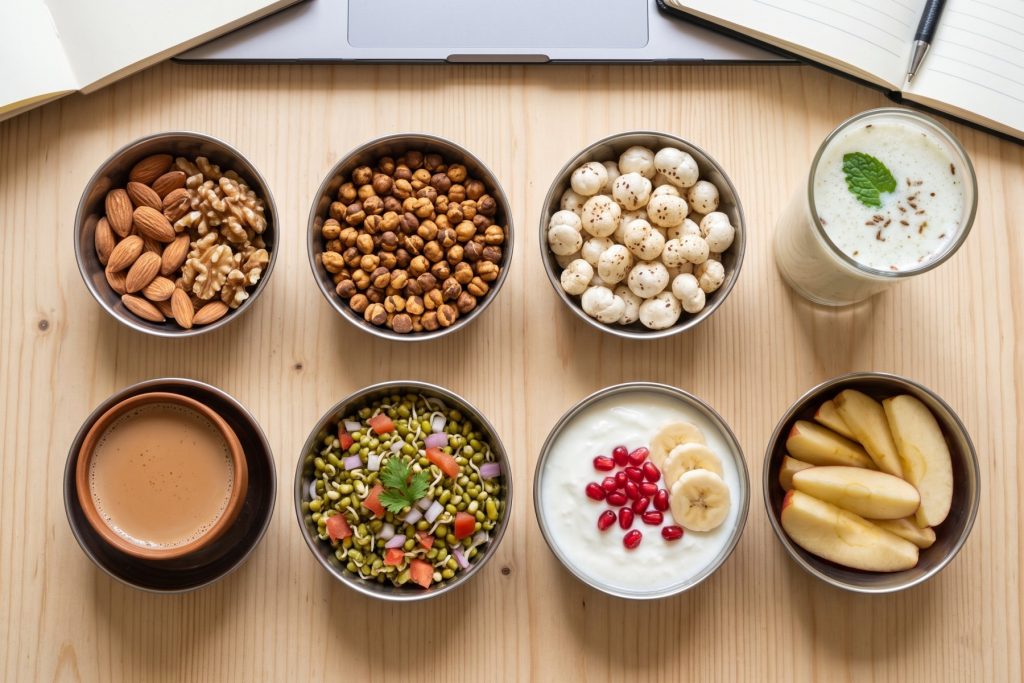
Mixed nuts (almonds, walnuts, peanuts) A small handful, about 20–30 g Protein, fibre and healthy fats. Eating about 20 g of nuts a day is linked to a lower risk of heart disease. Choose unsalted.
Roasted chana 2–3 tablespoons High in protein and fibre, cheap and filling. Mix with a few peanuts for variety.
Roasted makhana A small bowl Light and crunchy. Roast at home with a little ghee and spices, or check the salt on packaged ones.
Whole fruit 1 medium fruit, or a bowl of seasonal fruit Banana, apple, guava, orange or pear travel well. Whole fruit is more filling than juice.
Fruit with peanut butter 1 fruit with 1 tablespoon peanut butter Apple or banana slices with a little unsweetened peanut butter add protein and fat to keep you full.
Puffed rice bhel A small bowl Murmura with chopped onion, tomato, cucumber, roasted peanuts and lemon. Skip the sev and sweet chutney.

5-minute snacks at home

Snack Portion Why it works
Curd with fruit and seeds A small bowl of plain curd, fruit, 1 teaspoon seeds Protein and calcium from curd, fibre from fruit. Use plain curd rather than flavoured, which is often sweetened.
Sprouts chaat A small bowl Moong sprouts with onion, tomato, cucumber, lemon and chaat masala. Steam the sprouts lightly if you prefer them cooked.
Boiled eggs 1–2 eggs Boil a batch and keep them in the fridge for up to a few days. Add pepper and a pinch of salt.
Paneer or tofu cubes A small bowl Sauté briefly with pepper, chaat masala or a little chutney. High in protein.
Vegetable sticks with dip A bowl of carrot, cucumber and capsicum with 2 tablespoons hummus or hung-curd dip Crunchy, filling and very low in calories.
Masala chaas 1 glass Buttermilk with roasted jeera, mint and a pinch of salt. A good swap for a second cup of chai, especially in hot weather.

Simple snack swaps

You don’t have to give up the snacks you enjoy. Swapping the ones you eat most often makes the biggest difference.

Instead of Try What changes
Biscuits with chai A handful of nuts or roasted chana with chai Less sugar and refined flour, more protein
Namkeen or bhujia Roasted chana, peanuts or makhana Much less salt and fried fat
Potato chips Puffed rice bhel or vegetable sticks with a dip Lower in salt and fat, more fibre
Packaged fruit juice A whole fruit More fibre, less sugar, more filling
Flavoured yoghurt Plain curd with fresh fruit Far less added sugar
Samosa or pakora Sprouts chaat or a boiled egg Not deep-fried, more protein
Sweetened chai, third cup Masala chaas or water Less sugar and caffeine late in the day
“Health” or granola bar A banana with a few nuts Fewer added sugars and syrups

Making healthy snacking a habit

The easiest way to snack well is to make the healthy option the closest one.

Stock your desk drawer

  • Unsalted nuts and roasted chana in small boxes, portioned for the week
  • Roasted makhana or puffed rice in an airtight jar
  • One or two pieces of whole fruit, brought in each morning
  • A water bottle you refill through the day

Stock your fridge at home

  • Plain curd and a few boiled eggs
  • Washed and cut vegetable sticks in a box with a lid
  • Sprouts, hummus or hung-curd dip
  • Seasonal fruit where you can see it

Snack with intention

  • Check you’re hungry. Thirst, tiredness and boredom can feel like hunger. Try water first, or take a short walk.
  • Portion it out. Put your snack in a bowl and put the packet away.
  • Step away from the screen. Eating while working or scrolling makes it easy to eat more than you meant to.
  • Notice stress snacking. If you find yourself reaching for food when you’re stressed rather than hungry, our guide on why stress triggers unhealthy eating explains what is going on and how to break the cycle.
  • Go easy late at night. If you snack after dinner, keep it light, such as curd, fruit or a glass of warm milk.

The bottom line

Healthy snacking is mostly about having the right food within reach. Keep nuts, roasted chana, fruit and curd where you’ll see them, pair your snack with protein or fibre, keep portions small, and read the label on anything packaged. Five minutes is all it takes, and the payoff is steadier energy through the afternoon and less temptation from the biscuit jar.

Pro Tip: Use the GOQii App to log your snacks for a week. It’s an easy way to spot patterns, such as the 4 pm biscuits or the late-night fridge visit. Your GOQii Personalised Health Coach can help you plan snacks that suit your routine, tastes and health goals.

Frequently Asked Questions (FAQs)

  1. Is snacking between meals healthy?

It can be. A planned snack helps when there is a long gap between meals and stops you arriving at dinner very hungry. It is less helpful if you snack out of habit or boredom, or if the snack is mostly sugar, salt or fried food.

  1. What is a good portion size for a snack?

Think small: a handful of nuts (about 20–30 g), one fruit, a small bowl of chana or curd, or 1–2 eggs. A snack should keep you going until your next meal, not replace it.

  1. What are good high-protein snacks?

Roasted chana, nuts, sprouts, paneer or tofu cubes, plain curd, buttermilk and boiled eggs are all simple Indian options. Eggs are an easy source of good-quality protein if you eat them.

  1. Are packaged “healthy” snacks a good choice?

Some are, many aren’t. Words like “baked”, “multigrain” or “no added sugar” don’t guarantee a healthy snack. Check the label for sugar, salt and fat, and look at the serving size.

  1. How many nuts should I eat a day?

A small handful, about 20–30 g, is a good amount. Large studies link around 20 g a day with a lower risk of heart disease. Choose unsalted nuts and keep the portion in check, as nuts are high in calories.

  1. Is makhana a healthy snack?

Roasted makhana is a light, crunchy snack that is easy to make at home with a little ghee and spices. Packaged versions can be high in salt or flavourings, so check the label.

  1. What can I snack on at night?

If you’re genuinely hungry after dinner, choose something light such as plain curd, a piece of fruit, a few nuts or a glass of warm milk. Avoid heavy, fried or very sweet snacks close to bedtime.

#BeTheForce

Disclaimer: The information provided in this blog is for general awareness and educational purposes only. It is not intended to replace professional medical advice, diagnosis, or treatment. Always consult a qualified healthcare provider for personalised medical guidance or concerns related to your health.

  • « Previous Page
  • 1
  • …
  • 22
  • 23
  • 24
  • 25
  • 26
  • …
  • 437
  • Next Page »

Search

Recent Posts

  • Healthy Eating: Vegetable and Paneer Kathi Roll
  • The Science of Power Naps: How Long is Too Long?
  • 7 Reasons Why Pulses Are Good For You!
  • How Exercise Impacts Mental Health
  • Dussehra 2026: 10 Unhealthy Habits to Leave Behind

Stay Updated

Archives

  • October 2026 (17)
  • September 2026 (5)
  • August 2026 (8)
  • July 2026 (25)
  • June 2026 (22)
  • May 2026 (20)
  • April 2026 (24)
  • March 2026 (18)
  • February 2026 (14)
  • January 2026 (14)
  • December 2025 (19)
  • November 2025 (15)
  • October 2025 (20)
  • September 2025 (6)
  • August 2025 (5)
  • July 2025 (9)
  • June 2025 (18)
  • May 2025 (16)
  • April 2025 (22)
  • March 2025 (25)
  • February 2025 (21)
  • January 2025 (25)
  • December 2024 (21)
  • November 2024 (21)
  • October 2024 (15)
  • September 2024 (22)
  • August 2024 (27)
  • July 2024 (15)
  • June 2024 (23)
  • May 2024 (26)
  • April 2024 (27)
  • March 2024 (27)
  • February 2024 (23)
  • January 2024 (21)
  • December 2023 (14)
  • November 2023 (10)
  • October 2023 (18)
  • September 2023 (20)
  • August 2023 (16)
  • July 2023 (16)
  • June 2023 (21)
  • May 2023 (20)
  • April 2023 (19)
  • March 2023 (23)
  • February 2023 (19)
  • January 2023 (15)
  • December 2022 (11)
  • November 2022 (15)
  • October 2022 (15)
  • September 2022 (12)
  • August 2022 (9)
  • July 2022 (17)
  • June 2022 (11)
  • May 2022 (10)
  • April 2022 (6)
  • March 2022 (6)
  • February 2022 (13)
  • January 2022 (11)
  • December 2021 (7)
  • November 2021 (3)
  • October 2021 (6)
  • September 2021 (3)
  • August 2021 (8)
  • July 2021 (7)
  • June 2021 (15)
  • May 2021 (16)
  • April 2021 (10)
  • March 2021 (7)
  • February 2021 (4)
  • January 2021 (4)
  • December 2020 (3)
  • November 2020 (4)
  • October 2020 (10)
  • September 2020 (3)
  • August 2020 (3)
  • July 2020 (2)
  • June 2020 (4)
  • May 2020 (10)
  • April 2020 (12)
  • March 2020 (10)
  • February 2020 (4)
  • January 2020 (4)
  • December 2019 (3)
  • November 2019 (7)
  • October 2019 (5)
  • September 2019 (4)
  • August 2019 (9)
  • July 2019 (9)
  • June 2019 (11)
  • May 2019 (4)
  • April 2019 (8)
  • March 2019 (8)
  • February 2019 (9)
  • January 2019 (8)
  • December 2018 (9)
  • November 2018 (3)
  • October 2018 (3)
  • September 2018 (5)
  • August 2018 (10)
  • July 2018 (6)
  • June 2018 (13)
  • May 2018 (8)
  • April 2018 (17)
  • March 2018 (9)
  • February 2018 (8)
  • January 2018 (15)
  • December 2017 (12)
  • November 2017 (19)
  • October 2017 (13)
  • September 2017 (15)
  • August 2017 (4)
  • July 2017 (8)
  • June 2017 (7)
  • May 2017 (6)
  • April 2017 (8)
  • March 2017 (6)
  • February 2017 (7)
  • January 2017 (9)
  • December 2016 (10)
  • November 2016 (7)
  • October 2016 (7)
  • September 2016 (7)
  • August 2016 (11)
  • July 2016 (9)
  • June 2016 (9)
  • May 2016 (12)
  • April 2016 (17)
  • March 2016 (17)
  • February 2016 (8)
  • January 2016 (6)
  • December 2015 (2)
  • November 2015 (9)
  • October 2015 (7)
  • September 2015 (9)
  • August 2015 (11)
  • July 2015 (9)
  • June 2015 (11)
  • May 2015 (9)
  • April 2015 (13)
  • March 2015 (8)
  • February 2015 (5)
  • January 2015 (12)
  • December 2014 (14)
  • November 2014 (11)
  • October 2014 (6)
  • September 2014 (13)
  • August 2014 (12)
  • July 2014 (6)
  • June 2014 (2)
  • May 2014 (7)
  • April 2014 (4)

From Burnout to Balance: How Dr. Ranjit Reclaimed His Health

Dr Ranjit Bhatt has spent years tending to others. A practising doctor in Odisha, his days were packed with patients, surgeries, and emergencies. From the outside, it looked like a life lived in service. But on the inside, something wasn’t right. “I had no … [Read More...]

From Shimla’s Slopes to Chandigarh’s Sidewalks: Surinder Kaur Bhalla’s Journey from Chaos to Control

Some journeys start with a plan. Others begin with a stumble literally. Surinder Bhalla, a government professional, born and raised in the scenic hill town of Shimla, had always lived a life of movement. “In Shimla, you walked everywhere,” she reflects. “Walking was never an exercise. It was just life.” But after shifting to Chandigarh, […]

“I’ve Challenged Myself to Live 100 Years” – The Story of Chandubhai Savani’s Second Chance at Life

At 67, most people start slowing down. Not Chandubhai Savani. A resident of Surat, Chandubhai, thought life was on track. “My life was going well till I had my bypass surgery,” he says. That surgery, back in 2021, was a wake-up call.  Medication was routine, but exercise wasn’t. His diet? What he calls ‘normal.’ “I […]

Ananda Mukherjee Health Story

From Terminal Illness To Complete Wellness! Ananda Mukherjee Health Story

As we observe World Cancer Day under the powerful theme ‘United by Unique’ (2025-2027)**, we are reminded that every individual’s journey with cancer is distinct, yet united by shared resilience, hope, and the collective fight against this disease. This theme places people at the centre of care and their stories at the heart of the […]

  • HOME
  • HEALTHY LIVING
  • FITNESS
  • HEALTHY RECIPES
  • USER STORIES
  • KARMA
  • BUY GOQii

Copyright ©2016 GOQii

