GOQii

Blog

  • HOME
  • HEALTHY LIVING
  • FITNESS
  • HEALTHY RECIPES
  • USER STORIES
  • KARMA
  • BUY GOQii

Search Results for: fat

February 25, 2023 By Navnee Garg 3 Comments

Healthy Fats vs. Unhealthy Fats: Weight Loss, Heart Health & More

healthy fats

“Fat” used to be a bad word in nutrition. Years ago, your doctor might have recommended that you limit or avoid fat in your diet. You will be surprised to know that all fats aren’t bad. In fact, some ‘healthy fats’ lower your cholesterol level and help keep you healthy.

What are Dietary Fats?

Dietary fats are essential to give your body energy and to support cell growth. They also help protect your organs and help keep your body warm. Fats help your body absorb some nutrients and produce important hormones too. Your body definitely needs fat.

Healthy Fats vs Unhealthy Fats

Since fats are an important part of a healthy diet, rather than adopting a low-fat diet, it’s more important to focus on eating more beneficial “good” fats and limiting harmful “bad” fats.

1. Monounsaturated fats and polyunsaturated fats are known as the “good fats” or “healthy fats” because they are good for your heart, your cholesterol, and your overall health. Adding more of these healthy fats to your diet may help to make you feel more satisfied after a meal, reducing hunger and thus promoting weight loss.

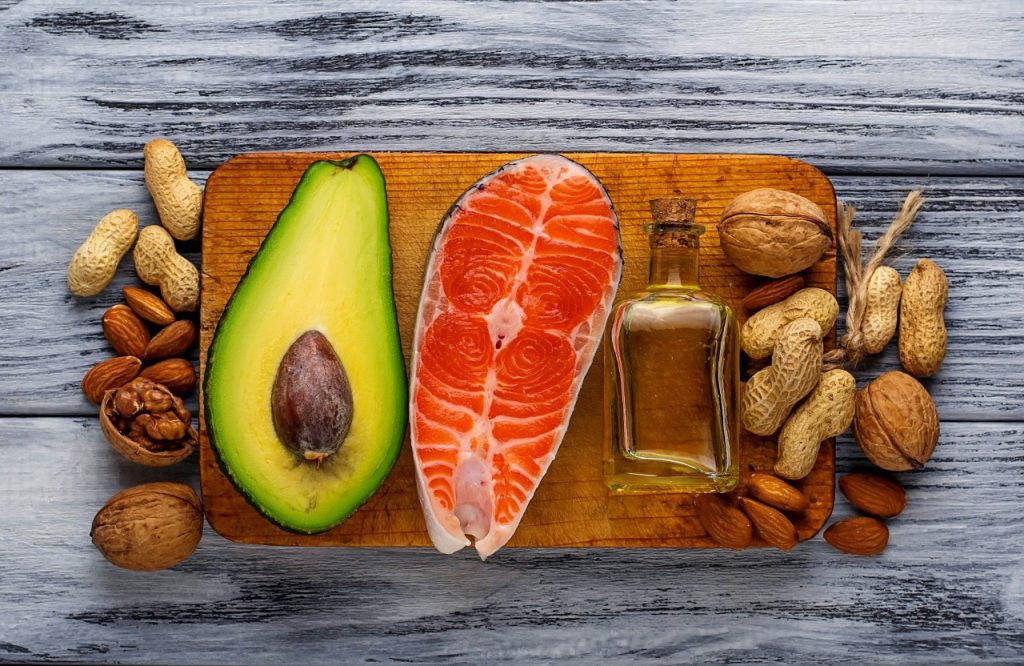
Sources: Olives, Avocado, Nuts, Peanut butter, flaxseed, walnut, soymilk, tofu.

2. Unhealthy or “Bad” fat are the Trans Fats. Small amounts of naturally occurring Trans Fats can be found in meat and dairy products but it is artificial Trans Fats that are considered dangerous. This is the worst type of fat since it not only raises bad LDL cholesterol but also lowers good HDL levels.

Sources: Commercially-baked pastries, cookies, doughnuts, muffins, cakes, pizza dough, Fried foods (French fries, fried chicken, chicken nuggets, breaded fish), Anything containing hydrogenated or partially hydrogenated vegetable oil, even if it claims to be “Trans Fat-Free”.

3. Saturated fats, while not as harmful as Trans Fats, can raise bad LDL cholesterol and too much can negatively impact heart health, so it’s best consumed in moderation.

Sources: Red meat, butter, ice cream, chicken skin.

Tips to Add More Healthy Fats to Your Diet

Instead of obsessively counting fat grams, aim for a diet rich in a variety of vegetables, fruit, nuts, and beans, with two or more weekly servings of fatty fish, moderate amounts of dairy, small amounts of red meat, and only occasional fried or processed meals.

  1. Say NO to Trans Fats from your diet. Check food labels for Trans Fats. Limiting commercially-baked goods and fast food can go a long way.
  2. Limit your intake of saturated fats by replacing some of the red meat you eat with beans, nuts, poultry, and fish, and switching from whole milk dairy to lower fat versions.
  3. Prefer Omega-3 Fats: Include a variety of fish sources as well as plant sources such as walnuts, ground flax seeds, flaxseed oil, canola oil, and soybean oil.
  4. Cook With Olive Oil: Use olive oil for stovetop cooking rather than butter, stick margarine, or lard. For baking, try canola oil.
  5. Eat More Avocados: Try them in sandwiches or salads. Along with being loaded with heart- and brain-healthy fats, they make for a filling meal.
  6. Go Nuts: You can add nuts to vegetable dishes, use them instead of breadcrumbs on chicken or fish, or make your own trail mix with nuts, seeds, and dried fruit.
  7. Snack on Olives: Olives are high in healthy monounsaturated fats and make for a low-calorie snack.
  8. Dress Your Own Salad: Commercial salad dressings are often high in unhealthy fat or added sugars. Create your own healthy dressings with olive, flaxseed, or sesame oils.

Want to know some Healthy Fat based recipes? Stay tuned for the next part of the article!

We hope this article helps you make more informed decisions on eating healthy fats. Do leave your thoughts in the comments below. For more on nutrition, check out Healthy Reads or speak to a GOQii Coach by subscribing for Personalised Health Coaching here.

#BeTheForce
November 7, 2022 By Soni Thakur 3 Comments

Do Your Muscles Turn Into Fat When You Stop Weight Training?

musclesBeing indoors for this long has given people a lot of time to do some research. If you have been researching fitness, weight training and muscles, I’m sure the thought of  – “will my muscles turn into fat if I stop weight training” has crossed your mind. While you might watch your fitness levels, maintain a healthy weight and improve strength, etc, it is equally important to understand what happens once you stop weight training in order to preserve muscle mass. 

What Do Muscles Mean? 

Muscle is a tissue in animal bodies. Their main purpose is to help us move our body parts. When a muscle is activated via exercise, it contracts, making itself shorter and thicker i.e. it grows in size.

  • When you exercise, your body does not create new muscles. Instead, your existing muscles grow larger and stronger.
  • With regular exercise, muscles also develop more mitochondria (this is where biochemical processes of respiration and energy production occur in the cell). The result is larger and more muscle mass.
  • When you stop weight training/adopt a sedentary lifestyle, then the increased blood flow previously needed to fuel your cells during exercise is no longer required, so your body begins to contract and reduce the size of your capillaries. As a consequence, muscles shrink and decrease in mass.

Points To Consider 

Muscle cells and fat cells are different structures and are not interchangeable at all. They will become smaller and weaker if you stop weight training because they lose muscle mass. Although, it will not happen in a short period of time as the process of losing muscle mass is slow and gradual which may take  4-6 weeks. Fat may be produced if your diet provides your body with more calories than required based on the activity levels you maintain.

You can preserve and maintain your muscle mass by keeping yourself active. By active I do not mean hitting the gym everyday but by just walking in between breaks, using the staircase instead of the lift, stretching your body every 2 hours, walking while being on a call instead of just sitting at one place, walking after every meal whether it’s your main meal or just snacks in between and obviously by eating a well- balanced healthy diet.

Keep an eye on your protein intake because the protein requirement of your body is directly associated with building and losing muscle mass as well. Don’t overtrain as this can also lead to decreased muscle. Leaving weight training alone should not be blamed for decreased muscle mass. 40-45 minutes of exercise 5-6 days a week is recommended and 1 day should be dedicated for rest and recovery.

We hope this article helps you. For more useful information on muscles, strength training, etc. check out Healthy Reads or tune in to LIVE, interactive workout classes by experts on GOQii PRO within the GOQii App. 

To get these tips directly from your GOQii Coach, subscribe for Personalised Health Coaching here: https://goqiiapp.page.link/bsr

#BeTheForce

August 8, 2022 By GOQii 10 Comments

Put Your Fat On Flame With Interval Training

Interval TrainingMost of us have this desirable goal of losing fat but, when asked to act on it, we have a fixed set of excuses ready – No time! Too tough for me! Too boring to repeat the same pattern, etc. It’s time to ditch these excuses and rev up workouts which consume less time, can be done easily and are not monotonous. We suggest going for Interval Training!

What Is Interval Training?

Interval training is a workout in which we alternate the bursts of high-intensity exercises with intervals of lighter activity. All that we do here is, we repeatedly challenge our body and then give it shorter breaks to recover, for a massive cardio blast. It helps burn more calories in a short period of time, as compared to a steady-state exercise.

How Does It Work?

When we vary the intensity while working out, it leads to muscle confusion. Our body gets confused and wonders what’s happening! As a regulatory mechanism, our heart rate shoots up and it starts pumping more blood. More the blood, higher the Oxygen and to your surprise, fat combustion occurs more efficiently in the presence of Oxygen.

Ever wondered why a candle stops burning when we put a glass over it and block the Oxygen? That’s exactly the principle. Any burning process requires O2 which is a key to burning fat. And since interval training involves a lot of Oxygen, it’s been gaining fame in the fat loss/inch loss sector.

There are no hard and fast rules in interval training. We can have variations as we want, to make it most enjoyable and keep boredom at bay. We can:

  • Interval walk: Walking fast for 2 minutes, then walking slowly for a minute, again fast, then slow and go on this way as long as we can
  • Interval runs Alternating 2 minutes run with a 1-minute walk
  • Interval swim: Alternating fast-paced swimming moves with slow-paced moves

We can also try this with cycling, dancing, strengthening exercises (Tabata – being the most popular form of High Intensity Interval Training) and the list can go on.

Interval training 2It’s quite possible to take interval training to many levels. The length and speed of each high-intensity interval solely depend upon our strength and capacity. To get better with it, we need to make sure we push our body way past our comfort zone each time we do it. Remember, not to rush into strenuous exercise before our body is ready, to avoid injury. Ensure a good warm-up session before starting with it, and end it with stretches.


If you are a beginner to exercising, We’d say, don’t start with interval training directly. Give your body some time to build the stamina with steady cardio workouts for a few weeks to a month. You can then add interval training to your routine. In fact, you can also add these interval training plans to your gym routine once a week to enhance your speed and cardiovascular endurance.

So what are you waiting for? Jump into your workout shoes and jazz up your workout routine by adding interval training! If you have a chronic health condition (Hypertension or Cardiovascular illness), it’s better to keep away from interval training to avoid any aggravation. You can check with your trainer or coach to take the best course. For further guidance, you can subscribe for GOQii’s personalized health coaching and get the best exercises and habits to meet your weight loss goals.

Additionally, you can also join our online classes on GOQii PRO, where our certified fitness experts will guide you on the correct form and posture in real time, while making sure that you are well motivated! You can book a class now from the GOQii App.

For more on fitness and weight loss, check out Healthy Reads.

Get Active and #BeTheForce 

October 13, 2021 By Palak Mittal 3 Comments

Fatty Liver Disease: What To Eat & What To Avoid

fatty liver disease

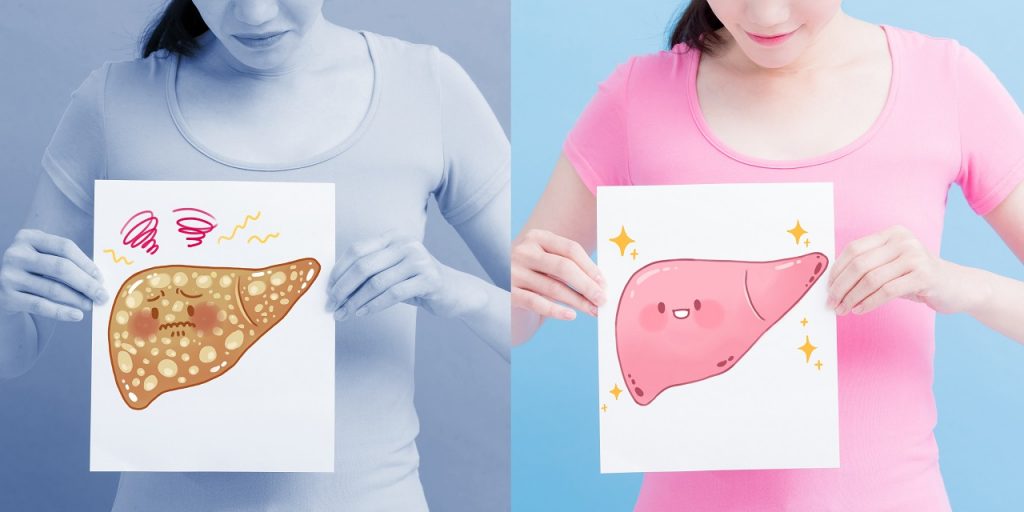
Our bodies have a tendency to store extra calories in terms of fat in each and every area to utilise it later for energy, or as a cushion for organs and insulation. The liver being the largest organ in the body, is partially made up of fat. However, if too much fat accumulates around the liver, it leads to Fatty Liver Disease. 

Fatty liver disease is mainly associated with the excess usage of alcohol and is termed as Alcoholic Fatty Liver. However, those who do not drink alcohol at all, can also develop this condition over time and is known as Non Alcoholic Fatty Liver. Excess fat around the liver damages it and makes it difficult for the liver to remove toxins and produce bile for the digestive system. 

The major plan of treatment for Fatty Liver Disease is dietary modifications and regular exercises. If the grade is too high, then one may need to see a doctor. For initial stages, the situation can be reversed completely with a few lifestyle modifications. 

What Causes Non Alcoholic Fatty Liver Disease (NAFLD)? 

  • Obesity: Overeating can cause weight gain which produces a load on the digestive system and the body forces the storage of extra calories in terms of fat, leading to NAFLD.
  • Pre-Diabetes: People with Insulin sensitivity or insulin resistance tend to store more fat in the liver as compared to non diabetics.
  • Over consumption of carbs and simple sugars: is linked with NAFLD as our body utilizes only what is required and rest is going to be stored as fat.
  • Poor Gut Health and genetics are also seen as linked with NAFLD.

Since it is a lifestyle disorder, modifying lifestyle with the right diet helps in controlling, maintaining and reversing both Alcoholic and Non Alcoholic Fatty Liver Disease.

The diet should include:  

  • Lots of fruits and vegetables
  • Reduced processed and packaged food with high salt and sugar
  • High fibre foods and less carbs
  • Whole grains like oats, quinoa, barley and millets
  • Nuts and seeds especially walnuts and flaxseeds as they are high in Omega 3  
  • Vitamin E from Sunflower seeds, almonds, walnuts, olive oil or canola oil
  • Avocados as they are a good source of fat and fiber 
  • Legumes

What Should You Avoid? 

If you’re suffering from this disease, here is a list of foods you should avoid completely. 

  •  Alcohol: As it is completely oxidised by the liver, there is no enzyme present in the body that can digest alcohol.
  • Added or simple sugars like candy, cookies, sodas, and fruit juices. It increases sugar level which increases fat build up.
  • Fried & oily foods due to excess calories and fat.
  • Too much salt makes the body hold on to excess water and can be a reason to gain weight.
  • Simple processed carbs like white bread, rice, and pasta, as they lack fibre and increase blood sugar.
  • Red meat like Beef and mutton are high in saturated fat.

Other Lifestyle Modifications 

  • Shed the extra weight
  • Control sugar levels well
  • Include Cardio and strength training consisting of 30 mins for 5 days a week 
  • Lower down cholesterol especially triglycerides.

We hope these tips help you manage Fatty Liver Disease with ease. Before you begin with any of the foods listed above, do consult your doctor, dietitian or nutritionist. Do let us know your thoughts and queries in the comments below! To learn more about AFLD and NAFLD, speak to a GOQii Coach by subscribing for personalized coaching here: https://goqiiapp.page.link/bsr

#BeTheForce  

  • « Previous Page
  • 1
  • …
  • 5
  • 6
  • 7
  • 8
  • 9
  • …
  • 212
  • Next Page »

Search

Recent Posts

  • 10 Everyday Habits That Could Be Hurting Your Health
  • Why Good Nutrition Matters: Benefits of Healthy Eating for a Healthy Life
  • Monsoon Health Tips: How to Boost Your Immunity During Seasonal Changes
  • Yoga for Healthy Ageing: Simple Practices to Add Life to Your Years
  • Calming Your Mind: Breathing Techniques for ADHD

Stay Updated

Archives

  • June 2026 (22)
  • May 2026 (20)
  • April 2026 (24)
  • March 2026 (18)
  • February 2026 (14)
  • January 2026 (14)
  • December 2025 (19)
  • November 2025 (15)
  • October 2025 (20)
  • September 2025 (6)
  • August 2025 (6)
  • July 2025 (11)
  • June 2025 (18)
  • May 2025 (16)
  • April 2025 (22)
  • March 2025 (27)
  • February 2025 (21)
  • January 2025 (25)
  • December 2024 (22)
  • November 2024 (23)
  • October 2024 (20)
  • September 2024 (23)
  • August 2024 (29)
  • July 2024 (20)
  • June 2024 (25)
  • May 2024 (26)
  • April 2024 (27)
  • March 2024 (27)
  • February 2024 (23)
  • January 2024 (21)
  • December 2023 (14)
  • November 2023 (10)
  • October 2023 (19)
  • September 2023 (22)
  • August 2023 (18)
  • July 2023 (21)
  • June 2023 (23)
  • May 2023 (20)
  • April 2023 (19)
  • March 2023 (23)
  • February 2023 (19)
  • January 2023 (15)
  • December 2022 (11)
  • November 2022 (15)
  • October 2022 (15)
  • September 2022 (12)
  • August 2022 (10)
  • July 2022 (17)
  • June 2022 (11)
  • May 2022 (10)
  • April 2022 (6)
  • March 2022 (6)
  • February 2022 (13)
  • January 2022 (11)
  • December 2021 (7)
  • November 2021 (3)
  • October 2021 (6)
  • September 2021 (3)
  • August 2021 (8)
  • July 2021 (7)
  • June 2021 (15)
  • May 2021 (16)
  • April 2021 (10)
  • March 2021 (7)
  • February 2021 (4)
  • January 2021 (4)
  • December 2020 (3)
  • November 2020 (4)
  • October 2020 (10)
  • September 2020 (3)
  • August 2020 (3)
  • July 2020 (2)
  • June 2020 (4)
  • May 2020 (10)
  • April 2020 (12)
  • March 2020 (10)
  • February 2020 (4)
  • January 2020 (4)
  • December 2019 (3)
  • November 2019 (7)
  • October 2019 (5)
  • September 2019 (4)
  • August 2019 (9)
  • July 2019 (9)
  • June 2019 (11)
  • May 2019 (4)
  • April 2019 (8)
  • March 2019 (8)
  • February 2019 (9)
  • January 2019 (8)
  • December 2018 (9)
  • November 2018 (3)
  • October 2018 (3)
  • September 2018 (5)
  • August 2018 (10)
  • July 2018 (6)
  • June 2018 (13)
  • May 2018 (8)
  • April 2018 (18)
  • March 2018 (9)
  • February 2018 (8)
  • January 2018 (15)
  • December 2017 (12)
  • November 2017 (19)
  • October 2017 (13)
  • September 2017 (15)
  • August 2017 (4)
  • July 2017 (8)
  • June 2017 (7)
  • May 2017 (6)
  • April 2017 (8)
  • March 2017 (6)
  • February 2017 (7)
  • January 2017 (9)
  • December 2016 (10)
  • November 2016 (7)
  • October 2016 (7)
  • September 2016 (7)
  • August 2016 (11)
  • July 2016 (9)
  • June 2016 (9)
  • May 2016 (12)
  • April 2016 (17)
  • March 2016 (17)
  • February 2016 (8)
  • January 2016 (6)
  • December 2015 (2)
  • November 2015 (9)
  • October 2015 (7)
  • September 2015 (9)
  • August 2015 (11)
  • July 2015 (9)
  • June 2015 (11)
  • May 2015 (9)
  • April 2015 (13)
  • March 2015 (8)
  • February 2015 (5)
  • January 2015 (12)
  • December 2014 (14)
  • November 2014 (11)
  • October 2014 (6)
  • September 2014 (13)
  • August 2014 (12)
  • July 2014 (6)
  • June 2014 (2)
  • May 2014 (7)
  • April 2014 (4)

From Shimla’s Slopes to Chandigarh’s Sidewalks: Surinder Kaur Bhalla’s Journey from Chaos to Control

Some journeys start with a plan. Others begin with a stumble literally. Surinder Bhalla, a government professional, born and raised in the scenic hill town of Shimla, had always lived a life of movement. “In Shimla, you walked everywhere,” she reflects. … [Read More...]

From “Laddu Nawin” to Fit and Fierce: How a 25-Year-Old Insurance Advisor Shed 20 Kilos and Gained His Life Back

When 25-year-old Nawin Yadav from Hyderabad walked into his office every morning, he carried more than just his files and policy papers. He had the weight of fatigue, sluggish energy, and an ever-growing belly that was becoming the butt of jokes. “People had even started calling me Laddu Nawin,” he says with a laugh, but […]

From Burnout to Balance: How Dr. Ranjit Reclaimed His Health

Dr Ranjit Bhatt has spent years tending to others. A practising doctor in Odisha, his days were packed with patients, surgeries, and emergencies. From the outside, it looked like a life lived in service. But on the inside, something wasn’t right. “I had no control over my schedule. I’d sleep late, eat at odd hours, […]

Ananda Mukherjee Health Story

From Terminal Illness To Complete Wellness! Ananda Mukherjee Health Story

As we observe World Cancer Day under the powerful theme ‘United by Unique’ (2025-2027)**, we are reminded that every individual’s journey with cancer is distinct, yet united by shared resilience, hope, and the collective fight against this disease. This theme places people at the centre of care and their stories at the heart of the […]

  • HOME
  • HEALTHY LIVING
  • FITNESS
  • HEALTHY RECIPES
  • USER STORIES
  • KARMA
  • BUY GOQii

Copyright ©2016 GOQii

