GOQii

Blog

  • HOME
  • HEALTHY LIVING
  • FITNESS
  • HEALTHY RECIPES
  • USER STORIES
  • KARMA
  • BUY GOQii

Search Results for: disease

June 26, 2024 By Trupti Hingad 10 Comments

Urine Colour – Can be a good indicator of health

1 (2)

In my previous blog, I discussed how your poop describes your health status. In this blog, I shall tell you how your pee says a lot about your health.

In a day, we all visit the bathroom many times to pee, but seldom does it cross our mind to check our pee colour before we flush it out of sight.

Urine, or pee, is the body’s way of expelling waste products in a liquid form, mainly composed of water, salt, and chemicals called urea and uric acid.

The kidney creates urine by flushing out toxins and other bad substances from the blood. Various factors such as medications, food, and illness can affect urine colour or odour.When there is a malfunction, the urine may contain clues to the problem. The colour of the urine can be a helpful indicator.

Ideally, the colour of urine should be pale yellow, indicating you are well hydrated. The pale yellow colour is due to a pigment produced by the body called – UROCHROME and UROBILIN.

Let’s understand how the colour of the urine describes your health. There are three main causes for abnormal urine colour

  • Food that you eat
  • Drugs or Medication that you take
  • Health Issues

What does the colour of Urine Indicate?

Transparent: If the pee colour is completely clear, its sign of over hydration. Sometimes excess hydration may lead to dilution of salts in the body.

Brown colour: Shades of brown in your urine may indicate dehydration. It can also signal liver disease, where bile salts that should be processed and eliminated through stool end up in the urine.

Note: If you eat a lot of aloe, fava beans, or rhubarb, these foods can also turn your urine brown.

Red colour: Foods like beets and blackberries can cause red urine. If the red color persists, it could be a sign of blood in the urine, which may be due to kidney disease, urinary tract infections (UTI), or cancers. In such cases, consult a doctor immediately.

Blue or Green colour: Consumption of asparagus can lead to green urine. Certain medications, genetic diseases, and UTIs can also cause blue or green urine.

Orange: An orange color may be due to medications such as high-dose vitamin B2, the UTI drug phenazopyridine, or the antibiotic isoniazid.

Dark yellow: Dark yellow urine indicates significant dehydration. It can also be linked to high intake of B vitamins, especially B12, resulting in this dramatic hue change.

Cloudy or milky: Cloudy or milky urine most often indicates the presence of white blood cells, suggesting an infection.

Bubbles/frothy urine: Excessive bubbles or frothing that occurs every time you urinate can indicate an excess of protein in your urine.

Does your urine smell?

Pee doesn’t usually have a strong smell. However, some foods, especially asparagus, contain a smelly sulfur compound that can change the odor. Vitamin B-6 supplements can also affect the smell. When you’re dehydrated and your pee gets very concentrated, it can smell strongly of ammonia. A strong ammonia smell may indicate a UTI, and a sweet smell could be a sign of excess sugar and diabetes.

How often should you urinate?

It varies for everyone, but normally people need to empty their bladder up to 8 times a day. If you suddenly need to pee more often than usual, it could be a sign of a health problem such as a UTI, diabetes, an enlarged prostate in men, vaginitis in women, or interstitial cystitis.

Urine is something that most of us must take a look and prevent any conditions by prevailing. By understanding what your urine color indicates, you can take steps to maintain your health and seek medical advice when necessary.

Keep yourself well hydrated and stay healthy!!

We hope this article helps you. Understanding the color and characteristics of your urine can provide valuable insights into your health. By paying attention to these signs, you can take proactive steps to maintain your well-being. Keep yourself well-hydrated and consult a healthcare professional if you notice any unusual changes in your urine or speak to a certified expert by subscribing to GOQii’s Personalised Health Coaching here.

#BeTheForce

June 22, 2024 By Jyoti Kumawat 1 Comment

Heal yourself with the magic of “MUSIC THERAPY”

musik

There is nothing more soothing than music. If you’re stressed, tired or unable to sleep, listening to music can make you feel better almost immediately. This effect is a type of Music Therapy.

The concept of music therapy is not new, especially in India. Music has long been an integral part of Ayurveda, the holistic science promoting a happy and healthy lifestyle. The Vedas, particularly the Samveda, are rich in music mantras and ragas.

Great composers of Indian classical music have practiced music therapy for centuries. It is even said that the classical music maestro Thyagaraja brought a dead person back to life with his composition.

How does it work?

Music stimulates the pituitary gland, which in turn affects the nervous system and the blood flow. Healing with music is believed to work by vibrating the cells of the body, which can effectively change a person’s consciousness and promote health.

Personally, I love music and have always considered it my medicine. Whether I am stressed or confused, music always gives me the right direction. Having experienced a lot of positivity through Music, I wanted to share how music can be a positive healer.

The Power of Music Therapy

Music therapy uses music and sounds to:

  • Help express emotions
  • Cope with symptoms of a disease and its treatment
  • Improve emotional and physical well being
  • Develop self-confidence and self-esteem
  • Re-kindle a sense of creativity
  • Help relax and feel comfortable

You don’t need to have musical expertise to benefit from music therapy. The technique consists of various interventions and planned programs that vary depending on the situation. The type of music is important—soothing music, ragas, relaxing music, and motivational music all have different effects.

Types of Interventions:

A typical music therapy session may include different interventions, which can be grouped into four types:

  1. Performing/Playing: This can include singing or playing an instrument
  2. Composing: This includes any group or individual songwriting process, which can be simple or complex as needed
  3. Improvising: Creating music on the spot or in the moment
  4. Receiving/Listening: This can include a music and relaxation experience, a lyric analysis intervention, or a “moving to music” experience, such as gait training

A “typical” music therapy session may incorporate multiple interventions or just one long, in-depth one. The key is that each intervention is designed to target a specific therapeutic goal and objective.

Benefits of Music Therapy :

The right kind of music helps one relax and refresh. Even while working, light music can improve efficiency. It helps control negative aspects of our personalities like worry, bias, and anger, and can help cure headaches, abdominal pain, and tension. Music therapy is one of the most effective ways of controlling emotions, blood pressure, and restoring liver function. It can also reduce insomnia, schizophrenia, and epilepsy.

Here are some additional benefits:

  1. Coping with work-related stress
  2. Enhancing social skills in children with autism
  3. Symptom management in cancer care
  4. Treatment of tension headaches
  5. Promoting health and wellness
  6. Helping people undergoing chemotherapy and radiotherapy
  7. Providing physical and psychological support for people with cancer
  8. Assisting people at the end of life
  9. Alleviating cancer pain
  10. Supporting children and young people
  11. Reducing stress
  12. Improving parent-child interactions
  13. Encouraging conversation among people with middle to late-stage Alzheimer’s disease

Music therapy is a powerful tool for healing and improving well-being. Whether you are dealing with stress, health issues, or just need a way to relax, music can be a wonderful companion and healer.

I would like to end this blog with a quote:

“If I should ever die, God forbid, let this be my epitaph:
THE ONLY PROOF HE NEEDED
FOR THE EXISTENCE OF GOD
WAS MUSIC”

― Kurt Vonnegut

We hope this article has enlightened you on the incredible healing power of music therapy. If you have any personal experiences with music therapy or have questions, please feel free to share your thoughts in the comments below.

#BeTheForce

June 19, 2024 By GOQii Leave a Comment

Managing Atopic Dermatitis (AD) Through Climate Changes

Atopic Dermatitis (AD) is a chronic and complex disease that requires consistent treatment and lifestyle adjustments. Regular moisturizing is essential, but it’s equally important to adapt skincare routines to surrounding climatic changes.

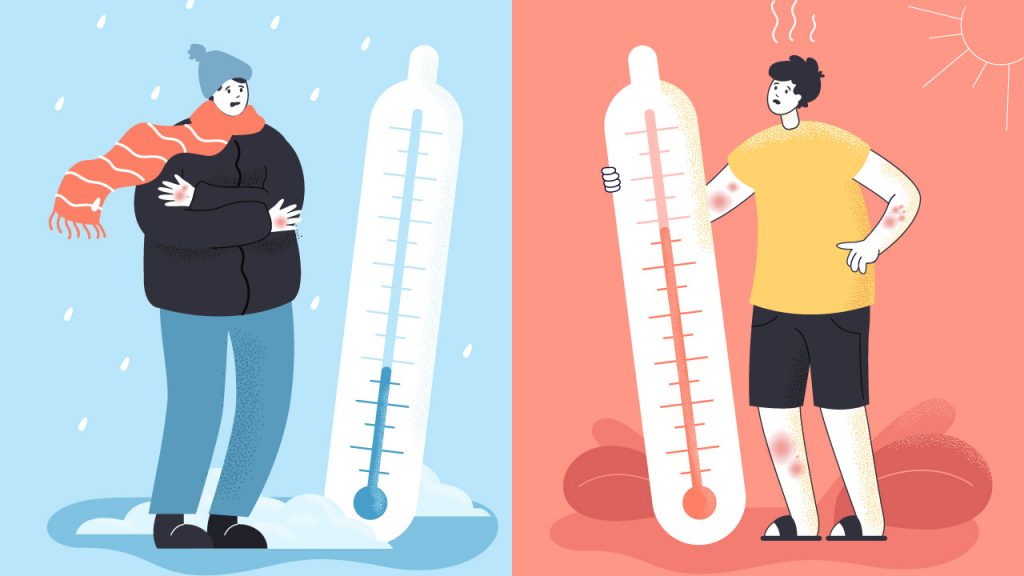
The outer skin barrier in individuals with AD becomes delicate and sensitized, making it highly susceptible to environmental changes. You might wonder, is a hot or cold climate better for AD? The answer is neither. Equal care and measures must be taken in both extremes to protect the skin barrier and retain moisture.

In summer, the weather is hot and often humid, causing people to perspire throughout the day. For someone with AD, dryness may not be a major issue, but constant perspiration can be problematic. The salts in sweat can irritate the skin and trigger flare-ups. Moreover, the heat and humidity can further sensitize the skin, making it redder and more prone to flares. Heat rash and secondary infections on sensitized skin are not uncommon during this season.

In winter, the scenario changes completely. The weather is dry and cold, leading to extreme dryness. The dry air dehydrates the skin further, making regular and repeated moisturizing crucial. Failing to do so can trigger a flare-up. For individuals working or sleeping in a cold environment, such as an air-conditioned room, using a humidifier next to the bed or desk can help prevent moisture loss and keep the skin hydrated.

Each climatic variation comes with its own challenges, requiring extreme care for individuals with AD. Regardless of the season, consistent and tailored skincare routines are necessary to manage symptoms and protect the skin barrier.

We hope this article helps you. For further information or guidance, reach out to your GOQii Skin Coach.

#BeTheForce

References –

Chen Z, Li M, Lan T, Wang Y, Zhou X, Dong W, Cheng G, Li W, Cheng L. Effects of ambient temperature on atopic dermatitis and attributable health burden: a 6-year time-series study in Chengdu, China. PeerJ. 2023 Apr 24;11:e15209. doi: 10.7717/peerj.15209. PMID: 37123004; PMCID: PMC10135404.

Luschkova D, Zeiser K, Ludwig A, Traidl-Hoffmann C. Atopic eczema is an environmental disease. Allergol Select. 2021 Aug 23;5:244-250. doi: 10.5414/ALX02258E. PMID: 34476334; PMCID: PMC8383845.

Disclaimer: The information provided in this blog is for general awareness and educational purposes only. It is not intended to replace professional medical advice, diagnosis, or treatment. Always consult a qualified healthcare provider for personalised medical guidance or concerns related to your health.

June 15, 2024 By Geetika Patni 7 Comments

Mindful eating: Control portions and be wise! – Part 3


portion-control-plate

In my previous two blogs, I discussed the concept of Mindful Eating and the harmful effects of Mindless Eating. In my second blog, I explained why eating slowly is crucial to enjoy your meal fully (check it out here). Today, continuing this 5-part series on Mindful Eating, I will take you through portion control and why it is a must.

Appetite is complex and dieting is a challenge.

With every passing year, it gets more harrowing. We end up blaming the food industry, which has, over the years, increased portions per package and per serving size by whopping 2-7 times than the recommended value. Most of these take-away food products and dishes don’t fit in a healthy eating plan.

Mindful eating is the key to fix this chaos. When we can’t change anyone else (i.e. food industry), we can still change ourselves.

The art of being in present when you are eating your food is termed as Mindful Eating. Eating mindfully has tremendous benefits – you really learn to taste food and realize your real favourites and dislike, thus knowing what foods best fuel your exercise, work and leisure. If you enjoy eating or your food experience, you tend to enjoy life better. The by-product of this mindfulness is also a healthy weight loss and maintenance, and even the reversal of lifestyle disorders.

Among the many advantages of this healthy practice, my favourite one is learning to eat when hungry and stop when full, avoiding overeating at any given time. I have maintained my weight for years by effectively practicing portion control.

This is difficult, yet the easiest way to lose weight, keep it off, and moreover, it’s a lifestyle change – something that can change this whole obesity epidemic. We all struggle with food. This may be the solution to eating our favourite food, yet controlling the portions and being fair to our bodies.

portion-control-1

Portion control is easily achieved when you slow down your pace of eating. When you eat slowly, you become aware of when your stomach gets full and you also know how much to serve yourself and when to stop. Portion size and eating speed can be well explained through the famous ‘French Paradox’ which says that despite high intake of calorie-rich and fatty foods in France as compared to the US, the incidence of heart disease and overweight is relatively low in France.

It is well-documented fact that the French eat much slower than the Americans, thus ending up taking smaller portions. Sensible eating, therefore, works miraculously for the weight-watchers.

In this blog, I am sharing some good tricks and hacks that will help you prevent overeating and eliminate the need to diet ever.

When you first go through the list, pick up only 2 tasks which you can practice as your healthy habits. As you succeed, take up new ones gradually and implement them consistently to build in mindful eating approach for life.

portion-control1

Here’s how to practice portion control- 

      A) At home or for your regular eating

  1. Replace your food plates with smaller plates or use a side plate as your main plate. The food portion has grown bigger, and by choosing a small plate (law of size-metrics), you will reduce your consumption.
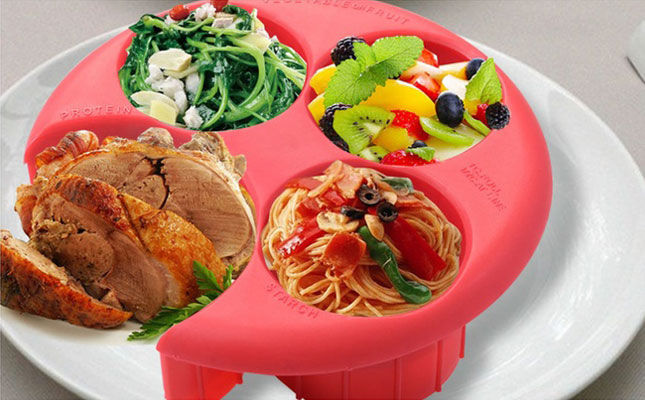
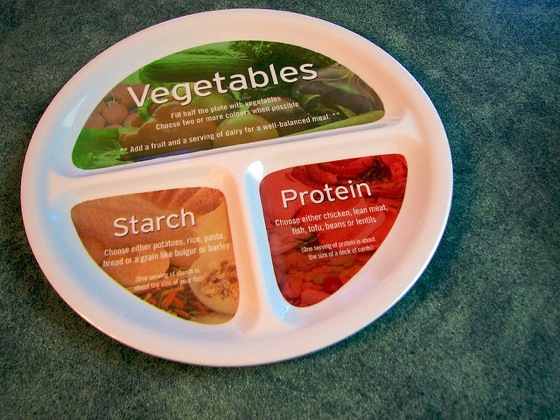
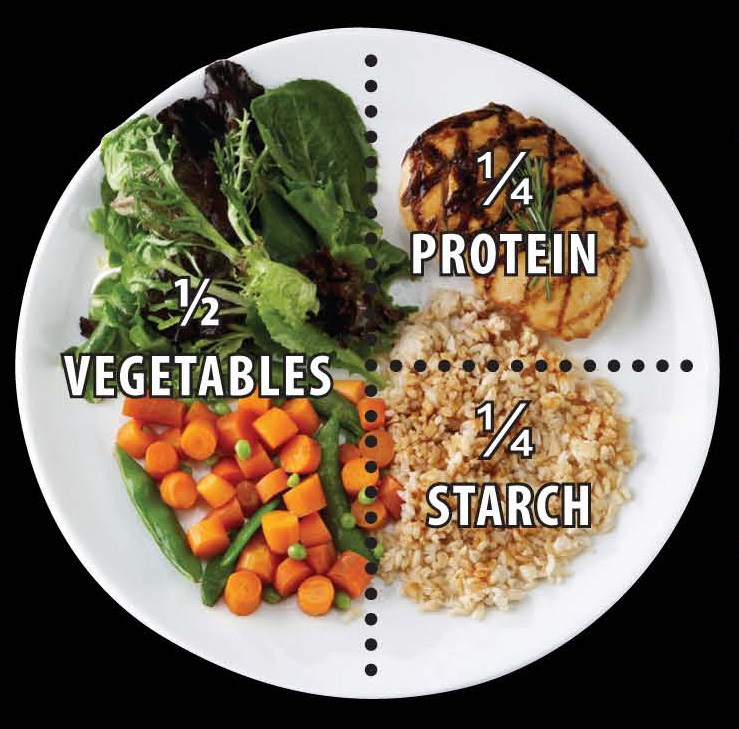
  1. Serve backwards – visualize your plate has 2 compartments. First fill up one half of it with veggies, both raw and cooked, and then serve other half of your plate with a portion of proteins (dal/curd) and carbs (rice/roti) combined. Eating veggies make you feel full, so serving it first on your plate and eating in larger portion quickly drives up the fullness quotient.
  1. Sit Down to eat- even if it is a snack. You are making your meal more organized by sitting down when dining, and this habit will prevent on-the-go munching that you may be unknowingly overdoing.
  • Deep breathe before you start your meal. This works as ‘ringing the bell’ –bringing your attention to your next to-do task, which is feeding yourself. Gently inhale through your nose, filling your chest with air, drawing your shoulder upwards, and exhale through your mouth for a little longer. Now take your first bite or sip.
  • Dine! Don’t multitask- Eating while watching TV or while fiddling with your cell phone will distract you from your meal. And distraction will lead to over consumption. Put away all gadgets while eating and you’ll be surprised that going back to your smart phone after 20 minutes is so refreshing. Plus, the added bonus of having a satisfying meal.
  • Have liquid first – A glass of water or a bowl of healthy soup. Starting your meal with fluids will fill up your belly to prevent over eating. It will irrigate the lining of your digestive tract, making your meals easier to flow down, and, probably quench your thirst, which may be the real reason behind your rumbling belly.
  • Eat slowly – to finish a meal in no less than 20 minutes. You may realize you don’t need the second helping if you eat your meals slowly.
  • Get Smart with leftovers – Because no one is judging how clean your plate is. If you are done with dinner, don’t stuff yourself just so that you don’t have to pack up the remaining food. Wrapping up remaining food is a smart way (as leftovers taste better too!) or downsizing your cooking is another idea to prevent over consumption.
  • Snack from a bowl– and not from a bag or box. You may end up eating 50% more if the snack you are having is hidden from your view. Pour a serving in a bowl and then munch.

portion-control

If you buy a bag of trail mix that reads 10 servings, divide the contents of the bag into 10 smaller bags or label it bold – ‘to be finished in 10 attempts’.

  • Out of sight-out of mouth – Keep tempting treats like chips, cookies, candies, and ice creams out of sight – high up in the kitchen cabinet or in the back line of the pantry shelf. Putting a fruit bowl, dark chocolate, dates, and nuts in the front row and within reach easily gets you to practice snacking.
  • Follow IN/OUT rule – When at home, the rule is to eat nutritious, balanced, and wholesome meals, avoiding all treats (White Sugar/breads/pasta/creamy desserts, and fried foods). When outside treat yourself to your favourite delicacies (but in moderation, lest you slip down the slope). This way you will be able to eat super healthy most of the time, and the occasional indulgences will soothe your soul.

Here are few suggestions to practice portion control outside home

When dining out –

  • Plan Ahead – Right when you start from home, put up a portion in head- “I’ll have only 2 glass of wine today”, “I’ll eat only 1 plate of pasta tonight”. When a plan is there, you only need to work on your determination during the action, so it makes sense to make a quick portion note prior to stepping out.
  • Survey the spread first (or read menu carefully) – By getting a sense of what are the foods available, you avoid heaping on excess of usual offerings because you didn’t realize earlier that the ‘can’t miss items’ were at the end of the line. So make your plate with intention and eat only what you really want to eat.
  • Order to serve your salad or soup first and entrée only after the appetizers are done with. A lot of food on the table and in sight will promote over eating.
  • Split and Share –the entrée with your dining partner. If eating alone, try doubling up your appetizer and skipping the main course altogether.
  • Indulge wisely – If you intend to end your meal with drinks or dessert, eat only half of your capability. Yes, it’s your treat meal! But a firm moderation now will prevent you from guilt trip later.
  • Split and share desserts too – or skip them totally and order yourself an unsweetened coffee/hot beverage to end the meal. Some metabolic push there! Plus you can always have a cube of dark chocolate when you reach home.
  • If Ice cream melts you away – Choose inedible dishes- say a cup over a cone, as your ice cream serving dish. Or if a cone gets you carried away, choose a kiddie, regular or sugar cone, as a waffle cone will increase your portion considerably. Avoid toppings or go for fruit based ones.
  • Tall and slim – Research says drinking from tall and slim glasses will cut down the portion of your drink by 20%, and so does avoiding exotic mixed liquor drinks. It’s that easy!
  • If you are travelling – Avoid heading to a restaurant directly. Instead take a pit stop at a fruit vendor first. A healthy snack before a meal will not spoil it, but help you portion mindfully.

Eating in moderation and compensating with a good round (or extra round) of exercising keeps one in balance. Avoid overeating and practice mindfulness – your ideal weight is just this one healthy habit away!

In my fourth blog, I shall talk about emotional eating. Very often, we find ourselves overeating or better to say indulge in mindless eating such as stress eating. Too happy indulge in over eating, too sad again indulge in over eating to feel good. The blog will take you through some pointers on how to avoid stress eating and satisfy your needs with mindfulness.

To be continued…

#BeTheForce

  • « Previous Page
  • 1
  • …
  • 53
  • 54
  • 55
  • 56
  • 57
  • …
  • 147
  • Next Page »

Search

Recent Posts

  • World AMR Awareness Week 2026: when you need antibiotics, and simple steps to prevent AMR
  • PCOS: diet, exercise and the myths to stop believing
  • Cholesterol numbers explained: LDL, HDL and triglycerides
  • International Men’s Day 2026: why men’s health is everyone’s business
  • World COPD Day 2026: Short of Breath? Think COPD – Why Early Diagnosis Matters

Stay Updated

Archives

  • November 2026 (21)
  • October 2026 (23)
  • September 2026 (5)
  • August 2026 (8)
  • July 2026 (24)
  • June 2026 (22)
  • May 2026 (20)
  • April 2026 (24)
  • March 2026 (18)
  • February 2026 (14)
  • January 2026 (14)
  • December 2025 (19)
  • November 2025 (14)
  • October 2025 (17)
  • September 2025 (6)
  • August 2025 (5)
  • July 2025 (9)
  • June 2025 (18)
  • May 2025 (16)
  • April 2025 (22)
  • March 2025 (25)
  • February 2025 (21)
  • January 2025 (25)
  • December 2024 (21)
  • November 2024 (21)
  • October 2024 (15)
  • September 2024 (22)
  • August 2024 (27)
  • July 2024 (14)
  • June 2024 (23)
  • May 2024 (26)
  • April 2024 (27)
  • March 2024 (27)
  • February 2024 (23)
  • January 2024 (21)
  • December 2023 (14)
  • November 2023 (10)
  • October 2023 (18)
  • September 2023 (20)
  • August 2023 (16)
  • July 2023 (16)
  • June 2023 (21)
  • May 2023 (20)
  • April 2023 (19)
  • March 2023 (23)
  • February 2023 (19)
  • January 2023 (15)
  • December 2022 (11)
  • November 2022 (15)
  • October 2022 (15)
  • September 2022 (12)
  • August 2022 (9)
  • July 2022 (17)
  • June 2022 (11)
  • May 2022 (10)
  • April 2022 (6)
  • March 2022 (6)
  • February 2022 (13)
  • January 2022 (11)
  • December 2021 (7)
  • November 2021 (3)
  • October 2021 (6)
  • September 2021 (3)
  • August 2021 (8)
  • July 2021 (7)
  • June 2021 (15)
  • May 2021 (16)
  • April 2021 (10)
  • March 2021 (7)
  • February 2021 (4)
  • January 2021 (4)
  • December 2020 (3)
  • November 2020 (4)
  • October 2020 (10)
  • September 2020 (3)
  • August 2020 (3)
  • July 2020 (2)
  • June 2020 (4)
  • May 2020 (10)
  • April 2020 (12)
  • March 2020 (10)
  • February 2020 (4)
  • January 2020 (4)
  • December 2019 (3)
  • November 2019 (7)
  • October 2019 (5)
  • September 2019 (4)
  • August 2019 (9)
  • July 2019 (9)
  • June 2019 (11)
  • May 2019 (4)
  • April 2019 (8)
  • March 2019 (8)
  • February 2019 (9)
  • January 2019 (8)
  • December 2018 (9)
  • November 2018 (3)
  • October 2018 (3)
  • September 2018 (5)
  • August 2018 (10)
  • July 2018 (6)
  • June 2018 (13)
  • May 2018 (8)
  • April 2018 (17)
  • March 2018 (9)
  • February 2018 (8)
  • January 2018 (15)
  • December 2017 (12)
  • November 2017 (19)
  • October 2017 (13)
  • September 2017 (15)
  • August 2017 (4)
  • July 2017 (8)
  • June 2017 (7)
  • May 2017 (6)
  • April 2017 (8)
  • March 2017 (6)
  • February 2017 (7)
  • January 2017 (9)
  • December 2016 (10)
  • November 2016 (7)
  • October 2016 (7)
  • September 2016 (7)
  • August 2016 (11)
  • July 2016 (9)
  • June 2016 (9)
  • May 2016 (12)
  • April 2016 (17)
  • March 2016 (17)
  • February 2016 (8)
  • January 2016 (6)
  • December 2015 (2)
  • November 2015 (9)
  • October 2015 (7)
  • September 2015 (9)
  • August 2015 (11)
  • July 2015 (9)
  • June 2015 (11)
  • May 2015 (9)
  • April 2015 (13)
  • March 2015 (8)
  • February 2015 (5)
  • January 2015 (12)
  • December 2014 (14)
  • November 2014 (11)
  • October 2014 (6)
  • September 2014 (13)
  • August 2014 (12)
  • July 2014 (6)
  • June 2014 (2)
  • May 2014 (7)
  • April 2014 (4)

From Burnout to Balance: How Dr. Ranjit Reclaimed His Health

Dr Ranjit Bhatt has spent years tending to others. A practising doctor in Odisha, his days were packed with patients, surgeries, and emergencies. From the outside, it looked like a life lived in service. But on the inside, something wasn’t right. “I had no … [Read More...]

From Shimla’s Slopes to Chandigarh’s Sidewalks: Surinder Kaur Bhalla’s Journey from Chaos to Control

Some journeys start with a plan. Others begin with a stumble literally. Surinder Bhalla, a government professional, born and raised in the scenic hill town of Shimla, had always lived a life of movement. “In Shimla, you walked everywhere,” she reflects. “Walking was never an exercise. It was just life.” But after shifting to Chandigarh, […]

“I’ve Challenged Myself to Live 100 Years” – The Story of Chandubhai Savani’s Second Chance at Life

At 67, most people start slowing down. Not Chandubhai Savani. A resident of Surat, Chandubhai, thought life was on track. “My life was going well till I had my bypass surgery,” he says. That surgery, back in 2021, was a wake-up call.  Medication was routine, but exercise wasn’t. His diet? What he calls ‘normal.’ “I […]

Ananda Mukherjee Health Story

From Terminal Illness To Complete Wellness! Ananda Mukherjee Health Story

As we observe World Cancer Day under the powerful theme ‘United by Unique’ (2025-2027)**, we are reminded that every individual’s journey with cancer is distinct, yet united by shared resilience, hope, and the collective fight against this disease. This theme places people at the centre of care and their stories at the heart of the […]

  • HOME
  • HEALTHY LIVING
  • FITNESS
  • HEALTHY RECIPES
  • USER STORIES
  • KARMA
  • BUY GOQii

Copyright ©2016 GOQii