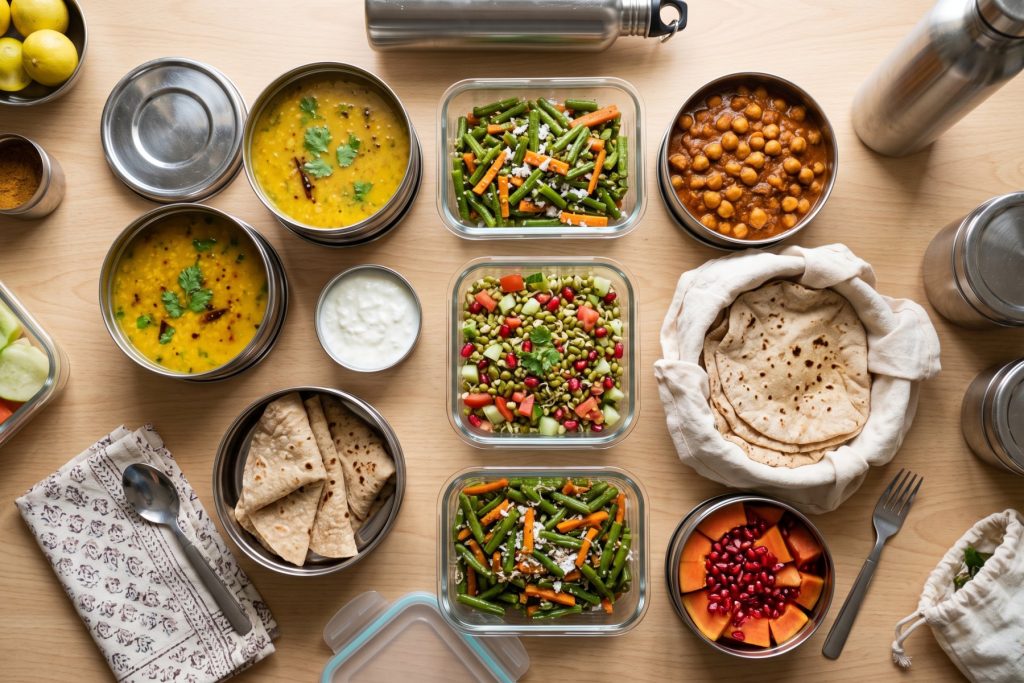
A packed lunch built around vegetables, protein and whole grains is one of the easiest ways to eat well on a workday. With an hour or so of prep at the weekend, you can have healthy lunches ready for most of the week.
For many people, workday lunch is whatever is quickest: a canteen thali heavy on rice and fried sides, a delivery order, or biscuits and chai at the desk. Then comes the 3 pm slump. Some of that afternoon dip is down to your body clock, but what and how much you eat at lunch can make it better or worse.
This guide covers what a balanced lunchbox looks like, how to prep a week of lunches without spending your whole Sunday in the kitchen, practical Indian lunch ideas, and how to keep packed food safe.
Meal prep at a glance
- Fill half your box with vegetables. Then add a quarter protein (dal, paneer, eggs, chicken) and a quarter whole grains or millets.
- A heavy, carb-led lunch can deepen the afternoon slump. Balance and portion size matter more than any single “superfood”.
- Prep components, not complete meals. Cook a grain, a dal or protein, and chop vegetables once; mix and match through the week.
- Keep it safe. Cool food quickly, refrigerate it, and eat cooked rice within a day and most other dishes within 2–3 days.
- Lunch is only part of it. Drinking water and taking a short walk after eating also help you stay alert.
Why lunch affects your afternoon energy
The afternoon slump is real, but food is only part of the story. Research on the “post-lunch dip” shows it happens even when people skip lunch. It is partly built into the body clock and is worse when you have slept badly. The same review notes that a high-carbohydrate lunch can make it worse.
That gives you a few things you can actually control:
- A meal that is mostly white rice, roti or bread, with little vegetable or protein, is digested quickly. Adding vegetables, dal, curd or another protein slows things down and keeps you fuller for longer.
- Portion size. A very large lunch is more likely to leave you sluggish than a moderate one. Packing your own box makes portions easier to judge than a buffet or a large delivery order.
- Vegetables, pulses and whole grains or millets add fibre, which helps you stay satisfied until evening, so you’re less likely to reach for biscuits or namkeen at 4 pm.
- Sleep and water. A packed lunch can’t make up for a short night, and poor sleep affects appetite and food choices Being slightly dehydrated can also leave you feeling tired.
The balanced lunchbox formula
The ICMR–National Institute of Nutrition’s “My Plate for the Day” recommends that vegetables and fruits make up about half of what you eat, with cereals or millets, pulses or other protein, and some curd or milk, nuts and oil making up the rest. It also suggests eating from a range of food groups each day. Translated into a lunchbox, that looks like this:
| Part of your box | How much | Indian examples |
| Vegetables | About half | Sabzi, salad, kosambari, stir-fried greens, vegetable raita |
| Protein | About a quarter | Dal, chana, rajma, sprouts, paneer, tofu, eggs, chicken, fish |
| Whole grains or millets | About a quarter | 1–2 whole wheat, jowar or bajra rotis; brown, red or hand-pounded rice; millet pulao |
| Extras | A little | Curd or buttermilk, a few nuts or seeds, a piece of fruit |
Easy upgrades
- Swap some of the grain for vegetables. If you usually pack three rotis, try two rotis and an extra serving of sabzi.
- Add protein you can see. Many vegetarian lunches are low in protein. A bowl of dal, a handful of chana or a cube of paneer makes a real difference.
- Pack curd or buttermilk. Both add protein and are easy to carry in a small steel box.
- Go easy on oil and salt. Pickles, papad and fried sides add up quickly. The NIN suggests limiting added sugar to about 25–30 g a day.
How to meal prep in 60–90 minutes a week
Meal prep doesn’t mean eating the same dull box five days running. The trick is to prepare components you can combine in different ways, and to leave anything that spoils quickly for a short top-up mid-week.
1. Plan (10 minutes)
Pick two or three lunches for the week. Choose dishes that share ingredients, so one batch of chopped onions, tomatoes and greens covers several meals.
2. Batch-cook the base (45–60 minutes)
- One protein: a pot of dal, chole or rajma, or grilled chicken or paneer.
- Two vegetables: one dry sabzi (beans, cabbage or bhindi) and one gravy or roasted tray of mixed vegetables.
- Raw prep: wash and chop salad vegetables, soak and sprout moong, boil eggs.
- Grains: make roti or millet dough to keep in the fridge, and cook rice fresh on the day or the night before rather than for the whole week (see food safety below).
3. Store smart (10 minutes)
- Portion straight away into individual boxes, so mornings are grab-and-go.
- Keep wet and dry apart. Store dressings, chutney and raita separately so salads and rotis don’t go soggy.
- Freeze what you won’t eat by Wednesday. Dal, chole, rajma and most cooked sabzis freeze well. Move a box to the fridge the night before.
4. Mid-week top-up (15–20 minutes)
On Wednesday evening, cook a fresh vegetable or protein and make fresh rice if you need it. This keeps Thursday and Friday lunches safe and tasting fresh.
Kit that helps
Steel or glass containers with tight lids, a compartment tiffin, a small leak-proof pot for curd or dressing, and an insulated lunch bag with an ice pack if you have no fridge at work.
10 healthy lunch ideas for work
Each of these follows the balanced lunchbox formula. Swap the protein to suit how you eat.
| Lunch | What’s in it | Prep ahead | Good for |
| Rajma or chole bowl | Rajma or chole, a small portion of brown rice or 1–2 rotis, onion–cucumber salad | Cook the rajma or chole at the weekend; it freezes well | Vegetarian, high fibre |
| Dal, sabzi and millet roti | Any dal, a dry sabzi, 2 jowar or bajra rotis, curd | Dal and sabzi on Sunday; make rotis fresh or the night before | Vegetarian, classic tiffin |
| Sprouts chaat box | Moong sprouts, tomato, onion, cucumber, roasted peanuts, lemon, chaat masala | Sprout moong over 2 days; pack the lemon separately | Vegetarian, no reheating |
| Paneer or tofu tikka wrap | Grilled paneer or tofu, peppers and onions, mint chutney in a whole wheat roti | Marinate and grill in a batch; assemble in the morning | Vegetarian, eat cold or warm |
| Vegetable millet pulao | Foxtail or little millet cooked with mixed vegetables and peas, with raita | Cook the night before; keep the raita separate | Vegetarian, one-box meal |
| Besan chilla rolls | Besan chillas filled with grated vegetables or paneer, green chutney | Make the batter the night before; cook in the morning | Vegetarian, high protein |
| Egg bhurji and veg roti | Egg bhurji with onion, tomato and spinach, 2 whole wheat rotis, salad | Boil or scramble eggs fresh; chop vegetables ahead | Eggetarian |
| Chicken and vegetable stir-fry | Chicken strips with beans, carrot, capsicum and cabbage, with a small portion of rice | Cook the chicken in a batch; stir-fry vegetables fresh | Non-vegetarian |
| Fish curry box | Light fish curry, rice, a dry vegetable such as beans thoran | Cook the curry once; eat within 2 days | Non-vegetarian, omega-3 |
| Curd rice with a twist | Curd rice with grated carrot, cucumber and pomegranate, with a side of kosambari or chana | Cook rice fresh the night before; mix with curd in the morning | Vegetarian, cooling for hot days |
Tips for variety
- Change the cuisine, keep the formula. A rajma bowl, a paneer wrap and a millet pulao feel very different but share the same balance.
- Rotate your grains. Alternate wheat roti with jowar, bajra, ragi, brown rice or millets across the week.
- Keep a no-cook backup. Sprouts, boiled eggs, roasted chana and fruit cover you on days when the plan falls apart.
Keeping your lunch safe
Cooked food left warm for hours is a common cause of food poisoning, and India’s heat makes it a bigger risk. A few rules keep meal prep safe.
| What | Guidance |
| Cooling | Cool cooked food and get it into the fridge within 2 hours. Spread large batches into smaller boxes so they cool faster. |
| Most cooked dishes | Eat within about 3 days from the fridge, or freeze for up to 3 months. |
| Cooked rice | Cool it quickly, ideally within 1 hour, refrigerate, and eat within 24 hours. |
| Reheating | Reheat until steaming hot all the way through, and reheat rice only once. |
| Out of the fridge | Food kept between 5°C and 60°C for more than 4 hours in total should be thrown away. |
Why rice needs extra care
Raw rice can carry spores of a bacterium called Bacillus cereus that survive cooking. If cooked rice sits at room temperature, the bacteria can produce a toxin that makes it unsafe to eat. This is why rice is the one thing not to cook for the whole week. Make it fresh, or the night before, and cool it quickly.
No fridge at work?
- Pack your lunch straight from the fridge into an insulated bag with an ice pack.
- Choose foods that travel well, such as rotis with dry sabzi, chillas or roasted chana, over creamy gravies, rice or curd on very hot days.
- If you have no way of keeping it cool, eat your lunch within about 4 hours of taking it out of the fridge.
- If you use a hot-food flask, fill it with food that is already piping hot, and keep it closed until lunch.
Sprouts and salads
Rinse sprouts well and keep them chilled. Raw sprouts carry a small risk of food poisoning, so if you are pregnant, older or have a weakened immune system, steam or lightly cook them first. Add cut fruit and salad dressings on the day.
Beyond the lunchbox: other habits that help your afternoon
- Step away from your desk. Eating while working makes it easy to overeat without noticing. Even 15 minutes away from the screen helps you notice when you’re full.
- Take a short walk after eating. A 10-minute walk after lunch is an easy way to break up a long sitting day. Pair it with a few simple office workouts through the afternoon.
- Keep water at your desk. Refill a bottle a couple of times through the day, especially in hot weather or air-conditioned offices, which can make you forget you’re thirsty.
- Plan a 4 pm snack. A small, planned snack such as fruit, roasted chana, a handful of nuts, or buttermilk is better than whatever is in the office pantry.
- Watch the extra chai. Two or three cups of sweetened tea in the afternoon add up in sugar, and caffeine late in the day can affect your sleep that night.
The bottom line
A healthy work lunch doesn’t need special ingredients or hours in the kitchen. Fill half your box with vegetables, add a good portion of protein and a moderate serving of whole grains or millets, and keep the portion sensible. An hour of batch-cooking at the weekend and a short top-up mid-week will cover most of your lunches. Store food safely, take a short walk after eating, and keep water close by.
Pro Tip: Use the GOQii App to log your lunches and see how your meals, water, steps and sleep line up with how you feel in the afternoon. Your GOQii Personalised Health Coach can help you build a weekly meal-prep plan around your food preferences, budget and work schedule.
Frequently Asked Questions (FAQs)
- How long does meal-prepped food last in the fridge?
Most cooked dishes, such as dal, sabzi and curries, are best eaten within about 3 days. Cooked rice should be eaten within 24 hours. Freeze anything you won’t eat in time.
- Is it safe to cook rice for the whole week?
No. Cooked rice can carry bacteria that produce a toxin if the rice cools slowly or is kept too long. Cook rice fresh or the night before, cool it quickly, refrigerate it, and eat it within a day.
- Why do I feel sleepy after lunch?
A dip in alertness in the early afternoon is partly natural and linked to your body clock. A heavy lunch that is mostly rice or bread can make it worse, and so can poor sleep. A balanced, moderate lunch and a short walk afterwards can help.
- How do I get enough protein in a vegetarian lunch?
Include a proper serving of dal, chana, rajma, sprouts, paneer or tofu, and add curd or buttermilk. If you eat eggs, a couple of boiled eggs or a bhurji add good-quality protein easily.
- What can I pack if there’s no fridge at work?
Pack your lunch straight from the fridge into an insulated bag with an ice pack. Choose foods that travel well, such as rotis with dry sabzi, chillas, sprouts kept chilled, or roasted chana, and eat within about 4 hours.
- Can I freeze Indian food for meal prep?
Yes. Dal, rajma, chole and most cooked sabzis freeze well for up to 3 months. Thaw them in the fridge overnight and reheat until steaming hot.
- How much time does meal prep take?
Around 60–90 minutes at the weekend for the main batch, plus a 15–20 minute top-up mid-week. Even prepping just one dal and chopping vegetables saves time every morning.
#BeTheForce
Disclaimer: The information provided in this blog is for general awareness and educational purposes only. It is not intended to replace professional medical advice, diagnosis, or treatment. Always consult a qualified healthcare provider for personalised medical guidance or concerns related to your health.

 Fatty liver can be reversed in its early stages, and diet and exercise are the first-line treatment. Losing as little as 5% of your body weight can start to shrink the fat in your liver.