GOQii

Blog

  • HOME
  • HEALTHY LIVING
  • FITNESS
  • HEALTHY RECIPES
  • USER STORIES
  • KARMA
  • BUY GOQii

Search Results for: sleep

April 8, 2021 By Srini Leave a Comment

Sleep Series: The Chemistry of Sleep

sleep series: chemistry of sleepDifficult to believe? Yes it is true. The perfect sleep is the result of a complex reaction from 2 main chemicals. Adenosine is a neurochemical which accumulates during “wake” and drains during “sleep”. Imagine a specially made hourglass, but one which builds up for approx. 16 hours of our wake cycle and drains within 8 hours of our sleep cycle. The receptors of Adenosine inform the brain that “stock levels are up” and it is time to relax and sleep. As sleep kicks in, stock levels of Adenosine goes down and receptors send a “wake up” signal to the brain.

Adenosine is the primary inducer of sleep-wake cycle. It reduces neural activity and sets you to start sleep. Interestingly, Caffeine blocks the Adenosine receptors and creates the opposite effect.  There we go – as to why we feel a bit fresh and brisk after a cup of coffee – it is an illusion we create by confusing the brain! The body’s excretion system works hard to flush Caffeine. It takes 5-6 hours to flush out just 50% of this possessive chemical.

I’ve mentioned Adenosine over Melatonin as the primary sleep chemical because I wanted to impress upon the impact of Caffeine. We take Caffeine in many forms – Coffee, Cola, energy drinks, etc. Caffeine also impacts the Dopamine and Serotonin chemical reaction, thereby causing a significant disruption of the normal neural activity. 

Do let Adenosine do its job naturally, you will sleep on time and naturally! Caffeine interferes with several hormonal/neurochemical reactions related to sleep. Do not consume Caffeine beyond lunchtime and in any case, beyond 4pm. 

The Magical Darkness Hormone – Melatonin

Melatonin is the second chemical responsible for enabling “onset” of sleep. It detoxifies the body of free radicals and other toxins. It starts secretion as soon as darkness sets in and it peaks by midnight. The synthesis of melatonin occurs through a multistep complex chemical process:

  • It all starts with food – food contains an amino acid called tryptophan. Foods like Milk, oats, nuts contain more tryptophan. 
  • Tryptophan is absorbed from the bloodstream to the pineal gland in the brain.
  • First, tryptophan is converted to another amino acid and then to a brain chemical called Serotonin. 2 Enzymes are involved here!
  • Serotonin’s conversion to melatonin involves two more enzymes.
  • All chemicals discussed here follow complex routines and they are part of a chain which is amazingly responsible for the onset of sleep. On top of it all, there is a closely coordinated play of the “Brain-Gut complex” to get this right!

How Can You Aid This Natural Process For Good Sleep? 

DON’T intervene in the natural process! Supplements can’t get you anywhere near the good quality sleep offered by this natural process.  

  • Beware of Caffeine! – Stop post lunch consumption
  • Consume foods high in tryptophan – consult your GOQii coach
  • Gut (Serotonin storage) has its role in sleep, so keep it clean and healthy
  • Get used to darkness after dinner to catalyze natural Melatonin 

Adenosine has other functions such as certain cardiac functions as well. This article does not deal with them. An enzyme is a biological catalyst that speeds up the rate of a chemical reaction and an amino acid is an organic acid used to make proteins usually obtained from food. OTC Melatonin – a small dose is usually fine to get over jet lag. 

We hope this article on the Chemistry of Sleep helps you!  Stay tuned for more from the Sleep Series by Srini! To read more about sleep and sleeping techniques, check out Healthy Reads or tune in to LIVE sessions by experts on GOQii Play. 

#BeTheForce 
March 17, 2021 By Srini 2 Comments

Sleep Series: In Praise Of Darkness!

sleep series

In the beginning there was only darkness and then, light came out of darkness! Light and darkness are not two different and opposing things. Society has made a villain out of darkness. Darkness is used as a synonym of all things sinister. We are trained from childhood to look at darkness with fear.

In Hindu religion, darkness is deified – we have “Maha Kaal” and “Maha Kaali” – in religion this could either mean “darkness” or “time” – there is close relationship between them, but that is for another day. 

There is darkness everywhere – interstellar, intergalactic is just darkness.

Modern living has opted for lights of high luminescence. The poor old incandescent light of 60 watt (tungsten filament bulb) has a luminosity of 400-800 lumens whereas the modern day LED lamps can produce the same lumens at just 5 Watts. Where we had one incandescent light, now we have at least 4 LED! Which means we are consuming 5 times more light! 

Light has to be light ( Pun intended)

Since we fear darkness, we have created a social necessity (business necessity?) for bright light, whereas the number 1 villain for good sleep is LIGHT! Many of us know of the bad impact of blue light emitted from phones, laptops and tablets. Evenings are intended to be a journey to acclimatize to emerging darkness and night time is intended to be pitch-dark by nature.

So, for a good night’s sleep, the gradual reducing of lighting and luminosity is a must. Which means after 7:30pm, you should: 

  • Slowly switch off lights and send a signal of reducing light to the eyes
  • Make the bedroom pitch-dark for sleeping
  • Immediately activate “night mode” in Laptops and Phones

This could easily be the first step towards good sleep! Remember that you are meant to sleep in darkness. The sleep hormone Melatonin (more about this later) is highly impacted by luminosity. Darkness is key to sleep. Light is an inhibitor of sleep. Embrace the darkness, start falling in love with it! Darkness is the source of all light, time and space and is a good first step to a good sleep.

We hope you enjoyed reading this article so far. Stay tuned for more from the Sleep Series! To read more about sleep and sleeping techniques, check out Healthy Reads or tune in to LIVE sessions by experts on GOQii Play. 

#BeTheForce  

June 28, 2018 By Samar Hafeez 7 Comments

Reduce Anxiety, Sleep Sound

anxiety1

Anxiety and Fear are a part of life. You may feel anxious before you take a test or walk a dark street. This kind of anxiety is useful as it can make you more alert, careful and productive, however, it usually ends soon after you are out of the situation that caused it. But, for millions of people, the anxiety does not go away and gets worse over time. This can make one, more restless, clumsy and unproductive thereby causing dysfunction in daily activities, and ultimately begins to take over lives.

Anxiety has plagued millions around the world from time immemorial. Anxiety is defined as a feeling of excessive worry, nervousness or unease about something. In this people are always preoccupied with ‘what- if’ thinking, what if something bad, dangerous or threatening could happen, what if anything bad happens to someone I love etc.

Symptoms of Anxiety:

Physical symptoms include:

  • Muscle tension, Muscle Twitching
  • Chronic indigestion, constipation, Diarrhoea
  • Increased or heavy breathing
  • Hyperventilation/Palpitations
  • Nausea
  • Cold chills, Hot flash, Frequent urination, sudden weight loss, headaches

Emotional symptoms include:

  • Feeling of dread, feeling tense and jumpy
  • Irritability
  • Restlessness
  • Sleep problems
  • Panicky most of the time

Cognitive symptoms:

  • Poor concentration Negative thoughts and Apprehension
  • Confusion
  • Poor communication, attention and memory skills

Now let’s move on to discuss how Anxiety may cause sleep problems

Many of us toss and turn and watch the clock when we can’t sleep for a night or two. But for some, a restless night is routine.

The growing cases of sleep disorders due to anxiety are not to be ignored. Indian women outnumber men when it comes to disturbed sleep due to anxiety.

Anxiety and sleep have a bidirectional relationship, meaning high amounts of anxiety tends to disrupt sleep and disruptions in sleep tend to increase anxiety.

In case of Anxiety, it begins in anticipation of an event. When you reflect on a stressful event at night, the emotional centres of brain namely Amygdala and Insular cortex get activated. This stimulates a chain of events that raise both your adrenaline and blood sugar levels. This sudden source of energy then keeps you alert, tense and restless. Ultimately disrupting your sleep.

Sleep on other hand is an integral part of emotional regulation. A lack of it leaves your emotions unstable and in disarray. You are more prone to falling sick often, show irritability and lack of patience and discontent often.

What your Anxiety at night may look like

An individual usually experiences either racing or stagnant/fixed anxious thoughts. These thoughts build on each other or spiral around making it harder and harder to fall asleep.

Some people describe this feeling as being stuck in their head.

Due to the consistent rise in adrenaline and cortisol (stress hormone) levels more and more physical symptoms may result.

Reduce Anxiety

  1. Melt Anxiety with mindfulness meditation: Focusing on your breath and physical sensations can help you stay in the present moment. This can help you recognize what your thoughts may be, allowing them to pass without reaction or judgement.
  2. Rationalize and not Awfulize: Accept the what if thinking as a projection that connects horrifying thoughts and images to anxiety. Think that a what if disaster does not validate or guarantee a disaster, Awfulizing things real or imagined situations as horrible, Awful or terrible will only make symptoms worse
  3. The shift from passive to active perspective: Talk to yourself in a realistic self- assuring way
  4. Relax your body Relax your mind: Practice Diaphragmatic breathing these exercises are simple to learn and can have relatively quick effects. This technique involves breathing in a way that your belly expands as you breathe in and contracts as you breathe out. Psychologist Jon Carlson describes belly breathing as a technique that can send calming signals to the brain and promote a feeling of relaxation and improved attention and awareness.
  5. Imagination and Relaxation: Rolodex of anxiety thoughts can be controlled by using Guided imagery, Guided imagery serves to redirect people’s attention away from what is stressing them and towards an alternative focus, this includes only visualizing pleasant and relaxing image like on a beach or on a serene hill or whatever may soothe a person. This practice is extremely portable, as it relies on nothing but one’s imagination and concentration abilities.
  6. Exercise: Regular exercise provides an outlet for frustrations and releases mood-enhancing endorphins/hormones
  7. Play music: Soft calming music can lower blood pressure and muscle agitation, usually found symptoms in people who get anxious often
  8. Direct anxiety elsewhere: Lend a hand to relative or neighbour or volunteer in your community services. Helping others will take your mind off your own anxieties and will help you count your blessings.

Sleep More Soundly

  1. Make good sleep a priority: Block out 7 hours for a full uninterrupted sleep
  2. Maintain regularity: Try to sleep and wake up on same time daily even on weekends, this helps circadian rhythm your ‘biological clock’ to tick properly.
  3. Avoid stimulants: Say no-no to alcohol, coffee, chocolate or nicotine post sunset
  4. Keep it cool: sleep in a dark room which is slightly cold, this helps the temperature in the brain to fall and help fall asleep quicker, the cool room takes your brain and body in the right temperature direction to get good sleep.
  5. Dark- deprived society: We need darkness in the evening to allow the release of a hormone called Melatonin(sleep hormone) It helps the healthy time of our sleep. In this modern era, we are severely deprived of darkness. So try to dim lights down in your home an hour before bed. Stay away from LED screens as they emit blue light that actually puts break on melatonin and fools brain into thinking it’s still daytime, even though night time.
  6. Do not stay in bed awake: If you haven’t fallen asleep within 30 mins of getting into bed or have woken up and finding difficult to fall back asleep, the advise is to get up go to another room and in dim light just read a book, no screens, no email checking, NO FOOD. And only when you feel sleepy should you return to bed and that way your brain can actually re-learn the association between bed being a place of sleep, rather than a place to stay awake.
  7. Avoid big meals before bedtime and avoid working out 2 hours before bedtime.
  8. Try magnesium-rich foods/supplements like fish or fish oil, almonds, bananas, pumpkin seeds, warm milk, cherries, mushrooms and dark green leafy veggies in dinner. Magnesium relaxes muscles and easesanxiety1 anxiety which contributes to insomnia
  9. Chamomile magic: Try having a cup of chamomile tea 30 mints before bed chamomile is regarded as a mild tranquillizer and sleep inducer, It relaxes nerves and muscles and help fall sleep quicker.

The power of sleep has always been known to be significant but now there’s more and more evidence demonstrating just how important it is for those who experience anxiety. By using above mentioned techniques you can hope for relief from anxiety and eventually will sleep your anxiety away!


May 26, 2026 By GOQii Leave a Comment

Why Mitochondrial Health Determines How Well You Age

Quick Answer

Mitochondria are microscopic structures inside your cells responsible for producing ATP—the body’s primary source of usable energy. As mitochondrial efficiency declines with age, the body produces less energy and more oxidative stress, increasing the risk of fatigue, metabolic dysfunction, cognitive decline, and chronic disease. Lifestyle habits like exercise, quality sleep, balanced nutrition, and metabolic health practices can help support healthier mitochondrial function and long-term longevity.

When people think about longevity and healthy ageing, they usually focus on the heart, brain, hormones, or metabolism. We track cholesterol levels, blood sugar, body fat percentage, and fitness scores.

But deep inside nearly every cell in your body sits a microscopic system that quietly determines how well you age, recover, think, move, and produce energy every single day.

These structures are called mitochondria your body’s cellular energy engines.

From muscle contractions and brain function to immunity and recovery, almost every biological process depends on the energy mitochondria generate. And as longevity science evolves, researchers are increasingly discovering that ageing is not just about the passage of time it is also about the gradual decline of the body’s ability to efficiently produce and use energy.

Persistent fatigue, brain fog, poor recovery, declining stamina, and reduced physical resilience are often some of the earliest signs that your cellular energy systems are under stress.

What Do Mitochondria Actually Do?

Mitochondria convert nutrients from the food you eat into ATP (Adenosine Triphosphate), the molecule your cells use as fuel to function.

But their role extends far beyond energy production.

Mitochondria also help regulate:

  • Cellular repair
  • Inflammation
  • Metabolic rate
  • Oxidative stress
  • Muscle performance
  • Immune signalling
  • Brain function

The human body contains trillions of mitochondria. Organs and tissues that require the highest amounts of energy—like the brain, heart, liver, and skeletal muscles contain the greatest mitochondrial density.

When mitochondria function efficiently, the body is better able to:

  • produce stable energy,
  • recover effectively,
  • maintain metabolic flexibility,
  • and support long-term cellular health.

Why Mitochondrial Health Declines With Age

As we age, mitochondrial efficiency naturally begins to decline. Clinical research suggests mitochondrial function may decrease by nearly 8% per decade after the age of 30.

When mitochondria become less efficient:

  • ATP production decreases,
  • oxidative stress increases,
  • and cells struggle to repair themselves effectively.

This creates a ripple effect throughout the body.

According to a landmark study published in Cell by Nunnari & Suomalainen (2012), mitochondrial dysfunction is strongly associated with:

  • Type 2 diabetes
  • Cardiovascular disease
  • Neurodegenerative disorders
  • Chronic inflammation
  • Accelerated biological ageing

One of the earliest signs of mitochondrial decline is persistent fatigue. The body simply cannot generate energy as efficiently as it once could.

Over time, this may also contribute to:

  • slower recovery,
  • reduced muscle performance,
  • impaired cognitive function,
  • and lower physical resilience.

Why Modern Lifestyles Are Exhausting Our Cells

Modern lifestyles place enormous stress on mitochondrial health.

Long hours of sitting, chronic stress, poor sleep, ultra-processed foods, excessive screen exposure, smoking, alcohol overconsumption, and low physical activity all increase oxidative stress inside the body.

At the same time, constant overfeeding and sedentary behaviour reduce the body’s demand for efficient energy production.

In simple terms:
your cells stop adapting because they are rarely challenged.

This is one reason why many people feel constantly tired despite consuming more calories than ever before.

The issue is not always a lack of food—it is often inefficient cellular energy production.

4 Ways to Support Mitochondrial Health Naturally

The encouraging news is that mitochondria are highly adaptable. Lifestyle habits can directly influence both the number of mitochondria you have and how efficiently they function.

  1. Exercise: The Most Powerful Mitochondrial Stimulus

Physical activity is one of the strongest triggers for mitochondrial biogenesis—the process through which the body creates new mitochondria.

When you exercise, your cells are forced to adapt to rising energy demands. In response, the body increases mitochondrial density and efficiency.

Research published by Hood et al. (2019) showed that regular exercise significantly improves mitochondrial function, endurance, and metabolic health.

The Action Step:

Combine:

  • aerobic exercise,
  • brisk walking,
  • cycling,
  • and strength training

to improve both cardiovascular fitness and muscular energy efficiency.

Even consistent daily movement can create meaningful long-term changes in cellular health.

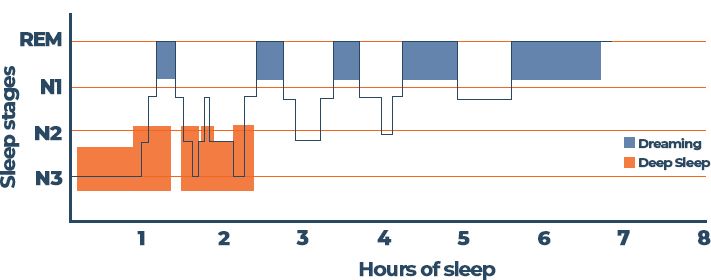
  1. Prioritise Deep Sleep and Recovery

Sleep is when much of the body’s cellular repair and recovery takes place.

Poor sleep increases oxidative stress, disrupts hormonal regulation, impairs insulin sensitivity, and reduces mitochondrial efficiency over time.

Chronically sleeping less than 6 hours a night may significantly affect:

  • energy production,
  • recovery,
  • cognitive performance,
  • and inflammatory regulation.

The Action Step:

Support mitochondrial recovery by:

  • maintaining a consistent sleep schedule,
  • reducing screen exposure before bed,
  • avoiding heavy late-night meals,
  • and creating a cooler, darker sleep environment.
  1. Eat for Cellular Energy

Mitochondria depend on several nutrients to produce energy efficiently and protect cells from oxidative damage.

The Action Step:

Focus on nutrient-dense foods rich in:

  • B Vitamins → support energy metabolism
  • Magnesium → required for ATP production
  • Omega-3 fatty acids → help protect mitochondrial membranes
  • Coenzyme Q10 (CoQ10) → supports cellular energy transfer
  • Antioxidants → help neutralise oxidative stress

Foods like leafy greens, nuts, seeds, fatty fish, berries, legumes, and colourful vegetables provide many of these essential compounds naturally.

  1. Build Metabolic Flexibility

Healthy mitochondria are metabolically flexible they can efficiently switch between burning glucose and fat depending on energy demand.

Sedentary lifestyles, constant snacking, poor sleep, and insulin resistance reduce this adaptability over time.

The Action Step:

Regular movement, balanced eating patterns, strength training, and avoiding constant grazing can help improve metabolic flexibility and cellular energy efficiency.

Habits That Damage Mitochondrial Health

Certain lifestyle behaviours accelerate mitochondrial dysfunction significantly.

Some of the biggest contributors include:

  • Chronic sleep deprivation
  • Smoking
  • Sedentary lifestyles
  • Excess refined sugar intake
  • Ultra-processed foods
  • Chronic psychological stress
  • Excess alcohol consumption

Over time, these habits increase oxidative stress and inflammation, impairing the body’s ability to produce and utilise energy efficiently.

The Bigger Picture: Energy Is the Foundation of Longevity

Longevity is not simply about living longer. It is about preserving energy, mobility, cognition, resilience, and independence as the years pass.

When mitochondrial health declines, the body becomes less efficient at:

  • repairing damage,
  • managing inflammation,
  • adapting to stress,
  • and sustaining physical and mental performance.

Protecting your mitochondria through movement, recovery, balanced nutrition, sleep, and metabolic health habits may be one of the most powerful long-term investments you can make in your healthspan.

Because ageing is not just about getting older.
It is also about how efficiently your cells continue producing energy over time.

Pro Tip: Use the GOQii App to track activity levels, sleep quality, movement patterns, and nutrition habits. Your GOQii Personalised Health Coach can help you build sustainable routines that naturally support mitochondrial health, energy production, and long-term vitality.

Frequently Asked Questions (FAQs)

1. Can you restore damaged mitochondria?
Yes. While you cannot completely stop the biological aging process, lifestyle interventions like regular cardiovascular exercise, intermittent fasting, and proper sleep can clear out damaged mitochondria (a process called mitophagy) and stimulate the creation of new, healthy ones.

2. What foods are bad for mitochondrial health?
Ultra-processed foods, foods containing trans fats, and excess refined sugars are highly damaging. They create an energy overload that mitochondria struggle to process, leading to high oxidative stress and cellular inflammation.

3. Is fatigue a sign of poor mitochondrial health?
Yes. Because mitochondria are responsible for producing ATP (cellular energy), chronic fatigue, brain fog, and extended muscle soreness after light activity are often primary indicators that your cells are not producing energy efficiently.

#BeTheForce

Disclaimer: This article is intended for educational purposes only. If you suffer from chronic fatigue syndrome or metabolic disorders, please consult your primary healthcare provider before adopting new exercise or dietary regimens.

  • « Previous Page
  • 1
  • …
  • 7
  • 8
  • 9
  • 10
  • 11
  • …
  • 138
  • Next Page »

Search

Recent Posts

  • Why Mitochondrial Health Determines How Well You Age
  • World IBD Day 2026: Why IBD Is More Than Just a Gut Problem
  • World Hypertension Day 2026: The Silent Killer & 5 Natural Ways to Lower Your Blood Pressure
  • Eat Healthy At Work: Quick & Easy Snacks You Can Eat In The Office
  • The Great Summer Mango Debate: Can You Eat Mangoes While Trying to Lose Weight?

Stay Updated

Archives

  • May 2026 (16)
  • April 2026 (24)
  • March 2026 (18)
  • February 2026 (14)
  • January 2026 (14)
  • December 2025 (19)
  • November 2025 (15)
  • October 2025 (20)
  • September 2025 (6)
  • August 2025 (6)
  • July 2025 (12)
  • June 2025 (18)
  • May 2025 (16)
  • April 2025 (22)
  • March 2025 (27)
  • February 2025 (21)
  • January 2025 (25)
  • December 2024 (22)
  • November 2024 (23)
  • October 2024 (21)
  • September 2024 (23)
  • August 2024 (30)
  • July 2024 (21)
  • June 2024 (25)
  • May 2024 (28)
  • April 2024 (27)
  • March 2024 (27)
  • February 2024 (24)
  • January 2024 (21)
  • December 2023 (14)
  • November 2023 (10)
  • October 2023 (19)
  • September 2023 (22)
  • August 2023 (18)
  • July 2023 (22)
  • June 2023 (23)
  • May 2023 (22)
  • April 2023 (19)
  • March 2023 (23)
  • February 2023 (19)
  • January 2023 (15)
  • December 2022 (11)
  • November 2022 (15)
  • October 2022 (15)
  • September 2022 (12)
  • August 2022 (10)
  • July 2022 (17)
  • June 2022 (11)
  • May 2022 (10)
  • April 2022 (6)
  • March 2022 (6)
  • February 2022 (13)
  • January 2022 (11)
  • December 2021 (7)
  • November 2021 (3)
  • October 2021 (6)
  • September 2021 (3)
  • August 2021 (8)
  • July 2021 (7)
  • June 2021 (15)
  • May 2021 (16)
  • April 2021 (10)
  • March 2021 (7)
  • February 2021 (4)
  • January 2021 (4)
  • December 2020 (3)
  • November 2020 (4)
  • October 2020 (10)
  • September 2020 (3)
  • August 2020 (3)
  • July 2020 (2)
  • June 2020 (4)
  • May 2020 (10)
  • April 2020 (12)
  • March 2020 (10)
  • February 2020 (4)
  • January 2020 (4)
  • December 2019 (3)
  • November 2019 (7)
  • October 2019 (5)
  • September 2019 (4)
  • August 2019 (9)
  • July 2019 (9)
  • June 2019 (11)
  • May 2019 (4)
  • April 2019 (8)
  • March 2019 (8)
  • February 2019 (9)
  • January 2019 (8)
  • December 2018 (9)
  • November 2018 (3)
  • October 2018 (3)
  • September 2018 (5)
  • August 2018 (10)
  • July 2018 (6)
  • June 2018 (13)
  • May 2018 (8)
  • April 2018 (18)
  • March 2018 (9)
  • February 2018 (8)
  • January 2018 (15)
  • December 2017 (12)
  • November 2017 (19)
  • October 2017 (13)
  • September 2017 (15)
  • August 2017 (4)
  • July 2017 (8)
  • June 2017 (7)
  • May 2017 (6)
  • April 2017 (8)
  • March 2017 (6)
  • February 2017 (7)
  • January 2017 (9)
  • December 2016 (10)
  • November 2016 (7)
  • October 2016 (7)
  • September 2016 (7)
  • August 2016 (11)
  • July 2016 (9)
  • June 2016 (9)
  • May 2016 (12)
  • April 2016 (17)
  • March 2016 (17)
  • February 2016 (8)
  • January 2016 (6)
  • December 2015 (2)
  • November 2015 (9)
  • October 2015 (7)
  • September 2015 (9)
  • August 2015 (11)
  • July 2015 (9)
  • June 2015 (11)
  • May 2015 (9)
  • April 2015 (13)
  • March 2015 (8)
  • February 2015 (5)
  • January 2015 (12)
  • December 2014 (14)
  • November 2014 (11)
  • October 2014 (6)
  • September 2014 (13)
  • August 2014 (12)
  • July 2014 (6)
  • June 2014 (2)
  • May 2014 (7)
  • April 2014 (4)

From “Laddu Nawin” to Fit and Fierce: How a 25-Year-Old Insurance Advisor Shed 20 Kilos and Gained His Life Back

When 25-year-old Nawin Yadav from Hyderabad walked into his office every morning, he carried more than just his files and policy papers. He had the weight of fatigue, sluggish energy, and an ever-growing belly that was becoming the butt of jokes. “People … [Read More...]

“I’ve Challenged Myself to Live 100 Years” – The Story of Chandubhai Savani’s Second Chance at Life

At 67, most people start slowing down. Not Chandubhai Savani. A resident of Surat, Chandubhai, thought life was on track. “My life was going well till I had my bypass surgery,” he says. That surgery, back in 2021, was a wake-up call.  Medication was routine, but exercise wasn’t. His diet? What he calls ‘normal.’ “I […]

From Shimla’s Slopes to Chandigarh’s Sidewalks: Surinder Kaur Bhalla’s Journey from Chaos to Control

Some journeys start with a plan. Others begin with a stumble literally. Surinder Bhalla, a government professional, born and raised in the scenic hill town of Shimla, had always lived a life of movement. “In Shimla, you walked everywhere,” she reflects. “Walking was never an exercise. It was just life.” But after shifting to Chandigarh, […]

Ananda Mukherjee Health Story

From Terminal Illness To Complete Wellness! Ananda Mukherjee Health Story

As we observe World Cancer Day under the powerful theme ‘United by Unique’ (2025-2027)**, we are reminded that every individual’s journey with cancer is distinct, yet united by shared resilience, hope, and the collective fight against this disease. This theme places people at the centre of care and their stories at the heart of the […]

  • HOME
  • HEALTHY LIVING
  • FITNESS
  • HEALTHY RECIPES
  • USER STORIES
  • KARMA
  • BUY GOQii

Copyright ©2016 GOQii