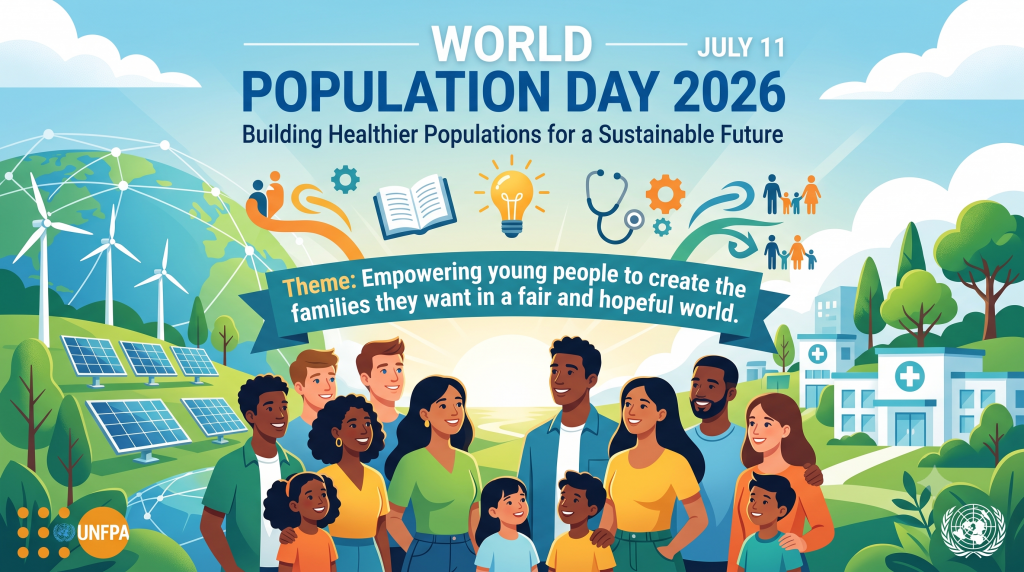
 The Big Question: As the world’s population continues to grow and demographics continue to shift, how can we create healthier communities where people of every age have the opportunity to live longer, healthier lives?
Every year on July 11, the world observes World Population Day to raise awareness about issues that shape our collective future—from reproductive health and gender equality to education, ageing and sustainable development. Established by the United Nations Development Programme (UNDP) in 1989 following the milestone of the world’s population reaching five billion people, the day has evolved into an opportunity to focus not simply on how many people inhabit the planet, but on how we can improve the quality of life for everyone.
The 2026 World Population Day theme, “Empowering young people to create the families they want in a fair and hopeful world,” highlights a simple but powerful truth: when people have access to education, healthcare and informed choices, individuals, families and societies all thrive. Population isn’t just about numbers. It’s about people—and healthier people create healthier nations.
Why Population Health Matters
The world’s population recently crossed eight billion people, but growth is not occurring uniformly across every country. Some nations have younger populations that require greater investments in maternal healthcare, childhood nutrition and education. Others are experiencing rapidly ageing populations, where chronic diseases, mobility challenges and long-term care have become pressing public health priorities.
- The Demographic Health Divide: Young Populations ⇒ Higher Reproductive & Pediatric Healthcare Demands.
- The Aging Population Curve: Elderly Populations ⇒ Higher Chronic Disease Management & Long-Term Preventative Care Demands.
Although these challenges differ by geography, they share one common solution: prevention. Investing in preventive healthcare, healthy lifestyles and equitable access to medical services allows people to stay healthier for longer while reducing pressure on global healthcare systems.
Four Pillars of a Healthier Future
-
Empower Young People Through Better Healthcare
Good health begins long before adulthood. Access to quality reproductive healthcare, maternal care, vaccinations and health education enables young people to make informed decisions about their futures as outlined by the United Nations Population Fund (UNFPA).
When individuals can plan their families safely and access appropriate healthcare services, maternal and infant health improves, educational opportunities expand and communities become more resilient. Healthy beginnings always lead to healthier generations.
-
Invest in Education and Health Literacy
Education is one of the strongest predictors of long-term health. People who understand nutrition, physical activity, preventive screenings and mental wellbeing are better equipped to make informed lifestyle decisions.
Health literacy empowers individuals to:
- Make healthier, unrefined food choices.
- Recognise early warning signs of disease before they progress.
- Access healthcare systems appropriately and effectively.
- Adopt preventive daily habits earlier in life.
Building healthier populations starts with making reliable health information accessible to everyone.
-
Support Healthy Ageing
People today are living longer than ever before, thanks to global improvements in sanitation, nutrition, vaccination programmes and medical care. However, longevity should be accompanied by good health. Healthy ageing focuses on maintaining physical function, cognitive health and independence throughout later life.
Simple daily habits can make a meaningful difference:
- Staying physically active with consistent step targets.
- Eating a balanced, fibre-rich, whole-food diet.
- Managing chronic stress levels and protecting sleep hygiene.
- Going for regular preventive health check-ups and screenings.
Adding years to life is important—but adding life to those years matters even more.
-
Live More Sustainably
Human health and planetary health are closely connected. Simple lifestyle choices can support both personal wellbeing and environmental sustainability.
- The Stagnant Consumption Loop: Ultra-Processed Foods ⇒ High Packaging Waste ⇒ Landfill & Ocean Pollution ⇒ Ecosystem Degradation.
- The Sustainable Lifestyle Loop: Whole Plant Foods ⇒ Low Carbon Footprint ⇒ Resource Conservation ⇒ Thriving Planetary Ecosystem.
You can lower your environmental footprint by choosing more whole, minimally processed foods, reducing household food waste, conserving drinking water, walking or cycling whenever possible, and using reusable bottles and bags. Many small actions, when multiplied across millions of people, can create meaningful change.
The Global Demographic Health Matrix
| Population Focus Area | Primary Clinical & Public Health Focus | Targeted Preventive Measure |
| Developing Youth Populations | Maternal care, micronutrient deficiencies, and health literacy gaps. | Fulfilling reproductive health rights and access to early vaccinations. |
| Ageing Societies | Non-communicable diseases, cognitive decline, and loss of independence. | Promoting high-fibre whole nutrition, active daily mobility, and regular health check-ups. |
Why Prevention Matters More Than Ever
Healthcare systems across the world are facing increasing demands from chronic conditions such as Type 2 diabetes, cardiovascular disease, obesity and mental health disorders. Many of these conditions are directly influenced by lifestyle behaviours and cumulative everyday habits.
While not every illness can be prevented, maintaining a healthy weight, exercising regularly, eating nutritious foods, avoiding tobacco and limiting alcohol consumption can significantly reduce the risk of many non-communicable diseases. Preventive healthcare doesn’t simply improve individual wellbeing—it strengthens families, communities and national healthcare systems.
Everyday Habits That Support Your Community
True structural change is built on the foundation of consistent individual choices. Start with everyday habits that improve both your own health and your community’s wellbeing:
✔ Stay physically active for 30–45 minutes every day.
✔ Eat a balanced diet rich in fruits, vegetables and whole grains.
✔ Schedule your annual preventive health check-ups.
✔ Support health awareness and nutrition education within your family.
✔ Use water and natural resources responsibly at home.
✔ Encourage conversations around preventive healthcare and healthy ageing.
World Population Day is not simply about counting people—it is about creating opportunities for people to live healthier, longer and more fulfilling lives. The 2026 theme reminds us that empowering young people through education, healthcare and informed choices lays the foundation for stronger communities. At the same time, supporting healthy ageing, promoting preventive healthcare and adopting sustainable lifestyles ensure that people of every generation can thrive.
Lasting change doesn’t begin with global statistics. It begins with the everyday choices each of us makes—for ourselves, our families and the communities we live in. A healthier population starts with healthier individuals.
Pro Tip: Improving your health is easier when you can measure your progress. Use the GOQii App to track your daily physical activity, nutrition, hydration, sleep and lifestyle habits. You can seamlessly share this data with your GOQii Personalised Health Coach for evidence-based guidance tailored to your goals, helping you build a sustainable daily routine that aligns with your values!
Frequently Asked Questions (FAQs)
- What is the historical purpose behind celebrating World Population Day?
World Population Day is observed every year on July 11 to raise global awareness about pressing population issues. It focuses on the importance of reproductive health, gender equality, quality education, environmental sustainability, and public health infrastructure needed to support human development.
- What is the official theme for World Population Day 2026?
The 2026 theme is “Empowering young people to create the families they want in a fair and hopeful world.” It emphasizes the critical need to invest in the rights, health, and education of youth, enabling young adults to make informed life decisions and build resilient societies.
- Why is preventive healthcare so important for growing global populations?
Preventive healthcare reduces the global burden of chronic, non-communicable diseases before they develop. By encouraging healthy habits, balanced nutrition, and regular screenings, it improves long-term quality of life while relieving immense financial and operational strain on hospital infrastructures.
- How can an individual contribute to building healthier populations?
Individuals can make a collective impact by maintaining a physically active lifestyle, eating a fiber-rich whole-food diet, attending routine health check-ups, sharing reliable health information within their families, and conserving vital natural resources like drinking water.
#BeTheForce
Disclaimer: This article is intended for educational and informational purposes only and should not be considered medical advice. It is not a substitute for professional diagnosis, treatment or personalised healthcare recommendations. Always consult a qualified healthcare professional for personalised medical guidance or before making significant changes to your diet, exercise or healthcare routine.



Leave a Reply