GOQii

Blog

  • HOME
  • HEALTHY LIVING
  • FITNESS
  • HEALTHY RECIPES
  • USER STORIES
  • KARMA
  • BUY GOQii

Search Results for: protein

May 12, 2021 By Sheryl Afonso 1 Comment

Fatigue Fighting Hacks To Supercharge Your Mornings At Home

fatigue fighting hacksTrrriiing! There goes your 6 a.m. alarm! 

Boing! There goes the snooze button hit! Just another ten minutes you plead with your fatigued mind even though you know you’ll be late for that zoom call!  

How often have you caught yourself doing that in a week? The day whizzes by in a blur as you struggle to stay awake through that all-important morning call, exercise restraint from unnecessarily blowing your top at your colleague, force yourself to be patient as your junior takes longer than expected to understand a concept, and stop short of actually dozing and snoring at your comfy workspace at home as the day slowly comes to a close…

Morning fatigue can be pinned down to many reasons: a super-late night, hypothyroidism, too much progesterone, midnight visits to the washroom, sleep apnea, an overworked mind, and more. Chronic fatigue can take a toll on human health, and is best nipped in the bud. Once hormonal imbalances and sleep apnea have been ruled out as the cause of your daily fatigue, try out these fatigue fighting hacks to keep you alert through the day.

Fatigue Fighting Hacks To Supercharge Your Mornings

  1. Set a Double Alarm: A full sleep cycle is approximately 90 minutes. So, if you need to step out of bed at 7 a.m., set an alarm for 5:30 a.m. and another one for 7 a.m. Turn off the 5:30 alarm once it begins to shrill – go back to getting another complete sleep cycle – and bounce out of bed happily when the second alarm goes off! You won’t need the snooze button at all! 
  2. Exercise: If home workout isn’t your style – fret not! Begin your day with a few simple stretches or a 10-minute yoga session. The release of endorphins that this brings on will keep you feeling energized through the day. 
  3. Be a Sunflower: Just like a sunflower thrives on the energizing rays of the sun, so does your body. Throw open your windows, draw back the curtains and revel in the joy that comes along with the morning rays hitting your face. You’ll get a good dose of vitamin D too whilst you are at it.
  4. Power-up with Protein: Skipping breakfast is never an option if you want to feel fresh throughout the day. But choosing the right breakfast foods is important. Begin and end your day with protein-rich foods. Research indicates that protein induces serotonin and subsequent melatonin release that brings on better quality sleep while also leading to a build-up of enzymes that signal the brain to wake-up in the mornings. Plate up the eggs, fish, yoghurt, pulses, peanut butter, and nuts and roll away the sugar-laden carbohydrates.
  5. Tank up on Water: Dehydration can often be the reason for fatigue in the morning and all through the day. A glass of plain water or fruit-infused water is a sure shot way to get your body into “run” mode. Placing this by your bedside and reaching out for it as soon as your alarm goes off will get you moving faster than the Duracell rabbit!  
  6. Alexa to the Rescue: Programme Alexa to play out your favourite music at the exact hour you need to be out of bed. What better way to begin your day than with a blast of pop, hip hop, golden oldies, jazz or Hindi chartbusters? 
  7. Tease your Brain: Alarm clocks and mobiles that need you to perform a mental task before they can be “snoozed” or shut off are now available in the market! Not only will they supercharge your morning, but you’ll have increased your IQ by 5 points at least by the end of the month.

List Of Don’ts Before Bed 

I don’t need to dwell on the much-touted DON’Ts that keep you away from enjoying your mornings, but a quick reminder will reinforce your learning:

  • Limit water intake to just one glass a couple of hours before you hit the sack; then you won’t need to blame your midnight loo visits for your morning fatigue.
  • Cut down the fat at dinner to help you drift away to dreamland sooner.
  • Make sure your bedroom has just the right amount of light and is at the right temperature to allow for some uninterrupted sleep. 
  • Choose the right sleep accessories – pillow, mattress, blanket, and even a cuddly toy, if that’s what will keep your peepers tightly shut for 8 hours straight.
  • Stay away from electronic devices at least an hour before bedtime. Reading a book may be a better bit to bring on deeper sleep.
  • Maintain a sleep schedule so that the natural release of melatonin takes charge at the right time. 
  • Stay away from alcohol and caffeine closer to bedtime; they are diuretics that will cause you to wake up to piddle in the middle of the night! 

Sleep has no replacement. Fatigue is easily prevented. Do your health a huge favour – beat the morning blues! 

We hope these fatigue fighting hacks help you make your work from home more productive! Do let us know your thoughts in the comments below. For more tips, check out Healthy Reads or tune in to LIVE sessions by experts on GOQii Play. 

To directly interact with your GOQii Coach, subscribe to GOQii now: https://goqiiapp.page.link/wssu

Stay home, stay safe and #BeTheForce 
May 3, 2021 By Aruna Bhatia Leave a Comment

What Should You Eat If You Get Infected By COVID-19?

What Should You Eat If You Get Infected By COVID-19?

We are going through a very tough time with everyday monster surges in COVID-19 cases all over the country, excluding a few districts. It almost seems like each and every household has one or more members down with this infection. Thankfully, we have a good number of people getting well too! Food plays a key role in any form of recovery. So which kind of food should a person infected with COVID-19 eat? 

A Balanced Diet Is Key To COVID-19 Recovery 

Each day, the combination of food should include: 

  • Whole Grains: Millets, oats, wheat, brown rice, white rice, all this as roti, khichdi, upama, Pulao, Daliya, Chilla etc. 
  • Proteins: Eggs, Lentils, Legumes, Dairy Products, Soy Products, can be taken as besan cheela, Dal Soup, Sprouts Chat, Moong dal Khichdi, Paneer Bhurji, Omelette, Dosa, chickpea bowl, rajma, etc.
  • Fats: Good fats have anti-inflammatory acids like omega 3 fatty acids. So include flax seeds oils, extra virgin olive oils and safflower oil. Good fats can also be added from almonds, avocado, laddu with a mix of nuts, white sesame seeds, kalonji, ajwain all roasted in desi ghee helps provide essential minerals like zinc and magnesium for fast recovery. 
  • Fiber: Fresh fruits and vegetables are great sources of dietary fibers, vitamins, minerals, and antioxidants. So try to include two fruits a day, along with 2-3 cups of vegetables. This requirement can be met by adding soups mashed vegetables and fruits as small mid meals.

Apart from these main macros, here are a few things you need to consider:  

  • 2-3 liters of water should be included daily as infections dehydrate the body. Infused water, coconut water, water with honey can help meet the requirement. 
  • Immunity boosters like a herbal concoction, turmeric milk, soups and broth should be included at least one or two times a day.
  • As far as possible, make sure that all fruits, vegetables are fresh and meals are home cooked. 
  • Always eat small and frequent meals as the body will not tolerate big meals at a time. 
  • Avoid alcohol as it is highly dehydrating and may inhibit your immune system.
  • Limit salt and sugar
  • Avoid packaged processed food. 

Given all the dietary guidelines, a question may still come up as to how to manage adequate calorie intake when the infection has robbed you of your taste buds and sense of smell.

  1. Try adding lemon juice or vinegar in food, soups and water. The flavor of acids from them comes through even when smell or taste is impaired. 
  2. Try going a bit heavy on spices like cinnamon, black pepper, cumin, garlic and ginger, which could add flavor back to food.   

To make things a bit more clear, here is a sample diet chart, although it will be more customized as per symptoms.  

  1. Early morning: 5 to 6 soaked almonds, two dates and lukewarm lemon cinnamon water or tulsi lemon honey water.
  2. Breakfast: Besan cheela or moong dal cheela or stuffed omelette sandwich or paneer paratha or idli sambar or vegetable uttapam with coconut chutney.
  3. Mid meal: Coconut water or any one fruit with one tsp mix seeds
  4. Lunch: Rice with dal and subzi or Ajwain roti with rajma and any green leafy vegetable
  5. Evening: Any herbal concoction (kadha or green tea) and chana/ sprouts/ sweet potato chat and any one fruit
  6. Pre dinner: mix veg soup or moong dal soup or chicken broth or boiled egg
  7. Dinner: Khichdi or vegetable daliya or oats cheela or oats with milk or Garlic roti with any dal and mixed veg 
  8. Post dinner: One cup milk with turmeric and pinch of black pepper

We hope this article helps you manage COVID-19 infection and recover quickly. For more information, check out Healthy Reads or tune in to LIVE sessions by exprts on GOQii Play. 

For more expert guidance, subscribe to GOQii or download the app here: https://goqiiapp.page.link/wssu 

#BeTheForce 

April 29, 2021 By Dr. Vaidya's 5 Comments

How to Disinfect Your Home To Stay Safe During The Pandemic

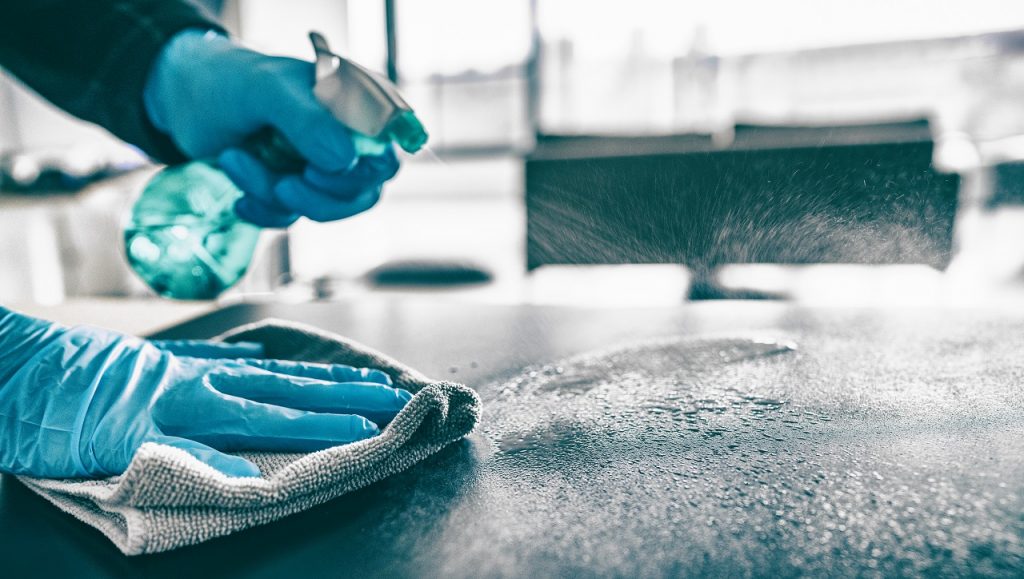
disinfect your homeWith the coronavirus pandemic showing no signs of abating, it’s up to us to do everything we can to slow its spread. This means protecting ourselves, our families, and those around us, especially the most vulnerable. While social distancing is the most important thing that you can do in this regard it is also important to pay more heed to hygiene. Sanitization and disinfection of your home and surroundings is something that you can actively do to lower the risk of contagion. Although contact with contaminated surfaces is not the primary mode of transmission of COVID-19, it can increase your risk. According to the US Centers for Disease Control and Prevention (CDC), contact with contaminated surfaces is a likely secondary mode of infection. Before you attempt to clean and disinfect your home in panic, take a breath and calm down. To effectively disinfect your home and lower the risk of coronavirus infection, find out which products work, how you should use them, and which areas of your house require your attention.
Disinfectants and Cleansers to Sanitize Your Home

Not every cleanser is effective at killing microorganisms like the coronavirus and some are only effective for bacteria or weaker viral strains. Here are the different categories of cleansers.

  • Bleach: If you’re looking to thoroughly disinfect and kill any pathogen in your house, nothing’s more effective than sodium hypochlorite – the active ingredient in bleach. Bleach is so effective as it destroys the protein and RNA, which is the defining feature of any virus. When cleaning with bleach, make sure to follow package directions and leave it on the surface for at least 10-15 minutes before mopping or wiping down.
  • Surgical Spirit or Ethanol: is one of the most powerful disinfectants you can find. It is therefore a common ingredient in many of the best disinfectants and sanitizers. From research, we know that ethanol can kill most types of coronavirus in about half a minute of exposure. It works in the same manner as bleach, destroying the virus’ RNA. When using surgical spirit or any ethanol-based cleanser, you simply need to moisten a cloth with the solution and rub it over the surface area. The point is to apply the solution over the area, not to rub it or wipe it off, as such liquids evaporate rapidly.
  • Surface Wipes: Depending on the type and quality of surface wipes, efficacy of such products can vary. Many contain antiseptics like benzalkonium chloride, which can kill germs, while some may also have natural antiseptics. The main benefit of such products is that they can help physically remove pathogens from surfaces, but they are unlikely to kill the virus itself.
  • Hand Sanitizers: are extremely useful for disinfection, especially for personal hygiene when you are forced to step outdoors and come in contact with surfaces. Hand sanitizers can also be used to clean household surfaces if needed. They are so effective because of the same primary ingredient in surgical spirit – ethanol. If you are looking for natural or herbal sanitizers, these should also contain alcohol to have any efficacy. An Ayurvedic herbal sanitizer would probably list the alcohol as prasanna or madya.
  • Soap and Water: As stated by health care authorities across the world, soap and water is your first defense against the virus. This is true with hand washing, but there’s a caveat. Almost all soaps and detergents will simply help to remove the virus and allow it be flushed away with water. However, these products will not kill the virus. This means that soaps and detergents, although helpful for hand washing, are not of much use when disinfecting household surfaces.

CAUTION

When using chemical-based disinfectants and cleansers like bleach, you need to exercise great caution. Bleach and other chemicals can be toxic if ingested or inhaled and can also cause severe skin and eye irritation. Make sure to use gloves and ensure good ventilation when using these products. If you’re using herbal Ayurvedic cleansers with ingredients like neem and aloe, this isn’t a concern at all.

When using bleach, make sure to dilute it precisely as directed and avoid mixing it with any other products as this can be deadly. Also keep in mind that bleach isn’t suitable for cleansing all surfaces as it can damage or discolor some surfaces.

Areas of Focus When You Disinfect Your Home

1. Household Surfaces
Because of the relative novelty of the COVID-19 virus, there is a lack of extensive research, but we are learning more each day. Studies show that the coronavirus has different survival times on different surfaces. Plastic and stainless steel surfaces deserve the most attention when you disinfect your home, as the virus could survive on such surfaces for up to nine days. On the other hand, paper and cardboard surfaces were found to be most inhospitable to the virus, with survival times of no more than a day.

Keeping this in mind and the efficacy of the various disinfectants that we have already discussed, you should focus on cleansing the following areas in your house.

  •       Kitchen and cabinet counters
  •       Door knobs, door handles, door bells, and all switches
  •       Remote controls, keyboards, joysticks, and other frequently used devices
  •       Laptops, tablets, and phones
  •       The outside of your wallet or bottom and handle of your purse
  •       Mattresses, cushions, and other upholstery that cannot be washed frequently may be cleansed with disinfectant sprays

2. Things You Bring into Your Home
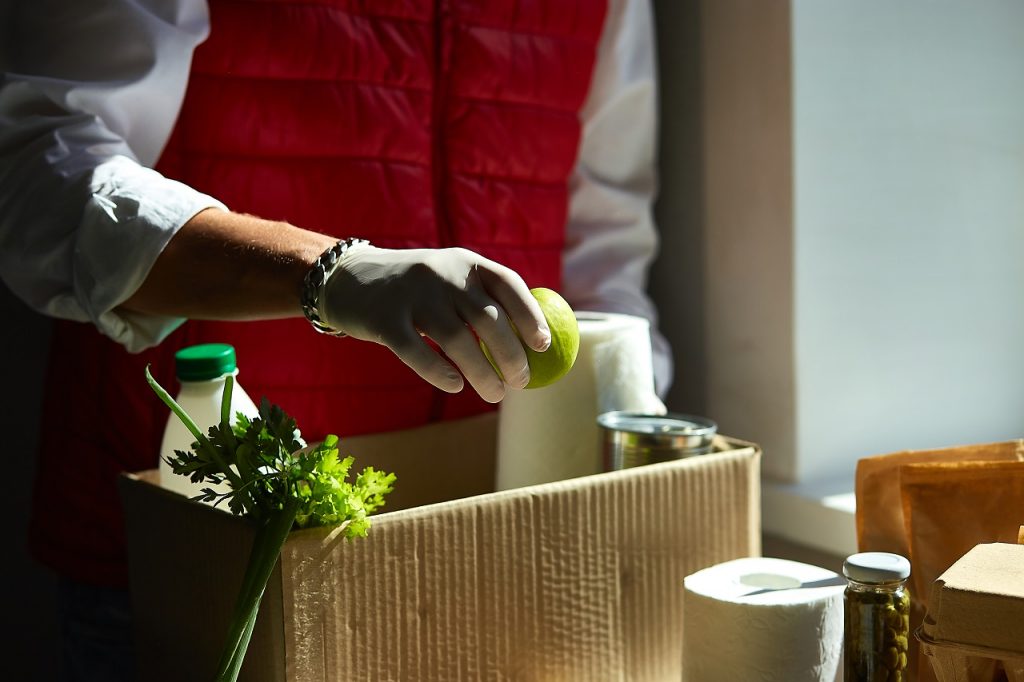
Despite the lockdown and social distancing measures, trips to the ATM, grocery store, or pharmacist can be unavoidable. When you return with groceries and other supplies, you need to be aware of the risk of surface contamination. Every item that you purchase and bring into your home, from the packaging to the individual items, is handled by a chain of people – the employee who stocks the shelves, the cashier, and other customers who may have handled the product before.

This makes the cleansing and sanitizing of all things you bring into the house more important than other household cleansing. Wipe the surfaces of all bottles, cans, plastic bags or boxes, and other containers with disinfectants like sanitizer before you put them in your cabinet or fridge. For the same reason, it would also be a good idea to put your clothes to wash with detergent each time you enter your home. Similarly, it would be a good idea to cleanse your car’s steering wheel, dashboard, and door handles each time you return home.

We hope this article helps you disinfect your home and stay safe during the COVID-19 pandemic. For more useful information, you can check out Healthy Reads or tune in to experts on GOQii Play. 

Ayurvedic cleansers are available on the GOQii Health Store within the GOQii app as well. 

#BeTheForce 

April 8, 2021 By Srini Leave a Comment

Sleep Series: The Chemistry of Sleep

sleep series: chemistry of sleepDifficult to believe? Yes it is true. The perfect sleep is the result of a complex reaction from 2 main chemicals. Adenosine is a neurochemical which accumulates during “wake” and drains during “sleep”. Imagine a specially made hourglass, but one which builds up for approx. 16 hours of our wake cycle and drains within 8 hours of our sleep cycle. The receptors of Adenosine inform the brain that “stock levels are up” and it is time to relax and sleep. As sleep kicks in, stock levels of Adenosine goes down and receptors send a “wake up” signal to the brain.


Adenosine is the primary inducer of sleep-wake cycle. It reduces neural activity and sets you to start sleep. Interestingly, Caffeine blocks the Adenosine receptors and creates the opposite effect.  There we go – as to why we feel a bit fresh and brisk after a cup of coffee – it is an illusion we create by confusing the brain! The body’s excretion system works hard to flush Caffeine. It takes 5-6 hours to flush out just 50% of this possessive chemical.

I’ve mentioned Adenosine over Melatonin as the primary sleep chemical because I wanted to impress upon the impact of Caffeine. We take Caffeine in many forms – Coffee, Cola, energy drinks, etc. Caffeine also impacts the Dopamine and Serotonin chemical reaction, thereby causing a significant disruption of the normal neural activity. 

Do let Adenosine do its job naturally, you will sleep on time and naturally! Caffeine interferes with several hormonal/neurochemical reactions related to sleep. Do not consume Caffeine beyond lunchtime and in any case, beyond 4pm. 

The Magical Darkness Hormone – Melatonin

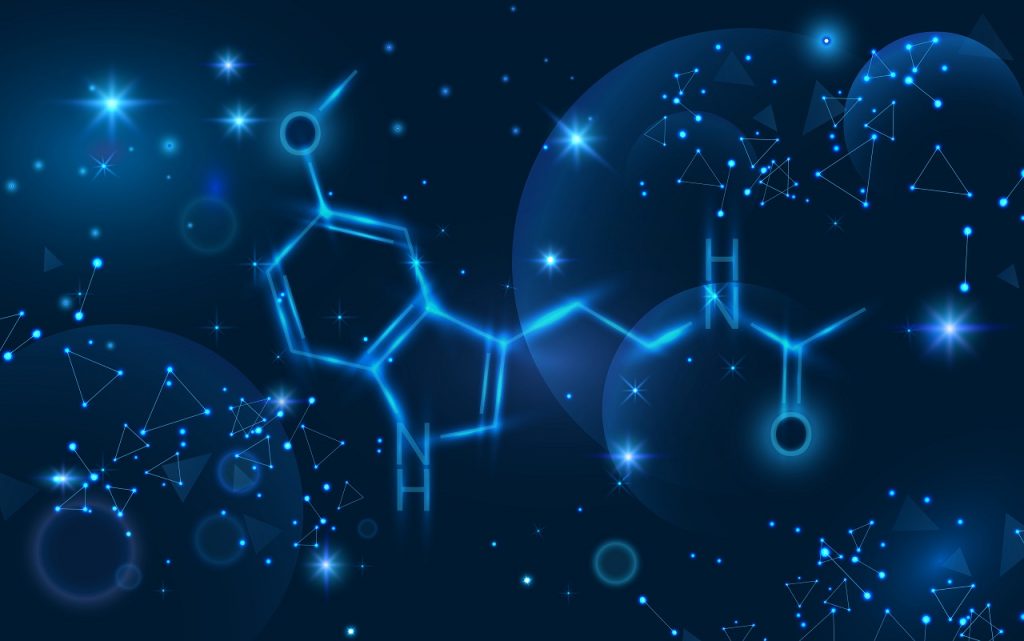
Melatonin is the second chemical responsible for enabling “onset” of sleep. It detoxifies the body of free radicals and other toxins. It starts secretion as soon as darkness sets in and it peaks by midnight. The synthesis of melatonin occurs through a multistep complex chemical process:

  • It all starts with food – food contains an amino acid called tryptophan. Foods like Milk, oats, nuts contain more tryptophan. 
  • Tryptophan is absorbed from the bloodstream to the pineal gland in the brain.
  • First, tryptophan is converted to another amino acid and then to a brain chemical called Serotonin. 2 Enzymes are involved here!
  • Serotonin’s conversion to melatonin involves two more enzymes.
  • All chemicals discussed here follow complex routines and they are part of a chain which is amazingly responsible for the onset of sleep. On top of it all, there is a closely coordinated play of the “Brain-Gut complex” to get this right!

How Can You Aid This Natural Process For Good Sleep? 

DON’T intervene in the natural process! Supplements can’t get you anywhere near the good quality sleep offered by this natural process.  

  • Beware of Caffeine! – Stop post lunch consumption
  • Consume foods high in tryptophan – consult your GOQii coach
  • Gut (Serotonin storage) has its role in sleep, so keep it clean and healthy
  • Get used to darkness after dinner to catalyze natural Melatonin 

Adenosine has other functions such as certain cardiac functions as well. This article does not deal with them. An enzyme is a biological catalyst that speeds up the rate of a chemical reaction and an amino acid is an organic acid used to make proteins usually obtained from food. OTC Melatonin – a small dose is usually fine to get over jet lag. 

We hope this article on the Chemistry of Sleep helps you!  Stay tuned for more from the Sleep Series by Srini! To read more about sleep and sleeping techniques, check out Healthy Reads or tune in to LIVE sessions by experts on GOQii Play. 

#BeTheForce 

  • « Previous Page
  • 1
  • …
  • 101
  • 102
  • 103
  • 104
  • 105
  • …
  • 152
  • Next Page »

Search

Recent Posts

  • World AMR Awareness Week 2026: when you need antibiotics, and simple steps to prevent AMR
  • PCOS: diet, exercise and the myths to stop believing
  • Cholesterol numbers explained: LDL, HDL and triglycerides
  • International Men’s Day 2026: why men’s health is everyone’s business
  • World COPD Day 2026: Short of Breath? Think COPD – Why Early Diagnosis Matters

Stay Updated

Archives

  • November 2026 (21)
  • October 2026 (23)
  • September 2026 (5)
  • August 2026 (8)
  • July 2026 (24)
  • June 2026 (22)
  • May 2026 (20)
  • April 2026 (24)
  • March 2026 (18)
  • February 2026 (14)
  • January 2026 (14)
  • December 2025 (19)
  • November 2025 (14)
  • October 2025 (17)
  • September 2025 (6)
  • August 2025 (5)
  • July 2025 (9)
  • June 2025 (18)
  • May 2025 (16)
  • April 2025 (22)
  • March 2025 (25)
  • February 2025 (21)
  • January 2025 (25)
  • December 2024 (21)
  • November 2024 (21)
  • October 2024 (15)
  • September 2024 (22)
  • August 2024 (27)
  • July 2024 (14)
  • June 2024 (23)
  • May 2024 (26)
  • April 2024 (27)
  • March 2024 (27)
  • February 2024 (23)
  • January 2024 (21)
  • December 2023 (14)
  • November 2023 (10)
  • October 2023 (18)
  • September 2023 (20)
  • August 2023 (16)
  • July 2023 (16)
  • June 2023 (21)
  • May 2023 (20)
  • April 2023 (19)
  • March 2023 (23)
  • February 2023 (19)
  • January 2023 (15)
  • December 2022 (11)
  • November 2022 (15)
  • October 2022 (15)
  • September 2022 (12)
  • August 2022 (9)
  • July 2022 (17)
  • June 2022 (11)
  • May 2022 (10)
  • April 2022 (6)
  • March 2022 (6)
  • February 2022 (13)
  • January 2022 (11)
  • December 2021 (7)
  • November 2021 (3)
  • October 2021 (6)
  • September 2021 (3)
  • August 2021 (8)
  • July 2021 (7)
  • June 2021 (15)
  • May 2021 (16)
  • April 2021 (10)
  • March 2021 (7)
  • February 2021 (4)
  • January 2021 (4)
  • December 2020 (3)
  • November 2020 (4)
  • October 2020 (10)
  • September 2020 (3)
  • August 2020 (3)
  • July 2020 (2)
  • June 2020 (4)
  • May 2020 (10)
  • April 2020 (12)
  • March 2020 (10)
  • February 2020 (4)
  • January 2020 (4)
  • December 2019 (3)
  • November 2019 (7)
  • October 2019 (5)
  • September 2019 (4)
  • August 2019 (9)
  • July 2019 (9)
  • June 2019 (11)
  • May 2019 (4)
  • April 2019 (8)
  • March 2019 (8)
  • February 2019 (9)
  • January 2019 (8)
  • December 2018 (9)
  • November 2018 (3)
  • October 2018 (3)
  • September 2018 (5)
  • August 2018 (10)
  • July 2018 (6)
  • June 2018 (13)
  • May 2018 (8)
  • April 2018 (17)
  • March 2018 (9)
  • February 2018 (8)
  • January 2018 (15)
  • December 2017 (12)
  • November 2017 (19)
  • October 2017 (13)
  • September 2017 (15)
  • August 2017 (4)
  • July 2017 (8)
  • June 2017 (7)
  • May 2017 (6)
  • April 2017 (8)
  • March 2017 (6)
  • February 2017 (7)
  • January 2017 (9)
  • December 2016 (10)
  • November 2016 (7)
  • October 2016 (7)
  • September 2016 (7)
  • August 2016 (11)
  • July 2016 (9)
  • June 2016 (9)
  • May 2016 (12)
  • April 2016 (17)
  • March 2016 (17)
  • February 2016 (8)
  • January 2016 (6)
  • December 2015 (2)
  • November 2015 (9)
  • October 2015 (7)
  • September 2015 (9)
  • August 2015 (11)
  • July 2015 (9)
  • June 2015 (11)
  • May 2015 (9)
  • April 2015 (13)
  • March 2015 (8)
  • February 2015 (5)
  • January 2015 (12)
  • December 2014 (14)
  • November 2014 (11)
  • October 2014 (6)
  • September 2014 (13)
  • August 2014 (12)
  • July 2014 (6)
  • June 2014 (2)
  • May 2014 (7)
  • April 2014 (4)

From Burnout to Balance: How Dr. Ranjit Reclaimed His Health

Dr Ranjit Bhatt has spent years tending to others. A practising doctor in Odisha, his days were packed with patients, surgeries, and emergencies. From the outside, it looked like a life lived in service. But on the inside, something wasn’t right. “I had no … [Read More...]

From Shimla’s Slopes to Chandigarh’s Sidewalks: Surinder Kaur Bhalla’s Journey from Chaos to Control

Some journeys start with a plan. Others begin with a stumble literally. Surinder Bhalla, a government professional, born and raised in the scenic hill town of Shimla, had always lived a life of movement. “In Shimla, you walked everywhere,” she reflects. “Walking was never an exercise. It was just life.” But after shifting to Chandigarh, […]

“I’ve Challenged Myself to Live 100 Years” – The Story of Chandubhai Savani’s Second Chance at Life

At 67, most people start slowing down. Not Chandubhai Savani. A resident of Surat, Chandubhai, thought life was on track. “My life was going well till I had my bypass surgery,” he says. That surgery, back in 2021, was a wake-up call.  Medication was routine, but exercise wasn’t. His diet? What he calls ‘normal.’ “I […]

Ananda Mukherjee Health Story

From Terminal Illness To Complete Wellness! Ananda Mukherjee Health Story

As we observe World Cancer Day under the powerful theme ‘United by Unique’ (2025-2027)**, we are reminded that every individual’s journey with cancer is distinct, yet united by shared resilience, hope, and the collective fight against this disease. This theme places people at the centre of care and their stories at the heart of the […]

  • HOME
  • HEALTHY LIVING
  • FITNESS
  • HEALTHY RECIPES
  • USER STORIES
  • KARMA
  • BUY GOQii

Copyright ©2016 GOQii