GOQii

Blog

  • HOME
  • HEALTHY LIVING
  • FITNESS
  • HEALTHY RECIPES
  • USER STORIES
  • KARMA
  • BUY GOQii

Search Results for: metabolism

August 7, 2026 By GOQii Leave a Comment

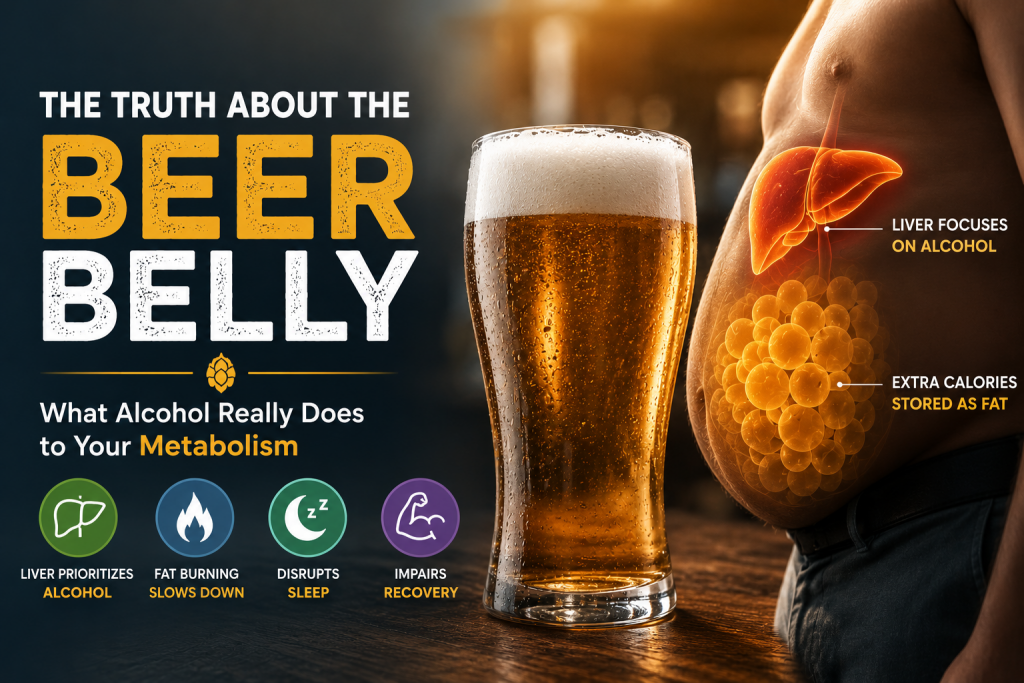
The Truth About the ‘Beer Belly’: What Alcohol Really Does to Your Metabolism

The Big Question – Can understanding how alcohol affects your metabolism help you make healthier choices?

International Beer Day provides an opportunity to look beyond the social aspect of drinking and better understand what alcohol actually does inside the body. Whether you enjoy an occasional drink or choose not to drink at all, knowing how alcohol influences your metabolism, recovery and overall health can help you make informed lifestyle decisions.

At GOQii, we believe preventive healthcare starts with awareness. Sustainable health isn’t built on extreme restrictions it’s built on understanding your body, making informed choices and staying consistent with healthy habits.

Let’s separate myth from fact and uncover the science behind alcohol, metabolism and the so-called “beer belly.”

Quick Answer – Does drinking beer really cause a beer belly?

A “beer belly” isn’t caused by beer alone. Weight gain occurs when calorie intake consistently exceeds calorie expenditure. Alcohol contributes because it is calorie-dense, temporarily reduces fat oxidation while your body prioritises metabolising alcohol, and often leads to overeating. Over time, these factors can contribute to increased abdominal fat, particularly when combined with poor diet, inactivity and inadequate sleep.

Why Alcohol Changes Your Metabolism

Your body normally uses carbohydrates, fats and proteins as sources of energy.

Alcohol changes that priority.

Unlike carbohydrates or fat, alcohol cannot be stored for later use. Because it is recognised as a substance that needs to be broken down and eliminated, your liver immediately prioritises metabolising alcohol.

During this period, fat oxidation is significantly reduced, meaning your body becomes temporarily less efficient at using fat as fuel.

If you’ve also consumed calorie-rich foods especially fried or processed snacks commonly eaten while drinking those excess calories are more likely to contribute to weight gain over time.

The Hidden Calories in Alcohol

Alcohol contains 7 calories per gram, making it almost as calorie-dense as fat.

Unlike nutrient-rich foods, alcoholic beverages contribute calories with very little nutritional value.

Approximate Calories Per Drink

Beverage Approximate Calories   
Light Beer (330 ml) 100–120
Regular Beer (330 ml) 150–220
Glass of Wine (150 ml) 120–130
Whisky (30 ml) ~70
Sugary Cocktail 250–500+

Three regular beers can easily provide the calories of a full meal without supplying the nutrients your body needs.

Why Drinking Often Leads to Overeating

Alcohol affects more than just calorie intake.

It can also reduce inhibitions and temporarily interfere with your body’s normal appetite regulation, making it easier to overeat.

This is one reason why drinking is often followed by cravings for:

  • Pizza
  • Burgers
  • Fried foods
  • Sugary desserts
  • Late-night takeaways

The combination of alcohol and calorie-dense foods often contributes more to weight gain than alcohol alone.

Alcohol, Exercise and Recovery

Regular exercise supports muscle growth and metabolic health – but alcohol can interfere with recovery.

Muscle Repair

Alcohol may reduce muscle protein synthesis, the process responsible for repairing and rebuilding muscle tissue after exercise.

Glycogen Replenishment

It can also slow the replenishment of muscle glycogen, which is essential for restoring energy after training.

Hydration

Because alcohol has a diuretic effect, it increases fluid loss and can contribute to dehydration, especially if adequate water intake is neglected.

Alcohol and Sleep

Although alcohol may make you feel sleepy initially, it often reduces overall sleep quality.

Research shows alcohol can:

  • Reduce REM sleep
  • Fragment sleep during the second half of the night
  • Affect recovery
  • Reduce concentration the next day
  • Increase fatigue

Quality sleep is one of the foundations of good metabolic health, and regular alcohol consumption can compromise that recovery process.

Can You Drink Alcohol and Still Lose Weight?

Weight loss depends on maintaining a sustainable calorie deficit while supporting your body with healthy lifestyle habits.

Occasional alcohol consumption doesn’t automatically prevent weight loss, but frequent or excessive drinking can make it more difficult by increasing calorie intake, disrupting sleep, affecting recovery and encouraging overeating.

Consistency in your daily habits matters far more than occasional indulgences.

If Alcohol Is Part of Your Lifestyle

From a health perspective, limiting alcohol consumption is the safest choice.

However, if you choose to drink occasionally, these strategies may help reduce some of the short-term health impacts.

Stay Hydrated

Drink a glass of water alongside every alcoholic beverage.

Eat Before Drinking

A balanced meal containing protein, fibre and healthy fats may help slow alcohol absorption and reduce overeating later.

Choose Lower-Calorie Options

If drinking, choose beverages with less added sugar and be mindful of portion sizes.

Plan Ahead

Avoid making food decisions late at night when judgement may be impaired.

Beyond the Beer Belly

Weight gain is only one aspect of alcohol’s impact on health.

Regular excessive alcohol consumption has been linked to an increased risk of:

  • Liver disease
  • High blood pressure
  • Cardiovascular disease
  • Certain cancers
  • Mental health disorders
  • Poor sleep quality

Understanding these risks allows you to make more informed decisions about your long-term wellbeing.

The Bottom Line

Good health isn’t determined by one meal, one workout or one social occasion.

It’s built through consistent choices over time.

Whether you drink alcohol or not, understanding its effects on metabolism, recovery and overall health empowers you to make decisions that support your long-term wellness goals.

At GOQii, our focus isn’t on restriction it’s on helping you make informed lifestyle choices that improve your health, one habit at a time.

Pro Tip: Your overall lifestyle matters far more than a single social occasion. Track your hydration, sleep, activity levels and nutrition using the GOQii App. A GOQii Personalised Health Coach can help you build sustainable habits that support your health goals while fitting into your everyday life.

Frequently Asked Questions (FAQs)

  1. Is light beer healthier than regular beer?

Light beer generally contains fewer calories and a lower alcohol content than regular beer. However, moderation remains important, as alcohol still affects metabolism and recovery.

  1. Does alcohol stop fat burning?

Alcohol temporarily reduces fat oxidation because your liver prioritises metabolising alcohol first. Once the alcohol has been processed, normal metabolism gradually resumes.

  1. Can I exercise after drinking alcohol?

Avoid high-intensity exercise if you’re dehydrated or recovering from alcohol consumption. Focus on hydration and allow your body adequate time to recover before returning to strenuous workouts.

  1. Is non-alcoholic beer a healthier alternative?

Non-alcoholic beer generally contains significantly less alcohol and often fewer calories than regular beer, although nutritional content varies between products.

  1. Is there a completely safe amount of alcohol?

Current evidence suggests that no level of alcohol consumption is entirely risk-free. If you choose to drink, doing so infrequently and in moderation is associated with lower health risks than regular or excessive drinking.

#BeTheForce

Disclaimer: This article is intended for educational and informational purposes only. GOQii does not promote or encourage alcohol consumption. If you choose to drink alcohol, do so responsibly, in moderation and only if you are of legal drinking age in your country. Never drink and drive. Excessive alcohol consumption is associated with serious health conditions, including liver disease, cardiovascular disease, certain cancers and mental health disorders. If you have concerns about your alcohol consumption, seek guidance from a qualified healthcare professional.

March 10, 2026 By GOQii Leave a Comment

The Sleep-Metabolism Connection: Why Rest is Your Best GLP-1 Partner

When we think about GLP-1 therapy, we usually think about what happens in the kitchen or at the gym. But some of the most important work happens while you are fast asleep. Have you noticed a change in your sleep patterns since starting your journey? Or perhaps you’ve found that on nights you sleep poorly, your “food noise” seems to whisper a little louder the next day?
The Biology of the Midnight Reset

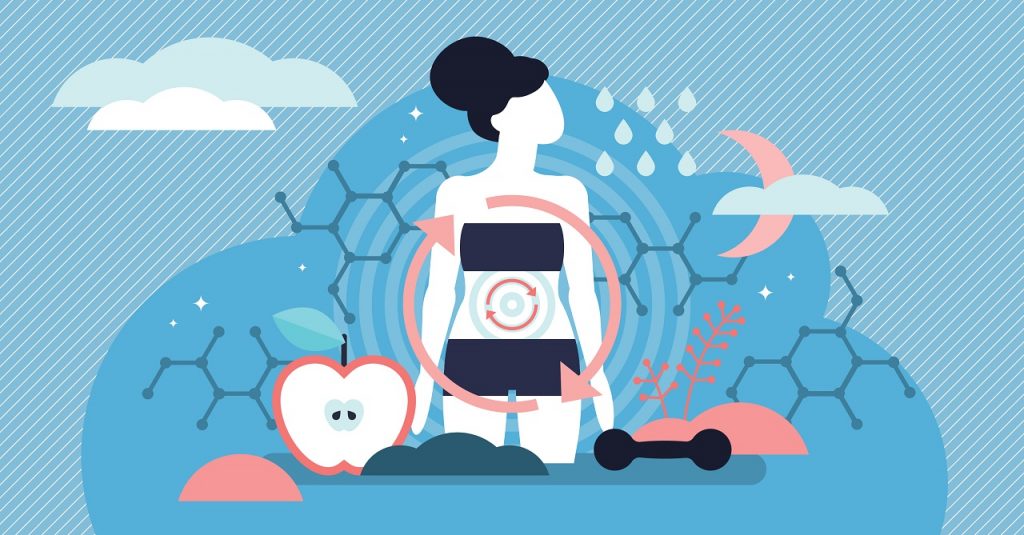
GLP-1 is a metabolic powerhouse, but it doesn’t work in a vacuum. It interacts closely with your circadian rhythm the internal clock that tells your body when to burn energy and when to store it.

When you are on this therapy, your body is undergoing a massive internal renovation. This requires energy. If you aren’t getting 7–9 hours of quality sleep, your body produces more ghrelin (the hunger hormone) and cortisol (the stress hormone). High cortisol can actually work against your GLP-1 medication, making it harder for the hormone to regulate your blood sugar and appetite effectively.

Mastering Your GLP-1 Sleep Hygiene

To ensure your body has the “downtime” it needs to repair muscle and burn fat, try these GOQii-approved sleep strategies:

  • The 3-Hour Buffer: Because GLP-1 slows down gastric emptying, lying down with a full stomach can lead to acid reflux or “heavy” discomfort. Aim to finish your last meal at least 3 hours before bed to give your stomach a head start.
  • Cool and Dark: Your metabolic rate is shifting, which can sometimes lead to changes in body temperature. Keep your bedroom slightly cooler (18∘C is the sweet spot) to help your body drop its core temperature for deep sleep.
  • Magnesium Magic: As we discussed in our fiber blog, magnesium is a friend to the digestive system, but it’s also a natural relaxant. Incorporating magnesium-rich foods or a supplement (after consulting your healthcare provider) in the evening can help calm the nervous system.
  • Morning Light Exposure: To keep your GLP-1 signals sharp, get 10 minutes of natural sunlight as soon as you wake up. This “sets” your clock and ensures your hormones are firing at the right time.

Tip: Sleep isn’t “time off” it’s a clinical requirement for weight loss. Treat your bedtime with the same discipline you treat your protein intake.

#BeTheForce

Disclaimer: GOQii is committed to providing accurate, up-to-date, and comprehensive health information. This article is intended for informational purposes only and should not be used as a substitute for professional medical advice, diagnosis, or treatment. Always consult a qualified healthcare professional before starting or changing any medication. Individual responses to treatment may vary.

August 2, 2023 By Dr. Naina Sudarshan 2 Comments

5 Simple Tips to Boost Metabolism and Lose Weight

boost metabolism

Ever wondered what metabolism is and why it is so important for your health? Metabolism is the process by which the food we eat is converted into energy. Going deeper into it, every cell in our body is producing energy through the chemical process of metabolism.

At a young age, our muscle mass stores energy that can prevent unhealthy weight gain. But as we age, we lose our muscle mass, which leads to excess fat accumulation. Metabolism starts slowing down as we reach 40 up to about 5% every decade thereafter. Our challenge will be to beat the metabolic slow down which is not impossible either as long as you follow these 5 eating habits to boost metabolism.

1. Eat Your Meals on Time

Busy routines such as the early morning rush to work, busy afternoons coupled with a late dinner and unruly sleep timings throw our circadian rhythm off track. The body is balanced with our circadian rhythm and any disruption can slow the metabolism down.

Our digestive power is naturally strong during noon which is why our ancestors had lunch between 12-1pm. As the day passes and night begins, our digestion is slowed down. Eating dinner late can disturb the circadian rhythm. Many research studies have proven that disturbed circadian rhythm can impair metabolism with a raised risk of metabolic disorders and obesity. Having meals on time can address this issue.

  • Ideal breakfast time: Before 10 am
  • Ideal Lunch time: Between 12 pm – 2 pm
  • Ideal Snack time: 4 – 5 pm
  • Ideal dinner: Between 7 pm – 9 pm

2. Mindful Eating

Very often when we have to eat outside or during some special occasion, we are likely to overeat not because we are hungry but because the food looks appealing or we are distracted while eating, or we are in a bad mood.

As per research studies, mindful eating habits improved metabolism while reducing the metabolic risk factors like high blood sugar levels, low levels of HDL or high blood pressure and large waist circumference. We need to incorporate mindful eating habits in our routine. For instance:

  • Consuming food because we are hungry instead of eating out of habit
  •  Chewing food slowly and thoroughly, savouring the taste
  • Thinking about how the food with all our senses before, during and after eating can help our body and health

3. Spice up Your Metabolism

Many spices from our kitchen can be good metabolic boosters when included in our daily diet. Turmeric, Cinnamon, Jeera, Fennel, Ginger, Ajwain, Clove and Nutmeg, because of some special chemical component and their healing effect on our body, can easily jumpstart metabolism when taken in right amounts.

4. Eat Whole Grains & Protein

Including a variety of whole grains like oats, barley, rye, quinoa, ragi and bhajra, can offer us rich sources of fiber and a diet high in protein can rev up the metabolism by controlling spiking sugar levels and keep us full for a longer time. Apart from this, protein consumption can increase the metabolic rate by 15-30% by raising the thermic effect of food (TEF). Thermic effect of food is caused by the extra calories that are required by our body to digest, absorb and assimilate the food that we eat.

5. Drink Warm Water

We all know drinking plenty of water is good for the wellbeing of our body. From ancient times until recent scientific studies, it has been proven that drinking warm or hot water is one of the simplest ways to improve digestion and metabolism. Warm/hot water up to 98.6 degrees accounted for 40 per cent increase in metabolism which lasted for at least 30-40 minutes of raised metabolism after consumption of warm water. Sipping warm water throughout the day can keep your metabolism high.

Overall, making these simple changes rather than counting calories, can improve metabolism as well as boost weight loss efforts. Try incorporating them into your routine and let us know how it works!

Want more tips and tricks to boost your metabolism via exercise and nutrition? Find them here or get in touch with a GOQii Coach by subscribing for Personalised Health Coaching here.

#BeTheForce

March 2, 2022 By Soni Thakur 5 Comments

How To Boost Metabolism & It’s Importance

boost metabolismYou’ve heard the word “metabolism” or the phrase “boost metabolism” a lot either in general conversation about health or by a GOQii Coach, but have you thought about why it is so important? Metabolism is the sum of chemical and physical reactions in our body or the amount of energy or calories our body burns to maintain vital functions. Raise your hand if you know it is important for weight loss but did you know that it has other functions as well? 
Why Is It Important to Boost Metabolism? 

  • It works in 2 processes i.e. catabolism and anabolism which are the buildup and breakdown of substances, whether it is digestion of food or the elimination of food, if these two processes are disrupted by any means then you can imagine what health issues we might face.
  • The better your metabolism, the more calories your body will burn and it will be easier to drop pounds.
  • It is important for the biochemical process of combining nutrients with oxygen to release the energy the body needs to function.
  • There are certain metabolic diseases and disorders like diabetes, thyroid (hypo/hyper), phenylketonuria (PKU), etc.  that can be caused when the metabolism fails or decreases/increases than the body’s requirement. Although reason for these metabolic disorders is not just one but it is the reason and these are complex, but who wants to experience the pain of not losing weight, being obese or struggling daily with any other big or small issue caused due to the ups and downs of metabolism.

How Can We Boost It? 

Let’s understand certain ways in which we can boost metabolism  

  1. Protein: Eating more protein can boost metabolism to burn more calories.
  2. Mixing up certain exercises: can help us burn more fat by increasing metabolic rate.
  3. Water: If your body is dehydrated, then your metabolism may slow down as your body needs water to process calories.
  4. Eating small, frequent meals: like a small snack every 3-4 hours keeps your metabolism going.
  5. Adding spices: like green/red chilies, pepper, garam masala, etc. have natural chemicals that can kick your metabolism into a higher gear.
  6. Recharge with organic green tea: Research suggests that drinking 2-3 cups of green tea may push the body to burn 17% more calories during moderate intensity workouts.
  7. Eat enough calories: Eating less calories than our body’s requirement may give us quick results but this can cause your metabolism to slow down and that in turn, can make you gain more weight and create imbalance issues.
  8. Get plenty of sleep: Sleep disruptions or not getting adequate sleep has been known to have harmful effects on our metabolism.
  9. Manage stress: It has been seen that when we are continuously under stressful conditions, our body releases cortisol (stress hormone) which in turn affects our metabolism.
  10. Keep a check on B vitamins: as they play an essential role in the metabolic rate. So, make sure to meet your body’s requirement of B vitamins by including foods like eggs, bananas, orange juice, peas, spinach, whole grains, baked potatoes, etc.

All these points might sound difficult, but trust me we can make it happen with just small changes in our diet and lifestyle. It does not require inclusion of any costly, fancy food products. We hope this article helps you boost metabolism and make a positive lifestyle change. Do leave your thoughts in the comments below! 

For more on metabolism, gut health and digestion, check out Healthy Reads or get these tips directly from a GOQii Coach by subscribing for personalized coaching here: https://goqiiapp.page.link/bsr 

#BeTheForce 

  • 1
  • 2
  • 3
  • …
  • 65
  • Next Page »

Search

Recent Posts

  • Foods to Manage Blood Sugar Naturally: A Complete Guide to Better Blood Sugar Control
  • The Lazy Person’s Guide to Staying Healthy: 5 Micro-Habits That Take Less Than 2 Minutes
  • Healthy Eating: Comforting Chilli Bean Soup Recipe for the Monsoon
  • The Truth About the ‘Beer Belly’: What Alcohol Really Does to Your Metabolism
  • Benefits of Meditation: How One Daily Habit Can Transform Your Mental Wellbeing

Stay Updated

Archives

  • August 2026 (7)
  • July 2026 (25)
  • June 2026 (22)
  • May 2026 (20)
  • April 2026 (24)
  • March 2026 (18)
  • February 2026 (14)
  • January 2026 (14)
  • December 2025 (19)
  • November 2025 (15)
  • October 2025 (20)
  • September 2025 (6)
  • August 2025 (6)
  • July 2025 (9)
  • June 2025 (18)
  • May 2025 (16)
  • April 2025 (22)
  • March 2025 (26)
  • February 2025 (21)
  • January 2025 (25)
  • December 2024 (22)
  • November 2024 (22)
  • October 2024 (20)
  • September 2024 (22)
  • August 2024 (28)
  • July 2024 (15)
  • June 2024 (23)
  • May 2024 (26)
  • April 2024 (27)
  • March 2024 (27)
  • February 2024 (23)
  • January 2024 (21)
  • December 2023 (14)
  • November 2023 (10)
  • October 2023 (19)
  • September 2023 (21)
  • August 2023 (16)
  • July 2023 (16)
  • June 2023 (21)
  • May 2023 (20)
  • April 2023 (19)
  • March 2023 (23)
  • February 2023 (19)
  • January 2023 (15)
  • December 2022 (11)
  • November 2022 (15)
  • October 2022 (15)
  • September 2022 (12)
  • August 2022 (9)
  • July 2022 (17)
  • June 2022 (11)
  • May 2022 (10)
  • April 2022 (6)
  • March 2022 (6)
  • February 2022 (13)
  • January 2022 (11)
  • December 2021 (7)
  • November 2021 (3)
  • October 2021 (6)
  • September 2021 (3)
  • August 2021 (8)
  • July 2021 (7)
  • June 2021 (15)
  • May 2021 (16)
  • April 2021 (10)
  • March 2021 (7)
  • February 2021 (4)
  • January 2021 (4)
  • December 2020 (3)
  • November 2020 (4)
  • October 2020 (10)
  • September 2020 (3)
  • August 2020 (3)
  • July 2020 (2)
  • June 2020 (4)
  • May 2020 (10)
  • April 2020 (12)
  • March 2020 (10)
  • February 2020 (4)
  • January 2020 (4)
  • December 2019 (3)
  • November 2019 (7)
  • October 2019 (5)
  • September 2019 (4)
  • August 2019 (9)
  • July 2019 (9)
  • June 2019 (11)
  • May 2019 (4)
  • April 2019 (8)
  • March 2019 (8)
  • February 2019 (9)
  • January 2019 (8)
  • December 2018 (9)
  • November 2018 (3)
  • October 2018 (3)
  • September 2018 (5)
  • August 2018 (10)
  • July 2018 (6)
  • June 2018 (13)
  • May 2018 (8)
  • April 2018 (18)
  • March 2018 (9)
  • February 2018 (8)
  • January 2018 (15)
  • December 2017 (12)
  • November 2017 (19)
  • October 2017 (13)
  • September 2017 (15)
  • August 2017 (4)
  • July 2017 (8)
  • June 2017 (7)
  • May 2017 (6)
  • April 2017 (8)
  • March 2017 (6)
  • February 2017 (7)
  • January 2017 (9)
  • December 2016 (10)
  • November 2016 (7)
  • October 2016 (7)
  • September 2016 (7)
  • August 2016 (11)
  • July 2016 (9)
  • June 2016 (9)
  • May 2016 (12)
  • April 2016 (17)
  • March 2016 (17)
  • February 2016 (8)
  • January 2016 (6)
  • December 2015 (2)
  • November 2015 (9)
  • October 2015 (7)
  • September 2015 (9)
  • August 2015 (11)
  • July 2015 (9)
  • June 2015 (11)
  • May 2015 (9)
  • April 2015 (13)
  • March 2015 (8)
  • February 2015 (5)
  • January 2015 (12)
  • December 2014 (14)
  • November 2014 (11)
  • October 2014 (6)
  • September 2014 (13)
  • August 2014 (12)
  • July 2014 (6)
  • June 2014 (2)
  • May 2014 (7)
  • April 2014 (4)

From Burnout to Balance: How Dr. Ranjit Reclaimed His Health

Dr Ranjit Bhatt has spent years tending to others. A practising doctor in Odisha, his days were packed with patients, surgeries, and emergencies. From the outside, it looked like a life lived in service. But on the inside, something wasn’t right. “I had no … [Read More...]

From Shimla’s Slopes to Chandigarh’s Sidewalks: Surinder Kaur Bhalla’s Journey from Chaos to Control

Some journeys start with a plan. Others begin with a stumble literally. Surinder Bhalla, a government professional, born and raised in the scenic hill town of Shimla, had always lived a life of movement. “In Shimla, you walked everywhere,” she reflects. “Walking was never an exercise. It was just life.” But after shifting to Chandigarh, […]

“I’ve Challenged Myself to Live 100 Years” – The Story of Chandubhai Savani’s Second Chance at Life

At 67, most people start slowing down. Not Chandubhai Savani. A resident of Surat, Chandubhai, thought life was on track. “My life was going well till I had my bypass surgery,” he says. That surgery, back in 2021, was a wake-up call.  Medication was routine, but exercise wasn’t. His diet? What he calls ‘normal.’ “I […]

Ananda Mukherjee Health Story

From Terminal Illness To Complete Wellness! Ananda Mukherjee Health Story

As we observe World Cancer Day under the powerful theme ‘United by Unique’ (2025-2027)**, we are reminded that every individual’s journey with cancer is distinct, yet united by shared resilience, hope, and the collective fight against this disease. This theme places people at the centre of care and their stories at the heart of the […]

  • HOME
  • HEALTHY LIVING
  • FITNESS
  • HEALTHY RECIPES
  • USER STORIES
  • KARMA
  • BUY GOQii

Copyright ©2016 GOQii


