GOQii

Blog

  • HOME
  • HEALTHY LIVING
  • FITNESS
  • HEALTHY RECIPES
  • USER STORIES
  • KARMA
  • BUY GOQii

Search Results for: mental health

August 4, 2024 By Divya Thampi Leave a Comment

Suicidal Thinking: Facts You Must Know To Save a Life!

suicidal thinking“Psychache” – It is a term coined by experts studying suicide. It refers to the unbearable psychological pain experienced by people, who consider suicide. Contrary to popular belief, suicide is less about attention seeking, manipulation or selfishness and more about an attempt to save oneself from excruciating pain (mostly psychological). People in the throes of suicide ideation, engage in such thinking especially when they are flooded by feelings of guilt, shame, worthlessness, inadequacy, social exclusion, anxiety, humiliation and ending their own life seems like the only way to save themselves from what appears to be inescapable suffering.

When feeling this way, the individual’s perception of reality is constricted and sometimes collapsing, thus making it hard for them to access logical thinking and rational consideration of the pros and cons of suicide. This probably answers some of the questions that pop up in our heads about suicide, like – How can people ignore their survival instinct? Why can’t they see that things will get better? What stops them from reaching out for help?

Most people are tempted to argue and attempt to convince a suicidal person that suicide is not a solution to their problems. Unfortunately, the more we argue using cold logic, the more we deny the pain experienced by the person, aggravating the feelings of isolation and hopelessness they experience and thus the argument has the exact opposite effect, almost adding to the person’s conviction that they should go ahead with the suicide.

suicidal thinking

Some Common Myths About Suicidal Thinking

The key to understanding suicide is to understand suicidal thinking. The following myths and facts might help you save a life!

Myth #1: People who say that they are going to suicide are looking for attention.
Fact: Suicide is an extreme step that a person is driven to by deep feelings of helplessness, hopelessness and desolation. If someone says that they plan to suicide, believe them, and do not dismiss it as attention seeking behavior. Threatening suicide is a way of asking for help. Support them by listening and offering to help. The support may prevent them from taking this step.

Myth #2: All suicidal people have some or the other mental illness.
Fact
: Though some people are diagnosed with a mental disorder, concluding that an individual is suicidal because of depression or other mental illnesses, is actually overlooking the real issue. Not all people with mental illnesses attempt suicide and not all who attempt suicide have had a history of mental illness.

Myth #3: The only people who can help a suicidal person are mental health professionals.
Fact: Any person who can listen non-judgmentally and provide support can effectively intervene. Professionals often involve friends and family for interventions.

Myth #4: If a person tells you about their suicidal thinking, you shouldn’t betray their confidence by telling others about it.
Fact: If you become aware that someone is considering suicide, you must inform a family member or friends who care, so that they can provide support. Informing loved ones is an important step in preventing suicides. Knowing that others care for them and that they are valued and wanted, discourages people from taking the extreme step.

Myth #5: If you suspect that a person may be considering suicide, never directly ask them whether they have had suicidal thoughts.
Fact: People worry that asking a person whether they have had suicidal thoughts can plant the idea of suicide in their head. On the contrary, asking to find out whether a person is thinking about suicide may allow the person to share their concerns and worries, and prevent them from deciding to die. It also lets them know that you care and worry about their safety.

Myth #6: Once a person decides to suicide nothing can stop them.
Fact: Most people who consider suicide are unsure about the choice. More than 90% of suicides are preventable. “Should I hang in there for one more day?” is a question that they end up asking themselves often. If one feels supported while feeling suicidal, and gets help in finding therapy or other support services, it can prevent them from taking such a decision now and in the future.

Myth #7: Improvement after a suicidal crisis, is equal to no more suicide risk.
Fact:
The weeks and months that follow a suicidal crisis are the most high-risk period because when the person who attempted suicide starts to feel stronger, they feel more capable of taking actions required to carry through the suicidal intention.

In the next part of this blog, we will help you understand suicidal thinking and ways to provide support to those who need it. Keep your loved ones close!

#BeTheForce

July 19, 2024 By Divya Thampi 1 Comment

The One Practice That Can Change Your Life

As she drifts between sleep and wakefulness, her mind brings along a sense of dread; just like a faithful pet would bring a rag doll, and wait, panting in anticipation, for her to wake up. Even before she can start to tell the difference between her own snores and the chimes of the alarm clock, the phone nudges her with notifications about the never-ending list of things to be done. She almost falls off her bed, phone in hand, stumbling from one task to another, trying to keep up with the demands of the day. She races against time, determined to make progress. But as the clock ticks on, her attempts to swim through the sea of distractions, hardly seem to work. She finishes her day feeling exhausted, with a nagging sense that very little has been achieved.



If such stress laden days, sound all too familiar, you are not alone. But knowing that many of us feel this way, hardly brings any reprieve from reality. However, one simple daily practice has the potential to change this experience quite drastically.

How Would You Like Your Day To Begin?

Before we talk about that practice, let’s look at what kind of day we would ideally like to spend – Personally, I would like to wake up feeling rested and refreshed, feeling excited and hopeful and in spite of the zillion things that need to be completed during the day, I would like to feel at peace with myself. Does that resonate with you? If it does, read ahead!

What’s That ONE Thing?

The one activity that could change the way we start and end our day, is Meditation. According to the Buddhist definition ‘Meditation practices are techniques that encourage and develop concentration, clarity, emotional positivity, and a calm seeing of the true nature of things.’

It is the one activity which will not change the circumstances or the people of your life, but has the potential to change the weather inside your mind. In 10 to 20 minutes, it could help your internal weather to change from grey, cloudy and chilly to pleasantly sunny, warm and hopeful. 

How Meditation Helps!

When you meditate regularly, you get better at holding your attention in the present moment. This automatically leads to less distraction. It also improves your ability to process sensory information. Personally, I find myself more capable of holding back angry retorts and loosening the hold of obsessive thoughts, much more now than when meditation was not a part of my life. This is not surprising given the research which shows that regular meditation enlarges the pre-frontal cortex (the part of the brain responsible for logical thinking, and decision making) and reduces the Amygdala activation (the key brain structure known as the emotional or fear center of the brain), leading to improved emotional regulation! According to Dr. Keith Holden, in his book “Power of the mind in health and healing”- “Regular meditation may even help prevent age-related brain atrophy, which has the potential to protect against memory loss and improve brain function as you age.”

In broader terms, a regular meditation practice helps you feel better about yourself, bring more harmony in your relationships, develop your ability to perform better at work, improve your creative thinking and foster the ability to stay calm in the face of uncertainty, not to mention adding to your overall sense of well being.meditation

Yes, You Are Already Good At It! 

Before I started practicing meditation, I used to think that it is meant for people who have a lot of time at hand. For someone who has retired from work life for instance, or someone who doesn’t have much to do. But I couldn’t be farther from the truth on both fronts! (being retired from work life doesn’t mean one is not busy). Meditation is beneficial for every single one of us. The busier you are, the more beneficial it is for you. You may not realise it, but whenever you are in a state of “flow” i.e. when you feel happily engrossed in a task, that you feel competent to do, and enjoy doing – you are meditating; you are meditating on that one task, with absolute focused attention and there’s this feeling of being in a different plane. You are meditating every time you sleep deeply. So, you are already practicing certain forms of meditation in your life and are good at it. Hence saying that “meditation is not my cup of tea” doesn’t hold water (or tea).

Conclusion

There’s no aspect of your life that goes untouched by the benefits of meditation. As an emotional wellness coach and counsellor, I get to hear hundreds of mental health concerns from people on a regular basis. No matter what the complaints are, meditation almost always features in the list of ways in which people can overcome those issues and move towards short term and long mental wellness. So, when do you plan to start?

We hope this article helps you! If you want to begin your meditation practice, check out some interesting articles on Healthy Reads. To get more meditation tips from a certified expert, subscribe to Personalised Health Coaching here.

#BeTheForce 

July 9, 2024 By GOQii Leave a Comment

Managing Nocturnal Itch and Discomfort in Atopic Dermatitis: Strategies for Better Sleep

Atopic Dermatitis is a chronically itchy condition that can be both discomforting and distressing. The persistent itchiness, which often worsens at night, can prevent individuals from getting a peaceful and restful sleep after a tiring day. Imagine constantly feeling the urge to scratch throughout the night, leading to increased redness, bruises, cuts, and bleeds. This burdensome itch, coupled with incomplete sleep, can be exhausting for those suffering from atopic dermatitis.

Maintaining the skin’s moisture levels throughout the night is crucial, as disturbed sleep can negatively affect day-to-day activities, social life, and work life, leading to a lack of enthusiasm. The relentless itch not only exacerbates atopic dermatitis but also impacts an individual’s mental health.

Preparing and following a bedtime ritual can be extremely beneficial in such cases. Simple habits can drastically improve sleep patterns and reduce itching. These habits can include taking a nightly dose of prescribed medication, regular and repeated moisturization, and using prescription-strength cream on inflamed areas. Wearing covered cotton clothing or nightwear helps retain the skin’s moisture levels and makes the itchy areas less accessible at night. Keeping nails short and trimmed helps prevent damage from scratching and reduces the risk of secondary infections on scratch marks. Light yoga asanas before sleep can help alleviate mental stress and calm the mind.

Small changes can make a significant difference in managing atopic dermatitis and improving the quality of life for those affected.

We hope this article helps you. For further information or guidance, reach out to your GOQii Skin Coach.

#BeTheForce

References –

Legat FJ. Itch in Atopic Dermatitis – What Is New? Front Med (Lausanne). 2021 May 7;8:644760. doi: 10.3389/fmed.2021.644760. PMID: 34026782; PMCID: PMC8137993.

Lipman ZM, Labib A, Yosipovitch G. Current Clinical Options for the Management of Itch in Atopic Dermatitis. Clin Cosmet Investig Dermatol. 2021 Aug 3;14:959-969. doi: 10.2147/CCID.S289716. PMID: 34377004; PMCID: PMC8349193.

Disclaimer: The information provided in this blog is for general awareness and educational purposes only. It is not intended to replace professional medical advice, diagnosis, or treatment. Always consult a qualified healthcare provider for personalised medical guidance or concerns related to your health.

June 23, 2024 By Geetika Patni 3 Comments

Mindful Eating: Mind your Mood – part 4

emotional-eating

My previous three blogs discussed the concept of Mindful eating and how mindless eating can be harmful. In my second blog, I talked about why you should eat slowly to enjoy your meal and shared some tips on how to do so here. The third blog covered portion control and how to be wise with it here. Continuing in this 5 part series on Mindful Eating, today, I will take you through how stress eating can be harmful and should be avoided.

Have you noticed why buttered popcorn sells out quickly during a movie intermission? Or why you might empty an entire packet of Oreos or chips when you’re feeling emotional? That’s because certain foods can be emotionally comforting. In most cases, these comfort foods are high in fat and sugar and low in nutrition. They are comforting because they trigger neurons in the brain that create a false perception of well-being.

Turning to food to make you feel better is ‘Emotional eating’.

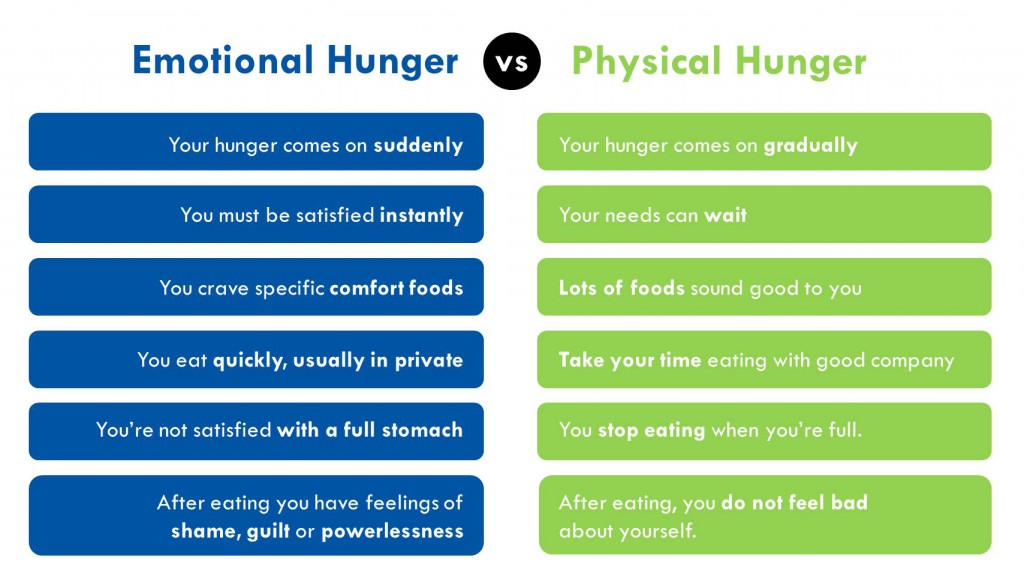
emotional-vs-plysical-hunger

It’s not necessarily bad to eat food from time to time as a pick-me-up meal, a reward treat, or a celebration feast. However, if food becomes your primary coping mechanism for anxiety, loneliness, boredom, anger, frustration, or exhaustion, and your first impulse when upset is to dig into a tub of ice cream, it calls for your attention. Feeding your emotion with food may feel good at the moment but doesn’t resolve the underlying problem. Often, you may end up feeling worse later due to unnecessary calorie bingeing and the physical havoc it wreaks on your metabolism.

The guilt, feeling powerless over emotions, and impulse eating leads to an unhealthy cycle, causing physical and emotional turmoil. Despite the difficulty, it is possible to make a positive change. All it requires is some effort on your part.

To help you break this cycle and mindless eating habit, here are a few pointers that work best when followed in order:

  1. Be Aware: Acknowledge your habit of emotional eating. If your near or dear ones have pointed it out or you know it by yourself, take it seriously! Awareness is the first positive step. Identify the emotions that lead to binge eating. Are they positive like exhilaration, victory, or success? Or negative like frustration, loneliness, anxiety, depression, anger, or boredom? Know your comfort foods, whether sweets, chocolates, ice creams or salty ones like chips, fries or some junk food like pizza, burger, maggi etc. that drive your emotional cravings. You may come up with multiple choices for multiple emotions and it is absolutely okay. You may also notice that your choice of comfort food is entirely different from others. So accept your unique patterns.

Tip: Maintain a food journal to help identify your emotions and associated foods, or use the food log feature in the GOQii app.

  1. Know your Hunger cues: Identify why you wish to eat. Hunger cues can be physical or emotional. If your stomach is growling and it’s been a few hours since your last meal, eating a salad or any other meal will suffice. But if you can postpone your hunger, you are likely to stop once you feel full, without guilt. This is true physical hunger.

Contrarily, if your hunger is sudden, urgent, and you crave specific foods like cookies or chips, or specific types of foods like sweets and fried foods and you are likely to over consume, feeling guilty later, you are about to be snacking out of false hunger, then the head hunger is generated out of emotional cues.

Tip: Next time you reach out for a snack, check if it’s driven by physical or emotional hunger.

  1. Cross check: Once you’ve identified your hunger cue, ask yourself why you are eating. Take a deep breath and get a clear answer. This helps put a check before the binge. If you’re reaching for a snack and unsure if it’s emotional, just ask yourself, “Why am I eating this?” Pause and reflect.

Tip: If it’s justified hunger, grab something healthy-roasted or steamed. If  it’s emotional, respectfully place the dish aside.

  1. Distract: Change your location once you put the dish aside. Go to another room or head outdoors. Find an alternative to food to fulfill your emotions. If lonely, talk to someone. If depressed or frustrated, watch a comic movie. For exhaustion, get a foot massage or take a warm bath. For anger, let it out or write it out. For anxiety, listen to your favorite music. If happy and wanting to reward yourself, indulge in your hobby.

Tip: You can also do some window shopping, reading, walking, exercising, meditating, or taking a nap which will give time to pass off the emotional storm and make you a stronger self- one who has more willpower to cope up with his/her feelings.

  1. Giving In: Emotional eating is an automatic and mindless habit. Sometimes, before you know it, you’ve eaten half a tub of ice cream. If you can pause for a moment when hit with a craving, you can make a different decision next time.

Tip: When you feel the urge to give in, pause and reflect. Don’t shut out the craving. Wait and consider what’s going on in your head and how you feel. Even if you eat afterward, this reflection helps you understand why and prepares you for a better response next time.


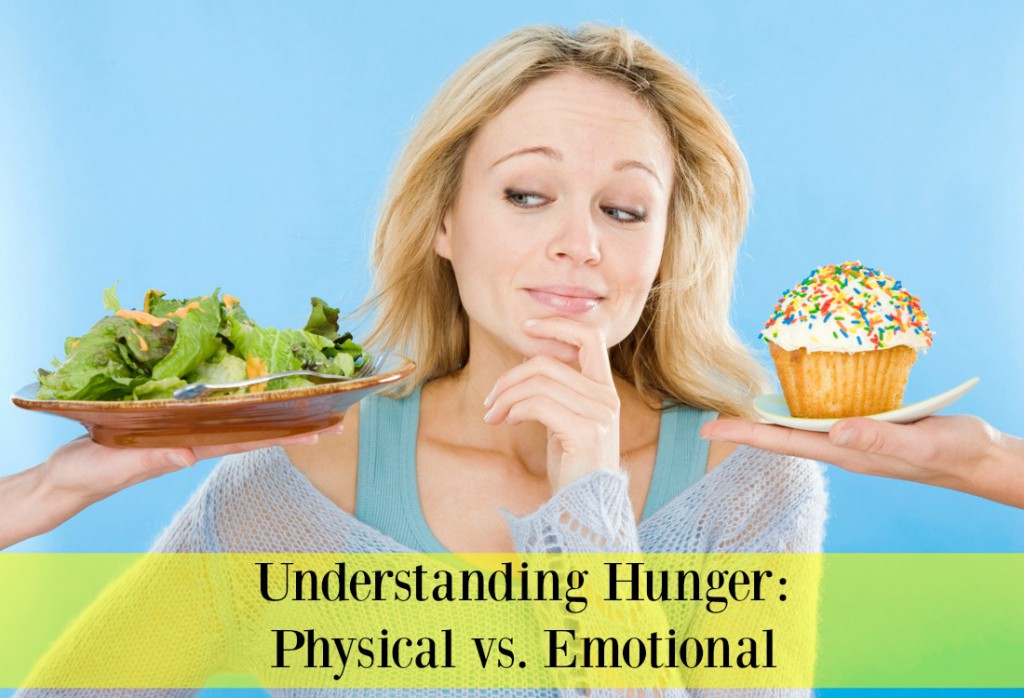
Understanding-Hunger-Physical-vs-Emotional
If you approach your feelings with kindness, reining in emotions is not a difficult task.

Listen to your emotions, accept them even if they are negative and when you do so, your body will understand that it doesn’t need to overeat to comfort itself and/or protect itself from powerful feelings.

Learning to mind your mood this way enables you to repair your emotional responses and physical fitness. Seeking help from experts or a personal coach can bring a turning point. Reach out if you need help to enjoy a better physical and mental health.

In the last blog of the 5 part series, I will discuss connecting with your meals and share tips on transforming your relationship with food for the better.

To be continued……………

#BeTheForce

  • « Previous Page
  • 1
  • …
  • 34
  • 35
  • 36
  • 37
  • 38
  • …
  • 101
  • Next Page »

Search

Recent Posts

  • 6 Health Benefits of Playing Sports
  • Foods to Manage Blood Sugar Naturally: A Complete Guide to Better Blood Sugar Control
  • The Lazy Person’s Guide to Staying Healthy: 5 Micro-Habits That Take Less Than 2 Minutes
  • Healthy Eating: Comforting Chilli Bean Soup Recipe for the Monsoon
  • The Truth About the ‘Beer Belly’: What Alcohol Really Does to Your Metabolism

Stay Updated

Archives

  • August 2026 (8)
  • July 2026 (25)
  • June 2026 (22)
  • May 2026 (20)
  • April 2026 (24)
  • March 2026 (18)
  • February 2026 (14)
  • January 2026 (14)
  • December 2025 (19)
  • November 2025 (15)
  • October 2025 (20)
  • September 2025 (6)
  • August 2025 (6)
  • July 2025 (9)
  • June 2025 (18)
  • May 2025 (16)
  • April 2025 (22)
  • March 2025 (26)
  • February 2025 (21)
  • January 2025 (25)
  • December 2024 (22)
  • November 2024 (22)
  • October 2024 (20)
  • September 2024 (22)
  • August 2024 (27)
  • July 2024 (15)
  • June 2024 (23)
  • May 2024 (26)
  • April 2024 (27)
  • March 2024 (27)
  • February 2024 (23)
  • January 2024 (21)
  • December 2023 (14)
  • November 2023 (10)
  • October 2023 (19)
  • September 2023 (21)
  • August 2023 (16)
  • July 2023 (16)
  • June 2023 (21)
  • May 2023 (20)
  • April 2023 (19)
  • March 2023 (23)
  • February 2023 (19)
  • January 2023 (15)
  • December 2022 (11)
  • November 2022 (15)
  • October 2022 (15)
  • September 2022 (12)
  • August 2022 (9)
  • July 2022 (17)
  • June 2022 (11)
  • May 2022 (10)
  • April 2022 (6)
  • March 2022 (6)
  • February 2022 (13)
  • January 2022 (11)
  • December 2021 (7)
  • November 2021 (3)
  • October 2021 (6)
  • September 2021 (3)
  • August 2021 (8)
  • July 2021 (7)
  • June 2021 (15)
  • May 2021 (16)
  • April 2021 (10)
  • March 2021 (7)
  • February 2021 (4)
  • January 2021 (4)
  • December 2020 (3)
  • November 2020 (4)
  • October 2020 (10)
  • September 2020 (3)
  • August 2020 (3)
  • July 2020 (2)
  • June 2020 (4)
  • May 2020 (10)
  • April 2020 (12)
  • March 2020 (10)
  • February 2020 (4)
  • January 2020 (4)
  • December 2019 (3)
  • November 2019 (7)
  • October 2019 (5)
  • September 2019 (4)
  • August 2019 (9)
  • July 2019 (9)
  • June 2019 (11)
  • May 2019 (4)
  • April 2019 (8)
  • March 2019 (8)
  • February 2019 (9)
  • January 2019 (8)
  • December 2018 (9)
  • November 2018 (3)
  • October 2018 (3)
  • September 2018 (5)
  • August 2018 (10)
  • July 2018 (6)
  • June 2018 (13)
  • May 2018 (8)
  • April 2018 (17)
  • March 2018 (9)
  • February 2018 (8)
  • January 2018 (15)
  • December 2017 (12)
  • November 2017 (19)
  • October 2017 (13)
  • September 2017 (15)
  • August 2017 (4)
  • July 2017 (8)
  • June 2017 (7)
  • May 2017 (6)
  • April 2017 (8)
  • March 2017 (6)
  • February 2017 (7)
  • January 2017 (9)
  • December 2016 (10)
  • November 2016 (7)
  • October 2016 (7)
  • September 2016 (7)
  • August 2016 (11)
  • July 2016 (9)
  • June 2016 (9)
  • May 2016 (12)
  • April 2016 (17)
  • March 2016 (17)
  • February 2016 (8)
  • January 2016 (6)
  • December 2015 (2)
  • November 2015 (9)
  • October 2015 (7)
  • September 2015 (9)
  • August 2015 (11)
  • July 2015 (9)
  • June 2015 (11)
  • May 2015 (9)
  • April 2015 (13)
  • March 2015 (8)
  • February 2015 (5)
  • January 2015 (12)
  • December 2014 (14)
  • November 2014 (11)
  • October 2014 (6)
  • September 2014 (13)
  • August 2014 (12)
  • July 2014 (6)
  • June 2014 (2)
  • May 2014 (7)
  • April 2014 (4)

From Burnout to Balance: How Dr. Ranjit Reclaimed His Health

Dr Ranjit Bhatt has spent years tending to others. A practising doctor in Odisha, his days were packed with patients, surgeries, and emergencies. From the outside, it looked like a life lived in service. But on the inside, something wasn’t right. “I had no … [Read More...]

From Shimla’s Slopes to Chandigarh’s Sidewalks: Surinder Kaur Bhalla’s Journey from Chaos to Control

Some journeys start with a plan. Others begin with a stumble literally. Surinder Bhalla, a government professional, born and raised in the scenic hill town of Shimla, had always lived a life of movement. “In Shimla, you walked everywhere,” she reflects. “Walking was never an exercise. It was just life.” But after shifting to Chandigarh, […]

“I’ve Challenged Myself to Live 100 Years” – The Story of Chandubhai Savani’s Second Chance at Life

At 67, most people start slowing down. Not Chandubhai Savani. A resident of Surat, Chandubhai, thought life was on track. “My life was going well till I had my bypass surgery,” he says. That surgery, back in 2021, was a wake-up call.  Medication was routine, but exercise wasn’t. His diet? What he calls ‘normal.’ “I […]

Ananda Mukherjee Health Story

From Terminal Illness To Complete Wellness! Ananda Mukherjee Health Story

As we observe World Cancer Day under the powerful theme ‘United by Unique’ (2025-2027)**, we are reminded that every individual’s journey with cancer is distinct, yet united by shared resilience, hope, and the collective fight against this disease. This theme places people at the centre of care and their stories at the heart of the […]

  • HOME
  • HEALTHY LIVING
  • FITNESS
  • HEALTHY RECIPES
  • USER STORIES
  • KARMA
  • BUY GOQii

Copyright ©2016 GOQii