GOQii

Blog

  • HOME
  • HEALTHY LIVING
  • FITNESS
  • HEALTHY RECIPES
  • USER STORIES
  • KARMA
  • BUY GOQii

Search Results for: mental health

January 8, 2025 By GOQii 2 Comments

Struggling with Sleep? Your Circadian Rhythm Might Be to Blame

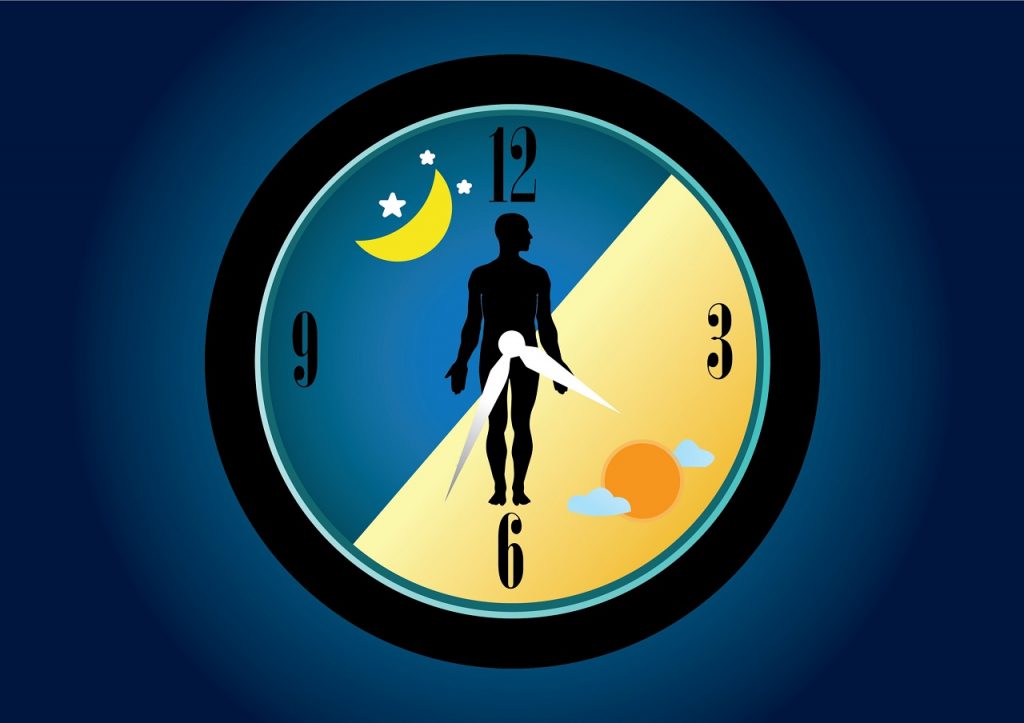
circadian rhythmCircadian Rhythms are 24 hour cycles that are part of the body’s internal clock, which aid essential functions and processes. For instance, the sleep-wake cycle is a well known circadian rhythm. Different parts of the body follow circadian rhythms that are connected to the master clock of the brain. The master clock is affected by the environment, which is why the circadian rhythm is tied to the day and night cycle.

While following your body’s natural clock can help you reap some amazing benefits, doing the opposite can create many health problems. Researchers also believe that circadian rhythms play an important role in the diverse aspects of physical and mental health.

How Does It Affect You?  

Circadian rhythms work best when the body processes are optimized at various points during a 24-hour period. It works with the mental and physical systems throughout the body. The digestive system produces proteins to suit the timings of the meals, and the endocrine system regulates the hormones to suit normal energy expenditure. 

During the day, when you are exposed to sunlight, the master clock sends signals to generate alertness which keeps us awake and active. As night falls, the master clock helps in the production of melatonin, a hormone that promotes sleep, and sends signals that helps us to sleep through the night. When we sleep well at night, it helps us be active during the day.

Straying away from your body’s clock can give rise to serious sleeping problems. Without proper signalling from the body’s internal clock, a person can struggle to fall asleep and wake up during the night, or being unable to sleep as long as they want in the morning. This leaves a person with little energy, attentiveness, focus, etc. 

In addition, studies have found out that Circadian rhythm disruptions as potential contributors to obstructive sleep apnea (OSA), a sleep disorder marked by repeated lapses in breathing. OSA reduces the body’s oxygen levels and causes numerous sleep interruptions through the night.

Types of Sleep-Wake Disorders 

  1. Delayed Sleep Phase Syndrome: This type of circadian rhythm disruption is associated with people who stay up late at night and sleep late in the morning. The main cause is unknown but may be related to genetics, underlying physical conditions and a person’s behaviour.
  2. Jet Lag Disorder: This happens when a person crosses a lot of time zones in a short period of time during intercontinental flights. They are likely to suffer from sleeping problems and fatigue from jet lag.
  3. Irregular Sleep–Wake Disorder: People with this rare disorder have no consistent pattern for their sleep and may have many naps or short sleeping periods throughout the day. It may affect the brain and cause dementia. 
  4. Shift Work Sleep Disorder: commonly affects those who work non-traditional hours, outside the typical 9am to 5pm work day. Shift work schedules go against most people’s internal body clocks or circadian rhythms. 
  5. Non 24 hour Sleep-Wake Disorder: This condition occurs in people who are blind and are not able to receive light. Their body follows a 24 hour cycle, but their sleeping hours change backwards by minutes or hours at a time.

Tips To Maintain Your Circadian Rhythm 

  • Exposure to sunlight: It is good to walk early in the day so that you can get good exposure to natural light and take in some Vitamin D.
  • Avoid caffeine: Stimulants like caffeine can keep you awake and can disturb the circadian rhythm. If you have trouble sleeping, avoid caffeine after noon. 
  • Eat a protein rich breakfast: Protein gives you the strength to be active throughout the day.
  • Avoid stress: Keep a positive attitude. Be assertive instead of aggressive, meditate, do yoga and eat healthy well-balanced meals.
  • Get daily exercise: Take a brisk walk early morning and keep yourself active throughout the day. This can help your internal clock and make it easier to fall asleep at night.
  • Take a short nap in the afternoon: Short naps can relax us while long naps throw our sleep off schedule.
  • Limit light before sleep: Artificial lighting can interfere with the circadian rhythm. Therefore, dim the lights and turn off all electronic devices one hour before bedtime.

Researchers believe that chronic disruptions in circadian rhythms could affect the immune system leading to weight gain, impulsive slower thinking and other physiological and behavioral changes from the observation made in people who work in shifts and those who are often jet lagged. 

If this article intrigued you and you’d like to know more, check out our article on the Circadian Rhythm Diet and how it helps. To balance your sleep-wake cycle or ensure better sleep quality, reach out to a GOQii Coach by subscribing to Personalised Health Coaching here.

#BeTheForce 

Disclaimer: The information provided in this blog is for general awareness and educational purposes only. It is not intended to replace professional medical advice, diagnosis, or treatment. Always consult a qualified healthcare provider for personalised medical guidance or concerns related to your health.

November 29, 2024 By Mubasheera Chaiwala Leave a Comment

Stress and You: A Comprehensive Guide to Managing Life’s Challenges-Part-1

India is still stressedPicture yourself about to deliver a crucial presentation at work. Standing before your colleagues, you feel your heart racing, your hands slightly sweaty, and your mind zeroing in on every word you’re about to say. That surge you feel? It’s stress at work—a natural response gearing you up to perform at your best. In this moment, stress isn’t a barrier; it’s a boost, keeping you sharp, focused, and ready to engage.


Stress plays a crucial role in many areas of our lives, whether it’s the drive to excel in an exam, perform well in a major game, or stay alert in a risky situation. However, like a double-edged sword, while stress can provide a helpful boost, excessive stress can start to hold us back. By understanding what stress is and how it impacts us, we can learn to harness it when it’s useful and manage it when it starts to feel overwhelming.

Let us understand what is Stress?

Stress is the body’s natural reaction to any demand or threat. When we sense danger—whether it’s real or perceived—the body triggers an automatic “stress response” designed to protect us, keeping us focused, energized, and alert. In emergencies, stress can even be life-saving, providing extra strength and heightened awareness to face the challenge.

However, stress isn’t always a negative force. It can serve as a motivator, helping us rise to challenges. For example, stress can keep us sharp during a work presentation, boost our focus in a game, or push us to study for an exam rather than indulge in distractions. In this way, stress can empower us to exceed our limits and achieve our goals. But when stress becomes chronic, it can start to affect our health, making it essential to manage it well.

What happens when you’re stressed?

When you experience stress, your nervous system releases a surge of stress hormones, including adrenaline and cortisol, priming your body for action. Your heart beats faster, muscles tense, blood pressure rises, breathing quickens, and your senses sharpen. However, after a certain point, stress ceases to be helpful and can begin to harm your health, mood, productivity, relationships, and overall quality of life.

Common symptoms of stress-

Cognitive symptoms

  1. Memory problems- Inability to concentrate
  2. Constant worrying
  3. Mood swings, irritability, anger

Physical symptoms                                                                              

  1. Chest pain, rapid heart rate
  2. Frequent colds or flu
  3. Aches and pains
  4. Dark circles, skin pigmentation

Behavioral symptoms

  1. Eating more or less
  2. Sleeping too much or too little
  1. Withdrawing from others
  2. Procrastinating or neglecting responsibilities
  3. consuming alcohol, smoking, or drugs to relax, Nervous habits (e.g. nail biting)

Health Problems Related to Stress:

Diabetes

Stress can worsen diabetes in two ways. Hormones like cortisol, cortisone, and hydrocortisone play a major role in the body’s response to stress. Under the influence of cortisol, blood sugar levels are maintained and can even rise during stressful times. These hormones are responsible for converting glycogen into glucose. Any type of stress increases cortisol levels in the blood. Additionally, stress raises the likelihood of unhealthy behaviours, such as poor eating habits and excessive drinking.

Hypertension and Heart Disease

People who are stressed have a higher risk of high blood pressure and heart problems. Stress can directly increase heart rate and blood flow, causing the release of cholesterol and triglycerides into the bloodstream. It’s also possible that stress is linked to other issues—like an increased likelihood of smoking or obesity—that indirectly elevate heart risks.

Things to do to effectively manage stress:

  1. Eat a well-balanced diet, food rich in important vitamins and minerals that help in managing stress (we will discuss the food helping in managing stress in PART 2)
  2. Yoga is a popular physical and mental health enhancer
  3. Exercise can be a great stress reliever. It changes one’s outlook and the day will seem far less tense.
  4. Massage is a form of enforced physical relaxation and mental relaxation to reduce stress.
  5. Being assertive. Assertive people tend to have less conflicts, and are understanding.
  6. Cultivate the power of patience, it will do you a lot of good.
  7. Keep yourself occupied so that your mind doesn’t think of those matter that hurt you. (example if watching news that make you sad .. try not to watch it and watch something funny and light.).
  8. Read books that motivate you.
  9. Try doing things that make you happy. For instance playing your favourite sport, going on a long drive, hanging out with friends or calling them home.

This concludes Part 1 of our comprehensive guide to stress management. We hope this article provided valuable insights into understanding and managing stress effectively. Stay tuned for Part 2, where we’ll delve into the role of nutrition and advanced strategies in stress management.

For more informative articles on health and well-being, explore Healthy Reads. For further guidance on managing stress and lifestyle, speak to a certified expert by subscribing to GOQii’s Personalised Health Coaching here.

#BeTheForce

Disclaimer: The information provided in this blog is for general awareness and educational purposes only. It is not intended to replace professional medical advice, diagnosis, or treatment. Always consult a qualified healthcare provider for personalised medical guidance or concerns related to your health.

November 28, 2024 By Pradnya Shinde Leave a Comment

Minimalist Living – Why Less is More!

minimalist living

“If you don’t know what you want, you end up with a lot you don’t,” – Well, if you have read Chuck Palahniuk’s masterpiece Fight Club, you’ll be familiar with this quote. It is funny how a work of fiction can hold so much relevance in the world we live in and maybe Tyler Durden, the film’s protagonist, was right when he said, “The things you own, end up owning you.”

How many times have you browsed through an online shopping portal and thought, “Oh! I might need a new phone”, “Wow! This is on discount. I should get this,” or just bought something that you don’t really need and it just sits on a shelf till you forget about it? No one would blame you. We’re living in the peak of consumerism where everything you need and don’t need is just a finger tap away.

Does happiness really exist in a big home with perfect flooring and matching drapes? Does it exist in a fancy car, smart electronic devices, furniture, fashionable clothes, jewellery, footwear et al? What if the answer was in the opposite direction?

When it comes to living a wholesome, healthy and holistic lifestyle, anything which is in excess is bad! Be it food, exercise, thoughts and even the things we surround ourselves with. One of the best ways to achieve good mental health is to declutter and take up minimalist living.

What is Minimalism?

Minimalism, in essence, is living with less. The whole idea is to live a life based on experiences rather than worldly possessions. This includes decluttering or minimum usage of things such as furniture, clothes, accessories, etc. It is a personal change one makes to add value to their life. You can choose what is important to you and throw away things which are not.

What are the Benefits of Minimalist Living?

Minimalist Living does involve sacrificing things you think you might need. Not necessarily the best life choice for hoarders and might seem a bit unnecessary but it needs to be done! Trust me, the pros most definitely outweigh the cons!

For instance, decluttering and reducing the number of things you own helps you focus only on the important things in life. With less distractions, you can pay attention to things that require it. This does not mean you throw out things important to you. Keep the things you really need and thrown away the things you don’t.

More space and less junk will definitely help you be more productive. A clean and organized house definitely reduces a lot of stress! More so, you have a lot less financial burdens and avoid unnecessary expenses.

How Do You Do It?  

Let’s get started! Observe your home and your belongings. Make a list of things which you have not used in a year or two. There are less chances you will need it again so get rid of it.

Here, I am sharing a sample list to help you out:

  • Unused and worn out clothes, shoes, socks, etc.
  • Excess clutter in wallet
  • Unwanted receipts, bills, papers, books, manuals, etc.
  • Old electronics/ wires/ chargers/ batteries
  • Unused and expired beauty products and medication
  • Unused stationery that doesn’t work
  • Unused cleaning products
  • Broken or unused furniture
  • Damaged plastic containers
  • Kitchen gadgets and appliances you don’t use
  • Extra towel/ cushions/ scarf/ gloves
  • Junk drawer
  • Extra bags
  • Anything that you don’t know the purpose of

Remove all of it from your home. You can donate the things you don’t need to somebody who might have use for it or just resell, recycle or repurpose it.

You’re all done! Does it feel good?

Furthermore, you can also make additional changes to keep this habit going by thinking before you buy. Don’t purchase it just because you might need it in the future or because it is on sale. Buy only when you need. Regularly keep a check and see if you’re cluttering again.

In the next article, we will explore the wonderful benefits that minimalism offers and how it can help your health and life!

Stay tuned and #BeTheForce!

October 7, 2024 By Pradnya Shinde 4 Comments

5 Powerful Ways Of Meditation

powerful ways of meditationWe know that meditation is very very good for health, especially mental health. But sometimes, we get confused about what exactly to do. So here’s a guide to help you begin. Try these powerful ways of meditation to improve your health and wellbeing! 

Powerful Ways Of Meditation 

1. Concentrative Meditation
As the word suggests, you are supposed to concentrate on one point so you won’t think about other things. When thoughts are scattered, it creates no impact, but sharp attention is a powerful tool. One way to do it is to focus on your own breathing cycle. See how you inhale through the nose, how you feel inside the body and how you exhale. Another way is to focus on sounds like any word or phrase or the sound of a bell. You can also focus on a candle’s flame. Sit in front of the candle, look at the flame and close your eyes. Behold the picture of the flame in front of your mind. When the picture fades, open your eyes and repeat the process.

2. Contemplative Meditation
Instead of trying to stop thinking, contemplative meditation includes focusing on a single thought. Instead of too many different thoughts, it’s thinking about one subject and one thought with complete awareness of the thought. For this, you can contemplate any sentence from a religious scripture or contemplate objects like a flower or a tree. Think about the shape of a particular flower.

Another way is asking a question to yourself, believing in your inner instinct and waiting for an answer to come up. The questions can be:

  • What am I looking for?
  • What is it I am resisting?
  • Knowing I will die, how should I live?
  • What is my greatest mission?
  • What do I love?
  • What do I have fear of?
  • Who am I?

3. Witness Meditation
Watch your thoughts as if it’s a movie. Let the thoughts come, simply observe them, but do not react or try to reject. Be neutral. This is called being the witness of your thoughts. What does it do? It reduces your attachment from your thoughts. You no longer feel pain with those repetitive thoughts. This is a great technique to let go of resentment from the past.

4. Chanting Mantra
Chanting mantras repeatedly is one way of meditation. Mantra is a sanskrit word. Man means mind and Tra means release. Mantra is supposed to be a set of words which releases your mind from all it’s anxieties. It has been said that chanting mantras provides spiritual growth. But make sure you are paying attention, because that is all what we want. You can chant OM or Gayatri Mantra.

5. Movement Meditation
If you think you can’t sit at one place and focus, practice meditation through body movements. Self defense practices like Tai chi and Qigong are used as a form of meditation for a very long time. Yoga is one excellent example of movement meditation. Yoga involves being fully aware of your breathing and understanding the basic nature of self. But not only this, we can also practice meditation through simply walking or dancing. Just be attentive, pay close attention to your steps, body movements and surroundings.

Next time, when you sit to meditate, you can try something new. Keep it mind, sometimes we might get a little restless but be patient. Don’t get frustrated. Slowly get back to your point of concentration.

We hope these 5 powerful ways of meditation help you! Do leave your thoughts and experiences in the comments below. For more on meditation and yoga, check out Healthy Reads or for further guidance, speak to a certified expert by subscribing to GOQii’s Personalised Health Coaching here.

#BeTheForce 

Disclaimer: The information provided in this blog is for general awareness and educational purposes only. It is not intended to replace professional medical advice, diagnosis, or treatment. Always consult a qualified healthcare provider for personalised medical guidance or concerns related to your health.

  • « Previous Page
  • 1
  • …
  • 32
  • 33
  • 34
  • 35
  • 36
  • …
  • 101
  • Next Page »

Search

Recent Posts

  • 6 Health Benefits of Playing Sports
  • Foods to Manage Blood Sugar Naturally: A Complete Guide to Better Blood Sugar Control
  • The Lazy Person’s Guide to Staying Healthy: 5 Micro-Habits That Take Less Than 2 Minutes
  • Healthy Eating: Comforting Chilli Bean Soup Recipe for the Monsoon
  • The Truth About the ‘Beer Belly’: What Alcohol Really Does to Your Metabolism

Stay Updated

Archives

  • August 2026 (8)
  • July 2026 (25)
  • June 2026 (22)
  • May 2026 (20)
  • April 2026 (24)
  • March 2026 (18)
  • February 2026 (14)
  • January 2026 (14)
  • December 2025 (19)
  • November 2025 (15)
  • October 2025 (20)
  • September 2025 (6)
  • August 2025 (6)
  • July 2025 (9)
  • June 2025 (18)
  • May 2025 (16)
  • April 2025 (22)
  • March 2025 (26)
  • February 2025 (21)
  • January 2025 (25)
  • December 2024 (22)
  • November 2024 (22)
  • October 2024 (20)
  • September 2024 (22)
  • August 2024 (27)
  • July 2024 (15)
  • June 2024 (23)
  • May 2024 (26)
  • April 2024 (27)
  • March 2024 (27)
  • February 2024 (23)
  • January 2024 (21)
  • December 2023 (14)
  • November 2023 (10)
  • October 2023 (19)
  • September 2023 (21)
  • August 2023 (16)
  • July 2023 (16)
  • June 2023 (21)
  • May 2023 (20)
  • April 2023 (19)
  • March 2023 (23)
  • February 2023 (19)
  • January 2023 (15)
  • December 2022 (11)
  • November 2022 (15)
  • October 2022 (15)
  • September 2022 (12)
  • August 2022 (9)
  • July 2022 (17)
  • June 2022 (11)
  • May 2022 (10)
  • April 2022 (6)
  • March 2022 (6)
  • February 2022 (13)
  • January 2022 (11)
  • December 2021 (7)
  • November 2021 (3)
  • October 2021 (6)
  • September 2021 (3)
  • August 2021 (8)
  • July 2021 (7)
  • June 2021 (15)
  • May 2021 (16)
  • April 2021 (10)
  • March 2021 (7)
  • February 2021 (4)
  • January 2021 (4)
  • December 2020 (3)
  • November 2020 (4)
  • October 2020 (10)
  • September 2020 (3)
  • August 2020 (3)
  • July 2020 (2)
  • June 2020 (4)
  • May 2020 (10)
  • April 2020 (12)
  • March 2020 (10)
  • February 2020 (4)
  • January 2020 (4)
  • December 2019 (3)
  • November 2019 (7)
  • October 2019 (5)
  • September 2019 (4)
  • August 2019 (9)
  • July 2019 (9)
  • June 2019 (11)
  • May 2019 (4)
  • April 2019 (8)
  • March 2019 (8)
  • February 2019 (9)
  • January 2019 (8)
  • December 2018 (9)
  • November 2018 (3)
  • October 2018 (3)
  • September 2018 (5)
  • August 2018 (10)
  • July 2018 (6)
  • June 2018 (13)
  • May 2018 (8)
  • April 2018 (17)
  • March 2018 (9)
  • February 2018 (8)
  • January 2018 (15)
  • December 2017 (12)
  • November 2017 (19)
  • October 2017 (13)
  • September 2017 (15)
  • August 2017 (4)
  • July 2017 (8)
  • June 2017 (7)
  • May 2017 (6)
  • April 2017 (8)
  • March 2017 (6)
  • February 2017 (7)
  • January 2017 (9)
  • December 2016 (10)
  • November 2016 (7)
  • October 2016 (7)
  • September 2016 (7)
  • August 2016 (11)
  • July 2016 (9)
  • June 2016 (9)
  • May 2016 (12)
  • April 2016 (17)
  • March 2016 (17)
  • February 2016 (8)
  • January 2016 (6)
  • December 2015 (2)
  • November 2015 (9)
  • October 2015 (7)
  • September 2015 (9)
  • August 2015 (11)
  • July 2015 (9)
  • June 2015 (11)
  • May 2015 (9)
  • April 2015 (13)
  • March 2015 (8)
  • February 2015 (5)
  • January 2015 (12)
  • December 2014 (14)
  • November 2014 (11)
  • October 2014 (6)
  • September 2014 (13)
  • August 2014 (12)
  • July 2014 (6)
  • June 2014 (2)
  • May 2014 (7)
  • April 2014 (4)

From Burnout to Balance: How Dr. Ranjit Reclaimed His Health

Dr Ranjit Bhatt has spent years tending to others. A practising doctor in Odisha, his days were packed with patients, surgeries, and emergencies. From the outside, it looked like a life lived in service. But on the inside, something wasn’t right. “I had no … [Read More...]

From Shimla’s Slopes to Chandigarh’s Sidewalks: Surinder Kaur Bhalla’s Journey from Chaos to Control

Some journeys start with a plan. Others begin with a stumble literally. Surinder Bhalla, a government professional, born and raised in the scenic hill town of Shimla, had always lived a life of movement. “In Shimla, you walked everywhere,” she reflects. “Walking was never an exercise. It was just life.” But after shifting to Chandigarh, […]

“I’ve Challenged Myself to Live 100 Years” – The Story of Chandubhai Savani’s Second Chance at Life

At 67, most people start slowing down. Not Chandubhai Savani. A resident of Surat, Chandubhai, thought life was on track. “My life was going well till I had my bypass surgery,” he says. That surgery, back in 2021, was a wake-up call.  Medication was routine, but exercise wasn’t. His diet? What he calls ‘normal.’ “I […]

Ananda Mukherjee Health Story

From Terminal Illness To Complete Wellness! Ananda Mukherjee Health Story

As we observe World Cancer Day under the powerful theme ‘United by Unique’ (2025-2027)**, we are reminded that every individual’s journey with cancer is distinct, yet united by shared resilience, hope, and the collective fight against this disease. This theme places people at the centre of care and their stories at the heart of the […]

  • HOME
  • HEALTHY LIVING
  • FITNESS
  • HEALTHY RECIPES
  • USER STORIES
  • KARMA
  • BUY GOQii

Copyright ©2016 GOQii


