GOQii

Blog

  • HOME
  • HEALTHY LIVING
  • FITNESS
  • HEALTHY RECIPES
  • USER STORIES
  • KARMA
  • BUY GOQii

Search Results for: kidney

March 9, 2023 By Luke Coutinho 5 Comments

A Simple Way To Keep Your Kidneys Healthy

healthy kidneys

Obesity comes with its own set of problems. It just doesn’t mean excess weight and heart problems. A lot more is involved. A common point that most people miss out is the health of their kidneys. Adverts in various media platforms educate and try and sell you the best ‘Dialysis’ options available and a plethora of medication. Dialysis is a painful procedure. It affects people’s lives, jobs, families, relationships, etc.

Your goal should be to never reach that stage if it’s in your control, and in most cases, your lifestyle is the only thing that is really in your control. It’s your choice. Keeping your kidneys working at their best should be a top priority. But, what’s sad is that even if you’re paying attention you could still end up with chronic kidney disease (CKD). Just taking care of your kidneys isn’t enough to prevent it.

The two main causes are high blood pressure and diabetes. In fact, one in three adults with diabetes—and 20% with high blood pressure have CKD. So, if you think this doesn’t affect you or a loved one, think again. About 26 million people have this kidney condition. And the numbers are only getting higher.

Chronic kidney disease can be hard to spot early. Most people find out they have it after a blood or urine test. Their doctors’ first course of action—of course—is to write a prescription. This can include blood pressure medications like beta blockers and even statins. If you don’t catch CKD early, your options could be even scarier, like dialysis or a full-on transplant. But, new research out of China has found a simple, natural solution.

Researchers in China followed 6,363 patients with chronic kidney disease (CKD). After 10 years they found people who did this were 33% less likely to die. But, this didn’t just help prevent death, it also helped improve the quality of life. These people lowered their risk for needing dialysis—or even a kidney transplant—by 21%. And that’s just the average. This easy, everyday activity may help you live longer with CKD—maybe even avoid it entirely.

We’re talking about walking. It sounds simple, but it’s effective. And for some people in the study, it may have added enjoyable years to their life. The people in this study who walked the most saw an even greater benefit than the rest of the group. Walking for 30 minutes or less at least once a day helped some subjects reduce mortality risk by 59%. And their likelihood of needing a kidney transplant or dialysis dropped by 44%.

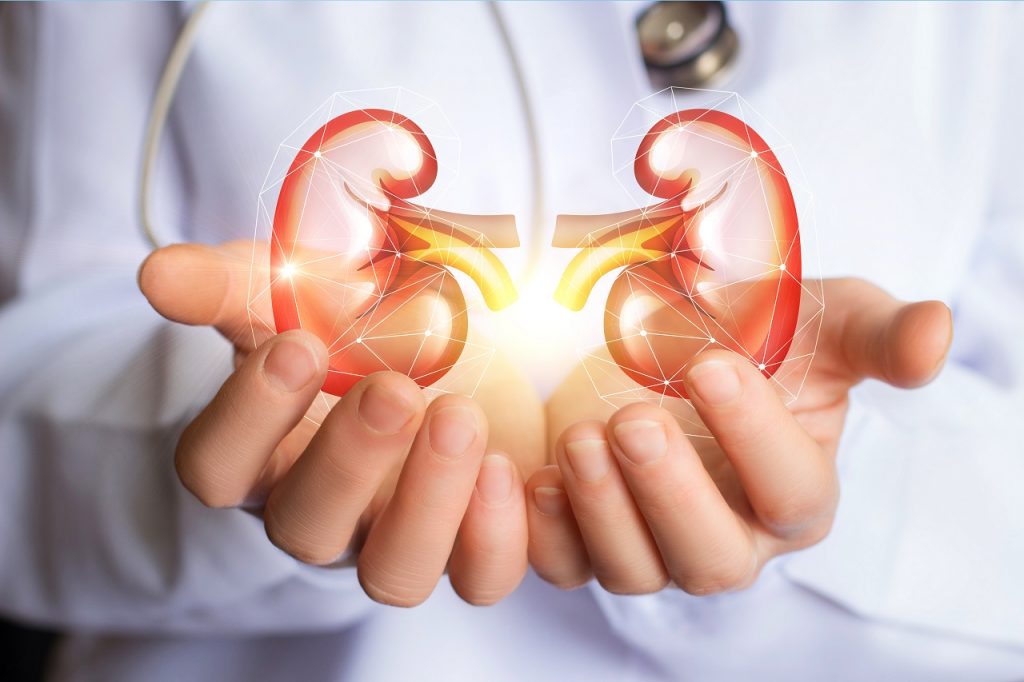
Your kidneys may be the most important organs in your body. They act like a filter for your blood. Their main job is to remove waste products and balance fluid levels. But, they also help produce vitamin D and red blood cells. They even help regulate blood pressure.

Chronic kidney disease includes a variety of conditions that cause your kidneys to shut down over time. At first, you may not notice anything is wrong. But, as time goes on, waste levels can build. This may eventually make you feel sick. But it can also lead to high blood pressure and nerve damage. Worse yet, CKD may increase your risk of developing heart disease.

Simply walking for a few minutes a day may help you avoid transplant or dialysis. It may even help you live longer with CKD. But exercise is also a great way to avoid CKD in the first place. Making the switch to high-intensity exercise could lead to impressive results. It may also help lower your blood pressure and diabetes – the two main causes that lead to developing CKD.

So get moving. Exercise should be your only medicine. We hope this article helps you. Do leave your thoughts in the comments below!

For more tips on how to improve the health of your kidneys, check out Healthy Reads or ask a GOQii Coach by subscribing for Personalised Health Coaching here.

#BeTheForce 
July 29, 2022 By GOQii 2 Comments

All You Need To Know About Maintaining Healthy Kidneys!

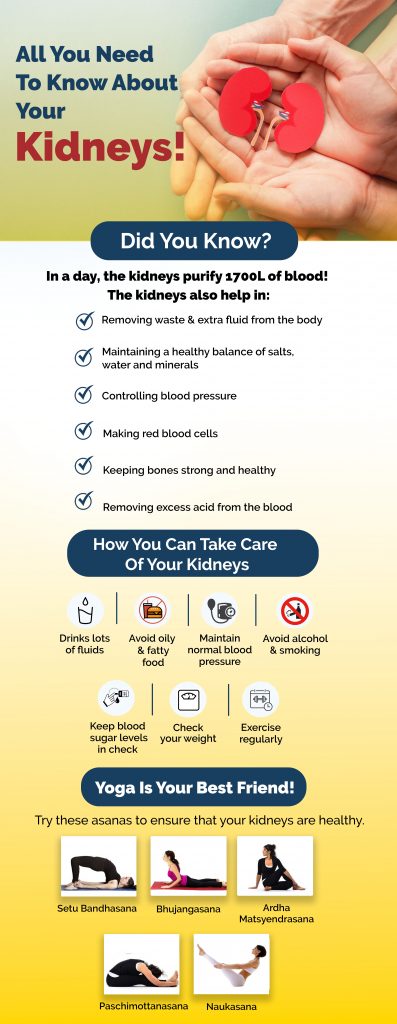
Your kidneys are one of the hardest working organs in your body. They help in removing waste and extra fluid from the body, reabsorb almost all of the water along with the minerals and nutrients your body needs, and remove excess acid from the blood as well. These are just a few things your kidneys do to keep your blood and body clean. So how do you ensure that you maintain healthy kidneys to help them do their job? Check out the detailed infographic below!

All You Need To Know About Kidney Health

Nothing beats regular exercise, especially yoga. These not only help the kidney, but the complete body. Yoga asanas assist in managing water retention in the body which enables sound sleep schedules and hence better rest. It is also one of the best ways to maintain balance in the body. Few asanas facilitate internal cleansing and flush out the toxins:

  1. Setu Bandhasana stimulates the abdominal organs, helps bring high blood pressure under control and relieves the body of stress.
  2. Bhujangasana stretches and strengthens the abdominal organs. It also raises the immunity level of the body.
  3. Ardha Matsyendrasana stimulates the kidneys and liver; improves the body’s immunity level.
  4. Paschimottanasana stimulates the kidney, improves digestion, and relieves menstrual discomfort.
  5. Naukasana improves digestion and alleviates stress. It strengthens and stimulates the abdominal organs.

We hope this article helps you. To know more about maintaining healthy kidneys, check out Healthy Reads or ask a GOQii Coach for some tips by subscribing for personalized coaching here: https://goqiiapp.page.link/bsr

#BeTheForce 

March 10, 2022 By Dr. Viral Thakkar 1 Comment

All About Your Kidneys – The Natural Cleansers

world kidneys day

Can you imagine your house not being cleaned for a day? Imagine no sweeping or mopping, and no sweeper collecting the garbage. The house would start smelling, it will get intense, and eventually there will be decay. Just like our house, the body needs to be cleaned. This essential and unparalleled job is done by a 10-13cm organ – the kidneys. The kidneys help in:

  • Removing waste and extra fluid from the body (Urine).
  • Maintaining a healthy balance of salts, water and minerals like sodium, calcium, phosphorus, and potassium in the blood. It removes acid too! 
  • They also make hormones that help control blood pressure, make red blood cells and keep bones strong and healthy. 

According to Traditional Chinese Medicine, the Kidney is the powerhouse of the body, supplying reserve energy to any organ running low on Qi. Its partner organ is the bladder.

The Kidney’s Job Profile

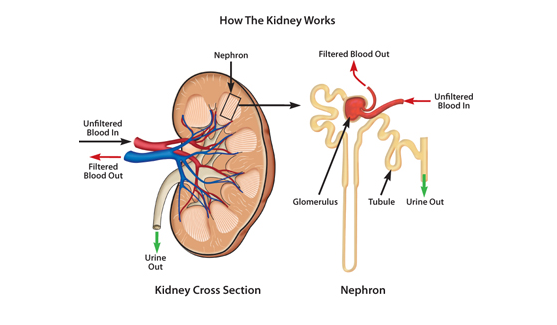
Each of the kidney is made up of about a million filtering units called nephrons. Each nephron includes a filter called the glomerulus and a tubule. The nephrons work through a two-step process:

The glomerulus filters the blood and the tubule returns needed substances to the blood and removes wastes. 

A blood vessel runs alongside the tubule. As the filtered fluid moves along the tubule, the blood vessel reabsorbs almost all of the water along with minerals and nutrients your body needs. The tubule helps remove excess acid from the blood. The remaining fluid and wastes in the tubule become urine.

The blood circulates through the kidneys many times a day. In a single day, kidneys filter about 150 quarts of blood. Most of the water and other substances that filter through the glomeruli are returned to the blood by the tubules. Only 1 to 2 quarts become urine.

Each kidney performs the process of reabsorption with great precision. Out of 180 liters of fluid that enters the tubules, 99% of fluid is selectively reabsorbed and only the remaining 1% of fluid is excreted in the form of urine.
By this intelligent and precise process, all essential substances and 178 liters of fluid are reabsorbed in the tubules, whereas 1-2 liters of fluids, waste products, and other harmful substances are excreted.

Urine formed by the kidneys flow to the ureters, and passes through the urinary bladder and is finally excreted out through the urethra.

Did you know that every minute, 1200 ml of blood enters the kidneys for purification, which is 20% of the total blood pumped by the heart? So in one day, 1700 liters of blood is purified!

Here is How You Can Take Care of Your Kidneys

  1. Drink up! Kidneys balance the electrolytes and fluid levels and hence its essential to drink liquids which are non-alcoholic and not caffeinated. Juices, coconut water, water, smoothies, etc. are your friends
  2. Check the colour of your urine. It should be the colour of a straw. Any darker means you need to drink up.
  3. Too much oily and fatty food is a big no! It puts pressure on the kidneys. Greens are your friends! 
  4. Ensure you have a normal blood pressure. It can silently impact your kidneys.
  5. Alcohol and smoking is a BIG no. There are no two ways about it! Just stop it
  6. Got diabetes? If you do, work with your doctor to keep your blood sugar levels in check. If they’re not under control, that can cause problems for your kidneys over time. Along with hypertension (high blood pressure), diabetes is one of the biggest concerns for kidney health.
  7. Use your meds correctly. Take them as your doctor recommends, or follow the instructions on the package. Be wary of medicines that can cause kidney damage when you take them for a long time, including over-the-counter painkillers like ibuprofen and prescriptions such as lithium and HIV medications. (Street drugs like cocaine can cause kidney disease too).
  8. Check your weight & exercise regularly. 
  9. Be positive, not just for your kidneys but for your overall health. People who tend to hold negative thoughts especially envious feelings with hatred tend to get kidney disorder as compared to a positive person, as every emotion is linked with an organ. 

Yoga and Pranayama are your friends for life!

Nothing beats regular exercise especially yoga and pranayama. These not only help the kidney, but the complete body. Yoga asanas assist in managing water retention in the body which enables sound sleep schedules and hence better rest. It is also one of the best ways to maintain balance in the body. Few asanas facilitate internal cleansing and flush out the toxins. Pranayam is known to relieve stress. 

To ensure that the kidneys perform their JD up to the mark, make sure you make your body do the following:

  1. Setu Bandhasana stimulates the abdominal organs, helps bring high blood pressure under control and relieves the body of stress.
  2. Bhujangasana stretches and strengthens the abdominal organs. It also raises the immunity level of the body.
  3. Ardha Matsyendrasana stimulates the kidneys and liver; improves the body’s immunity level.
  4. Paschimottanasana stimulates the kidney, improves digestion, and relieves menstrual discomfort.
  5. Naukasana improves digestion and alleviates stress. It strengthens and stimulates the abdominal organs. 

We hope this article helps you. To know more about improving kidney health, check out Healthy Reads or ask a GOQii Coach for some tips by subscribing for personalized coaching here: https://goqiiapp.page.link/bsr

#BeTheForce 

June 14, 2026 By GOQii Leave a Comment

World Blood Donor Day: The Lifesaving Gift That Science Still Cannot Create

The Big Question: In an era of artificial intelligence and organ transplants, why can’t scientists manufacture a single drop of human blood?
Every year, millions of patients around the world rely on blood transfusions to survive catastrophic accidents, invasive surgeries, cancer treatments, childbirth complications, and chronic illnesses. Despite breathtaking breakthroughs in modern medicine, a complete functional substitute for human blood does not exist. On World Blood Donor Day, we honor the extraordinary individuals whose simple act of voluntary donation keeps the global healthcare system from collapsing.

Imagine a patient being rushed into emergency surgery after a major road accident. A child undergoing intensive chemotherapy for leukemia. A mother experiencing sudden, severe postpartum hemorrhaging during childbirth. Or a patient with thalassemia whose entire life depends on regular, lifelong blood transfusions.

Now, imagine that the one resource all of these individuals urgently need to stay alive cannot be manufactured in a laboratory. It cannot be bio-printed using advanced technology, and it cannot be mass-produced in a pharmaceutical factory. That resource is human blood.

In a world driven by rapid scientific innovation, human blood remains one of the few medical resources that cannot be artificially replicated. Every drop used in hospitals comes from one source alone: another human being. This is why World Blood Donor Day, observed globally on June 14, remains one of the most critical healthcare awareness initiatives on the planet.

Why Blood Donation Matters

Blood is the ultimate fluid of life. It acts as a highly specialized transport system, delivering oxygen, essential nutrients, hormones, and immune cells to every tissue in the body while carrying away cellular waste products. When severe blood loss occurs due to trauma, or when a chronic medical condition impairs the bone marrow’s ability to produce healthy cells, a transfusion is the only viable solution.

Donated blood is a structural pillar for patients who:

  • Experience severe physical trauma or major accidents
  • Undergo complex cardiothoracic, orthopedic, or neurological surgeries
  • Receive chemotherapy treatments that temporarily suppress bone marrow function
  • Live with genetic blood disorders such as thalassemia and sickle cell disease
  • Require organ transplants, which inherently involve significant blood loss
  • Face unexpected acute complications during pregnancy and childbirth

For these individuals, a steady supply of blood is not simply beneficial—it is the thin line between life and death.

The One Resource Science Still Cannot Create

Medical science has transformed human longevity in remarkable ways. Today, surgeons can replace failing joints with titanium implants, transplant hearts and kidneys, utilize robotic-assisted surgical fields, and develop highly targeted immunotherapies.

Yet, despite decades of heavily funded international research, scientists have not been able to engineer a complete synthetic replacement for human blood that safely performs all of its vital biological functions. Blood is too chemically complex. It requires a perfect balance of fluid dynamics, oxygen-binding capacities, immune defenses, and clotting mechanisms.

This means every emergency room, trauma center, intensive care unit, and operating theater depends entirely on the goodwill of voluntary blood donors. Without them, there is no blood supply. And without a stable blood supply, modern life-saving treatments simply cannot happen.

One Donation, Multiple Saved Lives

A common misconception among first-time donors is that their single unit of donated blood (about 350ml to 450ml) helps only one person. In reality, modern blood banking utilizes a process where a single donation is separated into three distinct, highly potent components:

  • Red Blood Cells (Packed RBCs): Primarily used for patients experiencing acute blood loss from trauma, major surgeries, or individuals suffering from severe anemia.
  • Platelets: Frequently administered to cancer patients undergoing chemotherapy, whose platelet counts drop dangerously low, and individuals with severe blood clotting disorders.
  • Plasma: The liquid portion of the blood, packed with proteins and clotting factors, used in emergency trauma care, severe burn treatments, and the management of complex bleeding conditions.

Because these components can be distributed to entirely different wards, your single act of generosity can save up to three separate lives.

Demolishing Common Blood Donation Myths

Fear and misinformation are the primary reasons why eligible adults hesitate to donate. Let’s look directly at what clinical science says:

  • Myth 1: Donating blood permanently weakens your body.
    • The Reality: Most healthy adults can donate without a single long-term side effect. While you may feel temporarily tired immediately afterward, your body replaces the lost fluid volume within 24 to 48 hours, provided you drink enough fluids. Your red blood cells are fully replenished within a few weeks.
  • Myth 2: Blood donation is incredibly painful.
    • The Reality: Aside from a brief, minor needle prick when the sterile line is inserted, the actual process of blood collection causes zero pain or major discomfort.
  • Myth 3: My blood type is common, so it isn’t needed.
    • The Reality: Common blood types (like O+ or A+) are precisely the ones in the highest demand because the majority of patients requiring transfusions share those exact blood groups. Hospitals require a non-stop, steady stream of all blood types to prevent critical shortages.
  • Myth 4: A single donation doesn’t make a dent.
    • The Reality: Every single unit counts. Blood banking relies on a steady accumulation of individual donations. Because blood products have a limited shelf life, a steady, daily influx of donors is the only way to maintain a safe public net.

What to Expect: The Simple Step-by-Step Process

If you are stepping up to donate for the first time, you will find that the entire medical protocol is incredibly straightforward and efficient:

[1. Registration] ──►[2. Health Screening] ──►[3. Safe Donation] ──►[4. Rest & Refreshments]

(Info Check)                     (Mini-Physical)                  (Takes 8-10 Mins)              (Fluid Rebalancing)

  1. Registration: You will fill out a basic questionnaire regarding your personal details, recent travel history, and overall lifestyle habits.
  2. The Mini Health Check: A healthcare professional will perform a brief clinical screening. They will check your blood pressure, pulse rate, body temperature, and test a tiny drop of blood to verify your hemoglobin levels. This ensures that donating is completely safe for your body.
  3. The Donation: You will relax in a comfortable chair. The actual collection of a single unit of blood takes a mere 8 to 10 minutes.
  4. Recovery & Refreshment: After the needle is safely removed, you will rest for 10 to 15 minutes while enjoying a light snack and a hydrating beverage to instantly kickstart your fluid rebalancing.

An Unexpected Personal Benefit

While altruism is the driving force behind World Blood Donor Day, the process serves as an excellent tool for preventative health awareness. The standardized screening acts as a free, mini-physical that catches undiagnosed issues like high blood pressure or low hemoglobin early.

Furthermore, your blood sample undergoes strict laboratory testing for infectious diseases (including Hepatitis, HIV, and malaria) before it can ever be cleared for hospital use, offering you an extra layer of personal health security.

How to Prepare for a Perfect Donation Experience

To ensure your body transitions smoothly and recovers rapidly on the day of your donation, implement these simple preparatory steps:

  • Secure a full 7 to 8 hours of high-quality sleep the night before.
  • Stay exceptionally well-hydrated by drinking water or coconut water leading up to your appointment.
  • Eat a clean, balanced meal containing complex carbohydrates and iron within 2 to 3 hours of donating; never donate on an empty stomach.
  • Avoid drinking alcohol for 24 hours prior to your session.
  • Post-donation, avoid strenuous physical exercise or heavy weight-lifting for the remainder of the day to protect your blood volume, focusing instead on restful recovery.

World Blood Donor Day highlights a humbling medical truth: the most advanced hospital treatments in the world still depend entirely on a simple, timeless human act of compassion. Blood cannot be synthesized in a lab, nor can it be ordered from a factory when supplies run low. It can only be given from one human heart to another.

If you meet the medical eligibility criteria, choosing to donate blood is one of the most powerful contributions you can make to community wellness. Your choice can grant a second chance at life, a future, and hope to a patient you may never meet. When it comes to saving lives, every single drop truly counts.

Pro Tip: Maintaining a vibrant, healthy body is the best way to ensure you are always eligible to give the gift of life. Use the GOQii App to log your daily water intake, track your nutrient-dense meals, and log your sleep habits. You can consult with your GOQii Personalised Health Coach to optimize your baseline nutrition and wellness metrics, helping you build a strong foundation for long-term health and vitality!

Frequently Asked Questions (FAQs)

  1. How often can an individual safely donate blood?

The safe medical interval for whole blood donations is typically every 56 days (8 weeks) for men and every 90 days (12 weeks) for women. This window allows your bone marrow ample time to completely regenerate your red blood cell count and safely rebuild your iron stores.

  1. Is the blood donation process completely safe?

Yes, absolutely. Blood donation is conducted under strict clinical protocols at licensed blood banks. Every single needle, bag, and tube used during the extraction is 100% sterile and completely disposable. It is physically impossible to contract any bloodborne virus or infection by donating blood.

  1. How long does it take for my body to replace the donated blood volume?

Your blood volume (the liquid plasma portion) is completely restored within 24 to 48 hours through adequate fluid intake. However, it takes your bone marrow approximately 4 to 6 weeks to fully synthesize and replace the actual red blood cell count.

  1. Can individuals taking regular medications donate blood?

It depends entirely on the specific medication. Individuals taking standard medications for controlled high blood pressure or thyroid conditions are typically cleared to donate. However, if you are taking blood thinners, antibiotics for an active infection, or certain acne medications, you will face a temporary deferral period. Always disclose your full medication list to the screening staff.

  1. Why does blood have such a critical, non-stop demand?

Unlike frozen plasma, whole blood and packed red blood cells have a very strict, fragile shelf life—they can only be stored safely for up to 42 days. Platelets are even more volatile, expiring within just 5 days of collection. Because blood components degrade quickly, continuous daily donations are mandatory to prevent bank shortages.

#BeTheForce

Disclaimer: This article is intended for educational and informational purposes only. It is not intended to replace professional medical advice, diagnosis, or treatment. Always consult the medical personnel at a certified blood donation center to verify your specific personal eligibility before donating blood.

  • « Previous Page
  • 1
  • 2
  • 3
  • 4
  • …
  • 39
  • Next Page »

Search

Recent Posts

  • Why Good Nutrition Matters: Benefits of Healthy Eating for a Healthy Life
  • Monsoon Health Tips: How to Boost Your Immunity During Seasonal Changes
  • Yoga for Healthy Ageing: Simple Practices to Add Life to Your Years
  • Calming Your Mind: Breathing Techniques for ADHD
  • Healthy Oats & Besan Pancake Recipe for a Nutritious Breakfast

Stay Updated

Archives

  • June 2026 (21)
  • May 2026 (20)
  • April 2026 (24)
  • March 2026 (18)
  • February 2026 (14)
  • January 2026 (14)
  • December 2025 (19)
  • November 2025 (15)
  • October 2025 (20)
  • September 2025 (6)
  • August 2025 (6)
  • July 2025 (11)
  • June 2025 (18)
  • May 2025 (16)
  • April 2025 (22)
  • March 2025 (27)
  • February 2025 (21)
  • January 2025 (25)
  • December 2024 (22)
  • November 2024 (23)
  • October 2024 (20)
  • September 2024 (23)
  • August 2024 (29)
  • July 2024 (20)
  • June 2024 (25)
  • May 2024 (27)
  • April 2024 (27)
  • March 2024 (27)
  • February 2024 (23)
  • January 2024 (21)
  • December 2023 (14)
  • November 2023 (10)
  • October 2023 (19)
  • September 2023 (22)
  • August 2023 (18)
  • July 2023 (21)
  • June 2023 (23)
  • May 2023 (20)
  • April 2023 (19)
  • March 2023 (23)
  • February 2023 (19)
  • January 2023 (15)
  • December 2022 (11)
  • November 2022 (15)
  • October 2022 (15)
  • September 2022 (12)
  • August 2022 (10)
  • July 2022 (17)
  • June 2022 (11)
  • May 2022 (10)
  • April 2022 (6)
  • March 2022 (6)
  • February 2022 (13)
  • January 2022 (11)
  • December 2021 (7)
  • November 2021 (3)
  • October 2021 (6)
  • September 2021 (3)
  • August 2021 (8)
  • July 2021 (7)
  • June 2021 (15)
  • May 2021 (16)
  • April 2021 (10)
  • March 2021 (7)
  • February 2021 (4)
  • January 2021 (4)
  • December 2020 (3)
  • November 2020 (4)
  • October 2020 (10)
  • September 2020 (3)
  • August 2020 (3)
  • July 2020 (2)
  • June 2020 (4)
  • May 2020 (10)
  • April 2020 (12)
  • March 2020 (10)
  • February 2020 (4)
  • January 2020 (4)
  • December 2019 (3)
  • November 2019 (7)
  • October 2019 (5)
  • September 2019 (4)
  • August 2019 (9)
  • July 2019 (9)
  • June 2019 (11)
  • May 2019 (4)
  • April 2019 (8)
  • March 2019 (8)
  • February 2019 (9)
  • January 2019 (8)
  • December 2018 (9)
  • November 2018 (3)
  • October 2018 (3)
  • September 2018 (5)
  • August 2018 (10)
  • July 2018 (6)
  • June 2018 (13)
  • May 2018 (8)
  • April 2018 (18)
  • March 2018 (9)
  • February 2018 (8)
  • January 2018 (15)
  • December 2017 (12)
  • November 2017 (19)
  • October 2017 (13)
  • September 2017 (15)
  • August 2017 (4)
  • July 2017 (8)
  • June 2017 (7)
  • May 2017 (6)
  • April 2017 (8)
  • March 2017 (6)
  • February 2017 (7)
  • January 2017 (9)
  • December 2016 (10)
  • November 2016 (7)
  • October 2016 (7)
  • September 2016 (7)
  • August 2016 (11)
  • July 2016 (9)
  • June 2016 (9)
  • May 2016 (12)
  • April 2016 (17)
  • March 2016 (17)
  • February 2016 (8)
  • January 2016 (6)
  • December 2015 (2)
  • November 2015 (9)
  • October 2015 (7)
  • September 2015 (9)
  • August 2015 (11)
  • July 2015 (9)
  • June 2015 (11)
  • May 2015 (9)
  • April 2015 (13)
  • March 2015 (8)
  • February 2015 (5)
  • January 2015 (12)
  • December 2014 (14)
  • November 2014 (11)
  • October 2014 (6)
  • September 2014 (13)
  • August 2014 (12)
  • July 2014 (6)
  • June 2014 (2)
  • May 2014 (7)
  • April 2014 (4)

From Shimla’s Slopes to Chandigarh’s Sidewalks: Surinder Kaur Bhalla’s Journey from Chaos to Control

Some journeys start with a plan. Others begin with a stumble literally. Surinder Bhalla, a government professional, born and raised in the scenic hill town of Shimla, had always lived a life of movement. “In Shimla, you walked everywhere,” she reflects. … [Read More...]

From “Laddu Nawin” to Fit and Fierce: How a 25-Year-Old Insurance Advisor Shed 20 Kilos and Gained His Life Back

When 25-year-old Nawin Yadav from Hyderabad walked into his office every morning, he carried more than just his files and policy papers. He had the weight of fatigue, sluggish energy, and an ever-growing belly that was becoming the butt of jokes. “People had even started calling me Laddu Nawin,” he says with a laugh, but […]

From Burnout to Balance: How Dr. Ranjit Reclaimed His Health

Dr Ranjit Bhatt has spent years tending to others. A practising doctor in Odisha, his days were packed with patients, surgeries, and emergencies. From the outside, it looked like a life lived in service. But on the inside, something wasn’t right. “I had no control over my schedule. I’d sleep late, eat at odd hours, […]

Ananda Mukherjee Health Story

From Terminal Illness To Complete Wellness! Ananda Mukherjee Health Story

As we observe World Cancer Day under the powerful theme ‘United by Unique’ (2025-2027)**, we are reminded that every individual’s journey with cancer is distinct, yet united by shared resilience, hope, and the collective fight against this disease. This theme places people at the centre of care and their stories at the heart of the […]

  • HOME
  • HEALTHY LIVING
  • FITNESS
  • HEALTHY RECIPES
  • USER STORIES
  • KARMA
  • BUY GOQii

Copyright ©2016 GOQii