GOQii

Blog

  • HOME
  • HEALTHY LIVING
  • FITNESS
  • HEALTHY RECIPES
  • USER STORIES
  • KARMA
  • BUY GOQii

Search Results for: diabetes

July 23, 2024 By Disti Shah 7 Comments

Why You Should Exercise To Manage Diabetes

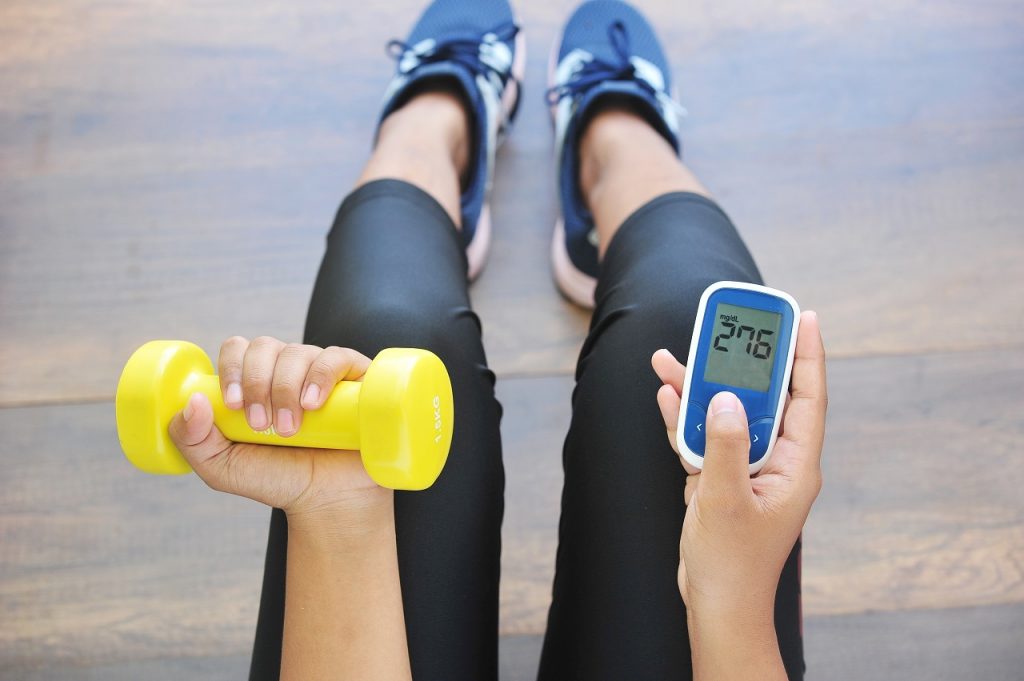
exercise to manage diabetesThe facts and myths about diabetes are plenty, especially on the kind of foods one should have or not have, whether one should exercise to manage diabetes, etc. But, it’s when I saw my dad exercising one day, a thought struck me – is it not important to test a diabetic before exercise? Is diet all that one needs to focus on?

What if he exercises vigorously and his sugar levels drop down? At what sugar levels should we allow or not allow a person to exercise? What should be the intensity and frequency of the exercise? What type of exercise should a diabetic do?

These questions obviously led me to explore and research more about diabetes and exercise. I would like to share some information about what Diabetes is, what are its types and how regular exercise can control your Diabetes.

What is Diabetes?

Diabetes is a chronic disease where there’s a high level of sugar in the blood, either due to less insulin sensitivity or because of low insulin secretion or no insulin levels in the body.

There are three major types of diabetes. The causes and risk factors are different for each type:

  • Type 1 diabetes: can occur at any age, but it is most often diagnosed in children, teens, or young adults. In this type, the body makes little or no insulin. Daily injections of insulin are needed. The exact cause is unknown.
  • Type 2 diabetes: makes up for most of the diabetes cases. It often occurs in adulthood, but teens and young adults are now being diagnosed because of high obesity rates. In such cases, either the body becomes less sensitive to insulin or insulin secretion decreases.
  • Gestational diabetes: is high blood sugar that develops at any time during pregnancy in a woman who does not have diabetes, and disappears once the pregnancy is over.

Can You Exercise To Manage Diabetes? 

We all know that exercise provides multiple benefits but does it help diabetics as well? In fact, it does! Here are some of the changes you can experience if you exercise to manage diabetes:

  • Exercise helps lower blood sugar levels
  • It helps you feel better
  • Helps maintain proper body weight
  • Keeps the heart rate and blood pressure lower
  • Keeps blood fat levels normal
  • Improves insulin sensitivity
  • Helps in maintaining normal blood circulation in the feet

Now that we know a few of many reasons why exercise is important for a person with diabetes, let’s see which exercises can benefit diabetics.

Which kinds Of Exercise Are Best For Diabetics?

To help manage diabetes, you can try:

  1. 30 minutes of “moderate intensity” aerobic activity – 5 days a week.
  2. “Vigorous intense” aerobic activity for 20 minutes or more a day – 3-5 days a week.

In addition, you should add flexibility and strength training to your routine.

  1. Flexibility activities 5-7 days a week.
  2. Strength training 8-10 exercises, 10-15 repetitions of each exercise, 2-3 days a week.

Calories Per hour and the types of moderate and vigorous exercises

Moderate physical activity for one hour Calorie burnt per hour
Hiking 370
Light gardening / Yard work 330
Dancing 330
Golf (walking and carrying clubs) 330
Bicycling (<10mph) 290
Walking  (3.5mph) 280
Weight lifting (light workout) 220
Stretching 180
Vigorous physical activity for one hour 
Running / Jogging (5mph) 590
Bicycling (>10mph) 590
Swimming (Slow freestyle laps) 510
Aerobics 480
Walking (4-5 mph) 460
Heavy Yard work (chopping wood) 440
Weight lifting (vigorous effort) 440
Basket ball (vigorous) 440

Source – Dietary Guidelines for Americans – 2005 *(These values are derived from American journals and may not be specific to other populations).

When Should One Exercise?

The best time to exercise will vary with the schedule. Preferably, one should pick the same time for exercise each day so that if one is on insulin, the adjustment of insulin dosage is manageable.

  1. Morning exercise may cause your blood glucose to drop less than if you exercised later.
  2. If you are on insulin or taking pills that work by making more insulin, evening exercise may result in low blood glucose while you sleep.

Remember – Your Diabetes Management can be adjusted to suit your lifestyle. Your lifestyle does not have to be adjusted to fit your diabetes.

After knowing what kind of exercise and at what time we should do them, let’s see what precautions should be taken while doing them.

Safety Tips for Active Diabetics

1. Get your doctor’s okay before you start exercising.
This is especially important if you are older than age 35, have had diabetes for more than 10 years, have any complications of diabetes, have not exercised in a long time, or have heart disease. Exercise has the same effect on blood glucose as insulin. It lowers blood glucose, making you more sensitive to insulin. This is a benefit of exercise that can also pose a problem if it lowers your blood glucose too much.

2. Avoid low blood sugar levels
Low blood sugar levels are when the glucose levels dip below <70mg/dl. Common symptoms include shakiness, weakness, abnormal sweating, and anxiety, tingling of mouth and hunger, headache, visual disturbance, confusion, seizures, coma. Monitor your blood glucose before and after working out, especially when beginning or modifying the exercise program. Always keep a 15g of fast-acting carbohydrate (powdered sugar/Glucose tablets 3-4) with you to treat Hypoglycemia.

3. Check your blood glucose levels pre and post workout
If you blood glucose is below 70 –

  1. Take 5g of carbohydrate right away
  2. Wait for 15 minutes
  3. Check again – if still below 70, then have another 15 grams.

It should work now.

If the blood glucose is high – Fasting is>250 and ketosis is present.

Or >300 with or without ketosis. Avoid exercise with such high blood sugar levels.

4. Eat before heavy exercise
If you’re going to exercise around mealtime, you should eat the meal first. When possible, allow half an hour for digestion. Solid foods, such as whole grains, vegetables, etc. are digested slowly than liquids. They provide protection for at least 2-3 hours. When it is possible to choose the exercise time, try to begin the exercise 30-60 minutes after a meal or snack.

Remember – Nothing works better than experience and frequent blood glucose testing. 

5. Diabetic complications 

  • Retinopathy: Patients with retinopathy are at risk for retinal detachment and vitreous hemorrhage associated with vigorous-intensity exercise. For those with retinopathy, vigorous aerobic and resistance, weight-bearing exercises should be avoided.
  • Nephropathy: Should not indulge in vigorous-intensity exercise as protein excretion increases post-exercise.
  • Peripheral Neuropathy: Should take proper care of feet to prevent foot ulcers. Feet should be kept dry. Avoid the wrong type of socks and shoes. Avoid tight elastic bands and ill-fitted shoes (they reduce circulation). Avoid wearing thick or bulky socks (they can fit poorly and irritate the skin). Rather wear light colored cotton socks that dissipate heat faster. Moisturize your feet – but not between your toes- that could encourage a fungal infection. Use a moisturizer daily to keep dry skin from itching or cracking. Consider non-weight bearing activities as they may be better tolerated and aid healing.

6. Stay hydrated
Proper hydration is essential during exercise. Exercising during hot weather requires special attention. Drinking extra fluids should begin an hour or two before you begin exercise to manage diabetes. A general rule is to drink 8 ounces of fluid for every 30 minutes of vigorous activity. 

7. Check your pulse rate
It’s important to check the pulse periodically to see if you are exercising within your target zone. Right after you exercise, take your pulse – count your pulse for 10 secs and multiply the no by 6.

Compare the numbers on the right grouping in the table below.

Age Target Heart range zone
20 years 100-150 beats/min
25 years 98-146 beats/min
30 years 95-142 beats / min
35 years 93-138 beats/ min
40 years 90-135 beats/min
45 years 88-131 beats/min
50 years 85-127 beats/ min
55 years 83-123 beats/min
60 years 80-120 beats/min
65 years 78-116 beats/ min
70 years 75-113 beats / min

Source: Exercise and Your Heart, National Heart, Lung, and Blood Institute/American Heart Association, NIH Publication No. 93-1677.

The good news is that if someone regularly exercises, these benefits can be permanent, and for someone with diabetes, it can mean reducing medication. If younger members of families with a predisposition to diabetes exercise regularly, they could avoid diabetes altogether.

A single bout of exercise can benefit the body’s sensitivity to insulin for 16-18 hours and have positive effects on blood glucose control (glucose absorption) for 24-48hours.

But these effects wear off between 60-72 hours. Hence, staying active most of the time is imperative.

I just want to convey that Diabetes cannot take your hope, faith, attitude, courage and happiness away from you. We are the authors of our own health. Let’s overcome it, no matter what type or what level of disease it is.

Now that you know why you should exercise to manage diabetes, get out there and begin your journey! To read more on Diabetes, check out Healthy Reads.

For further guidance and motivation by certified experts, join the GOQii Diabetes Care program. It’s India’s only diabetes program that is driven by Smart Science and Personal Coaching to improve Fasting Blood Sugar (FBS), Postprandial Blood Sugar (PP), reduce HbA1c levels and let you win gold! You can subscribe here: https://store.goqii.com/diabetescare.

#BeTheForce
May 13, 2024 By Megha Mahajan 1 Comment

10 Dietary Changes That Can Help Manage Diabetes

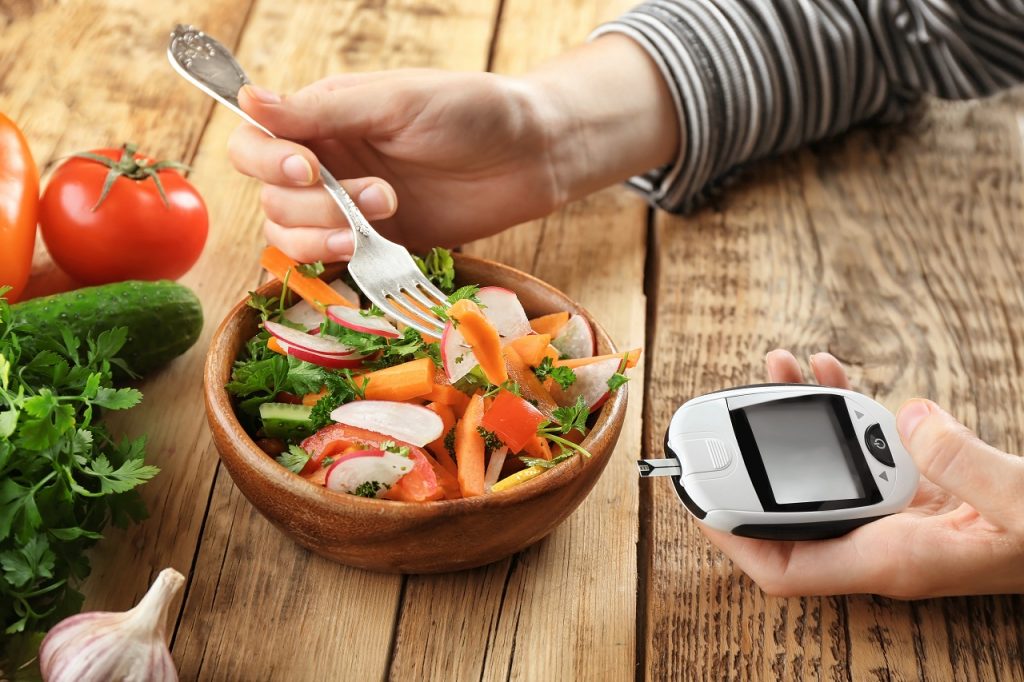
manage diabetesDiabetes – the one word that makes your mind wander in so many directions! You find yourself asking questions like: Will this last for ever? Will I ever get better? How can I manage my diabetes? Well, these are smart questions that anyone should ask. And, yes, you can and will get better! You just need to make a few tweaks in your lifestyle and you should be fine.

While it may seem like an insurmountable hurdle or a wall that cannot be breached, there are thousands of diabetics with good testimonies. Aged people who have lived with diabetes so much so that they sometimes forget that they have diabetes. How can this be your testimony? Well, the pointers below show some of the things you can do to kickstart your own journey to overcome diabetes.

Of course it’s not going to be easy to let go of all your favorite meals. But, no one is saying you have to get rid of them all at once. You’ve just got to be smart about it. Do not make diabetes “complex”,  make eating “complex” to keep diabetes “simple”. Just as in everything else, a lot of effort has to go into your overall lifestyle if you are to conquer diabetes. Just be conscious and you’ll make headway. To eliminate diabetes, take a step towards improving your eating habits and you’ll feel a lot better generally.

Some Dietary Changes To Help You Manage Diabetes

1. Eat Complex To Live Simple: Eating complex doesn’t mean you have to stop eating everything. It simply means you have to make your carbs complex over simple ones, as these are the best type of carbohydrates for diabetics. Complex carbohydrates digest slowly and maintain steady glucose levels in the body.

2. Make fiber an important part of your diet: Fiber refers to plant-based food that slows down the breaking of carbohydrates and keeps you full for longer periods of time. Yes, fiber can go a long way in improving your situation. You don’t have to go over and under in search of fiber rich foods. You can get your fiber fix by following these simple tips:

  • Do not sieve the flour
  • Eat whole fruits over a glass of juice
  • Choose whole grains and whole pulses
  • Eat more vegetables
  • Do not peel the edible portion of the fruit for example – apple, guava, pear, peaches
  • Make soups and salads your best friends

3. Choose healthier versions of your favorite food

Instead of these Choose these
White bread Brown bread
Normal roti Bran roti/multigrain roti
Meat Fish
Normal rice/parboiled rice Brown rice
Sugary or flavored cornflakes Plain cornflakes/oats
Sugar Jaggery/honey
Mayonnaise veg sandwich Hungcurd vegetable sandwich
Normal chocolate Dark chocolate
Creamy cheesy dip Salsa dip
Whole milk Skimmed milk
Salted nuts Unsalted nuts
Soda Salted fresh lime
Potato sticks Raw veggie sticks
Fried chicken Grilled chicken
White pasta Whole wheat pasta
Fruit juices Whole fruits

It surely can be very difficult to do away with all your favorite meals. Instead of doing away totally, you can instead opt for close alternatives as shown above. Choose the healthier version of your favorite meals and you’ll thank yourself for it.

4. Say “NEVER AGAIN” to Trans-fat: Trans-fat is basically obtained chemically by the hydrogenation of oils. It will make your condition worse! To avoid trans-fats, avoid chips, cookies, pastries and margarine. Incorporate healthy fats by following these simple methods:

  • Introduce olive oil or rice bran over butter or ghee
  • Remove the skin from chicken before cooking it
  • Prefer healthy ways of cooking such as grilling, baking and roasting over frying
  • Enhance flavour of food by using more of herbs and spices instead of oil. It will not only give you good taste but also prevent you from consuming extra oil as well as provide you the benefits of antioxidants
  • Prefer fish over red meat as it is full of good fat
  • Eat fish 2 or 3 times week instead of red meat
  • Use hung curd as dressing instead of mayonnaise
  • Prefer baked chips over fried ones

5. Choose Low-glycemic index foods: Glycemic Index refers to the rate at which a particular food raises our blood glucose levels. Foods with high GI spike our blood glucose level and vice-a-versa. Again, fiber is your hero! Fiber rich foods have lower glycemic index – another reason why you should take them.

Some Low GI Sources include whole nuts, whole cereals, cherries, oatmeal, apple, vermicelli, whole dals, prunes, plain yoghurt, soymilk, whole milk, peaches, channa dal and peanuts.

6. Eat small but frequently: The logic here is, heavy meals spike our glucose levels. So small frequent meals will keep our metabolism high, while maintaining glucose levels.

7. Walking and Exercise are your best friends: Exercise is important as it helps to maintain your ideal Body Weight which is very important for diabetics. Exercising helps your weight loss efforts, and is especially important in maintaining an ideal body weight.

8. Limit only high caloric fruits: Except for some fruits like mango, banana and chikoo, one can eat any fruit but  in prescribed amounts only.

9. Use functional foods in the diet: These foods provide “extra benefits” to your diet. Apart from nutrition, it provides you a number of benefits. Functional foods are full of antioxidants, unsaturated fatty acids and are also rich in fiber. Some of them include mustard seeds, flax seeds, fenugreek seeds, curry leaves, cinnamon, cloves and chia seeds.

10. Before sleeping ask yourself the following questions:

  • Am I taking too much of alcohol? If the answer is no, then you are okay
  • Am I taking medication properly? If yes, give yourself a pat on the back
  • My feet are clean? No? Then rush to the bathroom!
  • Am I feeling stressed? If your answer is yes? Chill with music and take deep breaths. Remember nothing comes at the cost of your health and ensure you feel some relief.
  • Have I checked my weight?
  • Did I walk for 45 minutes today? If yes, you’ve done well. Feel good about it because you are on track to manage diabetes
  • Now, time for sleep…Proper timing is essential. Get good sleep.

You can manage diabetes by living healthy. Eating in moderation and eating healthy can go a long way in giving you really good results!

We hope this article helps you manage diabetes effectively. For more help to manage diabetes, get the right guidance and motivation by certified experts, join the GOQii Diabetes Care program. It’s India’s only diabetes program that is driven by Smart Science and Personal Coaching to improve Fasting Blood Sugar (FBS), Postprandial Blood Sugar (PP), reduce HbA1c levels. You can subscribe here: https://store.goqii.com/diabetescare.

To read more on how to manage Diabetes, check out Healthy Reads.

Let’s #DefeatDiabetes and #BeTheForce!

February 27, 2024 By Komal Mehta Leave a Comment

Prediabetes, Its Risks & How You Can Manage It

prediabetesGetting tired easily, fatigue, black patches around the neck, elbows, knees, knuckles, arm pits or blurred vision, increased thirst, frequent urination, losing weight in spite of eating more, etc. are all signs associated with Diabetes. While this disease develops gradually, Prediabetes is pre-diagnosed diabetes, wherein, the blood glucose levels are higher than normal but not as high to be classified as Type 2 Diabetes.

Glucose is required to give energy for various activities. Insulin is the key which allows this glucose to go in the cells. When the body does not produce enough insulin or insulin is not able to enter the cells because of excess fat around cells, the glucose in the blood rises.

It puts you at risk when:

  • One is overweight or have high BMI of more than 25
  • Sedentary lifestyle – desk job
  • Age above 45 years
  • Family history of diabetes
  • Polycystic Ovarian Syndrome
  • High blood pressure
  • Abnormal lipid profile

Can You Prevent Prediabetes? 

Prediabetes can be prevented and your lifestyle plays an important role. This has been proven time and again by many of our Players. Simple changes can lead to big results. Here are a few simple points which can delay the process of Type 2 Diabetes and have a positive impact on overall health.

  • Weight loss: Reducing 5 to 10% of body weight can cut down the risk of developing diabetes
  • Eat healthy: Include soluble and insoluble fiber rich food with low glycemic index like whole grains, whole pulses, lentils, beans, vegetables, oats, whole fruits, and nuts, etc. Fiber controls blood glucose spikes and also improves insulin resistance. Protein helps control sugars as well.
  • Get active: Exercise can lower blood glucose levels. 150 minutes of moderate activity per week i.e. 30 minutes 5 days a week, is recommended. It could be walking, swimming, cycling or jogging. One can split the exercise through the day. Moreover, exercise will help reach desirable weight, it is healthy for the heart, controls lipids and blood pressure as well.

These 3 simple changes can go long way. As Prediabetes is more of a lifestyle related condition, consistent lifestyle modification can help delay and prevent Type 2 diabetes.

We hope this article helps you. For more on Diabetes, check out Healthy Reads. You can also get the right guidance for managing diabetes by opting for the GOQii Diabetes Care Program here.

#BeTheForce

Disclaimer: The information provided in this blog is for general awareness and educational purposes only. It is not intended to replace professional medical advice, diagnosis, or treatment. Always consult a qualified healthcare provider for personalised medical guidance or concerns related to your health.

May 20, 2023 By GOQii Leave a Comment

How Ahmad Najib Controlled His Diabetes & Lost Weight With GOQii

Ahmad Najib

It’s a well-established fact that unhealthy eating, lack of physical activity and an overall unhealthy lifestyle can lead to many health issues. To begin with, it is the biggest cause of being overweight, which comes with other issues such as high cholesterol, high blood pressure and even diabetes. While well known, people tend to overlook these aspects. Our Player Ahmad Najib had also found himself in this predicament and when things started to slip, he decided he needed to change his lifestyle. How did he bring about this change? Read on to find out. 

Before Joining GOQii

“My lifestyle was all over the place. There was no routine, I ate an unhealthy diet and ate whenever I wanted and ate whatever I wanted. I never even exercised,” says Ahmad Najib. Owing to his poor eating habits and lack of physical activity, his weight shot up to 108kg. 

His HbA1c levels were as high as 6.7. After his regular yearly checkup, he found that his triglyceride and cholesterol levels were high as well. The problem with sugar and being overweight is hereditary in his family. Keeping this in mind, Ahmad Najib wanted to change his lifestyle for the better.

One day while checking the internet for a solution along with a friend, he came across GOQii. After going through the features, he was attracted by the 3 month coaching subscription and decided this was the way to go! 

Interacting With The Coach & Adopting Healthy Habits 

When he began his coaching subscription, he said that he really liked the way the instructions were simplified for him and the communication was easy. “The interaction was so smooth and easy that I could follow everything my coach shared with me,” he said. The flow of information was continuous between him and his coach. 

6 months before beginning his journey with GOQii, Ahmad Najib said that he had completely cut off from sweets and oily food due to his Diabetes issue. But the daily workout he was doing wasn’t helping him at all. His weight would not budge.

After speaking with his GOQii Coach Farhat Khan, he got a better understanding of his diet and what he should be eating as well as avoiding. His coach suggested some fruits he could eat – which he says benefited him immensely. She also helped him clear any doubts he had regarding his meals and helped him balance them.

He was asked to stay off maida and wheat chapatis. These were replaced with jowar or bajra rotis. He was also instructed to stay off junk food and eating out.  Apart from this, Coach Farhat Khan also introduced him to portion control. She also asked him to take frequent walks – which included walking for 5-7 minutes post a meal. His workout routines were also shuffled frequently. 

Even during the holy month of Ramzan, Ahmad Najib did his best to follow the morning routine, exercises and diet suggested by his coach and avoided eating oily food or ordering in. He says that he has completely stopped eating out. 

How Did These Changes Impact Ahmad Najib? 

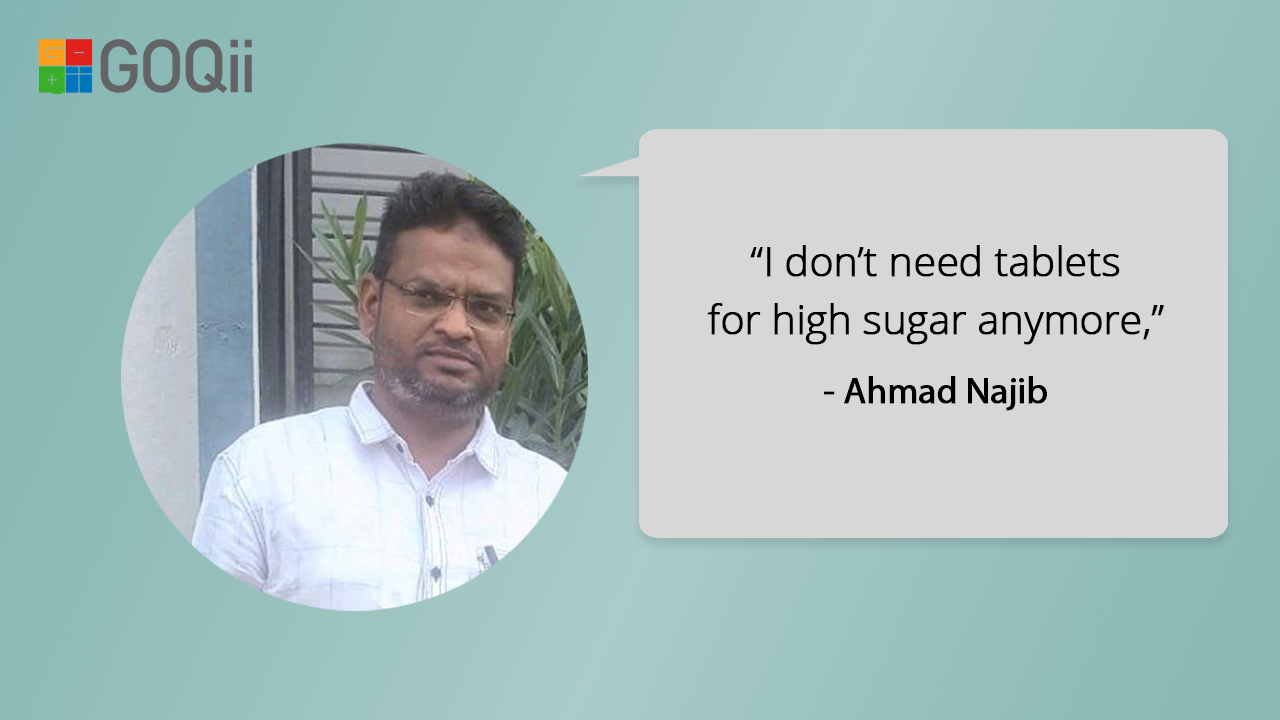
The biggest change he witnessed was that his weight was reduced from 108kg to 91kg. Furthermore, his HbA1c levels have reduced from 6.7 to 5.5. “I don’t need tablets for high sugar anymore,” he says. Even his triglycerides and cholesterol levels are now under control.

His Coach Farhat Khan says, “His fat loss is amazing, sugar readings are now under control and his fitness and stamina have also improved.” She further added that, “Ahmad is really dedicated. He never said ‘ye nahin kar paunga’, and was always ready for the tasks given to him – whether it was physical or diet related.” Before, he couldn’t walk even half a km in one go but now, he can cover 3km without feeling tired. 

Looking at his transformation, the people he meets wonder how he pulled it off. With the changes he saw within himself, he recommended GOQii to 2-3 of his acquaintances. He also gifted a GOQii Smartwatch to his sister who has benefited greatly from it. She too lost weight by following instructions from her GOQii Coach.

Overall, he says it’s been a life-changing experience! Currently, along with his coach, he plans on reducing another 8-9kg.

Was this story inspiring? Do you or someone you know wants to make a lifestyle change? Share this article with them and subscribe for GOQii’s Personalised Health Coaching here. 

You can find more inspiring health stories here.

#BeTheForce 

  • « Previous Page
  • 1
  • …
  • 3
  • 4
  • 5
  • 6
  • 7
  • …
  • 97
  • Next Page »

Search

Recent Posts

  • World AMR Awareness Week 2026: when you need antibiotics, and simple steps to prevent AMR
  • PCOS: diet, exercise and the myths to stop believing
  • Cholesterol numbers explained: LDL, HDL and triglycerides
  • International Men’s Day 2026: why men’s health is everyone’s business
  • World COPD Day 2026: Short of Breath? Think COPD – Why Early Diagnosis Matters

Stay Updated

Archives

  • November 2026 (21)
  • October 2026 (23)
  • September 2026 (5)
  • August 2026 (8)
  • July 2026 (24)
  • June 2026 (22)
  • May 2026 (20)
  • April 2026 (24)
  • March 2026 (18)
  • February 2026 (14)
  • January 2026 (14)
  • December 2025 (19)
  • November 2025 (14)
  • October 2025 (17)
  • September 2025 (6)
  • August 2025 (5)
  • July 2025 (9)
  • June 2025 (18)
  • May 2025 (16)
  • April 2025 (22)
  • March 2025 (25)
  • February 2025 (21)
  • January 2025 (25)
  • December 2024 (21)
  • November 2024 (21)
  • October 2024 (15)
  • September 2024 (22)
  • August 2024 (27)
  • July 2024 (14)
  • June 2024 (23)
  • May 2024 (26)
  • April 2024 (27)
  • March 2024 (27)
  • February 2024 (23)
  • January 2024 (21)
  • December 2023 (14)
  • November 2023 (10)
  • October 2023 (18)
  • September 2023 (20)
  • August 2023 (16)
  • July 2023 (16)
  • June 2023 (21)
  • May 2023 (20)
  • April 2023 (19)
  • March 2023 (23)
  • February 2023 (19)
  • January 2023 (15)
  • December 2022 (11)
  • November 2022 (15)
  • October 2022 (15)
  • September 2022 (12)
  • August 2022 (9)
  • July 2022 (17)
  • June 2022 (11)
  • May 2022 (10)
  • April 2022 (6)
  • March 2022 (6)
  • February 2022 (13)
  • January 2022 (11)
  • December 2021 (7)
  • November 2021 (3)
  • October 2021 (6)
  • September 2021 (3)
  • August 2021 (8)
  • July 2021 (7)
  • June 2021 (15)
  • May 2021 (16)
  • April 2021 (10)
  • March 2021 (7)
  • February 2021 (4)
  • January 2021 (4)
  • December 2020 (3)
  • November 2020 (4)
  • October 2020 (10)
  • September 2020 (3)
  • August 2020 (3)
  • July 2020 (2)
  • June 2020 (4)
  • May 2020 (10)
  • April 2020 (12)
  • March 2020 (10)
  • February 2020 (4)
  • January 2020 (4)
  • December 2019 (3)
  • November 2019 (7)
  • October 2019 (5)
  • September 2019 (4)
  • August 2019 (9)
  • July 2019 (9)
  • June 2019 (11)
  • May 2019 (4)
  • April 2019 (8)
  • March 2019 (8)
  • February 2019 (9)
  • January 2019 (8)
  • December 2018 (9)
  • November 2018 (3)
  • October 2018 (3)
  • September 2018 (5)
  • August 2018 (10)
  • July 2018 (6)
  • June 2018 (13)
  • May 2018 (8)
  • April 2018 (17)
  • March 2018 (9)
  • February 2018 (8)
  • January 2018 (15)
  • December 2017 (12)
  • November 2017 (19)
  • October 2017 (13)
  • September 2017 (15)
  • August 2017 (4)
  • July 2017 (8)
  • June 2017 (7)
  • May 2017 (6)
  • April 2017 (8)
  • March 2017 (6)
  • February 2017 (7)
  • January 2017 (9)
  • December 2016 (10)
  • November 2016 (7)
  • October 2016 (7)
  • September 2016 (7)
  • August 2016 (11)
  • July 2016 (9)
  • June 2016 (9)
  • May 2016 (12)
  • April 2016 (17)
  • March 2016 (17)
  • February 2016 (8)
  • January 2016 (6)
  • December 2015 (2)
  • November 2015 (9)
  • October 2015 (7)
  • September 2015 (9)
  • August 2015 (11)
  • July 2015 (9)
  • June 2015 (11)
  • May 2015 (9)
  • April 2015 (13)
  • March 2015 (8)
  • February 2015 (5)
  • January 2015 (12)
  • December 2014 (14)
  • November 2014 (11)
  • October 2014 (6)
  • September 2014 (13)
  • August 2014 (12)
  • July 2014 (6)
  • June 2014 (2)
  • May 2014 (7)
  • April 2014 (4)

From Burnout to Balance: How Dr. Ranjit Reclaimed His Health

Dr Ranjit Bhatt has spent years tending to others. A practising doctor in Odisha, his days were packed with patients, surgeries, and emergencies. From the outside, it looked like a life lived in service. But on the inside, something wasn’t right. “I had no … [Read More...]

From Shimla’s Slopes to Chandigarh’s Sidewalks: Surinder Kaur Bhalla’s Journey from Chaos to Control

Some journeys start with a plan. Others begin with a stumble literally. Surinder Bhalla, a government professional, born and raised in the scenic hill town of Shimla, had always lived a life of movement. “In Shimla, you walked everywhere,” she reflects. “Walking was never an exercise. It was just life.” But after shifting to Chandigarh, […]

“I’ve Challenged Myself to Live 100 Years” – The Story of Chandubhai Savani’s Second Chance at Life

At 67, most people start slowing down. Not Chandubhai Savani. A resident of Surat, Chandubhai, thought life was on track. “My life was going well till I had my bypass surgery,” he says. That surgery, back in 2021, was a wake-up call.  Medication was routine, but exercise wasn’t. His diet? What he calls ‘normal.’ “I […]

Ananda Mukherjee Health Story

From Terminal Illness To Complete Wellness! Ananda Mukherjee Health Story

As we observe World Cancer Day under the powerful theme ‘United by Unique’ (2025-2027)**, we are reminded that every individual’s journey with cancer is distinct, yet united by shared resilience, hope, and the collective fight against this disease. This theme places people at the centre of care and their stories at the heart of the […]

  • HOME
  • HEALTHY LIVING
  • FITNESS
  • HEALTHY RECIPES
  • USER STORIES
  • KARMA
  • BUY GOQii

Copyright ©2016 GOQii


