GOQii

Blog

  • HOME
  • HEALTHY LIVING
  • FITNESS
  • HEALTHY RECIPES
  • USER STORIES
  • KARMA
  • BUY GOQii

January 4, 2024 By Trishala Chopra 3 Comments

How much cardio should you do?


cardio exercise


CARDIO- The only form of exercise which has grabbed everybody’s attention and why not, almost all the common activities are a form of cardiovascular exercise.

Whenever I ask someone about what exercise you do throughout the day- their reply is mostly WALKING. Hours of walking sometimes.

So, what does cardio include?

  • Walking (As already mentioned above)
  • Running
  • Swimming
  • Cycling
  • Aqua-aerobics
  • Aerobics
  • Zumba
  • Rowing
  • Boxing

I have seen people concentrating only on cardio exercises for years without any change in their routine. Some people consider themselves to be fit with simply walking.

Fitness is measured by different things and not just your overall structure.

As a part of your fitness routine, these 3 components are very important which is as follows: –

  • Cardiovascular exercises
  • Strength training exercises
  • Flexibility exercises

None of the components can be skipped.

All these 3 components are very important for a proper fitness regime.

The question which I always get is (which also became an idea to write this article) how much cardio should I do?

And my answer is (Always), you should actually ask how much of these 3 components I should do?

Well, I will be covering all these 3 components in 3 separate articles so for now, I will be concentrating on cardio.

So, going back to the question which I always get, I wish I had an answer to that which could be as simple as

Do 60 minutes a day or maybe 150 minutes a week!

But being a healthcare professional, I cannot give a generic answer.

In fact, that question has no specific answer.

The amount of cardio which should be done completely depends upon these 4 factors: – (Ps: – Please read all the factors before you come to a conclusion for yourself)

cardio ex1

(1) It depends on what you are aiming at.

Well, not everybody needs weight loss! Some people might be looking for muscle gain while someone else might need to run a marathon.

So, does that mean all of them will be doing 150 minutes of cardio per week?

Definitely not!

Along with the aim, you also need to know about your metabolism.

Metabolism is the rate at which your body needs calories while resting.

So, for a person who wants to lose weight will probably be needing a lot of cardio but for someone who wants to build muscle- the amount of cardio which you require completely depends on your metabolism. If you have a fast metabolism then you don’t need any cardio but if your metabolism is slow then you need to do some amount of cardio.

Someone who is into different sports like shot put or powerlifting or sprinting might require very little cardio.

Why am I targeting these 2 categories first?

It is because losing weight and gaining muscles are totally different things to talk about. For your body as well, it becomes a very confusing state because the body cannot do 2 things simultaneously. However, with proper training, it does become possible sometimes.

Then, what about fat loss? How much cardio should one do?

If losing weight is your only goal then it is okay to put your focus more on cardio and neglect the muscle gain part.

You just work on not losing muscles while you are losing your fat.

This can be achieved by 2 times a week strength training and adequate proteins in your diet.

What If someone is a marathoner? How much cardio should one do?

It also includes a good amount of cardio and minimum strength training but flexibility here is very important. It can all be divided throughout the week with a focus more on cardio and other endurance sports.

Although I don’t like putting anything in a restricted way I guess I can do with sharing some guidelines about the first factor which I have discussed in brief above so that it becomes easier for everyone to understand.

  • Building muscle + Fast metabolism = No cardio
  • Building muscle + Slow metabolism = 2-4 days per week with about 20-30 minutes every day.
  • Losing fat = 5-6 times per week with about 45-60 minutes every day
  • Marathoner= 4-6 times per week with about 30-60 minutes every day

*This is very generic; the requirement might differ in each person but this can be used as a guideline to work upon.

(2) State of your hormones

Well, the most common problem which most of us are facing is WEIGHT GAIN or UNABLE TO LOSE THE EXISTING WEIGHT which ultimately makes you hit the gym and your trainer will suggest you do cardio. He or she will decide the plan and everyone blindly follows that plan. But, do you think everybody needs exactly the same amount of cardio?

When your weight becomes a problem the hormone which comes into the picture is CORTISOL.

Cortisol is a hormone which is released all the time in the body but most commonly it reaches its peak under extreme stress. When the stress is often short-term like some assignment to complete or some exams to give then the graph of cortisol keeps fluctuating but when the stress becomes long term which goes on for months and years then the gland which produces cortisol is adrenal glands that starts burning out which means there won’t be enough cortisol which is produced. Well, none of this is good. Neither LOW nor HIGH. Everything goes well in balance.

So now that was about the theory, let’s understand how to practically apply it.

Symptoms of cortisol imbalance: –

  • Rapid weight gain
  • Muscle weakness
  • Chronic fatigue
  • Mood swings
  • Anxiety
  • Depression
  • Confusion
  • Insomnia
  • Fluctuating sugar levels


How to know about your cortisol imbalance?

  • It is important to do a stress test first and then go for the lab reports and get your 8 am cortisol checked.
  • Visit an endocrinologist with your reports.

 How much cardio should you do if your cortisol levels are not up to the mark?

  • Under 60% of your maximal heart rate.

How to calculate your maximal heart rate?

  • 220 – your age= maximal heart rate

For example: –

Person who is 40 years of age,

220-40= 180 (Maximal heart rate)

60% of 180 = 108 beats per minute.

  • You should not cross 108 beats per minute while doing cardio in any case.
  • You must strictly monitor it and get yourself a personal trainer/coach who can help you understand this.

Why are we discussing cortisol imbalance and what is the reason behind reducing your cardio activities in such cases?
treadmill-2581437_640

  • All the exercise puts the body into some stress. This stress can affect stimulation of different hormones.
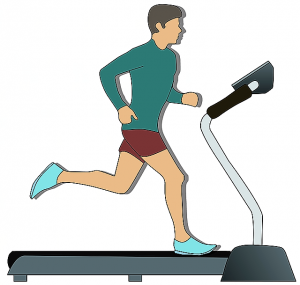
  • When you do steady cardio like a treadmill or cycling your body increases cortisol and reduces other hormones like growth hormone.
  • When you do interval training your body increases cortisol and growth hormone
  • When you do strength training with moderate repetition and sets your body increases growth hormone and cortisol by a small margin.
  • When you do strength training with heavy repetition and sets your body increases testosterone (Which is mostly seen in bodybuilders)

I have given you an in-depth reason here so that you can understand that doing cardio under any stress will increase the complication even more and will do no good to your body.

So before getting into intense workouts, check your cortisol levels.

If everything is okay then you can do the cardio as discussed above.

(3) Depends on your intensity

Whenever I try getting the history about exercises, I get to hear this very often: –

” I do cardio for about 1 and half hours in the gym but I am not getting any results “

” I walk for about 2 hours a day, one hour in the morning and one hour in the evening but I don’t think it is helping”

Well, the basic point to this is,

YOUR DURATION DOESN’T MATTER.

WHAT MATTERS IS- YOUR INTENSITY.

You can work out for just like 15 minutes and still get the same effect as you might get it from longer duration.

Since a couple of months, I often see people talking about high-intensity workouts, low-intensity workouts. I was actually very curious to know their definition of these workouts. I was actually very surprised to know that out of 10 people not even 2 of them knew what exactly it is. They were talking about it because they read it on the internet or their trainer told or something else. You don’t need to be a doctor or personal trainer or a certified health expert. You as a common man to have the rights to know, after all, you are the one who is actually, going to follow that advice. Well, writing this article in this depth is just for everyone to understand the basics behind all the theories which are coming up.

So, coming back to the theory behind intensity.

What is a low-intensity workout?

  • Under 60% of your maximal heart rate (How to calculate it is mentioned above) is a low-intensity workout.
  • These intensity workouts will not increase the endurance but do have relaxation benefits.

What is moderate intensity workout?

  • In between 60-85% of your maximal heart rate is moderate intensity workout.
  • This is a basic workout if your goal is to lose fats.
  • Start with 3-4 times per week and for 30-45 minutes
  • This is just about cardio however in this routine strength training is also required which will be covered in the upcoming article.

What is a high-intensity workout?

  • Anything above 85% of your maximal heart rate is high-intensity workout
  • This can be maintained only for about 1-4 minutes before your speed drops and then gradually goes ahead.
  • Start with 2-3 times per week for about 20 minutes.
  • This course will include proper strength training also which will be covered in upcoming article

Note: – High-intensity workout is not suggested for anybody who has not done any cardio exercises for past 4 months, for someone who has serious cardiac issues. Please consult your doctor before getting into these kinds of workout. Inform your coach and coaches too can take this as a basic part of history taking.

(4) Depends upon how well your response to cardio exercises.

  • As I mentioned in the beginning of the article, every individual is different and there is no same answer to HOW MUCH CARDIO YOU SHOULD DO?
  • It all depends on your responses which can vary from person to person
  • I can simply guess that maybe you require this much workout but I am never sure about it unless I check the response for minimum 15 days.

My players always ask me that why do I give the workouts for 15 days and then think so much for the next set of workouts. Sometimes it so happens that I refuse to change the workout and make then repeat it for 15 days. I know it’s annoying, like very annoying but it is better than any serious injury. Unless I am sure about the responses and progress I do not go ahead in case of workouts.

This article only gives you insights about CARDIO but your workout routine is incomplete with strength training and flexibility.

My next blog is HOW MUCH STRENGTH TRAINING YOU NEED TO DO?.

We hope this article helps you. For further information or guidance, reach out to our certified experts by subscribing to GOQii’s Personalised Health Coaching here.

#BeTheForce

September 25, 2023 By Ashwinkumar Rahate 7 Comments

Understanding Health and Fitness


We often speak and hear about health and fitness. In recent times, both these words have become a part of people’s daily lingo. How many of us actually know the meaning of these words? Is it just a fad to talk about health and fitness?

Truth be told, health and fitness have totally different meanings and concepts. Let us try to understand the terms ‘Health and Fitness’.

What is Health?

Health refers to the absence of disease. It indicates that all the systems in the body, be it the Central Nerves System, Cardiovascular System, Respiratory System or any other systems are working perfectly and together. According to the World Health Organisation (WHO), health is a state of complete physical, mental and social well-being, and not merely the absence of disease or infirmity.

What is Fitness?

Fitness refers to the degree of body functioning and ability of the body to handle physical demands. If the body is functioning more effectively and efficiently, it indicates greater or higher level of fitness. Any physical activity strenuous or non-strenuous requires one to have some basic fitness. Climbing stairs also requires a certain level of fitness.

Involving yourself in physical activities can bring about some basic level of fitness. Physical activity is defined as any bodily movement produced by the skeletal muscles that required energy expenditures. Physical exercise is as important as food and sleep.

When we don’t use the organs of our body, our body responds by saying, “Use it or lose it”. Leading a sedentary lifestyle leads to hypokinetic complications. Proper and regular exercise result in amazing physical, mental and emotional benefits.

To take up any physical activity, you need to set a goal as per your requirement and the way your body responds. Ensure that you are not just focusing on fitness but on the health aspect as well before setting a goal.

We hope you found this article insightful. Please share your thoughts in the comments below. For more on health and wellness, delve into Healthy Reads or speak to a GOQii Coach by subscribing for Personalised Health Coaching here.

#BeTheForce

September 4, 2023 By Ashwinkumar Rahate 1 Comment

Benefits of Physical Activities


In my previous blog, I explained the difference between health and fitness. This blog will detail the importance of physical activities and the role it plays in maintaining a good lifestyle.

As per ACSM (American College of Sports and Medicine) guidelines, a person must be involved in some sort of physical activity at least 3 days a week. The benefits of physical activities are divided into three categories i.e. Physical, Mental and Social benefits.

1. Physical Benefits of Exercising

  • Keep Away From Hypokinetic Medical Conditions
    This is one of the major benefits for a person who is involved in physical activities. Hypokinetic Condition arises from the complications of leading a sedentary lifestyle. This condition includes Cardiovascular Diseases, Obesity, Lower Back Pain Syndrome, Type II Diabetes, Hypertension, etc.
  • Increases Basal Metabolic Rate
    If you are regularly involved in some kind of a physical activity, it increases your Basal Metabolic Rate (BMR). BMR refers to the minimum amount of energy in the form of calories that our body requires to complete its normal functions such as breathing, breaking down foods, heart and brain functioning
  • Joint Mobility & Flexibility
    Regular physical activity improves your joint mobility and flexibility
  • Boost the Immune System
    Regular and frequent exercising helps boost the immune system. Exercises flush out bacteria from the system and lungs. This, in turn, helps us avoid the chances of catching a cold, flu, or other viral infections. Exercise temporarily increases the body temperature which in turn may prevent bacterial growth
  • Improve Bone Density
    Bone density refers to the amount of mineral matter per square centimeters of the bones. Physical activities improve bone density. If bone density improves, there is less chances of osteoporosis and fractures
  • Better Body Composition
    Body Composition is used to describe the percentage of fats, muscles, bones and the water in the body. If we say better body composition, it means more muscles and less fats, good bone weight and desired water level
  • Anti-Aging Agent
    Proper and regular physical activities targeting the basic components of fitness will result in a stronger heart, good bone density and increase in muscles. As a result, it will work as an anti-aging agent. As your body functions effectively well, your life expectancy increases
  • Increases HDL Levels
    Regular cardio exercises increase HDL levels. This is because cardio training helps supply oxygenated blood to the working muscle and that makes the heart stronger and helps in smooth blood flow
  • Low Risk of Heart Attack & Stroke
    Exercise helps strengthen the heart and the cardiovascular system. It improves blood circulation and lowers the risk of heart attack and strokes

2. Mental Benefits of Physical Activity

  • Release Endorphins
    It’s no surprise that physical activities help us improve our mood. This is primarily because of the release of chemicals known as endorphins. They not only create a feeling of happiness but sometimes, even euphoria
  • It’s a Great Stress Buster!
    Any physical activity is a great stress buster. It not only reduces physical stress but mental stress as well!
  • Remedy for Insomnia
    Regular involvement in an exercise is a medication alternative to improve sleep. It is a known remedy for chronic insomnia
  • Improves Memory and Brain Power
    Proper physical activities help sharpen memory and build the ability to learn new things. Being active everyday rapidly increases your brainpower!
  • Exercise Boosts Confidence
    Your body changes when you are active. Once you begin noticing the changes, you become more positive, productive and confident in yourself. It’s safe to say that exercise can boost your confidence!
  • Control or Elimination of Bad Addictions or Habits
    When we exercise regularly, our brain releases dopamine which is critically important in rewards and motivation. We experience happiness when Dopamine is released. Unfortunately, the same chemical is released while consuming alcohol, drugs, while having sex and also while eating junk food. It is easier to quit bad habits if you get your dopamine fix for the day while working out!

3. Social Benefits of Physical Activity

  • Improves Social Relationships
    A person who works out experiences good emotional health, is confident and this in turn improves his/her social relationships
  • Develop New Contacts
    Participating in sports or group fitness activities helps you meet new people. This opens an avenue of opportunities from friendships to business and you get to meet and surround yourself with like-minded individuals
  • Increase Productivity and Efficiency
    We have already established that being active helps your increase your brain function. It helps you  stay alert and focused at work which results in efficiency and you’re naturally more productive! Physical activities help you think and act smartly!
  • Reduce the Generation Gap
    As an active participant in a fitness group, a sports activity or even if you’re prepping/participating in a marathon, you enter a world where you meet people from all walks of life. You will meet like-minded people from different backgrounds and different age groups. You will begin to realize that age really doesn’t matter when you’re fit!

The most important aspect of being physically active is that you save a lot of money on medications and in some cases even a surgery. Given all the benefits, isn’t it better to spend time and money on exercise? Don’t forget that being healthy and active is an investment in life itself! For more on exercise and fitness, check out Healthy Reads or subscribe for LIVE interactive sessions with our experts on GOQii Pro within the GOQii App. 

August 21, 2023 By ASHWINI PRAKASH CHAUDHARI 7 Comments

A Quick 6 Minute Workout You Can Do Anywhere

fitness

With the gloomy weather and continuous downpour, it can get difficult to venture out to get some of that essential exercise. But don’t let the heavy rainfall keep you from working out. Get fit at home with this quick 6 minute workout! It is designed to help you reap all the benefits of a workout using only your body weight, a chair and a wall. You won’t need any special equipment and can perform this routine anywhere! We’d say it’s perfect for a rainy day!

The Quick 6 Minute Workout

  1. Jumping Jacks: This classic cardio move is a great way to warm up. It improves strength and endurance, increases metabolic rate, burns calories and is great for your heart and lungs as well!
  2. Wall Sit: Wall Sits are great in working out the two groups of muscles in your thighs. Repetitions of Wall Sits would naturally give you thighs that can withstand prolonged strenuous activities.
  3. Push-Ups: work many muscle groups at the same time, giving your body a full workout! You can work the quads, hamstrings, calves, chest, shoulders and arms all at the same time with a few push-ups. It stimulates metabolism and blood circulation, allowing you to burn more calories throughout the rest of your workout.
  4. Abdominal Crunch: Crunches work on the Rectus Abdominis Muscles. It is a core working exercise and burns less calories comparatively but, they move in a controlled manner, flexing and releasing the core muscles, thus helping you build abs.
  5. Step Up Onto Chair: This exercise is great for targeting your quad and Gluteus Maximus Muscles, giving you strong, powerful legs.
  6. Squats: are great for a total lower body workout. They effectively work most of the major muscle groups of the butt, hips and thighs. Squats are also a versatile exercise. Squats engage the core muscles of the body. The result is a tighter, flatter abdomen and a stronger lower back.
  7. Triceps Dips On Chair: It is a triceps-strengthening and a most effective body-weight exercise. Dips target your triceps – the muscles on the back of your upper arm.
  8. Planks: help in strengthening the midsection, upper-body and lower-body muscles along the front of your body. Planks also strengthen the inner core muscles that support your joints. It helps in reducing belly fat and back pain. At a time, it works on all your core muscles.
  9. High Knees Running: This is a nice warm-up. High Knees Running on Spot is good practice for runners and athletes to improve running form and develop lower body muscles. It also enhances your strength, speed, balance and flexibility. What’s more? It provides you more energy, burns calories, builds muscles and enhances blood circulation.
  10. Lunges: are easy-to-learn, safe and an incredibly effective exercise. Lunges target the quadriceps, but involve additional muscles, including the glutes, hamstrings, calves and core muscles, making them an important exercise for toning the lower body.
  11. Push-Up & Rotation: This exercise is great for building shoulder stabilization and strengthening your entire core. Don’t let your hips drop when you go into side rotation. Try to keep everything in a straight diagonal line throughout.
  12. Side Plank: works your entire core but particularly targets an often weak muscle called the Quadratus Lumborum. It helps to reduce risk for lower back pains, improves your balance and structure.

Perform the above exercises in rapid succession with 20 seconds for each exercise followed by 10 seconds of rest in between. Don’t forget to stretch before you begin!

These 6 minutes that you will give to your body and your health are equal to 0.5% of your day! So go out there and get fit the HIIT way! Don’t forget to leave your thoughts in the comments below.

Find more exciting, quick workouts and fitness related articles here. You can also tune in to our live, interactive classes on GOQii PRO, where our certified fitness experts will guide you on the correct form and posture in real time, while making sure that you are well motivated! Book a class now from the GOQii App.

#BeTheForce 

  • « Previous Page
  • 1
  • …
  • 11
  • 12
  • 13
  • 14
  • 15
  • …
  • 44
  • Next Page »

Search

Recent Posts

  • World Egg Day 2026: The Protein That Powers and Protects
  • When Not Eating Becomes a Disease: Understanding Anorexia Nervosa
  • 5 Common Habits That Cause Obesity (And How to Break Them)
  • 9 Hidden Benefits of Coffee You May Not Know
  • Best Foods to Support Liver Health & Reduce Fatty Liver Risk

Stay Updated

Archives

  • October 2026 (4)
  • September 2026 (5)
  • August 2026 (8)
  • July 2026 (25)
  • June 2026 (22)
  • May 2026 (20)
  • April 2026 (24)
  • March 2026 (18)
  • February 2026 (14)
  • January 2026 (14)
  • December 2025 (19)
  • November 2025 (15)
  • October 2025 (20)
  • September 2025 (6)
  • August 2025 (5)
  • July 2025 (9)
  • June 2025 (18)
  • May 2025 (16)
  • April 2025 (22)
  • March 2025 (25)
  • February 2025 (21)
  • January 2025 (25)
  • December 2024 (22)
  • November 2024 (22)
  • October 2024 (16)
  • September 2024 (22)
  • August 2024 (27)
  • July 2024 (15)
  • June 2024 (23)
  • May 2024 (26)
  • April 2024 (27)
  • March 2024 (27)
  • February 2024 (23)
  • January 2024 (21)
  • December 2023 (14)
  • November 2023 (10)
  • October 2023 (18)
  • September 2023 (20)
  • August 2023 (16)
  • July 2023 (16)
  • June 2023 (21)
  • May 2023 (20)
  • April 2023 (19)
  • March 2023 (23)
  • February 2023 (19)
  • January 2023 (15)
  • December 2022 (11)
  • November 2022 (15)
  • October 2022 (15)
  • September 2022 (12)
  • August 2022 (9)
  • July 2022 (17)
  • June 2022 (11)
  • May 2022 (10)
  • April 2022 (6)
  • March 2022 (6)
  • February 2022 (13)
  • January 2022 (11)
  • December 2021 (7)
  • November 2021 (3)
  • October 2021 (6)
  • September 2021 (3)
  • August 2021 (8)
  • July 2021 (7)
  • June 2021 (15)
  • May 2021 (16)
  • April 2021 (10)
  • March 2021 (7)
  • February 2021 (4)
  • January 2021 (4)
  • December 2020 (3)
  • November 2020 (4)
  • October 2020 (10)
  • September 2020 (3)
  • August 2020 (3)
  • July 2020 (2)
  • June 2020 (4)
  • May 2020 (10)
  • April 2020 (12)
  • March 2020 (10)
  • February 2020 (4)
  • January 2020 (4)
  • December 2019 (3)
  • November 2019 (7)
  • October 2019 (5)
  • September 2019 (4)
  • August 2019 (9)
  • July 2019 (9)
  • June 2019 (11)
  • May 2019 (4)
  • April 2019 (8)
  • March 2019 (8)
  • February 2019 (9)
  • January 2019 (8)
  • December 2018 (9)
  • November 2018 (3)
  • October 2018 (3)
  • September 2018 (5)
  • August 2018 (10)
  • July 2018 (6)
  • June 2018 (13)
  • May 2018 (8)
  • April 2018 (17)
  • March 2018 (9)
  • February 2018 (8)
  • January 2018 (15)
  • December 2017 (12)
  • November 2017 (19)
  • October 2017 (13)
  • September 2017 (15)
  • August 2017 (4)
  • July 2017 (8)
  • June 2017 (7)
  • May 2017 (6)
  • April 2017 (8)
  • March 2017 (6)
  • February 2017 (7)
  • January 2017 (9)
  • December 2016 (10)
  • November 2016 (7)
  • October 2016 (7)
  • September 2016 (7)
  • August 2016 (11)
  • July 2016 (9)
  • June 2016 (9)
  • May 2016 (12)
  • April 2016 (17)
  • March 2016 (17)
  • February 2016 (8)
  • January 2016 (6)
  • December 2015 (2)
  • November 2015 (9)
  • October 2015 (7)
  • September 2015 (9)
  • August 2015 (11)
  • July 2015 (9)
  • June 2015 (11)
  • May 2015 (9)
  • April 2015 (13)
  • March 2015 (8)
  • February 2015 (5)
  • January 2015 (12)
  • December 2014 (14)
  • November 2014 (11)
  • October 2014 (6)
  • September 2014 (13)
  • August 2014 (12)
  • July 2014 (6)
  • June 2014 (2)
  • May 2014 (7)
  • April 2014 (4)

From Burnout to Balance: How Dr. Ranjit Reclaimed His Health

Dr Ranjit Bhatt has spent years tending to others. A practising doctor in Odisha, his days were packed with patients, surgeries, and emergencies. From the outside, it looked like a life lived in service. But on the inside, something wasn’t right. “I had no … [Read More...]

From Shimla’s Slopes to Chandigarh’s Sidewalks: Surinder Kaur Bhalla’s Journey from Chaos to Control

Some journeys start with a plan. Others begin with a stumble literally. Surinder Bhalla, a government professional, born and raised in the scenic hill town of Shimla, had always lived a life of movement. “In Shimla, you walked everywhere,” she reflects. “Walking was never an exercise. It was just life.” But after shifting to Chandigarh, […]

“I’ve Challenged Myself to Live 100 Years” – The Story of Chandubhai Savani’s Second Chance at Life

At 67, most people start slowing down. Not Chandubhai Savani. A resident of Surat, Chandubhai, thought life was on track. “My life was going well till I had my bypass surgery,” he says. That surgery, back in 2021, was a wake-up call.  Medication was routine, but exercise wasn’t. His diet? What he calls ‘normal.’ “I […]

Ananda Mukherjee Health Story

From Terminal Illness To Complete Wellness! Ananda Mukherjee Health Story

As we observe World Cancer Day under the powerful theme ‘United by Unique’ (2025-2027)**, we are reminded that every individual’s journey with cancer is distinct, yet united by shared resilience, hope, and the collective fight against this disease. This theme places people at the centre of care and their stories at the heart of the […]

  • HOME
  • HEALTHY LIVING
  • FITNESS
  • HEALTHY RECIPES
  • USER STORIES
  • KARMA
  • BUY GOQii

Copyright ©2016 GOQii