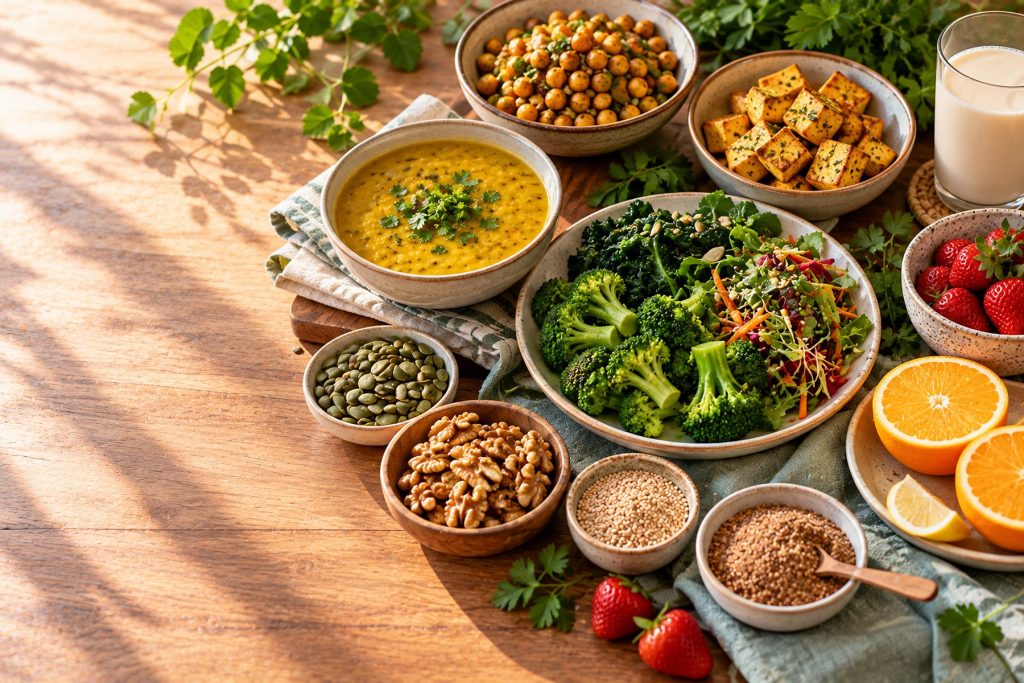
 Plant-based eating has moved from the fringes to the supermarket aisle. Oat milk sits next to dairy, tofu is on café menus, and “vegan” has become a label people look for, whether for their health, for animals or for the planet. World Vegan Day, held on 1 November, began in 1994 to mark 50 years of the UK Vegan Society, the group that coined the word “vegan”.
A well-planned vegan diet can be healthy at any age. The key words are well planned. Cutting out meat, fish, eggs and dairy also cuts out the easiest sources of a handful of nutrients, so you need to know where else to find them. This guide covers what the evidence says, the nutrients that matter most, and what a balanced vegan day looks like, whether you’re fully vegan or simply eating more plants.
At a glance
- Planned well, vegan diets are healthy: the Academy of Nutrition and Dietetics says appropriately planned vegan diets are healthful and nutritionally adequate.
- Possible benefits: trials link vegan diets with modest weight loss, lower LDL cholesterol and better blood sugar control in people with diabetes.
- Vitamin B12 is non-negotiable: there are no reliable plant sources, so vegans need fortified foods or a supplement.
- Five more to plan for: protein, calcium and vitamin D, iron and zinc, omega-3 fats, and iodine.
- Vegan doesn’t automatically mean healthy: heavily processed vegan foods don’t seem to carry the same benefits as whole plant foods.
- Extra care is needed in pregnancy, for babies and children, and for older adults.
Is a vegan diet healthy? What the evidence says
An umbrella review of 17 meta-analyses, published in 2022, gives a balanced picture:
- Weight: in trials, people on vegan diets lost about 2.5 kg more than those on comparison diets.
- Cholesterol: LDL (“bad”) cholesterol fell modestly in people at high risk of heart disease.
- Blood sugar: HbA1c dropped slightly in people with type 2 diabetes.
- Blood pressure: no clear effect.
- Bones: the evidence, though weak, pointed to a higher fracture risk.
That last point matters. In the long-running EPIC-Oxford study of nearly 55,000 people in the UK, vegans had a 43% higher risk of fractures than meat-eaters, and more than twice the risk of hip fractures, over about 18 years. The researchers think lower body weight and lower intakes of calcium and protein partly explain it. In other words, the problem isn’t plants; it’s missing nutrients, and that can be planned for.
The quality of the diet matters too. A 2024 study of more than 118,000 UK adults found that eating more ultra-processed plant-based foods, such as some meat substitutes, packaged snacks and sweetened drinks, was linked to a higher risk of heart disease, while whole and minimally processed plant foods were linked to a lower risk. These are associations rather than proof, but the message is clear: build your plate around beans, lentils, whole grains, vegetables, fruit, nuts and seeds, not just vegan-labelled packets.
1. Protein: easier than you think
Most adults need roughly 0.8 g of protein per kg of body weight a day; India’s ICMR–NIN sets it at 0.83 g/kg. For a 60 kg adult, that’s about 50 g a day. Older adults, very active people and those in pregnancy need more.
Good vegan sources, with typical amounts:
| Food | Serving | Protein (approx.) |
| Tempeh | 85 g (3 oz) | 18 g |
| Chickpeas, cooked | 1 cup | 15 g |
| Tofu | ¾ cup | 10 g |
| Lentils (dal), cooked | ½ cup | 9 g |
| Edamame | ½ cup | 9 g |
| Pumpkin seeds | ¼ cup | 9 g |
| Peanut butter | 2 tbsp | 8 g |
| Peanuts | 28 g (1 oz) | 7 g |
What helps:
- Include a protein food at every meal: dal, rajma, chana, tofu, tempeh, soya chunks, edamame or a handful of nuts and seeds.
- Mix your sources over the day. You don’t need to combine proteins at each meal, but eating a variety of pulses, grains, nuts and seeds over the day gives you all the essential amino acids. Classic pairings like dal-rice, hummus with pitta, or beans on toast do this naturally.
- Soya is a complete protein, so tofu, tempeh, soya milk and edamame are especially useful.
For more on why beans and lentils deserve a daily spot, read 7 reasons why pulses are good for you.
2. Vitamin B12: the one you can’t skip
Vitamin B12 keeps your blood and nervous system healthy. It’s made by bacteria, not plants, so there are no reliable unfortified plant sources. Spirulina, mushrooms and fermented foods aren’t dependable sources. The NHS notes that B12 sources for vegans are limited and a supplement may be needed.
Deficiency develops slowly, because the body stores B12 for years, and it can cause tiredness, low mood, memory problems and pins and needles. Long-term deficiency can damage nerves, so don’t wait for symptoms. B12 deficiency is also common among vegetarians in India; studies have found high rates in several groups, including pregnant women.
Options for adults, as set out by the UK Vegan Society’s B12 guidance. Choose one:
- eat B12-fortified foods (some plant milks, breakfast cereals, nutritional yeast and yeast extracts) two or three times a day, to get at least 3 micrograms a day
- take a daily supplement of at least 10 micrograms
- take a weekly supplement of at least 2,000 micrograms
Check labels, as not all plant milks or cereals are fortified. If you’ve been vegan for a while without a reliable B12 source, ask your doctor about a blood test.
3. Calcium and vitamin D: protect your bones
Given the fracture findings, calcium and vitamin D deserve real attention.
Calcium sources named by the NHS:
- calcium-set tofu (check the label for calcium sulphate or calcium chloride)
- fortified, unsweetened soya, pea and oat drinks
- sesame seeds and tahini
- green vegetables such as broccoli, cabbage, kale and okra
- pulses, and dried fruit such as figs and apricots
Ragi (finger millet) is another useful option, with about 344 mg of calcium per 100 g. One catch: spinach is rich in calcium, but the body absorbs little of it, so don’t count on it.
Vitamin D helps your body absorb calcium. Sunlight on the skin is the main source, but how much you make depends on where you live, the season, your skin tone and how much time you spend outdoors. Few plant foods contain it naturally, though some spreads, cereals and plant drinks are fortified. The NHS advises everyone in the UK to consider a daily supplement in autumn and winter. Many people in sunny countries, including India, are also low, so ask your doctor whether you need one. Check the label: some vitamin D3 comes from sheep’s wool, so look for D2 or D3 from lichen.
Women have particular needs for calcium, iron and vitamin D; read more in our guide to essential vitamins and minerals for women.
4. Iron and zinc: help your body absorb them
Plant foods contain plenty of iron, but in a form the body absorbs less easily than iron from meat. Zinc works in a similar way: natural compounds in whole grains and pulses (phytates) reduce how much you take in.
Good sources: lentils, beans and chickpeas, tofu and tempeh, whole grains and wholemeal bread, iron-fortified cereals, dark green leafy vegetables, nuts, seeds (especially pumpkin seeds) and dried fruit such as apricots and figs.
Simple ways to absorb more:
- Add vitamin C to iron-rich meals: a squeeze of lemon on dal, tomatoes or peppers in a curry, or a guava, orange or amla on the side.
- Keep tea and coffee away from meals. Have them at least an hour before or after, as they reduce iron absorption.
- Soak, sprout and ferment. Soaking beans, sprouting moong, and fermented batters such as idli and dosa help reduce phytates.
Iron needs are highest for women who menstruate and in pregnancy, and anaemia is common worldwide, especially among women in South Asia. If you feel unusually tired, breathless or look pale, ask your doctor for a blood test rather than starting iron tablets on your own.
5. Omega-3 fats and iodine: the easily overlooked two
Omega-3 fats support heart and brain health. Oily fish is the main source of the long-chain forms (EPA and DHA). Plants provide a shorter form (ALA), which the body converts only partly. The NHS suggests eating omega-3-rich nuts and seeds daily: ground flaxseed (alsi), chia seeds, shelled hemp seeds, walnuts and rapeseed (canola) oil. A spoonful of ground flaxseed in porridge, smoothies or atta is an easy habit. Algae-based omega-3 supplements are a vegan source of EPA and DHA; they’re worth discussing with your doctor, especially in pregnancy.
Iodine is needed for thyroid hormones, and it matters most in pregnancy for the baby’s brain development. Dairy and fish are the main sources in many diets, so vegans can fall short. The British Dietetic Association warns that many plant milks aren’t fortified with iodine, or contain too little, and that seaweed’s iodine content varies so much it can be excessive.
- Use iodised salt if your country fortifies it, as India does, but keep total salt low.
- Choose plant milks fortified with iodine where available.
- Don’t rely on seaweed, and avoid kelp supplements.
- Ask your doctor about a supplement if you don’t use iodised salt or fortified foods, or if you’re pregnant or planning a pregnancy.
What a balanced vegan day can look like
A simple way to plan a meal: half the plate vegetables and fruit, a quarter whole grains, and a quarter protein (pulses, soya, nuts or seeds), with a little healthy fat. Here’s how that can look across cuisines.
| Meal | Global option | Indian option |
| Breakfast | Porridge made with fortified soya milk, topped with ground flaxseed, walnuts and berries | Moong dal chilla with tomato chutney, or ragi porridge with fortified soya milk |
| Lunch | Lentil and vegetable soup with wholegrain bread, plus a salad with tahini dressing | Rajma or chana with brown rice or roti, a vegetable sabzi and a kachumber salad with lemon |
| Snack | Hummus with carrot and cucumber sticks; an orange | Roasted chana, a handful of peanuts and a guava |
| Dinner | Tofu and vegetable stir-fry with broccoli and edamame over noodles or rice | Tofu or soya chunk bhurji with palak, plus jowar or bajra roti |
| Daily extras | B12 supplement or fortified foods; vitamin D in winter; iodine from iodised salt or fortified milk | The same, and calcium-set tofu or sesame (til) for calcium |
This is an example, not a prescription. Portions depend on your age, activity and goals, and a dietitian can tailor a plan for you.
Who needs extra care
A vegan diet can work at every life stage, but some groups have less room for error. They should plan with a doctor or registered dietitian:
- Pregnancy and breastfeeding: B12, iodine, iron, vitamin D, folate, calcium and omega-3 needs are higher, and they matter for the baby’s development. Prenatal supplements are usually needed.
- Babies and young children: small stomachs need energy- and nutrient-dense foods. A vegan diet for a child must include reliable sources of B12, vitamin D, calcium, iodine, iron and enough calories. Never replace infant formula or breast milk with plant milks.
- Older adults: protein, calcium, vitamin D and B12 needs rise just as bones and muscles become more fragile.
- People with health conditions: if you have kidney disease, diabetes on medication, osteoporosis, anaemia or a past eating disorder, talk to your doctor before making big diet changes. Very restrictive eating isn’t advised for anyone with a history of disordered eating.
Flexible “mostly plant” eating can bring many of the same benefits, so you don’t have to go fully vegan to eat more plants.
The bottom line
Whether you’re going fully vegan this World Vegan Day or simply adding more plants to your plate, the principle is the same: eat mostly whole foods, include a protein source at every meal, and plan for the nutrients plants don’t easily provide. Make vitamin B12 a non-negotiable, look after calcium and vitamin D for your bones, help your body absorb iron, and don’t forget omega-3 and iodine. Do that, and plant-based eating can be both kind and nourishing.
Pro Tip: Log your meals in the GOQii App for a week to see whether protein, calcium and iron-rich foods show up every day. Your GOQii Personalised Health Coach can help you plan balanced plant-based meals that fit your routine, culture and taste.
Frequently asked questions
Is a vegan diet healthy?
A well-planned vegan diet can be healthy at all ages and may help with weight, cholesterol and blood sugar. It needs planning for vitamin B12, protein, calcium, vitamin D, iron, zinc, omega-3 fats and iodine, and it works best when built on whole rather than heavily processed foods.
Do vegans need to take vitamin B12?
Yes. There are no reliable plant sources of B12, so vegans need B12-fortified foods two or three times a day or a regular supplement. Low B12 can cause tiredness and, over time, nerve damage.
How can vegans get enough protein?
Include a protein food at every meal, such as lentils, beans, chickpeas, tofu, tempeh, soya, edamame, nuts or seeds. Eating a variety of these over the day provides all the essential amino acids. Most adults need about 0.8 g of protein per kg of body weight a day.
What are the best vegan sources of calcium?
Calcium-set tofu, fortified plant milks, sesame seeds and tahini, green vegetables such as broccoli, kale and okra, ragi, pulses and dried figs. Spinach contains calcium, but very little of it is absorbed.
Can vegans get enough iron?
Yes, from pulses, tofu, whole grains, leafy greens, nuts, seeds and fortified cereals. Eat them with a vitamin C source, such as lemon, tomatoes or citrus fruit, and avoid tea or coffee with meals to absorb more.
Do vegans have weaker bones?
A large UK study found vegans had a higher risk of fractures, partly linked to lower body weight and lower calcium and protein intake. Getting enough calcium, vitamin D and protein and staying active helps protect your bones.
Is a vegan diet safe during pregnancy or for children?
It can be, but it needs careful planning with a doctor or dietitian. Pregnant women and children have higher needs for B12, iodine, iron, calcium, vitamin D and omega-3, and supplements are usually needed.
#BeTheForce
Disclaimer: The information provided in this blog is for general awareness and educational purposes only. It is not intended to replace professional medical advice, diagnosis, or treatment. Always consult a qualified healthcare provider for personalised medical guidance or concerns related to your health.




Leave a Reply