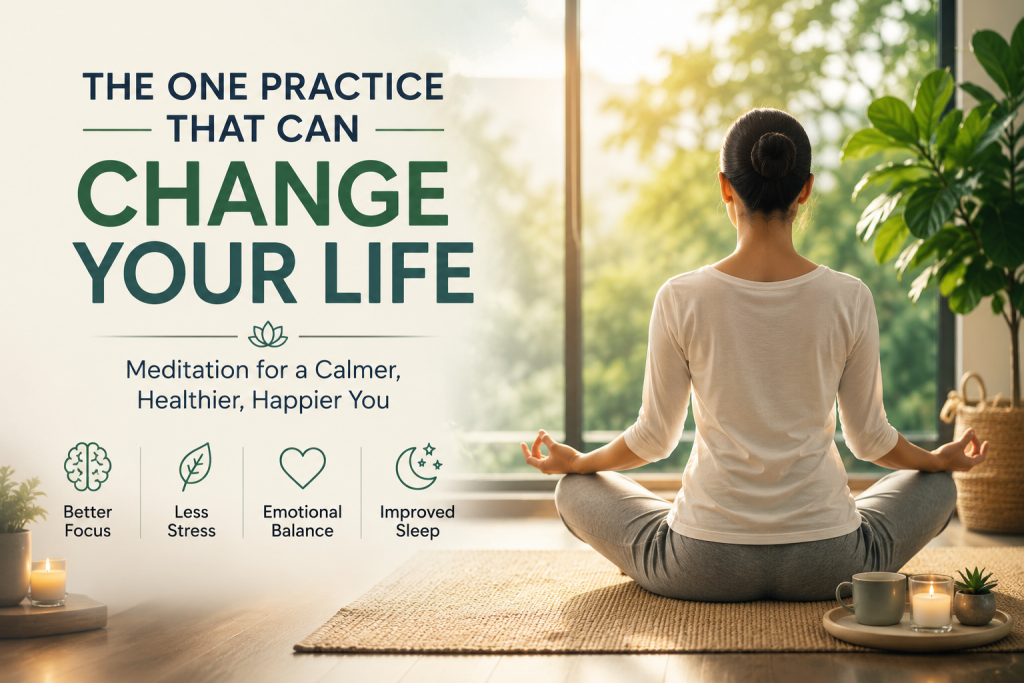
 The Big Question – What if just 10 minutes a day could help you feel calmer, think more clearly, and respond to life’s challenges with greater resilience?
The alarm hasn’t even stopped ringing.
Before you’re fully awake, your phone lights up with emails, messages, missed calls and reminders. Your mind immediately starts racing through deadlines, responsibilities and unfinished tasks. You move from one activity to the next, trying to keep pace with the day, yet somehow it always feels like you’re falling behind.
By evening, you’re exhausted not just physically, but mentally.
If this sounds familiar, you’re not alone.
Modern life constantly demands our attention, leaving little room for stillness. But what if one simple daily practice could help you navigate the same busy life with greater clarity, focus and peace?
That practice is meditation.
Quick Answer – What are the benefits of meditation?
Meditation is a mindfulness practice that trains your attention and awareness. Regular meditation has been associated with reduced stress, improved emotional regulation, better focus, enhanced sleep quality and greater overall wellbeing. Even 10–20 minutes a day can make a meaningful difference when practised consistently.
What Is Meditation?
Meditation is often misunderstood as “emptying your mind” or “thinking about nothing.”
In reality, meditation is simply the practice of intentionally focusing your attention.
According to Buddhist traditions, meditation develops:
- Concentration
- Mental clarity
- Emotional balance
- Self-awareness
- Compassion
Today, meditation is also widely practised in healthcare, psychology and workplace wellness programmes to help people manage stress and improve mental wellbeing.
Meditation doesn’t remove challenges from your life it changes how you respond to them.
It won’t eliminate difficult conversations, deadlines or uncertainty, but it can help you approach them with a calmer, more balanced mind.
What Happens in Your Brain During Meditation?
When you meditate regularly, you practise gently bringing your attention back to the present whenever your mind wanders.
Over time, research suggests meditation may support changes in brain function associated with:
- Better attention and concentration
- Improved emotional regulation
- Reduced stress reactivity
- Greater self-awareness
Studies have also observed changes in brain regions involved in learning, memory and decision-making, including the prefrontal cortex, while reduced activity in the amygdala may contribute to a calmer response to stress.
Although meditation isn’t a magic solution, consistent practice can help train your brain to respond more thoughtfully rather than react impulsively.
Why Meditation Matters in Everyday Life
Meditation isn’t just about sitting quietly.
Its benefits often extend into everyday situations.
You may notice that you:
- Respond instead of reacting during difficult conversations.
- Stay focused for longer periods.
- Feel less overwhelmed by stressful situations.
- Recover more quickly after setbacks.
- Become more patient with yourself and others.
These small changes often add up to meaningful improvements in overall wellbeing.
Science-Backed Benefits of Meditation
Helps Manage Stress
Meditation activates the body’s relaxation response, helping reduce mental and physical stress.
While stress is a normal part of life, learning how to respond to it more effectively can improve resilience.
Improves Focus and Productivity
Regular mindfulness practice strengthens your ability to sustain attention.
This can improve:
- Concentration
- Task completion
- Decision-making
- Workplace productivity
Supports Emotional Wellbeing
Meditation encourages greater awareness of thoughts and emotions without immediately reacting to them.
Over time, this may help reduce emotional overwhelm and improve emotional resilience.
May Improve Sleep Quality
Many people struggle to sleep because their minds remain active long after they’ve gone to bed.
Meditation and breathing exercises before bedtime can help calm the nervous system and support a more restful night’s sleep.
Supports Healthy Ageing
Emerging research suggests meditation may help support healthy brain ageing by encouraging lifelong cognitive engagement and stress management.
While more research continues, maintaining good mental wellbeing remains an important part of healthy ageing.
Common Types of Meditation
There is no single “correct” way to meditate.
Choose the approach that feels most comfortable.
Mindfulness Meditation
Observe your thoughts without judging them and gently bring your attention back to the present moment.
Breath Awareness Meditation
Focus entirely on your breathing.
Notice each inhale and exhale.
Whenever your mind wanders, gently return to your breath.
Guided Meditation
Listen to a trained instructor who guides you through relaxation or visualisation exercises.
Excellent for beginners.
Loving-Kindness Meditation
Focus on developing compassion and kindness toward yourself and others.
Body Scan Meditation
Slowly bring awareness to different parts of your body, noticing sensations without trying to change them.
Often used to reduce physical tension.
How to Start Meditating
You don’t need a mountain retreat or complete silence.
Start small.
Step 1
Find a quiet place.
Step 2
Sit comfortably with your spine relaxed but upright.
Step 3
Close your eyes or soften your gaze.
Step 4
Take slow, natural breaths.
Step 5
Focus on your breathing for five minutes.
When your mind wanders and it will gently bring your attention back without criticising yourself.
That’s the practice.
Common Meditation Myths
Myth: I have to empty my mind.
Reality: Thoughts are completely normal. Meditation teaches you to notice them without becoming carried away.
Myth: Meditation is only for spiritual people.
Reality: People from all backgrounds practise meditation for stress management, focus and overall wellbeing.
Myth: I need an hour every day.
Reality: Even 5–10 minutes of consistent practice can be beneficial.
Myth: I’m bad at meditation because my mind keeps wandering.
Reality: Every time you notice your mind wandering and gently bring it back, you’re practising meditation successfully.
Common Beginner Challenges
“I can’t stop thinking.”
That’s completely normal.
The goal isn’t to eliminate thoughts.
The goal is to notice when your attention drifts and gently guide it back.
Meditation is a skill, and like any skill, it improves with regular practice.
The Bottom Line
Life may never become less busy.
Emails will continue arriving.
Deadlines will remain.
Unexpected challenges will still appear.
Meditation doesn’t change your external circumstances—it changes your relationship with them.
It creates a little space between what happens and how you respond.
And sometimes, that small space is where clarity, resilience and peace begin.
Start with just five minutes today.
Your future self will thank you.
Pro Tip: Building a meditation habit is easier when you track your progress. Use the GOQii App to monitor your daily mindfulness practice alongside your sleep, activity and stress levels. Your GOQii Personalised Health Coach can help you develop a sustainable meditation routine that fits seamlessly into your lifestyle.
Frequently Asked Questions (FAQs)
- How long should I meditate each day?
Beginners can start with 5–10 minutes daily and gradually increase to 15–20 minutes as the habit becomes more comfortable.
- Is it better to meditate in the morning or evening?
Both work well. Morning meditation can help set a positive tone for the day, while evening meditation may help you unwind before sleep. The best time is the one you can practise consistently.
- What if my mind keeps wandering?
This is completely normal. Simply notice that your attention has wandered and gently bring it back to your breath. Every return strengthens your mindfulness practice.
- Can meditation help with anxiety?
Meditation may help reduce stress and improve emotional regulation. However, it should not replace professional mental health care. If you’re experiencing persistent anxiety or depression, consult a qualified mental health professional.
- Can I meditate lying down?
Yes, although many people find sitting upright helps them stay alert. If you’re practising before bedtime, lying down may be appropriate.
#BeTheForce
Disclaimer: This article is intended for educational purposes only and should not replace professional medical or psychological advice. Meditation can be a valuable tool for supporting mental wellbeing, but it is not a substitute for treatment of mental health conditions. If you are experiencing persistent anxiety, depression or emotional distress, seek guidance from a qualified healthcare professional.




Leave a Reply